

Deal delays directly undermine revenue performance, consume valuable seller capacity, and compromise forecast accuracy. Left unresolved, minor process gaps can become contract bottlenecks, payment friction, and lost momentum. This guide outlines five practical steps to identify blockers early, maintain deal velocity, and protect the path from opportunity to revenue.
TL;DR
Deal delays push revenue into later periods and increase the risk of missed payments.
Clear ownership, complete documents, and early approvals remove common contract delays.
A five step process helps teams find blockers, prepare information, and manage follow-up.
AI and pipeline data can reveal deal slippage before opportunities become inactive.
Better quotes, contracts, and approval rules reduce sales cycle bottlenecks.
Contract management software connects sales, legal, finance, and delivery teams.
A Five Step Process for Preventing Deal Delays
Diagnosing the delay before escalating the deal
Start by asking why the deal has slowed. Do not assume the buyer has lost interest. The issue may sit inside your own business.
A buyer may still support the deal. Their legal team may need more time. Their finance team may question the price. Their security team may need new documents.
Some delays begin with an unrealistic close date. Sellers may set dates before learning the buyer’s signing process. That approach creates deal slippage later.
Ask about the full path to signature. Find out who reviews the contract. Learn who approves the budget. Confirm who can sign the final agreement.
Also ask about past purchases. The buyer may have a formal process. They may use a procurement system or approval panel. They may follow an informal path instead.
Name the current blocker before raising pressure. A clear diagnosis helps the right person act. It also prevents repeated messages with no new value.
Preparing the documentation required to move forward
Deals often stall because information arrives in pieces. Sales may have the quote. Legal may need the customer’s contract form. Finance may need tax records.
Prepare the likely documents before the final stage. Include pricing details, customer needs, company records, and prior agreements. Add security, insurance, and delivery information when needed.
The right package depends on the deal. A small purchase may need only a quote and order form. A large deal may need several reviews.
Ask the buyer which documents matter most. This question can expose hidden steps early. It also shows respect for the buyer’s time.
Keep one current version of every file. Old prices and draft terms create confusion. They can also trigger another review cycle.
Clarifying commercial terms and approval ownership
Clear terms reduce questions. Use simple pricing language and define each service. Explain start dates, payment dates, renewals, and delivery duties.
Each approval should have a named owner. Legal should know which risks need review. Finance should know which payment terms need approval. Sales should own the customer relationship.
Set an escalation path before trouble starts. A manager may resolve a pricing issue. An executive may help with strategic alignment. Legal leaders may resolve a difficult clause.
Do not escalate every question. Escalate only when the current owner cannot act. This keeps senior teams focused on real blockers.
Monitoring deal health and improving the process
Deal health depends on more than seller confidence. Track buyer engagement, next steps, stakeholder coverage, and stage age. Watch for changes in forecast timing.
AI tools can spot patterns across many opportunities. They can flag repeated rescheduling or long approval times. They can also highlight unusual contract changes.
Pipeline data shows where the process breaks. Compare stage conversion, approval time, and total cycle time. Review lost deals for repeated causes.
Use those findings to change the process. Add a security step during qualification if needed. Move legal review earlier when contracts often cause delays.
A dashboard alone will not solve revenue leakage. Every alert needs an owner and a deadline. The team should record the response and final outcome.
A five step action sequence
1. Find the blocker. The seller starts when a close date moves. The trigger is a missed commitment or new concern. The expected outcome is one named cause.
2. Prepare the deal file. Sales and operations act when the blocker needs more evidence. The trigger is missing information or conflicting records. The expected outcome is one trusted document set.
3. Confirm terms and authority. Sales, legal, and finance act before formal review. The trigger is unclear pricing or approval ownership. The expected outcome is a clear decision path.
4. Recheck deal health. The seller and manager act during each pipeline review. The trigger is low engagement, stage aging, or forecast movement. The expected outcome is a recovery plan.
5. Secure the handoff. Sales, finance, and delivery act before signature. The trigger is an approved contract with open setup tasks. The expected outcome is a clean path to billing and delivery.
Related Article: Cut Contract Cycle Time: Proven Steps to Speed Up Deals
The Operational Causes Behind Stalled Deals
Misaligned stakeholders and unclear ownership
A deal can have many participants but no clear owner. Sales may wait for legal. Legal may wait for customer answers. Finance may wait for final pricing.
This creates quiet delays. Each team believes another team owns the next step. The buyer then receives slow or conflicting messages.
Map the buying committee early. Include the champion, budget owner, legal contact, procurement lead, and final signer. Add security or delivery teams when their review affects timing.
The seller should still own the customer plan. Internal teams own their reviews. One person must connect both sides and report progress.
Incomplete information and late-stage surprises
Missing details often appear near the close. A customer requirement may not match the quote. A payment term may conflict with company policy. A prior agreement may change the new deal.
These surprises force teams back into earlier discussions. They also reduce trust. Buyers may question whether other details remain hidden.
Ask direct questions before drafting final documents. Confirm scope, users, locations, renewal needs, and delivery dates. Record each answer in the deal file.
Use a short pre-review before formal approval. Legal can see the business goal. Finance can see the agreed price. Delivery can confirm that the promise is practical.
Process friction disguised as individual performance issues
Pressure does not fix a weak process. Asking sellers to call more often will not solve missing approvals. It will not correct poor qualification or unclear authority.
Review the system around the seller. Check territory design, approval rules, quote tools, and contract routing. Look for steps that add time without reducing risk.
A slow deal may show a process problem. Many sellers may face the same delay. Repeated contract delays point toward a shared workflow issue.
Fix the repeated cause instead of blaming one person. Create standard paths for common deal types. Reserve custom review for deals with real risk or unusual terms.
A diagnostic view of delay symptoms
No buyer response. The likely cause may be weak relevance or missing stakeholder support. The seller should confirm the buyer’s current priority. The manager should review the last useful customer action.
Repeated meeting changes. The buyer may lack internal agreement or urgency. The seller should ask what decision remains open. The team should reset the date around that decision.
Legal review has not started. The buyer may not know the required process. Sales should confirm the legal contact and contract route. The result should be a dated review commitment.
Price questions keep returning. The quote may lack scope or value detail. Sales and finance should align the commercial story. The buyer should receive one clear version.
Signature is close but not complete. The final signer or procurement step may be missing. The seller should map the signing path again. The team should record the remaining action and owner.
Forecast dates keep moving. The deal may have weak evidence behind its close date. The manager should test each milestone. The team should lower confidence until proof improves.
Related Article: Overcome Top 5 Contract Management Challenges with Ease
Deal Documentation That Keeps Revenue Moving
Building a centralized source of truth
A deal needs one trusted record. Store the proposal, quote, contract, amendments, and approval notes together. Add financial details, customer needs, and delivery commitments.
A central repository reduces searching. It also lowers the chance of using an old file. Teams can see which version is current.
Search matters during urgent reviews. Staff should find a clause or payment term quickly. Full-text search helps when file names offer little guidance.
Access rules still matter. Give each team the information needed for its work. Protect sensitive pricing, financial, and customer records.
The record should continue after signature. Delivery teams need the final scope. Finance needs payment terms. Account teams need renewal and obligation dates.
Preparing for diligence and commercial review early
Do not wait for final approval to inspect the deal. Run a short review when the opportunity becomes serious. Look for missing records and unclear promises.
Mock diligence means checking the deal before another team does. This simple review can expose weak evidence. It can also prevent late questions from legal or finance.
Review unusual discounts, custom services, and payment terms. Confirm that the customer’s needs match the proposed scope. Check that delivery teams can meet the promised dates.
Ask who owns each open issue. A document without an owner will remain unfinished. Give every gap a due date and a next action.
Early review supports a better buyer experience. It removes avoidable back-and-forth. It also protects revenue from errors after signature.
Document readiness inventory
Sales records. Include the final quote, business case, scope, and buyer commitments. Confirm that the seller has removed old versions. The owner should be the account executive.
Legal records. Include the contract form, marked changes, data terms, and risk notes. Confirm that open clauses have owners. The legal lead should set the review deadline.
Finance records. Include price, discount approval, billing details, and payment terms. Confirm that the buyer’s billing setup is known. The finance owner should approve exceptions.
Procurement records. Include vendor forms, purchase steps, and supplier requirements. Confirm whether the buyer uses a procurement portal. The procurement contact should confirm the route.
Delivery records. Include scope, start dates, service duties, and acceptance terms. Confirm that delivery can meet every promise. The delivery lead should approve the handoff.
Related Article: Enhancing Contract Visibility: Top 10 Strategies in 2025
AI and Analytics for Earlier Deal Risk Detection
Defining the signals of a healthy deal
A healthy deal shows steady progress. The buyer attends planned meetings and completes agreed actions. Key stakeholders join at the right time.
The stage should match real evidence. A deal should not remain late-stage without approval progress. A forecast date should connect to specific milestones.
Track recent engagement rather than activity alone. A buyer may open many emails without making a decision. A useful signal combines activity with meaningful progress.
Stakeholder coverage also matters. One helpful contact may not control budget or signature. The team needs access to people who own each decision.
Detecting bottlenecks before they become revenue leakage
AI can review activity across many deals. It can flag long gaps, repeated rescheduling, and missed follow-ups. It can also spot unusual wording in contract changes.
A deal may exceed its normal cycle time. That pattern can signal hidden approval risk. It can also show that the opportunity was never fully qualified.
Engagement signals can support better timing. A digital sales room may show which files buyers view. Proposal tracking may show whether key people return to the offer.
These tools do not replace judgment. They help teams focus attention. The seller still needs to ask the buyer what changed.
Turning insights into assigned actions
An alert should lead to a clear action. Assign an owner, deadline, and escalation rule. Record the response inside the deal record.
For example, low engagement may trigger a champion call. A stalled approval may trigger an executive review. An unusual clause may trigger a legal discussion.
Avoid creating another unmanaged dashboard. Too many alerts can hide important signals. Use a small set of actions tied to real business outcomes.
Review completed alerts each week. Ask which warnings proved useful. Remove signals that produce noise without better decisions.
Measuring the effect on revenue performance
Track time to close from a clear starting point. Measure approval time separately. This distinction shows whether delays start with buyers or internal reviews.
Stage aging reveals slow points in the sales path. Win rate shows whether faster movement protects quality. Forecast accuracy shows whether health signals improve judgment.
Payment timing completes the picture. A signed contract does not always create cash quickly. Billing setup, purchase orders, and acceptance steps can still delay payment.
Review these measures by segment and deal type. Large deals may need more reviews than small deals. The goal is not one universal time target.
Connecting signals to actions
Missed next step. The seller owns the response within one business day. Confirm the reason and set a new date. Measure recovery through completed action.
Repeated rescheduling. The sales manager reviews the buyer plan. Ask which decision remains open. Measure recovery through a firm milestone.
Long approval time. Legal or finance owns the review. Confirm missing information and escalation rules. Measure the time from submission to decision.
Low stakeholder coverage. The account executive maps missing decision roles. Ask the champion for introductions. Measure coverage before final approval.
Unusual contract changes. Legal reviews the changed terms. Compare them with approved fallback positions. Measure review time and accepted risk.
Forecast movement. The manager tests the close evidence. Remove unsupported dates from the forecast. Measure accuracy across later reporting periods.
Related Article: Using AI to Predict Legal Bottlenecks
Faster Quotes and More Predictable Contract Approvals
Making commercial proposals easier to understand
Buyers need to understand the offer quickly. Use short quotes with clear scope and price. Put important assumptions near the related service.
Avoid hiding key terms in dense pages. State billing dates, renewal rules, and delivery duties plainly. Use examples when pricing has several parts.
Supporting content should answer real buyer questions. Include security, service levels, and rollout details when relevant. Do not add material that creates new review work.
End with simple next steps. Name the person who answers questions. Show the path from approval to signature.
A clear proposal reduces unnecessary calls. It also helps the champion explain the offer internally. That support can reduce deal slippage.
Prioritizing material contract risks
Legal teams should focus on terms that change business risk. These often include liability, payment, delivery, data use, renewal, and termination.
Not every clause needs the same level of debate. Standard language can follow an approved path. Unusual requests should receive deeper review.
Sales should understand which terms are flexible. Legal can provide fallback positions before negotiations start. This keeps the seller from making promises without authority.
The goal is not to skip review. The goal is to direct effort wisely. Buyers receive faster answers when teams know the real decision points.
Establishing consistent approval thresholds
Approval rules should match deal risk. A small discount may need manager approval. A major liability change may need senior legal review.
Set clear authority levels before deals arrive. Explain who can approve price, payment, scope, and contract changes. Record exceptions in the deal file.
Consistent rules reduce needless handoffs. They also prevent staff from seeking approval twice. A clear path gives buyers more reliable timing.
Escalation rules should include deadlines. If an owner cannot decide, the issue moves upward. The deal should not wait without a visible reason.
Removing common quote and approval friction
Complex pricing. Before, buyers ask several questions about line items. After, the quote groups services and explains each charge. The improvement is faster review and fewer corrections.
Old quote versions. Before, teams debate which file is current. After, one approved version sits in the shared record. The improvement is less confusion during approval.
Unclear contract changes. Before, legal and sales revisit every edit. After, teams mark material changes and use agreed fallback terms. The improvement is shorter review time.
Missing approval owner. Before, requests move between managers. After, each exception has one named approver. The improvement is clearer accountability.
Manual signature routing. Before, sellers chase signers through email. After, e-signature sends the file through the correct path. The improvement is better visibility and fewer reminders.
Related Article: How To Accelerate Contract Review Process? Effective Guide
A Revenue Operating Rhythm That Prevents Repeat Delays
Setting ownership for every active next step
Every active deal needs a next action. Name one owner and one due date. Add the buyer commitment and any dependency.
A vague task creates little progress. “Follow up” says nothing about the needed result. “Confirm legal review with the buyer” gives the team direction.
Record the action where others can see it. This helps sales, legal, finance, and delivery work from one view. It also makes missed commitments easier to spot.
Owners should update the record after each action. Note what happened and what comes next. A short note can prevent repeated outreach.
This rhythm protects seller time. It stops teams from rebuilding the deal history. It also gives managers better evidence during reviews.
Reviewing high-risk deals on a consistent cadence
Not every deal needs the same meeting time. Focus on aging, high-value, contract-sensitive, or often rescheduled opportunities. Review those deals with the right people present.
A useful review asks what changed. It checks buyer progress, internal work, and forecast confidence. It ends with owners and dates.
Keep the discussion tied to action. Do not spend the meeting reading dashboard fields. Discuss the blocker, decision, or escalation that matters now.
Invite legal or finance when their work blocks progress. Invite delivery when scope or start dates create risk. Their early input prevents late surprises.
A recurring review agenda
Deal health. Review engagement, stage age, stakeholder coverage, and forecast movement. Ask whether current evidence supports the close date. Assign a new action when evidence is weak.
Current blockers. Name the buyer, commercial, legal, or operational issue. Confirm what information remains missing. Give the blocker one owner and one due date.
Buyer commitments. Check each promised meeting, review, and approval. Mark completed actions clearly. Reset missed commitments with a useful customer message.
Escalations. Decide which issues need manager or executive help. Define the requested decision before escalation. Set a response deadline and record the result.
Process improvements. Review repeated causes across active deals. Choose one process change for the next period. Track whether that change reduces delay or rework.
Related Article: Level Up Your Legal Operations: 6 Tips to Legal Efficiency
Why Contract Management Software Matters
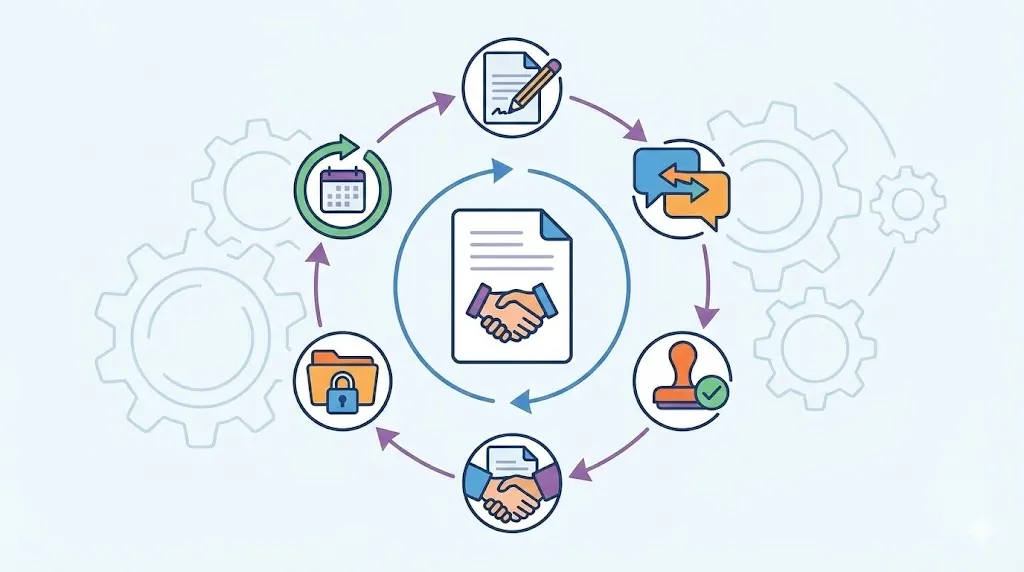
Contract management software creates one working system for agreements, approvals, obligations, and key deal data. It connects the work that happens before signature with the work that follows.
The right tool can reduce manual handoffs. Searchable records help teams find current terms quickly. Workflow controls route reviews to the right people and send reminders.
This supports faster approvals and clearer accountability. Teams can track payment terms, renewal dates, delivery duties, and open commitments. That visibility helps reduce payment delays and revenue leakage.
Generic contract management software can also connect sales, legal, finance, and delivery. It gives each team a shared view of contract status. Leaders can then measure approval time, cycle time, and handoff quality.
Volody’s CLM Software supports deal teams with AI Contract Summaries, AI Metadata Extraction, and Approval Workflow Automation. It can highlight obligations and renewal dates, capture key contract details, and route reviews with reminders. These features help teams reduce contract delays and protect the path from signature to revenue.
For example, a finance team can find payment terms quickly. Legal can review assigned changes in one workflow. Sales can see whether approval is ready before promising a close date.
Want to see how contract management software can simplify your legal workflows? Check out Volody's CLM Software.
FAQ
What were the stalling points in the prospect’s previous buying process?
Review the prospect’s earlier purchases to identify slow approvals, procurement steps, or legal reviews. Ask which steps required the most follow-up. Check whether missing information or unclear ownership caused the delay. Use those findings to build the current deal plan around known bottlenecks.
Did the prospect have a formal signing process or an ad hoc one?
Confirm whether the prospect uses a contract workflow, approval matrix, or procurement portal. Ask who coordinates reviews and who can provide the final signature. If the process is informal, document each expected step. This prevents administrative surprises near the planned close date.
Who was involved in the decision, and what part did each person own?
Map the economic buyer, champion, legal reviewer, procurement contact, and final signer. Add finance, security, or delivery teams when their approval matters. Clarify what each person must decide. This coverage reveals missing stakeholders before the close date arrives.
What should a mutual action plan include?
A mutual action plan should list each milestone needed for signature. Include an owner, due date, dependency, and buyer commitment. Add commercial review, security checks, legal review, procurement, signature, and delivery setup. Review the plan often and escalate missed commitments quickly.
Which signals can identify an at-risk deal before the close date?
Warning signs include low buyer engagement, repeated rescheduling, and missed next steps. Incomplete stakeholder coverage and unusual stage aging also signal risk. Stalled approvals and forecast movement add further concern. Combine these signals with contract activity before choosing a recovery action.
How can digital sales rooms and e-signatures reduce deal delays?
Use digital sales rooms and e-signature workflows to centralize deal materials, clarify stakeholder progress, reduce manual routing, and maintain momentum through final approval. Adopt these tools to create a faster, more accountable path from proposal to signature.
About the Company

Volody AI CLM is an Agentic AI-powered Contract Lifecycle Management platform designed to eliminate manual contracting tasks, automate complex workflows, and deliver actionable insights. As a one-stop shop for all contract activities, it covers drafting, collaboration, negotiation, approvals, e-signature, compliance tracking, and renewals. Built with enterprise-grade security and no-code configuration, it meets the needs of the most complex global organizations. Volody AI CLM also includes AI-driven contract review and risk analysis, helping teams detect issues early and optimize terms. Trusted by Fortune 500 companies, high-growth startups, and government entities, it transforms contracts into strategic, data-driven business assets.





" height="216.72211px" id="FYO0bO80Y" transform="translate(3 6.105)" width="206.073px"/><path d="M 108.174 222 C 88.432 222 70.303 217.239 53.785 207.717 C 37.267 198.196 24.173 185.052 14.504 168.285 C 4.835 151.312 0 132.165 0 110.845 C 0 89.731 4.835 70.792 14.504 54.025 C 24.173 37.052 37.267 23.804 53.785 14.282 C 70.303 4.761 88.432 0 108.174 0 C 128.116 0 146.246 4.761 162.562 14.282 C 179.08 23.804 192.073 37.052 201.541 54.025 C 211.21 70.792 216.044 89.731 216.044 110.845 C 216.044 132.165 211.21 151.312 201.541 168.285 C 192.073 185.052 179.08 198.196 162.562 207.717 C 146.044 217.239 127.915 222 108.174 222 Z M 108.174 183.189 C 120.864 183.189 132.044 180.291 141.713 174.495 C 151.382 168.492 158.936 160.006 164.375 149.035 C 169.814 138.064 172.533 125.334 172.533 110.845 C 172.533 96.355 169.814 83.729 164.375 72.965 C 158.936 61.994 151.382 53.611 141.713 47.815 C 132.044 42.02 120.864 39.122 108.174 39.122 C 95.483 39.122 84.202 42.02 74.332 47.815 C 64.663 53.611 57.109 61.994 51.67 72.965 C 46.231 83.729 43.511 96.355 43.511 110.845 C 43.511 125.334 46.231 138.064 51.67 149.035 C 57.109 160.006 64.663 168.492 74.332 174.495 C 84.202 180.291 95.483 183.189 108.174 183.189 Z" fill="rgba(255, 255, 255, 0.12)" height="222px" id="aa1McFcE9" transform="translate(227.183 3)" width="216.04399999999998px"/><path d="M 42.302 182.257 L 111.799 182.257 L 111.799 216.722 L 0 216.722 L 0 0 L 42.302 0 Z" fill="rgba(255, 255, 255, 0.12)" height="216.72211px" id="yRq4AnrsX" transform="translate(477.721 6.105)" width="111.79899999999998px"/><path d="M 108.174 222 C 88.432 222 70.303 217.239 53.785 207.717 C 37.267 198.196 24.173 185.052 14.504 168.285 C 4.835 151.312 0 132.165 0 110.845 C 0 89.731 4.835 70.792 14.504 54.025 C 24.173 37.052 37.267 23.804 53.785 14.282 C 70.303 4.761 88.432 0 108.174 0 C 128.116 0 146.246 4.761 162.562 14.282 C 179.08 23.804 192.073 37.052 201.541 54.025 C 211.21 70.792 216.045 89.731 216.045 110.845 C 216.045 132.165 211.21 151.312 201.541 168.285 C 192.073 185.052 179.08 198.196 162.562 207.717 C 146.044 217.239 127.915 222 108.174 222 Z M 108.174 183.189 C 120.864 183.189 132.044 180.291 141.713 174.495 C 151.382 168.492 158.936 160.006 164.375 149.035 C 169.814 138.064 172.534 125.334 172.534 110.845 C 172.534 96.355 169.814 83.729 164.375 72.965 C 158.936 61.994 151.382 53.611 141.713 47.815 C 132.044 42.02 120.864 39.122 108.174 39.122 C 95.483 39.122 84.202 42.02 74.332 47.815 C 64.663 53.611 57.108 61.994 51.67 72.965 C 46.231 83.729 43.511 96.355 43.511 110.845 C 43.511 125.334 46.231 138.064 51.67 149.035 C 57.108 160.006 64.663 168.492 74.332 174.495 C 84.202 180.291 95.483 183.189 108.174 183.189 Z" fill="rgba(255, 255, 255, 0.12)" height="222px" id="mo8HQspQ0" transform="translate(609.155 3)" width="216.04500000000007px"/><path d="M 73.727 0 C 95.885 0 115.324 4.45 132.044 13.351 C 148.967 22.252 161.957 34.982 171.027 51.541 C 180.287 67.894 184.917 86.937 184.917 108.671 C 184.917 130.405 180.287 149.449 171.027 165.801 C 161.957 181.947 148.967 194.47 132.044 203.371 C 115.324 212.271 95.885 216.722 73.727 216.722 L 0 216.722 L 0 0 Z M 72.216 179.773 C 94.374 179.773 111.497 173.564 123.583 161.144 C 135.669 148.724 141.713 131.233 141.713 108.671 C 141.713 86.109 135.669 68.515 123.583 55.888 C 111.497 43.055 94.374 36.638 72.216 36.638 L 42.302 36.638 L 42.302 179.773 Z" fill="rgba(255, 255, 255, 0.12)" height="216.72211px" id="I3iXX5Hi_" transform="translate(859.693 6.105)" width="184.91699999999992px"/><path d="M 185.22 0 L 113.91 141.273 L 113.91 216.722 L 71.61 216.722 L 71.61 141.273 L 0 0 L 47.74 0 L 93.06 99.046 L 138.08 0 Z" fill="rgba(255, 255, 255, 0.12)" height="216.72211px" id="nzHyWC0_d" transform="translate(1061.78 6.105)" width="185.22000000000003px"/></svg>)