

A missed deadline, notice, or data deletion duty can turn a routine contract into a costly dispute. Risks associated with contract obligations can be managed within a contract management platform to protect companies from financial loss, service failures, and trust damage. Consider a software provider that forgot to remove client data after a project ended. The clause existed, but no owner, reminder, or review process existed.
TL;DR
Contract obligations often stay hidden in dense terms, scattered files, and email threads after signing.
Missed duties can trigger penalties, lost revenue, disputes, audit findings, and long-term reputation damage.
A contract platform turns key duties into assigned tasks with dates, alerts, evidence, and escalation paths.
AI can find obligations, extract key terms, and flag risks before they create operational problems.
Strong processes connect legal, finance, sales, procurement, security, and business teams.
Volody helps teams draft, review, store, search, and track contracts through one controlled workspace.
Why missed contract obligations create business risk
A contract does more than record a deal. It creates a set of duties that people must perform over time. These duties may cover payments, service levels, data handling, insurance, reporting, audits, renewals, notices, and security controls.
The legal team may understand these terms during review. Business teams may not see them until a deadline approaches. That gap creates risk. A company can intend to follow an agreement and still fail because no one converted the clause into an action.
Obligations often sit across several documents. A master agreement may contain the main rules. An order form may add delivery dates. A statement of work may set acceptance steps. A security addendum may require annual reviews. A later amendment may change the deadline.
Teams often track these details in different places:
Shared drives
Email inboxes
Spreadsheets
Calendar reminders
Enterprise resource planning systems
Customer relationship management tools
Personal notes
Project management software
This scattered approach makes ownership unclear. It also makes information hard to verify. A manager may have a reminder but lack the full contract context. A lawyer may have the contract but not know whether the business completed the duty.
The risk grows when employees change roles. A person may leave the company with a spreadsheet on a local drive. Another employee may inherit the account without receiving the relevant contract history. The company then loses practical knowledge, even though the agreement remains active.
Contract risk also changes over time. A renewal may extend a service period. A new regulation may affect data processing duties. A customer may approve a revised delivery plan. A supplier may request a waiver. Each change can affect the work that teams must complete.
The United States Securities and Exchange Commission explains that companies must disclose certain material legal proceedings in public filings. A serious contract dispute may therefore become more than a private matter. It can affect investors, customers, lenders, and business partners. Read the SEC guidance on legal proceedings for more context.
The impact can include:
Direct damages and settlement payments
Refunds or service credits
Lost renewal or expansion revenue
Regulatory scrutiny
Emergency legal work
Delayed projects
Customer churn
Public statements or disclosures
Higher insurance or financing costs
A missed obligation does not always create immediate harm. Some duties protect against future problems. For example, a contract may require a supplier to maintain cyber insurance or test a recovery plan. If no one checks compliance, the company may discover the gap only after an incident.
What types of contract obligations need tracking?
Contract obligations differ by industry, contract type, and business model. A software company may need to track uptime, support response times, data deletion, and license limits. A manufacturer may track delivery windows, inspection rights, quality reports, and warranty work.
A procurement team may focus on supplier duties. A sales team may focus on customer commitments. Finance may track invoices, credits, price changes, and tax terms. Security teams may track audits, access controls, and incident notices.
Common obligations include:
Payment dates and invoice requirements
Delivery milestones and acceptance steps
Service levels and performance reports
Renewal and termination notice windows
Insurance certificates
Security questionnaires and audit rights
Data retention and deletion duties
Confidentiality and use restrictions
Regulatory certifications
Product warranties
Staffing and background check requirements
Volume commitments
Minimum purchase requirements
Price review dates
Marketing approvals
Reporting and recordkeeping
Some duties require a single action. A customer may need to receive a report by a stated date. Other duties repeat each month, quarter, or year. A platform should support both types.
Some duties also depend on an event. A contract may require notice within 48 hours after a security incident. That deadline does not appear on a fixed calendar. The team must identify the event, start the clock, and send the notice through the required channel.
Other duties depend on another party. A supplier may need to provide a certificate before the company releases payment. The business must track both the supplier's action and its own response. This creates a chain of related tasks.
Complex agreements may assign duties to several owners. A data processing agreement may involve legal, security, privacy, procurement, and IT. Each team may own a different step. Without shared visibility, one incomplete step can block compliance.
A useful obligation record should capture more than a short description. It should include:
The contract and clause that create the duty.
The person or team that owns the action.
The due date or trigger event.
The required output or proof of completion.
The reviewer who must approve the result.
The escalation path for overdue work.
The status and completion history.
Any linked amendment, waiver, or supporting document.
The National Institute of Standards and Technology provides practical guidance on managing cybersecurity supply chain risk. Its guidance shows why contract duties must connect to operational controls. A security promise has little value if no team tracks testing, reporting, and evidence. See the NIST Cybersecurity Supply Chain Risk Management practices for more detail.
How hidden obligations affect legal and operations teams
Legal teams often spend time answering questions that a contract system should answer quickly. Business users ask who owns a duty, when notice is due, or whether a supplier met a condition. Lawyers then search files, read amendments, and check email threads.
This work creates three problems. It consumes legal capacity, delays business decisions, and increases the chance of an incomplete answer. It also makes legal teams reactive. They find out about a missed obligation after a complaint, invoice dispute, or audit request.
Operations teams face a different problem. They may own the work but lack the contract context. A project manager may know that a customer expects a report but not know the exact format or delivery method. A vendor manager may know that insurance matters but not know the required coverage limits.
Finance teams may process payments without seeing a related performance condition. For example, a customer may have the right to withhold payment after a service failure. If finance cannot see the service obligation and its status, it may create an inaccurate invoice or credit.
Sales teams can also create risk during renewals. A salesperson may promise a new term without checking an existing notice period, price cap, or termination right. The company may then face conflicting commitments.
Security and privacy teams need clear visibility into contract controls. A contract may require an incident notice within a short period. It may also require a customer audit, annual certification, or deletion of records. Teams cannot meet these duties if they cannot find them.
A realistic example shows the problem. A national retailer signs a logistics agreement with a carrier. The contract requires monthly performance reports, proof of insurance, and notice before subcontractor changes. Procurement stores the agreement. Operations tracks delivery data. Risk stores certificates. No system connects those records.
Six months later, the carrier changes a subcontractor without notice. The company learns about the change during a customer complaint. It then discovers that two insurance certificates expired and three performance reports were never reviewed. Each failure began as a visibility problem.
The American Bar Association discusses the value of clear client communication and sound legal processes in its Model Rules of Professional Conduct. Contract obligation management supports that goal by helping legal teams communicate duties in a usable form.
A strong process gives each function a shared view:
Team | Main concern | Useful contract data |
|---|---|---|
Legal | Exposure and compliance | Clause, risk level, owner, evidence |
Operations | Delivery and performance | Milestone, service level, task status |
Finance | Money and entitlements | Payment date, credit, price, threshold |
Security | Controls and incidents | Audit duty, notice period, certification |
Sales | Renewal and customer promises | Term, notice date, commitments |
Procurement | Supplier performance | Insurance, reports, service duties |
This shared view does not remove judgment. It gives each team the facts needed to act before a problem grows.
How to build a contract obligation management process
Technology works best when the company defines a clear operating process first. A platform cannot fix unclear ownership or poor contract data by itself. Start with the business risks that matter most.
Begin by identifying high impact obligations. Review contracts that involve sensitive data, large payments, regulated services, critical suppliers, or major customers. Focus first on duties where failure could cause material loss or service disruption.
Then define an obligation taxonomy. Use plain labels that business users understand. Examples include payment, renewal, data deletion, audit, insurance, reporting, service level, and security notice.
Next, assign ownership. Each obligation needs one accountable owner, even when several teams contribute. A shared duty without a named owner often becomes nobody's duty.
Set due dates and trigger rules. Some dates come directly from the contract. Others start after an event, such as delivery, a breach, or a termination notice. Record the rule in plain language so users know what starts the countdown.
Define completion evidence. Evidence might include a signed certificate, delivery report, approval email, system log, invoice, or customer confirmation. A completed checkbox without proof may not help during an audit or dispute.
Create escalation rules. A reminder before a due date may help the owner. An escalation to a manager may help when the date passes. A legal or compliance alert may help when the missed duty carries serious risk.
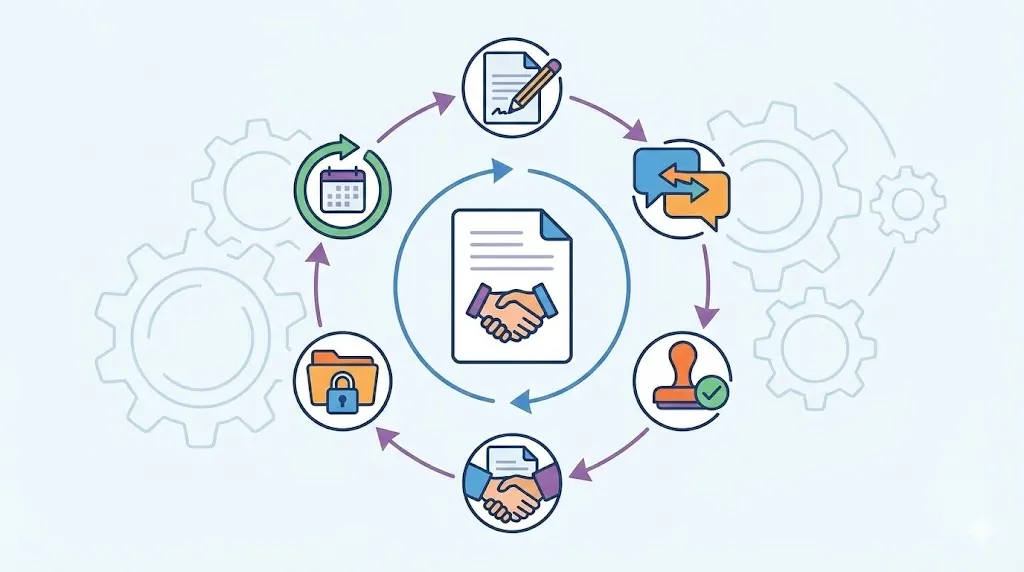
A practical process can follow this path:
Collect executed contracts and related amendments.
Store each agreement in one controlled repository.
Extract key parties, dates, terms, and duties.
Review extracted data for accuracy.
Classify obligations by type and risk.
Assign owners and backup owners.
Set deadlines, triggers, reminders, and escalations.
Attach evidence as teams complete work.
Review overdue and high risk items each week.
Report trends to legal and business leaders.
Do not send every reminder to every employee. Excess alerts create noise and encourage users to ignore the system. Match the alert to the owner's role, risk level, and required response.
Use different workflows for different obligations. A recurring supplier report may need a monthly reminder. A data deletion duty may need security approval and technical evidence. A renewal notice may need legal review before anyone sends it.
Build a review cadence. Business owners can review open items each week. Legal and compliance teams can review high risk duties each month. Leaders can review trends each quarter.
The Information Commissioner's Office provides guidance on accountability under data protection law. Its accountability framework highlights the need for records, ownership, monitoring, and evidence. Those same practices strengthen contract obligation controls.
Measure the process with useful metrics:
Open obligations by owner
Overdue obligations by risk level
Average time to complete a duty
Contracts without assigned owners
Renewals with late notice
Obligations completed without evidence
Repeated failures by supplier or business unit
Time spent answering contract questions
These measures show whether the process reduces risk. They also reveal where contract language creates repeated operational problems.
How AI helps identify and manage contract risk
Many companies have years of signed contracts in scanned files and shared folders. Manual review takes time and often misses details. AI can help organize this backlog, but people must validate important results.
AI contract extraction can identify parties, effective dates, renewal terms, payment rules, notice periods, governing law, and obligations. It can also find language related to security, privacy, indemnity, liability, audit rights, and termination.
The value comes from turning unstructured text into usable records. A clause stays hidden inside a document until the system connects it to an owner, date, and task. AI can speed that first step.
AI review can also compare contract language with company policy. It may flag a missing security provision, an unusual liability position, or a renewal term that falls outside approved standards. The legal team can then focus on decisions that require judgment.
AI summaries help business users understand agreements faster. A useful summary should highlight:
Parties and contract purpose
Start and end dates
Renewal rules
Payment and pricing terms
Key deliverables
Contractual duties
Liability and indemnity terms
Confidentiality and data requirements
Notice methods
Governing law
High risk deviations
AI clause recommendations can support negotiation. The system may suggest approved fallback language when a counterparty proposes a risky clause. A lawyer still decides whether the fallback fits the deal and the company's risk tolerance.
AI can also connect related documents. It may identify that an amendment changes a deadline in the original agreement. This helps prevent teams from relying on outdated terms.
A company should set controls before using AI for contract work. Establish approved playbooks and define which issues require human review. Limit access based on role, department, entity, and geography.
Check extraction accuracy with samples. Review results for critical fields, such as termination rights, notice periods, payment dates, and data deletion duties. Track errors and improve the rules over time.
Do not treat AI output as a legal conclusion. AI can find language and suggest patterns. It may misunderstand a defined term, exception, or relationship between clauses. A qualified reviewer should confirm high impact obligations before the company relies on them.
The National Institute of Standards and Technology offers an AI Risk Management Framework. It recommends governance practices that support reliable and accountable AI use. Contract teams can apply these ideas through testing, human review, access controls, audit logs, and clear ownership.
A careful AI workflow looks like this:
Import the agreement and related documents.
Run extraction for terms, dates, parties, and duties.
Mark low confidence results for human review.
Compare clauses with approved policies.
Route high risk issues to legal or compliance.
Create approved tasks from verified obligations.
Keep the source clause beside each task.
Record every change and review decision.
This approach helps teams move faster without treating automation as a substitute for legal analysis.
How to prove that contract obligations were fulfilled
Tracking a duty matters, but proving completion matters just as much. A company may face an audit, claim, renewal dispute, or regulator inquiry months after an obligation ended. Teams need a reliable record of what happened.
Evidence should connect to the specific contract and clause. A folder full of documents may not show which file proves which duty. A structured record creates a clear link between the promise, the owner, the deadline, and the result.
For a data deletion obligation, evidence may include a deletion ticket, system log, manager approval, and confirmation to the customer. For an insurance duty, evidence may include the certificate, policy limits, expiry date, and review record.
Use status values that explain progress. “Open” and “closed” may not provide enough detail. Consider statuses such as not started, in progress, waiting for third party, submitted for review, completed, waived, disputed, and overdue.
Record exceptions with care. A customer may grant an extension. A supplier may receive a waiver. A business unit may accept a temporary policy deviation. Store the approval, scope, expiration, and approving authority.
Keep an audit trail. The record should show who changed a due date, reassigned an owner, approved an exception, or marked a task complete. This detail can help reconstruct events during a dispute.
Access controls also matter. Contracts may include pricing, personal data, trade secrets, or investigation details. Limit sensitive information while giving each owner enough access to complete the assigned work.
Review evidence quality. Ask whether an independent reviewer could understand the record without contacting the original employee. If not, add clearer notes, source documents, or approval records.
Consider a quarterly obligation review. Ask business owners to confirm that open duties remain accurate. Check that owners still hold the right roles. Confirm that recurring tasks have the correct frequency and due dates.
A simple review checklist can include:
Does every high risk duty have an owner?
Does every due date match the contract?
Does each trigger event have a clear definition?
Does the record link to the source clause?
Does completion include supporting evidence?
Did an approved reviewer check the evidence?
Did an amendment change the requirement?
Did a waiver expire?
Does the next review date remain accurate?
The process should also support reporting. Leaders need to see patterns, not only individual tasks. A dashboard may show rising overdue items for one supplier, repeated data handling gaps, or renewal notices sent too late.
These patterns can change business decisions. Procurement may renegotiate weak supplier terms. Legal may update templates. Security may add stronger controls. Operations may change its delivery process.
A contract platform cannot guarantee perfect performance. It can create visibility, ownership, reminders, evidence, and accountability. Those controls give companies a stronger way to manage duties before failure becomes a claim.
How contract management software solves this
Contract management software creates one controlled place for agreements, amendments, obligations, owners, evidence, and deadlines. It can use AI to extract key terms, flag unusual language, and produce summaries. Workflow automation can then route approvals, send reminders, and escalate overdue work.
Volody supports this process with AI metadata extraction, obligation management, alerts, role based access, audit trails, advanced search, and dashboards. Teams can find duties faster, connect them to responsible owners, and keep proof of completion with the relevant contract.
> Looking for a better way to manage contracts? Discover Volody's CLM Software.
FAQ
What is a contractual obligation?
A contractual obligation is a duty that a party must perform under an agreement. It may involve payment, delivery, reporting, data protection, service levels, notice, or compliance.
Why do companies miss contract obligations?
Companies often miss duties because contracts sit in disconnected files and no one owns the related work. Amendments, event based deadlines, staff changes, and unclear language can add further risk.
What should an obligation management system track?
It should track the source clause, responsible owner, due date, trigger event, required evidence, status, reviewer, and escalation path. It should also connect each duty to amendments and related documents.
Can contract software track recurring obligations?
Yes. Many platforms can create recurring tasks for monthly reports, quarterly reviews, annual certifications, and other repeated duties. They can also send reminders before each due date.
Can AI identify obligations in existing contracts?
AI can scan agreements and suggest obligations, dates, parties, and key terms. A human reviewer should confirm important results, especially where exceptions or defined terms affect meaning.
How does obligation tracking protect legal teams?
It reduces manual searches and gives lawyers a clearer view of open risks. Legal teams can focus on high impact issues instead of answering routine questions about dates and owners.
How should a company start managing obligations?
Start with high value or high risk contracts. Build a small obligation taxonomy, assign owners, validate extracted data, set reminders, and review overdue work before expanding across the business.
Does a contract platform replace legal judgment?
No. The platform organizes information and supports follow through. Lawyers and business leaders still decide how to interpret terms, accept risk, approve exceptions, and respond to disputes.
About the Company

Volody AI CLM is an Agentic AI-powered Contract Lifecycle Management platform designed to eliminate manual contracting tasks, automate complex workflows, and deliver actionable insights. As a one-stop shop for all contract activities, it covers drafting, collaboration, negotiation, approvals, e-signature, compliance tracking, and renewals. Built with enterprise-grade security and no-code configuration, it meets the needs of the most complex global organizations. Volody AI CLM also includes AI-driven contract review and risk analysis, helping teams detect issues early and optimize terms. Trusted by Fortune 500 companies, high-growth startups, and government entities, it transforms contracts into strategic, data-driven business assets.





" height="216.72211px" id="FYO0bO80Y" transform="translate(3 6.105)" width="206.073px"/><path d="M 108.174 222 C 88.432 222 70.303 217.239 53.785 207.717 C 37.267 198.196 24.173 185.052 14.504 168.285 C 4.835 151.312 0 132.165 0 110.845 C 0 89.731 4.835 70.792 14.504 54.025 C 24.173 37.052 37.267 23.804 53.785 14.282 C 70.303 4.761 88.432 0 108.174 0 C 128.116 0 146.246 4.761 162.562 14.282 C 179.08 23.804 192.073 37.052 201.541 54.025 C 211.21 70.792 216.044 89.731 216.044 110.845 C 216.044 132.165 211.21 151.312 201.541 168.285 C 192.073 185.052 179.08 198.196 162.562 207.717 C 146.044 217.239 127.915 222 108.174 222 Z M 108.174 183.189 C 120.864 183.189 132.044 180.291 141.713 174.495 C 151.382 168.492 158.936 160.006 164.375 149.035 C 169.814 138.064 172.533 125.334 172.533 110.845 C 172.533 96.355 169.814 83.729 164.375 72.965 C 158.936 61.994 151.382 53.611 141.713 47.815 C 132.044 42.02 120.864 39.122 108.174 39.122 C 95.483 39.122 84.202 42.02 74.332 47.815 C 64.663 53.611 57.109 61.994 51.67 72.965 C 46.231 83.729 43.511 96.355 43.511 110.845 C 43.511 125.334 46.231 138.064 51.67 149.035 C 57.109 160.006 64.663 168.492 74.332 174.495 C 84.202 180.291 95.483 183.189 108.174 183.189 Z" fill="rgba(255, 255, 255, 0.12)" height="222px" id="aa1McFcE9" transform="translate(227.183 3)" width="216.04399999999998px"/><path d="M 42.302 182.257 L 111.799 182.257 L 111.799 216.722 L 0 216.722 L 0 0 L 42.302 0 Z" fill="rgba(255, 255, 255, 0.12)" height="216.72211px" id="yRq4AnrsX" transform="translate(477.721 6.105)" width="111.79899999999998px"/><path d="M 108.174 222 C 88.432 222 70.303 217.239 53.785 207.717 C 37.267 198.196 24.173 185.052 14.504 168.285 C 4.835 151.312 0 132.165 0 110.845 C 0 89.731 4.835 70.792 14.504 54.025 C 24.173 37.052 37.267 23.804 53.785 14.282 C 70.303 4.761 88.432 0 108.174 0 C 128.116 0 146.246 4.761 162.562 14.282 C 179.08 23.804 192.073 37.052 201.541 54.025 C 211.21 70.792 216.045 89.731 216.045 110.845 C 216.045 132.165 211.21 151.312 201.541 168.285 C 192.073 185.052 179.08 198.196 162.562 207.717 C 146.044 217.239 127.915 222 108.174 222 Z M 108.174 183.189 C 120.864 183.189 132.044 180.291 141.713 174.495 C 151.382 168.492 158.936 160.006 164.375 149.035 C 169.814 138.064 172.534 125.334 172.534 110.845 C 172.534 96.355 169.814 83.729 164.375 72.965 C 158.936 61.994 151.382 53.611 141.713 47.815 C 132.044 42.02 120.864 39.122 108.174 39.122 C 95.483 39.122 84.202 42.02 74.332 47.815 C 64.663 53.611 57.108 61.994 51.67 72.965 C 46.231 83.729 43.511 96.355 43.511 110.845 C 43.511 125.334 46.231 138.064 51.67 149.035 C 57.108 160.006 64.663 168.492 74.332 174.495 C 84.202 180.291 95.483 183.189 108.174 183.189 Z" fill="rgba(255, 255, 255, 0.12)" height="222px" id="mo8HQspQ0" transform="translate(609.155 3)" width="216.04500000000007px"/><path d="M 73.727 0 C 95.885 0 115.324 4.45 132.044 13.351 C 148.967 22.252 161.957 34.982 171.027 51.541 C 180.287 67.894 184.917 86.937 184.917 108.671 C 184.917 130.405 180.287 149.449 171.027 165.801 C 161.957 181.947 148.967 194.47 132.044 203.371 C 115.324 212.271 95.885 216.722 73.727 216.722 L 0 216.722 L 0 0 Z M 72.216 179.773 C 94.374 179.773 111.497 173.564 123.583 161.144 C 135.669 148.724 141.713 131.233 141.713 108.671 C 141.713 86.109 135.669 68.515 123.583 55.888 C 111.497 43.055 94.374 36.638 72.216 36.638 L 42.302 36.638 L 42.302 179.773 Z" fill="rgba(255, 255, 255, 0.12)" height="216.72211px" id="I3iXX5Hi_" transform="translate(859.693 6.105)" width="184.91699999999992px"/><path d="M 185.22 0 L 113.91 141.273 L 113.91 216.722 L 71.61 216.722 L 71.61 141.273 L 0 0 L 47.74 0 L 93.06 99.046 L 138.08 0 Z" fill="rgba(255, 255, 255, 0.12)" height="216.72211px" id="nzHyWC0_d" transform="translate(1061.78 6.105)" width="185.22000000000003px"/></svg>)