

Missed contract renewals and unnoticed termination deadlines cost businesses millions every year. Many organizations struggle to extract key details from complex agreements, which leads to revenue loss and compliance risks. Generating clear renewal and termination summaries solves this problem by distilling critical contract data into actionable insights. These summaries guide teams through the contract renewal process and termination decisions with clarity and precision.
This guide focuses on how to create effective renewal and termination summaries that support better contract management outcomes. It covers core concepts, essential summary elements, automation tools, and best practices. You’ll learn how tailored summaries help different stakeholders and how to overcome common challenges. By mastering these summaries, you can sharpen your contract renewal tracking and avoid costly auto-renewals or lapses.
Contract renewal and termination management, contract renewal tracking, contract renewal process, and contract renewal notice are at the heart of this discussion. These terms frame the steps and tools needed to keep contracts on track.
Defining Contract Renewal and Termination Management
Generating renewal and termination summaries means extracting key contract details to guide decisions. These summaries focus on critical dates, financial terms, and compliance data. Automation tools like contract renewal tracking software speed up summary creation and reduce errors. Tailoring summaries to legal, finance, and procurement teams improves clarity. Accurate summaries help prevent missed deadlines and unwanted auto-renewals, reducing risk and costs. This guide shows how to build and use these summaries effectively.
Related articles: What is Contract Renewal? Key Terms and Processes in 2026
Essential Elements of Effective Renewal and Termination Summaries
Core Concepts in Contract Renewal and Termination
Contract renewal and termination management involves tracking when contracts expire and deciding whether to extend or end them. This process covers reviewing contract terms, assessing vendor or service performance, and complying with notice windows. Renewal means continuing the agreement under existing or updated terms. Termination ends the contract, either at its natural expiry or early under specific clauses.
Renewal management requires proactive oversight to avoid unintended auto-renewals. An auto-renewal clause can silently extend contracts if no action occurs. Termination management ensures obligations are met and risks minimized when ending agreements. Both renewal and termination require timely contract renewal notices to alert stakeholders.
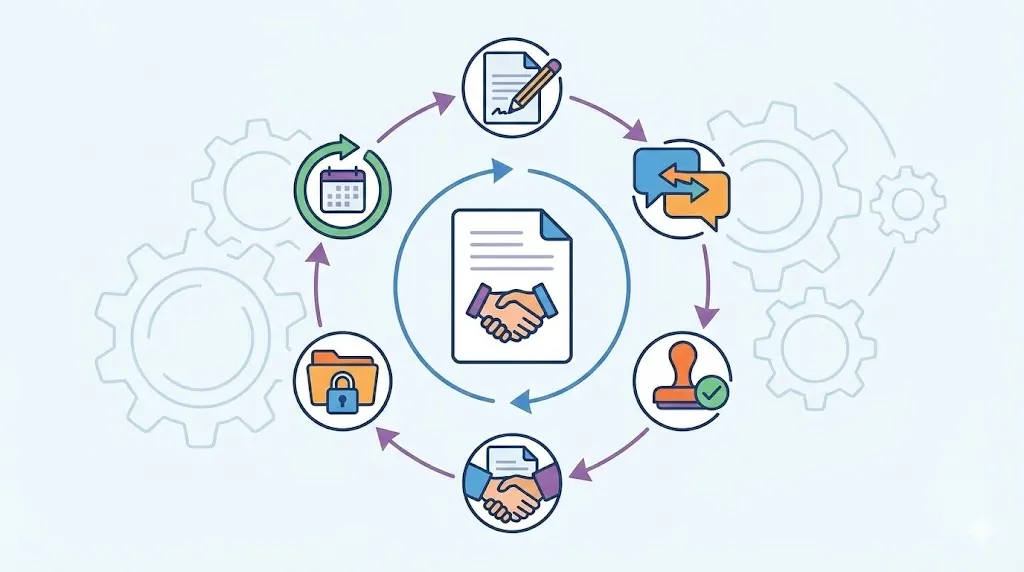
In practice, renewal and termination management is a continuous cycle, not a one-time event. Teams must monitor deadlines, send renewal notices, and track responses. This cycle supports strategic decisions about contract value and business needs.
Contract Renewal Tracking and Notice Requirements
Effective contract renewal tracking captures key dates such as contract end dates, renewal deadlines, and notice windows. A contract renewal notice is the formal communication sent within the notice window to confirm renewal or termination intent. Notice windows vary by contract but typically range from 30 to 90 days before expiry.
Tracking tools must flag these dates in advance to allow negotiation or termination steps. Missing a notice window often triggers automatic renewal, locking the business into another term. Contract renewal tracking software helps by automating alerts and centralizing deadlines.
Accurate tracking requires understanding contract terms. Some agreements allow multiple renewal options or require different notice periods for renewal versus termination. The tracking system must reflect these nuances or risk errors.
Differentiating Renewal Processes from Termination Procedures
The contract renewal process focuses on extending the agreement, either by confirming existing terms or negotiating updates. This process involves reviewing contract performance, market conditions, and financial terms. Renewal often leads to a new contract term or amendment.
Termination procedures come into play when a contract will not continue. They involve documenting reasons for ending, fulfilling exit obligations, and managing any penalties or transition plans. Termination may be voluntary or triggered by breach or non-performance.
While renewal and termination intersect at contract expiry, they require different documentation and communication workflows. Renewal emphasizes continuation and value optimization. Termination prioritizes risk mitigation and compliance. Summaries must reflect these distinct focuses clearly.
Related articles: What is Contract Termination? Key Concepts Explained in 2026
Automating Summary Generation: Leveraging Contract Management Software
Key Performance Indicators for Renewal Decisions
Renewal and termination summaries must include performance metrics to support informed decisions. Key performance indicators (KPIs) often cover:
Vendor or service delivery quality
Compliance with contract terms
Cost versus budget or market benchmarks
User or stakeholder satisfaction
These KPIs highlight whether a contract continues to deliver value or should be reconsidered. For example, a renewal summary might flag missed service-level agreements or rising costs. Termination summaries may document repeated breaches or unresolved disputes.
Including KPIs helps legal, procurement, and finance teams align on contract outcomes. It also supports negotiations by providing evidence-based insights.
Critical Dates: Renewal Deadlines and Notice Periods
Summaries must clearly state all critical dates. These include:
Contract expiration date
Renewal deadline
Contract renewal notice window
Termination notice deadline
Highlighting these dates prevents missed actions. A renewal summary should state when the renewal notice must be sent to avoid auto-renewal. Termination summaries emphasize the final date to exercise termination rights.
Presenting dates visually, such as in a timeline or table, improves clarity. It also enables calendar integration for automated reminders.
Financial and Compliance Data to Include
Financial details are essential for renewal decisions. Summaries typically include:
Current contract value and payment terms
Renewal pricing or escalation clauses
Budget impact and forecasted costs
Penalties or fees related to termination
Compliance data is equally important. Summaries should note:
Regulatory or industry requirements linked to the contract
Internal policy alignment
Audit status and past compliance issues
This financial and compliance data provides a full picture of contract implications. It helps teams evaluate risks and opportunities before renewing or terminating.
Tailoring Summaries to Stakeholder Needs
Role of AI in Extracting Contract Data
AI-powered contract renewal tracking software plays a key role in generating accurate summaries. It automatically extracts relevant clauses, deadlines, and financial terms from contracts. This eliminates manual data entry and reduces errors.
AI engines scan contracts for renewal dates, notice windows, auto-renewal clauses, and termination rights. They also identify amendments or version changes that affect renewal terms. This deep extraction ensures summaries are based on up-to-date contract data.
Using AI accelerates summary creation and supports large contract portfolios. It frees legal and procurement teams to focus on analysis rather than data gathering.
Real-Time Contract Monitoring and Alerts
Automated platforms provide real-time monitoring of contract status. They track upcoming renewal deadlines and send contract renewal reminders to stakeholders. These alerts ensure teams act within contract renewal notice windows.
Real-time dashboards offer visibility into the entire contract pipeline. Managers can see which contracts need review, which are pending renewal notices, and which face termination deadlines. This transparency improves coordination across departments.
Such platforms often integrate with calendars and email systems to embed reminders into everyday workflows. This integration boosts attention and reduces the risk of missed renewals.
Minimizing Errors through Automation
Manual renewal tracking risks human error—missed dates, inaccurate summaries, or overlooked clauses. Automation minimizes these risks by standardizing data extraction and alerts.
The system enforces contract renewal process rules, such as when notices must be sent and who must approve them. It also tracks compliance with these rules, creating an audit trail.
Automated summary generation ensures consistency in capturing key contract details. It prevents gaps caused by silos or last-minute rushes. This reliability underpins better contract renewal and termination management.
Related articles: What You Need to Know About Termination Clauses
Navigating Challenges in Generating Accurate Summaries
Legal Team Requirements for Summaries
Legal teams need summaries that highlight contractual obligations, risks, and renewal or termination rights. They focus on:
Precise contract language for renewal and termination clauses
Notice requirements and deadlines
Potential legal risks from auto-renewals or missed termination windows
Changes in contract terms or amendments
Legal summaries must be detailed enough to support risk assessment but concise for quick review. They often include references to specific clauses and links to full contract text.
Procurement and Finance Perspectives
Procurement and finance prioritize cost control and vendor performance. Their summaries emphasize:
Pricing changes and escalation clauses
Budget forecasts and cost-benefit analysis
Vendor delivery metrics and compliance
Contract renewal vs termination cost implications
These teams use summaries to prepare negotiation strategies and budget plans. Their focus is on value and financial impact.
Executive-Level Summary Customization
Executives require high-level summaries that synthesize key facts and recommendations. These focus on:
Critical renewal deadlines and risk exposure
Strategic vendor relationships and market context
Financial impact and opportunities for savings
Recommended action: renew, renegotiate, or terminate
Executive summaries avoid technical jargon and present data visually. They enable fast decision-making and cross-functional alignment.
Related articles: What is Contract Renewal? Ultimate Guide To Success
Strategic Use of Renewal Summaries to Influence Negotiations
Handling Contract Amendments and Version Control
Contracts often undergo amendments that alter renewal or termination terms. Managing these changes is a major challenge for summary accuracy.
Each amendment must be reviewed and integrated into the summary. Version control ensures the summary reflects the latest contract state. Failure to track amendments can cause wrong renewal dates or incorrect financial data.
Automated contract renewal tracking software helps by linking amendments and updating summaries dynamically. Manual processes risk missing critical changes.
Breaking Down Data Silos for Comprehensive Information
Contract data often resides across legal, procurement, and finance systems. This siloed information complicates summary generation.
Cross-department data sharing is essential. Summaries must combine legal clauses, financial terms, and performance metrics. Without integration, teams work with incomplete views.
Modern renewal notification platforms centralize contract data. They unify inputs to create comprehensive summaries. This improves accuracy and decision quality.
Ensuring Timely Access to Contractual Data
Delays in accessing contracts or related documents hinder summary creation. Teams may wait for physical copies or approvals, losing critical time.
Digital contract repositories and automated workflows ensure instant access. They enable quick extraction of renewal and termination details.
Timely data access supports meeting contract renewal notice windows. It also allows earlier strategy development and negotiation preparation.
Crafting Termination Summaries to Mitigate Risks
Benchmarking Vendor Performance Using Summaries
Renewal summaries compile vendor performance data alongside contract terms. This benchmarking supports renewal negotiations.
Teams compare current results to contract promises and market standards. They identify areas where vendors underperform or exceed expectations.
Such insight helps negotiate better terms or decide on termination. Summaries create a fact-based foundation for discussions.
Highlighting Cost and Value Considerations
Financial data in summaries reveals cost trends, escalation clauses, and value received. This information empowers teams to push for savings or improved service.
Renewal summaries may include:
Total spend analysis
Cost per unit or service level
Price increases due to auto-renewal clauses
Presenting these details transparently strengthens negotiation positions.
Preventing Unwanted Auto-Renewals with Data Insights
Unwanted auto-renewals happen when notice windows are missed. Renewal summaries flag these risks early.
They highlight contract renewal notice deadlines and auto-renewal clauses. This allows teams to act before contracts renew silently.
Proactive use of summaries reduces budget surprises and frees resources from unintended commitments.
Best Practices for Maintaining Summary Accuracy and Relevance
Documenting Termination Grounds and Obligations
Termination summaries record the legal grounds for ending contracts. They list obligations such as notice periods, penalties, and transition duties.
Clear documentation ensures compliance and reduces dispute risks. It also guides operational teams on next steps.
These summaries act as checklists to confirm all termination conditions are met.
Assessing Business Continuity Impacts
Terminating contracts can disrupt services or supply chains. Summaries should assess potential impacts on business continuity.
They identify dependencies, alternative vendors, and risk mitigation plans. This helps prepare for smooth transitions.
Business leaders use this information to weigh termination risks versus benefits.
Preparing for Legal and Compliance Reviews
Termination often triggers legal and compliance scrutiny. Summaries compile all relevant facts and communications.
This preparation supports audits and dispute resolution. It also demonstrates good-faith adherence to contract terms.
Well-crafted termination summaries protect the organization from penalties or litigation.
Future Trends in Renewal and Termination Summary Generation
Developing Standardized Summary Templates
Standardized templates ensure all key data points appear in every summary. Templates reduce omissions and improve readability.
They include fields for critical dates, financial data, performance metrics, and stakeholder comments. Templates can be customized by contract type or department.
Using templates also speeds up summary creation and review cycles.
Aligning Reviews with Contract Milestones
Regular review cycles tied to contract milestones maintain summary accuracy. Summaries should be updated after amendments, performance reviews, or negotiation rounds.
Aligning reviews with renewal notice windows ensures timely decisions. It also keeps data current and relevant.
Scheduled summary updates promote consistent contract oversight.
Incorporating Feedback from Renewal Outcomes
Feedback loops from previous renewal or termination outcomes improve summary quality. Teams can identify missing data, unclear language, or ineffective formats.
Incorporating this feedback refines templates and processes. It drives continuous improvement in contract renewal and termination management.
Engaging all stakeholders in feedback ensures summaries meet diverse needs.
Conclusion
Predictive Analytics for Renewal Forecasting
Predictive analytics will transform how organizations forecast renewal outcomes. Using historical contract data and market signals, platforms can estimate renewal likelihood and financial impacts.
This foresight enables proactive negotiations and budget planning. It shifts contract renewal management from reactive to strategic.
Early adopters gain competitive advantages by anticipating contract changes.
Enhancing Cross-Functional Collaboration Tools
Future renewal notification platforms will improve collaboration with integrated chat, task management, and document sharing. These tools break down silos and speed decision-making.
Real-time collaboration ensures all stakeholders contribute to summary accuracy and renewal strategies. It also creates accountability and audit trails.
Better teamwork reduces renewal cycle times and improves negotiation outcomes.
Blockchain’s Role in Contract Integrity
Blockchain technology offers immutable contract records that enhance trust and transparency. It can automate renewal and termination triggers via smart contracts.
This reduces disputes over contract status and enforces timely notices. Blockchain can also secure contract renewal notices with verifiable timestamps.
As adoption grows, blockchain will become a key enabler of reliable contract renewal and termination management.
About the Company

Volody AI CLM is an Agentic AI-powered Contract Lifecycle Management platform designed to eliminate manual contracting tasks, automate complex workflows, and deliver actionable insights. As a one-stop shop for all contract activities, it covers drafting, collaboration, negotiation, approvals, e-signature, compliance tracking, and renewals. Built with enterprise-grade security and no-code configuration, it meets the needs of the most complex global organizations. Volody AI CLM also includes AI-driven contract review and risk analysis, helping teams detect issues early and optimize terms. Trusted by Fortune 500 companies, high-growth startups, and government entities, it transforms contracts into strategic, data-driven business assets.




" height="216.72211px" id="FYO0bO80Y" transform="translate(3 6.105)" width="206.073px"/><path d="M 108.174 222 C 88.432 222 70.303 217.239 53.785 207.717 C 37.267 198.196 24.173 185.052 14.504 168.285 C 4.835 151.312 0 132.165 0 110.845 C 0 89.731 4.835 70.792 14.504 54.025 C 24.173 37.052 37.267 23.804 53.785 14.282 C 70.303 4.761 88.432 0 108.174 0 C 128.116 0 146.246 4.761 162.562 14.282 C 179.08 23.804 192.073 37.052 201.541 54.025 C 211.21 70.792 216.044 89.731 216.044 110.845 C 216.044 132.165 211.21 151.312 201.541 168.285 C 192.073 185.052 179.08 198.196 162.562 207.717 C 146.044 217.239 127.915 222 108.174 222 Z M 108.174 183.189 C 120.864 183.189 132.044 180.291 141.713 174.495 C 151.382 168.492 158.936 160.006 164.375 149.035 C 169.814 138.064 172.533 125.334 172.533 110.845 C 172.533 96.355 169.814 83.729 164.375 72.965 C 158.936 61.994 151.382 53.611 141.713 47.815 C 132.044 42.02 120.864 39.122 108.174 39.122 C 95.483 39.122 84.202 42.02 74.332 47.815 C 64.663 53.611 57.109 61.994 51.67 72.965 C 46.231 83.729 43.511 96.355 43.511 110.845 C 43.511 125.334 46.231 138.064 51.67 149.035 C 57.109 160.006 64.663 168.492 74.332 174.495 C 84.202 180.291 95.483 183.189 108.174 183.189 Z" fill="rgba(255, 255, 255, 0.12)" height="222px" id="aa1McFcE9" transform="translate(227.183 3)" width="216.04399999999998px"/><path d="M 42.302 182.257 L 111.799 182.257 L 111.799 216.722 L 0 216.722 L 0 0 L 42.302 0 Z" fill="rgba(255, 255, 255, 0.12)" height="216.72211px" id="yRq4AnrsX" transform="translate(477.721 6.105)" width="111.79899999999998px"/><path d="M 108.174 222 C 88.432 222 70.303 217.239 53.785 207.717 C 37.267 198.196 24.173 185.052 14.504 168.285 C 4.835 151.312 0 132.165 0 110.845 C 0 89.731 4.835 70.792 14.504 54.025 C 24.173 37.052 37.267 23.804 53.785 14.282 C 70.303 4.761 88.432 0 108.174 0 C 128.116 0 146.246 4.761 162.562 14.282 C 179.08 23.804 192.073 37.052 201.541 54.025 C 211.21 70.792 216.045 89.731 216.045 110.845 C 216.045 132.165 211.21 151.312 201.541 168.285 C 192.073 185.052 179.08 198.196 162.562 207.717 C 146.044 217.239 127.915 222 108.174 222 Z M 108.174 183.189 C 120.864 183.189 132.044 180.291 141.713 174.495 C 151.382 168.492 158.936 160.006 164.375 149.035 C 169.814 138.064 172.534 125.334 172.534 110.845 C 172.534 96.355 169.814 83.729 164.375 72.965 C 158.936 61.994 151.382 53.611 141.713 47.815 C 132.044 42.02 120.864 39.122 108.174 39.122 C 95.483 39.122 84.202 42.02 74.332 47.815 C 64.663 53.611 57.108 61.994 51.67 72.965 C 46.231 83.729 43.511 96.355 43.511 110.845 C 43.511 125.334 46.231 138.064 51.67 149.035 C 57.108 160.006 64.663 168.492 74.332 174.495 C 84.202 180.291 95.483 183.189 108.174 183.189 Z" fill="rgba(255, 255, 255, 0.12)" height="222px" id="mo8HQspQ0" transform="translate(609.155 3)" width="216.04500000000007px"/><path d="M 73.727 0 C 95.885 0 115.324 4.45 132.044 13.351 C 148.967 22.252 161.957 34.982 171.027 51.541 C 180.287 67.894 184.917 86.937 184.917 108.671 C 184.917 130.405 180.287 149.449 171.027 165.801 C 161.957 181.947 148.967 194.47 132.044 203.371 C 115.324 212.271 95.885 216.722 73.727 216.722 L 0 216.722 L 0 0 Z M 72.216 179.773 C 94.374 179.773 111.497 173.564 123.583 161.144 C 135.669 148.724 141.713 131.233 141.713 108.671 C 141.713 86.109 135.669 68.515 123.583 55.888 C 111.497 43.055 94.374 36.638 72.216 36.638 L 42.302 36.638 L 42.302 179.773 Z" fill="rgba(255, 255, 255, 0.12)" height="216.72211px" id="I3iXX5Hi_" transform="translate(859.693 6.105)" width="184.91699999999992px"/><path d="M 185.22 0 L 113.91 141.273 L 113.91 216.722 L 71.61 216.722 L 71.61 141.273 L 0 0 L 47.74 0 L 93.06 99.046 L 138.08 0 Z" fill="rgba(255, 255, 255, 0.12)" height="216.72211px" id="nzHyWC0_d" transform="translate(1061.78 6.105)" width="185.22000000000003px"/></svg>)