
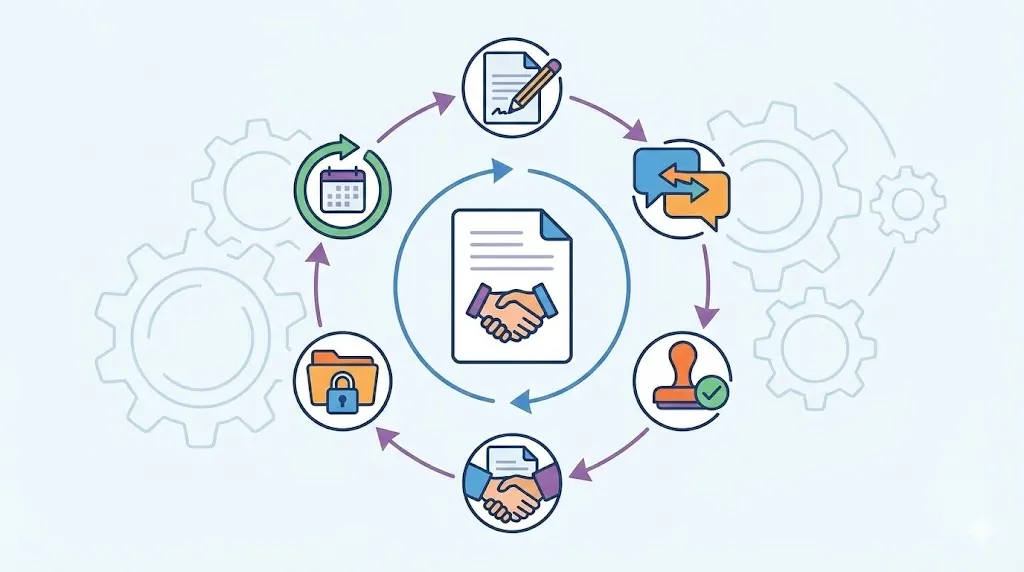
Contracts are the foundation of almost every transaction. However, managing the entire contract lifecycle manually is inefficient and prone to error. This is where contract lifecycle management (CLM) software becomes a game-changer.
A powerful CLM solution automates and streamlines every stage of your contracts, from creation and negotiation to execution and renewal. Adopting the right CLM software moves your organisation from fragmented processes to a unified, strategic approach to handling agreements.
Top 15 Best CLM Tools in 2026 – List and Comparative Analysis

To help you make an informed decision, we have compiled a definitive list of the top 15 CLM tools for 2026. This comparative analysis examines each platform's core strengths, potential drawbacks, and what real users are saying.
We will explore platforms known for their enterprise-grade scalability, ease of use for small teams, and specialised functions for procurement and sales. This guide answers the question, "Which are the best CLM software options available for 2026?" by providing a clear, side-by-side look at the leading vendors.
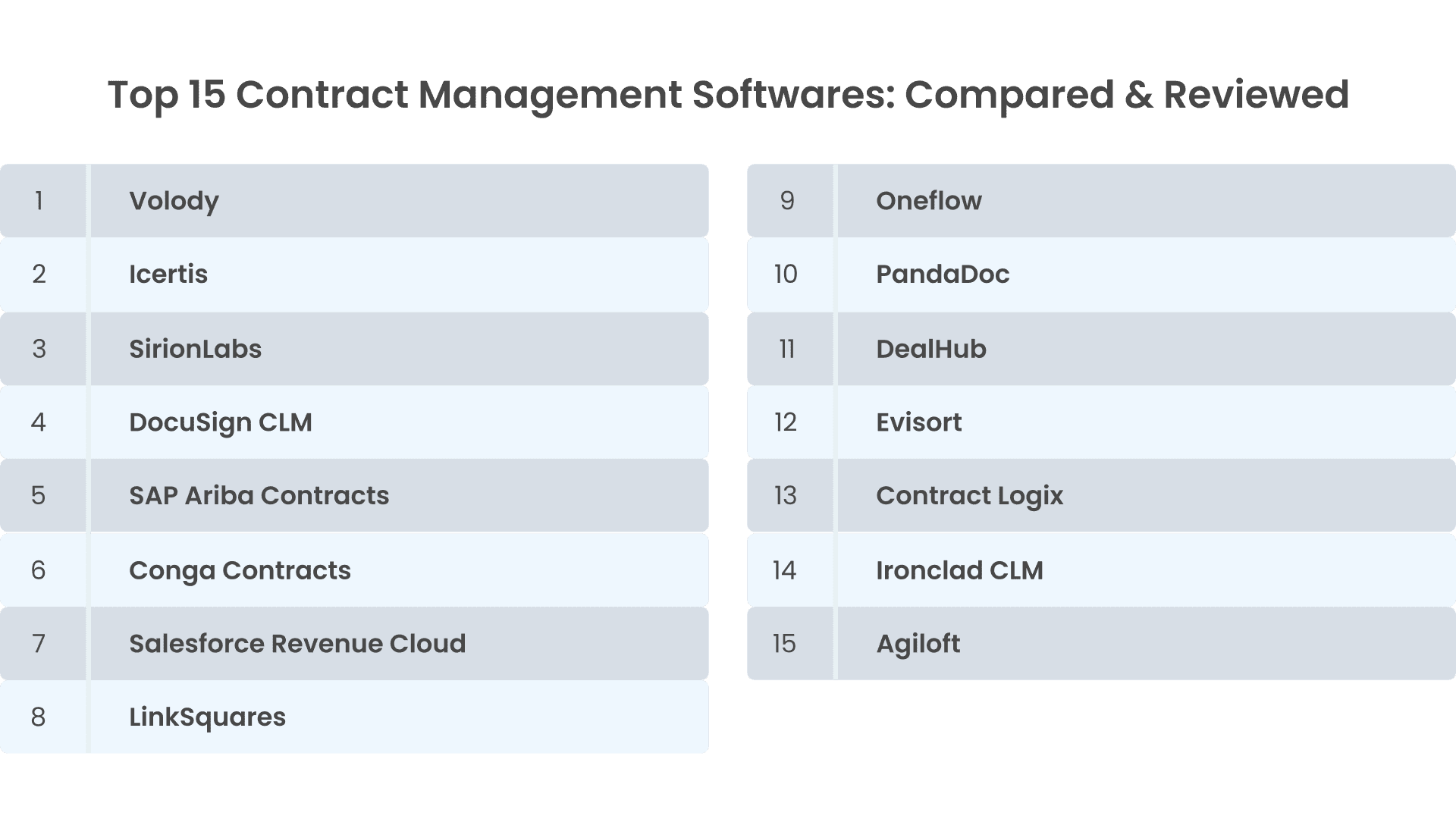
Below is a quick-reference table of our top 15 picks, followed by a detailed review of each provider. This table will give you a high-level overview to start your evaluation.
Rank | CLM Software Provider | Primary Focus |
|---|---|---|
1 | Volody | Enterprise Scalability & End-to-End Automation |
2 | Icertis | Contract Intelligence & Governance |
3 | SirionLabs CLM | Post-Signature Performance & AI Analytics |
4 | DocuSign CLM | eSignature Integration & Workflow Automation |
5 | SAP Ariba Contracts | Procurement & Supply Chain Integration |
6 | Conga Contracts | Salesforce Integration & Revenue Operations |
7 | Salesforce Revenue Cloud | Quote-to-Cash & Sales Process Automation |
8 | LinkSquares | AI-Powered Contract Analysis & Repository |
9 | Oneflow | Digital Contract Workflows & eSigning |
10 | PandaDoc | Document Creation & Small Business Usability |
11 | DealHub | Sales Enablement & CPQ Integration |
12 | Evisort | AI-Powered Data Extraction & Intelligence |
13 | Contract Logix | Mid-Market Flexibility & Ease of Use |
14 | Ironclad CLM | Digital Contracting & Workflow Design |
15 | Agiloft | High Configurability & Complex Workflows |
Now, let's explore what makes each of these contract management software solutions a top contender in the industry.
1. Volody

Volody stands out as the premier CLM platform, specifically engineered for enterprises that demand robust scalability and comprehensive, end-to-end automation. Its core value proposition is to transform complex contracting processes into streamlined, efficient workflows that grow with your business. Volody is not just a tool for storing agreements; it’s an AI-powered strategic system that manages every phase of the contract lifecycle, from initial drafting and negotiation to approvals, execution, and ongoing obligation management.
Pros:
Comprehensive Automation: Automates everything from contract creation using smart contract templates to complex approval workflows.
Advanced Contract Analytics: Provides deep insights into contract performance, risks, and obligations, enabling data-driven decisions.
Robust Audit Trail: Offers complete visibility into every change and action taken on an agreements, ensuring compliance and accountability.
Scalable Architecture: Designed to support the growth of large enterprises, handling high volumes of contracts without performance degradation.
Cons:
The sheer breadth of features might be overwhelming for smaller businesses with simpler needs.
The pricing for its enterprise-grade functionalities may also be a consideration for companies with limited budgets.
Customer Reviews
User reviews for Volody highlight its effectiveness as an enterprise-grade contract management software. Customers on platforms like G2 and Capterra frequently commend its efficiency in enhancing legal team performance and delivering a superior user experience. Many users note the platform's capability to centralize contract data for easy access and reporting, while also facilitating collaboration between legal and business departments, thus eliminating bottlenecks in the contracting process.
The intuitive interface is often mentioned as a significant advantage for smoother adoption across organizations. Additionally, reviewers appreciate the responsive customer support and the company's adaptability to specific client needs, emphasizing a strong focus on customer success.
G2 Reviews: https://www.g2.com/products/volody-contract-lifecycle-management/reviews
Capterra Reviews: https://www.capterra.com/p/184292/Contract-Lifecycle-Management/reviews/
Want To Schedule A Demo? Let's Get In Touch
2. Icertis
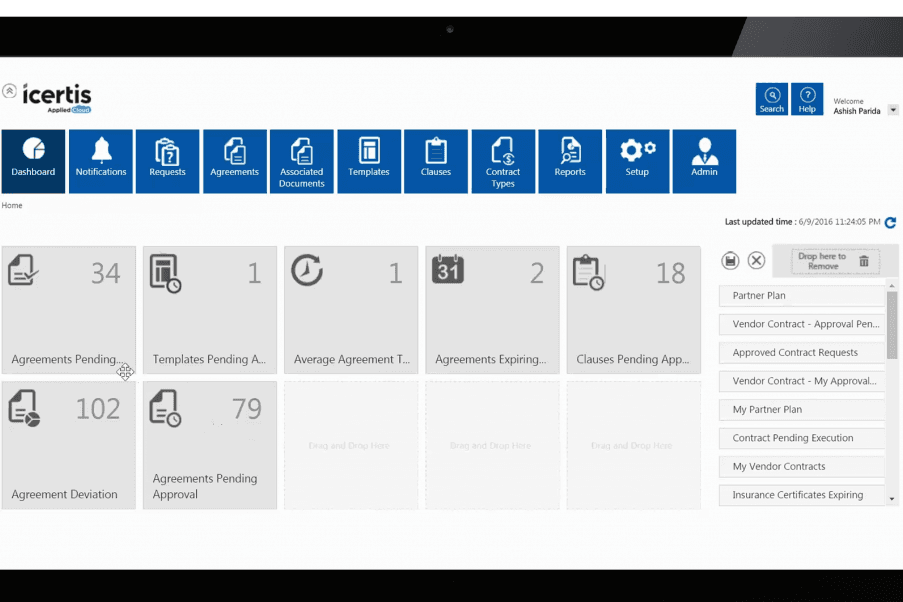
Icertis is a prominent contract management solution widely recognised as a leader in the CLM space, particularly for large enterprises. The platform excels at transforming agreements from static documents into strategic assets through its powerful contract intelligence capabilities. Icertis is designed to manage the most complex contracting scenarios, offering deep functionality for governance, risk management, and compliance. Its ability to structure and connect contract terms makes it a popular choice for global organisations.
Pros:
Highly Customisable: The platform can be adapted to fit unique and complex business workflows.
Strong Integration: Connects with a wide range of enterprise systems like Salesforce, SAP, and Adobe.
Advanced Risk Management: Provides tools to track risks across different categories, ensuring proactive monitoring.
Effective Version Control: The Microsoft Word plug-in is praised for simplifying the management of clauses and templates during negotiations.
Cons:
Some users report that the user interface feels dated and less intuitive compared to more modern SaaS applications.
The high degree of customisation can also make the implementation process long and complex, sometimes requiring significant support from implementation partners.
Customer Reviews
Real-world feedback on Icertis is generally positive, particularly from business users in large, regulated industries. Users appreciate its comprehensive management of the contract lifecycle and its strong reporting capabilities for analyzing performance and compliance.
However, some reviews highlight challenges with user experience, noting that the software can be slow and complex, which may hinder adoption among non-legal users without adequate training. Despite these concerns, many customers view Icertis as a strong solution for managing their contract portfolio effectively.
G2 Reviews: https://www.g2.com/products/icertis-contract-management-software/reviews
Capterra Reviews: https://www.capterra.com/p/133034/Icertis-Contract-Management/reviews/
3. SirionLabs CLM

SirionLabs has established itself as a leading CLM software, particularly known for its strengths in post-signature contract management. The platform leverages artificial intelligence to provide deep contract visibility and analytics, helping organisations maximise the value of their agreements after they are signed. SirionLabs is designed to move beyond basic contract administration and focus on performance, compliance, and relationship management.
Pros:
AI-Powered Data Extraction: Intelligently pulls key data and contract obligations from documents, reducing manual effort.
Performance Monitoring: Strong focus on tracking supplier performance against contractual commitments.
Complex Financial Modelling: Can model intricate financial structures within an agreement, improving financial oversight.
Smart Workflows: Automates processes and provides a clear audit trail for compliance purposes.
Cons:
Learning Curve: Users note a learning curve associated with its extensive features.
Training Requirement: The platform's depth may require dedicated training for teams to fully leverage its capabilities.
Limited Pre-Signature Tools: The focus on post-signature analytics might mean that its pre-signature and contract negotiations tools are not as robust as some competitors.
Related Article: Sirion Overview: Pricing, Features, and Best CLM Platform
Customer Reviews
User reviews of SirionLabs often highlight its positive impact on business relationships and internal processes. Customers value its smart contract repository for visibility into agreements, while the AI-driven analytics are praised for helping teams manage performance and risk. Many users say SirionLabs enables a shift from reactive to proactive contract management.
Automatic obligation tracking ensures commitments are met, strengthening relationships over time. Although users commend its features, some mention that implementation can be complex and requires a clear strategy. Overall, SirionLabs is seen as a valuable tool for organisations seeking to maximise agreement value post-signature.
4. DocuSign CLM

DocuSign is a household name for eSignatures, and has also expanded to contract management solution, DocuSign CLM, extends this functionality into a full lifecycle platform. It is designed to automate and connect the entire agreement process, from preparation to signing, acting on, and managing contracts. The platform is particularly strong in streamlining the approval process and accelerating contract execution, making it a favourite among sales and legal teams.
Pros:
Configurable Workflow Automation: Easily create and customise workflows for contract generation, approval, and execution.
Centralised Repository: Provides a single, searchable place for all agreement, with real-time visibility.
AI-Powered Analytics: Helps in risk scoring and tracking important milestones like contract renewal dates.
Strong Security: Authorized at the FedRAMP Moderate level, making it suitable for government and highly regulated industries.
A potential downside is that some users find the platform can be complex to configure without professional assistance. While powerful, achieving a perfectly tailored setup may require a significant initial investment of time and resources. Additionally, some advanced features may come at a premium price point.
Pros:
Received mostly positive feedback from users.
Speeds up contracting processes.
User-friendly interface, especially for those familiar with DocuSign's eSignature tool.
Allows sales teams to create, negotiate, and finalize contracts in one place.
Flexible for different types of agreements.
Strong workflow features.
Central repository improves control and visibility compared to shared drives or email.
Cons:
Customizing reports can be tricky.
Connecting & integrating with third-party systems may pose challenges.
Limitations in configurating the tool to your need.
Customer Reviews
DocuSign CLM is highly praised for its intuitive interface, efficient digital signing, and robust automation that streamlines contract workflows. Users appreciate the centralization of documents and strong integrations like with Salesforce.
Conversely, negative feedback often focuses on the high cost for smaller teams and the steep learning curve associated with its complex setup and lengthy implementation. Some reviewers also note occasional issues with slow load times and inconsistent technical support.
Overall, users feel that DocuSign CLM is a dependable tool for streamlining the agreement process.
G2 Reviews: https://www.g2.com/products/docusign-clm/reviews
Capterra Reviews: https://www.capterra.com/p/119589/DocusignCLM/reviews/
You might want to check out: How to integrate Contract Management Software with DocuSign
5. SAP Ariba Contracts

SAP Ariba Contracts is a CLM software that is deeply integrated into the broader SAP Ariba ecosystem for procurement and supply chain management. It specialises in helping procurement teams and sales departments standardise and control the contracting process. The platform's primary focus is on buy-side and sell-side contracts, enabling users to manage everything from sourcing and procurement to invoicing and payment within a unified system.
Pros:
Full Procurement Integration: Seamlessly connects contract management with sourcing, invoicing, and payment processes.
Standardised Compliance: Helps enforce consistency with pre-approved templates and clauses.
Supplier Relationship Management: Offers features for supplier onboarding, performance evaluation, and collaboration.
Automated Approval Workflows: Streamlines the review and approval process with clear audit trail capabilities.
However, users have reported a steep learning curve due to a user interface that can be difficult to navigate. The platform's performance can sometimes be slow, and the subscription cost may be prohibitive for smaller businesses. Furthermore, customisation options are somewhat limited, which might not suit businesses with highly specific requirements outside of standard procurement management systems.
Customer Reviews
Customer reviews for SAP Ariba Contracts: Pros & Cons
Pros:
Powerful features for contract management in procurement.
Streamlines the process from requisition to payment.
Essential for managing contracts and supplier relationships effectively for many organizations.
Cons:
Mixed opinions among users about the ease of use.
Clunky interface that is not very user-friendly, making it hard to adopt initially.
Complexity and challenges in integrating with non-SAP systems.
G2 Reviews: https://www.g2.com/products/sap-ariba/reviews
Capterra Reviews: https://www.capterra.com/p/87450/Ariba-Contract-Management/reviews/
You might want to check out: How to integrate Contract Management Software with SAP
6. Conga Contracts

Conga Contracts is a robust contract management solution known for its deep integration with the Salesforce ecosystem. It is designed to help businesses automate and streamline their commercial operations, particularly for sales and revenue teams. As one of the leader in the CLM software space, Conga offers an end-to-end solution that covers the entire contract lifecycle, from creation using contract templates to secure contract storage and renewal management.
Pros:
Deep Salesforce Integration: Enables sales teams to manage contracts without leaving their CRM.
End-to-End Automation: Automates contract creation, approvals, and execution to speed up cycles.
Effective Obligation Management: AI-powered data extraction helps track key obligations and mitigate risk.
Strong Collaboration Tools: Facilitates seamless communication and negotiation between internal and external stakeholders.
A potential con is that the platform's strength is so tied to Salesforce that it may be less suitable for companies that do not use Salesforce as their primary CRM. Some users have also reported that the implementation can be complex and that the user interface, while powerful, could be more intuitive for casual users.
Customer Reviews
User reviews for Conga Contracts:
Pros:
Effectiveness in enhancing sales and revenue management.
Smooth integration with Salesforce, helping sales teams close deals more quickly.
Ability to create a centralized contract repository within existing CRM systems, boosting visibility and control.
Strong workflow automation that streamlines processes and ensures timely approvals.
Cons:
Some users mention a learning curve when setting up complex workflows.
For a new user, the tool can be difficult to navigate through
Users mention that the tool is costlier compared to the other competitors out there.
G2 Reviews: https://www.g2.com/products/conga-contracts/reviews
Capterra Reviews: https://www.capterra.com/p/88389/Conga-Contracts/reviews/
7. Salesforce Revenue Cloud

Salesforce Revenue Cloud is not a standalone CLM but a comprehensive suite of products designed to manage the entire customer lifecycle from a revenue perspective. It combines Salesforce CPQ (Configure, Price, Quote), Billing, and Subscription Management into a unified platform. Within this suite, its contract management capabilities are focused on connecting sales quotes to final contracts and managing ongoing amendments and renewals, all natively within Salesforce.
Pros:
Unified Quote-to-Cash Process: Automates the entire lifecycle from product configuration to cash collection.
Native Salesforce Experience: Users can manage contracts without ever leaving the familiar Salesforce environment.
Automated Renewals and Amendments: Simplifies the management of ongoing customer contracts and subscriptions.
Strong Contract Performance Tracking: Directly links contract data to sales and revenue metrics.
However, being a part of a larger suite, its contract management features may not be as deep or customisable as standalone CLM solutions. It is also a premium-priced offering, which might be out of reach for smaller businesses. Its primary focus is on the sales contract review and execution process, with less emphasis on procurement or other contract types.
Customer Reviews
Pros:
Centralizes all revenue-related agreement data in one place.
Operates within Salesforce, enhancing efficiency and accuracy by reducing the need to switch between systems.
Simplifies billing and subscription management, making it ideal for SaaS and recurring revenue businesses.
Automation of amendments and renewals within the CRM is highly valued by users.
Cons:
Setup can be complicated and may require expert assistance.
Some users may find the initial configuration challenging.
It is not an end to end contract management platform
Overall, once set up, it is considered a strong tool for aligning sales and contracting processes in the Salesforce environment.
G2 Reviews: https://www.g2.com/products/salesforce-revenue-cloud/reviews
Capterra Reviews: https://www.capterra.com/p/265484/Salesforce-Revenue-Cloud/reviews/
8. LinkSquares

LinkSquares is a CLM platform that has rapidly gained popularity, especially among mid-to-large company legal teams, by focusing on AI-powered contract intelligence. Its core mission is to help legal departments move faster and be more strategic by transforming their contract storage into an intelligent, actionable database. The platform uses AI to automatically extract key data and clauses from agreements, making the contract review process faster and more accurate.
Pros:
Powerful AI-Powered Analysis: Automatically reads and extracts over 70 key data points from agreement.
Reduces Contract Cycle Time: Smart workflows and automated review processes accelerate agreements.
Intuitive User Interface: Designed with legal teams in mind, making it easy to adopt and use.
Secure Contract Repository: Provides a single, searchable, and secure place for all company agreements.
Cons:
Higher Pricing: Starts at a higher annual cost and may not be suitable for very small businesses or startups.
Limited Features in Pre-Signature Tools: Some users might find that its pre-signature authoring and negotiation tools are less feature-rich compared to older, more established platforms in the contract management space.
Customer Reviews
User reviews for LinkSquares are very positive, with legal teams often highlighting how it has improved their contracting processes. Many users describe the AI-powered analysis as a "game-changer," as it saves a lot of time on manual contract review and data extraction. The platform provides better contract visibility, helping legal departments respond quickly to business questions and offer strategic insights.
Customers like the user-friendly interface and the straightforward implementation process. They also praise the excellent customer support and the company's quick response to feedback. While some users mention the cost, most believe the time saved and reduced risks make it worth it. Overall, LinkSquares is viewed as an excellent solution for legal teams wanting to modernize their operations.
G2 Reviews: https://www.g2.com/products/linksquares/reviews
Capterra Reviews: https://www.capterra.com/p/174081/LinkSquares/reviews/
9. Oneflow

Oneflow presents itself as an all-in-one platform for digital contracts, designed to streamline the entire agreement workflow from creation to e-signing and archiving. This contract management software focuses on creating a seamless and interactive experience for all parties involved in contract negotiations. It features customisable templates, real-time editing, and detailed audit logs, all within a single, web-based platform.
Pros:
All-in-One Platform: Handles everything from creation and negotiation to contract execution and archiving in one flow.
Real-Time Collaboration: Allows multiple parties to edit and comment on a live document, avoiding versioning issues.
Automated Workflows: Saves time with smart automation and customizable approval workflows.
User-Friendly Interface: Clean and intuitive design makes it easy for non-legal users to create and manage agreements.
Cons:
While it is excellent for sales agreements and other standard documents, it may lack some of the deep, specialized features required for highly complex legal or procurement contracts.
Some users have also noted that its analytics and reporting capabilities are not as advanced as those found in more enterprise-focused CLM solutions.
Customer Reviews
Customers generally have positive things to say about Oneflow. They appreciate its user-friendly design and efficiency, noting that it significantly speeds up contract cycles by removing the hassle of email attachments and separate e-signature tools. Users find the platform helpful for making contract management clearer and easier.
They like the interactive documents that show when agreements are opened, viewed, and signed. The smart archive feature, which helps track key terms, is also well-received. While some users would like more advanced integrations and better reporting options, most agree that Oneflow is a great choice for sales and HR teams needing a simple and fast solution for their contracting processes.
G2 Reviews: https://www.g2.com/products/oneflow/reviews
Capterra Reviews: https://www.capterra.com/p/148241/Oneflow/reviews/
10. PandaDoc

PandaDoc is a popular contract management software known for its user-friendly interface and strong focus on document creation and management. It is particularly well-suited for small to medium-sized businesses looking to streamline their document workflows without the complexity of an enterprise-level CLM system. PandaDoc helps businesses create, send, and track contracts, proposals, and quotes with ease, significantly reducing the contract cycle time.
Pros:
Extremely User-Friendly: The interface is intuitive, allowing new users to get started with minimal training.
Rich Template Library: Offers a wide variety of customizable templates for different types of documents.
Good Collaboration Tools: Features like in-document commenting facilitate smooth contract negotiations.
Integrated Payments: Allows you to collect payments as soon as an agreement is signed.
Cons:
PandaDoc's post-signature management capabilities are not as comprehensive as dedicated CLM platforms.
It lacks the advanced contract analytics, obligation tracking, and repository management needed for complex contract review and compliance.
It is more of a document workflow tool than a full lifecycle management solution.
Customer Reviews
User reviews for PandaDoc are very positive, especially from those in sales and marketing. Customers appreciate how easy it is to use and the professional appearance of the documents. The software saves time and makes it easier to get proposals and agreements signed. Many users like the document analytics feature, which shows when and for how long a recipient views a document, helping sales teams follow up better.
The ability to create and customize templates is also a big plus. While some users find the contract storage and post-signature analytics basic, they believe PandaDoc does a great job at its main purpose: creating and managing documents efficiently, which is ideal for small and mid-sized businesses.
G2 Reviews: https://www.g2.com/products/pandadoc/reviews
Capterra Reviews: https://www.capterra.com/p/132213/PandaDoc/
11. DealHub

DealHub is a multifaceted B2B sales platform that includes a robust contract lifecycle management solution designed specifically for sales teams. Its primary goal is to accelerate the sales process by simplifying and streamlining everything from quote generation to contract negotiation and execution. DealHub's CLM enables sales reps to generate agreements quickly from pre-approved templates, collaborate with legal on redlines, and reduce the overall turnaround time for deals.
Pros:
Unified Sales Platform: Combines deal configuration, pricing, and contract management in one place.
Streamlined Redlining: Makes it easy for sales and legal to collaborate on revisions with clear version control.
Pre-approved Template Library: Ensures compliance requirements are met while allowing sales to move quickly.
CRM Integration: Works seamlessly with popular CRMs, keeping all deal information in sync.
Cons:
As a sales-focused platform, its contract management capabilities may not be as deep as those of standalone, enterprise-wide CLM software.
Features are primarily geared towards sales agreements and may not be as suitable for managing procurement, HR, or other types of agreements.
AI-powered analytics are more focused on the sales cycle than on post-signature compliance.
Customer Reviews
DealHub receives great reviews, especially from sales and revenue operations teams. Users love its easy-to-use interface and how it speeds up the sales process. Many highlight the smooth integration of CPQ and CLM software, which makes moving from quotes to signed agreements effortless. The collaborative redlining feature is also praised for making contract negotiations much easier.
Additionally, users value having a single place for all documents and communications related to deals. While some would like more post-signature features, like automatic tracking of renewal dates, most agree that DealHub is an excellent choice for organizations wanting to improve their sales process and support their sales teams.
G2 Reviews: https://www.g2.com/products/dealhub-io/reviews
Capterra Reviews: https://www.capterra.com/p/172031/Dealhub/reviews/
12. Workday CLM (Previously Known as Evisort)

Workday CLM is a contract intelligence platform that leverages cutting-edge artificial intelligence to transform contract management. Workday CLM's core strength is its ability to automatically read, understand, and extract data from any agreement, regardless of its format. This turns static documents into searchable, actionable data, providing organisations with unprecedented visibility into their contracting processes and obligations.
Pros:
Advanced AI Analytics: Automatically identifies and tracks metadata, provisions, and risks without manual tagging.
Self-Populating Dashboards: Instantly visualises key contract data and metrics.
Centralised Repository: Unifies all agreements into a single, searchable platform.
Flexible Workflow Automation: Streamlines approval processes and provides a complete audit trail.
Cons:
Advanced AI capabilities come at a premium price point, with a starting cost that may be high for smaller organisations.
While exceptionally powerful for analysis and reporting, some users may find the pre-signature authoring tools functional but not as polished as those of some competitors who focus more on document generation.
Customer Reviews
Workday CLM, powered by Evisort, is highly valued for its powerful GenAI capabilities in contract analysis, easy navigation, and exceptional customer support, making it simple to learn and adopt. However, users criticize the platform for having a steep learning curve with workflow creation, limited customization in reporting and dashboards, and being expensive. Additionally, its weak OCR engine can struggle with legacy contracts.
G2 Reviews: https://www.g2.com/products/workday-clm-powered-by-evisort/reviews
Capterra Reviews: https://www.capterra.in/software/1078012/Workday-Contract-Lifecycle-Management
13. Contract Logix
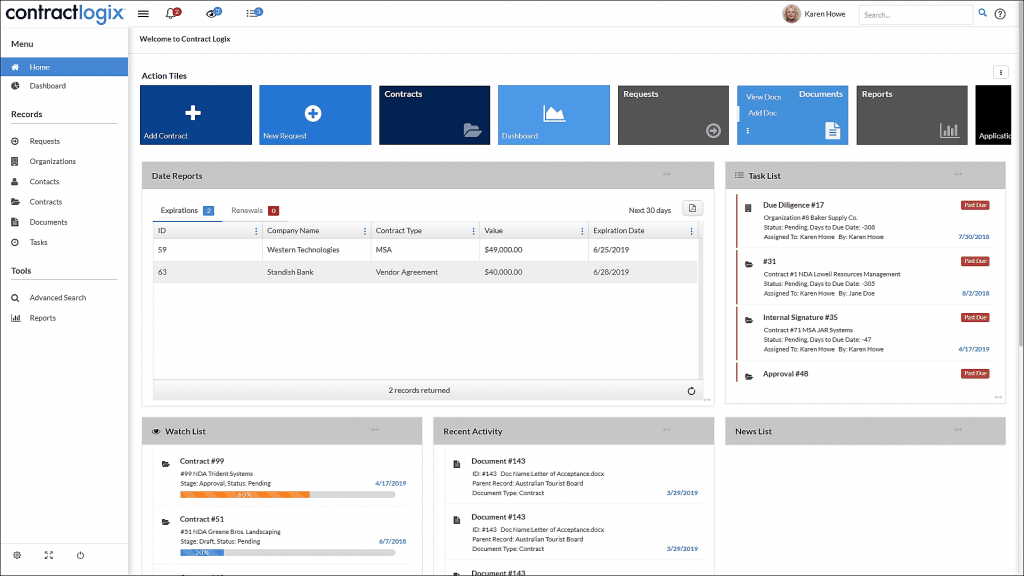
Contract Logix is one of the longest-tenured companies in the contract management solution space, offering a data-driven approach to CLM. The platform is designed for legal, procurement, finance, and sales teams in mid-market organisations, focusing on ease of use and high user adoption. It provides a secure and centralised contract repository to help businesses streamline their processes and meet compliance requirements.
Pros:
High User Adoption: The platform is designed to be easy to use, earning awards for its usability.
Secure Centralisation: Provides a secure, single source of truth for all contract-related information.
Automated Alerts: Helps with obligation management by sending timely reminders for key dates and milestones.
Collaboration Features: Includes versioning and e-signature to reduce contract cycle time.
Cons:
Interface: While user-friendly, it may appear less modern compared to some of the newer, slicker platforms on the market.
Limitations for Large Enterprises: Although it is a robust solution for mid-market needs, large enterprises with extremely complex global requirements might find it lacks the deep customisability of platforms like Volody or Agiloft.
Customer Reviews
Customers generally view Contract Logix positively, noting that it significantly improves the organization and efficiency of business processes. Users feel more in control of their agreements, transitioning from a disorganized system to a structured one. They often highlight the convenience of searching for and retrieving contracts. Many also commend the customer support team for being helpful during setup and after.
The automated alerts for renewals and expirations are valued for preventing missed deadlines and financial losses. While some users desire more advanced reporting options or a fresher user interface, most agree that Contract Logix is a dependable contract management tool that effectively helps mid-market companies digitize their contract workflows.
G2 Reviews: https://www.g2.com/products/contract-logix/reviews
Capterra Reviews: https://www.capterra.com/p/54572/Contract-Logix/reviews/
14. Ironclad CLM

Ironclad is a leading CLM software that has been a pioneer in the concept of "digital contracting." It is designed for modern legal teams and is used by innovative companies to manage their entire agreement process. Ironclad's core philosophy is that agreements should be dynamic, data-driven assets, not static documents. The platform provides powerful workflow automation tools that allow legal teams to design and launch their own contract management processes without needing IT support.
Pros:
No-Code Workflow Automation: Allows users to easily create and modify complex approval process workflows.
Digital Collaboration: Facilitates seamless contract negotiations with internal and external parties.
Complete Audit Trail: Captures every action and decision, providing a single source of truth for compliance.
Clickwrap Management: A unique feature for managing high-volume, online "I agree" agreements.
Cons:
Premium-priced solution, which may place it out of reach for smaller companies with limited budgets.
While workflow automation is top-notch, some users have noted that data extraction and analytics capabilities, while improving, are not as advanced as those of AI-first platforms like Volody.
Customer Reviews
User reviews for Ironclad are very positive, especially from legal teams in fast-growing tech companies. Customers appreciate the Workflow Designer, which has changed how they operate and allowed them to provide legal support without adding more staff. The platform is recognized for organizing and streamlining chaotic contract review processes.
Users also value the central contract repository, which makes it easy to locate and manage agreements. The interface is user-friendly, and collaboration features help reduce conflicts between legal and business teams. Although cost is a consideration, many feel that Ironclad's ability to enhance legal departments and speed up business processes offers good value. Overall, Ironclad is seen as a top choice for modern legal teams.
G2 Reviews: https://www.g2.com/products/ironclad/reviews
Capterra Reviews: https://www.capterra.com/p/162319/Ironclad/reviews/
15. Agiloft
Agiloft is one of the most established and respected names in the contract management software market. It is renowned for its no-code platform that offers unparalleled configurability, allowing it to adapt to the most complex and unique business processes. This makes it a powerful choice for enterprise-grade businesses with sophisticated requirements in sectors like healthcare, finance, and government.
Pros:
Highly Configurable: The no-code platform can be adapted to fit precise and complex approval workflows.
Enterprise-Grade Security: Offers robust security features, including strong access controls and data protection.
Conditional Logic: Can automatically generate complex agreements based on user selections, shortening contract cycles.
Strong Integration Capabilities: Able to integrate with various business systems, including billing and ERP.
Cons:
Challenging Implementation: The high level of configurability can make it difficult to implement and maintain.
Learning Curve: Custom configurations can be tricky to learn, necessitating a significant budget for a project manager and implementation team.
User Interface: Some users describe the interface as less modern and visually appealing than newer alternatives.
Customer Reviews
Customer reviews for Agiloft highlight its strength and flexibility, especially appreciated by users in complex industries. The platform can be tailored to specific needs and offers a complete audit trail for contract activities. Many users mention that it saves time by automating the creation of complex documents. However, opinions on the user experience vary; while some praise its capabilities, others find the interface outdated and challenging for non-technical users.
The implementation process can be lengthy and resource-heavy, but it is necessary to fully utilize the platform. Overall, Agiloft is viewed as a powerful and secure tool for organizations that require extensive customization, making it worthwhile for those ready to invest in its setup.
G2 Reviews: https://www.g2.com/products/agiloft/reviews
Capterra Reviews: https://www.capterra.com/p/101273/Agiloft/reviews/
What is CLM Software and How Does it Help Manage Contracts?
Contract Lifecycle Management (CLM) software is a digital tool designed to automate and streamline the administration of contracts from their creation to their expiration or renewal. This technology helps organisations manage the entire journey of a contract, covering all contracting processes in a single, unified system. Instead of using separate tools for drafting, signing, and contract storage, a CLM solution brings everything into one place.
CLM software helps manage agreement by replacing slow, manual processes with efficient, automated workflows. It provides a central repository for all agreements, making them easy to find and monitor. By tracking key dates, milestones, and contract obligations, CLM software reduces the risk of missed deadlines and non-compliance. Ultimately, it gives you greater control and visibility over your agreements, turning them from simple documents into valuable strategic assets for your business.
Key Functions of a Contract Lifecycle Management Software
From generating documents to routing them for signatures, a CLM solution handles the administrative burden so your teams can focus on more strategic work. The key functions generally include:
Automated Contract Creation: Enables users to quickly generate agreements using pre-approved contract templates and clause libraries.
Streamlined Contract Review: Facilitates collaboration with features like in-document commenting and version control.
Configurable Approval Workflows: Automatically routes agreements to the correct stakeholders for review and approval based on predefined rules.
Centralised Storage and Search: Provides a secure, searchable repository for all executed agreements.
Obligation and Renewal Tracking: Monitors key dates and commitments to ensure compliance and prevent missed opportunities.
Essential Features to Look for in the Best CLM Software
Feature | Key Capability & Benefit |
Automated Contract Creation | Enables "self-service" for business teams to generate compliant agreements instantly using pre-approved templates and clause libraries, ensuring speed and consistency. |
Collaboration & Negotiation | Replaces email chains with a single live document for real-time redlining and editing, eliminating version control issues and accelerating time-to-agreement. |
Compliance & Security | Protects sensitive legal data through granular access controls, encryption, and unalterable audit trails, ensuring strict adherence to internal and external regulations. |
AI-Powered Analytics | Uses Artificial Intelligence to automatically read contracts and extract strategic data—such as renewal dates and liabilities—to optimize future decision-making. |
Benefits of Adopting a CLM Tool

Increased Operational Efficiency: Automates routine tasks like drafting and approvals to drastically shorten contract cycle times and accelerate revenue recognition.
Enhanced Visibility and Control: Establishes a centralized, searchable repository with detailed audit trails, serving as a single source of truth for all contractual relationships.
Improved Compliance and Risk Management: Mitigates legal risks through pre-approved templates, automated obligation alerts, and AI-driven identification of liabilities.
Seamless System Integration: Connects with core CRM and ERP systems to unify data flow, eliminate redundant entry, and allow teams to work within their preferred applications.
Factors to Consider When Choosing the Best CLM Software

When selecting the best CLM software, your decision should be guided by your specific organizational needs, budget, and existing technology stack. A platform’s success relies heavily on user adoption, making the overall user experience a critical priority. To ensure long-term value and a high return on investment, you must evaluate potential vendors not just on their features, but on their ability to support your team through the transition and beyond.
Key factors to evaluate include:
Ease of Implementation and User Experience: Prioritize platforms with intuitive interfaces and logical workflows that require minimal training. A vendor that offers dedicated implementation support and resources ensures a smoother transition and higher adoption rates.
Pricing Models and Value for Money: Look beyond the initial subscription price to understand the total cost of ownership, including fees for training or integrations. The best value comes from a solution that directly addresses your pain points and accelerates business outcomes.
Customer Support and After-Sales Service: Choose a vendor that acts as a long-term partner, offering proactive advice and multiple support channels. Reliable after-sales service is essential for resolving issues quickly and maximizing the platform's utility over time.
Conclusion
In conclusion, selecting the right CLM software can enhance contract management processes significantly, fostering improved collaboration and compliance across business teams. Evaluating the top providers allows organisations to pinpoint solutions that align with their specific needs, ensuring effective contract execution and monitoring.
By adopting a well-suited CLM solution, companies can optimise contract performance, streamline approval workflows, and reduce manual tasks, ultimately leading to better business outcomes. The right choice not only maximises agreement value but also transforms the entire contracting process into a seamless experience.
Frequently Asked Questions
What is CLM software and how does it benefit businesses?
CLM software streamlines contract management by automating processes, improving compliance, and enhancing collaboration. Businesses benefit through reduced risks, increased efficiency, and better decision-making. By centralizing contract information, organizations can ensure timely renewals and minimize expenses associated with agreement errors.
Which is the Best CLM Software in 2026?
In 2026, the best CLM software will combine robust features like automation, analytics, and user-friendly interfaces. Top contenders such as DocuSign CLM and Agiloft stand out for their flexibility and scalability, catering to diverse business needs while enhancing contract lifecycle management efficiency.
How do the top CLM softwares of 2026 differ from one another?
The top CLM softwares of 2026 vary in features, pricing, and integration capabilities. Some focus more on automation and AI-driven insights, while others emphasize user-friendly interfaces or comprehensive analytics, catering to diverse organizational needs and enhancing contract management efficiency.
How do CLM platforms use AI to improve contract workflows?
CLM software leverage AI to automate contract creation, analysis, and compliance monitoring. By utilizing natural language processing and machine learning algorithms, these tools enhance efficiency, reduce errors, and provide insights that streamline workflows while ensuring adherence to regulations and organizational policies.
Can CLM software integrate with other business applications such as CRM or ERP?
Yes, CLM software can seamlessly integrate with other business applications like CRM and ERP systems. This integration enhances data sharing, improves workflow efficiency, and provides a holistic view of contract management across various departments, facilitating better decision-making and operational synergy.
About the Company
Volody AI CLM is an Agentic AI-powered Contract Lifecycle Management platform designed to eliminate manual contracting tasks, automate complex workflows, and deliver actionable insights. As a one-stop shop for all contract activities, it covers drafting, collaboration, negotiation, approvals, e-signature, compliance tracking, and renewals. Built with enterprise-grade security and no-code configuration, it meets the needs of the most complex global organizations. Volody AI CLM also includes AI-driven contract review and risk analysis, helping teams detect issues early and optimize terms. Trusted by Fortune 500 companies, high-growth startups, and government entities, it transforms contracts into strategic, data-driven business assets.




" height="216.72211px" id="FYO0bO80Y" transform="translate(3 6.105)" width="206.073px"/><path d="M 108.174 222 C 88.432 222 70.303 217.239 53.785 207.717 C 37.267 198.196 24.173 185.052 14.504 168.285 C 4.835 151.312 0 132.165 0 110.845 C 0 89.731 4.835 70.792 14.504 54.025 C 24.173 37.052 37.267 23.804 53.785 14.282 C 70.303 4.761 88.432 0 108.174 0 C 128.116 0 146.246 4.761 162.562 14.282 C 179.08 23.804 192.073 37.052 201.541 54.025 C 211.21 70.792 216.044 89.731 216.044 110.845 C 216.044 132.165 211.21 151.312 201.541 168.285 C 192.073 185.052 179.08 198.196 162.562 207.717 C 146.044 217.239 127.915 222 108.174 222 Z M 108.174 183.189 C 120.864 183.189 132.044 180.291 141.713 174.495 C 151.382 168.492 158.936 160.006 164.375 149.035 C 169.814 138.064 172.533 125.334 172.533 110.845 C 172.533 96.355 169.814 83.729 164.375 72.965 C 158.936 61.994 151.382 53.611 141.713 47.815 C 132.044 42.02 120.864 39.122 108.174 39.122 C 95.483 39.122 84.202 42.02 74.332 47.815 C 64.663 53.611 57.109 61.994 51.67 72.965 C 46.231 83.729 43.511 96.355 43.511 110.845 C 43.511 125.334 46.231 138.064 51.67 149.035 C 57.109 160.006 64.663 168.492 74.332 174.495 C 84.202 180.291 95.483 183.189 108.174 183.189 Z" fill="rgba(255, 255, 255, 0.12)" height="222px" id="aa1McFcE9" transform="translate(227.183 3)" width="216.04399999999998px"/><path d="M 42.302 182.257 L 111.799 182.257 L 111.799 216.722 L 0 216.722 L 0 0 L 42.302 0 Z" fill="rgba(255, 255, 255, 0.12)" height="216.72211px" id="yRq4AnrsX" transform="translate(477.721 6.105)" width="111.79899999999998px"/><path d="M 108.174 222 C 88.432 222 70.303 217.239 53.785 207.717 C 37.267 198.196 24.173 185.052 14.504 168.285 C 4.835 151.312 0 132.165 0 110.845 C 0 89.731 4.835 70.792 14.504 54.025 C 24.173 37.052 37.267 23.804 53.785 14.282 C 70.303 4.761 88.432 0 108.174 0 C 128.116 0 146.246 4.761 162.562 14.282 C 179.08 23.804 192.073 37.052 201.541 54.025 C 211.21 70.792 216.045 89.731 216.045 110.845 C 216.045 132.165 211.21 151.312 201.541 168.285 C 192.073 185.052 179.08 198.196 162.562 207.717 C 146.044 217.239 127.915 222 108.174 222 Z M 108.174 183.189 C 120.864 183.189 132.044 180.291 141.713 174.495 C 151.382 168.492 158.936 160.006 164.375 149.035 C 169.814 138.064 172.534 125.334 172.534 110.845 C 172.534 96.355 169.814 83.729 164.375 72.965 C 158.936 61.994 151.382 53.611 141.713 47.815 C 132.044 42.02 120.864 39.122 108.174 39.122 C 95.483 39.122 84.202 42.02 74.332 47.815 C 64.663 53.611 57.108 61.994 51.67 72.965 C 46.231 83.729 43.511 96.355 43.511 110.845 C 43.511 125.334 46.231 138.064 51.67 149.035 C 57.108 160.006 64.663 168.492 74.332 174.495 C 84.202 180.291 95.483 183.189 108.174 183.189 Z" fill="rgba(255, 255, 255, 0.12)" height="222px" id="mo8HQspQ0" transform="translate(609.155 3)" width="216.04500000000007px"/><path d="M 73.727 0 C 95.885 0 115.324 4.45 132.044 13.351 C 148.967 22.252 161.957 34.982 171.027 51.541 C 180.287 67.894 184.917 86.937 184.917 108.671 C 184.917 130.405 180.287 149.449 171.027 165.801 C 161.957 181.947 148.967 194.47 132.044 203.371 C 115.324 212.271 95.885 216.722 73.727 216.722 L 0 216.722 L 0 0 Z M 72.216 179.773 C 94.374 179.773 111.497 173.564 123.583 161.144 C 135.669 148.724 141.713 131.233 141.713 108.671 C 141.713 86.109 135.669 68.515 123.583 55.888 C 111.497 43.055 94.374 36.638 72.216 36.638 L 42.302 36.638 L 42.302 179.773 Z" fill="rgba(255, 255, 255, 0.12)" height="216.72211px" id="I3iXX5Hi_" transform="translate(859.693 6.105)" width="184.91699999999992px"/><path d="M 185.22 0 L 113.91 141.273 L 113.91 216.722 L 71.61 216.722 L 71.61 141.273 L 0 0 L 47.74 0 L 93.06 99.046 L 138.08 0 Z" fill="rgba(255, 255, 255, 0.12)" height="216.72211px" id="nzHyWC0_d" transform="translate(1061.78 6.105)" width="185.22000000000003px"/></svg>)