

Key Highlights
This guide compares 20 leading contract management software solutions to streamline your business operations.
Effective contract lifecycle management tools automate manual contract processes, from creation to renewal.
Key features to look for include a centralised document management system and powerful workflow automation.
Modern platforms leverage AI capabilities to provide advanced analytics and reduce risks.
Choosing the right software depends on your specific business needs, including security and integration capabilities.
The right platform transforms contracts into valuable assets, improving compliance and efficiency across your organisation.
Are your teams still struggling with outdated, manual contract management methods? This approach often leads to poor visibility, data errors, and missed deadlines. To thrive, your business needs a system that organizes agreements, automates workflows, and enhances security.
This is where contract management software becomes essential. By embracing modern contract lifecycle management, you can centralize your agreements, reduce manual effort, and gain complete control over your contractual obligations, setting your organization up for greater success and efficiency.
Top 20 Contract Management Software Compared & Reviewed
Finding the right contract management software is vital for optimising your contract management process. With so many options available, it can be challenging to know where to start. What are the top contract management software solutions available in 2025?
This guide explores the leading CLM software platforms that can transform how you handle agreements. We will review 20 of the best tools, examining their features, from contract creation to advanced analytics. This comparison will help you identify the contract lifecycle management software that best fits your organisation's unique needs.
Related Article: Leading Contract Management Software for Enterprises - Ready
Side by side Comparison
Software Name | G2 Rating | Summary of G2 Reviews | G2 Profile Link |
1. Volody | 4.8 / 5 | Users praise its AI-driven risk analysis and fast contract digitization. It is noted for being user-friendly and effective for legal teams wanting automation, though some users mention a a bit learning curve for advanced metadata configuration. | |
2. Ironclad | 4.4 / 5 | A leader for enterprise legal teams. Reviewers love the "Workflow Designer" and collaboration features. However, common complaints include a high price point and a complex implementation process that often requires dedicated admin time. | |
3. DocuSign CLM | 4.3 / 5 | Users value the seamless integration with Salesforce and the robust e-signature capabilities. Critical reviews often cite a steep learning curve, "clunky" UI for non-technical users, and a heavy reliance on professional services for setup. | |
4. Agiloft | 4.6 / 5 | consistently rated high for its extreme flexibility and no-code customizability. Users appreciate that it can be tailored to any workflow but warn that the interface feels dated and the initial setup can be time-consuming. | |
5. Juro | 4.8 / 5 | Highly rated for its browser-based, collaborative workspace that handles contracts as data (not just files). Users find it incredibly easy to use and fast to implement, though some note it can be expensive for smaller businesses. | |
6. LinkSquares | 4.7 / 5 | tailored specifically for legal teams with a focus on AI analysis and reporting. Reviewers highlight the "smart" repository and speed of finding clauses, though some mention that pricing transparency during sales can be improved. | Visit Profile |
7. SpotDraft | 4.5 / 5 | Users love the clean, modern interface and the intuitive drafting experience. It is often described as a "breath of fresh air" compared to legacy tools, though some users desire more customizable reporting features. | Visit Profile |
8. ContractWorks | 4.8 / 5 | A favorite for its simplicity, quick setup, and affordability. It is perfect for teams needing a secure repository and signing tool immediately. Limitations mentioned include a lack of complex, enterprise-grade workflow automation. | Visit Profile |
9. CobbleStone | 4.7 / 5 | An enterprise-grade powerhouse with a vast feature set. Users in government and healthcare appreciate the depth of functionality but frequently mention that the system can be overwhelming and the UI is not the most modern. | Visit Profile |
10. Concord | 4.2 / 5 | Praised for its collaborative, document-centric approach (similar to Google Docs). It is very easy to adopt for sales teams. Lower ratings often stem from reports of slow customer support response times and occasional bugs. | |
11. Gatekeeper | 4.5 / 5 | Strong focus on vendor and contract lifecycle management with a visual "Kanban" style workflow. Users love the visibility it provides but note that some customization options are limited or require additional modules. | |
12. Conga Contracts | 4.3 / 5 | Best known for its deep integration within the Salesforce ecosystem. It is a go-to for sales-led contracts. However, reviews consistently mention that configuration is complex, maintenance is difficult, and support can be slow. | |
13. Workday CLM (Evisort) | 4.7 / 5 | Famous for its AI capability to ingest and analyze third-party paper. Users love how easy it is to train the AI, though some note that the OCR can struggle with very old or poor-quality scans. | |
14. ContractPodAi | 4.6 / 5 | An end-to-end legal platform with a powerful AI assistant ("Leah"). Users value the comprehensive nature of the tool but report that implementation is a heavy lift and the platform can feel complex for casual users. | Visit Profile |
15. PandaDoc | 4.7 / 5 | The top choice for sales proposals and standard contracts. Users rave about its ease of use and speed. The main downside noted is that it lacks the deep redlining and legal negotiation features required by complex legal teams. | |
16. Zoho Contracts | 4.4 / 5 | A great value option for businesses already using Zoho. Users like the integration with Zoho CRM and the affordability. However, the UI is sometimes described as "clunky," and negotiation features are less advanced than competitors. | |
17. Razorsign | 4.7 / 5 | Users highlight its simplicity and user-friendly interface for drafting and signing. It is seen as a cost-effective solution, though some users mention they would like more depth in customization and third-party integrations. | Visit Profile |
18. Zluri | 4.6 / 5 | Note: Primarily a SaaS Management Platform. Users give it high marks for discovering shadow IT and managing SaaS renewals/contracts. It is less of a legal redlining tool and more of an IT/Finance contract tracking tool. | Visit Profile |
19. Salesforce Revenue | 4.2 / 5 | A powerhouse for connecting quoting (CPQ) and billing. Users love the unified data flow but consistently mention it is very expensive, requires specialized developers to maintain, and has a steep learning curve. | Visit Profile |
20. Icertis | 4.2/5 | An enterprise heavyweight known for its "Contract Intelligence" and deep integration with SAP/Microsoft. Users frequently cite a steep learning curve, dated UI, and a long, resource-intensive implementation process. | Visit Profile |
1. Volody
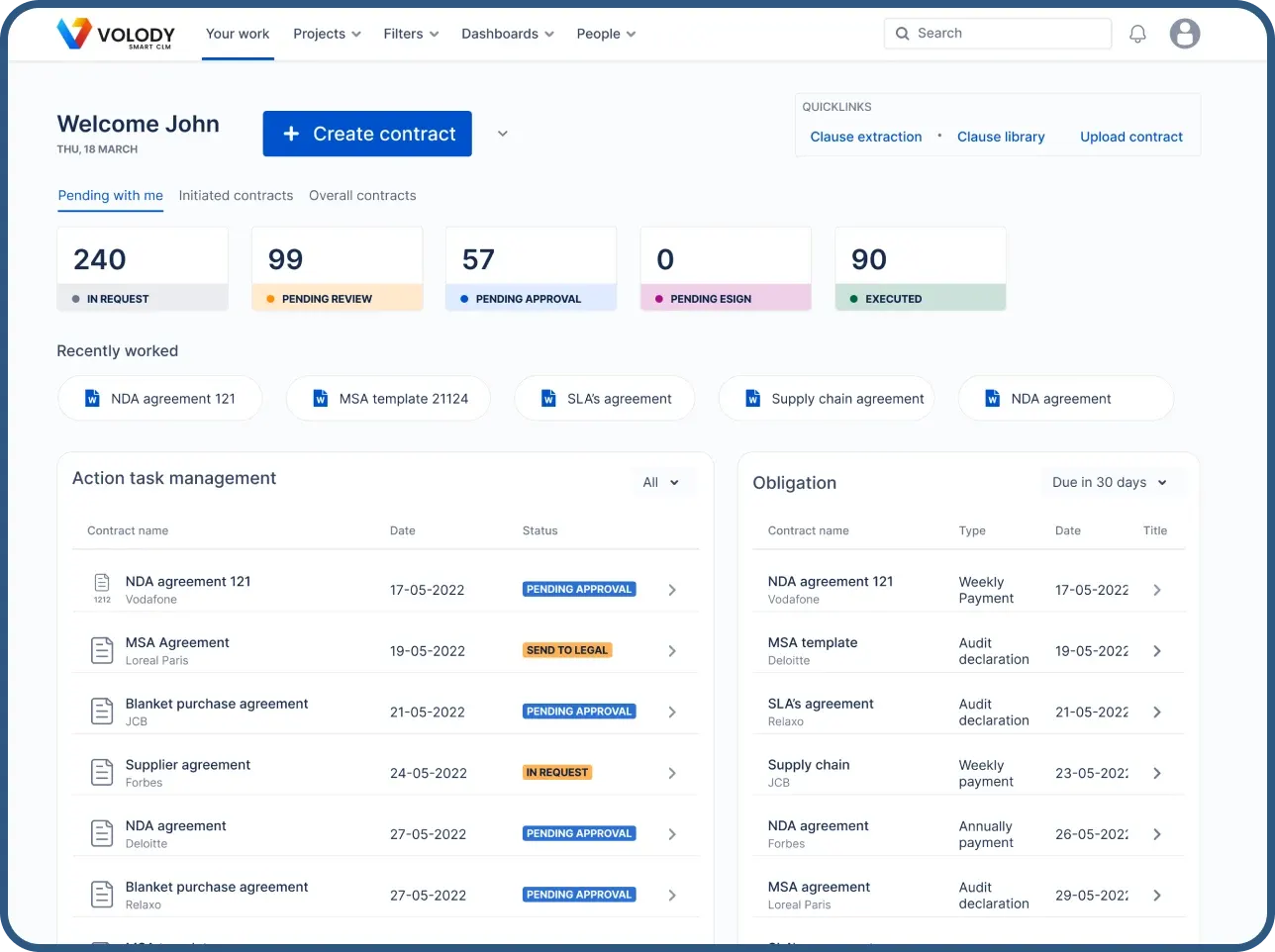
Volody offers a comprehensive contract management software designed to streamline your legal and business operations. It focuses on simplifying the entire contract lifecycle through intelligent automation, making Volody a strong contender among the top solutions for 2025. The platform is built to handle the complexities of modern business agreements.
A key feature is its powerful workflow automation, which helps you manage approvals and reduce manual intervention. This ensures that your contract processes are both efficient and consistent. With features geared towards contract automation, you can accelerate creation and execution, freeing up your team to focus on more strategic tasks.
Furthermore, Volody provides a centralised repository for all your contracts, ensuring easy access and improved organisation. You can gain valuable insights through its contract analytics, helping you make data-driven decisions. This focus on centralisation and analysis helps you maintain control over your contractual obligations and mitigate risks effectively.
2. Ironclad
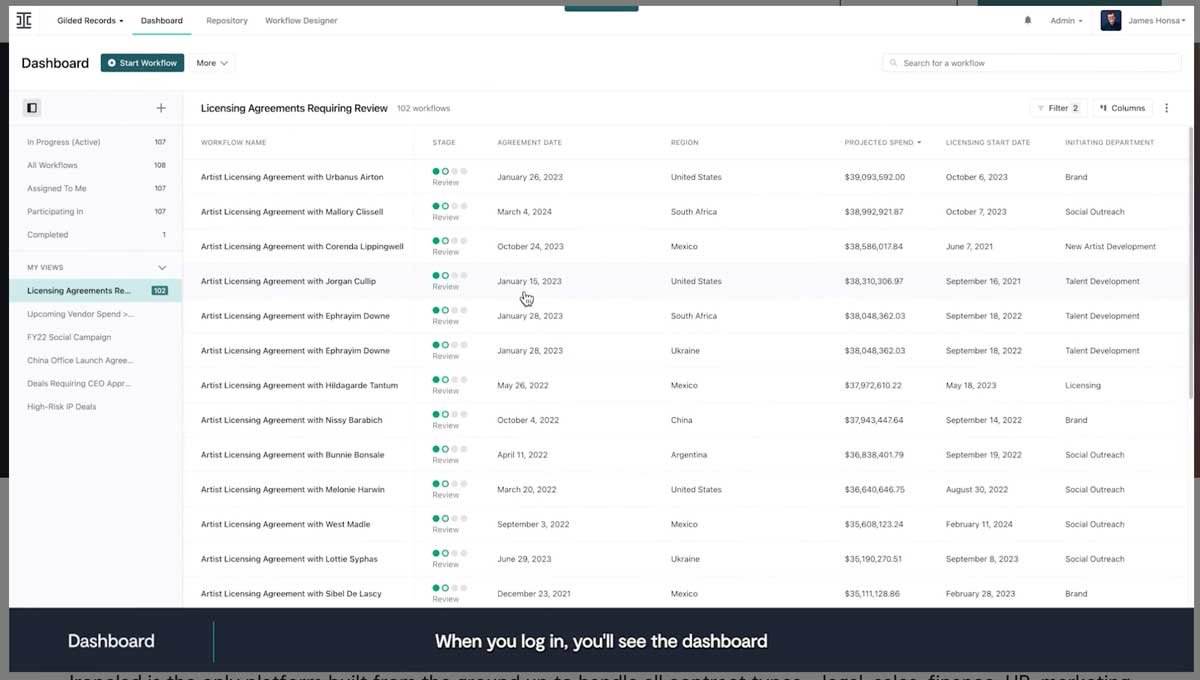
Ironclad is a digital contracting platform that automates the entire contract lifecycle management process. It is designed to handle everything from contract creation to storage, helping businesses streamline their workflows and ensure compliance. This software is capable of managing various contract types, including sales agreements and NDAs.
The platform excels at simplifying contract creation and review with standardised guidelines and automated data tagging. Its robust version control features and detailed audit trails provide complete visibility into every change and approval, ensuring accountability throughout the process. This makes it easier for teams to collaborate effectively.
While user ratings can fluctuate, Ironclad is often highly regarded for its powerful AI capabilities and user-friendly interface. It allows for seamless data extraction and offers custom reporting dashboards. This makes it a popular choice for mid-sized companies and enterprises looking to accelerate their contract turnaround times and improve overall efficiency.
3. DocuSign CLM
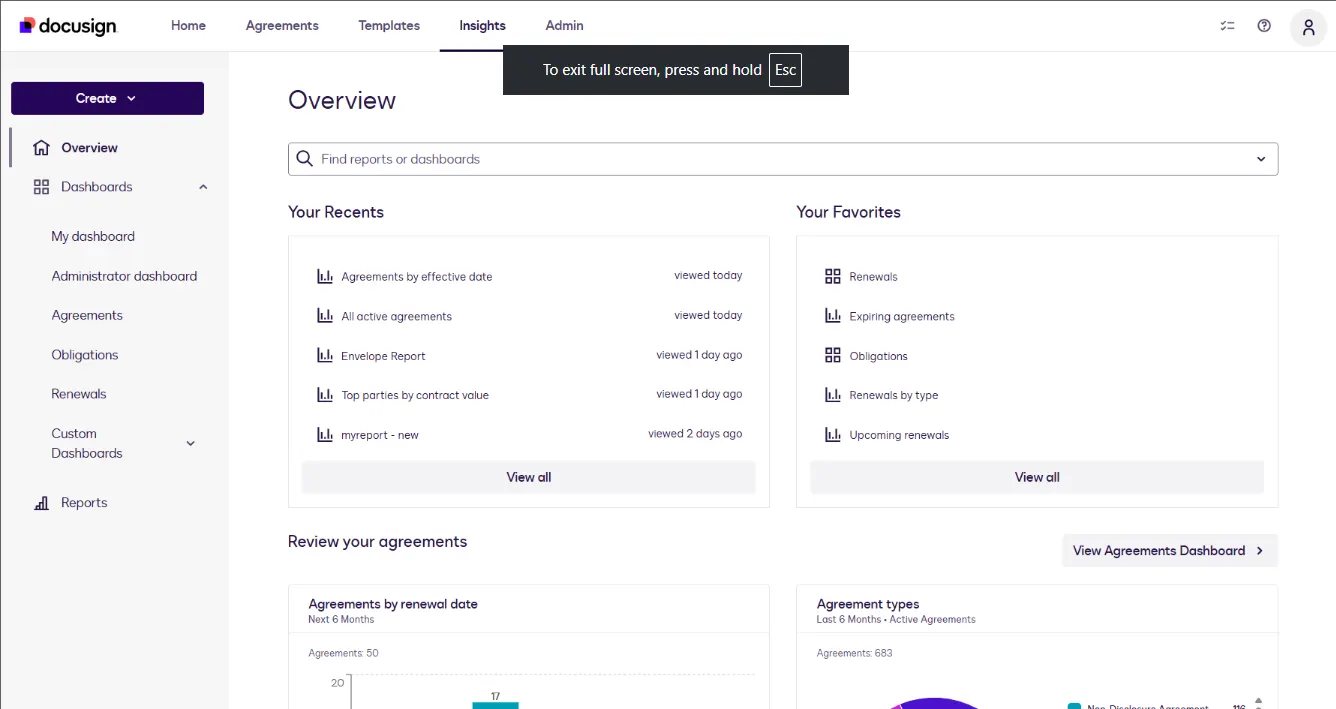
DocuSign CLM is a well-known contract lifecycle management software that simplifies how you manage agreements. It integrates powerful electronic signatures with a comprehensive suite of tools to automate the entire contract lifecycle. The platform is recognised for its ability to handle complex processes with ease.
When considering essential features, DocuSign CLM offers several, including a drag-and-drop editor for designing custom approval workflows. This feature allows you to automate processes without needing technical expertise. It also includes pre-trained AI models to analyse contract content, identify risks, and extract key data points, which is crucial for efficient contract execution.
With over 100 pre-defined workflow steps, this software helps you manage everything from generation to renewal. Its focus on automation, combined with robust collaboration and analysis tools, makes it an excellent choice for businesses looking to enhance efficiency and gain deeper insights into their contractual relationships.
4. Agiloft
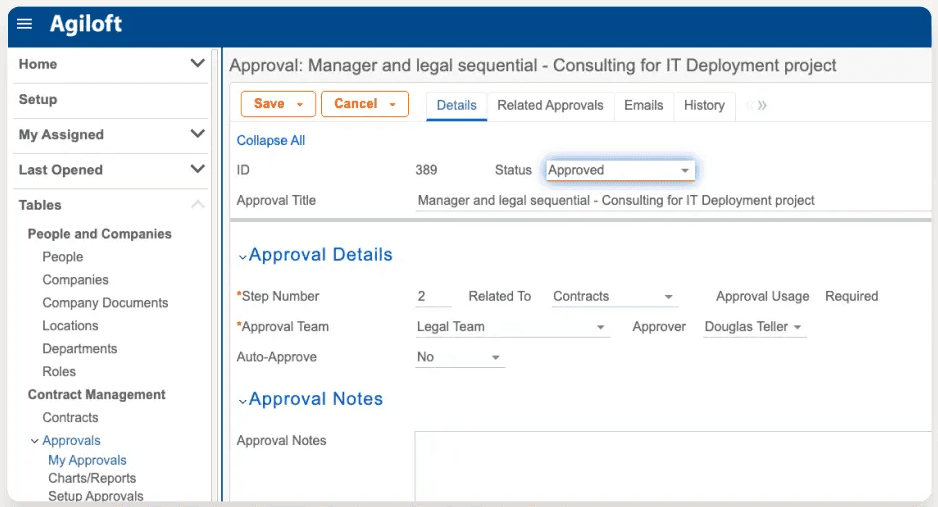
Agiloft provides a highly flexible, no-code contract management platform that adapts to your unique business processes. It offers a centralised repository that serves as a single source of truth for all your contract data, giving you complete visibility and control. This system is designed to be scalable for businesses of all sizes.
One of its standout features is the ability to create customizable workflows without any coding. This empowers your team to design and automate approval processes, track contract status in real-time, and manage deadlines effectively. The platform also includes a library of contract templates to standardize document creation.
For businesses seeking alternatives to Agiloft, options like Volody offer competitive features. However, Agiloft's reputation for deep customization, strong security, and high customer satisfaction makes it a leading choice for organizations that need a tailored solution to manage the entire contract lifecycle.
Related Article: Agiloft Pricing Overview: Features, Cost, and Alternatives
5. Juro
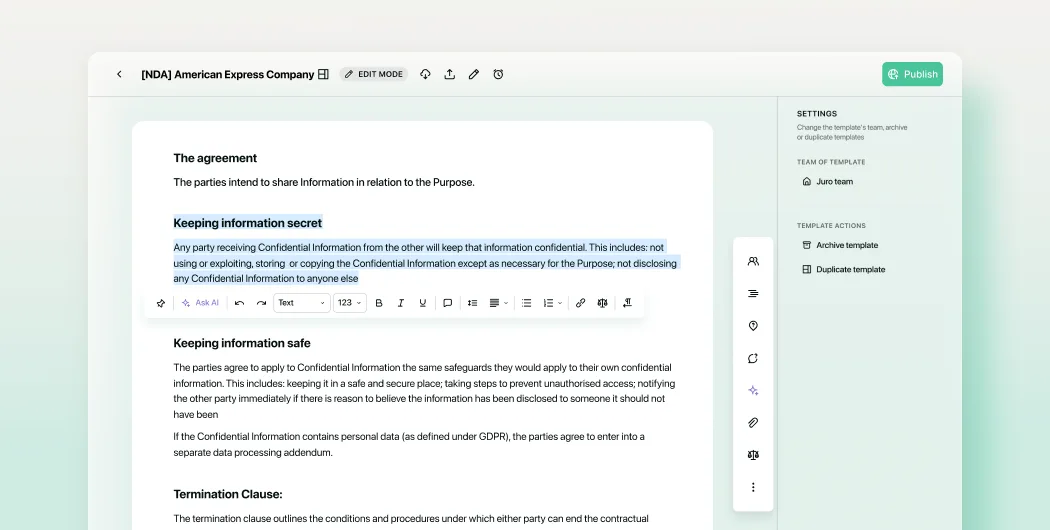
Juro is an AI-powered contract management solution designed to accelerate and simplify your legal processes. It provides a unified workspace where all contracts are stored in a secure contract repository, making them easy to search and manage from a single dashboard. This centralisation is particularly useful for teams that handle a high volume of agreements.
The platform streamlines contract drafting with customizable contract templates and clause libraries, ensuring consistency and saving time. Juro's strong collaboration features allow legal and business teams to review and negotiate contracts in one place, improving turnaround times by up to 90%.
For specialised needs, such as for IT departments, Juro’s extensive integration capabilities are a key advantage. It can connect with over 3,000 tools, including core systems for CRM and HRM. This hyper-connectivity ensures that contract data flows seamlessly across your tech stack, making it a versatile option for various departments.
6. LinkSquares
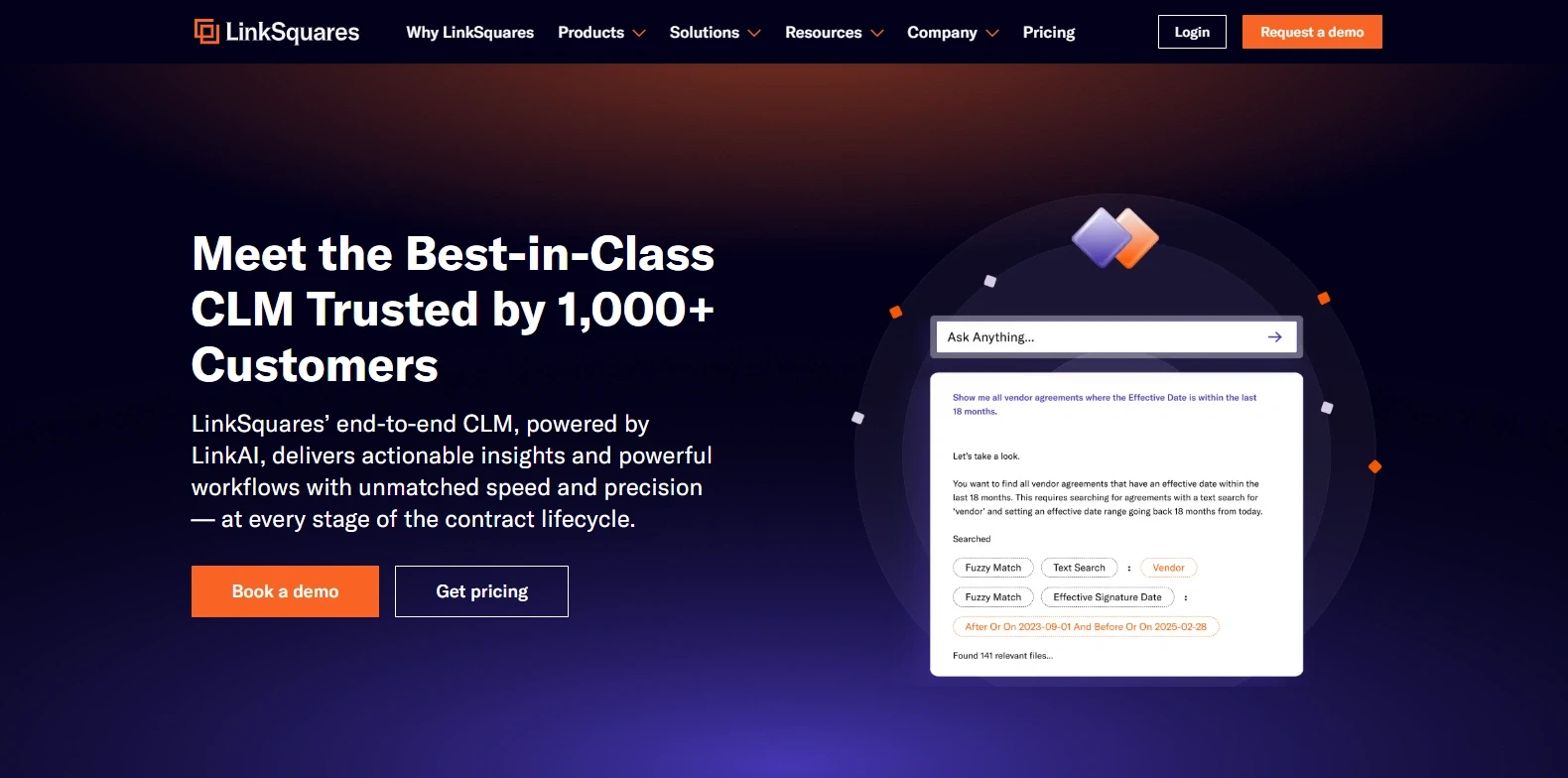
LinkSquares is an AI-powered contract management system that offers end-to-end visibility of your agreements. The platform is designed to streamline contracting from the initial draft to the final signature, helping your team work more efficiently. It empowers you to read, analyse, and extract structured contract data automatically.
If you need a tool with robust reporting and analytics, LinkSquares is an excellent recommendation. Its AI turns your contract repository into an insightful dashboard, offering advanced analytics for quick decision-making. You can generate custom reports to gain insights into contract performance, compliance, and risk management, allowing for a more proactive approach.
The platform also excels at contract review and analysis. LinkSquares automatically identifies key terms from legacy contracts for obligation tracking and helps you draft better agreements with consistent terminology. This combination of powerful contract analysis and data extraction makes it a valuable asset for any legal team.
Related Article: LinkSquares vs Juro: Best CLM Software Comparison 2026
7. SpotDraft
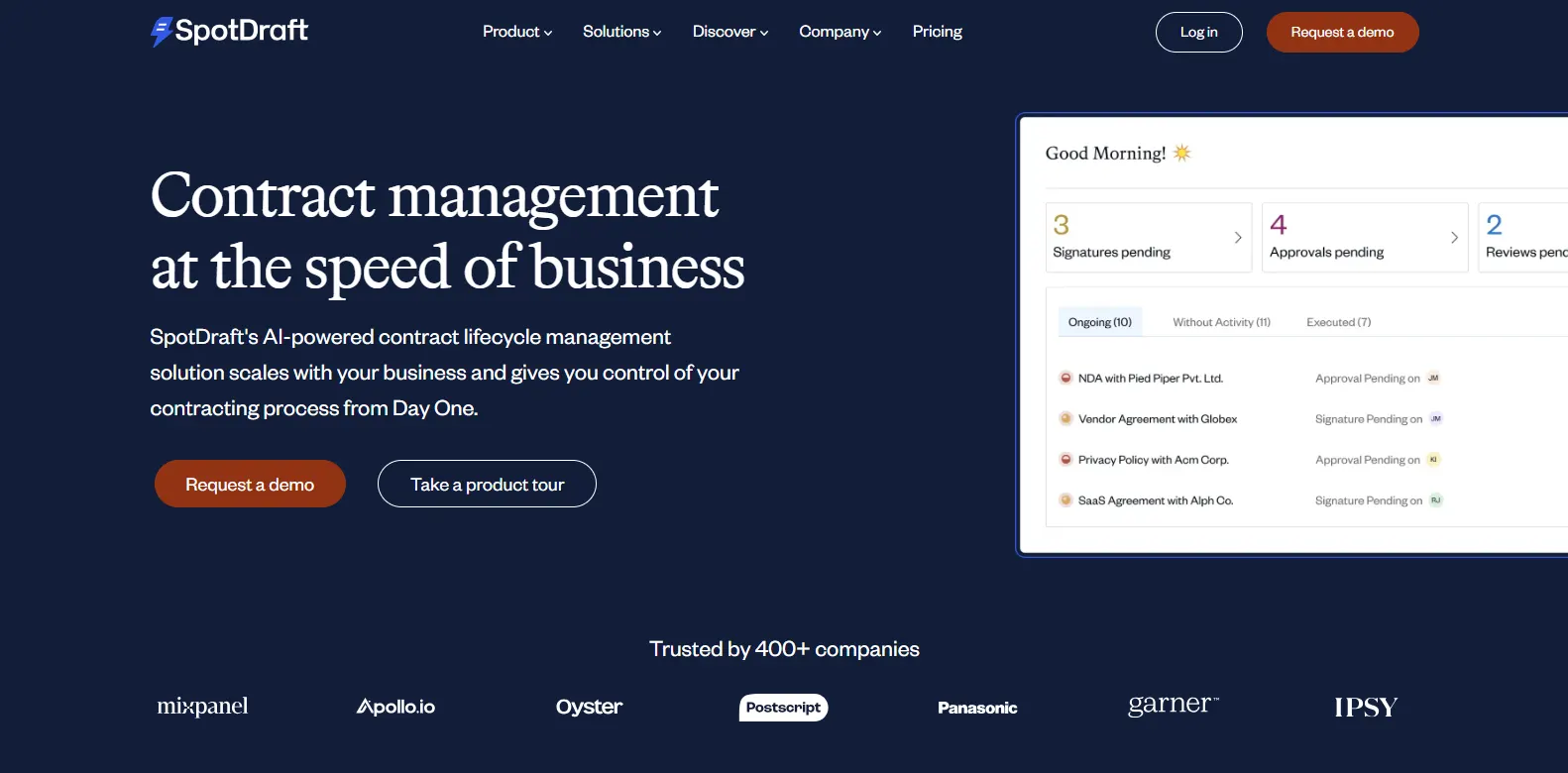
SpotDraft is an AI-based, end-to-end contract lifecycle management platform suitable for organisations of all sizes. It automates key tasks such as drafting, reviewing, and storing contracts in a centralised contract repository. This solution helps businesses put many of their contract management tasks on autopilot.
When considering essential features, SpotDraft's powerful contract automation stands out. It allows you to set up custom contract workflows that reduce turnaround times and minimise business risks. The platform's smart review capabilities use AI to identify potential risks, helping your team address issues early in the process.
The system also simplifies approval processes with collaborative workflows, allowing legal teams, vendors, and other stakeholders to interact seamlessly. With a diverse range of customizable templates and workflow automation, SpotDraft ensures that your contracts are aligned with your project needs and move smoothly through each stage.
8. ContractWorks(Onit)
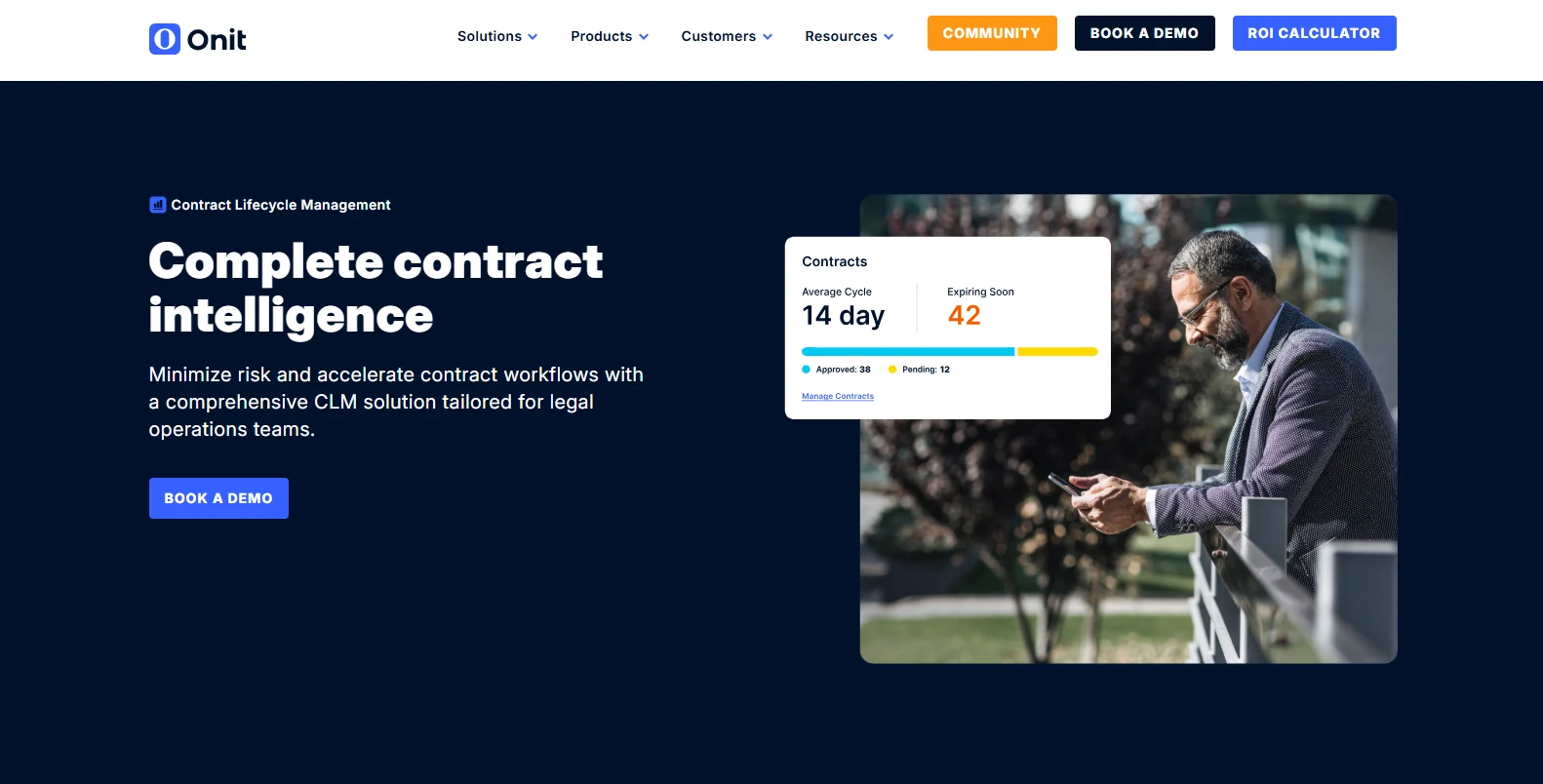
ContractWorks is a user-friendly contract management platform designed to help you sign, track, and manage all your agreements efficiently. It provides a secure, centralised location for contract storage, giving you complete contract visibility and making it easy to search for documents when needed. The platform is particularly well-suited for small and mid-sized businesses.
One of its key strengths is its simple yet effective approach to document management and compliance risk management. ContractWorks sends intelligent alerts and notifications for important dates, ensuring you never miss a renewal or deadline. This helps you stay organized and proactive in managing your contractual obligations.
Often receiving high user ratings, ContractWorks is praised for its ease of use and excellent customer support. While it may lack some of the advanced lifecycle automation of other platforms, its built-in electronic signature feature, custom reporting tools, and role-based permissions make it a strong and reliable choice for managing contracts.
9. CobbleStone Software
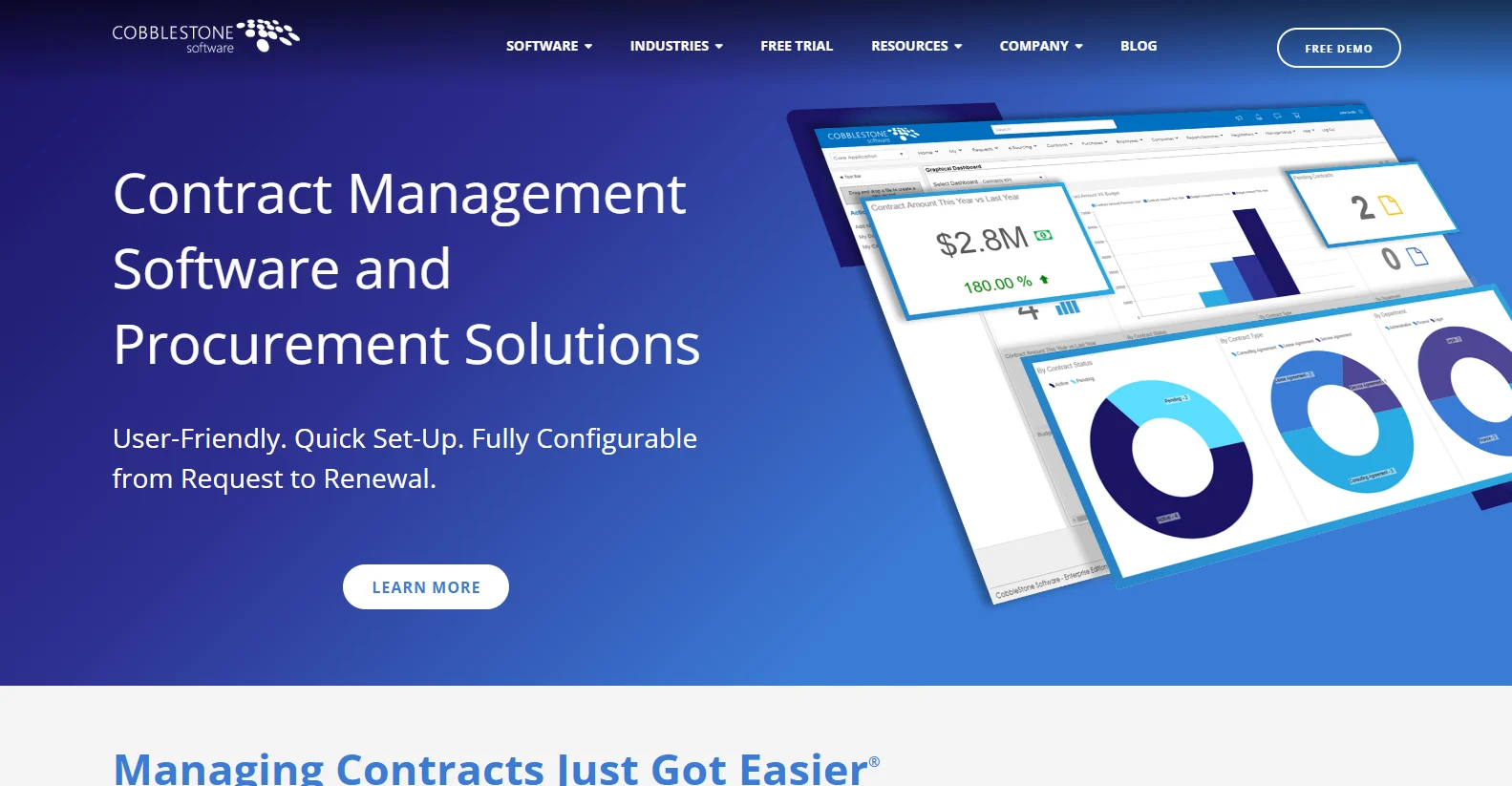
CobbleStone Software offers a leading contract management system, Contract Insight, which is designed for businesses of all sizes, including Fortune 500 companies. This contract management solution uses AI to analyze contracts and streamline processes across your organization. It provides a comprehensive suite of tools to manage the entire contract lifecycle.
A key question for many businesses is whether they can integrate their software with other platforms. CobbleStone excels in this area, offering seamless integration with leading CRMs, ERPs, and other department-specific systems. This ensures that your contract data remains consistent and accessible across your entire tech stack.
The platform also features highly customizable workflows and approval processes, allowing you to tailor the system to your specific needs. With powerful contract analytics and reporting, you can gain data-driven insights to optimise spending and improve decision-making, making it a robust and flexible contract management solution.
10. Concord
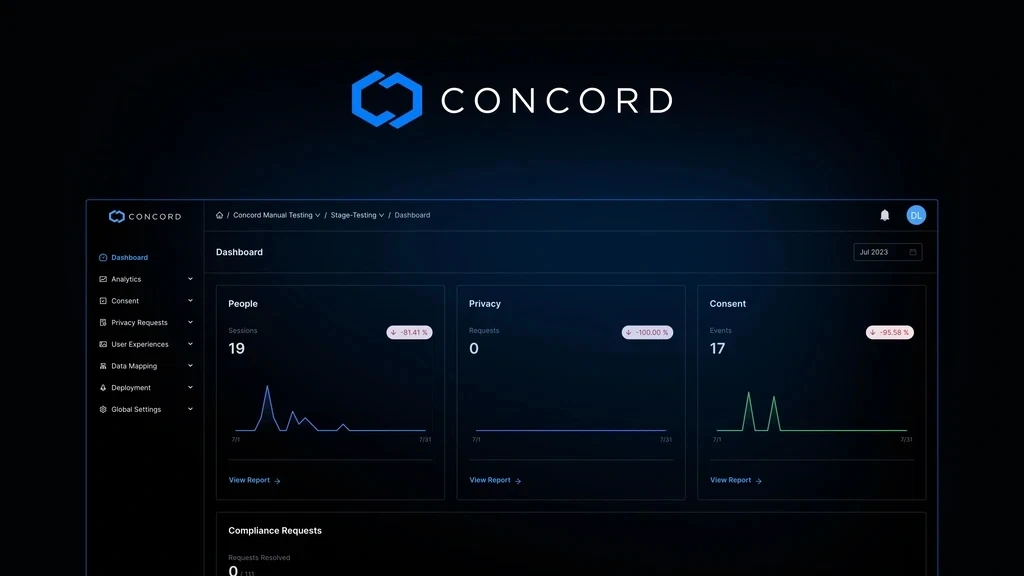
Concord is a contract management software that streamlines processes by providing a comprehensive suite of features for contract creation, negotiation, and management. It features an intuitive user interface that allows you to oversee the entire contract lifecycle from a centralized repository, eliminating scattered files and enhancing visibility.
The platform is designed to improve contract collaboration. It allows you to invite team members and external parties to review documents and negotiate in real-time, with version control tracking every change. This helps keep all stakeholders aligned and accelerates the approval process. A key difference from regular tools is this deep focus on the entire lifecycle, not just storage.
Furthermore, Concord offers extensive integration capabilities, connecting with over 5,000 applications like Salesforce and Google Docs. This allows for automated workflows, such as reminders and renewals, and ensures that your document management is unified across your most-used business tools.
11. Gatekeeper
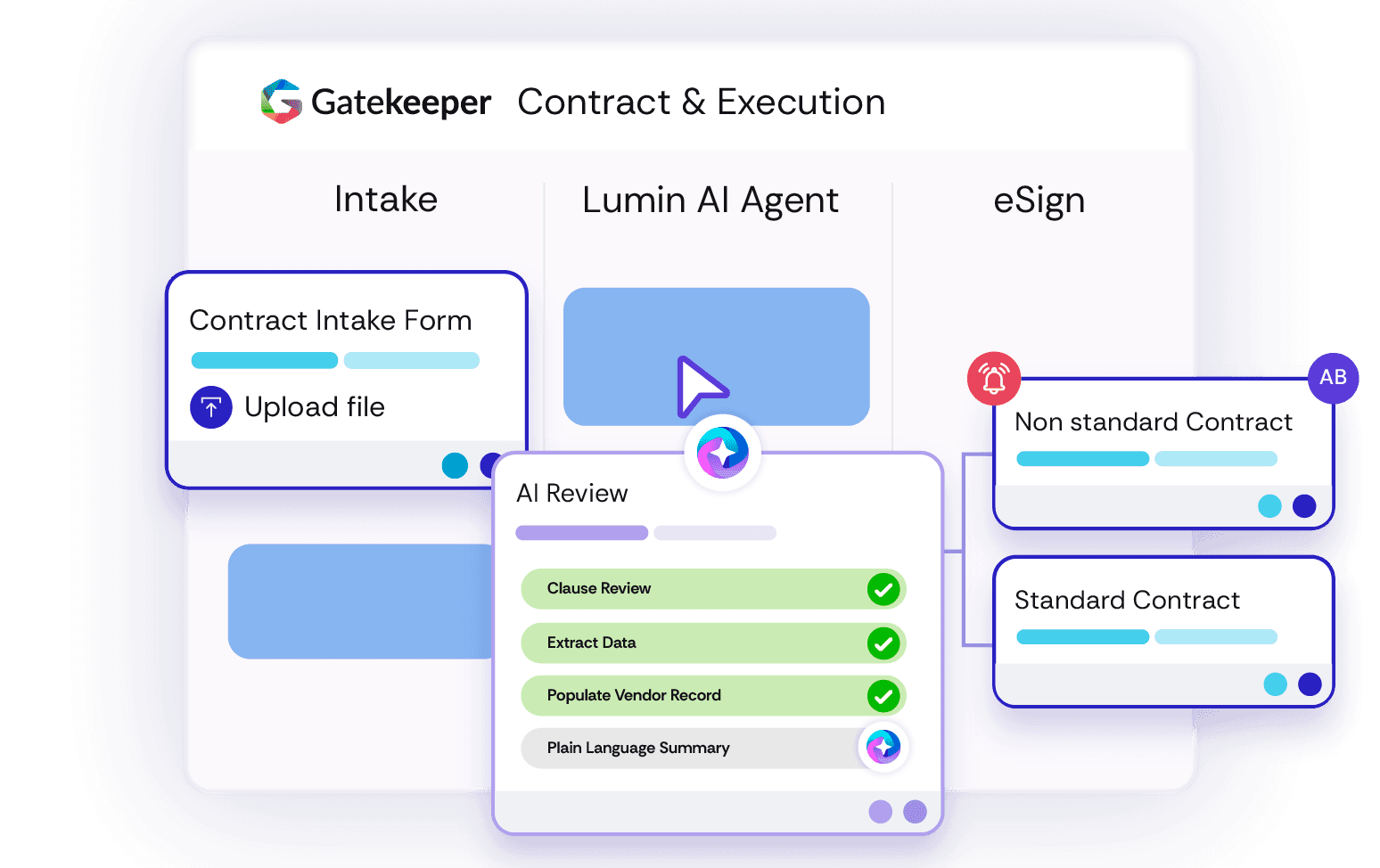
Gatekeeper is an ISO-certified contract lifecycle management solution that helps you restore visibility, elevate control, and ensure compliance. It provides a secure, centralised contract repository where all your contract data, files, and interactions are stored for easy access. This helps simplify audits and compliance checks.
The platform is particularly strong in risk management, allowing you to monitor risks and manage different contract types effectively. It uses a Kanban workflow engine to automate processes and streamline workflows. With robust access controls, you can ensure that sensitive contract data is only available to authorised personnel.
While popularity can vary, Gatekeeper is a well-regarded choice in the UK and globally. Its intelligent automation handles routine tasks, from creation to deadline alerts, allowing teams to focus on strategic activities. The integrated messaging tool and customizable fields make it a flexible solution for managing both contracts and vendor information.
12. Conga Contracts
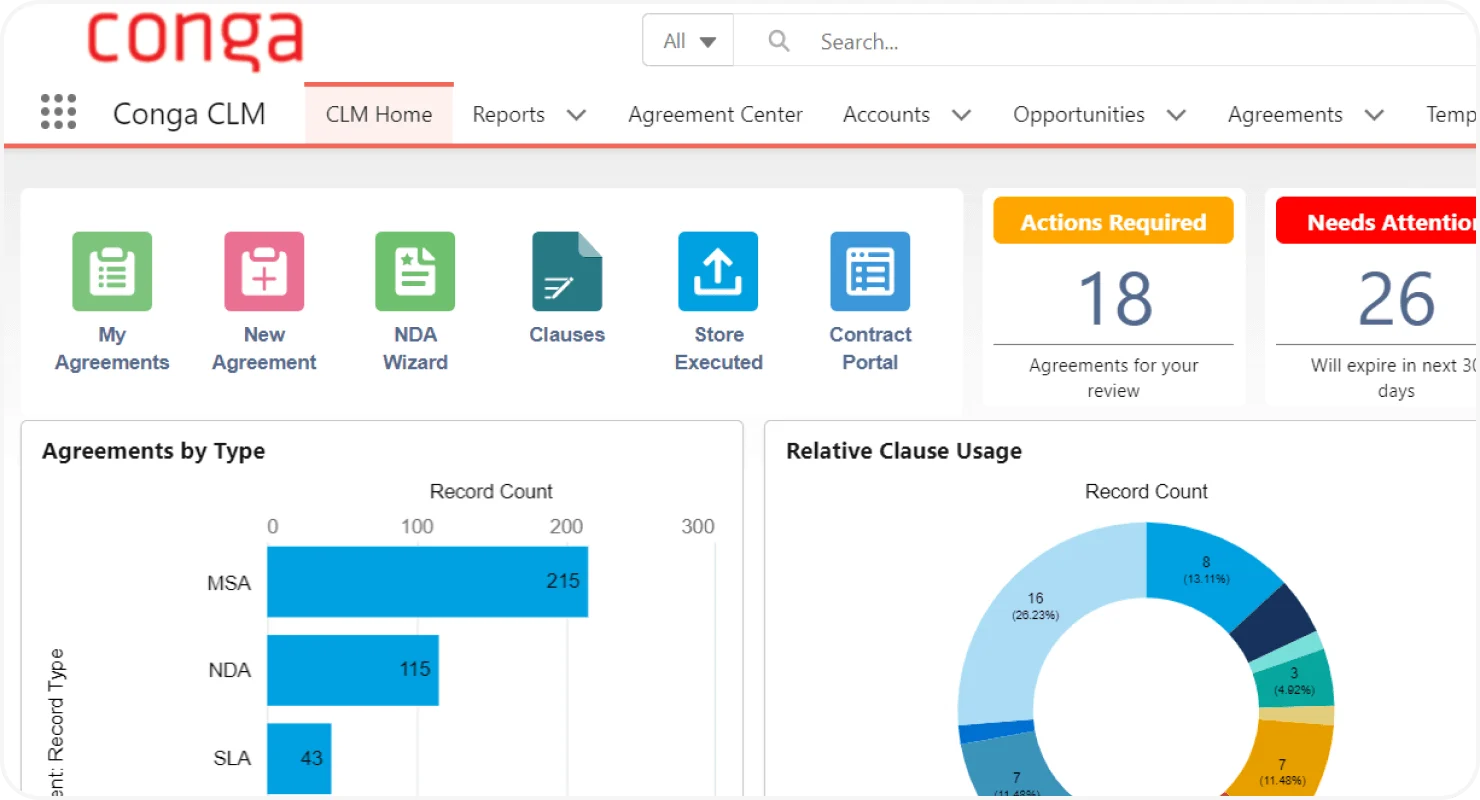
Conga Contracts offers an end-to-end contract management software that automates complex contract processes across departments. It is designed to enhance contract visibility, enforce compliance, and reduce risk. The platform handles every step of the contract lifecycle management journey, keeping information up-to-date and accessible.
When choosing software, a key factor is how well it manages your contract processes. Conga allows you to assign ownership of processes to the appropriate teams and easily track contract status to identify and fix bottlenecks. Its automated workflows speed up cycles and reduce manual effort, enhancing overall efficiency.
The platform also provides advanced features within a centralized repository, making it easy to retrieve critical data. Conga Contracts integrates perfectly with Salesforce, making it an excellent choice for businesses already using that ecosystem. It is a powerful tool for legal and procurement departments looking to streamline their operations.
13. Evisort (Now Acquired by Workday)
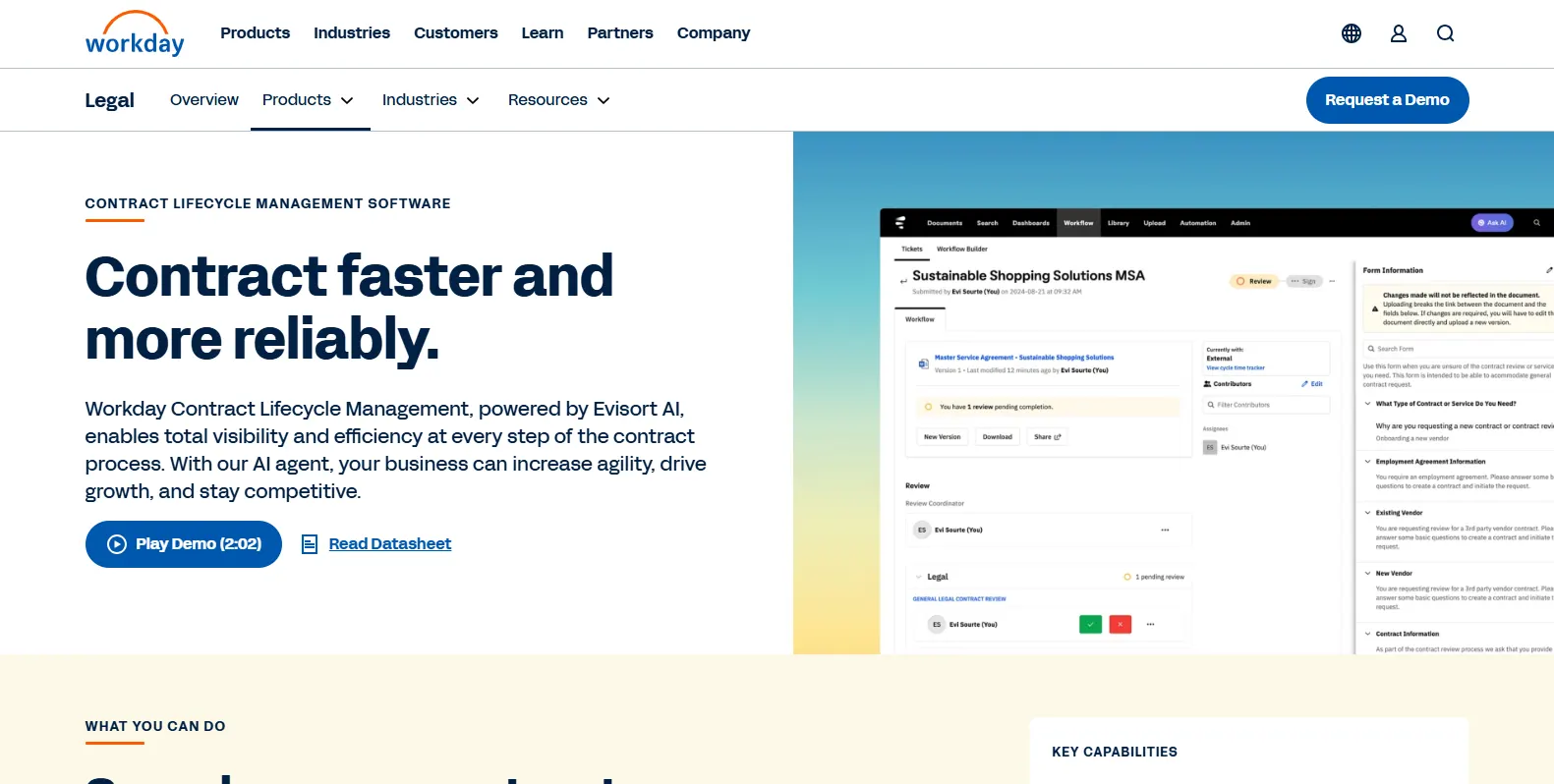
Evisort, now part of Workday, is an AI-powered contract management system that helps you manage all stages of the contract lifecycle. The platform is designed to create dynamic contract templates that adjust to your legal needs and streamline your contract processes through intelligent automation.
If you are looking for software with robust reporting and analytics, Evisort is a strong recommendation. The platform automatically extracts critical terms and contract data, turning it into actionable insights. Its contract analytics capabilities allow you to track obligations and deadlines, elevating contract visibility and enabling data-driven decisions.
Evisort also offers excellent integration capabilities with systems like Salesforce and SAP Ariba, allowing for synchronised document management across your tech stack. The AI-powered contract review feature helps you accelerate the process from draft to execution, reducing manual work and improving compliance.
14. ContractPodAi
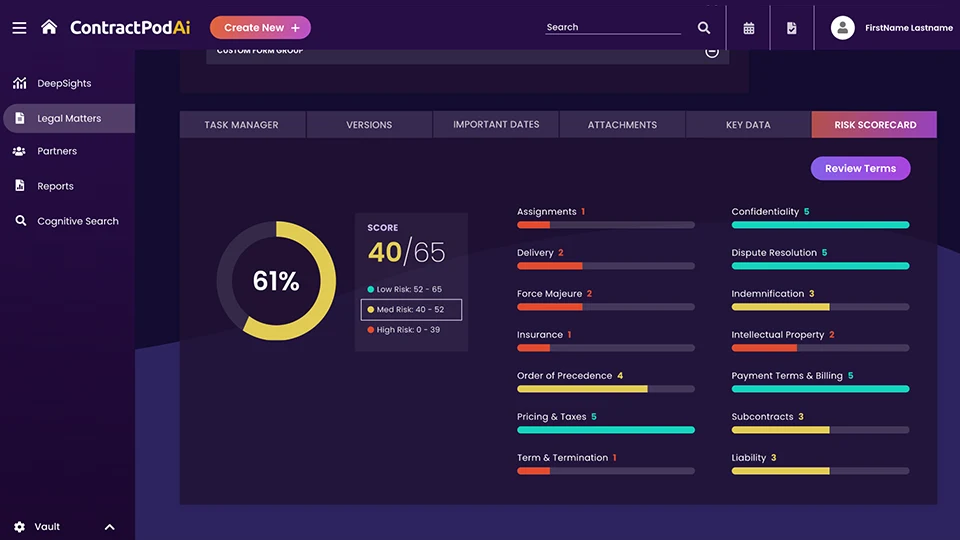
ContractPodAi is a leading platform in the contract management space, built to empower the modern legal team with advanced technology. It provides a comprehensive solution that leverages artificial intelligence to automate and streamline the entire contract lifecycle, making it an essential tool for busy legal departments.
One of the essential features to look for in any software is robust contract automation, and ContractPodAi delivers this through its intelligent system. It automates repetitive tasks, allowing your team to focus on high-value work. The platform also offers powerful workflow automation to manage approvals and other critical stages efficiently.
The software includes a secure, centralised repository for all your document storage needs, ensuring that contracts are organised and easily accessible. This central hub gives your legal team full visibility and control over all agreements, helping to minimise risks and ensure compliance across the board.
15. PandaDoc
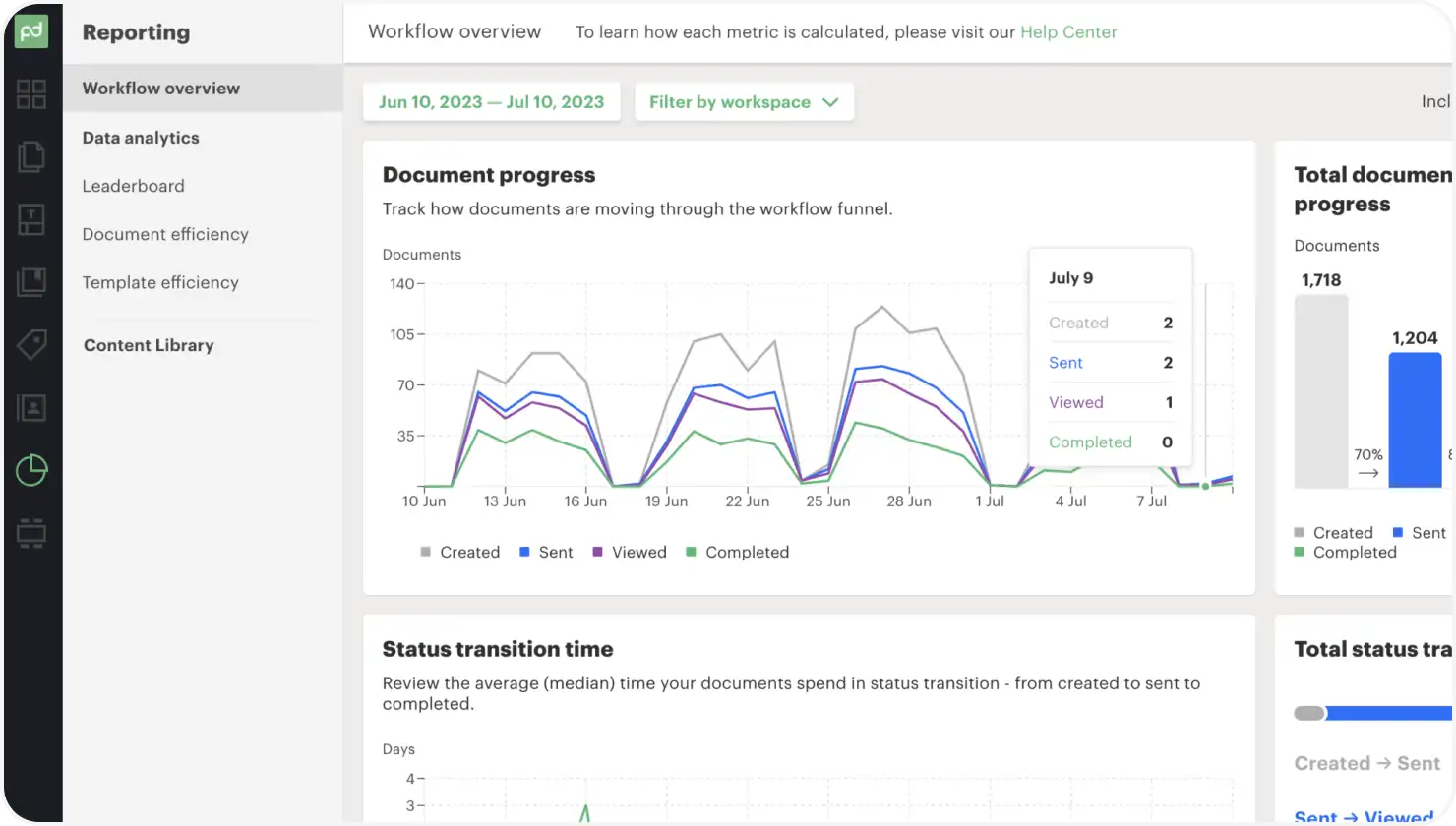
PandaDoc is a leading contract management solution that simplifies the entire contract creation and approval process. Its intuitive interface and collaborative features allow your team to manage agreements efficiently, saving time and reducing the risk of errors.
A key question for many is about integration, and PandaDoc integrates seamlessly with your existing IT infrastructure. This ensures that the tool aligns with your organisation's processes without causing disruption. Its strength lies in combining powerful electronic signatures with user-friendly contract creation tools, including a library of contract templates.
PandaDoc also offers advanced features like smart document tracking, which provides real-time insights into contract progress. You can automate approval workflows and manage contracts on the go with its mobile accessibility. This makes it a versatile solution for teams that need to keep a close eye on their agreements from anywhere.
16. Zoho Contracts
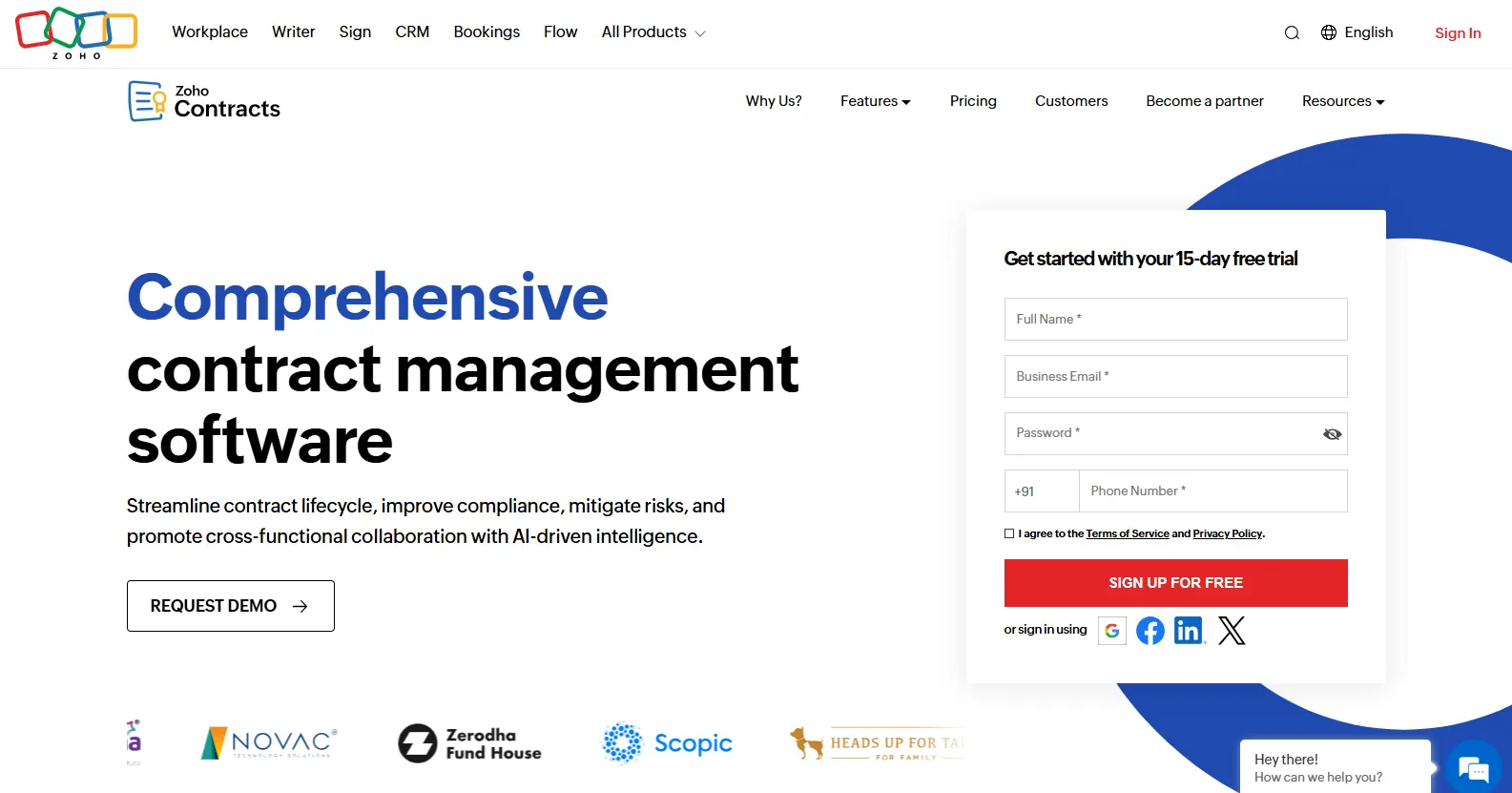
Zoho Contracts is a top contract management software that simplifies every stage of the contract management process. Its intuitive interface makes tasks like drafting, negotiating, and signing straightforward. The platform’s automation capabilities help reduce manual work, minimise errors, and keep agreements moving smoothly.
Zoho Contracts provides a secure contract repository where all your agreements are stored, making document management simple and organised. It offers robust access control features, ensuring only authorised personnel can view or edit sensitive information.
The platform also excels in its integration capabilities, connecting seamlessly with other Zoho products and third-party applications. This creates a unified approach to managing contracts. With features like a comprehensive audit trail and efficient approval processes, Zoho Contracts is a powerful tool for maintaining transparency and control.
Related Article: Contract Versions: A Guide to Easily Tracking Each Update
17. Razorsign
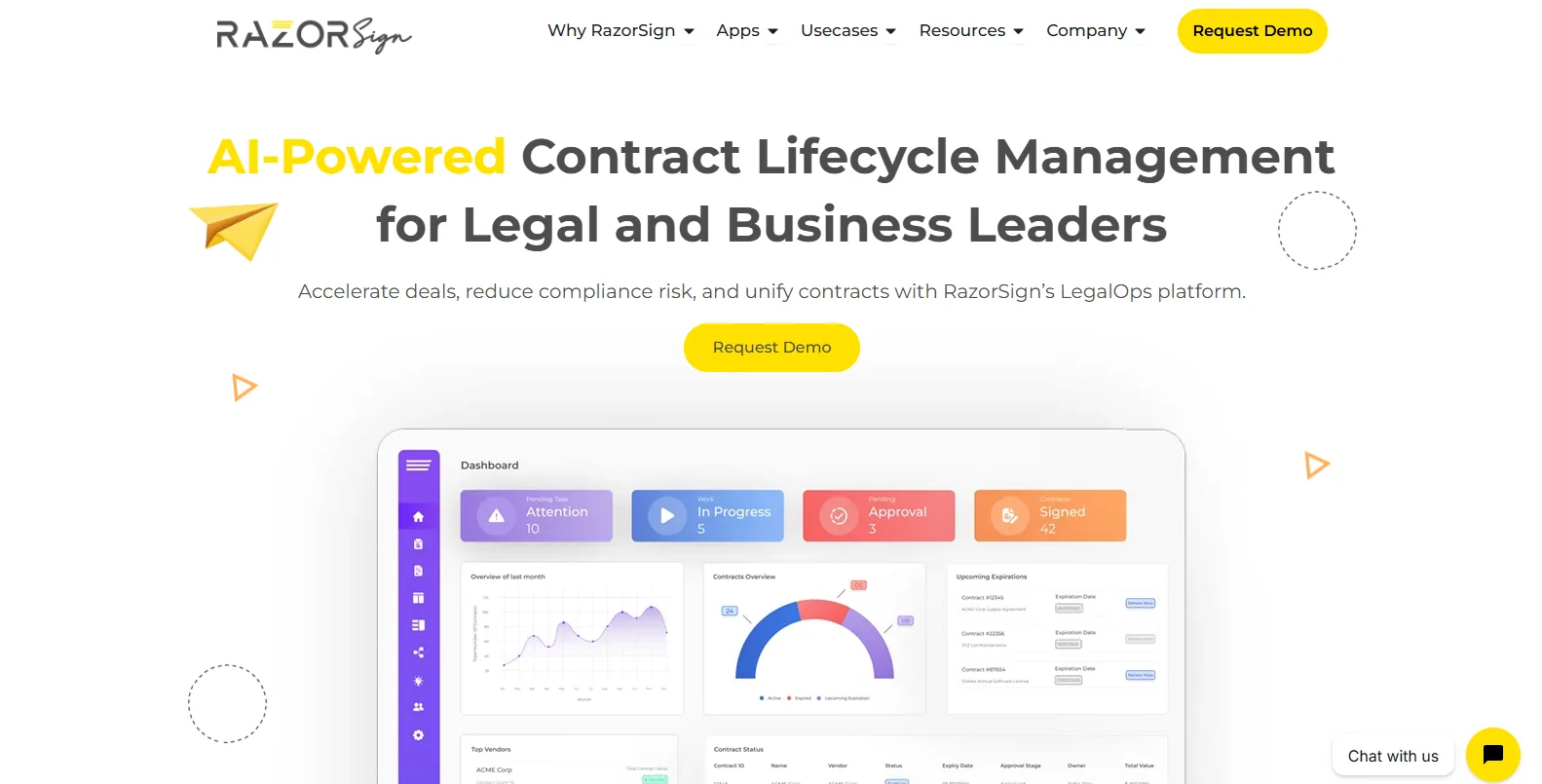
Razorsign is a popular contract management system designed to streamline the contract lifecycle with precision and ease. It simplifies contract creation, negotiation, signing, and tracking, empowering businesses to stay competitive. The platform is known for its user-friendly interface and robust feature set.
The software is often highly rated by users due to its powerful electronic signatures and secure document storage. Razorsign provides detailed audit trails for every action taken on a contract, enhancing accountability and transparency. This feature is crucial for maintaining compliance and resolving any potential disputes.
Furthermore, Razorsign enhances contract visibility and offers excellent collaboration features. Automated workflows help define approval paths and track progress in real-time, ensuring a smooth and compliant process. It also integrates well with existing IT infrastructure, including CRM and ERP systems, making it a versatile choice.
18. Zluri
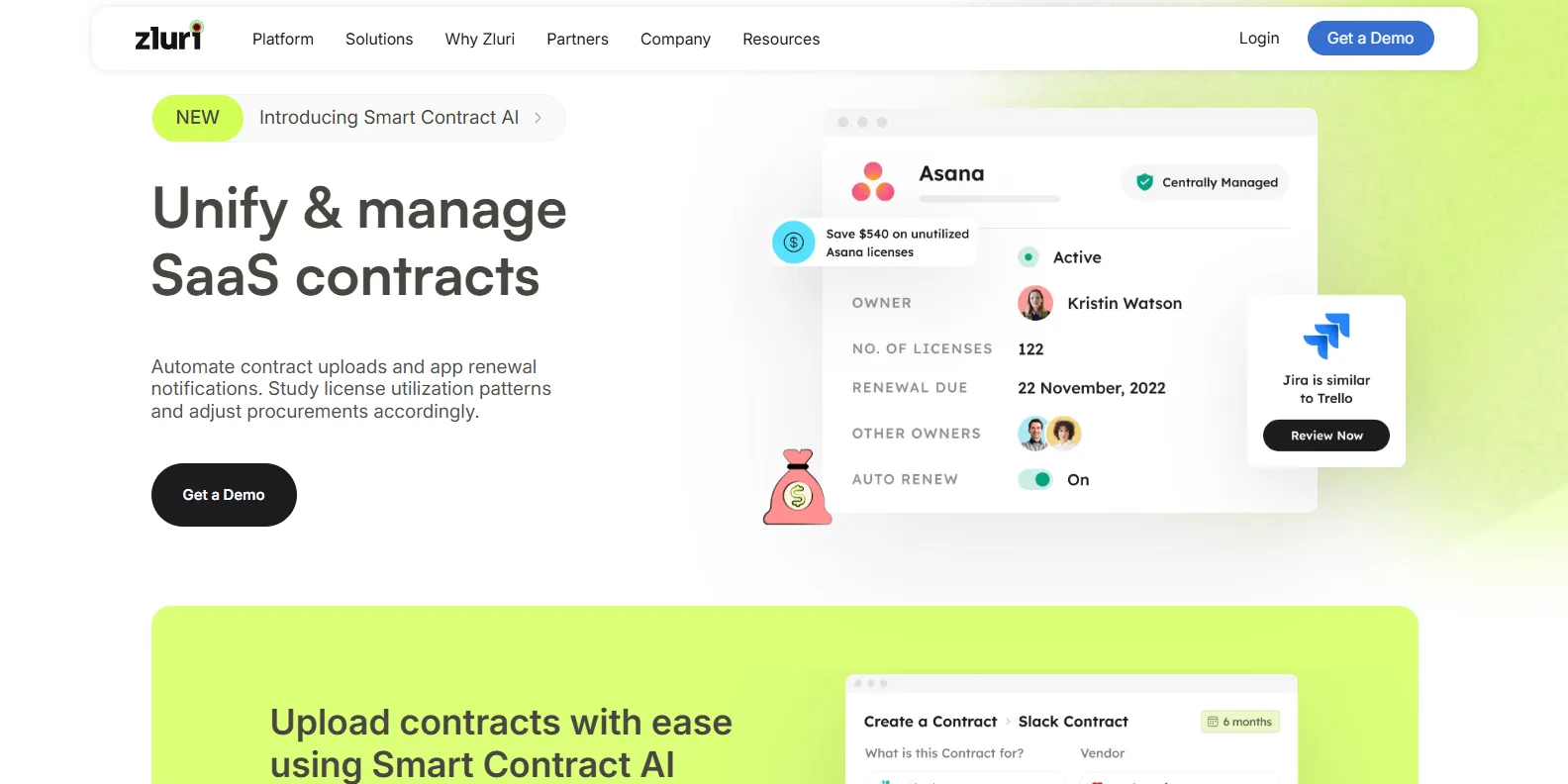
Zluri offers a unique contract management software solution focused on giving you complete visibility into your organisation's SaaS stack and associated contracts. Its powerful discovery engine identifies every SaaS app and agreement, making it a key player among companies leading the global market.
The platform provides a unified repository for all agreements, eliminating scattered contract storage and streamlining management. Through integrations with finance and expense management systems, Zluri extracts key contract insights like value, payment terms, and renewal dates. This helps you efficiently manage your SaaS contracts and maximise ROI.
Zluri's AI-powered contract recognition simplifies the process further by automatically extracting details from uploaded PDFs. With proactive renewal monitoring, timely notifications, and comprehensive contract analytics, Zluri is a powerful tool for any organisation looking to gain control over its SaaS spend and contract landscape.
19. Salesforce Revenue Cloud
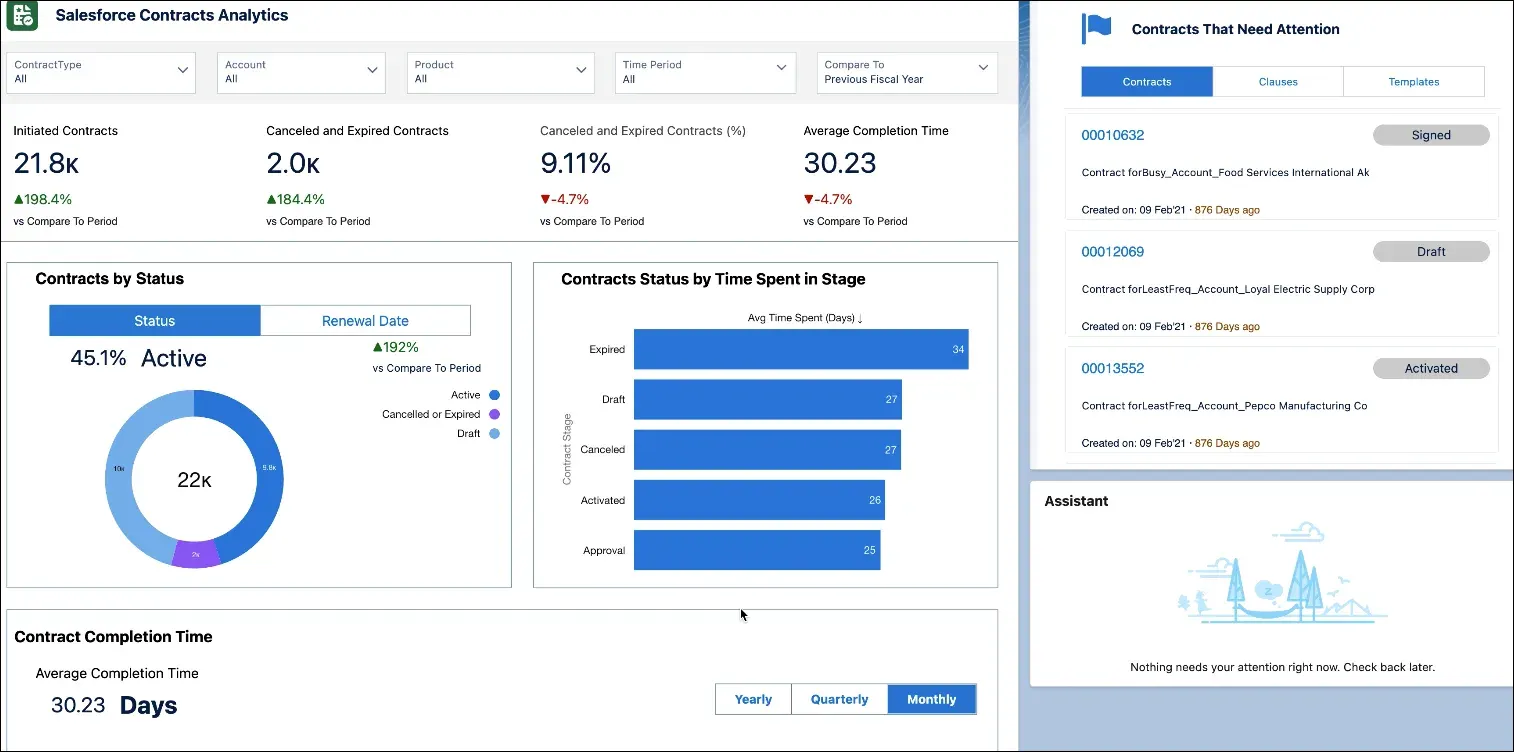
Salesforce Revenue Cloud is a powerful contract management solution that is deeply integrated within one of the world's leading CRM systems. This platform is designed to manage the entire quote-to-cash process, which includes a significant focus on the contract lifecycle. It helps businesses connect their sales and revenue operations seamlessly.
For businesses wondering about integration, Salesforce Revenue Cloud is an ideal choice as it naturally connects with the broader Salesforce ecosystem. This allows you to manage contract processes directly within your CRM, providing a single source of truth for customer and contract data. Its integration capabilities extend to other business tools, creating a unified workflow.
The solution streamlines contract creation, negotiation, and execution, ensuring that your sales and legal teams are always aligned. By managing contracts within the same platform where customer relationships are nurtured, you can improve efficiency, reduce errors, and accelerate the entire sales and contract lifecycle.
20. Icertis
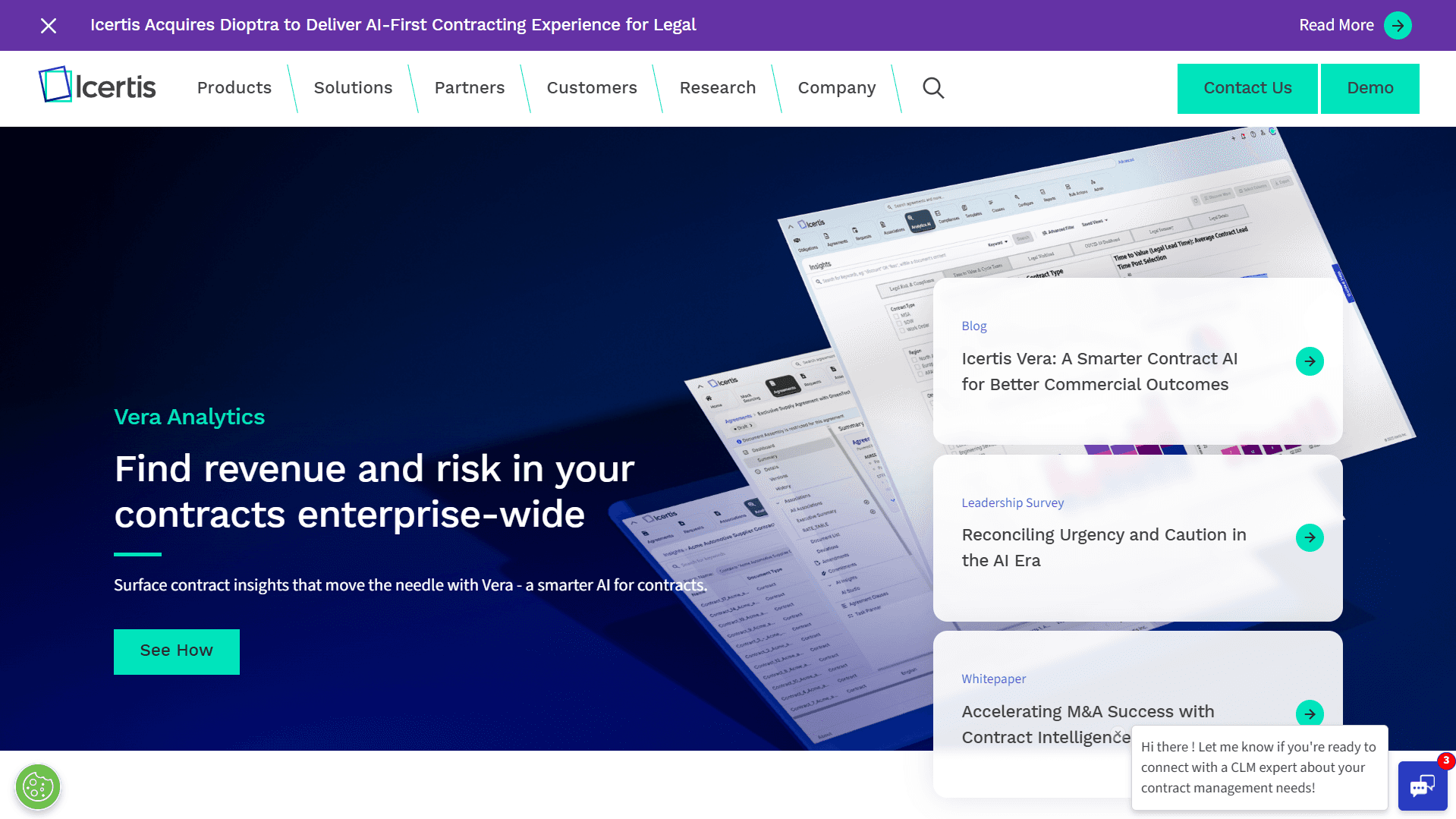
Icertis is an enterprise-grade contract lifecycle management platform designed to simplify the entire contract journey. It offers a unified digital environment for drafting, negotiating, signing, storing and managing agreements in a central contract repository. The platform aims to remove manual paperwork and fragmented processes.
Icertis doesn’t just store contracts; it actively manages them. Its built-in eSignature integrations make contract execution quick and secure, while automated workflows ensure consistent compliance, approval routing, and milestone tracking.
The platform streamlines contract creation through dynamic templates, clause libraries and guided workflows; supports negotiation with playbooks, fallback language and role-based approvals; and provides post-signature governance including renewal management, bulk amendments and obligation tracking.
With powerful analytics and reporting, Icertis surfaces real-time and historical insights on contract performance, cycle times, savings, risks and obligations, giving you a comprehensive view of your contract portfolio and helping you optimize contract value while reducing risk.
Icertis gives organizations full control over their contracts, ensuring accountability, improving collaboration across departments, and reducing the risk of missed deadlines or compliance lapses.
Related Article: What is an E-Signature? A Comprehensive Guide to E-sign
Key Features to Look for in Contract Management Software
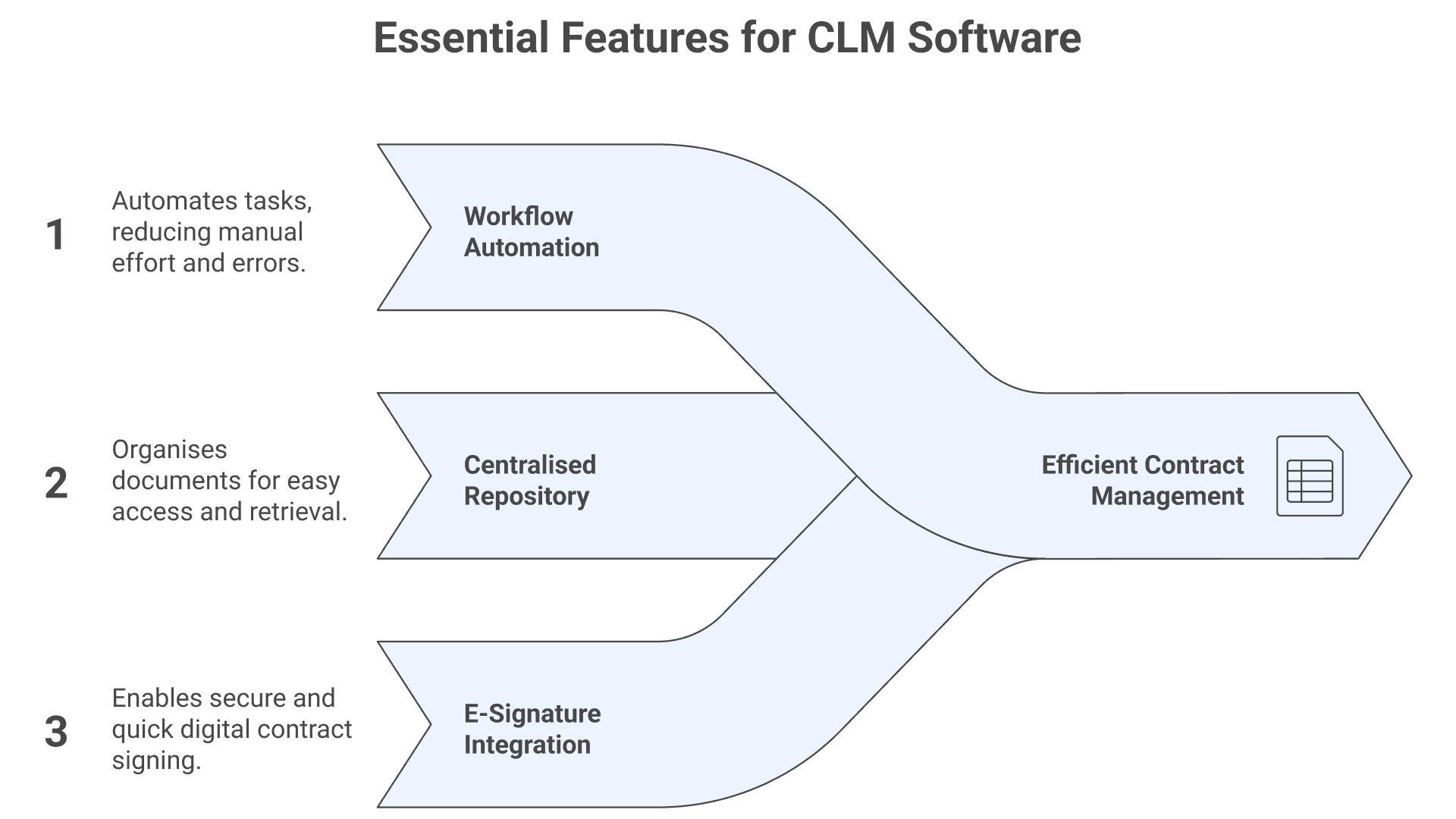
Choosing the right contract management software requires a clear understanding of the key features that drive efficiency and reduce risk. What essential features should you look for? The best platforms offer a combination of automation, centralization, and intelligence to streamline your contract processes from start to finish.
Look for tools with robust AI capabilities, seamless e-signature integration, and comprehensive risk management functionalities. These features will not only save time but also provide deeper insights into your agreements. Below, we explore some of the most critical features in more detail.
Workflow Automation and AI Capabilities
Workflow automation and AI capabilities are essential features that transform contract management from a manual chore into a strategic function. These technologies automate repetitive tasks, reduce human error, and accelerate the entire contract lifecycle. By automating approval workflows, you can ensure that contracts move smoothly from one stakeholder to the next without delays.
AI-powered contract automation can intelligently draft agreements, extract key metadata, and analyze terms for potential risks. This allows your team to focus on high-value activities instead of getting bogged down in administrative work. These features help maintain consistency and compliance across all your agreements.
Key features in this area include:
Automated approval workflows to eliminate bottlenecks.
AI-driven data extraction for quick analysis.
Intelligent contract creation and review.
Proactive alerts for deadlines and renewals.
A centralised repository for easy access to automated records.
Centralised Document Repository and Search
A centralised repository is the cornerstone of effective document management in any contract management software. It acts as a single source of truth, storing all contracts and related documents in one organised and secure location. This eliminates the problem of scattered files and ensures that your team always has easy access to the latest versions.
This feature is particularly beneficial for specialised departments like IT, which often manage numerous vendor agreements and software licences. A searchable contract repository allows them to quickly find specific contracts, clauses, or terms, which is crucial for compliance and renewal management. Advanced search functions can scan through large volumes of documents in seconds.
A well-organised repository should include:
Secure storage for all contract-related files.
Advanced search and filtering capabilities.
Role-based access controls to protect sensitive data.
Version history to track all changes.
Access to pre-approved templates and clause libraries.
E-Signature Integration and Collaboration Tools
Seamless e-signature integration is a critical feature for modern contract management. It allows you to execute agreements quickly and securely without the need for printing, scanning, or physical delivery. Most top-tier software integrates with leading electronic signature providers or offers a native solution, making the signing process a simple, one-click action.
Collaboration features are equally important, as they streamline the contract drafting and negotiation stages. These tools allow multiple stakeholders to review, comment on, and edit documents in real-time within a single platform. This avoids confusing email chains and ensures everyone is working on the most up-to-date version.
Key integration and collaboration features include:
Native or third-party electronic signatures.
Real-time commenting and redlining.
Version control and audit trails.
Automated approval processes.
Secure document storage for executed agreements.
Related Article: Overcome Top 5 Contract Management Challenges with Ease
Comparing Contract Lifecycle Management vs. Regular Contract Management Tools
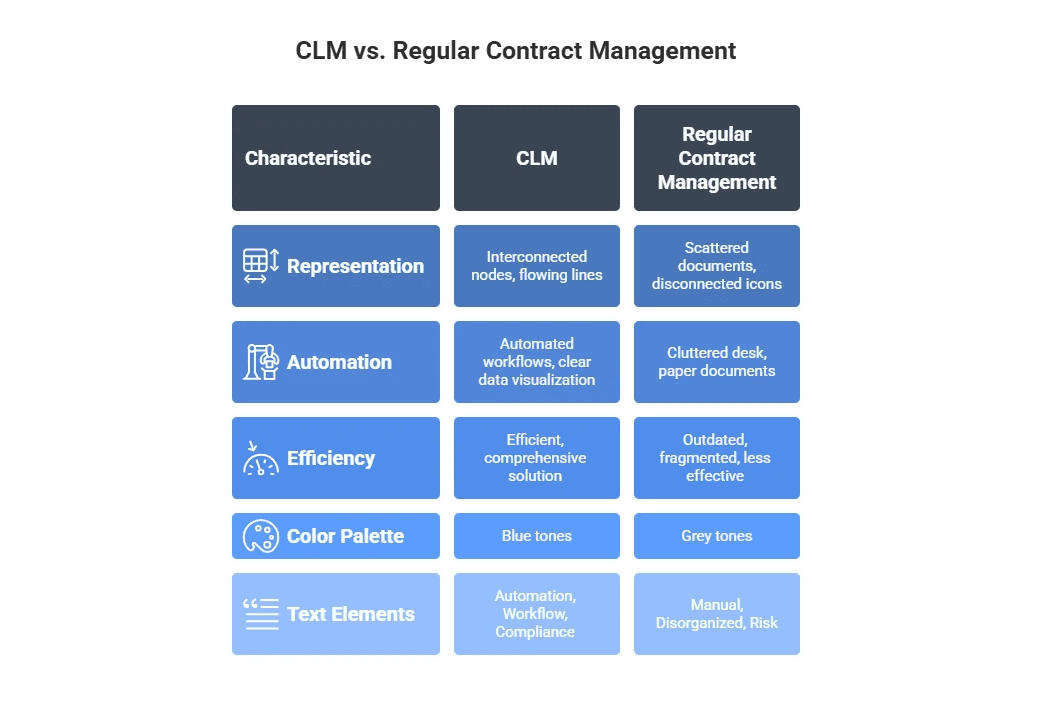
How do contract lifecycle management (CLM) solutions differ from regular contract management tools? While both types of software aim to improve how you handle agreements, CLM platforms offer a much more comprehensive approach. Regular tools often focus on basic storage and retrieval, acting as a digital filing cabinet.
In contrast, CLM software manages the entire contract lifecycle, from initial contract creation and negotiation to execution, renewal, and analysis. These platforms provide advanced automation, detailed audit trails, and deep integrations that support every stage of a contract's journey, making them a more strategic asset for your business.
Understanding the Contract Lifecycle Process
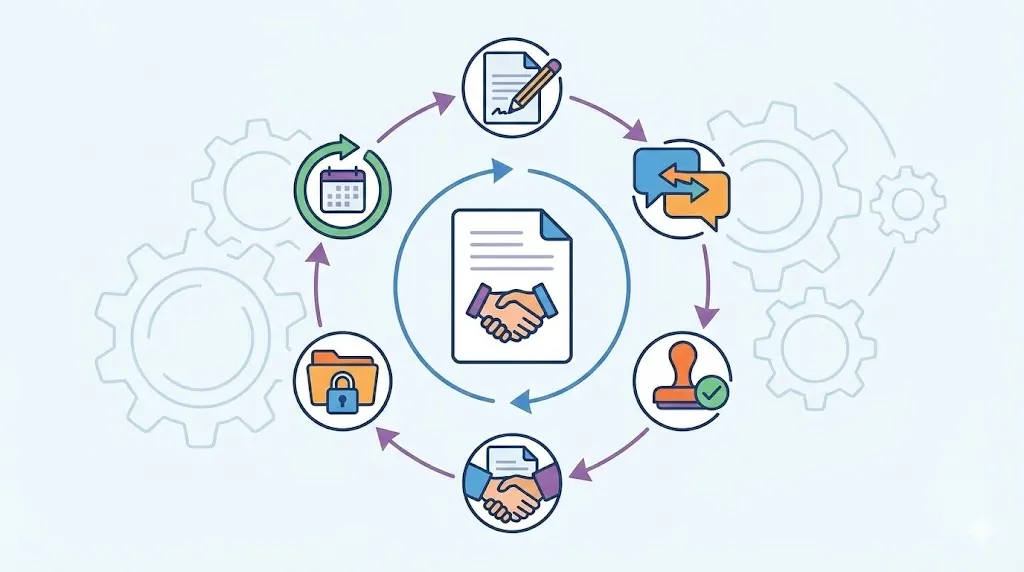
The contract lifecycle encompasses every stage an agreement goes through, from its conception to its conclusion. Understanding this process is key to seeing the value of a full CLM solution over a basic management tool. It begins with contract creation, where the initial draft is prepared using templates and pre-approved clauses.
Next, the contract enters negotiation and approval workflows, where stakeholders review and agree on the terms. Once finalised, it moves to contract execution, typically involving electronic signatures. After signing, the contract is stored and managed, with its status and obligations tracked throughout its active period until renewal or termination.
A full CLM platform actively manages each of these stages, providing tools and automation to ensure efficiency and compliance at every step.
Stage | Description |
|---|---|
Creation | Drafting the initial contract using templates and clauses. |
Negotiation | Collaborating with parties to review and finalise terms. |
Approval | Routing the contract through internal approval workflows. |
Execution | Signing the contract, typically with e-signatures. |
Management | Storing, tracking obligations, and managing renewals/expirations. |
Differences in Automation and Compliance
One of the most significant differences between CLM and regular contract management tools lies in automation and compliance. CLM platforms offer sophisticated workflow automation that goes far beyond simple reminders. They can automate complex approval processes, route documents to the right people, and trigger actions based on contract data.
This level of contract automation is crucial for effective compliance tracking. CLM software can monitor obligations, deadlines, and regulatory requirements automatically, flagging potential issues before they become problems. It also provides detailed audit trails that record every action taken on a contract, which is essential for demonstrating compliance.
Key differences include:
Advanced workflow automation for complex approval processes.
Proactive compliance tracking and risk alerts.
Comprehensive audit trails for full transparency.
AI-powered data extraction to monitor obligations.
Automated reminders for key milestones and renewals.
Suitability for Different Business Needs
Choosing between a regular contract management tool and a full CLM solution depends entirely on your business needs. For small businesses or startups with a low volume of simple contracts, a basic tool might suffice. These are often more affordable and have a lower learning curve, providing essential storage and tracking functions.
However, for growing or large enterprises with complex contract portfolios, CLM solutions are indispensable. These platforms are designed to scale, handling high volumes of agreements and intricate workflows. While they may have different pricing models and a steeper learning curve, the ROI from improved efficiency, risk mitigation, and compliance is significant.
Factors to consider when deciding include:
The volume and complexity of your contracts.
The need for advanced automation and workflow management.
Your budget and available pricing models.
The importance of ease of use versus advanced features.
Integration requirements with other business systems.
Factors to Consider When Choosing the Best Contract Management Solution
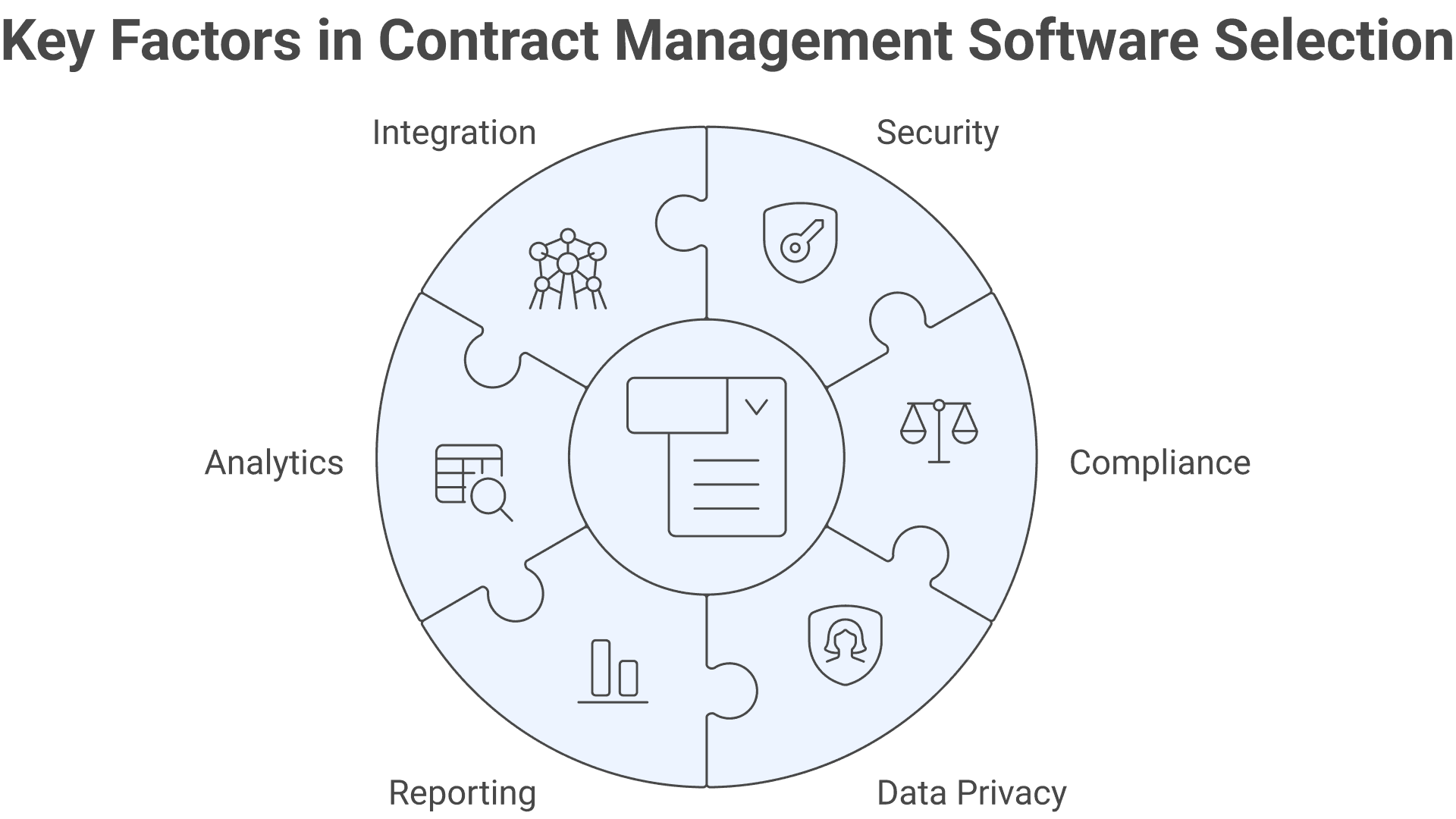
What are some key factors to consider when choosing the best contract management solution for your business? Selecting the right software is a critical decision that impacts efficiency, risk, and compliance. Beyond the basic features, you must evaluate aspects like security, analytics, and integration capabilities to ensure the tool aligns with your long-term goals.
It is also important to consider practical factors such as user ratings, pricing, and the quality of customer support. A platform with advanced features is only valuable if your team can use it effectively and get help when needed. The following sections will explore these crucial factors in greater detail.
Security, Compliance and Data Privacy
Security, compliance, and data privacy are non-negotiable factors when choosing a contract management solution. Contracts contain highly sensitive information, and a breach could have severe financial and legal consequences. Your chosen platform must offer robust security measures to protect your data at all times.
Look for software that provides strong access controls, allowing you to define user roles and permissions. This ensures that only authorised personnel can view or edit specific contracts. End-to-end encryption for both data in transit and at rest is also essential for secure contract storage.
Furthermore, the solution should support your compliance tracking needs by adhering to industry standards like GDPR, SOC 2, and ISO 27001.
Role-based access controls to restrict data access.
End-to-end data encryption.
Compliance with major data privacy regulations (e.g., GDPR).
Detailed audit trails for accountability.
Secure and reliable cloud infrastructure.
Reporting, Analytics, and Integration Capabilities
Powerful reporting and analytics are what transform a contract repository from a simple storage system into a strategic business tool. Advanced analytics allow you to extract valuable insights from your contract data, helping you identify trends, assess risks, and make informed decisions. These features are vital for proactive contract management.
Platforms with customisable dashboards and reporting tools enable you to track key performance indicators (KPIs) and monitor contract performance effectively. Contract analytics can highlight non-standard clauses, track obligations, and provide a clear view of your overall contractual landscape.
Equally important are integration capabilities. The software should connect seamlessly with your other business systems, such as CRM and ERP platforms, to ensure a single source of truth for all your data.
Customisable dashboards and reports.
AI-powered contract analytics.
Real-time tracking of contract data and KPIs.
Seamless integration with CRM, ERP, and other tools.
Automated data synchronisation across platforms.
Related Article: CLO Guide: Legal Metrics & CLM Insights
Conclusion
In conclusion, selecting the right contract management software can significantly enhance your business operations by streamlining processes and improving compliance. With a multitude of options available, it is essential to assess their features carefully—such as workflow automation, security measures, and integration capabilities to find a solution that aligns with your specific needs.
As you consider your choices, don’t overlook the importance of user ratings and pricing in making an informed decision. If you're ready to take the next step towards efficient contract management, why not get a free trial or consultation with our experts? They can help guide you through the best options tailored to your business requirements.
Frequently Asked Questions
What are the essential features of contract management software for Legal departments in 2025?
For a legal team, essential features in contract management software include robust security, detailed audit trails for compliance, and customisable approval workflows to streamline reviews. Access to pre-approved clause libraries is also critical for ensuring consistency and accelerating contract drafting, helping the team manage risk effectively.
Which contract management software companies are leading the global market in 2025?
Leading the global market are companies like Volody, Ironclad, DocuSign CLM, and Juro. These providers of CLM software and management systems are distinguished by their advanced features, strong AI capabilities, and extensive integration options, catering to a wide range of business needs across various industries worldwide.
What key features should I look for in contract management software?
Look for key features like contract automation to reduce manual tasks, workflow automation for streamlined approval processes, and contract analytics for data-driven insights. Strong collaboration features for negotiation and a centralised repository for easy access are also essential for an effective contract management solution.
How do different contract management software options compare in terms of pricing?
Contract management software pricing varies widely based on the provider's pricing models, which can be per-user, tiered, or custom. The cost is often influenced by the number of users, contract volume, and access to advanced features. It's crucial to align the pricing with your specific business needs and budget.
Can I integrate contract management software with other tools or platforms my business uses?
Yes, most modern contract management software offers robust integration capabilities. You can connect your CLM platform with other essential tools like CRM systems (e.g., Salesforce), ERPs, and document storage solutions. This creates a unified workflow and ensures consistent data for reporting across your entire business.
What are some common challenges businesses face when implementing contract management software?
Common implementation challenges include a steep learning curve for complex systems, resistance from users accustomed to the old contract management process, and poor data migration. Choosing a platform with high ease of use ratings and reliable customer support can help mitigate these issues and ensure a smoother transition.
About the Company
Volody AI CLM is an Agentic AI-powered Contract Lifecycle Management platform designed to eliminate manual contracting tasks, automate complex workflows, and deliver actionable insights. As a one-stop shop for all contract activities, it covers drafting, collaboration, negotiation, approvals, e-signature, compliance tracking, and renewals. Built with enterprise-grade security and no-code configuration, it meets the needs of the most complex global organizations. Volody AI CLM also includes AI-driven contract review and risk analysis, helping teams detect issues early and optimize terms. Trusted by Fortune 500 companies, high-growth startups, and government entities, it transforms contracts into strategic, data-driven business assets.




" height="216.72211px" id="FYO0bO80Y" transform="translate(3 6.105)" width="206.073px"/><path d="M 108.174 222 C 88.432 222 70.303 217.239 53.785 207.717 C 37.267 198.196 24.173 185.052 14.504 168.285 C 4.835 151.312 0 132.165 0 110.845 C 0 89.731 4.835 70.792 14.504 54.025 C 24.173 37.052 37.267 23.804 53.785 14.282 C 70.303 4.761 88.432 0 108.174 0 C 128.116 0 146.246 4.761 162.562 14.282 C 179.08 23.804 192.073 37.052 201.541 54.025 C 211.21 70.792 216.044 89.731 216.044 110.845 C 216.044 132.165 211.21 151.312 201.541 168.285 C 192.073 185.052 179.08 198.196 162.562 207.717 C 146.044 217.239 127.915 222 108.174 222 Z M 108.174 183.189 C 120.864 183.189 132.044 180.291 141.713 174.495 C 151.382 168.492 158.936 160.006 164.375 149.035 C 169.814 138.064 172.533 125.334 172.533 110.845 C 172.533 96.355 169.814 83.729 164.375 72.965 C 158.936 61.994 151.382 53.611 141.713 47.815 C 132.044 42.02 120.864 39.122 108.174 39.122 C 95.483 39.122 84.202 42.02 74.332 47.815 C 64.663 53.611 57.109 61.994 51.67 72.965 C 46.231 83.729 43.511 96.355 43.511 110.845 C 43.511 125.334 46.231 138.064 51.67 149.035 C 57.109 160.006 64.663 168.492 74.332 174.495 C 84.202 180.291 95.483 183.189 108.174 183.189 Z" fill="rgba(255, 255, 255, 0.12)" height="222px" id="aa1McFcE9" transform="translate(227.183 3)" width="216.04399999999998px"/><path d="M 42.302 182.257 L 111.799 182.257 L 111.799 216.722 L 0 216.722 L 0 0 L 42.302 0 Z" fill="rgba(255, 255, 255, 0.12)" height="216.72211px" id="yRq4AnrsX" transform="translate(477.721 6.105)" width="111.79899999999998px"/><path d="M 108.174 222 C 88.432 222 70.303 217.239 53.785 207.717 C 37.267 198.196 24.173 185.052 14.504 168.285 C 4.835 151.312 0 132.165 0 110.845 C 0 89.731 4.835 70.792 14.504 54.025 C 24.173 37.052 37.267 23.804 53.785 14.282 C 70.303 4.761 88.432 0 108.174 0 C 128.116 0 146.246 4.761 162.562 14.282 C 179.08 23.804 192.073 37.052 201.541 54.025 C 211.21 70.792 216.045 89.731 216.045 110.845 C 216.045 132.165 211.21 151.312 201.541 168.285 C 192.073 185.052 179.08 198.196 162.562 207.717 C 146.044 217.239 127.915 222 108.174 222 Z M 108.174 183.189 C 120.864 183.189 132.044 180.291 141.713 174.495 C 151.382 168.492 158.936 160.006 164.375 149.035 C 169.814 138.064 172.534 125.334 172.534 110.845 C 172.534 96.355 169.814 83.729 164.375 72.965 C 158.936 61.994 151.382 53.611 141.713 47.815 C 132.044 42.02 120.864 39.122 108.174 39.122 C 95.483 39.122 84.202 42.02 74.332 47.815 C 64.663 53.611 57.108 61.994 51.67 72.965 C 46.231 83.729 43.511 96.355 43.511 110.845 C 43.511 125.334 46.231 138.064 51.67 149.035 C 57.108 160.006 64.663 168.492 74.332 174.495 C 84.202 180.291 95.483 183.189 108.174 183.189 Z" fill="rgba(255, 255, 255, 0.12)" height="222px" id="mo8HQspQ0" transform="translate(609.155 3)" width="216.04500000000007px"/><path d="M 73.727 0 C 95.885 0 115.324 4.45 132.044 13.351 C 148.967 22.252 161.957 34.982 171.027 51.541 C 180.287 67.894 184.917 86.937 184.917 108.671 C 184.917 130.405 180.287 149.449 171.027 165.801 C 161.957 181.947 148.967 194.47 132.044 203.371 C 115.324 212.271 95.885 216.722 73.727 216.722 L 0 216.722 L 0 0 Z M 72.216 179.773 C 94.374 179.773 111.497 173.564 123.583 161.144 C 135.669 148.724 141.713 131.233 141.713 108.671 C 141.713 86.109 135.669 68.515 123.583 55.888 C 111.497 43.055 94.374 36.638 72.216 36.638 L 42.302 36.638 L 42.302 179.773 Z" fill="rgba(255, 255, 255, 0.12)" height="216.72211px" id="I3iXX5Hi_" transform="translate(859.693 6.105)" width="184.91699999999992px"/><path d="M 185.22 0 L 113.91 141.273 L 113.91 216.722 L 71.61 216.722 L 71.61 141.273 L 0 0 L 47.74 0 L 93.06 99.046 L 138.08 0 Z" fill="rgba(255, 255, 255, 0.12)" height="216.72211px" id="nzHyWC0_d" transform="translate(1061.78 6.105)" width="185.22000000000003px"/></svg>)