

Enterprise contract governance is a strategic operating discipline that gives every agreement a defined path, accountable owner, and measurable control framework. It aligns Legal, Procurement, Finance, Sales, IT, and business teams around consistent processes for managing risk, compliance, performance, and value. This guide outlines a practical approach to building governance capabilities that scale across the enterprise.
TL;DR
Set clear goals, sponsors, decision rights, and roles across every team involved in contract work.
Build one secure repository with clean metadata, version control, audit trails, and strong access rules.
Start with high-risk contracts, then expand your contract governance framework through controlled phases.
Automate intake, approvals, obligations, renewals, exceptions, and audit evidence through repeatable workflows.
Address fragmented records, unclear ownership, poor data, regional needs, and resistance before scaling governance.
Track visibility, cycle time, compliance, renewals, obligations, savings, risk, and user adoption through clear KPIs.
Establish the Governance Foundation
Define business objectives and risk priorities
Start by stating what enterprise contract governance must improve. Common goals include lower risk, faster approvals, and stronger contract compliance.
Some goals may focus on money. Others may focus on control, speed, or visibility. Write each goal in measurable terms.
For example, a team may want fewer missed renewals. Another team may need better control over customer commitments.
Next, rank risks by business effect. Consider contract value, business criticality, regulatory impact, and renewal sensitivity.
High-value contracts may need deeper review. Contracts tied to key systems may also need stronger controls.
Do not treat every agreement in the same way. A small purchase order needs less review than a strategic supplier deal.
Use risk tiers to guide effort. Each tier should have clear review rules and approval limits.
Secure sponsorship and cross functional participation
An executive sponsor removes barriers and protects the program budget. This person also resolves disputes between departments.
The sponsor should support shared rules across the enterprise. They should also review progress at set points.
Legal should own legal standards and risk guidance. Procurement should shape supplier processes and commercial controls.
Finance should confirm value, payment terms, and financial approval rules. Sales should help design customer contract workflows.
IT should manage system design, integrations, and technical support. Security should guide access, encryption, and data protection.
Business owners should test whether rules work in daily operations. Their feedback can prevent slow and impractical processes.
Bring these groups together early. Design sessions can reveal gaps before the system goes live.
Set decision rights and policy boundaries
Define who may create, approve, amend, renew, terminate, and access contracts. Write these rights in plain language.
Set authority thresholds for value, risk, geography, and contract type. Then define what happens when a contract crosses a threshold.
Create an exception path for unusual terms. That path should name the reviewer, approver, and response time.
Regional rules may change tax, language, privacy, or retention needs. Your enterprise legal governance model should allow local rules within common controls.
Separate duties where risk requires it. The person requesting a contract should not always approve it.
Keep policy owners accountable for updates. Review each policy when laws, systems, or business needs change.
Create a governance charter as the program’s main control document. It should cover goals, stakeholders, rights, risk tolerance, policy owners, and escalation steps.
Related articles: 10 Key Contract Clauses Every Business Should Know in 2026
5 Key Challenges in Enterprise Contract Governance
1. Fragmented contract records and incomplete visibility
Contracts often sit in email, shared drives, paper files, and local tools. Teams may also store different copies of one agreement.
This creates missing records and unclear status. It also makes renewals, audits, and obligation reviews harder.
Start with a contract inventory before automating work. Record the source, owner, type, status, and likely value.
Then create a migration plan for priority records. Check files for duplicates, missing pages, old versions, and unclear dates.
Do not move every file without review. Some records may need enrichment, archiving, or controlled exception handling.
2. Inconsistent data and unclear accountability
Poor metadata limits useful reporting. Missing owners can also leave obligations without action.
Common gaps include duplicate records, old versions, inconsistent names, and missing renewal dates. These gaps weaken approvals and risk analysis.
Set naming and data rules before migration. Assign a data steward to review important fields.
Each contract should have a current business owner. That owner should remain clear after staff changes or team moves.
Use review queues for uncertain records. Track the source and confidence of key data fields.
3. Resistance to standardized processes
Teams may bypass workflows when rules feel slow or restrictive. They may return to email because it seems easier.
Design the process with daily users. Ask where current steps create delay, confusion, or duplicate work.
Keep intake forms short and clear. Request only the information needed for the next decision.
Provide role-based training for each team. Show how the process improves speed, visibility, or workload.
Share early wins with users. A faster approval or missed renewal prevented can build trust.
4. Complex requirements across regions and contract types
Different regions may use different laws, languages, currencies, and retention rules. Contract types may also require distinct reviews.
A common contract governance framework can support local variation. It should define shared controls, while allowing approved regional rules.
Use a core policy with local add-ons. This approach avoids disconnected processes across business units.
Document when local rules apply. Also name who approves changes to those rules.
5. Weak change control and limited follow-through
A program can fail after launch when teams stop reviewing its rules. New risks may then enter through old workflows.
Set a regular review cycle for policies and controls. Check whether users still follow the intended process.
Track exceptions and missed obligations. Repeated exceptions may show that a rule needs revision.
Assign an owner for each corrective action. Give that owner a due date and clear success measure.
Maintain a challenge and response matrix for ongoing oversight. It should connect each obstacle with impact, cause, owner, remedy, and success indicator.
Related articles: Contract Management for Small Business in 2026
Design the Enterprise Contract Operating Model
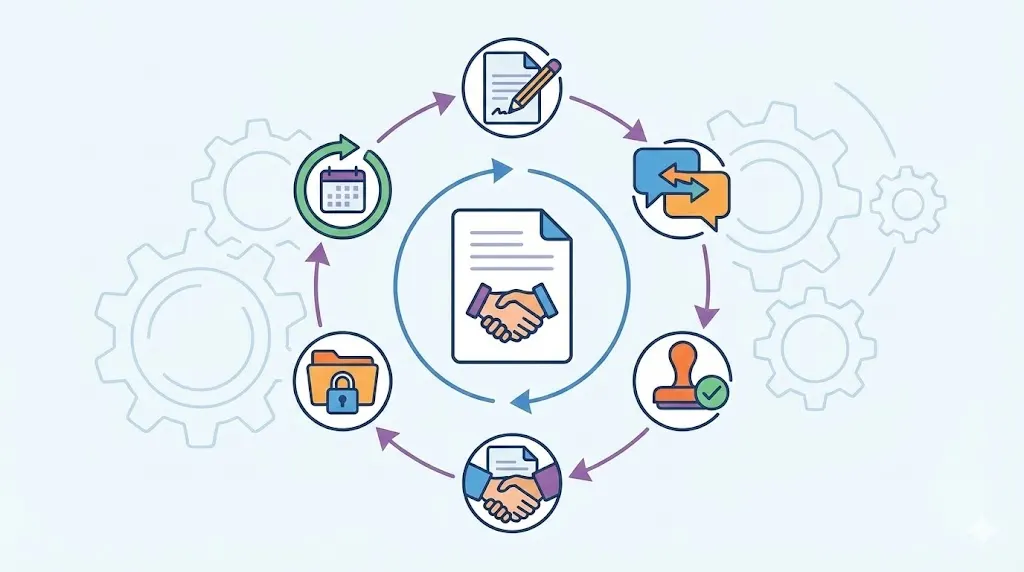
Map the contract lifecycle
Map each stage from request to retention. Include drafting, negotiation, approval, signature, performance, renewal, amendment, and termination.
Define the record created at every stage. For example, an approval stage should retain the decision, approver, date, and conditions.
Set controls before work begins. Intake controls can prevent missing data and wrong templates.
Negotiation controls should flag nonstandard terms. Approval controls should route work to the right people.
Post-signature controls should track promises and dates. Retention controls should preserve final records and related evidence.
A lifecycle map helps teams see the full process. It also reveals handoffs that create delay or risk.
Assign ownership across the portfolio
A contract owner manages business performance after signature. This person tracks deliverables, dates, risks, and needed changes.
A legal reviewer checks terms and exceptions. A procurement lead may manage supplier terms and commercial discussions.
Finance may verify value, payment rules, and budget impact. Data stewards maintain key fields and correct errors.
System administrators manage workflows, permissions, and releases. Approvers make decisions within their assigned authority.
Ownership must remain current when roles change. Set a transfer process for staff moves, departures, and reorganized teams.
Review owner assignments during key events. Renewal, amendment, and supplier changes offer useful review points.
Create approval, escalation, and documentation rules
Build approval routes around risk, not habit. Consider value, clauses, geography, counterparty, and business unit.
Set escalation rules for delayed reviews. Add separate paths for nonstandard terms, missed obligations, and unresolved exceptions.
Record every decision with its reason. This evidence supports audits and helps teams learn from past choices.
Keep playbooks and clause standards under version control. Record who changed them and why.
Review approval matrices at set intervals. Remove old steps that no longer reduce meaningful risk.
Create a responsibility assignment matrix for each lifecycle activity. It should name owners, reviewers, approvers, system actions, and escalation contacts.
Related articles: Contract Audit Trails: A Complete Business Guide
Govern Contract Data as an Enterprise Asset
Prioritize high impact contract types
Start with contracts that carry major financial, operational, legal, or reputational risk. These agreements provide the strongest early value.
Supplier agreements often need close review. Customer contracts may contain important service and payment promises.
Employment arrangements can hold sensitive data. Technology licenses may affect system access, cost, and business continuity.
Data processing agreements need careful privacy review. Strategic partnerships may also need special oversight.
Choose a focused first group. A narrow scope makes data cleanup, testing, and training easier.
Then expand after the first group works well. Use lessons from the pilot to improve later contract types.
Define metadata standards and protect data quality
Metadata is information about a contract. It helps teams search, report, route, and monitor agreements.
Start with parties, contract type, owner, effective date, and expiration date. Add renewal terms, value, governing law, and confidentiality status.
Capture obligations and risk classification as well. These fields support post-signature work and better contract oversight.
Validate data during intake. Use required fields, approved values, duplicate checks, and review queues.
Track where each field came from. It may be extracted, entered by a user, received through an integration, or verified later.
Do not treat all data as equally reliable. Mark uncertain values for review before using them in reports.
Create a metadata standard for every key field. Define its format, required status, source, owner, validation rule, and review frequency.
Related articles: Contract Management as a Growth Engine
Centralize Records and Automate Governance Controls
Build one secure system of truth
A central repository should hold final contracts and related records. Include drafts, amendments, exhibits, correspondence, and supporting files.
Users need fast search across approved fields and document text. Search should also respect each user’s access rights.
Version control prevents teams from using old files. Audit trails show who viewed, changed, approved, or downloaded records.
Use retention rules for different contract types. Backups should protect records from loss or system failure.
Protect confidential information with role-based access. Encryption should protect data during storage and transfer.
Review access rights on a set schedule. Remove access when people change roles or leave.
Configure intake and contract creation workflows
Use intake forms to gather basic business needs. The form should guide users toward the right contract path.
Templates can reduce drafting time and improve consistency. Clause libraries can provide approved language for common terms.
AI-assisted drafting may create a first draft from approved content. Human reviewers should still check the result.
AI data extraction can find parties, dates, values, and obligations. Send uncertain results to a person for review.
Build validation into the process. Do not rely only on policy documents that users may forget.
Automate negotiation, approval, and execution
Route contracts by risk and authority. A low-risk renewal should not follow the same path as a major deal.
Review unusual clauses before approval. Flag missing protections, unusual language, and terms outside the playbook.
Use electronic signature after final approval. Store the signed record with its approval evidence.
Escalate stalled work automatically. Reminders should reach the right person without manual tracking.
Keep an exception log for approved deviations. Record the reason, decision, date, and review owner.
Track obligations and post signature events
A signed contract still creates work. Teams must deliver, report, pay, renew, amend, or terminate as promised.
Create tasks for each important obligation. Give every task an owner, due date, source clause, and status.
Set alerts before renewal dates. Early alerts give teams time to review performance and negotiate changes.
Use milestone tracking for long projects. Link amendments to the original agreement and preserve the full history.
Connect the repository with CRM, ERP, identity, and reporting tools. These links can reduce duplicate entry and improve oversight.
Use a control checklist for security, data validation, routing, audit logs, retention, alerts, integrations, and access reviews.
Related articles: Education Contract Management Software: Detailed Guide
Select and Implement the Right Technology
Translate governance needs into platform requirements
Start with real business needs, not product features. Map the required process for each priority contract type.
Assess repository structure, search, workflow design, reporting, and permissions. Include auditability, regional support, and ease of use.
Review AI features for drafting, data extraction, risk scoring, and analytics. Test them with real documents and real review steps.
Check expected contract volume and user groups. Include departments, regions, systems, and risk levels in the design.
Plan integration needs early. CRM, ERP, identity, e-signature, and reporting links may affect the design.
Ask users to test common tasks. A powerful system can still fail if people find it hard to use.
Evaluate readiness and total cost of ownership
Check the quality of current contract data. Poor records can increase migration effort and delay launch.
Review identity management and integration dependencies. Confirm who will support each technical connection.
Assess process ownership and change capacity. A system needs people who can manage rules after launch.
Calculate total cost of ownership, not subscription price alone. Include licenses, migration, setup, integration, training, support, and administration.
Also consider future growth and regional expansion. Low starting cost may hide later process or support limits.
Write each assumption in the business case. This makes later cost changes easier to explain.
Pilot, scale, and govern the platform
Pilot one contract type or business unit first. Choose a group with clear needs and engaged users.
Measure intake completion, approval time, data accuracy, alert performance, and exception rates. Review the results before expanding.
Test unusual cases during the pilot. These cases often reveal missing rules or weak handoffs.
Assign system ownership before launch. Owners should manage releases, access reviews, workflow changes, and policy updates.
Create a platform evaluation scorecard. Compare functional fit, security, integration, usability, effort, scale, reporting, and total cost.
Related articles: Top 5 Contract Management Solutions for Karnataka in 2026
Measure Performance and Improve Continuously
Establish meaningful governance KPIs
Choose measures that show business value. Contract visibility, data completeness, and approval time reveal process health.
Track renewal capture and obligation fulfillment. These measures show whether teams act on contract commitments.
Monitor exceptions, compliance rates, savings, leakage, and user adoption. Each measure should support a clear management decision.
Avoid activity measures without context. The number of contracts processed says little about risk reduction.
Set a target, threshold, owner, and review period for every KPI. Define the corrective action before problems appear.
Create monitoring, reporting, and improvement routines
Executives need high-level risk and value views. Contract owners need tasks, dates, and exception details.
Legal may need clause and policy trends. Procurement may need supplier performance and savings views.
Finance may need value, payment, and leakage information. Operational teams may need milestones and obligations.
Use alerts for urgent events. Use recurring reviews for trends, repeated exceptions, and weak controls.
KPI findings can reveal unnecessary approvals or poor adoption. They can also show missing data or weak supplier performance.
Share results in plain business terms. Explain avoided cost, lower exposure, faster work, better audit readiness, and stronger obligation performance.
Create a KPI register for every metric. Include its formula, data source, owner, frequency, target, threshold, and corrective action.
Related articles: Intercompany Agreement Management Across Legal Entities
Launch the Program in Manageable Phases
Complete discovery and define the governance baseline
Begin with a current state review. Map existing processes, systems, records, owners, risks, and pain points.
Create an inventory of contracts and related files. Mark priority records by value, risk, status, and renewal timing.
Then approve the governance charter. Confirm the data model, ownership rules, policy boundaries, and priority workflows.
Document current exceptions without judging them too quickly. They may reveal real business needs or weak controls.
Prepare data, processes, and implementation resources
Estimate migration scope before selecting a launch date. Check file quality, duplicates, missing data, and access needs.
Clean priority records before loading them. Confirm metadata rules and review uncertain fields.
Assign business, legal, technical, and data resources. Each role needs clear time commitments and decisions.
Confirm integrations and security controls early. Document dependencies, owners, risks, and fallback plans.
Maintain a delivery plan with dates and decision rights. Review progress through regular governance meetings.
Pilot and expand through controlled rollout
Use the pilot to test both technology and behavior. A successful test should show that users can complete real work.
Review intake completion, approval speed, data quality, and alert results. Check whether users understand their roles.
Hold an executive checkpoint before expansion. Reassess risks, costs, user feedback, and platform performance.
Expand by contract type, business unit, or region. Avoid opening every process at once.
Sustain adoption and ongoing governance
Provide training for each user role. Add office hours, quick guides, and simple feedback channels.
Monitor adoption after launch. Low usage may signal unclear rules, difficult forms, or weak leadership support.
Decide what to do with legacy contracts. Digitize important records, enrich useful data, archive inactive files, or retain controlled exceptions.
Keep improving through short releases. Small fixes can build trust while larger capabilities develop.
Maintain a phased roadmap for discovery, design, preparation, pilot, rollout, optimization, and ongoing governance.
Related articles: What is an Enterprise License Agreement (ELA)?
Why Contract Management Software Matters
A contract management platform supports the rules in your contract governance framework. It brings records, workflows, approvals, and obligations into one working system.
The platform can also enforce policy during daily work. This reduces reliance on memory, email, and manual contract oversight.
Centralized records: A secure repository stores contracts, amendments, metadata, and audit records together. Users can search approved records without checking many local folders. Version control helps teams find the current document quickly. Access rules protect confidential agreements from unnecessary exposure.
Automated controls: Intake forms collect required data before work begins. Approval routes can change with value, risk, clauses, or region. Renewal alerts and obligation tasks support post-signature work. Exception steps also preserve evidence for later review.
Measured improvement: Dashboards show visibility, cycle time, data quality, and compliance. Teams can track renewals, obligations, exceptions, and financial outcomes. Managers can see where work slows or risks increase. These findings support better decisions and focused process changes.
Volody's CLM Software supports enterprise governance with AI Contract Summaries, Approval Workflow Automation, and a Central Contract Repository. It can highlight obligations and renewal dates, route reviews with reminders, and store searchable contract records with controlled access.
For example, a supplier renewal can surface key dates, route approval to Finance and Legal, and retain the final agreement in one record.
Want to see how contract management software can simplify your legal workflows? Check out Volody's CLM Software.
FAQ
What is enterprise contract governance?
Enterprise contract governance is the system for controlling contracts across their full lifecycle. It combines policies, ownership, processes, data standards, technology, and performance reviews. The system guides drafting, approval, signing, storage, monitoring, renewal, amendment, and termination. It also creates evidence that teams followed approved rules.
Why is a centralized contract repository important?
A centralized repository gives teams one trusted place for contract records. It improves search, version control, access management, and audit readiness. It also supports renewal alerts and obligation tracking. Strong permissions, encryption, backups, and retention rules help protect confidential information.
Who should own enterprise contract governance?
Enterprise contract governance should have shared ownership across business and control teams. An executive sponsor removes barriers and supports funding. Legal, Procurement, Finance, Sales, IT, security, contract owners, and data stewards each manage defined duties. A charter and responsibility matrix should record those duties clearly.
How should an organization prioritize contracts for governance?
Rank contracts by value, risk, business criticality, and regulatory exposure. Also consider renewal timing, operational dependency, and data sensitivity. Start with agreements where weak oversight could cause serious harm. Expand after the first group has clean data, working controls, and trained users.
What contract data should be governed first?
Start with parties, contract type, owner, value, and key dates. Add expiration dates, renewal terms, obligations, governing law, and risk classification. Confidentiality status may also guide access rules. Record each field’s source and review status so users understand its reliability.
How can contract governance improve compliance?
Governance improves compliance by making rules part of daily workflows. Required data, approval controls, access limits, alerts, and exception handling reduce missed steps. Audit trails show who made each decision and when. Regular reviews also help teams find weak controls before failures grow.
How long does it take to implement enterprise contract governance?
Implement governance through a focused pilot, measurable controls, and phased expansion, with clear ownership and executive oversight at every stage. Engage the right stakeholders, establish readiness checkpoints, and move forward when the organization can demonstrate clean data, effective workflows, trained users, and measurable improvements in risk, compliance, and contract performance.
About the Company

Volody AI CLM is an Agentic AI-powered Contract Lifecycle Management platform designed to eliminate manual contracting tasks, automate complex workflows, and deliver actionable insights. As a one-stop shop for all contract activities, it covers drafting, collaboration, negotiation, approvals, e-signature, compliance tracking, and renewals. Built with enterprise-grade security and no-code configuration, it meets the needs of the most complex global organizations. Volody AI CLM also includes AI-driven contract review and risk analysis, helping teams detect issues early and optimize terms. Trusted by Fortune 500 companies, high-growth startups, and government entities, it transforms contracts into strategic, data-driven business assets.




" height="216.72211px" id="FYO0bO80Y" transform="translate(3 6.105)" width="206.073px"/><path d="M 108.174 222 C 88.432 222 70.303 217.239 53.785 207.717 C 37.267 198.196 24.173 185.052 14.504 168.285 C 4.835 151.312 0 132.165 0 110.845 C 0 89.731 4.835 70.792 14.504 54.025 C 24.173 37.052 37.267 23.804 53.785 14.282 C 70.303 4.761 88.432 0 108.174 0 C 128.116 0 146.246 4.761 162.562 14.282 C 179.08 23.804 192.073 37.052 201.541 54.025 C 211.21 70.792 216.044 89.731 216.044 110.845 C 216.044 132.165 211.21 151.312 201.541 168.285 C 192.073 185.052 179.08 198.196 162.562 207.717 C 146.044 217.239 127.915 222 108.174 222 Z M 108.174 183.189 C 120.864 183.189 132.044 180.291 141.713 174.495 C 151.382 168.492 158.936 160.006 164.375 149.035 C 169.814 138.064 172.533 125.334 172.533 110.845 C 172.533 96.355 169.814 83.729 164.375 72.965 C 158.936 61.994 151.382 53.611 141.713 47.815 C 132.044 42.02 120.864 39.122 108.174 39.122 C 95.483 39.122 84.202 42.02 74.332 47.815 C 64.663 53.611 57.109 61.994 51.67 72.965 C 46.231 83.729 43.511 96.355 43.511 110.845 C 43.511 125.334 46.231 138.064 51.67 149.035 C 57.109 160.006 64.663 168.492 74.332 174.495 C 84.202 180.291 95.483 183.189 108.174 183.189 Z" fill="rgba(255, 255, 255, 0.12)" height="222px" id="aa1McFcE9" transform="translate(227.183 3)" width="216.04399999999998px"/><path d="M 42.302 182.257 L 111.799 182.257 L 111.799 216.722 L 0 216.722 L 0 0 L 42.302 0 Z" fill="rgba(255, 255, 255, 0.12)" height="216.72211px" id="yRq4AnrsX" transform="translate(477.721 6.105)" width="111.79899999999998px"/><path d="M 108.174 222 C 88.432 222 70.303 217.239 53.785 207.717 C 37.267 198.196 24.173 185.052 14.504 168.285 C 4.835 151.312 0 132.165 0 110.845 C 0 89.731 4.835 70.792 14.504 54.025 C 24.173 37.052 37.267 23.804 53.785 14.282 C 70.303 4.761 88.432 0 108.174 0 C 128.116 0 146.246 4.761 162.562 14.282 C 179.08 23.804 192.073 37.052 201.541 54.025 C 211.21 70.792 216.045 89.731 216.045 110.845 C 216.045 132.165 211.21 151.312 201.541 168.285 C 192.073 185.052 179.08 198.196 162.562 207.717 C 146.044 217.239 127.915 222 108.174 222 Z M 108.174 183.189 C 120.864 183.189 132.044 180.291 141.713 174.495 C 151.382 168.492 158.936 160.006 164.375 149.035 C 169.814 138.064 172.534 125.334 172.534 110.845 C 172.534 96.355 169.814 83.729 164.375 72.965 C 158.936 61.994 151.382 53.611 141.713 47.815 C 132.044 42.02 120.864 39.122 108.174 39.122 C 95.483 39.122 84.202 42.02 74.332 47.815 C 64.663 53.611 57.108 61.994 51.67 72.965 C 46.231 83.729 43.511 96.355 43.511 110.845 C 43.511 125.334 46.231 138.064 51.67 149.035 C 57.108 160.006 64.663 168.492 74.332 174.495 C 84.202 180.291 95.483 183.189 108.174 183.189 Z" fill="rgba(255, 255, 255, 0.12)" height="222px" id="mo8HQspQ0" transform="translate(609.155 3)" width="216.04500000000007px"/><path d="M 73.727 0 C 95.885 0 115.324 4.45 132.044 13.351 C 148.967 22.252 161.957 34.982 171.027 51.541 C 180.287 67.894 184.917 86.937 184.917 108.671 C 184.917 130.405 180.287 149.449 171.027 165.801 C 161.957 181.947 148.967 194.47 132.044 203.371 C 115.324 212.271 95.885 216.722 73.727 216.722 L 0 216.722 L 0 0 Z M 72.216 179.773 C 94.374 179.773 111.497 173.564 123.583 161.144 C 135.669 148.724 141.713 131.233 141.713 108.671 C 141.713 86.109 135.669 68.515 123.583 55.888 C 111.497 43.055 94.374 36.638 72.216 36.638 L 42.302 36.638 L 42.302 179.773 Z" fill="rgba(255, 255, 255, 0.12)" height="216.72211px" id="I3iXX5Hi_" transform="translate(859.693 6.105)" width="184.91699999999992px"/><path d="M 185.22 0 L 113.91 141.273 L 113.91 216.722 L 71.61 216.722 L 71.61 141.273 L 0 0 L 47.74 0 L 93.06 99.046 L 138.08 0 Z" fill="rgba(255, 255, 255, 0.12)" height="216.72211px" id="nzHyWC0_d" transform="translate(1061.78 6.105)" width="185.22000000000003px"/></svg>)