

Effective obligation management protects revenue, reduces disputes, and strengthens accountability across the contract lifecycle. Organizations may manage thousands of supplier contracts, yet one missed notice date can renew an unwanted service for another year. Legal may own the language, but finance, sales, procurement, and operations must act on the promises inside it.
TL;DR
Missed obligations are a common result when contracts sit in different systems, no one clearly owns them, and key dates are buried in dense legal language.
Poor tracking can forfeit savings and trigger unwanted renewals; it also opens compliance gaps, fuels disputes, and undermines supplier performance.
Build a complete contract inventory first. Assign clear owners, specify the data fields to capture, and set escalation rules.
For every duty, record who is responsible, the deadline and trigger, the evidence required, and the consequence. Then track the obligation through completion.
Effective governance connects contract terms with business systems and workflows. Reporting and regular performance reviews maintain oversight over time.
Across the contract lifecycle, CLM software can automate everything from extraction and alerts through approvals, reporting, and audit trails.
Why Do Companies Miss Contract Obligations?
A contract obligation is a promise that one party must perform. Additionally, it may also call for a payment, delivery, report, notice, service level, audit, certification, or renewal decision. Some duties arise once, while others recur monthly, quarterly, or annually.
Companies often overlook obligations when they use contracts as repositories of text rather than as operating instructions. Signed agreements end up in email folders, shared drives, procurement tools, and personal desktops. No one sees the full set of duties in one place.
A contract can also contain obligations that do not look like tasks. For example, a customer might be required to maintain insurance, meet volume targets, or provide access to systems. Suppliers, in turn, often must submit security reports, meet response times, or destroy data after termination.
The contract language may appear clear to a lawyer. It may still be unclear to the person responsible for carrying it out. Legal teams understand terms such as “commercially reasonable efforts” or “notice within 30 days.” Business owners need to know what action they must take, when it starts, and how they prove completion.
Some recurring conditions make missed obligations more likely:
The business owns contracts, but no one is accountable for the related tasks.
Renewal dates remain in calendars with no links to the governing contract terms.
Amendments, meanwhile, can leave the task list out of date.
Other obligations arise from events that teams may not monitor.
When external parties owe performance, internal teams may have no follow-up process in place.
Scanned pages within the documents can also defeat basic search tools.
Deadlines get tracked; evidence of performance does not.
When staff leave, knowledge of informal contract practices can disappear with them.
Mergers, acquisitions, and system changes introduce an additional layer of exposure. A new business unit may also inherit contracts without understanding their notice periods. Moreover, a new procurement platform may capture supplier names but miss service credits and reporting duties.
Large contract populations create another problem. A team may review a few strategic agreements by hand. It cannot reliably monitor tens of thousands of contracts that way. Manual review also creates inconsistent results. One analyst may record a data security obligation, while another may overlook it.
The contract itself can create timing risks. A notice period may start after a delivery date, not after the signature date. Also, a price adjustment may require written notice before a specific anniversary. A service credit may require the customer to submit a claim within a short window.
This structure makes obligation tracking a business control issue. It does not belong to legal alone. Legal interprets the promise, while another team often performs it. Finance may process payments, information security may complete assessments, and operations may deliver the service.
The National Institute of Standards and Technology provides a useful lesson through its Privacy Framework. It connects policies with clear responsibilities, controls, and review steps. Contract governance needs the same discipline.
Related articles: What is Lack of Notice in Contracts? An Effective Guide
What Is the Business Impact of a Missed Obligation?
Missed obligations can create direct financial loss. Additionally, it may fail to claim a service credit, apply a late fee, or enforce a pricing term. It may also keep paying for a service after a cancellation window closes.
A 2019 World Commerce and Contracting report estimated that poor contract management can cost companies about 9 percent of annual revenue. The finding covers wider contract performance problems, not only missed obligations. It still shows why teams should treat contract execution as a financial process.
Consider a managed services agreement worth $5 million per year. The supplier must meet uptime targets and provide monthly performance reports. If the customer misses the claim deadline for service credits, it may lose thousands of dollars each month. The problem may continue because no one links performance data to contract rights.
The financial effect can also run in the other direction. The business may owe a customer a rebate after the customer meets a volume threshold. If the finance team misses that trigger, the company may breach the agreement. The customer could demand payment, interest, or other remedies.
Legal and compliance risk can follow. A missed privacy notice, audit response, or records retention duty may create evidence of weak controls. Regulators and auditors may ask who owned the duty, what deadline applied, and whether anyone checked completion.
The U.S. Securities and Exchange Commission has adopted rules that require certain public companies to report material cybersecurity incidents. Contract duties often support that type of readiness. Vendor notification terms, investigation cooperation, and evidence preservation can affect a company’s response.
A missed obligation may also trigger:
Contractual damages or indemnity claims
Loss of termination rights
Unplanned automatic renewals
Missed price protections
Failed audit responses
Service interruptions
Customer dissatisfaction
Supplier disputes
Negative financial reporting effects
Reputational harm
The relationship cost may exceed the immediate payment. A strategic customer may lose trust after repeated failures. A supplier may refuse flexible terms during the next negotiation. Internal teams may also stop relying on legal because contract guidance arrives too late.
Poor tracking creates hidden workload as well. Staff search through old emails, ask colleagues for context, and rebuild timelines before each review. That effort pulls skilled people away from negotiation, risk planning, and business support.
Leaders should look beyond missed-deadline counts. Useful measures include:
Credits or rebates captured.
Obligations lacking assigned owners.
Overdue duties by business unit.
How long it takes an alert to follow a trigger.
Furthermore, the proportion of obligations supported by documented completion evidence.
Whether renewal reviews occurred before the applicable notice deadlines.
The outstanding value of supplier claims.
Contracts missing essential metadata.
These measures tie contract work to business results. A dashboard can show overdue tasks, but leaders need to know what those tasks affect. A missed insurance certificate may block a project. A missed renewal notice may create a large unplanned expense.
Risk also varies by contract type. A marketing agreement may contain simple deliverables and payment dates. A cloud services agreement may include security reviews, uptime standards, data deletion, audit access, and incident notices.
Use a risk based review model. Give more attention to agreements with high spend, critical services, sensitive data, strict regulations, or complex performance terms. This helps teams focus limited time where a miss could cause the greatest damage.
Related articles: Missed a Contract Deadline? Here’s What You Should Do Next!
How Can You Build an Obligation Management Process?
Start with a complete contract inventory. Additionally, gather executed agreements, amendments, statements of work, order forms, exhibits, and side letters. Include contracts held by acquired businesses and regional offices.
Do not treat the signed master agreement as the whole deal. An amendment may change a deadline. A statement of work may add a reporting duty. A purchase order may introduce delivery terms. The team must review the document set as one commercial relationship.
Next, classify the contracts. Useful groups include:
Suppliers and outsourcing partners
Customers and channel partners
Technology and cloud providers
Real estate and facilities
Employment and workforce services
Finance and insurance
Research and development
Government and regulated agreements
Classification helps teams apply the right review rules. A software contract needs different fields from a property lease. A government contract may require special reporting, records, and flow down terms.
Then define an obligation data model. This model provides a consistent way to record each duty. Capture enough detail for a business owner to act without rereading the entire agreement.
At a minimum, capture the following:
Field | What to capture |
|---|---|
Obligation | The action or promise that someone must complete |
Responsible party | The internal or external person or team that owns performance |
Trigger | The event that starts the clock |
Due date | The fixed date or calculated deadline |
Frequency | One time, monthly, quarterly, annual, or event based |
Evidence | The record that proves completion |
Consequence | The result of delay, failure, or nonperformance |
Escalation route | The people who act after a warning or missed date |
Contract source | The clause, schedule, or amendment that creates the duty |
Status | Planned, in progress, complete, overdue, or disputed |
Write each obligation as an action. “Compliance with security requirements” does not tell anyone what to do. “Submit the annual security assessment to the customer by March 31” gives an owner a clear task.
Separate duties by party. Furthermore, a company may have obligations to a supplier, while the supplier owes separate duties to the company. Track both sides. This view helps teams claim entitlements and manage counterparty performance.
Record conditions and triggers with care. A deadline may depend on delivery, an invoice, a usage threshold, an incident, or a notice from another party. Also, if the trigger remains vague, the alert may arrive too early or too late.
Set warning periods based on the work required. A simple certificate upload may need a reminder 14 days before the deadline. A renewal decision may require alerts 180, 120, and 60 days in advance.
Also, assign ownership by role, not only by person. People leave teams, change jobs, and take leave. A role based owner, such as the regional procurement lead, provides continuity. Therefore, add a named backup for critical duties.
Create an escalation path. The first reminder should reach the task owner. A second reminder may reach the manager. A critical overdue item may require legal, finance, security, or executive review.
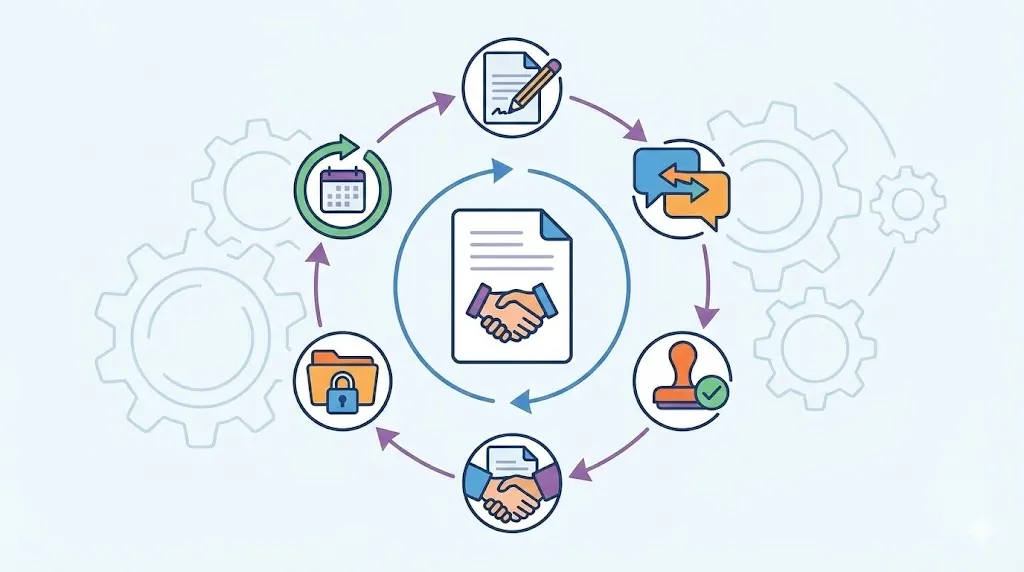
Use this operating sequence:
Identify the source clause and related documents.
Therefore, describe the action in plain language so the responsible party knows exactly what must be done.
Confirm when the obligation is triggered and how its timing is calculated.
Give performance responsibility to an owner and designate a backup.
State what records or other materials will establish that the obligation has been fulfilled.
Define the reminder schedule, including the escalation rules.
Have the owner review the entry and verify its accuracy.
When the task is complete, document completion and attach the supporting proof.
Send any dispute or delay through the designated escalation channel.
Consequently, after an amendment or renewal, update the record accordingly.
The U.S. National Archives emphasizes reliable records management, including retention, access, and proper disposition. Obligation tracking should follow a similar principle. Keep the source document, activity history, and completion evidence together.
Build review points into the contract lifecycle. Run an obligation review during intake, negotiation, approval, signature, onboarding, renewal, amendment, and termination. Next, this prevents a new task from appearing without an owner.
Make business teams part of the process. As a result, legal should not extract every detail in isolation. Procurement can provide context on supplier workflows, while Finance confirms payment rules and Security specifies what documentation is needed for technology controls.
Train users to perform the work rather than memorize theory. Show them how to find a task, acknowledge it, attach evidence, request help, and report a dispute. Short, role specific training works better than a long explanation of contract law.
Audit the process each quarter. Select a sample of contracts and compare the source terms with the obligation records. Look for missing triggers, wrong owners, outdated dates, and weak evidence.
Review the results with process owners. If supporting records are routinely missing, strengthen the documentation standard. When alerts routinely go unanswered, reassess ownership as well as escalation. Missed amendment changes warrant a formal change review.
Related Article: 7 Contract Management Principles Every Legal Team Needs
How Can Technology Help Prevent Misses?
Technology helps when it supports a clear process. Additionally, it cannot, however, fix vague ownership, poor data, or weak review habits on its own. Start with the business rules, then configure the system around those rules.
A central contract repository gives teams one trusted location. It should support full text search, metadata, version history, and access controls. Users should find the signed agreement and its amendments without searching separate drives.
Optical character recognition, or OCR, makes scanned contracts searchable. This matters during legacy contract cleanup. Many older agreements exist as image files, so ordinary search tools cannot read their terms.
Artificial intelligence can also extract key data from contracts. The system may identify parties, dates, payment terms, renewal clauses, reporting duties, and other commitments. Important results still require human review before the company relies on them.
Moreover, aI summaries give busy stakeholders a faster way to understand a contract. A useful summary should highlight obligations, deadlines, liability terms, renewal rules, governing law, and key risks. It should point users back to the source clause.
Extraction quality depends on context. A system must read definitions, schedules, amendments, and cross references. A deadline in one section may, for instance, depend on a term defined several pages earlier.
Where available, build confidence scores and review queues into the workflow. Send low-confidence extractions to legal or business reviewers, who can validate them. Without that review, a polished dashboard may hide how uncertain the underlying data is.
Workflow automation handles the recurring operational work associated with each duty. The system can route a task, send reminders, request evidence, escalate overdue items, and update status. Furthermore, this reduces the amount of work that relies on memory or personal calendars.
Integrations can link obligation data with business systems. For example:
An ERP can validate payment and rebate events.
Customer commitments can be surfaced through the CRM.
Supplier performance reporting can flow from the procurement tool.
Certification tracking can be tied to the security system.
Execution status can be verified through an e signature tool.
Critical deadlines can appear on the calendar.
Approved notifications can then be distributed through an email tool.
Integration design needs control. Do not copy every field into every system. Decide which platform owns each data point. Also, maintain an auditable record of changes, including failed data transfers.
A dashboard earns its place when it answers questions people need to act on. What critical duties are due this month? Which owners are carrying overdue tasks? Are any suppliers showing a recurring pattern of failure? Which renewals require a decision? Which contracts lack supporting evidence?
Use filters for business unit, region, contract type, owner, risk level, and due date. Executives require a portfolio-level view. Task owners, by contrast, need an actionable shortlist. Legal teams need access to source clauses and audit history.
Therefore, access controls keep sensitive information restricted. Not every employee should view pricing, employment terms, or litigation language. Set permissions by role, business unit, entity, and geography.
Audit trails support accountability. As a result, the system should record who created, changed, approved, reassigned, or completed an item. It should also preserve the prior value after a change.
The International Organization for Standardization describes compliance management as a system of policies, processes, and controls. Obligation technology should fit that wider system. It should help teams show what they knew, who acted, and when they acted.
Select technology with practical tests. Ask vendors to demonstrate a real contract, not a perfect sample. Test an amendment, a scanned document, a conditional deadline, and a duty assigned to an external party.
Check these capabilities during evaluation:
Bulk contract import
OCR for scanned agreements
AI metadata and obligation extraction
Human review and correction
Custom fields and obligation types
Recurring and event based deadlines
Automated alerts and escalation
Evidence attachments
Source clause links
Version history
Role based permissions
Audit reports
Business system integrations
Configurable dashboards
No code workflow changes
Plan the rollout in stages. Start with a high value contract group, such as strategic suppliers or major customers. Test the data model, alert timing, ownership rules, and reports before expanding.
Measure results after launch. Track captured credits, avoided renewals, completion rates, overdue tasks, and time spent searching for contract terms. Compare those results against the manual-process baseline.
Technology should sharpen decisions rather than generate additional noise. An excessive number of alerts may lead users to disregard them all. Apply severity levels, sensible timing, and clear task instructions.
Review automation rules as the business changes. New regulations, acquisitions, products, and contract types may require new fields or workflows. A flexible system should let administrators adjust these rules without waiting for a long development cycle.
Related articles: 20 Key Contract Clauses Every Business Should Know in 2026
How Contract Management Software Supports Obligation Tracking
Generic contract management software gives teams a shared repository, structured workflows, and automated alerts. Additionally, it can also connect contract terms with owners, deadlines, evidence, and performance data. This helps legal and business teams act before a missed duty becomes a financial or legal problem.
Volody supports this work with AI contract summaries, metadata extraction, obligation tracking, configurable reminders, workflow automation, search, audit trails, and dashboards. Teams can identify key duties, assign owners, monitor progress, and keep proof with the related agreement.
Ready to make contract management more efficient? Learn more about Volody's CLM Software.
FAQ
What does a contractual obligation mean?
Additionally, a contractual obligation is a duty that a party must perform. Examples include making payments, delivering services, submitting reports, meeting standards, or sending notices. The duty may apply once or repeat over time.
Why do companies miss contract obligations?
Companies miss duties when contracts sit in scattered locations and no one owns the related tasks. Dense language, unclear triggers, staff changes, and weak reminders add risk. Amendments can also change obligations without changing the tracking process.
Who should own contract obligations?
The person or team responsible for carrying out the action should own the task. Legal should explain the term and help resolve uncertainty. A manager or backup owner should receive escalations for critical or overdue items.
Moreover, how can teams track obligations without CLM software?
Teams can begin with a controlled contract inventory and a shared obligation register. Each entry should include the owner, trigger, deadline, evidence, and escalation path. Manual tools can work for small volumes, but they become harder to control as contract numbers grow.
Can AI identify obligations in contracts?
AI can help locate clauses, dates, parties, and potential duties. Human review is still required when the language is conditional, the contract has been amended, or the agreement carries high risk. Before relying on the results, teams should retain the source clause and verify and correct the extracted data.
What evidence should prove obligation completion?
Evidence depends on the duty. It may include a receipt, report, certificate, approval, delivery record, payment confirmation, or email notice. Furthermore, store the evidence with the obligation and record who reviewed it.
How far in advance should teams receive renewal alerts?
Also, the right timing depends on contract value, notice rules, and the effort needed to decide. For strategic agreements, alerts may be appropriate six months or more ahead of the notice deadline. Less significant agreements can use shorter warning periods.
How should companies monitor obligations owed by suppliers?
Supplier duties belong in the same system used for internal duties. An internal relationship owner can monitor performance and request evidence. Failures should be tied to service credits, remedies, corrective actions, or escalation steps.
What should leaders measure after improving obligation management?
Establish clear owners, automate deadline tracking, and connect evidence to contract terms so teams reduce risk, capture value, and prevent costly misses.
About the Company

Volody AI CLM is an Agentic AI-powered Contract Lifecycle Management platform designed to eliminate manual contracting tasks, automate complex workflows, and deliver actionable insights. As a one-stop shop for all contract activities, it covers drafting, collaboration, negotiation, approvals, e-signature, compliance tracking, and renewals. Built with enterprise-grade security and no-code configuration, it meets the needs of the most complex global organizations. Volody AI CLM also includes AI-driven contract review and risk analysis, helping teams detect issues early and optimize terms. Trusted by Fortune 500 companies, high-growth startups, and government entities, it transforms contracts into strategic, data-driven business assets.





" height="216.72211px" id="FYO0bO80Y" transform="translate(3 6.105)" width="206.073px"/><path d="M 108.174 222 C 88.432 222 70.303 217.239 53.785 207.717 C 37.267 198.196 24.173 185.052 14.504 168.285 C 4.835 151.312 0 132.165 0 110.845 C 0 89.731 4.835 70.792 14.504 54.025 C 24.173 37.052 37.267 23.804 53.785 14.282 C 70.303 4.761 88.432 0 108.174 0 C 128.116 0 146.246 4.761 162.562 14.282 C 179.08 23.804 192.073 37.052 201.541 54.025 C 211.21 70.792 216.044 89.731 216.044 110.845 C 216.044 132.165 211.21 151.312 201.541 168.285 C 192.073 185.052 179.08 198.196 162.562 207.717 C 146.044 217.239 127.915 222 108.174 222 Z M 108.174 183.189 C 120.864 183.189 132.044 180.291 141.713 174.495 C 151.382 168.492 158.936 160.006 164.375 149.035 C 169.814 138.064 172.533 125.334 172.533 110.845 C 172.533 96.355 169.814 83.729 164.375 72.965 C 158.936 61.994 151.382 53.611 141.713 47.815 C 132.044 42.02 120.864 39.122 108.174 39.122 C 95.483 39.122 84.202 42.02 74.332 47.815 C 64.663 53.611 57.109 61.994 51.67 72.965 C 46.231 83.729 43.511 96.355 43.511 110.845 C 43.511 125.334 46.231 138.064 51.67 149.035 C 57.109 160.006 64.663 168.492 74.332 174.495 C 84.202 180.291 95.483 183.189 108.174 183.189 Z" fill="rgba(255, 255, 255, 0.12)" height="222px" id="aa1McFcE9" transform="translate(227.183 3)" width="216.04399999999998px"/><path d="M 42.302 182.257 L 111.799 182.257 L 111.799 216.722 L 0 216.722 L 0 0 L 42.302 0 Z" fill="rgba(255, 255, 255, 0.12)" height="216.72211px" id="yRq4AnrsX" transform="translate(477.721 6.105)" width="111.79899999999998px"/><path d="M 108.174 222 C 88.432 222 70.303 217.239 53.785 207.717 C 37.267 198.196 24.173 185.052 14.504 168.285 C 4.835 151.312 0 132.165 0 110.845 C 0 89.731 4.835 70.792 14.504 54.025 C 24.173 37.052 37.267 23.804 53.785 14.282 C 70.303 4.761 88.432 0 108.174 0 C 128.116 0 146.246 4.761 162.562 14.282 C 179.08 23.804 192.073 37.052 201.541 54.025 C 211.21 70.792 216.045 89.731 216.045 110.845 C 216.045 132.165 211.21 151.312 201.541 168.285 C 192.073 185.052 179.08 198.196 162.562 207.717 C 146.044 217.239 127.915 222 108.174 222 Z M 108.174 183.189 C 120.864 183.189 132.044 180.291 141.713 174.495 C 151.382 168.492 158.936 160.006 164.375 149.035 C 169.814 138.064 172.534 125.334 172.534 110.845 C 172.534 96.355 169.814 83.729 164.375 72.965 C 158.936 61.994 151.382 53.611 141.713 47.815 C 132.044 42.02 120.864 39.122 108.174 39.122 C 95.483 39.122 84.202 42.02 74.332 47.815 C 64.663 53.611 57.108 61.994 51.67 72.965 C 46.231 83.729 43.511 96.355 43.511 110.845 C 43.511 125.334 46.231 138.064 51.67 149.035 C 57.108 160.006 64.663 168.492 74.332 174.495 C 84.202 180.291 95.483 183.189 108.174 183.189 Z" fill="rgba(255, 255, 255, 0.12)" height="222px" id="mo8HQspQ0" transform="translate(609.155 3)" width="216.04500000000007px"/><path d="M 73.727 0 C 95.885 0 115.324 4.45 132.044 13.351 C 148.967 22.252 161.957 34.982 171.027 51.541 C 180.287 67.894 184.917 86.937 184.917 108.671 C 184.917 130.405 180.287 149.449 171.027 165.801 C 161.957 181.947 148.967 194.47 132.044 203.371 C 115.324 212.271 95.885 216.722 73.727 216.722 L 0 216.722 L 0 0 Z M 72.216 179.773 C 94.374 179.773 111.497 173.564 123.583 161.144 C 135.669 148.724 141.713 131.233 141.713 108.671 C 141.713 86.109 135.669 68.515 123.583 55.888 C 111.497 43.055 94.374 36.638 72.216 36.638 L 42.302 36.638 L 42.302 179.773 Z" fill="rgba(255, 255, 255, 0.12)" height="216.72211px" id="I3iXX5Hi_" transform="translate(859.693 6.105)" width="184.91699999999992px"/><path d="M 185.22 0 L 113.91 141.273 L 113.91 216.722 L 71.61 216.722 L 71.61 141.273 L 0 0 L 47.74 0 L 93.06 99.046 L 138.08 0 Z" fill="rgba(255, 255, 255, 0.12)" height="216.72211px" id="nzHyWC0_d" transform="translate(1061.78 6.105)" width="185.22000000000003px"/></svg>)