

Small businesses often juggle multiple roles with limited resources. Imagine a growing startup chasing new clients while handling contracts on scattered spreadsheets and email threads. Missed deadlines, unclear terms, and late payments quickly pile up. This scenario is common. Effective contract management is no longer optional - it’s essential for small businesses aiming to thrive in 2026. This guide breaks down how to build a reliable contract management process that safeguards cash flow, reduces risk, and fuels growth.
TL;DR
Small businesses face risks such as delayed payments, unmet obligations, and revenue loss when contract management is inefficient.
Additionally, centralizing contract storage combined with process automation drives significant gains in workflow efficiency without the need for additional personnel.
The use of templates integrated with real-time collaboration tools minimizes errors and expedites both the drafting stage and contract finalization.
Establishing clear ownership alongside defined approval protocols is critical to ensuring contracts do not stall or get overlooked.
Small businesses need affordable, easy-to-use contract software that delivers measurable ROI.
Contract management software simplifies compliance, audit readiness, and contract tracking.
Why Contract Management Is Critical for Small Businesses
Contracts form the foundation of every business agreement. Additionally, these documents delineate payment conditions, clarify roles and responsibilities, define timelines, and incorporate legal protections. For small businesses, the impact of these agreements extends deeply into financial stability and market standing. Yet many small companies treat contracts informally to save time or money. This approach creates risks that can quickly spiral out of control.
Related Articles: Financial Contract Management: Best practices
The Hidden Risks of Informal Contract Practices
Small businesses often lack dedicated legal teams. Contract duties fall to finance, operations, or even the founder. Without clear processes or ownership, contracts get lost in inboxes or shared drives. This leads to:
Late payments: According to a UK study, 84% of small businesses experience late payments, with £14 billion owed in overdue invoices.
Missed renewals: Failure to track contract expirations often causes revenue loss or unintended service disruptions.
Unclear obligations: Without documented terms, disputes over deliverables or liabilities become common.
Legal exposure: Informal agreements may lack enforceable clauses, exposing businesses to risk.
These issues threaten a small business’s survival. Delays in cash flow can halt operations or lead to increased borrowing. Furthermore, legal conflicts, on the other hand, consume valuable resources and attention. Addressing these challenges requires a disciplined and structured approach to contract management.
Related Article: Mastering Automotive Contract Management at Full Speed
Contracts as Growth Enablers
Contracts transcend mere protection by serving as catalysts for expansion. Well-defined agreements foster confidence among customers, suppliers, and partners. They set expectations, reduce misunderstandings, and speed decision-making. When contracts flow smoothly, businesses can focus on scaling, not firefighting.
Related articles: Contract Management for Small Business: A Complete Guide
What Does Effective Contract Management Look Like?
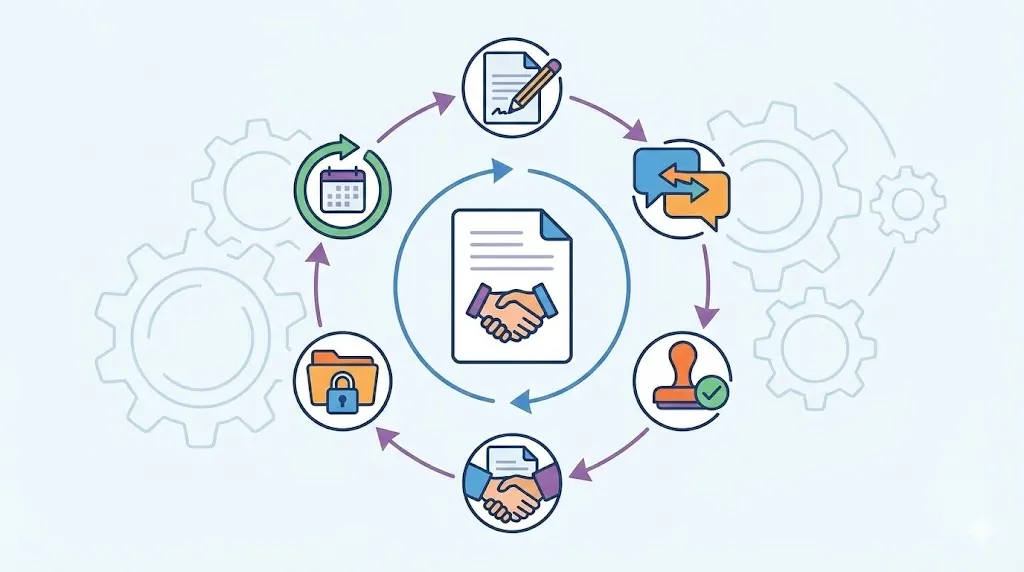
Contract management involves a range of processes dedicated to the creation, storage, tracking, and enforcement of contracts. Additionally, for small businesses in particular, the system must balance simplicity, efficiency, and scalability. Here are key elements:
Centralized Contract Storage
Storing contracts in a single, secure repository reduces the risk of loss and confusion. Physical files are vulnerable to damage or misplacement. Digital storage facilitates several critical advantages:
Easy access: Quickly find contracts with search tools and filters.
Security measures: Use encryption and control user permissions to safeguard sensitive information.
Audit readiness: Keep comprehensive records to support compliance and facilitate reviews.
Automated Contract Creation
Moreover, drafting every contract from scratch consumes valuable time. Templates reduce this burden by standardizing language and fields. Automation tools can:
Pull data from CRM or finance systems to fill contract details.
Guide users through simple Q&A forms to generate contracts.
Ensure consistent, approved language to reduce legal risk.
Real-Time Collaboration
Contracts typically require input from multiple stakeholders, including sales, finance, legal departments, and clients. Collaboration capabilities facilitate:
The ability to comment and suggest edits directly on documents.
Tracking changes and version history to avoid confusion.
Accelerated negotiations by consolidating discussions in one platform.
Clear Ownership and Approval Workflows
Contracts need champions. Assigning responsibility ensures agreements don’t stall. Approval workflows automate:
Routing contracts to the right people based on value or risk.
Sending reminders and escalating overdue approvals as needed.
Enforcing compliance with company policies.
Tracking and Alerts
Failing to meet deadlines can severely impact small businesses. Contract management tools can track:
Renewal dates to avoid losing business or auto-renewing unwanted terms.
Payment milestones to enforce cash flow.
Obligations and deliverables to maintain good relationships.
Alerts notify stakeholders ahead of critical dates, helping teams stay proactive.
Related articles: What is Contract Management? Key Concepts Explained (2025)
5 Challenges Small Businesses Face in Contract Management
Small businesses encounter a distinct set of challenges that differ markedly from those faced by larger corporations. Additionally, addressing these obstacles requires a nuanced approach tailored to their unique operational contexts.
1. Limited Legal Expertise
In many small enterprises, access to dedicated in-house legal counsel is uncommon. The level of contract knowledge varies widely among employees. Consequently, contract quality often lacks consistency, which elevates the potential for risk.
2. Resource Constraints
The cost associated with employing dedicated contract managers or legal advisors is often prohibitive. Small teams juggle contracts alongside core responsibilities, causing delays and errors.
3. Disorganized Document Storage
Contracts dispersed across multiple platforms-email, shared drives, personal folders-create significant confusion. Moreover, finding a contract quickly becomes a time-consuming task.
4. Manual Processes
The absence of automation means that contract drafting, review, and approval depend entirely on manual procedures. This slows down deal cycles and increases the chance of mistakes.
5. Lack of Visibility and Control
Small businesses often lack tools to monitor contract status, deadlines, or risk factors. This reduces their ability to act proactively.
Related articles: Best Contract Management Software in 2026: Top 20 CLM Tools
How to Build a Contract Management Process That Works
Small businesses can build a reliable contract management process by following these steps:
Step 1: Centralize Contract Storage
Start by gathering all contracts into a single digital repository. Additionally, opt for cloud storage solutions that offer robust security protocols. Organize contracts by type, client, or date.
Step 2: Create and Use Templates
Standardize contract creation by preparing templates tailored to frequent agreement types such as sales contracts, service agreements, and NDAs. These templates enhance efficiency and maintain uniformity in terms.
Step 3: Assign Contract Owners
Designate a responsible individual or department to manage each contract, whether that be finance, operations, or the business owner. Establishing clear accountability ensures contracts are managed diligently.
Step 4: Set Up Approval Workflows
Moreover, establish approval criteria based on contract value, risk factors, and other relevant considerations. Employ automated routing and notification systems to sustain progress throughout the approval cycle.
Step 5: Track Key Dates and Obligations
Leverage calendar reminders or software alerts to monitor renewals, payment deadlines, and deliverables. Staying ahead avoids costly oversights.
Step 6: Review and Update Regularly
Contracts and processes should be reviewed periodically. Update templates and workflows to reflect changes in law, business needs, or market conditions.
Related articles: 10 Key Contract Clauses Every Business Should Know in 2026
Practical Examples of Contract Management in Action
A small marketing agency uses templates and automation to generate client contracts in minutes. Additionally, this approach accelerates onboarding processes while minimizing errors.
To improve contract accessibility and security, a local construction firm consolidates all agreements within a cloud-based repository.
Contract management includes setting automated notifications for renewal dates and payment milestones, which enhances cash flow management.
Within a tech startup, the operations manager is designated as the contract owner. Approval workflows mandate legal review for contracts exceeding a specified threshold, thereby mitigating risk.
Related articles: Mastering Digital Contract Management: A Strategic Guide
Why Contract Management Software Matters
Small businesses need tools that simplify contract management without adding complexity or cost. Modern contract lifecycle management (CLM) software offers:
Centralized repository: Secure, searchable storage for all contracts.
Template automation: Leverage pre-approved language to accelerate contract generation.
Collaboration tools: Enable multiple stakeholders to edit, comment, and manage versions seamlessly.
Approval workflows: Automated routing and reminders.
Alerts and tracking: Notifications for renewals, obligations, and deadlines.
Reporting: Dashboards to monitor contract status and performance.
These features reduce manual work, improve accuracy, and help small businesses stay compliant and competitive.
Related articles: 5 Tips for Effective Contract Collaboration: A Short Guide
How CLM Software Solves This
A CLM Software optimizes each phase of the contract lifecycle. Additionally, it reduces the burden of administrative duties while improving oversight. Small businesses benefit from secure storage of contracts within a centralized system governed by role-based access controls.
Volody offers a CLM platform designed specifically to meet the demands of small businesses with an intuitive interface.
The platform integrates AI capabilities for drafting, reviewing, and extracting metadata from contracts to streamline operations. Automated approval sequences help avoid delays. Moreover, volody’s secure centralized repository combined with advanced search functions ensures swift access to contracts.
Seeking an improved solution for contract oversight? Explore Volody's CLM Software.
Related articles: Legacy Contracts: How to Effectively Migrate to a CLM
FAQ
What is contract management, and why does it matter for small businesses?
Contract management encompasses drafting, storing, monitoring, and enforcing contractual agreements. Within small enterprises, this discipline guarantees prompt payments, clearly delineated responsibilities, and legal safeguards.
By maintaining vigilant oversight, businesses can minimize risk, enhance cash flow, and foster sustainable growth.
How can small businesses start improving their contract management?
The initial step is consolidating contract storage into a protected digital repository. Create standardized templates for frequent agreements, designate contract custodians, and establish approval processes. Furthermore, employ calendar reminders or specialized software to monitor deadlines and responsibilities.
What are the risks of not managing contracts properly?
Inefficient contract management can result in delayed payments, overlooked renewals, disputes, and legal vulnerabilities. These challenges may disrupt cash flow, tarnish reputation, and escalate operational expenses.
Do small businesses need contract management software?
While not mandatory, implementing contract lifecycle management software can greatly enhance operational efficiency. It reduces manual effort, improves accuracy, and increases transparency. Organizations with expanding contract portfolios particularly benefit from such solutions.
How does automation help in contract management?
Also, automation accelerates contract generation by utilizing templates and integrating data from other platforms. It also facilitates routing for approvals, dispatching reminders, and tracking critical dates. This reduces inaccuracies and shortens negotiation timelines.
Can non-legal staff manage contracts effectively?
Yes, provided there are well-defined procedures and appropriate technology, non-legal personnel can competently handle contracts. Templates, approval workflows, and collaborative functionalities support users and mitigate risks.
What features should small businesses look for in contract software?
Essential capabilities include centralized contract repositories, template libraries, collaborative communication tools, approval workflow automation, proactive notifications, and comprehensive reporting features.
Cost-effectiveness, intuitive usability, and scalability aligned with business growth are also critical considerations.
Therefore, how do contract management tools improve compliance?
They maintain comprehensive records, monitor obligations, and generate audit trails. Automated notifications help prevent missed deadlines. These features facilitate adherence to legal and regulatory standards.
What are common contract management mistakes small businesses make?
Typical pitfalls are informal agreements, decentralized storage, ambiguous ownership, manual processes, and neglecting renewal dates. Such errors elevate risk and hinder growth.
How often should small businesses review their contract processes?
Regular assessments are essential. At a minimum, contracts and workflows should be reviewed annually or whenever business needs shift to ensure continued relevance and effectiveness.
About the Company

Volody AI CLM is an Agentic AI-powered Contract Lifecycle Management platform designed to eliminate manual contracting tasks, automate complex workflows, and deliver actionable insights. As a one-stop shop for all contract activities, it covers drafting, collaboration, negotiation, approvals, e-signature, compliance tracking, and renewals. Built with enterprise-grade security and no-code configuration, it meets the needs of the most complex global organizations. Volody AI CLM also includes AI-driven contract review and risk analysis, helping teams detect issues early and optimize terms. Trusted by Fortune 500 companies, high-growth startups, and government entities, it transforms contracts into strategic, data-driven business assets.





" height="216.72211px" id="FYO0bO80Y" transform="translate(3 6.105)" width="206.073px"/><path d="M 108.174 222 C 88.432 222 70.303 217.239 53.785 207.717 C 37.267 198.196 24.173 185.052 14.504 168.285 C 4.835 151.312 0 132.165 0 110.845 C 0 89.731 4.835 70.792 14.504 54.025 C 24.173 37.052 37.267 23.804 53.785 14.282 C 70.303 4.761 88.432 0 108.174 0 C 128.116 0 146.246 4.761 162.562 14.282 C 179.08 23.804 192.073 37.052 201.541 54.025 C 211.21 70.792 216.044 89.731 216.044 110.845 C 216.044 132.165 211.21 151.312 201.541 168.285 C 192.073 185.052 179.08 198.196 162.562 207.717 C 146.044 217.239 127.915 222 108.174 222 Z M 108.174 183.189 C 120.864 183.189 132.044 180.291 141.713 174.495 C 151.382 168.492 158.936 160.006 164.375 149.035 C 169.814 138.064 172.533 125.334 172.533 110.845 C 172.533 96.355 169.814 83.729 164.375 72.965 C 158.936 61.994 151.382 53.611 141.713 47.815 C 132.044 42.02 120.864 39.122 108.174 39.122 C 95.483 39.122 84.202 42.02 74.332 47.815 C 64.663 53.611 57.109 61.994 51.67 72.965 C 46.231 83.729 43.511 96.355 43.511 110.845 C 43.511 125.334 46.231 138.064 51.67 149.035 C 57.109 160.006 64.663 168.492 74.332 174.495 C 84.202 180.291 95.483 183.189 108.174 183.189 Z" fill="rgba(255, 255, 255, 0.12)" height="222px" id="aa1McFcE9" transform="translate(227.183 3)" width="216.04399999999998px"/><path d="M 42.302 182.257 L 111.799 182.257 L 111.799 216.722 L 0 216.722 L 0 0 L 42.302 0 Z" fill="rgba(255, 255, 255, 0.12)" height="216.72211px" id="yRq4AnrsX" transform="translate(477.721 6.105)" width="111.79899999999998px"/><path d="M 108.174 222 C 88.432 222 70.303 217.239 53.785 207.717 C 37.267 198.196 24.173 185.052 14.504 168.285 C 4.835 151.312 0 132.165 0 110.845 C 0 89.731 4.835 70.792 14.504 54.025 C 24.173 37.052 37.267 23.804 53.785 14.282 C 70.303 4.761 88.432 0 108.174 0 C 128.116 0 146.246 4.761 162.562 14.282 C 179.08 23.804 192.073 37.052 201.541 54.025 C 211.21 70.792 216.045 89.731 216.045 110.845 C 216.045 132.165 211.21 151.312 201.541 168.285 C 192.073 185.052 179.08 198.196 162.562 207.717 C 146.044 217.239 127.915 222 108.174 222 Z M 108.174 183.189 C 120.864 183.189 132.044 180.291 141.713 174.495 C 151.382 168.492 158.936 160.006 164.375 149.035 C 169.814 138.064 172.534 125.334 172.534 110.845 C 172.534 96.355 169.814 83.729 164.375 72.965 C 158.936 61.994 151.382 53.611 141.713 47.815 C 132.044 42.02 120.864 39.122 108.174 39.122 C 95.483 39.122 84.202 42.02 74.332 47.815 C 64.663 53.611 57.108 61.994 51.67 72.965 C 46.231 83.729 43.511 96.355 43.511 110.845 C 43.511 125.334 46.231 138.064 51.67 149.035 C 57.108 160.006 64.663 168.492 74.332 174.495 C 84.202 180.291 95.483 183.189 108.174 183.189 Z" fill="rgba(255, 255, 255, 0.12)" height="222px" id="mo8HQspQ0" transform="translate(609.155 3)" width="216.04500000000007px"/><path d="M 73.727 0 C 95.885 0 115.324 4.45 132.044 13.351 C 148.967 22.252 161.957 34.982 171.027 51.541 C 180.287 67.894 184.917 86.937 184.917 108.671 C 184.917 130.405 180.287 149.449 171.027 165.801 C 161.957 181.947 148.967 194.47 132.044 203.371 C 115.324 212.271 95.885 216.722 73.727 216.722 L 0 216.722 L 0 0 Z M 72.216 179.773 C 94.374 179.773 111.497 173.564 123.583 161.144 C 135.669 148.724 141.713 131.233 141.713 108.671 C 141.713 86.109 135.669 68.515 123.583 55.888 C 111.497 43.055 94.374 36.638 72.216 36.638 L 42.302 36.638 L 42.302 179.773 Z" fill="rgba(255, 255, 255, 0.12)" height="216.72211px" id="I3iXX5Hi_" transform="translate(859.693 6.105)" width="184.91699999999992px"/><path d="M 185.22 0 L 113.91 141.273 L 113.91 216.722 L 71.61 216.722 L 71.61 141.273 L 0 0 L 47.74 0 L 93.06 99.046 L 138.08 0 Z" fill="rgba(255, 255, 255, 0.12)" height="216.72211px" id="nzHyWC0_d" transform="translate(1061.78 6.105)" width="185.22000000000003px"/></svg>)