

A rigorous contract performance benchmarking program gives business units a reliable basis for comparing speed, value, risk, and compliance. By applying consistent definitions and analyzing comparable data, organizations can identify bottlenecks, missed obligations, weak terms, and revenue leakage. The strongest programs translate these findings into measurable process improvements, clear accountability, and better commercial outcomes.
TL;DR
Define shared metrics so business units compare contract speed, value, risk, and compliance fairly.
Combine internal comparisons with external context to separate local process issues from market conditions.
Track cycle time, renewals, obligations, approvals, clause changes, disputes, and contract value outcomes consistently.
Address poor data, unequal workloads, unclear definitions, and defensive reactions before ranking business unit performance.
Turn benchmark gaps into practical standards, workflow changes, playbook updates, and focused technology investments.
Maintain trust through clear ownership, regular reviews, strong data controls, and documented interpretation rules.
Define the Scope and Objectives of Benchmarking
Align benchmarks with business priorities
Start with the decisions that benchmarking should support. A revenue team may need faster approvals. Procurement may need stronger supplier terms. Legal may need fewer risky deviations. Finance may need better renewal control.
The goal should connect to a clear business result. This keeps Contract Performance Benchmarking focused on useful action. It also prevents teams from collecting metrics without using them.
A company might compare units to reduce review delays. Another company might focus on missed renewals or weak obligation tracking. Both goals are valid. They require different measures and different owners.
Write the goal in plain language. For example, “reduce approval delays for standard supplier contracts” gives teams direction. It also makes later results easier to judge.
Establish comparable business unit boundaries
Define which units belong in the comparison. Include the business units, regions, contract types, teams, and owners. Set the review period before gathering results.
Then record important differences between units. One team may handle simple purchase orders. Another may manage global technology deals. Their cycle times should not share one target.
Note staffing levels, approval layers, contract values, and risk levels. Record special rules for regulated markets. This information gives context when teams review performance gaps.
Use peer groups when direct comparisons lack fairness. A regional sales unit may compare best with similar sales units. A strategic procurement team may need a separate group.
Distinguish internal and external benchmarking
Internal benchmarking compares teams inside one organization. It often gives the fastest path to improvement. Internal teams share policies, systems, and leadership goals.
External benchmarking adds market context. It can show whether a cycle time looks typical across similar companies. However, external data may use different definitions or contract mixes.
Treat outside figures as context, not automatic targets. Internal trends usually offer clearer action. They show which process, policy, or team behavior needs attention.
Document the comparison design before reporting results. This step should state the objective, scope, data owner, reporting period, and decision. It should also list excluded records and known data limits.
Related articles: Essential Metrics to Track for Smarter Contract Management
Build a Consistent Contract Performance Measurement Framework
Standardize KPI definitions
A KPI, or key performance indicator, measures a defined business result. Every unit must calculate each KPI in the same way. Otherwise, similar labels can hide different methods.
Define cycle time from intake to signature, or from draft to signature. Choose one start point and one end point. Record exclusions for paused or cancelled contracts.
Define negotiation duration separately from approval time. Track renewal rate using eligible contracts, not every signed record. Define compliance rate using confirmed obligations and due dates.
Include both speed and quality. Useful measures cover clause deviation, exception frequency, dispute rates, and obligation completion. Contract Management Metrics should explain performance, not merely count activity.
Organize data across the contract lifecycle
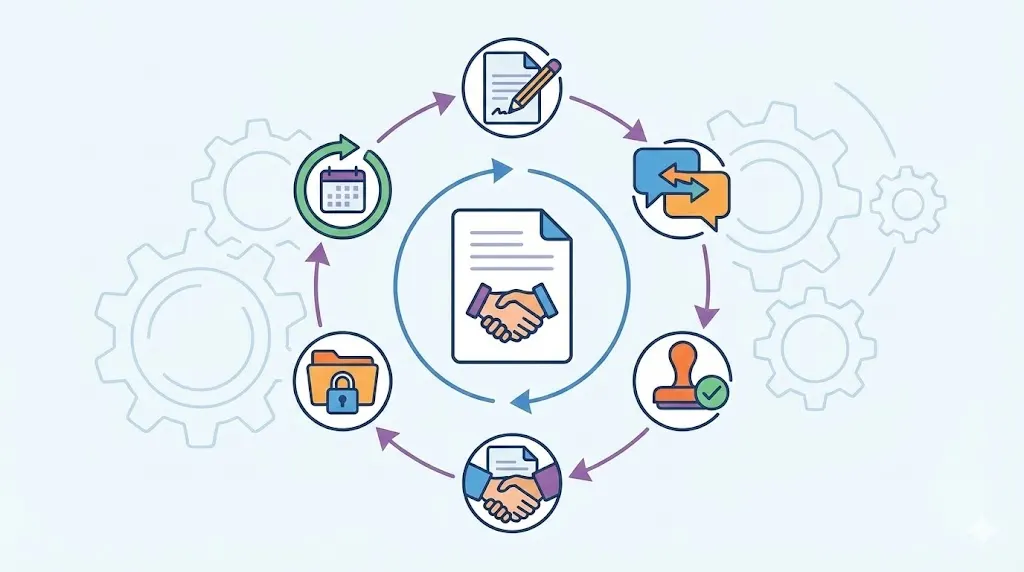
Build the model around each contract stage. Include intake, drafting, negotiation, approval, signature, renewal, and obligation work. Capture both dates and responsible teams.
Connect workflow automate data with commercial results. Record contract value, payment terms, concessions, and renewal outcomes. Include risk ratings, clause changes, and supplier performance where possible.
This approach supports Contract Performance Analysis across the full lifecycle. It also helps teams see links between slow approvals and lost value. A fast signature may still hide weak controls or missed commitments.
Create a KPI dictionary before publishing dashboards. The dictionary should state each formula, source, owner, review frequency, and data quality rule. It should also explain how teams handle missing or changed records.
Related articles: How Machine Learning Transforms Contract Management Today
4 Key Challenges in Cross Unit Benchmarking
1. Inconsistent data definitions and quality
Poor data can make strong teams look weak. Missing timestamps can inflate cycle times. Duplicate records can count one contract twice.
Business units may classify agreements differently. One team may label a contract high risk. Another may use the same label for a routine deal.
Validate records before ranking teams. Check dates, owners, contract types, values, and status fields. Remove duplicates and explain every correction.
Contract analytics can help find missing fields and unusual records. Still, people must confirm whether the data reflects real work. Automation cannot fix unclear business rules.
2. Unequal workload and contract complexity
Workload differences can create fair performance gaps. A unit managing global agreements may need more reviews. A unit handling standard forms may finish sooner.
Segment results by contract type, value, risk, geography, and negotiation complexity. Separate routine, complex, strategic, and highly regulated agreements.
Use medians and ranges when unusual cases distort averages. Review outliers rather than deleting them without explanation. An outlier may show a serious process or risk issue.
Fair benchmarking does not hide differences. It makes those differences visible and manageable. Leaders can then set standards for each useful peer group.
3. Limited adoption and defensive comparisons
Teams may view benchmarks as punishment. That reaction can weaken data quality and reduce honest reporting. It can also turn collaboration into competition.
Explain the method before sharing results. Show the data sources, formulas, exclusions, and peer groups. Let unit leaders check the findings before final publication.
Focus reports on process improvement, not personal judgment. Do not use unit results as direct employee ratings. Ask what support or policy change could close each gap.
Shared ownership builds trust. Legal, procurement, finance, and business leaders should review results together. They should agree on actions before publishing the next scorecard.
4. Weak connections between metrics and outcomes
Faster work does not always mean better work. A short review may increase risky concessions. A high renewal rate may hide poor pricing or service.
Use a balanced scorecard that combines efficiency, quality, risk, and value. Pair cycle time with clause deviation and approval exceptions. Pair renewal rate with revenue and obligation performance.
Review disputes, missed obligations, and supplier results beside workflow data. These measures show whether Contract process speed KPIs supports business goals. They also prevent narrow targets from driving poor decisions.
A diagnostic review should test four areas. Check data integrity, workload fairness, stakeholder trust, and outcome relevance. If one area fails, pause ranking and correct the method.
Related articles: Best Contract Management Software: Top 10 CLM Tools
Compare Workflow Performance Across Business Units
Identify process stages that create delay
End-to-end cycle time hides the source of delay. Break the process into intake, drafting, redlining, approval, signature, and renewal preparation.
Compare median time at each stage. Then review the spread between faster and slower records. A wide spread may show inconsistent work, unclear rules, or uneven staffing.
Track queue time separately from active work time. A contract may spend days waiting for a business response. That delay needs a different remedy from slow legal review.
Stage-level data supports a useful Contract Management Dashboard. Leaders can see where work stops. Local teams can then address the right handoff.
Analyze negotiation and approval patterns
Compare the number of review rounds across business units. Track recurring fallback positions and escalation frequency. Also measure time spent on nonstandard clauses.
Repeated clause changes may signal weak templates. Frequent escalations may show unclear approval rights. Long approval queues may show too many required reviewers.
Use clause-level comparison to find unusual language. A clause outlier does not always signal poor work. It may reflect a valid market, product, or risk need.
The key is to investigate patterns, not isolated records. Contract Lifecycle Analytics can connect clause changes with delay, value, and risk. That link helps teams choose better negotiation strategies.
Interpret variation without oversimplifying
Variation may come from process design, system use, staffing, policy, or behavior. It may also reflect contract mix or local market needs. Do not assign blame before checking these causes.
Review dashboard data with people who handle the work. Ask where handoffs fail. Ask which rules create avoidable review rounds.
Compare units that use the same templates and approval paths. Then compare units with different rules. This approach separates policy effects from local execution issues.
A strong process comparison records stage, median time, variance, bottleneck, likely cause, and improvement owner. It turns a visible gap into a practical investigation.
Related articles: Top 10 Contract Management Software for Enterprises in 2026
Turn Benchmark Results into Practical Standards
Set realistic internal performance baselines
Reliable internal results can create useful target ranges. Avoid one universal target for every agreement. Routine contracts and strategic deals need different expectations.
Set separate standards for simple, complex, high-risk, and strategic agreements. Include acceptable ranges for cycle time and approval time. Add quality checks for risk and clause deviation.
Use past results as a starting point. Then test targets with legal, procurement, finance, and business teams. A target should stretch performance without encouraging unsafe shortcuts.
Refresh baselines after major process changes. New templates or approval rules may alter normal results. Old targets can become unfair when the work changes.
Prioritize high impact improvement opportunities
Not every gap deserves immediate action. Rank gaps by business value, frequency, risk exposure, and effort. This method keeps teams focused on meaningful problems.
A frequent delay may deserve priority over one unusual case. A small clause issue may deserve urgent action if it creates high risk. Review both size and consequence.
Separate symptoms from causes. A late signature may result from slow intake or unclear authority. Fixing the last handoff alone may not improve results.
Use Contract Management KPIs to track the chosen actions. Set a starting measure, a target change, an owner, and a review date. This makes improvement visible and testable.
Related articles: How to Scale Contract Organization for Growing Enterprises
Apply Remedies to Improve Contract Performance
Simplify repeatable workflows
Start with clear intake forms. Ask for the deal value, contract type, risk level, owner, and requested date. Complete intake data reduces later questions.
Use templates for common agreements. Add clause libraries and approved fallback positions. Give teams clear rules for handling exceptions.
Standardize approval routes by risk and value. Routine contracts should not follow the same path as strategic deals. This change can reduce delay while keeping controls in place.
Use playbooks to support consistent negotiation. A playbook explains preferred terms, fallback language, and escalation triggers. It helps business units follow shared negotiation strategies.
Improve collaboration between legal and business teams
Set service expectations for each contract group. State who submits requests, who reviews them, and who approves exceptions. Clear roles reduce repeated handoffs.
Create escalation paths for urgent or high-risk deals. Include named owners and response steps. Do not rely on informal messages or personal contacts.
Use shared dashboards for progress and blocked work. Business teams can see pending actions. Legal teams can see demand, risk, and recurring questions.
Add feedback after major deals. Ask which steps helped and which caused delay. Use that feedback to improve templates, policies, and training.
Use technology where it addresses a verified gap
Choose tools after confirming the process problem. A dashboard cannot fix missing ownership. Automation cannot fix an unclear approval rule.
Contract Management Software can centralize records and workflow data. It can also support alerts, searchable clauses, and renewal tracking. These features help when teams lack one reliable source.
Contract Management playbook can show trends by unit, owner, contract type, and risk. Use those views to monitor a defined action. Avoid building reports that no team reviews.
Compare pre-change and post-change results. Check whether the expected KPI moved. Also check for new risks, workarounds, or data gaps.
An improvement action plan should link each gap to an intervention. Include the owner, deadline, expected KPI change, and review date. This keeps benchmark findings tied to delivery.
Related articles: ContractWorks Overview: Cost, Features, and Alternative CLM
Govern, Report, and Refresh the Benchmarking Program
Assign accountability for data and action
Name an owner for every KPI. That person should explain the formula, check the source, and approve changes. A shared owner prevents silent definition drift.
Separate data validation from action delivery when possible. One group checks whether the result is sound. Another group leads the process response.
Include legal, procurement, finance, operations, and business units. Each group sees different contract risks and outcomes. Joint review creates better interpretation.
Record decisions in a simple governance log. Note changed formulas, excluded records, new peer groups, and approved targets. This record support audit rights readiness and trust.
Design useful reporting views
Executives need outcome summaries. They may focus on contract value, risk, renewal results, and revenue leakage. Keep those views short and clear.
Operational teams need bottleneck details. Show stage times, queues, exception rates, and open obligations. Let users filter by unit, contract type, owner, and team.
Business units need local action views. Show trends, peer ranges, target gaps, and assigned improvements. Avoid rankings without context.
Use medians, ranges, trends, and percentiles where suitable. A single average can hide uneven work. Segment results before drawing conclusions.
Create a continuous review cycle
Monitor operational data throughout the month. Hold formal benchmark reviews each quarter. Use a deeper annual review for definitions and peer groups.
Retire metrics that no longer support decisions. Add measures when business goals change. Review external comparisons when markets or contract policies shift.
Recheck results after system changes. New fields or legal workflows can change reported times. Compare old and new methods before declaring improvement.
Connect every review to action. Close completed items and explain delays. Carry unresolved issues into the next governance meeting.
Protect fairness and responsible interpretation
Restrict access to sensitive contract and supplier data. Use role-based permissions and clear sharing rules. Protect personal details and confidential commercial terms.
Do not treat business unit metrics as individual employee scores. Team results often reflect workload, policy, and market conditions. Individual judgments need more complete evidence.
Document assumptions behind every major comparison. Explain missing data, segmentation, exclusions, and unusual events. This record helps leaders interpret results fairly.
A quarterly agenda should cover data quality, KPI trends, improvement progress, benchmark changes, and unresolved issues. It should also confirm owners and next review dates.
Related articles: Master Contract Generation: A Comprehensive Guide
Why Contract Management Software Matters
Contract management software creates one shared record for contract data. It can connect cycle times, approvals, renewals, obligations, and compliance results. This makes cross-unit comparisons easier to trust.
Volody's CLM Software supports Contract Performance Benchmarking through AI Metadata Extraction, Contract Management Dashboard views, and Obligation Management. It can extract parties, dates, and payment terms from contracts. It can also show key risks, renewal dates, and required commitments in one workspace.
For example, a procurement leader can compare renewal performance across regions. The team can then find missed dates, review contract terms, and assign follow-up work.
Want to see how contract management software can simplify your legal workflows? Check out Volody's CLM Software.
FAQ
What is contract analytics and how does it support benchmarking against peers?
Contract analytics uses structured data to examine terms, workflows, obligations, and outcomes. It supports peer benchmarking by comparing similar units, portfolios, owners, or suppliers. Analytics can reveal outliers, bottlenecks, clause differences, missed obligations, and value gaps. Teams can then connect unusual results with specific process or contract changes.
Which contract KPIs are most important for benchmarking?
Useful KPIs include cycle time, negotiation duration, approval time, renewal performance, and obligation compliance. Teams should also track clause deviation, exception rates, disputes, contract value, and revenue leakage. The right mix balances speed with quality, risk, and commercial outcomes. Define each KPI clearly before comparing business units.
How do legal operations teams measure contract management efficiency?
Legal operations teams measure how contracts move through each lifecycle stage. They review intake volume, drafting time, negotiation rounds, approval delays, and signature time. They may also track automation use, exception rates, resource costs, and service levels. These measures become stronger when linked with risk, value, compliance, and stakeholder outcomes.
How should organizations normalize contract metrics across business units?
Organizations should segment results by volume, value, complexity, geography, and risk. They should also account for currency, regulatory rules, and negotiation needs. Median and percentile results can reduce the effect of unusual records. Document the normalization method and use it consistently across every reporting period.
What is a good contract cycle time?
A good cycle time depends on contract type, risk, value, and approval needs. Routine agreements should usually have simpler paths than strategic agreements. Measure intake, active work, and waiting time separately. Then compare similar contracts and review whether speed affects clause quality, compliance, or commercial value.
How often should contract performance benchmarks be reviewed?
Teams can monitor operational dashboards throughout the month. Formal benchmark reviews often work well each quarter. An annual review should reassess definitions, peer groups, targets, and external comparisons. Recheck the framework after system changes, policy updates, acquisitions, market shifts, or major changes in contract strategy.
How can benchmarking avoid becoming a punitive ranking exercise?
Adopt benchmarking as a fact-based improvement program: explain the method, protect sensitive data, account for workload differences, and require every major gap to produce an owned remediation plan. Use the next review to verify progress and strengthen shared standards.
About the Company

Volody AI CLM is an Agentic AI-powered Contract Lifecycle Management platform designed to eliminate manual contracting tasks, automate complex workflows, and deliver actionable insights. As a one-stop shop for all contract activities, it covers drafting, collaboration, negotiation, approvals, e-signature, compliance tracking, and renewals. Built with enterprise-grade security and no-code configuration, it meets the needs of the most complex global organizations. Volody AI CLM also includes AI-driven contract review and risk analysis, helping teams detect issues early and optimize terms. Trusted by Fortune 500 companies, high-growth startups, and government entities, it transforms contracts into strategic, data-driven business assets.






" height="216.72211px" id="FYO0bO80Y" transform="translate(3 6.105)" width="206.073px"/><path d="M 108.174 222 C 88.432 222 70.303 217.239 53.785 207.717 C 37.267 198.196 24.173 185.052 14.504 168.285 C 4.835 151.312 0 132.165 0 110.845 C 0 89.731 4.835 70.792 14.504 54.025 C 24.173 37.052 37.267 23.804 53.785 14.282 C 70.303 4.761 88.432 0 108.174 0 C 128.116 0 146.246 4.761 162.562 14.282 C 179.08 23.804 192.073 37.052 201.541 54.025 C 211.21 70.792 216.044 89.731 216.044 110.845 C 216.044 132.165 211.21 151.312 201.541 168.285 C 192.073 185.052 179.08 198.196 162.562 207.717 C 146.044 217.239 127.915 222 108.174 222 Z M 108.174 183.189 C 120.864 183.189 132.044 180.291 141.713 174.495 C 151.382 168.492 158.936 160.006 164.375 149.035 C 169.814 138.064 172.533 125.334 172.533 110.845 C 172.533 96.355 169.814 83.729 164.375 72.965 C 158.936 61.994 151.382 53.611 141.713 47.815 C 132.044 42.02 120.864 39.122 108.174 39.122 C 95.483 39.122 84.202 42.02 74.332 47.815 C 64.663 53.611 57.109 61.994 51.67 72.965 C 46.231 83.729 43.511 96.355 43.511 110.845 C 43.511 125.334 46.231 138.064 51.67 149.035 C 57.109 160.006 64.663 168.492 74.332 174.495 C 84.202 180.291 95.483 183.189 108.174 183.189 Z" fill="rgba(255, 255, 255, 0.12)" height="222px" id="aa1McFcE9" transform="translate(227.183 3)" width="216.04399999999998px"/><path d="M 42.302 182.257 L 111.799 182.257 L 111.799 216.722 L 0 216.722 L 0 0 L 42.302 0 Z" fill="rgba(255, 255, 255, 0.12)" height="216.72211px" id="yRq4AnrsX" transform="translate(477.721 6.105)" width="111.79899999999998px"/><path d="M 108.174 222 C 88.432 222 70.303 217.239 53.785 207.717 C 37.267 198.196 24.173 185.052 14.504 168.285 C 4.835 151.312 0 132.165 0 110.845 C 0 89.731 4.835 70.792 14.504 54.025 C 24.173 37.052 37.267 23.804 53.785 14.282 C 70.303 4.761 88.432 0 108.174 0 C 128.116 0 146.246 4.761 162.562 14.282 C 179.08 23.804 192.073 37.052 201.541 54.025 C 211.21 70.792 216.045 89.731 216.045 110.845 C 216.045 132.165 211.21 151.312 201.541 168.285 C 192.073 185.052 179.08 198.196 162.562 207.717 C 146.044 217.239 127.915 222 108.174 222 Z M 108.174 183.189 C 120.864 183.189 132.044 180.291 141.713 174.495 C 151.382 168.492 158.936 160.006 164.375 149.035 C 169.814 138.064 172.534 125.334 172.534 110.845 C 172.534 96.355 169.814 83.729 164.375 72.965 C 158.936 61.994 151.382 53.611 141.713 47.815 C 132.044 42.02 120.864 39.122 108.174 39.122 C 95.483 39.122 84.202 42.02 74.332 47.815 C 64.663 53.611 57.108 61.994 51.67 72.965 C 46.231 83.729 43.511 96.355 43.511 110.845 C 43.511 125.334 46.231 138.064 51.67 149.035 C 57.108 160.006 64.663 168.492 74.332 174.495 C 84.202 180.291 95.483 183.189 108.174 183.189 Z" fill="rgba(255, 255, 255, 0.12)" height="222px" id="mo8HQspQ0" transform="translate(609.155 3)" width="216.04500000000007px"/><path d="M 73.727 0 C 95.885 0 115.324 4.45 132.044 13.351 C 148.967 22.252 161.957 34.982 171.027 51.541 C 180.287 67.894 184.917 86.937 184.917 108.671 C 184.917 130.405 180.287 149.449 171.027 165.801 C 161.957 181.947 148.967 194.47 132.044 203.371 C 115.324 212.271 95.885 216.722 73.727 216.722 L 0 216.722 L 0 0 Z M 72.216 179.773 C 94.374 179.773 111.497 173.564 123.583 161.144 C 135.669 148.724 141.713 131.233 141.713 108.671 C 141.713 86.109 135.669 68.515 123.583 55.888 C 111.497 43.055 94.374 36.638 72.216 36.638 L 42.302 36.638 L 42.302 179.773 Z" fill="rgba(255, 255, 255, 0.12)" height="216.72211px" id="I3iXX5Hi_" transform="translate(859.693 6.105)" width="184.91699999999992px"/><path d="M 185.22 0 L 113.91 141.273 L 113.91 216.722 L 71.61 216.722 L 71.61 141.273 L 0 0 L 47.74 0 L 93.06 99.046 L 138.08 0 Z" fill="rgba(255, 255, 255, 0.12)" height="216.72211px" id="nzHyWC0_d" transform="translate(1061.78 6.105)" width="185.22000000000003px"/></svg>)