
Procurement teams carry a heavy load in companies. They juggle tight deadlines, last-minute requests, and complex negotiations. This constant pressure leads many procurement professionals to burnout, a state of mental and physical exhaustion that hurts productivity and morale. Understanding why procurement roles are so prone to burnout helps leaders take steps to protect their teams and improve outcomes.
TL;DR
Procurement burnout comes from constant pressure, last-minute demands, and unclear roles.
Additionally, teams frequently respond by either overextending beyond capacity or declining requests altogether, both of which exacerbate stress.
Clear processes and boundaries reduce reactive firefighting and improve team focus.
Deploying self-service platforms allows stakeholders to directly access necessary resources, significantly decreasing repetitive workload.
Transparent communication about the team's current capacity is essential for aligning expectations and optimizing how tasks are distributed.
Beyond automating routine processes, contract management software enhances transparency by delivering real-time insights into workflow progression.
Related Article: Top Contract Resources Every Procurement Team Needs
Why Do Procurement Professionals Burn Out More Often?
Procurement professionals face unique challenges that make burnout common. Additionally, unlike many other departments, procurement functions as a critical interface between internal teams and external suppliers. This role often places them under conflicting pressures from both sides.
The Pressure of Always Being On Call
Procurement is often seen as a support function. As a result, teams frequently need to adjust rapidly to new projects that arrive with minimal advance notice. When internal stakeholders bypass processes, procurement feels the strain to fix issues quickly. This constant reactivity drains energy and leaves little room for strategic work.
For instance, consider a procurement team at a mid-sized company faced with an urgent request. The product team needs to onboard a new supplier immediately to meet a looming launch deadline. They skip the usual approval steps and ask procurement to expedite the contract. The procurement team scrambles to review terms, negotiate, and get approvals, often working late hours. This cycle repeats frequently, wearing down the team.
Conflicting Roles Create Stress
Procurement teams often respond to last-minute requests in two ways:
The Tugboat Approach: Teams try to steer stakeholders back on track by adding processes retroactively. This approach entails additional workload and extended hours to address the resulting gaps.
The Blockade Approach: Teams refuse to help unless proper processes are followed, causing tension and delays.
Neither approach solves the root problem. The tugboat method causes overload, while the blockade creates frustration and poor relationships. Both increase stress and burnout risk.
Complex Negotiations and Difficult Conversations
Procurement professionals negotiate contracts, manage supplier relationships, and control costs. These tasks require diplomacy and resilience. Handling cost increases, supply risks, or contract disputes adds emotional strain. Over time, this can lead to exhaustion.
According to a Gartner survey, 70% of procurement leaders report high stress levels due to workload and stakeholder demands. This pressure contributes directly to burnout.
Related articles: Contract Management for Procurement: Elevate Your Strategy
What Are the Signs of Procurement Burnout?
Recognizing burnout early helps prevent long-term damage. Procurement professionals may show these signs:
Chronic fatigue and lack of motivation
Difficulty concentrating or making decisions
Increased irritability or frustration with colleagues
Physical symptoms like headaches or sleep problems
Reduced job satisfaction and engagement
If these symptoms persist, they affect team performance and retention. Leaders must act before burnout worsens.
Related articles: Vendor Negotiation: 4 Steps of Success Contract Negotiation
How Can Procurement Teams Prevent Burnout?
Preventing burnout requires changes in mindset, processes, and communication. Additionally, procurement leaders can implement several targeted strategies to safeguard their teams.
1. Shift From Reactive to Proactive Procurement
Stop firefighting last-minute requests. Instead, create a system to evaluate urgent demands and prioritize effectively. Use a simple framework:
Measure Impact: Assess what happens if procurement is bypassed. Is it critical or low risk?
Assess Options: Identify which actions can realistically be completed within the available timeframe.
Solve What Matters: When possible, assign non-core risks to other departments better suited to manage them.
Transition to Value: Direct resources toward projects where procurement adds distinct strategic advantage.
This method curtails inefficiencies and focuses the team’s efforts on high-value priorities. It also delineates procurement’s operational limits when under pressure.
2. Build a Self-Service Model for Stakeholders
Not every request needs direct procurement involvement. Provide stakeholders with templates, guidelines, and tools to handle simple tasks independently. For example:
Contract request portals with clear intake forms
Pre-approved contract templates for common purchases
FAQs and process guides
These resources cut down on back-and-forth emails and enable procurement to concentrate on more complex agreements. Furthermore, it also empowers stakeholders to move faster without unnecessary bottlenecks.
3. Set Clear Boundaries and Communicate Capacity
Procurement teams often feel pressured to say yes to every request. This mindset leads to overload. Instead, leaders should encourage honest conversations about workload.
Inform stakeholders when the team is at capacity
Negotiate realistic deadlines and expectations
Encourage team members to speak up if overwhelmed
Regular check-ins and stand-ups help track workload and redistribute tasks. Transparent communication builds trust and prevents hidden stress.
4. Streamline Processes and Automate Routine Tasks
Manual contract reviews, approvals, and data entry require significant time and effort. Leveraging automation and workflow solutions helps alleviate repetitive tasks.
For example, automated contract approval routing and alerts prevent missed deadlines. Centralized contract repositories make searching easier. These enhancements allow procurement to dedicate more attention to negotiation and strategic initiatives.
5. Support Mental Health and Wellbeing
Organizations should provide resources to support procurement professionals’ mental health. This includes:
Access to counseling or employee assistance programs
Training on stress management and resilience
Encouraging breaks and work-life balance
A culture that values wellbeing helps prevent burnout and improves retention.
Related articles: How Does AI Limitations Impacting Contract Management?
5 Common Challenges Procurement Teams Face That Lead to Burnout
Understanding the precise challenges procurement teams encounter enables the development of targeted interventions.
Challenge 1: Last-Minute Requests and Process Bypass
Additionally, stakeholders frequently engage procurement at the final stages or circumvent established procedures altogether. This forces teams into rapid problem-solving under intense time pressure. The unpredictability inherent in this dynamic significantly elevates stress levels and often leads to prolonged working hours.
Challenge 2: Lack of Clear Authority and Role Definition
In many cases, procurement lacks explicit authority to enforce compliance with policies. This situation requires teams to persistently negotiate with stakeholders who resist controls. The resulting conflict drains energy.
Challenge 3: High Volume of Low-Risk Tasks
Moreover, procurement teams dedicate considerable time to routine approvals or straightforward contracts that are candidates for automation or delegation. This workload reduces time for strategic projects.
Challenge 4: Complex Negotiations and Supplier Issues
Handling disputes, price increases, or compliance risks requires skill and patience. These difficult conversations add emotional burden.
Challenge 5: Poor Visibility Into Workload and Priorities
When tasks and deadlines lack transparency, it undermines the ability to plan and prioritize effectively. This opacity generates a reactive workflow environment that exacerbates burnout.
Explore additional insights in: Contract Governance: A Guide to Strategic Value
How to Build Procurement Processes That Protect Teams
Leaders can design processes that reduce burnout risk by focusing on clarity, efficiency, and empowerment.
Step 1: Define Clear Procurement Policies
Additionally, clearly outline the mandatory procedures for contract review, approval stages, and supplier onboarding to ensure compliance. It is essential to secure stakeholder alignment and commitment to these policies.
Step 2: Create a Tiered Approval System
Contracts vary in complexity and risk, so the level of scrutiny applied must be adjusted accordingly. Establish approval paths based on defined risk and value criteria. By doing so, procurement teams can avoid becoming burdened with routine, low-risk approvals.
Step 3: Implement a Contract Request Portal
A structured intake system standardizes requests and gathers necessary information upfront. This reduces back-and-forth and speeds processing.
Step 4: Provide Training and Resources for Stakeholders
Educate business teams on procurement policies and tools. Offer templates, checklists, and self-service options to reduce dependency on procurement.
Step 5: Monitor Workload and Capacity Regularly
Use dashboards or reports to track open requests, turnaround times, and team capacity. Adjust priorities and resources based on data.
Related articles: Contract Management Software for Sales Teams | CLM Guide
Real-World Example: How a Procurement Team Reduced Burnout
A technology company faced high procurement burnout due to frequent last-minute contract requests. Additionally, to address this, they implemented a contract request portal featuring detailed guidelines and standardized templates tailored for frequent purchase types. They also put in place a tiered approval system aligned with the financial thresholds of each contract.
Over the course of six months, the volume of urgent requests fell by 40%, indicating a marked change in how workflows were managed. This reduction allowed the procurement team to dedicate greater attention to complex supplier negotiations that required strategic focus. Concurrently, employee satisfaction metrics improved significantly while overtime hours declined sharply. Such outcomes underscore the tangible benefits of methodical process optimization in alleviating operational strain.
See also: Leading Contract Management Software for Fashion in 2026
Why Contract Management Software Matters for Procurement Burnout
Contract lifecycle management (CLM) significantly mitigates procurement burnout. Additionally, it also automates routine tasks and enhances transparency, enabling teams to dedicate more effort to high-value activities.
How CLM Software Helps Procurement Teams
Automates Contract Drafting: Generates contracts from templates, reducing manual work.
Speeds Up Reviews: AI highlights risky clauses and missing terms, cutting review times.
Tracks Approvals: Automated workflows ensure contracts move quickly without chasing signatures.
Centralizes Documents: A single repository makes it easy to find contracts and track obligations.
Sends Alerts: Automated reminders prevent missed deadlines and renewals.
These features reduce repetitive work and improve control, lowering stress for procurement teams.
Related Article: Leading Contract Management Software for Enterprises - Ready
Introducing Volody’s Contract Management Solution
Moreover, volody offers a contract management platform designed to simplify procurement workflows. Its capabilities include AI-powered drafting and review tools, automated approval routing, and a centralized contract repository. Volody enables procurement teams to lessen manual workload and focus on higher-level priorities.
> See how Volody's CLM Software helps your team move contracts forward with confidence.
FAQ
What causes burnout specifically in procurement roles?
Procurement burnout frequently arises from persistent urgent requests, ambiguous authority lines, and the demands of complex negotiations. These factors create a reactive work environment with high emotional and mental demands.
Furthermore, how might procurement teams improve their response to last-minute requests?
Teams should evaluate the urgency and impact of each request. They can also prioritize critical tasks, delegate low-risk issues, and communicate clear boundaries to stakeholders to reduce overload.
Could you describe the concept behind a self-service procurement model?
A self-service framework provides stakeholders with resources such as templates and portals to independently manage routine contract requests. This approach decreases procurement’s workload and accelerates simple approvals.
A self-service procurement model offers stakeholders resources including templates and portals, enabling them to manage routine contract requests autonomously.
Also, why is communication important in preventing burnout?
Open communication about workload and capacity helps set realistic expectations. It allows teams to negotiate deadlines and redistribute tasks before stress builds up.
How does contract management software reduce burnout?
Also, CLM platforms automate repetitive tasks like drafting, approvals, and reminders. It improves contract visibility and speeds workflows, freeing procurement to concentrate on strategic work.
Can procurement burnout affect company performance?
Yes. Burnout lowers productivity, increases errors, and leads to higher staff turnover. Therefore, this can delay projects and increase costs.
What role do leadership and culture play in burnout?
When leadership establishes clear priorities and actively promotes employee wellbeing, the risk of burnout decreases. Cultivating a workplace culture that encourages open discussions about workloads further supports effective stress management.
What strategies help teams handle difficult supplier negotiations without burning out?
Training in negotiation skills and emotional resilience helps. Teams should also share workload and seek support from legal or finance when needed.
Consequently, what metrics can procurement track to spot burnout risk?
Metrics like overtime hours, request backlog, turnaround times, and employee satisfaction scores can indicate burnout risk.
How long does it take to see improvements after process changes?
Improvements can be seen within months if changes address root causes. Regular reviews and adjustments ensure lasting benefits.
This article provides a deep understanding of why procurement professionals face burnout and offers practical steps to prevent it. Leaders who act on these insights can build stronger, more resilient procurement teams.
About the Company
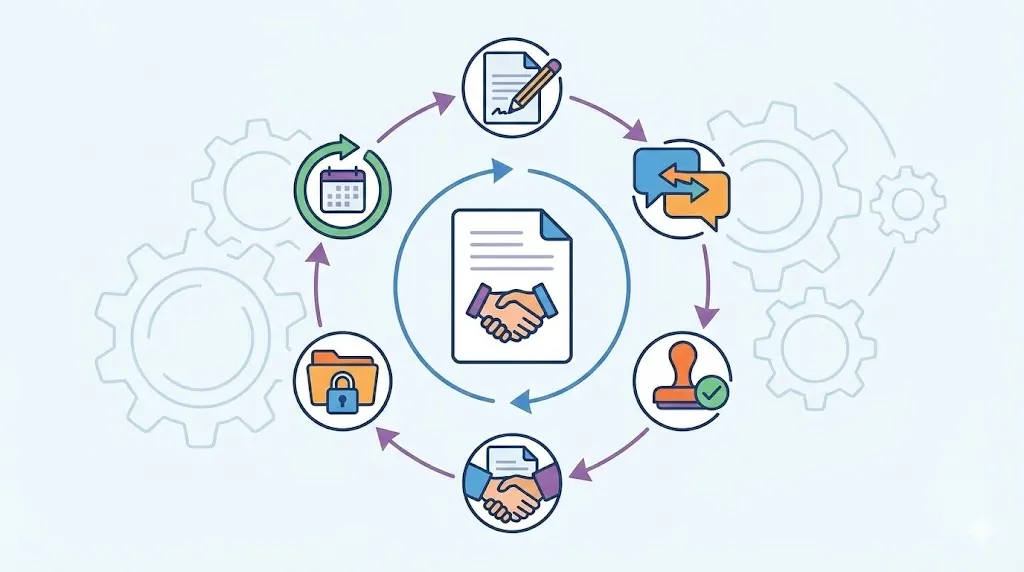
Volody AI CLM is an Agentic AI-powered Contract Lifecycle Management platform designed to eliminate manual contracting tasks, automate complex workflows, and deliver actionable insights. As a one-stop shop for all contract activities, it covers drafting, collaboration, negotiation, approvals, e-signature, compliance tracking, and renewals. Built with enterprise-grade security and no-code configuration, it meets the needs of the most complex global organizations. Volody AI CLM also includes AI-driven contract review and risk analysis, helping teams detect issues early and optimize terms. Trusted by Fortune 500 companies, high-growth startups, and government entities, it transforms contracts into strategic, data-driven business assets.



" height="216.72211px" id="FYO0bO80Y" transform="translate(3 6.105)" width="206.073px"/><path d="M 108.174 222 C 88.432 222 70.303 217.239 53.785 207.717 C 37.267 198.196 24.173 185.052 14.504 168.285 C 4.835 151.312 0 132.165 0 110.845 C 0 89.731 4.835 70.792 14.504 54.025 C 24.173 37.052 37.267 23.804 53.785 14.282 C 70.303 4.761 88.432 0 108.174 0 C 128.116 0 146.246 4.761 162.562 14.282 C 179.08 23.804 192.073 37.052 201.541 54.025 C 211.21 70.792 216.044 89.731 216.044 110.845 C 216.044 132.165 211.21 151.312 201.541 168.285 C 192.073 185.052 179.08 198.196 162.562 207.717 C 146.044 217.239 127.915 222 108.174 222 Z M 108.174 183.189 C 120.864 183.189 132.044 180.291 141.713 174.495 C 151.382 168.492 158.936 160.006 164.375 149.035 C 169.814 138.064 172.533 125.334 172.533 110.845 C 172.533 96.355 169.814 83.729 164.375 72.965 C 158.936 61.994 151.382 53.611 141.713 47.815 C 132.044 42.02 120.864 39.122 108.174 39.122 C 95.483 39.122 84.202 42.02 74.332 47.815 C 64.663 53.611 57.109 61.994 51.67 72.965 C 46.231 83.729 43.511 96.355 43.511 110.845 C 43.511 125.334 46.231 138.064 51.67 149.035 C 57.109 160.006 64.663 168.492 74.332 174.495 C 84.202 180.291 95.483 183.189 108.174 183.189 Z" fill="rgba(255, 255, 255, 0.12)" height="222px" id="aa1McFcE9" transform="translate(227.183 3)" width="216.04399999999998px"/><path d="M 42.302 182.257 L 111.799 182.257 L 111.799 216.722 L 0 216.722 L 0 0 L 42.302 0 Z" fill="rgba(255, 255, 255, 0.12)" height="216.72211px" id="yRq4AnrsX" transform="translate(477.721 6.105)" width="111.79899999999998px"/><path d="M 108.174 222 C 88.432 222 70.303 217.239 53.785 207.717 C 37.267 198.196 24.173 185.052 14.504 168.285 C 4.835 151.312 0 132.165 0 110.845 C 0 89.731 4.835 70.792 14.504 54.025 C 24.173 37.052 37.267 23.804 53.785 14.282 C 70.303 4.761 88.432 0 108.174 0 C 128.116 0 146.246 4.761 162.562 14.282 C 179.08 23.804 192.073 37.052 201.541 54.025 C 211.21 70.792 216.045 89.731 216.045 110.845 C 216.045 132.165 211.21 151.312 201.541 168.285 C 192.073 185.052 179.08 198.196 162.562 207.717 C 146.044 217.239 127.915 222 108.174 222 Z M 108.174 183.189 C 120.864 183.189 132.044 180.291 141.713 174.495 C 151.382 168.492 158.936 160.006 164.375 149.035 C 169.814 138.064 172.534 125.334 172.534 110.845 C 172.534 96.355 169.814 83.729 164.375 72.965 C 158.936 61.994 151.382 53.611 141.713 47.815 C 132.044 42.02 120.864 39.122 108.174 39.122 C 95.483 39.122 84.202 42.02 74.332 47.815 C 64.663 53.611 57.108 61.994 51.67 72.965 C 46.231 83.729 43.511 96.355 43.511 110.845 C 43.511 125.334 46.231 138.064 51.67 149.035 C 57.108 160.006 64.663 168.492 74.332 174.495 C 84.202 180.291 95.483 183.189 108.174 183.189 Z" fill="rgba(255, 255, 255, 0.12)" height="222px" id="mo8HQspQ0" transform="translate(609.155 3)" width="216.04500000000007px"/><path d="M 73.727 0 C 95.885 0 115.324 4.45 132.044 13.351 C 148.967 22.252 161.957 34.982 171.027 51.541 C 180.287 67.894 184.917 86.937 184.917 108.671 C 184.917 130.405 180.287 149.449 171.027 165.801 C 161.957 181.947 148.967 194.47 132.044 203.371 C 115.324 212.271 95.885 216.722 73.727 216.722 L 0 216.722 L 0 0 Z M 72.216 179.773 C 94.374 179.773 111.497 173.564 123.583 161.144 C 135.669 148.724 141.713 131.233 141.713 108.671 C 141.713 86.109 135.669 68.515 123.583 55.888 C 111.497 43.055 94.374 36.638 72.216 36.638 L 42.302 36.638 L 42.302 179.773 Z" fill="rgba(255, 255, 255, 0.12)" height="216.72211px" id="I3iXX5Hi_" transform="translate(859.693 6.105)" width="184.91699999999992px"/><path d="M 185.22 0 L 113.91 141.273 L 113.91 216.722 L 71.61 216.722 L 71.61 141.273 L 0 0 L 47.74 0 L 93.06 99.046 L 138.08 0 Z" fill="rgba(255, 255, 255, 0.12)" height="216.72211px" id="nzHyWC0_d" transform="translate(1061.78 6.105)" width="185.22000000000003px"/></svg>)