

Legal workflow automation powered by AI is revolutionizing the legal industry by streamlining repetitive tasks and enhancing precision. This comprehensive guide provides an expert overview of how AI integrates with legal workflows to drive efficiency, reduce errors, and optimize resource allocation. Explore the practical applications, challenges, and strategic best practices to successfully implement AI-driven automation in your legal operations.
TL;DR
Legal workflow automation uses AI to speed up and improve legal tasks, reducing manual work and errors.
AI brings benefits like saving time, cutting costs, and increasing accuracy in legal processes.
Common challenges include staff resistance, data security concerns, and system integration issues.
AI helps with contract analysis, document review, compliance checks, and automating task alerts.
Successful automation requires proper workflow assessment, staff training, and ongoing system updates.
Contract management software plays a key role by centralizing documents and adding AI insights.
Understanding Legal Workflow Automation with AI
What Legal Workflow Automation Means
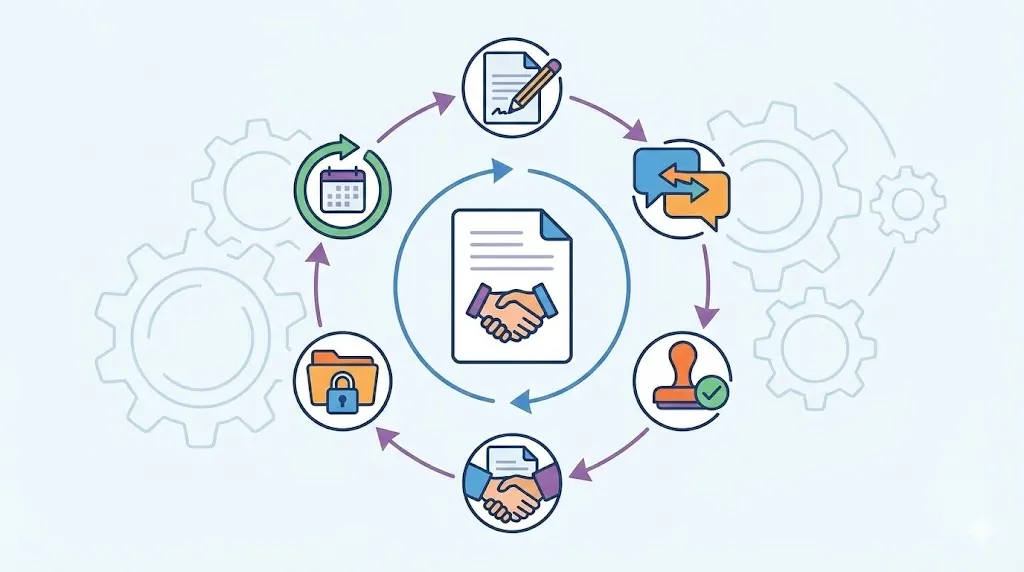
Legal workflow automation means using software to handle routine legal tasks automatically. These tasks include document drafting, review, client intake, and case tracking. Automation replaces manual steps with digital processes that run on their own. This speeds up work and reduces errors. It frees legal teams to focus on more complex and strategic tasks.
Role of AI in Enhancing Legal Processes
AI adds intelligence to legal workflow automation. It uses machine learning and natural language processing (NLP) to understand legal texts and data. AI can analyze contracts, spot risks, suggest edits, and extract key information. It also predicts outcomes based on past cases. This makes workflows smarter and more accurate. AI can adapt to new patterns and improve over time.
Distinction Between Automation and Human Judgment
Automation handles repetitive and rule-based tasks but does not replace lawyers’ judgment. Humans still review complex issues, make decisions, and advise clients. AI supports legal professionals by providing fast data and insights. It reduces mundane work but does not remove the need for human expertise. Together, AI and lawyers create a more efficient legal process.
Types of Legal Tasks Commonly Automated with AI
Contract drafting and redlining
Document review and classification
Legal research and case summarization
Compliance monitoring and risk alerts
Client intake and data entry
Task assignments and deadline tracking
Billing and time tracking
Each of these tasks involves repetitive work that AI can speed up while reducing errors. For example, AI can scan documents and highlight key clauses automatically.
Legal workflow automation with AI also improves consistency across cases by applying the same rules and standards every time. This helps reduce risks caused by human oversight or fatigue. For example, AI tools can flag missing clauses or inconsistent language in contracts, ensuring all documents meet company policies. Additionally, automation can integrate with calendars and email systems to send timely reminders about upcoming deadlines or renewals. This prevents missed obligations and supports better client service. Over time, AI systems learn from user feedback to fine-tune their suggestions, making the process more reliable. By combining speed, accuracy, and adaptability, AI-driven automation transforms how legal teams manage their daily work and deliver value to clients.
Related articles: AI Contract Review vs. Human Lawyers: Speed, Accuracy & ROI
Benefits of AI-Powered Legal Workflow Automation
Increased Efficiency and Time Savings
AI speeds up legal tasks by automating routine work. It cuts down time spent on reviewing contracts or searching documents. Legal teams can complete tasks faster without sacrificing quality. This frees up time to focus on client advice and strategy. Faster workflows also improve responsiveness and client satisfaction.
Improved Accuracy and Reduced Errors
Manual legal work often contains mistakes due to fatigue or oversight. AI tools check documents against rules and flag inconsistencies. They highlight missing clauses or unusual language. This reduces risks from human errors. AI also enforces consistency in contract terms and compliance checks. Better accuracy means fewer costly legal problems later.
Enhanced Scalability and Predictability of Legal Work
Automation allows law firms to handle more cases or contracts without adding staff. AI workflows run 24/7 and can process large volumes of data quickly. This scalability helps firms grow without ballooning costs. Predictable workflows also improve planning and resource use. Legal teams can forecast task completion and deadlines more reliably.
Cost Reduction and Resource Optimization
By automating routine tasks, firms lower labor costs and reduce overtime. AI helps avoid expensive mistakes that lead to disputes or regulatory fines. It also optimizes staff time by focusing human effort where it adds most value. These savings improve profit margins and client pricing competitiveness. Automation can reduce reliance on outside counsel for standard tasks.
AI also enables better tracking and reporting of legal workflows. It collects data on task durations and bottlenecks, helping managers spot inefficiencies. Teams can then adjust processes for smoother operations. Additionally, AI tools support collaboration by centralizing documents and communications. This reduces delays caused by unclear responsibilities or lost files. For example, AI-powered dashboards provide real-time updates on contract statuses, keeping all stakeholders informed. These improvements create a more transparent and agile legal function. Over time, firms gain deeper insights into their work patterns, allowing continuous improvement. This ongoing refinement further boosts efficiency and client satisfaction without additional investment.
Related articles: AI in Law: Smart Contracts & Legal Automation Tools
Challenges in Implementing Legal Workflow Automation
Resistance to Change Within Legal Teams
Legal professionals often prefer traditional methods and may resist new technology. They might fear job loss or worry about AI accuracy. This resistance slows adoption and limits benefits. Building trust through education and involving staff in planning helps reduce pushback. Showing quick wins can encourage acceptance.
Data Privacy and Security Concerns
Legal data is sensitive and subject to strict privacy rules. Automating workflows raises questions about data protection and confidentiality. Firms must ensure AI tools comply with security standards and legal regulations. This requires strong encryption, access controls, and audit trails. Vendors should provide transparency about data use.
Integration with Existing Legal Technology Systems
Most firms already use multiple software tools for case management, billing, or document storage. Adding AI automation means these systems must work together smoothly. Poor integration leads to data silos, duplicated work, and frustration. Selecting AI solutions that connect with current platforms or have open APIs is critical. Planning integration carefully reduces disruption.
Managing Change in High-Stakes Environments
Legal work often involves tight deadlines and high risks. Introducing automation can feel like adding uncertainty. Teams may hesitate if they think technology will disrupt critical case handling. Clear communication about phased rollouts and backup plans helps ease fears. Training sessions that simulate real scenarios boost confidence in new tools.
Ensuring Quality and Accuracy of AI Outputs
AI tools can make mistakes, especially with complex legal language. Teams must validate automated outputs carefully to avoid costly errors. Establishing review checkpoints balances speed with accuracy. Continuous monitoring and improvement of AI models based on user feedback maintain reliability. This builds trust and supports wider adoption.
Addressing Costs and Budget Constraints
Upfront costs for AI software and integration can be high. Legal departments must justify investments with clear ROI. Demonstrating time saved on routine tasks and faster contract turnaround helps secure funding. Pilots and phased implementations reduce financial risks and prove value gradually.
Related articles: Strategic AI in Legal Document Automation
Practical Applications of AI in Legal Workflows
Contract Analysis and Automated Redlining
AI scans contracts to identify key clauses and suggest changes. It flags risky language or missing provisions based on rules. Automated redlining highlights edits for faster review cycles. This reduces manual contract vetting time. AI can also suggest fallback clauses or compliant alternatives. It speeds negotiations and improves contract quality.
Document Review and Case Data Extraction
AI tools classify and extract important information from legal documents. They find dates, parties, obligations, and case facts automatically. This boosts accuracy and saves hours of manual reading. Extracted data feeds case management systems for better tracking. AI can also spot inconsistencies or unusual terms.
Compliance Monitoring and Risk Identification
AI continuously monitors contracts and legal processes for compliance risks. It alerts teams about upcoming renewals, deadlines, or regulatory changes. Risk and compliance analysis tools check documents against legal playbooks. Early warnings help avoid breaches and penalties. This proactive approach protects firms and clients.
Workflow Triggering and Task Notifications
AI triggers follow-up tasks automatically when certain conditions are met. For example, after contract approval, it can assign tasks to billing or client intake teams. Automated reminders keep deadlines on track. This reduces missed steps and improves team coordination. Notifications ensure everyone knows their responsibilities in real time.
AI also supports contract lifecycle management by tracking key dates like renewals and expirations. It sends proactive alerts well before deadlines, allowing legal teams to prepare or renegotiate terms on time. Integration with email and calendar tools ensures these notifications reach the right people immediately. Furthermore, AI can analyze past contract data to identify patterns in negotiation outcomes or common bottlenecks. This insight helps legal teams refine their strategies and improve future contracts. Some AI systems even generate summary reports that highlight critical risks and obligations, enabling quick executive review. These capabilities collectively streamline legal workflows, reduce human error, and free lawyers to focus on higher-value tasks.
Related articles: Can AI Replace Lawyers? Exploring the Future of Legal AI
Best Practices for Successful Legal Workflow Automation
Assessing Workflow Suitability for Automation
Not every legal task suits automation. Start by mapping out existing processes and identifying high-volume, repetitive tasks. Evaluate which tasks follow clear rules and have measurable outcomes. Prioritize workflows that offer quick wins and high impact. Avoid automating complex judgment calls early on.
Training and Change Management for Legal Staff
Legal teams need training to understand AI tools and their benefits. Transparent communication about how automation supports—not replaces—lawyers builds trust. Provide hands-on sessions and resources to ease adoption. Encourage feedback and address concerns promptly. Change management is key to lasting success.
Continuous Monitoring and Improvement of AI Systems
AI systems require ongoing tuning and updates to stay effective. Monitor performance metrics like error rates and task completion times. Collect user feedback to spot issues or new needs. Regularly update AI models and rules based on evolving legal standards. Continuous improvement keeps automation aligned with firm goals.
Assessing Workflow Suitability for Automation
Consider the volume and variability of data involved in each task. Automation thrives where inputs are consistent and predictable. Tasks requiring frequent human judgment or interpretation often need a hybrid approach. For example, contract review with standard clauses suits automation, while negotiation steps may not.
Training and Change Management for Legal Staff
Assign automation champions within legal teams to foster peer learning. These champions can provide real-time support and share best practices. Tailor training to different user roles, focusing on relevant features. Recognize and reward early adopters to motivate wider acceptance.
Continuous Monitoring and Improvement of AI Systems
Set up dashboards to visualize key performance indicators in real time. Use these insights to prioritize updates and training focus areas. Also, plan for periodic audits to ensure AI decisions remain fair and unbiased. This proactive stance helps avoid costly errors and maintains user confidence.
Related articles: Agentic AI in Legal: 5 Effective Ways Lawyers Use Agentic AI
The Future of Legal Workflow Automation with AI
Emerging AI Technologies in Legal Practice
Future AI tools will use more advanced natural language understanding and predictive analytics. They will automate even complex tasks like litigation strategy and negotiation support. Integration with client management and billing will deepen. AI will become a trusted assistant rather than just a tool.
Potential Impact on Legal Roles and Services
AI will change how legal professionals work but will not replace them. Lawyers will focus more on strategy, client relationships, and creative problem-solving. Routine work will be largely automated. New roles will emerge, such as legal technologists and AI trainers. Overall, legal services will become faster, more transparent, and client-friendly.
AI-driven contract analysis will grow more sophisticated, quickly identifying risks and suggesting tailored remedies. This will reduce review times and improve accuracy. Predictive analytics may forecast case outcomes by analyzing past rulings, helping lawyers advise clients with better data. Collaboration tools powered by AI will streamline communication between legal teams and clients, cutting delays and misunderstandings. Ethical questions will rise, prompting firms to develop clear guidelines on AI use to maintain trust and accountability. Smaller firms will gain access to advanced AI tools once limited to large practices, leveling the playing field. These changes will reshape legal workflows, making them leaner and more focused on value-added tasks while preserving human judgment where it matters most.
Related articles: How to maintain ethically use AI in Legal Operations
Why Contract Management Software Matters
Contract management software is crucial for legal workflow automation. It centralizes contracts in a secure repository, making access easy. Automated alerts notify teams about deadlines, renewals, and approvals. AI features analyze contract terms to flag risks and suggest improvements.
Centralized contract repository for quick search and retrieval
Automated alerts and workflow triggers to keep contract processes on schedule
AI-powered insights that identify risks and optimize contract language
This software reduces manual errors and improves collaboration between legal and business teams. It supports compliance by tracking obligations and renewal dates automatically. With contract management software, law firms streamline their workflows and serve clients better.
Volody's CLM Software combines these benefits with powerful AI tools. It offers AI Contract Drafting to generate initial drafts from templates quickly. AI Contract Review flags risky clauses and missing provisions, speeding up contract vetting. Its Obligation Management tracks deliverables and renewal deadlines automatically. These features help legal teams save time and reduce risks.
For example, a law firm using Volody's CLM Software can auto-draft a contract, get AI suggestions for safer clauses, and monitor key deadlines all in one platform. This improves workflow efficiency and client satisfaction.
> Want to see how contract management software can simplify your legal workflows? Check out Volody's CLM Software.
FAQ
Will legal workflow automation replace lawyers in corporate legal departments?
Legal workflow automation helps lawyers by handling routine tasks. It does not replace their judgment or expertise. Instead, it frees them to focus on strategic and complex legal work. AI supports lawyers with faster data processing and fewer errors.
How do law firms use workflow automation to reduce operational costs?
Law firms automate time-consuming work like document review and contract drafting. This reduces manual labor and speeds up processes. Automation also cuts errors, avoiding costly fixes. Together, these savings lower overhead and improve profit margins.
What is legal workflow automation software?
It is software that uses AI and rules to automate legal tasks. Examples include contract management, document review, and deadline tracking. It integrates with existing systems and provides alerts and analytics to improve accuracy and efficiency.
How does AI improve contract analysis?
AI quickly scans contracts to find key clauses and suggests safer alternatives. It flags risky or missing terms based on customizable rules. This speeds up reviews and reduces human errors. AI helps maintain consistency and compliance.
What are common challenges in adopting legal workflow automation?
Resistance from staff used to manual work is common. Data security and privacy concerns also arise. Integrating new AI tools with existing legal software can be tricky. Overcoming these challenges requires training, clear policies, and careful planning.
Is legal workflow automation suitable for all law firms?
Suitability depends on firm size, practice areas, and tech setup. Larger firms with many repetitive tasks benefit most. However, no-code AI platforms make automation accessible for smaller firms too. Evaluating workflows helps determine fit.
What future trends are expected in AI-driven legal workflows?
Expect more predictive analytics, better natural language processing, and deeper system integration. AI will assist with strategy and client management. Legal workflows will become more automated, accurate, and responsive.
How can law firms prepare for implementing AI automation?
Start by identifying tasks fit for automation and mapping current workflows. Invest in staff training and communicate changes clearly. Begin with small pilot projects to build confidence. Monitor and improve AI systems continuously for best results.
Leverage Volody’s advanced contract management software to implement AI-driven legal workflow automation efficiently. Streamline your processes, reduce risks, and enhance client service with a proven platform designed to meet the evolving demands of modern legal teams. Discover how Volody can transform your legal operations today.
About the Company

Volody AI CLM is an Agentic AI-powered Contract Lifecycle Management platform designed to eliminate manual contracting tasks, automate complex workflows, and deliver actionable insights. As a one-stop shop for all contract activities, it covers drafting, collaboration, negotiation, approvals, e-signature, compliance tracking, and renewals. Built with enterprise-grade security and no-code configuration, it meets the needs of the most complex global organizations. Volody AI CLM also includes AI-driven contract review and risk analysis, helping teams detect issues early and optimize terms. Trusted by Fortune 500 companies, high-growth startups, and government entities, it transforms contracts into strategic, data-driven business assets.





" height="216.72211px" id="FYO0bO80Y" transform="translate(3 6.105)" width="206.073px"/><path d="M 108.174 222 C 88.432 222 70.303 217.239 53.785 207.717 C 37.267 198.196 24.173 185.052 14.504 168.285 C 4.835 151.312 0 132.165 0 110.845 C 0 89.731 4.835 70.792 14.504 54.025 C 24.173 37.052 37.267 23.804 53.785 14.282 C 70.303 4.761 88.432 0 108.174 0 C 128.116 0 146.246 4.761 162.562 14.282 C 179.08 23.804 192.073 37.052 201.541 54.025 C 211.21 70.792 216.044 89.731 216.044 110.845 C 216.044 132.165 211.21 151.312 201.541 168.285 C 192.073 185.052 179.08 198.196 162.562 207.717 C 146.044 217.239 127.915 222 108.174 222 Z M 108.174 183.189 C 120.864 183.189 132.044 180.291 141.713 174.495 C 151.382 168.492 158.936 160.006 164.375 149.035 C 169.814 138.064 172.533 125.334 172.533 110.845 C 172.533 96.355 169.814 83.729 164.375 72.965 C 158.936 61.994 151.382 53.611 141.713 47.815 C 132.044 42.02 120.864 39.122 108.174 39.122 C 95.483 39.122 84.202 42.02 74.332 47.815 C 64.663 53.611 57.109 61.994 51.67 72.965 C 46.231 83.729 43.511 96.355 43.511 110.845 C 43.511 125.334 46.231 138.064 51.67 149.035 C 57.109 160.006 64.663 168.492 74.332 174.495 C 84.202 180.291 95.483 183.189 108.174 183.189 Z" fill="rgba(255, 255, 255, 0.12)" height="222px" id="aa1McFcE9" transform="translate(227.183 3)" width="216.04399999999998px"/><path d="M 42.302 182.257 L 111.799 182.257 L 111.799 216.722 L 0 216.722 L 0 0 L 42.302 0 Z" fill="rgba(255, 255, 255, 0.12)" height="216.72211px" id="yRq4AnrsX" transform="translate(477.721 6.105)" width="111.79899999999998px"/><path d="M 108.174 222 C 88.432 222 70.303 217.239 53.785 207.717 C 37.267 198.196 24.173 185.052 14.504 168.285 C 4.835 151.312 0 132.165 0 110.845 C 0 89.731 4.835 70.792 14.504 54.025 C 24.173 37.052 37.267 23.804 53.785 14.282 C 70.303 4.761 88.432 0 108.174 0 C 128.116 0 146.246 4.761 162.562 14.282 C 179.08 23.804 192.073 37.052 201.541 54.025 C 211.21 70.792 216.045 89.731 216.045 110.845 C 216.045 132.165 211.21 151.312 201.541 168.285 C 192.073 185.052 179.08 198.196 162.562 207.717 C 146.044 217.239 127.915 222 108.174 222 Z M 108.174 183.189 C 120.864 183.189 132.044 180.291 141.713 174.495 C 151.382 168.492 158.936 160.006 164.375 149.035 C 169.814 138.064 172.534 125.334 172.534 110.845 C 172.534 96.355 169.814 83.729 164.375 72.965 C 158.936 61.994 151.382 53.611 141.713 47.815 C 132.044 42.02 120.864 39.122 108.174 39.122 C 95.483 39.122 84.202 42.02 74.332 47.815 C 64.663 53.611 57.108 61.994 51.67 72.965 C 46.231 83.729 43.511 96.355 43.511 110.845 C 43.511 125.334 46.231 138.064 51.67 149.035 C 57.108 160.006 64.663 168.492 74.332 174.495 C 84.202 180.291 95.483 183.189 108.174 183.189 Z" fill="rgba(255, 255, 255, 0.12)" height="222px" id="mo8HQspQ0" transform="translate(609.155 3)" width="216.04500000000007px"/><path d="M 73.727 0 C 95.885 0 115.324 4.45 132.044 13.351 C 148.967 22.252 161.957 34.982 171.027 51.541 C 180.287 67.894 184.917 86.937 184.917 108.671 C 184.917 130.405 180.287 149.449 171.027 165.801 C 161.957 181.947 148.967 194.47 132.044 203.371 C 115.324 212.271 95.885 216.722 73.727 216.722 L 0 216.722 L 0 0 Z M 72.216 179.773 C 94.374 179.773 111.497 173.564 123.583 161.144 C 135.669 148.724 141.713 131.233 141.713 108.671 C 141.713 86.109 135.669 68.515 123.583 55.888 C 111.497 43.055 94.374 36.638 72.216 36.638 L 42.302 36.638 L 42.302 179.773 Z" fill="rgba(255, 255, 255, 0.12)" height="216.72211px" id="I3iXX5Hi_" transform="translate(859.693 6.105)" width="184.91699999999992px"/><path d="M 185.22 0 L 113.91 141.273 L 113.91 216.722 L 71.61 216.722 L 71.61 141.273 L 0 0 L 47.74 0 L 93.06 99.046 L 138.08 0 Z" fill="rgba(255, 255, 255, 0.12)" height="216.72211px" id="nzHyWC0_d" transform="translate(1061.78 6.105)" width="185.22000000000003px"/></svg>)