
Contracts are the backbone of business deals. Yet, managing hundreds or thousands of contracts manually can slow teams down and increase risks. A Practical Guide to Machine Learning in Contract Management helps legal and operations leaders automate routine tasks, reduce errors, and speed up contract cycles. Imagine a legal team no longer sifting through pages of contracts but instead focusing on strategic decisions, thanks to smart software that learns from past contracts and highlights what matters most.
TL;DR
Machine learning streamlines various aspects of contract lifecycle management, including review, drafting, risk identification, and the monitoring of obligations, significantly reducing both time expenditure and error rates.
By proposing relevant clauses and automatically identifying potentially risky language, it enhances the efficiency of contract drafting and redlining processes.
Employing machine learning to monitor critical deadlines and renewal dates mitigates the risk of overlooked obligations and helps preserve contractual value.
Evaluate contract AI tools by testing with your own contracts and checking security and accuracy, not just demos.
Start machine learning adoption with one contract type, pilot with a small team, then scale based on results.
Contract management software centralizes workflows and uses AI to keep contracts organized, compliant, and actionable.
What Does Machine Learning Mean in Contract Management?
Machine learning (ML) represents a specialized area within artificial intelligence focused on enabling software to discern patterns and make data-driven decisions. Additionally, in the domain of contract management, ML tools analyze your existing agreements to streamline tasks such as reviewing, drafting, and monitoring contracts. Rather than manually examining each contract in detail, ML algorithms parse documents to extract clauses, detect potential risks, and monitor critical dates.
ML operates as an intelligent system intimately familiar with your organization’s standard contract terminology, which allows it to detect anomalies. For instance, if your contracts typically mandate a 30-day termination notice, ML will pinpoint contracts that deviate from this provision. This approach alleviates the burden of exhaustive manual reviews, allowing legal teams to concentrate on more nuanced matters.
Related Article: Leading Contract Management Software for Enterprises - Ready
Key Machine Learning Functions in Contract Management
Clause Extraction and Classification: This capability systematically identifies and categorizes clauses such as confidentiality, indemnity, and termination.
Risk Scoring: This process highlights clauses that diverge from your established terms or introduce risk.
Obligation Tracking: This extracts deadlines, renewal dates, and deliverables embedded within contracts.
Drafting Assistance: This supports by suggesting contract language or generating initial drafts from templates.
Predictive Analytics: This utilizes historical data to forecast negotiation timelines or assess contract risks.
Traditional vs. Machine Learning Contract Management
Task | Traditional Approach | Machine Learning Approach |
|---|---|---|
Manual review of each contract segment | Automated detection of clauses and identification of risks | |
Search | Keyword searches in folders or emails | AI-powered semantic search understanding intent |
Risk Identification | Depends on reviewer’s experience | Consistent risk scoring across all contracts |
Obligation Tracking | Calendars or spreadsheets | Automated extraction and alerts for deadlines |
Reporting | Manual data collection | Real-time dashboards with analytics |
Machine learning does not replace legal judgment. Instead, it handles routine work, freeing your team to focus on decisions that need expertise.
Related articles: Leading Contract Management Software for Fashion in 2026
How Machine Learning Improves Every Stage of the Contract Lifecycle
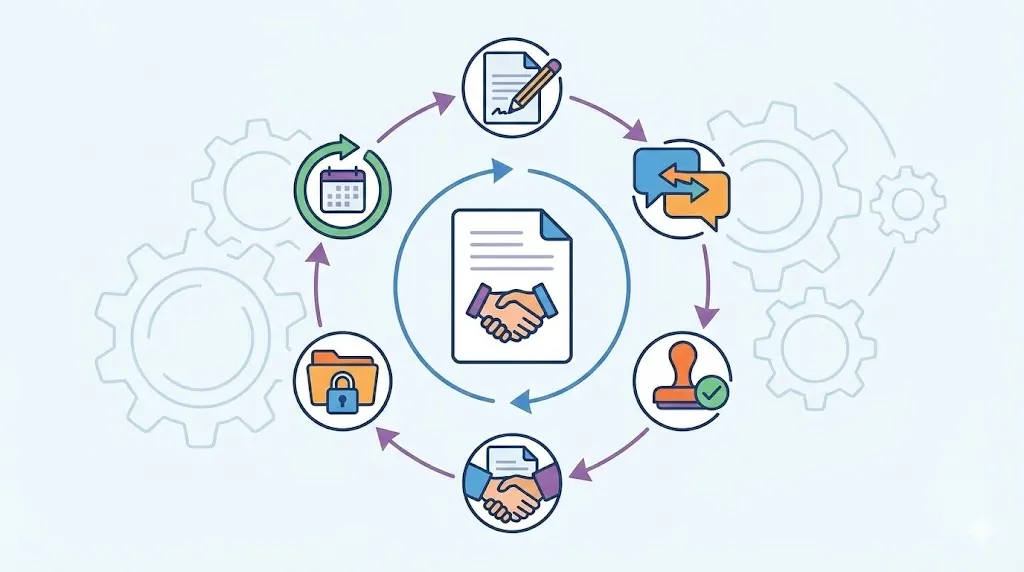
Contracts move through several phases: intake, drafting, negotiation, execution, storage, and renewal. Machine learning can improve each step, but it makes the biggest difference in drafting and obligation management.
Faster Drafting and Redlining
Drafting contracts from scratch or negotiating terms can take days or weeks. ML tools speed this up by generating first drafts based on your approved templates and clause libraries. When a counterparty sends a contract, ML compares their language to your standards and suggests changes automatically.
For example, a sales team handling hundreds of NDAs can reduce contract turnaround from three weeks to just a few days. This faster cycle helps close deals sooner and reduces bottlenecks.
Proactive Obligation and Renewal Tracking
Many companies lose value because they miss contract deadlines or renewal windows. Research by Deloitte found that poor contract management causes an average 8.6% loss in contract value. ML tools extract key dates and obligations buried in executed contracts and send alerts before deadlines.
This proactive tracking prevents auto-renewals or missed termination notices. It also monitors whether counterparties meet their commitments, such as delivery milestones or payment schedules, by linking contract data with operational systems.
Continuous Learning and Improvement
The more contracts you process, the better ML becomes at recognizing your company’s language and risk patterns. This means accuracy improves over time, helping legal teams catch subtle issues faster.
Related articles: How to Improve Vendor Contract Management in Logistics
What Are the Core Machine Learning Technologies Used in Contract Management?
Machine learning applications in contract management incorporate a variety of sophisticated technical components. Additionally, understanding these elements is crucial for assessing software capabilities and orchestrating effective deployment.
Natural Language Processing (NLP)
NLP allows software to interpret and analyze human language. In contracts, NLP identifies clauses, extracts key data like dates and parties, and classifies contract types. It also powers semantic search, which finds contracts based on meaning, not just keywords.
Optical Character Recognition (OCR)
OCR converts scanned paper contracts or PDFs into searchable text. This functionality enables the conversion of legacy contract archives into machine-readable data suitable for subsequent ML analysis.
Machine Learning Models and Training
ML models learn from your contract data. Moreover, they typically employ supervised learning methodologies, training on datasets with annotated examples (e.g., clauses labeled as “confidentiality”). Over time, models improve accuracy by learning from corrections and new contracts.
Predictive Analytics
By analyzing historical contract data, predictive analytics forecasts outcomes like negotiation time, risk exposure, or renewal likelihood. This helps legal teams prioritize which contracts need attention.
Integration and APIs
Modern ML contract tools connect with other enterprise systems such as CRM, ERP, and e-signature platforms. This integration ensures contract data flows smoothly across business functions.
Related articles: Best Practices for Legacy Contract Digitization
What Business Benefits Does Machine Learning Bring to Contract Management?
Machine learning delivers measurable value in several areas:
Time Savings and Efficiency
Automating contract review and drafting cuts contract cycle times by up to 75%. Additionally, this shift allows legal teams to allocate more effort toward strategic initiatives rather than routine manual tasks.
Risk Reduction
Consistent risk scoring and clause analysis reduce the chance of missing risky language or non-compliance. This lowers legal exposure.
Improved Compliance and Governance
Automated obligation tracking and audit trails help companies meet regulatory requirements and internal policies.
Better Contract Visibility
Real-time dashboards and searchable contract repositories give teams instant access to contract status and key terms.
Cost Savings
Reducing contract cycle time and avoiding penalties from missed deadlines lowers operational costs.
Enhanced Collaboration
Centralized platforms with AI assistance improve communication between legal, sales, procurement, and other teams.
Related articles: Generative AI for Contract Management: An Effective Guide
What Contract Management Use Cases Benefit Most from Machine Learning?
Machine learning shines in several practical scenarios:
High-Volume Contract Drafting and Review
Sales teams handling NDAs, purchase agreements, or service contracts benefit from automated drafting and redlining. Additionally, it also alleviates bottlenecks and accelerates deal closure.
Complex Risk Analysis
Legal teams reviewing supplier or customer contracts use ML to flag unusual clauses or deviations from policy. This ensures consistent risk management.
Obligation and Renewal Management
Procurement and legal teams track deliverables, payment schedules, and renewal dates automatically, preventing costly oversights.
Contract Data Extraction for Analytics
Finance and compliance teams extract metadata like payment terms or jurisdiction to analyze contract portfolios and inform decisions.
Contract Migration and Digitization
Organizations moving paper or legacy contracts into digital systems use OCR and ML to index and classify documents quickly.
Related articles: How to Simplify Contract Review with AI? Comprehensive Guide
How to Choose the Right Machine Learning Contract Tools
Selecting a machine learning contract tool requires careful evaluation. Here are key criteria:
Test with Your Own Contracts
Vendor demos often use ideal examples. Test tools using your contracts to see how well they extract clauses, identify risks, and suggest changes.
Check Legal Language Accuracy
It is essential that the tool accurately interprets both standard legal terminology and the unique phrasing used within your organization. Accuracy in clause classification and risk scoring is critical.
Evaluate Data Security and Compliance
Assess the vendor’s security certifications alongside their protocols for managing sensitive data. Contracts contain sensitive information that must be protected.
Confirm Integration Capabilities
The tool should connect with your existing systems like CRM, ERP, and e-signature platforms to avoid data silos.
Review AI Transparency
Understand how the AI makes decisions and whether you can audit or override automated suggestions.
Consider User Experience
Legal and business users need intuitive interfaces that require minimal training.
Assess Scalability
Choose a tool that can grow with your contract volume and support multiple teams or business units.
Related articles: Streamlining Contract Summaries for Business Teams
How to Implement Machine Learning in Contract Management Successfully
Rolling out ML in contract management works best as a phased approach:
Start Small with One Contract Type
Choose a high-volume contract type like NDAs or purchase agreements to pilot ML capabilities. Additionally, this approach mitigates risk and yields quantifiable outcomes.
Use a Sandbox Environment
Test the tool in a controlled setting with real contracts to fine-tune settings and workflows.
Launch a Pilot Group
Deploy the tool to a small team to gather feedback and measure impact on cycle times and accuracy.
Train Users Thoroughly
Provide training on how to interpret AI suggestions and override when needed.
Measure and Adjust
Track key metrics such as contract turnaround time, error rates, and user satisfaction. Adjust workflows and configurations accordingly.
Scale Gradually
Following successful pilots, progressively incorporate additional contract categories and involve broader teams.
Maintain Human Oversight
Ongoing involvement of legal professionals is essential to assess flagged concerns and determine final resolutions.
Related articles: Contract AI Metrics: Measuring Success Beyond the Basics
Why Contract Management Software Matters
Contract management software consolidates the processes of contract creation, review, storage, and analysis into a single, cohesive platform. Additionally, leveraging machine learning further refines these capabilities, boosting both precision and workflow efficiency.
A good CLM system offers:
Template and Clause Libraries: Maintain a repository of approved language to guarantee consistency throughout the drafting process.
Automated Workflows: Facilitate contract routing for review and approval, complete with reminder notifications.
AI Assistance: Enable automatic contract drafting, clause review, data extraction, and obligation tracking.
Collaboration Tools: Enable real-time commenting and version control.
Reporting and Analytics: Visualize contract performance and risk exposure.
Adopting platforms equipped with integrated ML reduces manual work, improves compliance, and speeds contract cycles.
Managing complex legal workflows requires a centralized and intelligent solution. Volody’s platform delivers AI-powered drafting, review, obligation tracking, and analytics capabilities. Its integration with Microsoft Word and enterprise systems allows legal departments to operate efficiently within familiar applications.
See how Volody's CLM Software enables legal teams to accelerate contract management with enhanced oversight.
Related Article: Mastering Advanced Conditions to Maximize Workflow
FAQ
What is the difference between machine learning and traditional contract review?
Additionally, traditional review depends heavily on manual reading and professional experience. Machine learning automates clause detection, risk scoring, and obligation extraction, speeding up the process and reducing errors while still requiring human judgment.
How does machine learning improve contract drafting?
ML tools generate first drafts using approved templates and suggest fallback clauses. They also compare incoming contracts to your standards and highlight deviations, reducing drafting time and negotiation cycles.
Is it possible to track contract obligations automatically using machine learning?
In addition, ML extracts deadlines, renewal dates, and deliverables from contracts and sends alerts before key dates. Moreover, this prevents missed renewals and helps ensure compliance with contract terms.
Is machine learning accurate enough for legal contracts?
The accuracy is influenced by the quality of the training data alongside the tool’s NLP capabilities. Testing with your own contracts and ongoing human review ensures reliable results.
How do I start implementing machine learning for contract management?
A good approach is to begin with one contract type, test in a sandbox, pilot with a small team, and expand based on results. Furthermore, provide training and maintain legal oversight throughout.
What security measures should I look for in ML contract tools?
Look for enterprise-grade encryption, compliance certifications (such as ISO 27001), role-based access controls, and secure data storage to protect sensitive contract information.
Is it feasible to predict negotiation outcomes with machine learning?
Some ML tools analyze historical data to estimate negotiation length or risk levels. These insights help prioritize contracts that need more attention.
Also, how does ML handle contracts in different languages or jurisdictions?
Advanced ML systems support multiple languages and can be configured for jurisdiction-specific rules, but accuracy may vary. Also, verify language support during evaluation.
Will machine learning replace legal teams?
No. ML automates routine tasks and highlights issues, but legal experts make final decisions and manage complex negotiations.
What are common challenges when adopting ML in contract management?
Challenges include data quality, user adoption, integration with existing systems, and setting realistic expectations about AI capabilities. Starting small and iterating helps overcome these issues.
About the Company
Volody AI CLM is an Agentic AI-powered Contract Lifecycle Management platform designed to eliminate manual contracting tasks, automate complex workflows, and deliver actionable insights. As a one-stop shop for all contract activities, it covers drafting, collaboration, negotiation, approvals, e-signature, compliance tracking, and renewals. Built with enterprise-grade security and no-code configuration, it meets the needs of the most complex global organizations. Volody AI CLM also includes AI-driven contract review and risk analysis, helping teams detect issues early and optimize terms. Trusted by Fortune 500 companies, high-growth startups, and government entities, it transforms contracts into strategic, data-driven business assets.




" height="216.72211px" id="FYO0bO80Y" transform="translate(3 6.105)" width="206.073px"/><path d="M 108.174 222 C 88.432 222 70.303 217.239 53.785 207.717 C 37.267 198.196 24.173 185.052 14.504 168.285 C 4.835 151.312 0 132.165 0 110.845 C 0 89.731 4.835 70.792 14.504 54.025 C 24.173 37.052 37.267 23.804 53.785 14.282 C 70.303 4.761 88.432 0 108.174 0 C 128.116 0 146.246 4.761 162.562 14.282 C 179.08 23.804 192.073 37.052 201.541 54.025 C 211.21 70.792 216.044 89.731 216.044 110.845 C 216.044 132.165 211.21 151.312 201.541 168.285 C 192.073 185.052 179.08 198.196 162.562 207.717 C 146.044 217.239 127.915 222 108.174 222 Z M 108.174 183.189 C 120.864 183.189 132.044 180.291 141.713 174.495 C 151.382 168.492 158.936 160.006 164.375 149.035 C 169.814 138.064 172.533 125.334 172.533 110.845 C 172.533 96.355 169.814 83.729 164.375 72.965 C 158.936 61.994 151.382 53.611 141.713 47.815 C 132.044 42.02 120.864 39.122 108.174 39.122 C 95.483 39.122 84.202 42.02 74.332 47.815 C 64.663 53.611 57.109 61.994 51.67 72.965 C 46.231 83.729 43.511 96.355 43.511 110.845 C 43.511 125.334 46.231 138.064 51.67 149.035 C 57.109 160.006 64.663 168.492 74.332 174.495 C 84.202 180.291 95.483 183.189 108.174 183.189 Z" fill="rgba(255, 255, 255, 0.12)" height="222px" id="aa1McFcE9" transform="translate(227.183 3)" width="216.04399999999998px"/><path d="M 42.302 182.257 L 111.799 182.257 L 111.799 216.722 L 0 216.722 L 0 0 L 42.302 0 Z" fill="rgba(255, 255, 255, 0.12)" height="216.72211px" id="yRq4AnrsX" transform="translate(477.721 6.105)" width="111.79899999999998px"/><path d="M 108.174 222 C 88.432 222 70.303 217.239 53.785 207.717 C 37.267 198.196 24.173 185.052 14.504 168.285 C 4.835 151.312 0 132.165 0 110.845 C 0 89.731 4.835 70.792 14.504 54.025 C 24.173 37.052 37.267 23.804 53.785 14.282 C 70.303 4.761 88.432 0 108.174 0 C 128.116 0 146.246 4.761 162.562 14.282 C 179.08 23.804 192.073 37.052 201.541 54.025 C 211.21 70.792 216.045 89.731 216.045 110.845 C 216.045 132.165 211.21 151.312 201.541 168.285 C 192.073 185.052 179.08 198.196 162.562 207.717 C 146.044 217.239 127.915 222 108.174 222 Z M 108.174 183.189 C 120.864 183.189 132.044 180.291 141.713 174.495 C 151.382 168.492 158.936 160.006 164.375 149.035 C 169.814 138.064 172.534 125.334 172.534 110.845 C 172.534 96.355 169.814 83.729 164.375 72.965 C 158.936 61.994 151.382 53.611 141.713 47.815 C 132.044 42.02 120.864 39.122 108.174 39.122 C 95.483 39.122 84.202 42.02 74.332 47.815 C 64.663 53.611 57.108 61.994 51.67 72.965 C 46.231 83.729 43.511 96.355 43.511 110.845 C 43.511 125.334 46.231 138.064 51.67 149.035 C 57.108 160.006 64.663 168.492 74.332 174.495 C 84.202 180.291 95.483 183.189 108.174 183.189 Z" fill="rgba(255, 255, 255, 0.12)" height="222px" id="mo8HQspQ0" transform="translate(609.155 3)" width="216.04500000000007px"/><path d="M 73.727 0 C 95.885 0 115.324 4.45 132.044 13.351 C 148.967 22.252 161.957 34.982 171.027 51.541 C 180.287 67.894 184.917 86.937 184.917 108.671 C 184.917 130.405 180.287 149.449 171.027 165.801 C 161.957 181.947 148.967 194.47 132.044 203.371 C 115.324 212.271 95.885 216.722 73.727 216.722 L 0 216.722 L 0 0 Z M 72.216 179.773 C 94.374 179.773 111.497 173.564 123.583 161.144 C 135.669 148.724 141.713 131.233 141.713 108.671 C 141.713 86.109 135.669 68.515 123.583 55.888 C 111.497 43.055 94.374 36.638 72.216 36.638 L 42.302 36.638 L 42.302 179.773 Z" fill="rgba(255, 255, 255, 0.12)" height="216.72211px" id="I3iXX5Hi_" transform="translate(859.693 6.105)" width="184.91699999999992px"/><path d="M 185.22 0 L 113.91 141.273 L 113.91 216.722 L 71.61 216.722 L 71.61 141.273 L 0 0 L 47.74 0 L 93.06 99.046 L 138.08 0 Z" fill="rgba(255, 255, 255, 0.12)" height="216.72211px" id="nzHyWC0_d" transform="translate(1061.78 6.105)" width="185.22000000000003px"/></svg>)