

Vendor obligation management is a strategic discipline that protects service quality, security, cost control, and business continuity. After signature, organizations must convert contractual commitments into accountable operational processes. This guide provides a practical framework for assigning, tracking, reviewing, and enforcing vendor duties. It also explains how technology can support consistent obligation management at scale.
TL;DR
Build one vendor record that connects contracts, owners, deadlines, evidence, risks, and review decisions.
Define measurable duties for service, security, reporting, payment, renewal, insurance, and exit planning.
Assign every obligation to a named owner, then use reminders and escalation to prevent missed actions.
Review vendor performance through scorecards, evidence checks, risk reviews, and documented renewal decisions.
Use AI to find contract duties, but require human review before acting on important results.
Plan remedies, transition work, and failover tests before vendor failure threatens business operations.
Establishing a Vendor Obligation Management Foundation
Define the obligation management operating model
Vendor management covers the wider supplier relationship. It includes sourcing, risk checks, performance reviews, and business decisions. Contract administration focuses on storing agreements and managing paperwork. Vendor obligation management connects signed terms with ongoing work.
The process starts after signature, but good design starts earlier. Legal teams interpret clauses and define workable contract terms. Procurement manages commercial duties and supplier contact. Finance tracks payment, credits, rebates, and price changes.
Security teams monitor controls, incidents, and access duties. Compliance teams review laws, policies, and required evidence. Business owners confirm service quality and delivery results. One person should own each obligation, even when teams share work.
Each owner needs a clear escalation path. That path should name the backup owner and decision maker. It should also define when an issue becomes urgent. A missed report may need a reminder first.
A security breach may need immediate executive action. This operating model prevents tasks from landing with “the business.” That phrase hides responsibility and delays action.
Classify vendors by risk and business importance
Vendor classification sets the level of oversight each relationship needs. Start with the data the vendor can access. Sensitive customer, employee, payment, or health data raises risk. Service importance also matters.
A small vendor may support a vital business process. A large vendor may provide a replaceable service. Review both criticality and substitutability before setting controls. Geographic reach can increase legal and operating complexity.
Regulatory exposure should shape contract and review needs. Financial dependence can make vendor failure harder to absorb. Integration depth may create switching delays and data challenges. These factors should feed the vendor risk tier.
High-risk vendors need stronger evidence and tighter review cycles. They may need security reports, insurance proof, and recovery tests. They may also need senior approval before renewal. Lower-risk vendors can follow lighter review steps.
Classification should not remain fixed forever. Services change, owners move, and business dependence grows. Update the risk tier after major incidents or scope changes. That keeps supplier obligation tracking aligned with real exposure.
Create a reliable central record
A central record gives teams one trusted view of each vendor. It should connect the vendor profile with every related agreement. Include amendments, statements of work, schedules, and side letters. Missing documents can hide important duties and changed terms.
The record should show every active obligation. Each item needs a clause reference and plain language description. It also needs a named owner, due date, and review frequency. Add the required evidence and completion status.
Record insurance details, certificates, and expiry dates. Capture renewal notice periods and termination windows. Link performance results to the related service duties. Store exceptions, corrective actions, and approval history.
A useful record supports quick questions during an audit. Who owns this duty? What proves completion? When must the vendor act again? What happens if the vendor misses the requirement?
It should answer those questions without searching email threads. Access rules should protect sensitive vendor and contract data. The record must also preserve changes over time. That history supports fair reviews and defensible decisions.
Related Article: Master Contract Obligation Management: 5 Proactive Steps
Connecting Vendor Obligations to the Contract Lifecycle
Capture obligations during intake and negotiation
Teams should identify vendor duties before contract signature. Start during intake, when the business explains its needs. Ask what the vendor must deliver and how teams will measure success. Define required reports, approvals, and evidence at this stage.
Negotiators should mark service levels and delivery milestones. They should also review payment rules and price changes. Security teams should confirm access, incident, and data duties. Compliance teams should identify required records and attestations.
Audit rights need practical wording. The clause should explain access, notice, scope, and evidence. Termination triggers should match real business concerns. Vague rights often fail during a serious dispute.
The team should test every obligation for clarity. Can someone measure the result? Can an owner verify it? Can the vendor provide evidence within a useful time? If not, the term needs better wording.
Manage obligations after signature
A signed agreement should create work, not end it. Move each obligation into an assigned workflow after execution. Set the first due date and future repeat dates. Add reminders before action becomes urgent.
The workflow should request evidence from the right person. It should route approvals to the correct team. It should record exceptions and explain delayed completion. Escalation should follow clear time and risk rules.
For example, a vendor may submit monthly service reports. The owner checks the report against agreed service levels. Finance may then apply a service credit. The system should preserve both the report and decision.
Renewal work needs an earlier trigger. Teams need time to review performance and negotiate changes. They may also need time to test replacement options. Late alerts leave little room for sound business choices.
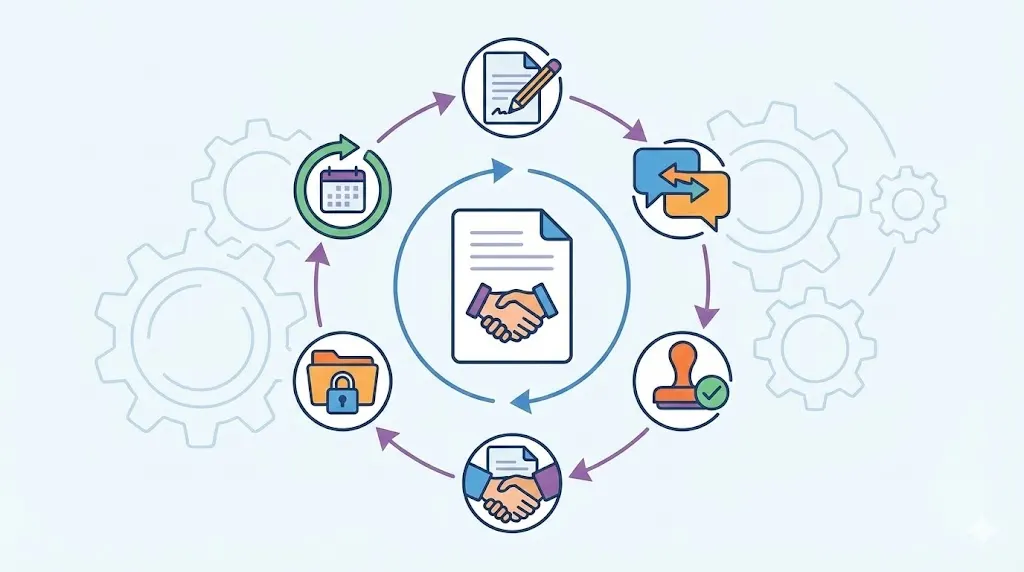
A complete lifecycle keeps obligations active through exit. It covers renewal, renegotiation, transition, and final data return. This prevents teams from tracking duties only during contract disputes.
Related Article: Mastering Digital Contract Management: A Strategic Guide
Key Challenges in Vendor Obligation Management
Fragmented contract and vendor information
Many teams store contracts in shared drives. Others keep key terms in email or spreadsheets. These sources rarely show the full vendor relationship. Amendments may sit apart from the main agreement.
Duplicate records create another problem. Different teams may use different vendor names or owners. A renewal date may appear in one file only. This creates missed notices and conflicting reports.
Fragmentation also weakens audit work. Teams spend time finding documents instead of testing controls. They may rely on old versions during important reviews. That weakens vendor contract compliance and increases dispute risk.
A central record solves only part of the issue. Teams must also agree on naming, ownership, and update rules. Every change needs a clear place and responsible person.
Ambiguous or unmeasurable commitments
Terms such as “high quality” create weak obligations. They do not explain the expected result or proof. A vendor may believe it performed well. The customer may hold a different view.
Service descriptions need clear measures. Define response times, resolution targets, and delivery dates. State how teams will collect and review evidence. Include acceptance rules for important work.
Reporting duties also need structure. Name the report, owner, format, deadline, and review method. Remediation terms should explain what happens after failure. Without this detail, enforcement becomes slow and costly.
Clear terms help both sides. Vendors understand the standard before performance begins. Customers can raise issues with facts and records. That supports fair action instead of subjective arguments.
Missed deadlines and renewal exposure
Renewals create risk when teams track only end dates. Many contracts require notice months before expiration. Some renew automatically if no party acts. Late discovery can trap the business in poor terms.
Insurance certificates can expire before contract end. Security attestations may also become outdated. Price reviews may happen without business owner input. These events need their own alerts and owners.
Reminder timing should match the action required. A simple document request may need early notice. A major renewal may require several review stages. Critical vendors may need executive decisions before notice periods close.
The process should show open actions and overdue items. Escalation should reach a manager when owners do not respond. This creates control without treating every delay as a crisis.
Dependency, concentration, and continuity risk
A vendor may become hard to replace over time. Custom integrations can increase switching costs. Unique data formats can slow migration. A lack of alternatives can weaken negotiation power.
Teams should record important dependencies in the vendor profile. Include systems, data flows, subcontractors, and key people. Note whether another supplier could take over. Also record the time needed for transition.
Continuity planning should start before a crisis. Contracts should require useful assistance during exit. They should cover data return, documentation, and knowledge transfer. They should also protect access to essential records.
A single vendor can support several business processes. That creates concentration risk even when each service seems small. Review connected services together during major risk reviews. This gives leaders a more accurate view of exposure.
Related Article: Missed Contract Obligations? What to Do Next?
Contract Terms That Make Obligations Enforceable
Use measurable service levels and deliverables
Service levels turn broad promises into testable duties. Availability terms should state the measurement period and exclusions. Response times should separate urgent and routine requests. Resolution targets should reflect issue type and business impact.
Delivery milestones need dates and acceptance rules. The contract should name who approves completed work. It should explain what happens when work fails acceptance. This prevents arguments over whether delivery actually occurred.
Reports should include required fields and submission dates. The vendor should identify the data source and review contact. Service credits may apply when targets fall short. They should not replace every other remedy.
Good measures remain practical for both sides. Too many measures create noise and manual work. Focus on duties that protect service, risk, and business value. Review them when the service changes.
Strengthen data protection and security language
Security duties should match the data and service involved. Contracts should cover access control, encryption, and incident notice. They should also address data location and retention. Secure deletion needs proof and a clear completion point.
Vendors should manage their subcontractors with equal care. The contract should require notice of material changes. It should also support reviews of key security controls. Audit rights must allow useful evidence without blocking operations.
Incident language should set clear notice times. It should define required facts and update duties. The vendor should support investigation and recovery work. These terms help teams respond before harm spreads.
Sensitive vendors may need independent assurance reports. They may also need testing evidence or regular attestations. Evidence requests should match the vendor’s risk tier. This keeps oversight firm without creating needless work.
Tie performance to remedies and escalation
Remedies should follow the seriousness and pattern of failure. Start with notice, facts, and a reasonable cure period. Require a root-cause review when problems repeat. Then request a written corrective action plan.
Service credits may address measurable service failures. Suspension rights may protect systems during serious security concerns. Indemnities may address defined losses and legal exposure. Termination should remain available for material or repeated breaches.
Escalation should name the next decision maker. A service owner may handle the first issue. A senior sponsor may handle repeated failure. Legal and security teams may join high-risk events.
The goal is usable enforcement. Extreme clauses can look strong but fail in practice. Clear triggers help teams act with confidence. They also give vendors a fair chance to correct problems.
Related Article: SLA Obligations Explained: Key Terms and Best Practices
Monitoring Performance, Compliance, and Renewals
Build an obligation tracking calendar
A calendar should cover more than contract end dates. Add service reports, audits, insurance renewals, and certifications. Include price reviews, notice periods, and termination windows. Track recurring duties with their required evidence.
Set reminders early enough for real action. A document request may need several business days. A major renewal may need months of review. Critical services may need a replacement assessment first.
Calendar entries should identify the action owner. They should also show the vendor and contract clause. Link each item to its evidence and completion record. This reduces manual searching during reviews.
The calendar should support supplier obligation tracking across teams. Finance can see payment duties and credits. Security can see assessments and incident actions. Business owners can see service and delivery commitments.
Run structured vendor reviews
Review meetings should follow a repeatable agenda. Strategic vendors may need quarterly performance reviews. Lower-risk relationships may need annual reviews. Incidents or major changes should trigger extra reviews.
Use scorecards that combine service and risk information. Include open issues, missed duties, and evidence gaps. Review financial changes and stakeholder feedback. Discuss changes in data, systems, or subcontractors.
Every meeting should end with decisions. Record actions, owners, due dates, and escalation needs. The renewal recommendation should explain its reasons. It should consider performance, risk, cost, and alternatives.
A review is not complete when the meeting ends. Owners must track actions until closure. Unresolved issues should remain visible in later reviews. This creates a useful history for vendor contract compliance.
Related Article: Best Practices for Contract Obligation Tracking
Using Automation and AI Without Losing Accountability
Extract obligations from contracts at scale
Contract tools can find key terms across large agreement sets. They can identify parties, dates, service levels, and renewal language. They can also find audit rights, security terms, and termination duties. This reduces the burden of manual review.
Extraction results still need careful checking. Scanned documents may contain poor text or missing pages. Clauses may use unusual wording or hidden exceptions. A tool may also confuse a duty with a right.
Teams should compare extracted terms with the full clause. They should confirm the owner and required evidence. They should also check amendments and related schedules. This creates a reliable starting point for tracking.
Connect contract terms to operational workflows
Obligation data becomes useful when it starts work. A due date can create a task for an owner. A missing certificate can trigger a vendor request. A renewal notice can start a review workflow.
Payment controls can use approved service results. Finance may hold disputed charges for review. Procurement may require risk approval before renewal. Security may request new evidence after a service change.
Workflows should show status in plain language. Use stages such as open, waiting, complete, and overdue. Show the next action and responsible person. This helps managers act without reading every contract.
Apply human review to automated outputs
AI can suggest classifications, summaries, and risk signals. It should not make material decisions without human review. High-risk clauses need legal or subject matter approval. Important vendor changes need business owner confirmation.
Reviewers should record what they checked. They should correct errors in the source data. They should explain overrides and unusual decisions. This creates a useful audit trail for later questions.
Human review matters most for ambiguous language. A clause may depend on definitions elsewhere. A duty may apply only after a specific event. Only context can confirm the correct workflow.
Protect the data used by contract technology
Contract data often includes prices, security details, and personal information. Access should follow job needs and approved roles. Sensitive records may need stronger restrictions. Former users should lose access quickly.
Audit logs should record views, changes, and approvals. Retention rules should match legal and business needs. Integrations should use controlled connections and clear permissions. Teams should know where copied data travels.
Model governance also needs clear rules. Do not send sensitive contract data to unauthorized services. Confirm how providers store and process submitted content. Restrict any use for model training without approval.
Related Article: Contract Obligation Management Made Easy with AI | Volody
Designing Remedies, Exit Rights, and Vendor Resilience
Respond consistently to missed obligations
A missed duty should start a documented response. Record the failure, date, impact, and available evidence. Ask the vendor for facts and root-cause detail. Then set a corrective action deadline.
Repeated failures need stronger action. Escalate to senior contacts when agreed targets fail again. Use service credits or other remedies when appropriate. Consider termination when recovery remains unlikely.
Consistency helps teams avoid two common errors. They should not ignore important failures without a record. They should not threaten extreme action without facts. A defined process supports balanced decisions.
The response should also protect business operations. Security failures may need immediate containment. Service failures may need temporary workarounds. Legal remedies should support, not delay, practical recovery.
Plan for transition before dependency deepens
Exit planning belongs in the original contract. Define data return, migration support, and documentation duties. Include knowledge transfer for important services. State how long the vendor must support transition.
Teams should know the required notice period. They should also know who approves a move. Replacement options should be reviewed before an emergency. A shortlist can save valuable time.
Data portability needs more than a general promise. Name usable formats, access methods, and delivery dates. Protect essential records throughout the transition. Confirm deletion after the receiving team accepts the data.
Test continuity and failover assumptions
Plans often look strong until teams test them. Run exercises for outages, security incidents, and supplier failure. Test decision rights and communication routes. Check whether manual workarounds actually work.
Exercises should include alternate suppliers where possible. They should also test internal staff capacity. Measure recovery time and record unresolved gaps. Assign owners for every improvement action.
A failover test can expose hidden dependencies. A backup supplier may lack needed data. A recovery plan may depend on one employee. A contract may not provide enough transition access.
Testing evidence should remain with the vendor record. Use it during reviews and renewal decisions. Update the plan after system or service changes. Resilience depends on current facts, not old assumptions.
Related Article: Align Vendor Contracts with Company Playbooks for Risk
Why Contract Management Software Matters
Contract management software gives teams one shared system. It connects vendor records, contracts, obligations, owners, and evidence. It can also support reminders, approvals, reviews, and renewals. This reduces missed work after signature.
A platform cannot replace clear process design. Teams still need owners, risk tiers, and review rules. They also need human judgment for unusual or serious issues. Good software makes those rules easier to follow.
Central records: Store agreements, amendments, evidence, and vendor details together. This reduces searches across drives, emails, and separate spreadsheets. Owners can find current terms and related actions faster. Managers gain a clearer view of overdue work and renewal exposure.
Workflow automation: Create tasks for reports, certifications, reviews, and renewal decisions. Send reminders before deadlines and escalate unresolved actions. Route approvals to legal, finance, security, or business owners. Record each step for later audit or dispute work.
Contract intelligence: Find dates, duties, service levels, and unusual clauses faster. Extracted terms can support risk classification and obligation tracking. Human reviewers should confirm important results before action. This protects accuracy when language is complex or incomplete.
Evidence and reporting: Link completion records to the related obligation and contract clause. Dashboards can show open issues, missed deadlines, and vendor trends. Teams can use that view during performance and renewal reviews. Leaders receive clearer information for risk and investment decisions.
Volody's CLM Software supports vendor obligation management with AI Contract Summaries, Obligation Management, and Approval Workflow Automation. It can highlight renewal dates and key risks, track deliverables and commitments, and route reviews with reminders. These features help teams connect contract terms with accountable actions.
For example, a security certificate can create an owner task. The system can remind that owner before the certificate expires. Managers can review the evidence and escalate missing proof.
Explore a simpler way to create, review, approve, and track contracts with Volody's CLM Software.
FAQ
What is contract obligation management?
Contract obligation management identifies, assigns, monitors, and records contract duties. It continues after signature by connecting terms with owners and deadlines. Teams also track evidence, exceptions, and escalation actions. For vendors, this covers service, security, payment, reporting, renewal, and exit duties.
How does vendor management software help with vendor risk and compliance?
Vendor management software brings vendor records, contracts, risks, and evidence together. It can automate reminders, reviews, approvals, issue tracking, and reports. This creates better visibility into vendor risk and compliance work. Teams still need clear controls, accountable owners, and human review.
How often should you audit contract compliance?
Audit frequency should match vendor risk, service importance, and data access. Critical vendors may need quarterly monitoring and annual formal reviews. Lower-risk vendors may follow annual or event-based checks. Incidents, major changes, and renewal decisions should trigger extra review.
What should an obligation register include?
An obligation register should name the vendor, contract, clause, and duty. It should also show the owner, due date, frequency, and evidence. Include status, risk tier, dependencies, and escalation details. Completion history and exceptions help teams prove control over time.
How should companies prioritize vendor obligations by risk?
Prioritize duties by impact, urgency, vendor criticality, and data sensitivity. Regulatory exposure and recovery difficulty should also influence priority. Security duties, critical service levels, insurance, and renewal notices often rank highly. Review the model when services, threats, ownership, or dependencies change.
How can companies manage subcontractor and fourth-party obligations?
Require vendors to disclose important subcontractors and service dependencies. Flow down security, privacy, reporting, and audit duties through the chain. Keep evidence, attestations, and dependency records current for critical services. Adopt a centralized obligation program to improve accountability, strengthen compliance, and protect continuity across every vendor relationship.
About the Company

Volody AI CLM is an Agentic AI-powered Contract Lifecycle Management platform designed to eliminate manual contracting tasks, automate complex workflows, and deliver actionable insights. As a one-stop shop for all contract activities, it covers drafting, collaboration, negotiation, approvals, e-signature, compliance tracking, and renewals. Built with enterprise-grade security and no-code configuration, it meets the needs of the most complex global organizations. Volody AI CLM also includes AI-driven contract review and risk analysis, helping teams detect issues early and optimize terms. Trusted by Fortune 500 companies, high-growth startups, and government entities, it transforms contracts into strategic, data-driven business assets.




" height="216.72211px" id="FYO0bO80Y" transform="translate(3 6.105)" width="206.073px"/><path d="M 108.174 222 C 88.432 222 70.303 217.239 53.785 207.717 C 37.267 198.196 24.173 185.052 14.504 168.285 C 4.835 151.312 0 132.165 0 110.845 C 0 89.731 4.835 70.792 14.504 54.025 C 24.173 37.052 37.267 23.804 53.785 14.282 C 70.303 4.761 88.432 0 108.174 0 C 128.116 0 146.246 4.761 162.562 14.282 C 179.08 23.804 192.073 37.052 201.541 54.025 C 211.21 70.792 216.044 89.731 216.044 110.845 C 216.044 132.165 211.21 151.312 201.541 168.285 C 192.073 185.052 179.08 198.196 162.562 207.717 C 146.044 217.239 127.915 222 108.174 222 Z M 108.174 183.189 C 120.864 183.189 132.044 180.291 141.713 174.495 C 151.382 168.492 158.936 160.006 164.375 149.035 C 169.814 138.064 172.533 125.334 172.533 110.845 C 172.533 96.355 169.814 83.729 164.375 72.965 C 158.936 61.994 151.382 53.611 141.713 47.815 C 132.044 42.02 120.864 39.122 108.174 39.122 C 95.483 39.122 84.202 42.02 74.332 47.815 C 64.663 53.611 57.109 61.994 51.67 72.965 C 46.231 83.729 43.511 96.355 43.511 110.845 C 43.511 125.334 46.231 138.064 51.67 149.035 C 57.109 160.006 64.663 168.492 74.332 174.495 C 84.202 180.291 95.483 183.189 108.174 183.189 Z" fill="rgba(255, 255, 255, 0.12)" height="222px" id="aa1McFcE9" transform="translate(227.183 3)" width="216.04399999999998px"/><path d="M 42.302 182.257 L 111.799 182.257 L 111.799 216.722 L 0 216.722 L 0 0 L 42.302 0 Z" fill="rgba(255, 255, 255, 0.12)" height="216.72211px" id="yRq4AnrsX" transform="translate(477.721 6.105)" width="111.79899999999998px"/><path d="M 108.174 222 C 88.432 222 70.303 217.239 53.785 207.717 C 37.267 198.196 24.173 185.052 14.504 168.285 C 4.835 151.312 0 132.165 0 110.845 C 0 89.731 4.835 70.792 14.504 54.025 C 24.173 37.052 37.267 23.804 53.785 14.282 C 70.303 4.761 88.432 0 108.174 0 C 128.116 0 146.246 4.761 162.562 14.282 C 179.08 23.804 192.073 37.052 201.541 54.025 C 211.21 70.792 216.045 89.731 216.045 110.845 C 216.045 132.165 211.21 151.312 201.541 168.285 C 192.073 185.052 179.08 198.196 162.562 207.717 C 146.044 217.239 127.915 222 108.174 222 Z M 108.174 183.189 C 120.864 183.189 132.044 180.291 141.713 174.495 C 151.382 168.492 158.936 160.006 164.375 149.035 C 169.814 138.064 172.534 125.334 172.534 110.845 C 172.534 96.355 169.814 83.729 164.375 72.965 C 158.936 61.994 151.382 53.611 141.713 47.815 C 132.044 42.02 120.864 39.122 108.174 39.122 C 95.483 39.122 84.202 42.02 74.332 47.815 C 64.663 53.611 57.108 61.994 51.67 72.965 C 46.231 83.729 43.511 96.355 43.511 110.845 C 43.511 125.334 46.231 138.064 51.67 149.035 C 57.108 160.006 64.663 168.492 74.332 174.495 C 84.202 180.291 95.483 183.189 108.174 183.189 Z" fill="rgba(255, 255, 255, 0.12)" height="222px" id="mo8HQspQ0" transform="translate(609.155 3)" width="216.04500000000007px"/><path d="M 73.727 0 C 95.885 0 115.324 4.45 132.044 13.351 C 148.967 22.252 161.957 34.982 171.027 51.541 C 180.287 67.894 184.917 86.937 184.917 108.671 C 184.917 130.405 180.287 149.449 171.027 165.801 C 161.957 181.947 148.967 194.47 132.044 203.371 C 115.324 212.271 95.885 216.722 73.727 216.722 L 0 216.722 L 0 0 Z M 72.216 179.773 C 94.374 179.773 111.497 173.564 123.583 161.144 C 135.669 148.724 141.713 131.233 141.713 108.671 C 141.713 86.109 135.669 68.515 123.583 55.888 C 111.497 43.055 94.374 36.638 72.216 36.638 L 42.302 36.638 L 42.302 179.773 Z" fill="rgba(255, 255, 255, 0.12)" height="216.72211px" id="I3iXX5Hi_" transform="translate(859.693 6.105)" width="184.91699999999992px"/><path d="M 185.22 0 L 113.91 141.273 L 113.91 216.722 L 71.61 216.722 L 71.61 141.273 L 0 0 L 47.74 0 L 93.06 99.046 L 138.08 0 Z" fill="rgba(255, 255, 255, 0.12)" height="216.72211px" id="nzHyWC0_d" transform="translate(1061.78 6.105)" width="185.22000000000003px"/></svg>)