

Contracts are full of promises, deadlines, and conditions. Yet many teams struggle to track whether those promises get fulfilled. Imagine a procurement manager scrambling to confirm if a vendor met a delivery milestone, or a legal team hunting through endless PDFs to find renewal dates. Contract obligation tracking made simple means turning that chaos into clarity. It helps you catch deadlines, assign clear responsibility, and use technology to pull key obligations from dense contract text. This keeps your business running smoothly and avoids costly surprises.
TL;DR
Contract obligation tracking means monitoring all promises made in contracts to ensure they get done on time.
It is essential to monitor every obligation that carries deadlines or conditions, encompassing everything from payments to service levels and contract renewals.
Maintaining a centralized repository for contracts is fundamental to efficiently locate and oversee agreements without sacrificing critical information.
Leveraging AI technologies enables the extraction of obligations embedded within intricate contractual language, significantly reducing the time spent on manual review.
Defining specific owners for each contractual obligation and implementing automated notifications helps prevent overlooked deadlines and associated penalties.
Spreadsheets and emails often fail for tracking because they lack automation, accountability, and real-time visibility.
What Does Contract Obligation Tracking Really Mean?
Contract obligation tracking is the process of keeping tabs on every promise made in a contract. Additionally, these commitments often include payment schedules, delivery deadlines, service quality standards, confidentiality requirements, and renewal clauses. The goal is to know exactly what each party owes, who is responsible, and when each task must be completed.
This process starts after the contract is signed and continues until the agreement ends or renews. It differs from broader contract management, which includes drafting, negotiating, and signing contracts. Obligation tracking focuses on making sure the agreed terms actually happen.
A good obligation tracking system has several key parts:
Centralized repository: One place to store and search all signed contracts.
Obligation extraction: Pulling out specific duties, deadlines, and conditions from contract text.
Ownership assignment: Designating the individual accountable for fulfilling each obligation.
Automated alerts: Notifications triggered automatically to prevent any critical deadlines, notices, or renewals from being missed.
Performance monitoring: Dashboards that provide real-time insights into which obligations are on schedule and which require attention.
Without these pieces, teams risk missing deadlines, losing revenue, or incurring costly penalties. For example, failing to notice an auto-renewal clause could lock a company into another year of unfavorable terms.
Related articles: What is Contract Tracking? Your Guide to Contract Monitoring
Which Contract Obligations Should You Track?
Any promise with a deadline or condition belongs in your tracking system. Additionally, the specific obligations prioritized vary according to your role within the company. Finance teams focus on payment terms, operations track service levels, and legal oversees compliance and renewals.
Here are common types of obligations and typical owners:
Obligation Type | What It Covers | Typical Owner |
|---|---|---|
Payment Terms | Invoice schedules, net terms, late fees | Finance / Accounts Payable |
Delivery and Milestones | Ship dates, go-live dates, project phases | Procurement / Project Management |
Performance Standards (SLAs) | Uptime, response time, quality thresholds | IT / Operations |
Renewal and Termination | Auto-renewal dates, notice windows, opt-outs | Legal / Procurement |
Confidentiality | Data handling, NDA scope, permitted disclosures | Legal / InfoSec |
Regulatory Compliance | Certifications, audit rights, reporting requirements | Legal / Compliance |
Many organizations only track obligations that seem urgent now. This shortsightedness causes problems. For instance, missing a renewal notice that feels distant can result in automatic contract extensions. According to Deloitte, companies with advanced renewal management are 31% more likely to hit strategic goals.
Related articles: Significance of tracking data points in contract management
Why a Centralized Contract Repository Is Your Tracking Foundation
You cannot track what you cannot find. Additionally, contracts dispersed across emails, local drives, or multiple systems create blind spots. These gaps lead to missed deadlines and overlooked obligations.
Centralizing contract management consolidates all executed contracts, amendments, and related documents into a single searchable location. By applying metadata tagging alongside full-text search capabilities, users can locate any clause or obligation within seconds rather than hours.
This single source of truth supports every other tracking step: extraction, alerts, dashboards, and reporting. Data from World Commerce & Contracting reveals that companies rely on an average of 24 disparate systems to manage contracts. This fragmentation causes teams to miss critical details like pricing changes or renewal clauses.
A well-organized repository ensures that procurement, legal, finance, and operations teams all access the same contract information. This alignment reduces risk and improves decision-making.
Related articles: What to Track in Legal Operations Dashboards
How AI Finds Hidden Obligations in Contract Language
Contract obligations rarely appear in neat, labeled sections. Payment terms might hide in exhibits, notice periods inside termination clauses, and performance standards scattered across statements of work.
AI-powered extraction uses natural language processing (NLP) to read through dense contract text and identify key commitments. It pulls out dates, dollar amounts, conditions, and restrictions automatically.
This technology saves your team from reading every page line by line. Instead, AI flags the obligations that need human review. People then verify and assign responsibility.
For example, AI can scan a 50-page contract and highlight all renewal deadlines, payment schedules, and confidentiality clauses. This reduces manual work from hours to minutes.
This approach also helps catch obligations buried in amendments or side letters that might otherwise be missed.
Related articles: How to Simplify Contract Review with AI? Comprehensive Guide
How to Set Up Alerts for Deadlines, Notices, and Renewals
Deadlines and notice periods are critical to track. Additionally, missing a renewal window or a termination notice can result in significant financial losses or binding unfavorable contract terms.
Set up automated alerts with tiered reminders and escalation paths. For example:
Send a first reminder 60 days before a renewal deadline.
Send a second reminder 30 days before.
If there is no response by 15 days before the deadline, escalate the issue to a manager for immediate attention.
This approach to layered notifications greatly enhances the likelihood that essential obligations are addressed promptly.
Use calendar integrations or specialized contract management software to facilitate the automation of alert processes.
Relying on manual tracking methods such as spreadsheets introduces risks of error, making them less reliable for managing critical deadlines.
Alerts should cover:
Renewal and termination notice periods
Payment due dates
Delivery milestones
Compliance report deadlines
Regularly review and update alert settings as contracts change or new obligations arise.
Related Articles: Effective Contract Milestone Tracking to Prevent Slippage
How to Assign Clear Ownership for Every Obligation
Assigning a named individual to each obligation creates accountability. Additionally, avoid vague ownership such as “the legal team” or “procurement department,” as specifying clear responsibility ensures tasks are completed, particularly when personnel change.
For example, assign the finance manager to payment obligations and the project lead to delivery milestones. Use your contract repository or tracking system to record and display these owners.
When responsibilities transfer, update the owner in the system immediately. This avoids confusion and missed deadlines.
Clear ownership also helps with escalation. If an obligation is at risk, you know exactly who to contact.
Related articles: The Contract Obligation Tracking Playbook
How to Monitor SLA and Performance Obligations with Dashboards
Service level agreements (SLAs) and performance obligations require ongoing monitoring. Additionally, dashboards serve as an effective visual tool to track progress and identify issues promptly.
Build dashboards that show:
Completed vs. outstanding deliverables
SLA compliance rates (e.g., uptime, response times)
Upcoming deadlines and overdue tasks
Risk indicators for missed obligations
Dashboards help operations and legal teams focus on problem areas before they escalate.
For example, an IT team can track system uptime against contract requirements and flag any shortfalls. Procurement can monitor vendor delivery milestones in real time.
Regularly review dashboard data in team meetings to keep everyone aligned.
Related articles: Missed Contract Obligations? What to Do Next?
Why Spreadsheets and Email Fail at Contract Obligation Tracking
Organizations frequently depend on spreadsheets paired with email reminders to monitor obligations. This approach often fails because:
Spreadsheets lack automation and require manual updates.
Important messages often disappear in cluttered inboxes.
Absence of a unified dashboard results in redundant or inconsistent information.
The missing audit trails hinder effective accountability.
These tools rarely incorporate real-time alerting or escalation mechanisms.
These gaps often result in missed deadlines, exposure to contractual penalties, and considerable revenue loss.
Contract tracking demands platforms that seamlessly automate workflows, clearly designate responsibilities, and consolidate diverse data sources. Spreadsheets and email, as traditional instruments, consistently fail to provide these robust capabilities at scale.
Explore further: Master Contract Obligation Management: 5 Proactive Steps
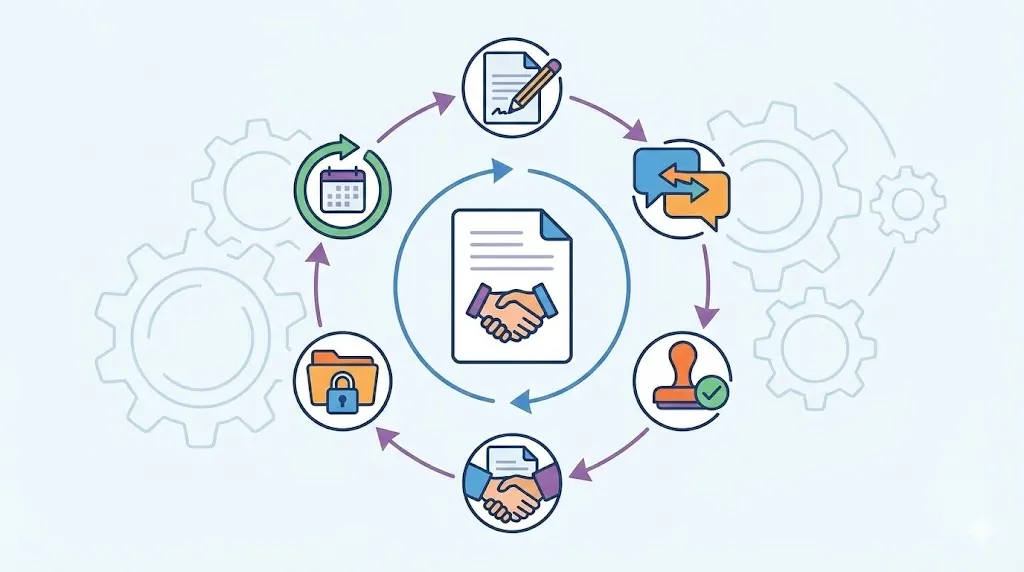
7-Step Contract Obligation Tracking Workflow
Centralize contracts: Gather all executed agreements into one searchable repository.
Extract obligations: Use AI or manual review to identify key commitments and deadlines.
Assign owners: Designate individuals who will be accountable for managing each obligation.
Set alerts: Automated notifications combined with escalation protocols help prevent overlooked deadlines.
Monitor performance: Dashboards provide continuous visibility into SLA compliance and milestone achievement.
Review regularly: Periodic audits ensure ongoing adherence to all contractual commitments.
Update continuously: Prompt incorporation of new contracts and realignment of obligations accommodate evolving terms and conditions.
Following these steps helps your team stay proactive, identifying and addressing potential risks well before they impact contract performance.
Related articles: Mastering Contract Clauses: Risk & Performance
What Proactive Obligation Tracking Prevents
Tracking obligations proactively helps prevent issues that commonly arise in contract management:
Missing renewal deadlines often results in unwanted extensions that can disrupt strategic planning.
Additionally, invoicing errors or payment delays frequently cause notable challenges in managing organizational cash flow.
Violations of service level agreements damage client relationships and may trigger substantial financial penalties.
Failure to comply with regulatory requirements heightens the likelihood of audits and subjects the organization to severe fines.
When contractual commitments are unmet, it directly translates to lost revenue opportunities.
Ambiguity regarding task ownership leads to internal confusion.
By catching issues early, your business protects its reputation and bottom line.
Related articles: Mastering Contract Terms: Your Comprehensive Guide
Why Contract Management Software Matters
Contract lifecycle solutions streamline the entire process from drafting through execution and fulfillment. Additionally, centralizing documents, automating obligation extraction, and tracking deadlines with alerts are critical functionalities they provide.
These tools offer dashboards to monitor contract health and performance. They also assign ownership and maintain audit trails for compliance.
Software reduces manual work and human error. It improves visibility across teams and speeds up decision-making.
Implementing these platforms eliminates the need for teams to sift through folders or spreadsheets searching for information. Access to real-time insights and automated reminders ensures contracts remain on schedule.
For further reading, see: Managing Contracts in the Government Sector: Tools and Strategies
How CLM Software Solves This
CLM (Contract Lifecycle Management) software helps teams organize contracts and track obligations efficiently. Additionally, it consolidates all contract documents into a secure repository designed for comprehensive full-text searches and enriched metadata classification.
AI-powered features extract obligations automatically, pinpointing deadlines, payment terms, and performance criteria with exceptional precision. The system designates accountability for obligations and issues alerts well before critical dates.
Dashboards provide detailed visibility into contract progress and compliance indicators. Teams collaborate directly in the system on contract reviews and approvals, enhancing workflow cohesion.
Volody integrates these functionalities along with AI-assisted drafting, advanced risk analysis, and robust compatibility with Microsoft Word and e-signature applications. This combination streamlines legal workflows while mitigating risk.
> Explore how Volody's Contract Management Platform empowers your team to advance contracts confidently.
FAQ
What exactly does contract obligation tracking involve?
Contract obligation tracking requires a systematic approach to monitoring all commitments outlined within contracts to ensure they are honored within the stipulated timeframe.
Contract obligation tracking entails systematically monitoring every commitment specified in a contract to ensure timely fulfillment.
It encompasses deadlines, payment schedules, performance benchmarks, renewal terms, and compliance requirements.
The objective is to identify accountable individuals and verify completion status.
Why is tracking obligations such a challenge for many organizations?
Furthermore, organizations often maintain contracts across disparate locations such as email archives, shared drives, or individual folders. This dispersion complicates swift retrieval of contracts or critical clauses. Relying on spreadsheets or email reminders for manual tracking increases the likelihood of errors and reduces accountability. Without automated processes and explicit responsibility assignment, obligations can easily be overlooked.
In what ways does AI enhance obligation tracking?
Leveraging natural language processing, AI scans contract documents to automatically extract essential obligations. It discerns critical elements like dates, payment provisions, renewal options, and performance criteria embedded in complex contractual language. Also, this capability significantly reduces manual review efforts and flags potential risks or approaching deadlines.
What types of obligations should be monitored?
Track any contractual commitment associated with deadlines or conditions, including payment obligations, delivery milestones, service level agreements, renewal and termination clauses, confidentiality stipulations, and regulatory compliance. Prioritize according to your organizational role and operational priorities.
How do I assign ownership for contract obligations?
Responsibility for obligations should be allocated to designated individuals rather than distributed across groups. This method promotes accountability and transparency. Therefore, update ownership records promptly to reflect organizational changes. Leverage your contract management system to document and display assignees for easy access.
Why are spreadsheets inadequate for managing obligations?
Spreadsheets require manual data input and lack the capability to issue timely reminders or escalate missed deadlines. Information can become stale or duplicated, and spreadsheets do not maintain audit trails or offer real-time visibility, thereby increasing the potential for errors.
What advantages do automated alerts offer?
Automated notifications alert responsible stakeholders well in advance of upcoming deadlines. Consequently, combining layered reminders with escalation protocols ensures timely attention to obligations. This minimizes exposure to penalties, inadvertent renewals, or breaches of service agreements.
How can dashboards enhance contract obligation oversight?
Dashboards deliver a consolidated view of contract execution, highlighting completed tasks alongside outstanding duties. They monitor SLA adherence and signal emerging risks. By focusing attention on critical components, dashboards facilitate informed strategic decisions.
What are the consequences of missing renewal deadlines?
As a result, failing to meet renewal deadlines can trigger automatic contract extensions, potentially binding your organization to unfavorable terms.
It may also forfeit negotiation leverage and incur unexpected expenses.
Vigilant tracking is essential to avoid these detrimental outcomes.
What steps should I take to improve tracking of contract obligations?
Start by centralizing contracts within a searchable repository. Utilize AI-powered or manual techniques to accurately catalog obligations. Ensure clear assignment of responsibility and implement automated reminder systems. Employ dashboards for ongoing progress monitoring and perform regular audits to maintain comprehensive oversight of contractual commitments.
About the Company

Volody AI CLM is an Agentic AI-powered Contract Lifecycle Management platform designed to eliminate manual contracting tasks, automate complex workflows, and deliver actionable insights. As a one-stop shop for all contract activities, it covers drafting, collaboration, negotiation, approvals, e-signature, compliance tracking, and renewals. Built with enterprise-grade security and no-code configuration, it meets the needs of the most complex global organizations. Volody AI CLM also includes AI-driven contract review and risk analysis, helping teams detect issues early and optimize terms. Trusted by Fortune 500 companies, high-growth startups, and government entities, it transforms contracts into strategic, data-driven business assets.





" height="216.72211px" id="FYO0bO80Y" transform="translate(3 6.105)" width="206.073px"/><path d="M 108.174 222 C 88.432 222 70.303 217.239 53.785 207.717 C 37.267 198.196 24.173 185.052 14.504 168.285 C 4.835 151.312 0 132.165 0 110.845 C 0 89.731 4.835 70.792 14.504 54.025 C 24.173 37.052 37.267 23.804 53.785 14.282 C 70.303 4.761 88.432 0 108.174 0 C 128.116 0 146.246 4.761 162.562 14.282 C 179.08 23.804 192.073 37.052 201.541 54.025 C 211.21 70.792 216.044 89.731 216.044 110.845 C 216.044 132.165 211.21 151.312 201.541 168.285 C 192.073 185.052 179.08 198.196 162.562 207.717 C 146.044 217.239 127.915 222 108.174 222 Z M 108.174 183.189 C 120.864 183.189 132.044 180.291 141.713 174.495 C 151.382 168.492 158.936 160.006 164.375 149.035 C 169.814 138.064 172.533 125.334 172.533 110.845 C 172.533 96.355 169.814 83.729 164.375 72.965 C 158.936 61.994 151.382 53.611 141.713 47.815 C 132.044 42.02 120.864 39.122 108.174 39.122 C 95.483 39.122 84.202 42.02 74.332 47.815 C 64.663 53.611 57.109 61.994 51.67 72.965 C 46.231 83.729 43.511 96.355 43.511 110.845 C 43.511 125.334 46.231 138.064 51.67 149.035 C 57.109 160.006 64.663 168.492 74.332 174.495 C 84.202 180.291 95.483 183.189 108.174 183.189 Z" fill="rgba(255, 255, 255, 0.12)" height="222px" id="aa1McFcE9" transform="translate(227.183 3)" width="216.04399999999998px"/><path d="M 42.302 182.257 L 111.799 182.257 L 111.799 216.722 L 0 216.722 L 0 0 L 42.302 0 Z" fill="rgba(255, 255, 255, 0.12)" height="216.72211px" id="yRq4AnrsX" transform="translate(477.721 6.105)" width="111.79899999999998px"/><path d="M 108.174 222 C 88.432 222 70.303 217.239 53.785 207.717 C 37.267 198.196 24.173 185.052 14.504 168.285 C 4.835 151.312 0 132.165 0 110.845 C 0 89.731 4.835 70.792 14.504 54.025 C 24.173 37.052 37.267 23.804 53.785 14.282 C 70.303 4.761 88.432 0 108.174 0 C 128.116 0 146.246 4.761 162.562 14.282 C 179.08 23.804 192.073 37.052 201.541 54.025 C 211.21 70.792 216.045 89.731 216.045 110.845 C 216.045 132.165 211.21 151.312 201.541 168.285 C 192.073 185.052 179.08 198.196 162.562 207.717 C 146.044 217.239 127.915 222 108.174 222 Z M 108.174 183.189 C 120.864 183.189 132.044 180.291 141.713 174.495 C 151.382 168.492 158.936 160.006 164.375 149.035 C 169.814 138.064 172.534 125.334 172.534 110.845 C 172.534 96.355 169.814 83.729 164.375 72.965 C 158.936 61.994 151.382 53.611 141.713 47.815 C 132.044 42.02 120.864 39.122 108.174 39.122 C 95.483 39.122 84.202 42.02 74.332 47.815 C 64.663 53.611 57.108 61.994 51.67 72.965 C 46.231 83.729 43.511 96.355 43.511 110.845 C 43.511 125.334 46.231 138.064 51.67 149.035 C 57.108 160.006 64.663 168.492 74.332 174.495 C 84.202 180.291 95.483 183.189 108.174 183.189 Z" fill="rgba(255, 255, 255, 0.12)" height="222px" id="mo8HQspQ0" transform="translate(609.155 3)" width="216.04500000000007px"/><path d="M 73.727 0 C 95.885 0 115.324 4.45 132.044 13.351 C 148.967 22.252 161.957 34.982 171.027 51.541 C 180.287 67.894 184.917 86.937 184.917 108.671 C 184.917 130.405 180.287 149.449 171.027 165.801 C 161.957 181.947 148.967 194.47 132.044 203.371 C 115.324 212.271 95.885 216.722 73.727 216.722 L 0 216.722 L 0 0 Z M 72.216 179.773 C 94.374 179.773 111.497 173.564 123.583 161.144 C 135.669 148.724 141.713 131.233 141.713 108.671 C 141.713 86.109 135.669 68.515 123.583 55.888 C 111.497 43.055 94.374 36.638 72.216 36.638 L 42.302 36.638 L 42.302 179.773 Z" fill="rgba(255, 255, 255, 0.12)" height="216.72211px" id="I3iXX5Hi_" transform="translate(859.693 6.105)" width="184.91699999999992px"/><path d="M 185.22 0 L 113.91 141.273 L 113.91 216.722 L 71.61 216.722 L 71.61 141.273 L 0 0 L 47.74 0 L 93.06 99.046 L 138.08 0 Z" fill="rgba(255, 255, 255, 0.12)" height="216.72211px" id="nzHyWC0_d" transform="translate(1061.78 6.105)" width="185.22000000000003px"/></svg>)