

Vendor contracts often pile up fast, creating a mountain of documents for legal teams to sift through. Each contract hides critical details that can expose a company to risk if overlooked. How AI-powered vendor contract review saves hours and reduces risk is no longer a question of if but how. Imagine a legal team facing hundreds of vendor agreements every month, racing against deadlines, yet needing to catch every nuance in complex clauses. AI tools can scan, flag, and summarize contracts in minutes, freeing lawyers to focus on strategic decisions. This article explains how AI transforms vendor contract review into a faster, safer, and more reliable process.
TL;DR
AI accelerates vendor contract review by swiftly pinpointing critical clauses and assessing potential risks.
Additionally, it also mitigates human error by drawing attention to atypical or high-risk provisions that require detailed scrutiny.
The fusion of AI-driven insights with experienced legal judgment ensures contracts comply with both regulatory requirements and corporate goals.
By benchmarking against internal policies and regulatory standards, discrepancies can be detected early in the review process.
Leveraging AI effectively requires robust training programs combined with rigorous compliance enforcement.
Contract management platforms enhanced with AI enable streamlined workflow automation while maintaining precise contract organization.
Related Article: Mastering Renewal and Upsell Contracts for Business Growth
Why Vendor Contract Review Is So Time-Consuming and Risky
Vendor contracts cover many essential details: pricing, delivery terms, liability limits, termination rights, and compliance obligations. Additionally, each clause carries significant weight. Missing a hidden renewal clause or an unfair indemnity term can cost a company millions or lead to legal disputes. Reviewing these contracts manually is tedious and error-prone. Lawyers often juggle dozens or hundreds of contracts, each with unique language and varying complexity.
Manual review requires reading every word carefully, cross-checking terms against policies, and flagging any unusual language. This process can take hours per contract, depending on length and complexity. When volume increases, the risk of missed details grows. Moreover, even experienced lawyers can overlook subtle but critical risks under tight deadlines.
For example, a procurement team might receive a vendor contract with a clause allowing automatic renewal unless canceled within 30 days. If the legal team misses this, the company could be locked into unfavorable terms for another year. Or a liability clause might cap damages at a low amount, leaving the company exposed to significant losses. These risks multiply with every contract.
According to a report by the International Association for Contract & Commercial Management (IACCM), companies spend up to 40% of their legal budget on contract review and negotiation. This shows how much time and money manual contract review consumes. AI-powered tools aim to reduce this burden by automating routine tasks and highlighting risks faster.
Related articles: 8 Strategies to reduce cost for AI Contract Management
How AI Identifies Key Contract Clauses and Risks
AI uses natural language processing (NLP) and machine learning to read contracts like a lawyer would. It also analyzes the document to identify and extract critical clauses, including payment terms, indemnity, termination, renewal, confidentiality, and liability limits. Then it compares these clauses against company policies, legal standards, and industry benchmarks.
Here is how AI breaks down contract review:
Clause Extraction: AI detects and labels important contract sections automatically, sparing lawyers the tedious task of manually searching through pages to locate payment deadlines or termination conditions.
Risk Flagging: The system identifies clauses deviating from approved standards or containing language that may introduce legal vulnerabilities.
Compliance Checks: Contract terms are evaluated against regulations such as GDPR and industry-specific mandates to uncover potential compliance issues.
Summary Generation: Summaries distill critical obligations, deadlines, and risk elements, facilitating rapid evaluation by legal and business teams.
Benchmarking: By evaluating contract provisions against industry norms, AI highlights where pricing or liability terms deviate significantly, either more stringent or more lenient than typical agreements.
For example, AI will flag a vendor contract featuring a non-standard auto-renewal clause and recommend a thorough review to assess implications. In another instance, if a confidentiality provision omits a defined duration, the system identifies this omission as a potential risk and suggests specifying a clear time limit.
AI models learn from thousands of contracts and legal precedents, continuously refining their precision with expanded datasets. These models may also be customized using company-specific playbooks to ensure consistent enforcement of internal policies.
Explore further: AI Contract Review vs. Human Lawyers: Speed, Accuracy & ROI
How Combining AI with Human Expertise Improves Outcomes
AI speeds up contract review but does not replace legal judgment. Additionally, lawyers remain essential for interpreting flagged issues, shaping negotiation strategies, and making informed decisions. The best results come from combining AI's speed and consistency with human insight.
Here is how this balance works:
AI Handles Routine Tasks: AI scans contracts, extracts data, and flags risks automatically. This frees lawyers from repetitive reading and lets them focus on complex issues.
Lawyers Review AI Findings: Legal teams analyze AI-flagged clauses to confirm risks and decide on changes. They add context that AI cannot fully grasp, such as business relationships or negotiation history.
Feedback Improves AI: Lawyers provide feedback on false positives or missed risks, helping refine AI models for future reviews.
Training and Guidelines: Organizations develop clear protocols on when to trust AI outputs and when to escalate for human review. Moreover, this ensures compliance and quality control.
Consider a scenario where AI identifies a clause limiting vendor liability to $10,000. The lawyer evaluates this limitation within the broader context of the vendor’s role and the overall contract value to determine its appropriateness. If the potential exposure appears disproportionate, the lawyer will engage in negotiations aiming to increase the liability cap.
This approach has been shown to cut contract review times by as much as 70% without sacrificing precision. Findings from a 2023 Deloitte report highlight that organizations employing AI-assisted contract review experience a reduction in overlooked risks alongside accelerated processing times.
Related articles: How to Simplify Contract Review with AI? Comprehensive Guide
What You Need to Prepare Before Using AI for Contract Review
Adopting AI for vendor contract review requires more than installing software. Additionally, legal and procurement teams also need a thorough understanding of AI functionalities alongside strategies for integrating it into existing workflows.
Key preparation steps include:
Define Review Objectives: Clarify what risks and clauses matter most for your business. This helps tailor AI models to focus on relevant issues.
Develop Playbooks: Create rule sets that define approved contract language, risk thresholds, and compliance requirements. AI uses these playbooks to flag deviations.
Train Users: It is essential to provide lawyers and contract managers with comprehensive training that enables them to navigate and leverage AI tools effectively.
Set Human Review Processes: Establish detailed protocols that govern human oversight and approval subsequent to AI-driven contract assessments.
Address Data Security: Confirm that AI solutions comply rigorously with your organization’s security policies and privacy mandates, given the sensitive nature of vendor contract data.
Pilot and Refine: Start with a pilot phase to test AI on sample contracts. Collect feedback and adjust settings before full deployment.
This training includes interpreting AI-generated flags as well as formulating precise queries to optimize AI responses.
Establishing clear roles and responsibilities further ensures thorough oversight and prevents operational gaps.
For example, a company may instruct its legal team to have AI verify specific elements such as termination notice periods or indemnity caps.
Without this groundwork, AI tools may produce too many false positives or miss critical issues. Clear guidelines and training maximize the value of AI-assisted review.
Related articles: Contract Risk Analysis Strengthened By AI In Legal Ops
How to Use AI Tools Step-by-Step for Vendor Contract Review
Using AI for contract review is straightforward when integrated into familiar workflows. Additionally, many solutions integrate seamlessly with Microsoft Word or contract management platforms, which helps minimize onboarding time.
Here is a typical step-by-step process:
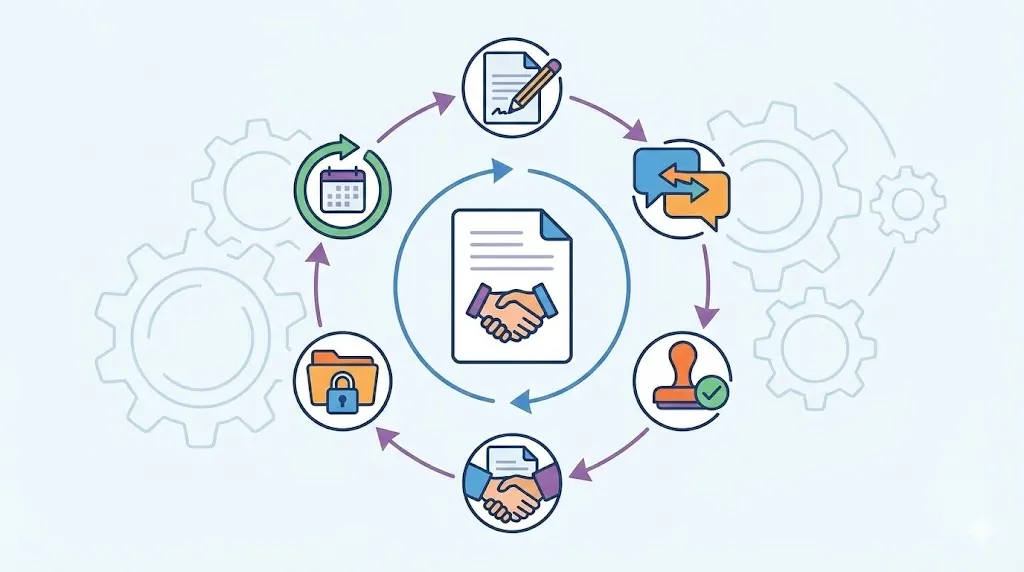
Upload Contract: Import the vendor contract into the platform. The tool accepts common file formats like Word or PDF.
Pre-Processing: AI cleans up the document, ensuring text clarity and extracting metadata such as parties, dates, and payment terms.
Clause Identification: The AI highlights key clauses automatically, such as termination rights, indemnity, and renewal terms.
Risk Analysis: The system flags clauses that deviate from company policies or contain ambiguous language. It also checks compliance with relevant laws.
Summary Report: A concise overview is produced, outlining obligations, identifying risks, and marking critical deadlines to facilitate an efficient review.
Lawyer Review: Attorneys review flagged items, append their annotations, and engage in negotiations with the other party to resolve outstanding issues.
Approval Workflow: The contract moves through designated authorization stages, supported by automated notifications and comprehensive tracking tools.
Storage and Tracking: The finalized agreement is securely archived with metadata tagging to enhance retrieval and manage renewal schedules effectively.
For instance, legal teams confronted with a vendor contract featuring a complex indemnity clause benefit from the platform’s ability to identify the provision and recommend language aligned with the company’s established playbooks. Following this evaluation, the attorney enters negotiations with the counterparty to finalize amendments prior to approval. Meanwhile, the system monitors renewal timelines and dispatches alerts well in advance of expiration dates.
This methodology substantially accelerates review cycles while simultaneously mitigating contractual risks.
Related articles: AI Contract Review: Enhancing Legal Workflow Efficiency
Common Challenges When Using AI for Vendor Contracts
AI tools are powerful but not perfect. Additionally, legal teams need to recognize common pitfalls and implement strategies to mitigate them.
Challenges include:
Misclassification of Clauses: Complex or atypical clauses may be inaccurately identified by AI, necessitating expert human review.
Context Limitations: AI models often fail to capture the nuanced context of contracts, such as the nature of business relationships or the history of negotiations.
Data Security Risks: Sensitive contract data must be protected from unauthorized access or breaches.
Overreliance on AI: Blind trust in AI outputs can lead to missed risks if human review is skipped.
Handling Complex Contracts: Highly customized or multi-party contracts may confuse AI models.
Integration Issues: AI tools that do not fit existing workflows create friction and reduce adoption.
To overcome these challenges, organizations should:
Use AI tools trained specifically on legal language and vendor contracts.
Maintain clear human review protocols to catch AI errors.
Secure data with encryption and access controls.
Provide ongoing training and feedback loops to improve AI accuracy.
Choose AI solutions that integrate well with contract management systems and Microsoft Word.
According to Gartner, companies that combine AI with strong governance and human oversight reduce contract risk significantly compared to manual review alone.
Related articles: Effectively use AI in Contract Drafting
Why Contract Management Software Matters for Vendor Contracts
Contract lifecycle management (CLM) platforms enable legal and procurement teams to systematically organize, track, and automate contract workflows. Additionally, the integration of AI significantly enhances their analytical precision and operational efficiency.
Here is why CLM software matters:
Central Repository: Store all vendor contracts in one secure place with easy search and retrieval.
Automated Workflows: Contracts progress through review and approval stages with automated routing, complemented by timely reminders and escalation protocols.
AI-Powered Review: Employ AI to thoroughly analyze contracts for potential risks, absent clauses, and compliance discrepancies.
Clause Libraries and Templates: Leverage standardized language sets to accelerate drafting processes while minimizing errors.
Obligation Tracking: Keep track of critical milestones such as renewals, payments, and regulatory deadlines to ensure obligations are consistently met.
Collaboration Tools: Facilitate real-time commentary and negotiation between legal and business stakeholders.
Audit Trails: Maintain comprehensive documentation of all contract edits and approval sequences to facilitate thorough compliance verification.
Related Article: Plain Language Contracts: The Strategic Advantage
Volody’s platform combines these features with advanced contract analytics, dynamic clause recommendation engines, and precise metadata extraction.
It integrates smoothly with Microsoft Word and other commonly used applications, streamlining the onboarding process and enhancing user adoption rates.
Discover how Volody's CLM Software empowers legal teams to accelerate contract management while maintaining stringent control.
FAQ
How accurate is AI in reviewing vendor contracts?
Additionally, the accuracy depends on the quality of the training dataset and the extent to which the system has been customized. Modern AI tools trained on legal documents can identify key clauses and risks with high accuracy, but human review remains essential to catch nuances and context.
Can AI replace lawyers in contract review?
No. AI speeds up routine tasks and highlights risks but does not replace legal judgment. Lawyers interpret AI findings, negotiate terms, and make final decisions.
What types of risks can AI detect in vendor contracts?
AI can flag risks like unfavorable renewal terms, ambiguous indemnity clauses, missing compliance language, liability caps, and unusual payment terms. Moreover, it also identifies gaps related to regulatory compliance.
What measures ensure data security when deploying AI tools?
Organizations must deploy AI solutions with enterprise-grade encryption, enforce strict access controls, and maintain compliance with relevant standards. Secure data storage and meticulous management of user permissions are imperative.
Is training required to use AI contract review tools?
Training is essential for users to accurately interpret AI-generated flags, effectively prompt the system, and seamlessly incorporate AI outputs into legal workflows.
Are AI systems capable of managing complex or heavily customized vendor contracts?
Furthermore, aI demonstrates optimal performance with standardized contract templates; however, agreements involving extensive customization demand increased human oversight. Ongoing AI refinement through iterative feedback enhances its capacity to address complex contractual scenarios.
How does AI compare contract terms to industry standards?
AI uses benchmark data and company playbooks to compare contract clauses against common practices and regulatory requirements. This helps identify terms that deviate from accepted norms.
What happens if AI misses a risk in a contract?
Also, human review processes are critical to catch any risks AI may miss. Organizations should not rely solely on AI but use it as a tool to assist legal professionals.
Also, can AI tools integrate with existing contract management systems?
Many solutions powered by AI offer integration with widely used contract management platforms and Microsoft Word, enabling legal teams to operate within familiar software environments.
What approaches do organizations use to measure the ROI of AI-powered contract review?
Organizations evaluate return on investment by measuring reduced review durations, minimized overlooked risks, accelerated contract cycles, and decreased legal expenditures. Industry surveys indicate companies can reduce review time by up to 70% through AI-assisted tools.
This comprehensive overview shows how AI-powered vendor contract review saves hours and reduces risk by automating routine tasks, highlighting risks, and supporting legal expertise. Combining AI with contract management software creates a streamlined, secure, and efficient contract process.
About the Company
Volody AI CLM is an Agentic AI-powered Contract Lifecycle Management platform designed to eliminate manual contracting tasks, automate complex workflows, and deliver actionable insights. As a one-stop shop for all contract activities, it covers drafting, collaboration, negotiation, approvals, e-signature, compliance tracking, and renewals. Built with enterprise-grade security and no-code configuration, it meets the needs of the most complex global organizations. Volody AI CLM also includes AI-driven contract review and risk analysis, helping teams detect issues early and optimize terms. Trusted by Fortune 500 companies, high-growth startups, and government entities, it transforms contracts into strategic, data-driven business assets.




" height="216.72211px" id="FYO0bO80Y" transform="translate(3 6.105)" width="206.073px"/><path d="M 108.174 222 C 88.432 222 70.303 217.239 53.785 207.717 C 37.267 198.196 24.173 185.052 14.504 168.285 C 4.835 151.312 0 132.165 0 110.845 C 0 89.731 4.835 70.792 14.504 54.025 C 24.173 37.052 37.267 23.804 53.785 14.282 C 70.303 4.761 88.432 0 108.174 0 C 128.116 0 146.246 4.761 162.562 14.282 C 179.08 23.804 192.073 37.052 201.541 54.025 C 211.21 70.792 216.044 89.731 216.044 110.845 C 216.044 132.165 211.21 151.312 201.541 168.285 C 192.073 185.052 179.08 198.196 162.562 207.717 C 146.044 217.239 127.915 222 108.174 222 Z M 108.174 183.189 C 120.864 183.189 132.044 180.291 141.713 174.495 C 151.382 168.492 158.936 160.006 164.375 149.035 C 169.814 138.064 172.533 125.334 172.533 110.845 C 172.533 96.355 169.814 83.729 164.375 72.965 C 158.936 61.994 151.382 53.611 141.713 47.815 C 132.044 42.02 120.864 39.122 108.174 39.122 C 95.483 39.122 84.202 42.02 74.332 47.815 C 64.663 53.611 57.109 61.994 51.67 72.965 C 46.231 83.729 43.511 96.355 43.511 110.845 C 43.511 125.334 46.231 138.064 51.67 149.035 C 57.109 160.006 64.663 168.492 74.332 174.495 C 84.202 180.291 95.483 183.189 108.174 183.189 Z" fill="rgba(255, 255, 255, 0.12)" height="222px" id="aa1McFcE9" transform="translate(227.183 3)" width="216.04399999999998px"/><path d="M 42.302 182.257 L 111.799 182.257 L 111.799 216.722 L 0 216.722 L 0 0 L 42.302 0 Z" fill="rgba(255, 255, 255, 0.12)" height="216.72211px" id="yRq4AnrsX" transform="translate(477.721 6.105)" width="111.79899999999998px"/><path d="M 108.174 222 C 88.432 222 70.303 217.239 53.785 207.717 C 37.267 198.196 24.173 185.052 14.504 168.285 C 4.835 151.312 0 132.165 0 110.845 C 0 89.731 4.835 70.792 14.504 54.025 C 24.173 37.052 37.267 23.804 53.785 14.282 C 70.303 4.761 88.432 0 108.174 0 C 128.116 0 146.246 4.761 162.562 14.282 C 179.08 23.804 192.073 37.052 201.541 54.025 C 211.21 70.792 216.045 89.731 216.045 110.845 C 216.045 132.165 211.21 151.312 201.541 168.285 C 192.073 185.052 179.08 198.196 162.562 207.717 C 146.044 217.239 127.915 222 108.174 222 Z M 108.174 183.189 C 120.864 183.189 132.044 180.291 141.713 174.495 C 151.382 168.492 158.936 160.006 164.375 149.035 C 169.814 138.064 172.534 125.334 172.534 110.845 C 172.534 96.355 169.814 83.729 164.375 72.965 C 158.936 61.994 151.382 53.611 141.713 47.815 C 132.044 42.02 120.864 39.122 108.174 39.122 C 95.483 39.122 84.202 42.02 74.332 47.815 C 64.663 53.611 57.108 61.994 51.67 72.965 C 46.231 83.729 43.511 96.355 43.511 110.845 C 43.511 125.334 46.231 138.064 51.67 149.035 C 57.108 160.006 64.663 168.492 74.332 174.495 C 84.202 180.291 95.483 183.189 108.174 183.189 Z" fill="rgba(255, 255, 255, 0.12)" height="222px" id="mo8HQspQ0" transform="translate(609.155 3)" width="216.04500000000007px"/><path d="M 73.727 0 C 95.885 0 115.324 4.45 132.044 13.351 C 148.967 22.252 161.957 34.982 171.027 51.541 C 180.287 67.894 184.917 86.937 184.917 108.671 C 184.917 130.405 180.287 149.449 171.027 165.801 C 161.957 181.947 148.967 194.47 132.044 203.371 C 115.324 212.271 95.885 216.722 73.727 216.722 L 0 216.722 L 0 0 Z M 72.216 179.773 C 94.374 179.773 111.497 173.564 123.583 161.144 C 135.669 148.724 141.713 131.233 141.713 108.671 C 141.713 86.109 135.669 68.515 123.583 55.888 C 111.497 43.055 94.374 36.638 72.216 36.638 L 42.302 36.638 L 42.302 179.773 Z" fill="rgba(255, 255, 255, 0.12)" height="216.72211px" id="I3iXX5Hi_" transform="translate(859.693 6.105)" width="184.91699999999992px"/><path d="M 185.22 0 L 113.91 141.273 L 113.91 216.722 L 71.61 216.722 L 71.61 141.273 L 0 0 L 47.74 0 L 93.06 99.046 L 138.08 0 Z" fill="rgba(255, 255, 255, 0.12)" height="216.72211px" id="nzHyWC0_d" transform="translate(1061.78 6.105)" width="185.22000000000003px"/></svg>)