

Key Highlights
A strong renewal management process is crucial for improving customer retention and reducing the churn rate.
Without a structured system, businesses risk missing deadlines and auto-renewing unwanted contract renewals.
Effective renewal strategies involve proactive communication, tracking key dates, and analysing software usage.
Automating the renewal process with software helps centralise data and prevent costly mistakes.
Managing renewals properly allows you to negotiate better terms and enhance long-term business stability.
A focus on customer success throughout the contract lifecycle is essential for securing future renewals.
Welcome to your guide on renewal management. In today's business world, managing contracts and subscriptions is more important than ever. An effective contract renewal process does more than just save money; it is a cornerstone of customer retention and sustainable business growth. Failing to manage renewals can lead to wasted budgets and missed opportunities. This article will walk you through the key strategies and tips to master your renewal management and drive your organisation forward.
Defining Renewal Management in Modern Businesses

Renewal management has become a critical discipline for companies, especially with the rise of subscription-based services. It is the structured process of overseeing all your contract renewals to ensure they align with your business needs. This involves tracking dates, reviewing contract terms, and making strategic decisions.
A solid approach to the renewal process helps you maintain strong customer relationships and control your spending. By understanding what renewal management is and why it matters, you can avoid unnecessary costs and build a more stable, profitable business. Let’s explore this concept in more detail.
What Is Renewal Management?
So, what exactly is renewal management? It is the strategic process of overseeing and managing the renewal of all your contracts, software licences, and subscriptions. This involves tracking expiration dates, evaluating the relevance of existing tools, and ensuring all contract renewals align with your budget and goals.
The contract renewal process isn't just about administrative tasks. It is a proactive approach to reviewing contract terms and fees to make sure you do not renew unwanted services. This gives you the chance to renegotiate terms with vendors who are keen to keep your business.
Ultimately, the process of overseeing renewals empowers you to be proactive rather than reactive. It allows you to optimise costs, negotiate favourable terms, and maintain the flexibility needed for sustainable business growth. It's about taking control of your contractual agreements.
Why Is Renewal Management Essential for Organisations?
Having a strong renewal management system is essential for controlling your subscriptions and spending. Contract renewals offer a chance to extend commercial relationships, renegotiate payment terms, and address any updates that benefit both parties. Without it, you risk getting locked into auto-renewals that can be very costly.
Visibility into your upcoming renewals is key. Many software subscriptions are purchased by different teams, and without a central process, costs can quickly spiral. Research shows a significant percentage of software licences go unused. A formal process brings these hidden costs to light, allowing you to review contract terms and act before the renewal date passes.
This proactive management boosts customer satisfaction and increases customer lifetime value. By staying on top of renewals, you can make informed decisions, get more value from your technology stack, and maintain a competitive advantage in the market.
The Importance of Renewal Management for Customer Retention

Effective renewal management is a powerful tool for improving customer retention. When you handle the renewal process smoothly, it shows customers they are valued, which directly improves the customer experience. This boosts customer loyalty and increases your renewal rates over time.
By focusing on building strong customer relationships throughout the contract lifecycle, you turn a simple transaction into a long-term partnership. Below, we will explore how this process helps build client relationships and reduces your churn rate.
Role in Building Long-Term Client Relationships
A well-managed renewal process plays a significant role in building lasting customer relationships. Proactively reaching out to clients before a renewal shows that you prioritise their business and value their partnership. It creates an opportunity for a conversation, not just a transaction.
This approach allows you to address any concerns, offer personalised deals, and ensure the customer is getting the most out of your service. This focus on customer success demonstrates your commitment to their goals, which is fundamental for building trust and customer loyalty.
When customers feel supported and valued, they are more likely to stay with you. This directly contributes to higher retention rates and increases the overall customer lifetime value. A positive renewal experience solidifies the relationship and turns satisfied customers into long-term advocates for your brand.
Impact on Churn Rate and Business Stability
Your renewal management strategy has a direct impact on your churn rate. Involuntary churn, which happens due to issues like payment failures, can be significantly reduced with a proactive system that notifies customers of problems before they lead to a cancellation.
By actively managing renewals, you keep more of your existing customer base. Retaining customers is far more cost-effective than acquiring new ones. This focus on revenue retention creates predictable income streams, which is a cornerstone of business stability and financial health.
A lower churn rate and a stable customer base allow your company to plan for the future with confidence. It provides a solid foundation for sustainable growth, as you can better forecast revenue and invest in new opportunities without the uncertainty of a fluctuating customer count.
Key Elements of a Successful Renewal Management Process
An effective renewal management process is built on a few core elements. To successfully manage your contract renewals, you need clear visibility into all your agreements and a system for timely communication. Without these, even the best intentions can fall short.
Proper contract management ensures no renewal is a surprise. The following sections break down two of the most critical components: tracking your contracts effectively and communicating with stakeholders at the right time.
Effective Contract and Subscription Tracking
The first step in any successful renewal process is to establish a comprehensive inventory of all your software licences and subscription renewals. This means documenting every agreement, including details like the vendor, renewal date, and the number of licences.
The process of tracking these details in a centralised repository is crucial. Think of it as your organisation's software encyclopaedia. Having all this information in one place prevents oversights and ensures that no subscription renewal falls through the cracks. It gives decision-makers a single source of truth.
Without this level of contract management, you risk missing important deadlines or renewing software you no longer need. Effective tracking gives you the foundation you need to make informed, strategic decisions about every contract.
Timely Communication and Reminders
Clear communication is another vital element of successful renewal management. Waiting for a vendor's renewal notifications is not a cost-effective strategy. You should proactively contact vendors or customers well before a contract is set to expire, typically around 90 days in advance.
This early communication gives you enough time to ask about pricing changes, negotiate better terms, or review usage. For your customers, it shows that you are organised and value their business, making the renewal process a positive experience rather than a last-minute scramble.
To ensure communication is always timely, set up automated reminders. These renewal reminders can alert the responsible teams and stakeholders about upcoming deadlines. Using automated renewal notifications is a simple way to prevent service interruptions and ensure you never miss a critical date.
Typical Renewal Management Challenges Faced by Companies

Despite its importance, many companies struggle with managing contract renewals effectively. Common challenges often stem from manual processes and disorganised data management. These issues can lead to missed deadlines, wasted spending, and a chaotic renewal cycle.
When you don't have a clear view of each renewal date and the associated contract details, it's easy to make costly mistakes. Let's look at two of the biggest hurdles organisations face: overlooked contracts and poor data systems.
Missed Deadlines and Overlooked Contracts
One of the most damaging consequences of poor renewal management is missed deadlines. Many commercial contracts include auto-renewal clauses. If you miss the notice period to cancel, you may be locked into another year of service you no longer want or need, with no choice but to pay the invoice.
This often happens when there is no formal process of tracking each contract's expiration date. For example, some contracts require 60 days' notice to terminate. If you only discover the upcoming renewal a week before, it is already too late to act.
Without a system that gives you enough time to review and decide, you lose all your negotiation leverage. Overlooking contracts and missing deadlines directly leads to wasted budget and prevents your company from adapting to changing needs.
Ineffective Data Management Systems
Another major challenge is ineffective data management. When customer data and contract information are scattered across different spreadsheets, emails, and systems, it's nearly impossible to get a clear picture. This lack of a central repository leads to inaccurate data and poor decision-making.
Without organised data, you cannot analyse important information like software usage patterns. How can you decide whether to renew a tool if you do not know if your teams are actually using it? This lack of insight means you might continue paying for redundant or underutilised software.
An ineffective system also hinders your ability to be proactive. Your teams spend more time searching for information than strategising for the renewal cycle. This makes it difficult to track customer interactions, understand their needs from usage data, and tailor renewal offers effectively.
Steps Involved in Setting Up a Renewal Management Program
Creating a formal renewal management program can transform your contract renewal process from chaotic to controlled. A structured program involves defining your processes, assigning responsibilities, and implementing the right renewal strategies for your business.
The process of overseeing renewals becomes much simpler with a clear framework in place. Let's explore the initial steps you can take to build your own renewal program, starting with assessing your current state and defining roles within your team.
Assessing Current Processes and Pain Points
The first step in building a renewal program is to assess your current renewal process. Take an honest look at how you handle renewals now. Where are the bottlenecks? Are you frequently missing deadlines or rushing at the last minute?
Identify the specific pain points. This could involve auditing existing contracts to find unfavourable terms or analysing customer interactions to see where the customer experience is falling short. Understanding what is not working is crucial for designing a better system.
This assessment will provide a clear baseline. It helps you understand where improvements in operational efficiency are needed and how a more structured process of overseeing renewals can benefit your organisation and your customers.
Mapping Out Roles and Responsibilities
Once you know your pain points, the next step is to map out roles and responsibilities. A successful renewal management process requires clear ownership. Who is responsible for tracking renewal dates? Who handles negotiations? Who communicates with the customer?
Define these roles clearly across your teams, whether it is sales, legal, finance, or customer success. When everyone knows what they are responsible for, accountability increases, and tasks are less likely to be overlooked. This is a critical part of a successful renewal program.
This step may also involve staff training to ensure everyone understands the new process and their part in it. Aligning your team members and giving them clear responsibilities is essential for making your renewal program work effectively.
Strategies for Streamlining Renewals in SaaS Businesses
For SaaS businesses, where the entire business model is built on subscriptions, effective SaaS renewal management is non-negotiable. The high volume of SaaS contracts means that manual tracking is inefficient and prone to error. The key is to leverage technology.
Streamlining contract renewals involves using software to automate tasks like tracking software usage and sending automated reminders. Let's look at how specific tools and automated workflows can simplify this complex process.
Utilising Contract Management Software
Contract management software (CLM) is designed to automate and streamline the entire contract lifecycle, including renewals. These SaaS tools allow you to centralise all your SaaS applications and contracts into a single, searchable repository.
Instead of hunting through spreadsheets, your team can instantly find any contract and review its terms. Renewal management software provides real-time insights into contract initiators, active users, and usage frequency, helping you make informed decisions about which contracts to renew.
By using dedicated software for contract management, you can easily identify redundant contracts, manage complex contract terms, and ensure that every renewal is approached strategically. It's a powerful way to bring order to your SaaS portfolio.
Leveraging Automated Notifications and Workflows
Automation is a game-changer for SaaS renewal management. Setting up automated notifications and workflows ensures that no renewal date ever comes as a surprise. These systems act as a proactive safety net for your business.
You can configure automated reminders to be sent out at key intervals before a contract expires. This gives your team plenty of time to review usage data, prepare for negotiations, and make a strategic decision. Common alert schedules include:
90 days before the renewal date to start the review process.
30 and 15 days before as final renewal reminders.
1 day before the deadline for any last-minute actions.
These renewal notifications can be sent directly to the responsible team members, eliminating the risk of human error or oversight. By automating these crucial communications, you create a streamlined and reliable process that saves time and money.
Best Practices for Managing Contract and Software Renewals
To truly master your contract renewals, it is important to follow established best practices. These practices help you stay organised, proactive, and strategic in your approach. They apply whether you are managing a software renewal or any other type of subscription.
By standardising your process, you can ensure that you are always in a position to negotiate the best renewal terms and make decisions based on accurate data about software usage. Here are two key practices to implement.
Creating a Renewal Calendar and Checklist
A renewal calendar is a strategic roadmap that outlines all your upcoming renewals. This simple tool provides a clear, visual overview of all critical dates, including renewal deadlines and negotiation periods. It helps you plan ahead and avoid last-minute rushes.
To make it even more effective, create a renewal checklist for your team to follow for each contract. This ensures consistency and that no important step is missed. A typical checklist might include:
Confirming the contract owner and stakeholders.
Reviewing current contract terms and performance.
Analysing usage data to determine value.
This combination of a renewal calendar and a checklist brings structure to your process. Using automated renewal reminders linked to your calendar ensures that your team is always prompted to take action, making your management of upcoming renewals much more efficient.
Reviewing and Negotiating Terms Proactively
A proactive approach to renewals is essential for securing better terms and achieving cost savings. Do not wait for the vendor to contact you. Instead, initiate renewal discussions well in advance. This puts you in a stronger negotiating position.
Use the time before the renewal to thoroughly review the existing contract terms and the provider's performance. Have they met their service level agreements? Is the pricing still competitive? Are your needs being met? Use this information to build your case for negotiation.
By being proactive, you can often negotiate better pricing, more flexible terms, or additional features. This proactive approach to renewal discussions demonstrates that you are a savvy and organised partner, which can strengthen your long-term relationship with vendors while benefiting your bottom line.
Maximising ROI Through Renewal Management Strategies
Effective renewal management strategies do more than just prevent missed deadlines; they are a powerful way to maximise your return on investment (ROI). By making data-driven decisions and aligning your renewal efforts with your business goals, you can directly improve your bottom line.
A strategic approach turns the renewal process into an opportunity for growth and optimisation. It helps you enhance the customer experience while ensuring every pound spent is justified. Let's look at how you can analyse data and align your strategies for maximum impact.
Analysing Renewal Data to Identify Opportunities
Your renewal data is a goldmine of insights. By analysing key metrics, you can identify opportunities for cost savings, upsells, and process improvements. Track metrics like renewal rates, churn rates, and customer lifetime value to understand what’s working and what is not.
Look at software usage patterns to identify underutilised licences that can be eliminated or redistributed. This analysis of renewal data helps you stop spending on tools that do not provide value. You can also spot highly engaged customers who might be open to upgrading their services, contributing to business growth.
Regularly reviewing these key metrics helps you make smarter, evidence-based decisions.
Metric | What It Tells You | Opportunity |
|---|---|---|
Renewal Rate | The percentage of customers who renew. | Identify trends and improve retention strategies. |
Usage Patterns | How often and which features are used. | Eliminate unused software or identify upsell opportunities. |
Churn Rate | The percentage of customers who do not renew. | Pinpoint reasons for churn and address them. |
Aligning Renewal Approaches with Business Goals
Your renewal strategies should not exist in a vacuum. To maximise their impact, you must align them with your broader business goals. For example, if your company's goal is to increase profitability, your renewal strategy should focus on negotiating better prices and eliminating unnecessary software.
If a key objective is sustainable growth, your renewal approach should prioritise customer success and retention. This means focusing on delivering value and building strong relationships to increase customer lifetime value, rather than just securing the renewal at any cost.
By connecting your actions during the renewal cycle to your main business goals, you ensure that your efforts are always contributing to what matters most. This alignment turns renewal management from an administrative task into a strategic driver of your company's success.
Common Mistakes to Avoid in Renewal Management
Even with the best intentions, it is easy to make mistakes in renewal management. These errors can undermine your efforts, leading to lost customers and wasted resources. A common pitfall is having a flawed process of overseeing renewals that ignores crucial information.
Being aware of these common mistakes is the first step toward avoiding them. Two of the biggest errors are neglecting what your customers have to say and relying too heavily on automation without a human touch. Let's examine these more closely.
Neglecting Customer Feedback and Value Delivery
One of the most significant mistakes in renewal management is ignoring customer feedback. If you are not actively listening to your customers and assessing their satisfaction, you will not know if they are happy with your service or at risk of leaving.
Value delivery is an ongoing process, not a one-time event at the point of sale. You need to ensure your customers are continuously getting value from your product. This requires regular customer engagement to understand their evolving needs and challenges.
Simply assuming a customer will renew without checking in on their satisfaction is a risky gamble. Neglecting customer feedback and failing to demonstrate value are sure-fire ways to see your renewal rates drop.
Over-automation Without Personalisation
While automation is a powerful tool, relying on it too heavily can be a mistake. Over-automation without any personalisation can make your customers feel like just another number. Sending generic renewal reminders and notifications is efficient, but it lacks the personal touch that builds strong customer relationships.
For high-value clients, a completely automated process is not enough. These relationships often require direct, personal outreach. A phone call or a personalised email from a dedicated account manager can make all the difference in securing a renewal.
The key is to find the right balance. Use automation to handle routine tasks and ensure clear communication, but do not let it replace the human element entirely. Personal interaction is often what solidifies customer loyalty and trust.
Essential Tools and Technology for Automating Renewals
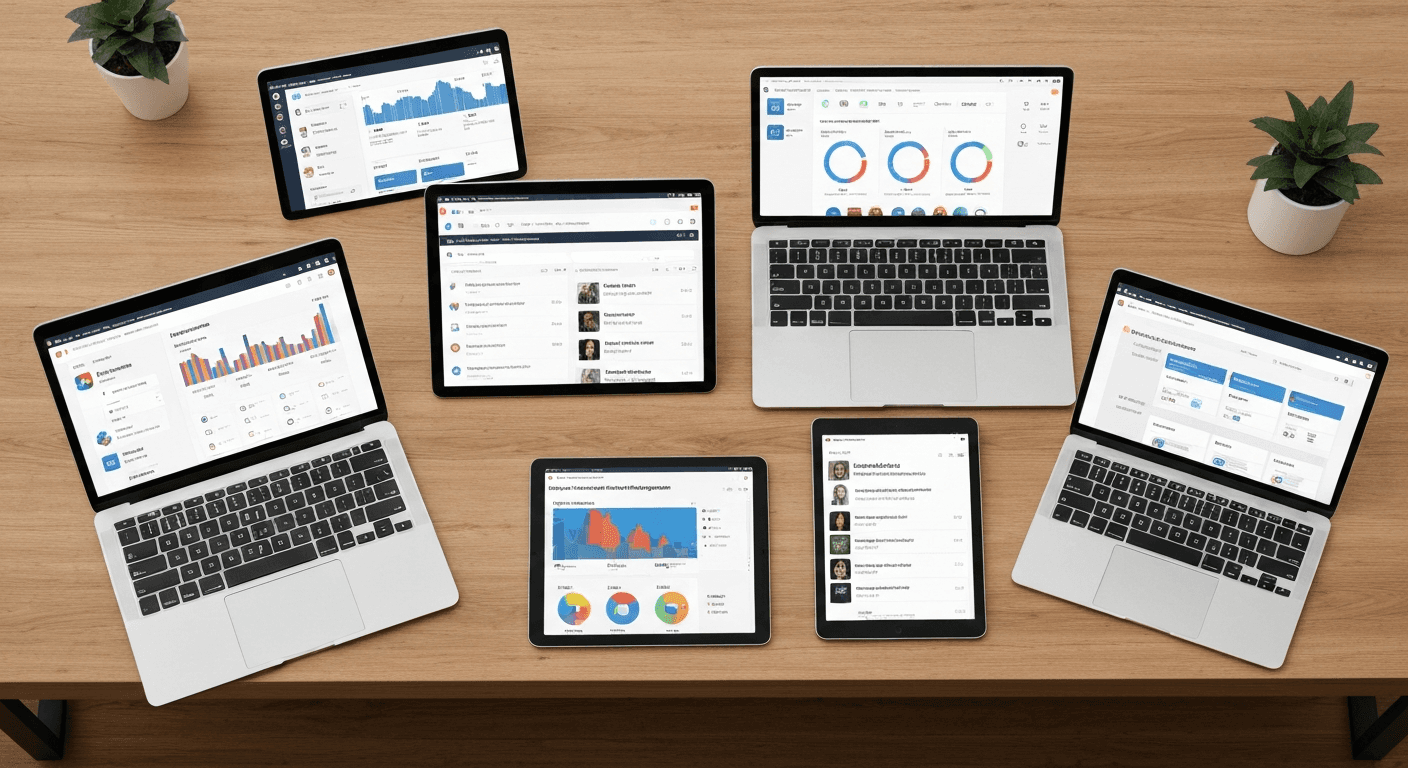
The right technology is essential for automating and simplifying the management of subscription renewals. Manual methods are no longer sufficient in a world of numerous SaaS tools and complex contracts. Renewal management software can transform your process of overseeing renewals.
These tools centralise information, automate reminders, and provide the insights needed for strategic decision-making. Let's compare some of the key platforms available and discuss how to choose the right one for your organisation's needs.
Comparing CRM, CLM, and Subscription Management Platforms
Several types of software can help with renewals, each with a different focus. Customer Relationship Management (CRM) systems are great for managing customer data and interactions. Contract Lifecycle Management (CLM) platforms are specifically designed to handle contracts from creation to renewal. Subscription management tools focus on the billing and payment aspects of SaaS subscriptions.
Choosing the right renewal management software depends on your primary challenge. If your main issue is managing contract renewals and legal terms, a CLM is ideal. If you are focused on sales and customer communication, a CRM is key.
Often, the best solution is an integrated approach, where these systems work together to provide a complete view of the customer and their contracts.
Tool Type | Primary Focus | Best For |
|---|---|---|
CRM | Managing customer data and sales interactions. | Sales and customer success teams. |
CLM | Automating the entire contract lifecycle. | Legal teams and managing contract terms. |
Subscription Management | Handling billing, payments, and subscription plans. | Finance teams and SaaS businesses. |
Selecting the Right Solution for Your Organisation
Choosing the right renewal management software depends entirely on your specific business needs. Start by identifying your biggest pain points. Are you struggling with tracking contract dates, managing negotiations, or handling billing for software renewal?
Consider the size and complexity of your organisation. A small business might need a simple tool, while a large enterprise will require a more robust platform with advanced features and integration capabilities. Your choice of software should simplify your process of overseeing renewals, not complicate it.
Evaluate different options and look for a solution that aligns with your existing workflows and can scale with your business. The goal is to find a contract management or renewal tool that empowers your team to be more efficient and strategic.
Measuring Success of Your Renewal Management Efforts
How do you know if your renewal process is effective? The answer lies in tracking the right data. Measuring the success of your efforts requires you to monitor key metrics related to renewal rates, customer satisfaction, and overall retention.
These metrics provide concrete evidence of what is working and where you need to improve. By regularly reporting on these numbers, you can continuously refine your strategy and demonstrate the value of your renewal management program.
Key Performance Indicators to Track
To measure success, you need to track a few key metrics consistently. These Key Performance Indicators (KPIs) give you a clear view of your performance and help you make data-driven decisions. They provide insight into financial health and customer loyalty.
Some of the most important metrics to track are renewal rates, which show the percentage of customers who renew, and the churn rate, which shows the percentage who leave. Tracking customer lifetime value (CLV) is also critical, as it represents the total revenue a customer brings to your business over time.
Other vital KPIs include:
Revenue Retention Rate: Measures the revenue retained from existing customers.
Customer Acquisition Cost (CAC): Helps compare the cost of acquiring new customers versus retaining existing ones.
Predictable Cash Flow: Strong renewal performance leads to more reliable financial forecasting.
Reporting on Customer Satisfaction and Retention Metrics
Tracking metrics is only half the battle; you also need to report on them regularly. Reporting on customer satisfaction and retention metrics helps you and your stakeholders understand the impact of your renewal efforts. Use this customer data to tell a story about your performance.
Your reports should go beyond just numbers. Include insights from customer feedback surveys and analyse customer engagement levels. Are customers using the product? Are they satisfied? This qualitative information provides crucial context to your quantitative retention metrics.
By consistently reporting on the entire customer experience, you can identify trends, celebrate successes, and pinpoint areas that need attention. This continuous feedback loop is essential for refining your renewal strategy and driving long-term customer loyalty.
Building a Renewal Management Mindset Across Teams
Effective renewal management is not the job of a single person or department; it's a team sport. Building a renewal-focused mindset across your entire organisation is crucial for success. This means everyone, from sales to customer success, understands their role in retaining customers.
This culture is built through staff training and aligning department objectives around the shared goal of customer retention. When teams work together, the renewal process becomes seamless. Let’s explore how to foster this collaborative environment.
Training Staff and Aligning Department Objectives
To build a renewal mindset, you need to provide your teams with the right staff training. Ensure everyone understands the renewal process, their specific responsibilities, and the tools they will be using. This empowers them to perform their roles confidently and effectively.
Beyond training, it is vital to align department objectives. The goals of your sales, legal, and customer success teams should all support the primary objective of customer retention. For instance, sales can be incentivised not just on new business, but also on renewals.
When all departments are working towards the same goal, you eliminate internal silos and improve operational efficiency. This alignment ensures that everyone is focused on delivering a great customer experience that leads to long-term loyalty.
Encouraging Cross-Functional Collaboration
Collaboration between different departments is key to a smooth renewal process. Sales, legal, finance, and customer success teams all hold valuable pieces of customer data and insights. When they share this information, everyone can make better, more informed decisions.
For example, the customer success team might know that a client is unhappy, which is crucial information for the sales team member handling the renewal. Similarly, the legal team can provide guidance on contract terms that helps in negotiations. This kind of collaboration boosts operational efficiency.
Encourage regular meetings and open communication channels to foster this teamwork. When different teams collaborate effectively, the customer experiences a unified and supportive organisation, which significantly improves their likelihood of renewing.
Conclusion
In conclusion, understanding and implementing effective renewal management strategies is crucial for any organisation aiming to enhance customer retention and maximise ROI. By systematically tracking contracts, maintaining timely communication, and embracing automation, businesses can minimise churn rates and build enduring client relationships. It’s essential to stay proactive in reviewing terms and integrating customer feedback into your processes. Remember, a successful renewal management program not only streamlines operations but also fosters a culture of collaboration across teams. As you embark on optimising your renewal management efforts, consider engaging with our experts to gain insights tailored to your unique organisational needs—book a free consultation today!
Frequently Asked Questions
How does renewal management work in SaaS businesses?
In SaaS businesses, renewal management involves tracking numerous subscription contracts to maximise customer retention. SaaS vendors use renewal strategies like proactive communication and analysing usage data to simplify the contract renewal process. The goal is to review contract terms and ensure customers continue to see value, encouraging them to renew.
What steps should organisations take to ensure smooth renewals?
To ensure smooth contract renewals, organisations should establish a clear renewal management process. This includes centralising contract management to track every renewal date, setting up automated reminders to avoid missed deadlines, and proactively communicating with customers or vendors well in advance to discuss terms and ensure alignment.
Are there tools to automate the renewal management process?
Yes, there are many tools available. Renewal management software, such as Contract Lifecycle Management (CLM) platforms, can automate the entire renewal cycle. These SaaS tools centralise contracts, send automatic renewal reminders, and provide data insights to help you make strategic decisions, simplifying the entire process.
About the Company

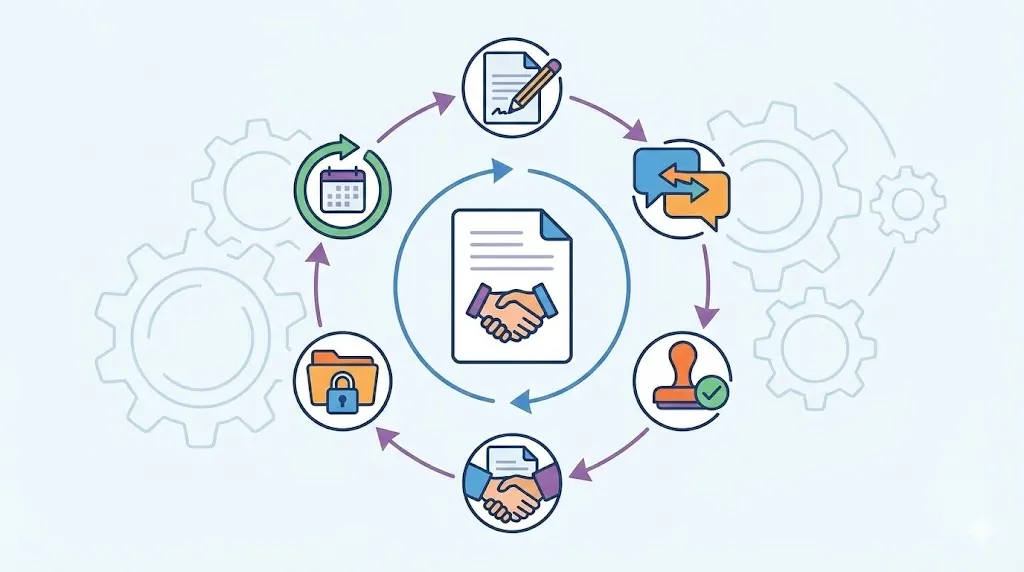
Volody AI CLM is an Agentic AI-powered Contract Lifecycle Management platform designed to eliminate manual contracting tasks, automate complex workflows, and deliver actionable insights. As a one-stop shop for all contract activities, it covers drafting, collaboration, negotiation, approvals, e-signature, compliance tracking, and renewals. Built with enterprise-grade security and no-code configuration, it meets the needs of the most complex global organizations. Volody AI CLM also includes AI-driven contract review and risk analysis, helping teams detect issues early and optimize terms. Trusted by Fortune 500 companies, high-growth startups, and government entities, it transforms contracts into strategic, data-driven business assets.




" height="216.72211px" id="FYO0bO80Y" transform="translate(3 6.105)" width="206.073px"/><path d="M 108.174 222 C 88.432 222 70.303 217.239 53.785 207.717 C 37.267 198.196 24.173 185.052 14.504 168.285 C 4.835 151.312 0 132.165 0 110.845 C 0 89.731 4.835 70.792 14.504 54.025 C 24.173 37.052 37.267 23.804 53.785 14.282 C 70.303 4.761 88.432 0 108.174 0 C 128.116 0 146.246 4.761 162.562 14.282 C 179.08 23.804 192.073 37.052 201.541 54.025 C 211.21 70.792 216.044 89.731 216.044 110.845 C 216.044 132.165 211.21 151.312 201.541 168.285 C 192.073 185.052 179.08 198.196 162.562 207.717 C 146.044 217.239 127.915 222 108.174 222 Z M 108.174 183.189 C 120.864 183.189 132.044 180.291 141.713 174.495 C 151.382 168.492 158.936 160.006 164.375 149.035 C 169.814 138.064 172.533 125.334 172.533 110.845 C 172.533 96.355 169.814 83.729 164.375 72.965 C 158.936 61.994 151.382 53.611 141.713 47.815 C 132.044 42.02 120.864 39.122 108.174 39.122 C 95.483 39.122 84.202 42.02 74.332 47.815 C 64.663 53.611 57.109 61.994 51.67 72.965 C 46.231 83.729 43.511 96.355 43.511 110.845 C 43.511 125.334 46.231 138.064 51.67 149.035 C 57.109 160.006 64.663 168.492 74.332 174.495 C 84.202 180.291 95.483 183.189 108.174 183.189 Z" fill="rgba(255, 255, 255, 0.12)" height="222px" id="aa1McFcE9" transform="translate(227.183 3)" width="216.04399999999998px"/><path d="M 42.302 182.257 L 111.799 182.257 L 111.799 216.722 L 0 216.722 L 0 0 L 42.302 0 Z" fill="rgba(255, 255, 255, 0.12)" height="216.72211px" id="yRq4AnrsX" transform="translate(477.721 6.105)" width="111.79899999999998px"/><path d="M 108.174 222 C 88.432 222 70.303 217.239 53.785 207.717 C 37.267 198.196 24.173 185.052 14.504 168.285 C 4.835 151.312 0 132.165 0 110.845 C 0 89.731 4.835 70.792 14.504 54.025 C 24.173 37.052 37.267 23.804 53.785 14.282 C 70.303 4.761 88.432 0 108.174 0 C 128.116 0 146.246 4.761 162.562 14.282 C 179.08 23.804 192.073 37.052 201.541 54.025 C 211.21 70.792 216.045 89.731 216.045 110.845 C 216.045 132.165 211.21 151.312 201.541 168.285 C 192.073 185.052 179.08 198.196 162.562 207.717 C 146.044 217.239 127.915 222 108.174 222 Z M 108.174 183.189 C 120.864 183.189 132.044 180.291 141.713 174.495 C 151.382 168.492 158.936 160.006 164.375 149.035 C 169.814 138.064 172.534 125.334 172.534 110.845 C 172.534 96.355 169.814 83.729 164.375 72.965 C 158.936 61.994 151.382 53.611 141.713 47.815 C 132.044 42.02 120.864 39.122 108.174 39.122 C 95.483 39.122 84.202 42.02 74.332 47.815 C 64.663 53.611 57.108 61.994 51.67 72.965 C 46.231 83.729 43.511 96.355 43.511 110.845 C 43.511 125.334 46.231 138.064 51.67 149.035 C 57.108 160.006 64.663 168.492 74.332 174.495 C 84.202 180.291 95.483 183.189 108.174 183.189 Z" fill="rgba(255, 255, 255, 0.12)" height="222px" id="mo8HQspQ0" transform="translate(609.155 3)" width="216.04500000000007px"/><path d="M 73.727 0 C 95.885 0 115.324 4.45 132.044 13.351 C 148.967 22.252 161.957 34.982 171.027 51.541 C 180.287 67.894 184.917 86.937 184.917 108.671 C 184.917 130.405 180.287 149.449 171.027 165.801 C 161.957 181.947 148.967 194.47 132.044 203.371 C 115.324 212.271 95.885 216.722 73.727 216.722 L 0 216.722 L 0 0 Z M 72.216 179.773 C 94.374 179.773 111.497 173.564 123.583 161.144 C 135.669 148.724 141.713 131.233 141.713 108.671 C 141.713 86.109 135.669 68.515 123.583 55.888 C 111.497 43.055 94.374 36.638 72.216 36.638 L 42.302 36.638 L 42.302 179.773 Z" fill="rgba(255, 255, 255, 0.12)" height="216.72211px" id="I3iXX5Hi_" transform="translate(859.693 6.105)" width="184.91699999999992px"/><path d="M 185.22 0 L 113.91 141.273 L 113.91 216.722 L 71.61 216.722 L 71.61 141.273 L 0 0 L 47.74 0 L 93.06 99.046 L 138.08 0 Z" fill="rgba(255, 255, 255, 0.12)" height="216.72211px" id="nzHyWC0_d" transform="translate(1061.78 6.105)" width="185.22000000000003px"/></svg>)