

Enterprise agreements form an interconnected operating system for the business. A sales commitment can activate supplier obligations, service levels, data controls, or renewal decisions across multiple teams. Effective contract dependency management gives organizations the visibility and control to connect those commitments, assign accountability, govern change, and protect performance.
TL;DR
Map agreements, duties, owners, dates, systems, and risks before linked commitments create delivery problems.
Set clear ownership and escalation paths across legal, sales, procurement, finance, IT, and operations.
Store agreements, amendments, versions, approvals, and related records in one searchable source.
Use approved templates, clause libraries, workflows, and audit trails for consistent agreement management.
Track obligations, service levels, renewals, notice windows, evidence, and risks with proactive alerts.
Connect contract data with business systems to measure delays, risk, value, and renewal performance.
Establish a Dependency Management Framework
Contractual dependencies link agreements, duties, deliverables, parties, systems, and business events. One contract may create work that another agreement must support.
A customer deal might promise fast delivery, secure data handling, or uptime targets. Those promises may depend on supplier terms, licenses, insurance, or internal approvals.
Managing each agreement alone hides these links. Teams may miss conflicting dates, weak flow-down terms, or unclear responsibility.
Define the Dependency Types That Matter
Commercial dependencies connect pricing, volume, rebates, credits, and payment terms. A customer discount may depend on supplier pricing or minimum purchase levels.
Operational dependencies connect delivery, support, staffing, service levels, and acceptance milestones. A supplier delay can therefore affect customer performance.
Regulatory dependencies involve privacy, security, records, licenses, insurance, and audit rights. These duties often cross legal, security, finance, and operations teams.
Technology and data dependencies link systems, access rights, hosting, integrations, and data use. A change in one system may affect several agreements.
Timing dependencies connect effective dates, notice windows, milestones, renewals, and termination rights. One missed date can limit another team’s choices.
Assign Ownership Across the Contract Lifecycle
Legal may own legal risk, but it cannot perform every related task. Procurement may manage suppliers, while business owners manage service delivery.
Assign owners during intake, negotiation, approval, execution, performance, amendment, and renewal. Each stage needs a named person with authority to act.
Separate contract data ownership from task execution. A legal owner may oversee a contract, while finance handles invoices and IT manages access.
Include sales, procurement, finance, IT, security, operations, and business teams. Their early input can expose dependencies before signing.
Set Dependency Governance Rules
Create simple rules for recording links, approving exceptions, and escalating missed duties. Rules should support daily work, not slow every request.
Require teams to record related agreements, key dates, owners, risks, and approval records. Use the same fields across departments.
Set a clear escalation path for overdue tasks, term conflicts, and failed service levels. Define who receives alerts and who makes final decisions.
Review major dependencies before amendments, renewals, and terminations. This review can reveal effects on customers, suppliers, systems, and internal teams.
Related articles: Essential Contract Resources Every Sales Team Needs to Win
Identify the Challenges That Disrupt Connected Agreements
Interdependent contracts create risk when teams cannot see the full relationship. A local change may affect delivery, cost, compliance, or customer service elsewhere.
Fragmented records also slow review work. People spend time searching for terms instead of resolving business questions.
Fragmented Contract Information
Contracts often sit in email accounts, shared drives, spreadsheets, and business tools. These locations rarely show the complete agreement family.
Teams may find a signed document but miss an amendment or side letter. They may also use an old version during review.
This creates uncertainty about governing plain language. It also weakens evidence when teams need to explain an approval or decision.
A central record should connect the master agreement, statements of work, orders, amendments, and related supplier terms. Search should cover both text and structured fields.
Misaligned Obligations and Critical Dates
Linked agreements can contain different milestones, notice periods, service levels, or payment terms. These gaps may make one promise impossible to meet.
A customer contract may require notice sixty days before renewal. A supplier contract may allow notice only thirty days before renewal.
Teams may also accept a strict customer service level without securing matching supplier support. The business then carries the gap and its related cost.
Unclear ownership makes these risks worse. An contract obligation without a named owner can remain unseen until a deadline passes.
Conflicting Terms and Slow Decisions
Negotiators may change pricing, liability, data use, or service terms without reviewing connected agreements. The change can create a new exposure elsewhere.
Approvals also stall when reviewers do not know why their input matters. This slows revenue, procurement, and service delivery.
A clear dependency review gives each stakeholder context. It also helps decision makers resolve conflicts before execution.
Related articles: 10 Best Contract Obligation Management Software in 2026
Map Dependencies and Create a Reliable Source of Truth
A useful map shows how agreements connect and why each link matters. Start with the agreements that support major revenue, supply, service, or compliance commitments.
Review direct links first. Then add operational links that affect delivery, even when no document refers to another agreement.
Build a Contract Relationship Map
Connect master agreements with statements of work, order forms, purchase orders, and amendments. Add supplier contracts, licenses, data agreements, and subcontractor terms.
Record the relationship type for each link. Examples include supports, replaces, flows down, depends on, or renews with.
A customer agreement may depend on a supplier contract risk for hosting. A statement of work may depend on a license for required software.
Include internal policies when they control a contract duty. Security standards, approval rules, and data policies can shape performance.
Capture Structured Metadata
Record counterparties, business units, contract owners, and agreement types. Add effective dates, expiration dates, notice windows, and renewal terms.
Capture obligations, dependencies, governing law, contract value, and risk level. Use consistent field names across every department.
Structured data makes sorting and reporting easier. It also lets teams find all agreements linked to one customer, supplier, system, or renewal date.
Keep important terms in searchable text. Metadata gives structure, while full text preserves the detail needed for review.
Link Obligations to Responsible Teams
Every obligation needs an accountable owner and a due date. It should also show the evidence required to prove completion.
Connect the task to a supporting team and escalation contact. This makes handoffs clear when one group depends on another.
The contract owner oversees the agreement and its risks. The task owner completes the specific work.
For example, procurement may own a supplier contract. Operations may own delivery checks, while finance confirms payment events.
Preserve Versions and Negotiation History
Version control shows which document is current. It also prevents teams from acting on an old draft.
Keep redlines, comments, approvals, signatures, and amendments with the agreement record. These records explain how the final language developed.
Track changes to scope, price, service levels, data use, and liability. Each change may affect other agreements or internal processes.
A clear history supports audits and future negotiations. It also helps teams understand why an exception was accepted.
Related articles: Contract Versions: A Guide to Easily Tracking Each Update
Design Workflows for Intake, Approval, and Change Control
Controlled workflows help teams identify dependencies before agreements become binding. They also make approval work visible and easier to manage.
Start with a consistent intake process. Then route work according to risk, value, language, jurisdiction, and affected teams.
Start With Structured Contract Intake
An intake form should capture the business purpose and proposed counterparty. It should also identify related agreements and target dates.
Ask whether the request affects pricing, delivery, data, security, insurance, or systems. These questions reveal dependencies early.
Include the required template, clauses, and reviewers. The form should identify legal, procurement, finance, security, privacy, and business owners.
Early screening prevents avoidable rework. It also gives reviewers enough context to make faster decisions.
Automate Reviews and Approvals
Routing rules can send agreements to the right reviewers automatically. A high-value deal may need finance and executive review.
A data-heavy agreement may need privacy and security review. A supplier agreement may need procurement and operations review.
Automated reminders show where work has stopped. They also reduce reliance on personal email follow-ups.
Document every approval, rejection, exception, and requested change. This creates a useful audit trail without adding manual work.
Control Amendments and Exceptions
Treat amendments as new dependency events. A small pricing or scope change may affect suppliers, invoices, service levels, or systems.
Require a dependency review before execution. The review should identify affected agreements, owners, dates, and controls.
Exceptions should include a reason, risk owner, expiry date, and approval. Temporary exceptions need follow-up before they become permanent practice.
After signature, update linked records and alerts. Notify each team that must change its work.
Related articles: Ultimate guide of Contract Repository Systems
Standardize Clauses, Templates, and Negotiation Practices
Standard terms make connected agreements easier to compare. They also give teams a clear starting point for negotiation.
Use flexibility where business needs differ. Keep that flexibility within approved risk limits and documented fallback positions.
Use Modular Templates and Clause Libraries
Create approved templates for master agreements, statements of work, order forms, supplier terms, and amendments. Each template should fit its common use case.
A clause library stores approved language for common risks. It may cover liability, service levels, data use, insurance, audit rights, and termination.
Include fallback clauses for likely negotiation points. This helps teams respond without creating unapproved language.
Keep ownership clear for each template and clause. Review them when law, policy, or business risk changes.
Align Terms Across Back to Back Agreements
Back-to-back contracting means one agreement supports duties promised in another. The terms must match closely enough to protect delivery and value.
Compare customer and supplier pricing, delivery duties, warranties, service levels, and credits. Review indemnities, insurance, data duties, and termination rights too.
Check dates and notice windows together. A supplier should not renew after a customer contract ends without a clear business reason.
Also compare remedies and limits. A weak supplier remedy may leave the business exposed to a stronger customer claim.
Related articles: Reducing Contractual Liability with AI-Driven CLM
Monitor Obligations, Renewals, and Performance Continuously
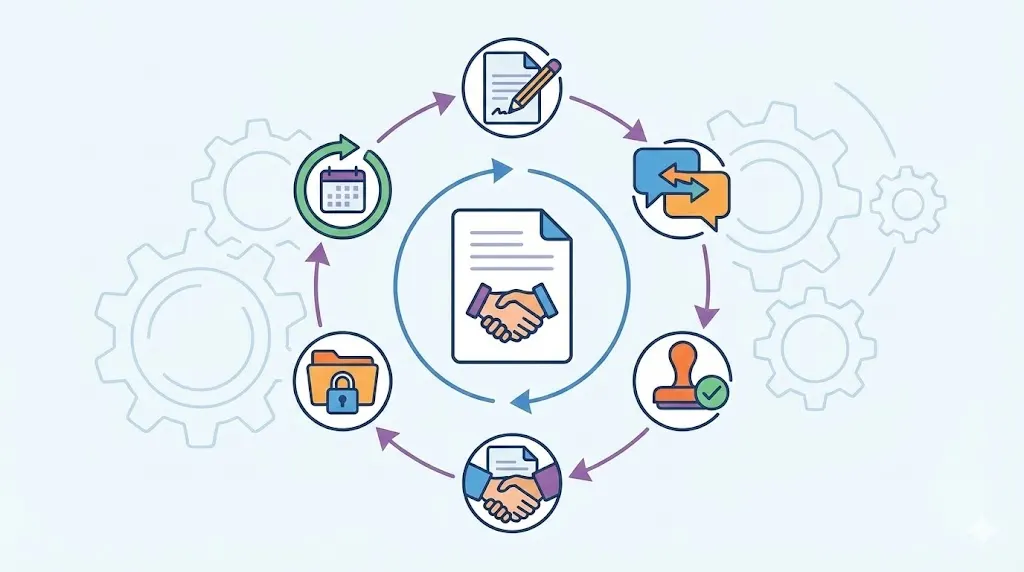
Signature starts the performance stage. Teams must turn contract language into tasks, evidence, alerts, and decisions.
Continuous monitoring matters most for connected agreements. A missed supplier duty may become a customer failure or financial loss.
Convert Contract Terms Into Trackable Obligations
Create tasks for deliverables, reports, service levels, payments, audits, certifications, insurance, and milestones. Assign each task to a named owner.
Record due dates, evidence needs, related agreements, and escalation contacts. This gives teams a clear path from promise to proof.
Some duties repeat monthly, quarterly, or yearly. Set recurring tasks so owners do not rebuild schedules by hand.
Link each task to the clause or document that creates it. Owners can then understand both the duty and its purpose.
Coordinate Renewal and Termination Decisions
Review linked agreements together before renewal or termination. A customer renewal may require supplier capacity, licenses, or new security reviews.
Start before the notice window opens. Late review can force automatic renewal or reduce negotiation choices.
Include transition planning for important services. Teams may need data returns, access removal, replacement suppliers, or customer notices.
Record the final decision and its reasons. Update related agreements, tasks, owners, and dates after the decision.
Use Dashboards and Proactive Alerts
Dashboards should show overdue obligations, upcoming milestones, renewal windows, and unresolved risks. They should also show owner actions and stalled approvals.
Use alerts that match the task’s importance. A critical renewal needs earlier notice than a routine document upload.
Give managers a view across departments and business units. Give task owners a focused view of their own work.
Avoid alert overload. Too many low-value notices can cause people to ignore important warnings.
Document Evidence and Remediation
Store service reports, approval records, notices, certificates, and meeting records. Link each item to the relevant obligation.
When a duty fails, record the issue and its business effect. Add the corrective action, owner, deadline, and closure evidence.
Keep exceptions with the related agreement. This creates a complete record for audits, disputes, and future reviews.
Use lessons from failures to improve templates and workflows. Repeated issues often show a wider process gap.
Related articles: Contract Management Software for Government Sector
Integrate Contract Data With Enterprise Systems and Analytics
Contract data has more value when it reaches the systems where work occurs. Integrations can reduce duplicate entry and connect promises with business activity.
Use controlled data exchange rather than copying every field everywhere. Each system should have a clear purpose and data owner.
Connect CRM, ERP, Procurement, and Signature Tools
Connect contracts with customer opportunities, suppliers, purchase orders, invoices, and revenue events. This links commercial terms with business activity.
Connect signature tools so executed records return to the central repository. The final document should trigger post-signature tasks.
Procurement links can show whether supplier orders match approved terms. Finance links can help track payment duties, credits, and contract value.
Use CRM links to show contract status during sales planning. Sales teams can then see renewal dates and customer commitments.
Apply Access Controls and Data Governance
Use role-based access so people see only the records they need. Sensitive pricing, personal data, and security terms require careful control.
Keep audit logs for views, edits, approvals, downloads, and deletions. These logs support accountability and incident review.
Apply data classification, retention rules, and encryption. Align controls with existing security and privacy practices.
Define who owns each data field and relationship. Poor data ownership can weaken reports and dependency alerts.
Measure Risk, Efficiency, and Realized Value
Track approval delays, cycle time, obligation completion, and renewal trends. Review clause deviations and dependency-related incidents.
Measure contract value, savings, leakage, credits, and missed benefits. These measures show whether agreements deliver expected results.
Compare performance across business units and contract types. The results can reveal weak templates, slow approvals, or training needs.
Set a review schedule for these measures. Monthly operational reviews and regular leadership reviews can support steady improvement.
Related articles: Understanding Exclusive Contracts: Key Insights and Tips
Why Contract Management Software Matters
Managing dependencies through email and spreadsheets creates blind spots. Teams may not know which agreement governs, who owns a duty, or when action is due.
Contract management software brings these records into one controlled workspace. It connects agreements, automates workflows, preserves audit trails, and supports renewal and performance tracking.
A strong platform should support linked agreement management across departments. It should also fit existing security, collaboration, finance, procurement, and sales systems.
Centralized records: One searchable platform connects agreements, amendments, obligations, owners, and dependency relationships.
Controlled workflows: Automated routing, reminders, and approvals reduce missed deadlines and inconsistent review.
Clear contract data: Structured fields show parties, dates, values, risks, owners, and related agreements.
Ongoing monitoring: Dashboards track duties, renewals, service levels, overdue actions, and unresolved issues.
Useful analytics: Reports show cycle times, clause changes, compliance trends, renewal exposure, and realized value.
Volody CLM Software supports contract dependency management with AI Contract Summaries, Approval Workflow Automation, and Obligation Management. Its summaries highlight obligations, renewal dates, and key risks. Automated routing supports multi-level approvals, while obligation tools track deliverables, renewals, and commitments.
For example, a sales agreement can connect to supplier terms, assign service duties, and alert owners before renewal dates.
Want to see how contract management software can simplify your legal workflows? Check out Volody's CLM Software.
FAQ
Why is legal contract management important?
Legal contract management helps organizations control commitments, reduce compliance exposure, and preserve reliable performance records. It gives legal and business teams visibility into obligations, renewals, amendments, and exceptions. Strong management also improves collaboration across departments. It helps protect value after agreements are signed and supports better decisions during disputes or renewals.
What should legal operations teams look for in contract management software?
Legal operations teams should look for central records, configurable workflows, searchable metadata, and version control. The platform should track obligations, renewals, approvals, permissions, and audit trails. It should also connect with CRM, ERP, procurement, finance, identity, security, and signature tools. Ease of use matters because adoption affects data quality and long-term value.
How can contracts from one department create dependencies elsewhere?
A sales contract may promise delivery, service levels, data handling, or pricing that requires work elsewhere. Procurement may then rely on supplier terms, licenses, insurance, or subcontractor commitments. Finance, IT, security, and operations may each perform related tasks. These links create dependencies even when separate teams negotiated the agreements.
How should organizations choose an enterprise contract management solution?
Organizations should assess current processes, dependency risks, stakeholder needs, data quality, and security controls first. They should test workflow flexibility, integrations, reporting, migration support, permissions, and audit features. User experience also matters because complex tools often reduce adoption. A clear rollout plan and executive support should guide the software choice.
What is enterprise CLM software?
Enterprise CLM software manages contracts from intake through drafting, negotiation, approval, signature, performance, renewal, and termination. It connects agreements with owners, obligations, dates, workflows, and related systems. Unlike isolated repositories, enterprise CLM supports shared visibility and consistent controls. It also helps departments manage linked agreements across the organization.
How should teams resolve conflicts between linked agreements?
Resolve conflicts by identifying the competing terms and confirming the applicable precedence language first. Verify which agreement, amendment, or order governs the issue, then document the decision with legal, commercial, operational, and finance owners. Assess related impacts, update linked records and controls, and execute any required amendment without delay.
About the Company

Volody AI CLM is an Agentic AI-powered Contract Lifecycle Management platform designed to eliminate manual contracting tasks, automate complex workflows, and deliver actionable insights. As a one-stop shop for all contract activities, it covers drafting, collaboration, negotiation, approvals, e-signature, compliance tracking, and renewals. Built with enterprise-grade security and no-code configuration, it meets the needs of the most complex global organizations. Volody AI CLM also includes AI-driven contract review and risk analysis, helping teams detect issues early and optimize terms. Trusted by Fortune 500 companies, high-growth startups, and government entities, it transforms contracts into strategic, data-driven business assets.




" height="216.72211px" id="FYO0bO80Y" transform="translate(3 6.105)" width="206.073px"/><path d="M 108.174 222 C 88.432 222 70.303 217.239 53.785 207.717 C 37.267 198.196 24.173 185.052 14.504 168.285 C 4.835 151.312 0 132.165 0 110.845 C 0 89.731 4.835 70.792 14.504 54.025 C 24.173 37.052 37.267 23.804 53.785 14.282 C 70.303 4.761 88.432 0 108.174 0 C 128.116 0 146.246 4.761 162.562 14.282 C 179.08 23.804 192.073 37.052 201.541 54.025 C 211.21 70.792 216.044 89.731 216.044 110.845 C 216.044 132.165 211.21 151.312 201.541 168.285 C 192.073 185.052 179.08 198.196 162.562 207.717 C 146.044 217.239 127.915 222 108.174 222 Z M 108.174 183.189 C 120.864 183.189 132.044 180.291 141.713 174.495 C 151.382 168.492 158.936 160.006 164.375 149.035 C 169.814 138.064 172.533 125.334 172.533 110.845 C 172.533 96.355 169.814 83.729 164.375 72.965 C 158.936 61.994 151.382 53.611 141.713 47.815 C 132.044 42.02 120.864 39.122 108.174 39.122 C 95.483 39.122 84.202 42.02 74.332 47.815 C 64.663 53.611 57.109 61.994 51.67 72.965 C 46.231 83.729 43.511 96.355 43.511 110.845 C 43.511 125.334 46.231 138.064 51.67 149.035 C 57.109 160.006 64.663 168.492 74.332 174.495 C 84.202 180.291 95.483 183.189 108.174 183.189 Z" fill="rgba(255, 255, 255, 0.12)" height="222px" id="aa1McFcE9" transform="translate(227.183 3)" width="216.04399999999998px"/><path d="M 42.302 182.257 L 111.799 182.257 L 111.799 216.722 L 0 216.722 L 0 0 L 42.302 0 Z" fill="rgba(255, 255, 255, 0.12)" height="216.72211px" id="yRq4AnrsX" transform="translate(477.721 6.105)" width="111.79899999999998px"/><path d="M 108.174 222 C 88.432 222 70.303 217.239 53.785 207.717 C 37.267 198.196 24.173 185.052 14.504 168.285 C 4.835 151.312 0 132.165 0 110.845 C 0 89.731 4.835 70.792 14.504 54.025 C 24.173 37.052 37.267 23.804 53.785 14.282 C 70.303 4.761 88.432 0 108.174 0 C 128.116 0 146.246 4.761 162.562 14.282 C 179.08 23.804 192.073 37.052 201.541 54.025 C 211.21 70.792 216.045 89.731 216.045 110.845 C 216.045 132.165 211.21 151.312 201.541 168.285 C 192.073 185.052 179.08 198.196 162.562 207.717 C 146.044 217.239 127.915 222 108.174 222 Z M 108.174 183.189 C 120.864 183.189 132.044 180.291 141.713 174.495 C 151.382 168.492 158.936 160.006 164.375 149.035 C 169.814 138.064 172.534 125.334 172.534 110.845 C 172.534 96.355 169.814 83.729 164.375 72.965 C 158.936 61.994 151.382 53.611 141.713 47.815 C 132.044 42.02 120.864 39.122 108.174 39.122 C 95.483 39.122 84.202 42.02 74.332 47.815 C 64.663 53.611 57.108 61.994 51.67 72.965 C 46.231 83.729 43.511 96.355 43.511 110.845 C 43.511 125.334 46.231 138.064 51.67 149.035 C 57.108 160.006 64.663 168.492 74.332 174.495 C 84.202 180.291 95.483 183.189 108.174 183.189 Z" fill="rgba(255, 255, 255, 0.12)" height="222px" id="mo8HQspQ0" transform="translate(609.155 3)" width="216.04500000000007px"/><path d="M 73.727 0 C 95.885 0 115.324 4.45 132.044 13.351 C 148.967 22.252 161.957 34.982 171.027 51.541 C 180.287 67.894 184.917 86.937 184.917 108.671 C 184.917 130.405 180.287 149.449 171.027 165.801 C 161.957 181.947 148.967 194.47 132.044 203.371 C 115.324 212.271 95.885 216.722 73.727 216.722 L 0 216.722 L 0 0 Z M 72.216 179.773 C 94.374 179.773 111.497 173.564 123.583 161.144 C 135.669 148.724 141.713 131.233 141.713 108.671 C 141.713 86.109 135.669 68.515 123.583 55.888 C 111.497 43.055 94.374 36.638 72.216 36.638 L 42.302 36.638 L 42.302 179.773 Z" fill="rgba(255, 255, 255, 0.12)" height="216.72211px" id="I3iXX5Hi_" transform="translate(859.693 6.105)" width="184.91699999999992px"/><path d="M 185.22 0 L 113.91 141.273 L 113.91 216.722 L 71.61 216.722 L 71.61 141.273 L 0 0 L 47.74 0 L 93.06 99.046 L 138.08 0 Z" fill="rgba(255, 255, 255, 0.12)" height="216.72211px" id="nzHyWC0_d" transform="translate(1061.78 6.105)" width="185.22000000000003px"/></svg>)