
Many procurement and legal teams struggle to decide when to use purchase orders, purchase agreements, or contracts. Each document plays a unique role in business transactions. Confusing them can lead to delays, compliance risks, or missed opportunities. Imagine a company buying office supplies regularly but also negotiating a complex software service. Using the wrong document could cause payment disputes or unclear obligations. This article breaks down these documents clearly, helping you pick the right one and manage them efficiently.
TL;DR
Purchase orders are best for routine buys with clear specs and fixed prices under $50,000.
Additionally, purchase agreements address complex or long-term deals that require detailed terms and signatures.
Contracts are broader, legally binding agreements covering various business relationships.
A solid purchase order process includes requisition, issuance, supplier approval, delivery check, and invoice matching.
Centralizing procurement documents improves access, compliance, and audit readiness.
Contract management software can automate workflows, reduce errors, and increase visibility.
What Exactly Is a Purchase Order?
A purchase order (PO) is a formal document a buyer sends to a seller to request goods or services. Additionally, it specifies the items requested, agreed pricing, and delivery instructions. Think of it as a detailed purchase instruction that outlines terms alongside costs. Upon the seller's acceptance, the PO establishes a legally binding contract.
A typical purchase order includes:
Item descriptions and quantities
Unit prices and total cost
Delivery dates and shipping instructions
PO number for tracking
Buyer and seller contacts
For example, an IT department might issue a PO to buy 50 laptops at a set price, with delivery expected in two weeks. The PO helps both sides confirm what was ordered and when it should arrive.
Related Artivle: Acceleration Clauses: Key Mechanisms and Activation Criteria
Why Businesses Use Purchase Orders
Purchase orders create a clear, auditable record of every purchase. They help finance teams control spending by requiring approval before money is committed. This prevents unexpected expenses and keeps budgets on track.
For suppliers, POs minimize payment disputes by clearly documenting the buyer’s order details and agreed pricing. This precision accelerates invoicing and payment cycles.
Purchase orders also simplify inventory and delivery tracking. Warehouse teams verify incoming goods against the original documentation for accuracy.
How the Purchase Order Process Works
Managing purchase orders involves several key steps:
Requesting a Purchase
Someone in the company identifies a need and creates a purchase requisition. This internal document explains what is needed and why, including estimated costs.
Issuing the Purchase Order
Procurement reviews and approves the requisition, then drafts the PO incorporating all final details. The PO is sent to the supplier.
Supplier Approval
The supplier reviews the PO. If they agree to the terms, they accept it, making the PO legally binding. If changes are needed, they negotiate before acceptance.
Delivery and Inspection
Upon receipt, the warehouse team cross-checks the shipment documentation to ensure the quantity and quality correspond to the PO specifications.
Invoice Matching and Payment
The supplier submits an invoice that references the purchase order number to facilitate verification. Accounts payable then conducts a thorough comparison of the invoice, purchase order, and delivery records prior to authorizing payment. This "three-way match" prevents errors and fraud.
Different Types of Purchase Orders
Purchase orders come in various forms depending on the buying scenario:
Standard Purchase Order: Used for one-time purchases with fixed quantities and prices.
Blanket Purchase Order: Created for ongoing procurement needs, allowing multiple releases over time without fixed quantities.
Contract Purchase Order: Linked to a master contract that governs specific orders placed under its terms.
Planned Purchase Order: Forecasts future buying requirements with estimated amounts and delivery schedules.
For example, a cleaning company might have a blanket PO for monthly janitorial supplies but use standard POs for one-off equipment purchases.
Related articles: Clear Contract Payment Terms: A Guide to Understanding
What Is a Purchase Agreement?
A document formalizing the terms agreed upon by buyer and seller for a specific transaction is known as a purchase agreement. Additionally, it encompasses more than the mere description of the purchased items. The contract delineates obligations related to delivery schedules, payment terms, warranties, liabilities, and mechanisms for resolving disputes.
Purchase agreements are common for high-value or complex transactions. They require signatures from both parties to be valid.
When to Use Purchase Agreements
Use purchase agreements for deals that need clear, negotiated terms beyond what a purchase order covers. Examples include:
Buying custom software with service levels and support terms
Purchasing machinery with installation and maintenance clauses
Long-term supply arrangements with pricing adjustments
Purchase agreements protect both sides by specifying responsibilities, timelines, and remedies if something goes wrong.
Key Elements of Purchase Agreements
Typical provisions found within these contracts include:
Detailed description of goods or services
Pricing, payment schedules, and penalties for late payment
Delivery terms and risk transfer points
Warranties and product guarantees
Confidentiality and intellectual property clauses
Termination rights and dispute resolution methods
Because of their complexity, purchase agreements often require legal review before signing.
Related articles: Key Contract Terms: WCC 2022 Most Negotiated
How Do Contracts Differ from Purchase Orders and Purchase Agreements?
Contracts are broad legal documents that govern various business relationships. Additionally, they encompass purchase agreements as well as leases, employment contracts, partnerships, and other arrangements.
Contracts bind parties to specific obligations and rights. They frequently specify conditions related to confidentiality, liability, governing law, and remedies available in case of breach.
Contracts in Procurement
In the context of procurement, contracts define the comprehensive structure that governs buying and selling activities. Within this structure, purchase agreements and purchase orders have distinct roles.
For example, a company might have a master supply contract with a vendor. Within that overarching contract, purchase agreements are issued for particular projects while purchase orders are used for routine purchases.
Moreover, contracts require signatures from authorized representatives and often have renewal and amendment provisions.
Related Articles: Representations and Warranties Clause Explained
Why Contracts Matter
Contracts specify the duties each party must fulfill and establish the repercussions if those duties are not met. This clarity helps minimize disputes while safeguarding business interests.
Contracts also facilitate adherence to applicable laws and regulations. Written contracts are mandated in many industries for specific types of transactions.
Related articles: Contract Management for Procurement: Elevate Your Strategy
What Are the Main Differences Between Purchase Orders, Purchase Agreements, and Contracts?
Aspect | Purchase Order | Purchase Agreement | Contract |
|---|---|---|---|
Purpose | Authorizes routine purchase | Sets detailed terms for a specific deal | Governs broad business relationships |
Complexity | Simple, fixed terms | Complex, negotiated terms | Comprehensive, covers multiple aspects |
Legal Binding | Becomes binding when accepted by seller | Requires signatures from both parties | Signed by authorized parties |
Typical Use | Low-value, straightforward buys | High-value, complex transactions | Various business agreements |
Document Length | Short, focused on order details | Longer, includes terms and conditions | Often lengthy, covers many clauses |
Approval Process | Internal approval then supplier acceptance | Negotiation and signing by both parties | Formal signing and possible legal review |
Understanding these differences helps teams choose the right document, reducing confusion and risk.
Related articles: What's the Difference Between Agreement and Contract
When Should You Use Purchase Orders, Purchase Agreements, and Contracts?
Selecting the appropriate document hinges on the transaction’s size, complexity, and risk.
Use purchase orders for routine buys under $50,000 with clear specs and prices. This keeps procurement fast and simple.
Use purchase agreements when the deal involves complex terms, service levels, or long-term commitments. These need negotiation and signatures.
Contracts are best suited for comprehensive business relationships, master agreements, or situations demanding absolute legal certainty.
For instance, acquiring office chairs for a single department is typically managed through a purchase order. When dealing with multi-year software licenses, a purchase agreement becomes essential to address the intricate terms involved. In cases such as forming a partnership for joint product development, executing a formal contract is indispensable.
Explore more detailed guidance in Contract Guidelines vs Playbooks: Choosing the Right Legal
Best Practices for Managing Purchase Orders
Efficient purchase order management prevents delays and errors. Follow these steps:
Standardize the Process
Create a clear workflow from requisition to payment. Establish clear roles specifying who is authorized to request, approve, and issue purchase orders.
Use Tiered Approval
Implement approval thresholds that correspond to the purchase amount, ensuring appropriate oversight at each level.
Centralize Documentation
Consolidate all purchase orders within a searchable repository to facilitate audit readiness, contract renewals, and vendor performance assessments.
Perform Three-Way Matching
Match the PO, delivery receipt, and invoice before payment. This avoids paying for incorrect or missing goods.
Train Teams Regularly
Ensure procurement, finance, and receiving teams understand their roles and the importance of accurate PO handling.
Monitor and Report
Track PO cycle times, approval bottlenecks, and spend against budgets. Use reports to improve processes.
Related articles: Vendor Negotiation: 4 Steps of Success Contract Negotiation
How to Use Purchase Orders, Purchase Agreements, and Contracts Strategically
Strategic use of these documents boosts procurement efficiency and reduces risk.
Segment Purchases by Complexity and Value
Use POs for simple buys and agreements for complex deals. This matches effort to risk.
Integrate with ERP and Finance Systems
Automate PO creation, approval, and matching to reduce manual errors.
Leverage Contract Templates and Clause Libraries
For purchase agreements and contracts, use standard templates to speed drafting and ensure consistency.
Maintain a Central Repository
Keep all documents accessible to legal, procurement, and finance teams. This supports compliance and quick decision-making.
Review and Update Regularly
Periodically audit your documents and processes to adapt to changing business needs and regulations.
Related articles: How to Simplify Contract Review with AI? Comprehensive Guide
Why Centralizing Procurement Documents Matters
Many companies struggle to find contracts and purchase documents when needed. Additionally, a recent survey found that 71% of companies cannot locate 10% or more of their contracts during audits or renewals. This leads to missed deadlines, lost discounts, and compliance risks.
Centralizing all procurement documents in one searchable repository solves this problem. It enables quick access to:
Vendor contracts and agreements
Purchase orders and requisitions
Invoices and payment records
A centralized system also supports audit trails, version control, and secure access controls. Teams can collaborate more easily and avoid duplicate or conflicting documents.
Related articles: Essential Guide to Sales and Purchase Agreement
How Contract Management Software Solves This
Contract lifecycle management (CLM) software automates and organizes procurement documents. Additionally, it enables teams to efficiently create, review, approve, and store purchase orders, agreements, and contracts within a unified platform.
Key benefits include:
Automated workflows for approvals and renewals
AI-powered contract drafting and review for accuracy
Centralized repository with advanced search and tagging
Alerts for key dates like renewals and payment deadlines
Integration with ERP and finance systems for seamless data flow
Volody offers a modern CLM platform designed to simplify contract management. Features like AI contract summaries, obligation tracking, and electronic signatures reduce manual work and speed up procurement cycles.
> Looking for a better way to manage contracts? Discover Volody's CLM Software.
FAQ
When does issuance of a purchase orders become legally binding?
Additionally, once the supplier accepts—either explicitly by signing or confirming, or implicitly by fulfilling the order—this document attains legal enforceability.
Additionally, is it possible to have contractual purchase terms without issuing a purchase order?
Yes, contractual purchase agreements can independently govern transaction terms, with purchase orders subsequently issued to specify particular orders.
Are contracts always signed physically?
No, contracts can be signed electronically using e-signature platforms. These electronic signatures are recognized as legally valid in most jurisdictions, facilitating faster contract finalization.
What happens if a delivery does not match the purchase order?
Moreover, the receiving team should document discrepancies and notify procurement and the supplier.
Payment may be withheld or adjusted until the issue is resolved.
How do blanket purchase orders work?
Blanket POs set agreed prices for repeated purchases over time without specifying exact quantities or delivery dates upfront. Buyers issue releases or call-offs as needed.
Why is three-way matching important?
Furthermore, the three-way match process verifies that the order, delivery receipt, and invoice correspond before authorizing payment. This step prevents payment for undelivered or incorrect goods and mitigates fraud risk.
When should legal review purchase agreements?
Legal teams should evaluate purchase agreements involving complex terms, unusual clauses, or high-value transactions to mitigate risks and ensure compliance.
Can purchase orders be modified after issuance?
Yes, modifications must be approved by both buyer and seller.
Also, changes should be documented with revised POs or amendments.
Also, what distinguishes purchase agreements from master agreements?
A master agreement defines the overarching terms governing an ongoing business relationship.
Purchase agreements are specific contracts under that master agreement detailing individual transactions.
How can technology improve purchase order management?
Technology automates approvals, tracks order status, matches invoices, and stores documents centrally. This reduces errors, speeds processes, and improves visibility.
This detailed guide clarifies the differences and uses of purchase orders, purchase agreements, and contracts. Understanding these distinctions helps your teams avoid costly mistakes and manage procurement more effectively. Using the right documents, supported by modern contract management tools, creates a smoother, more transparent buying process.
About the Company
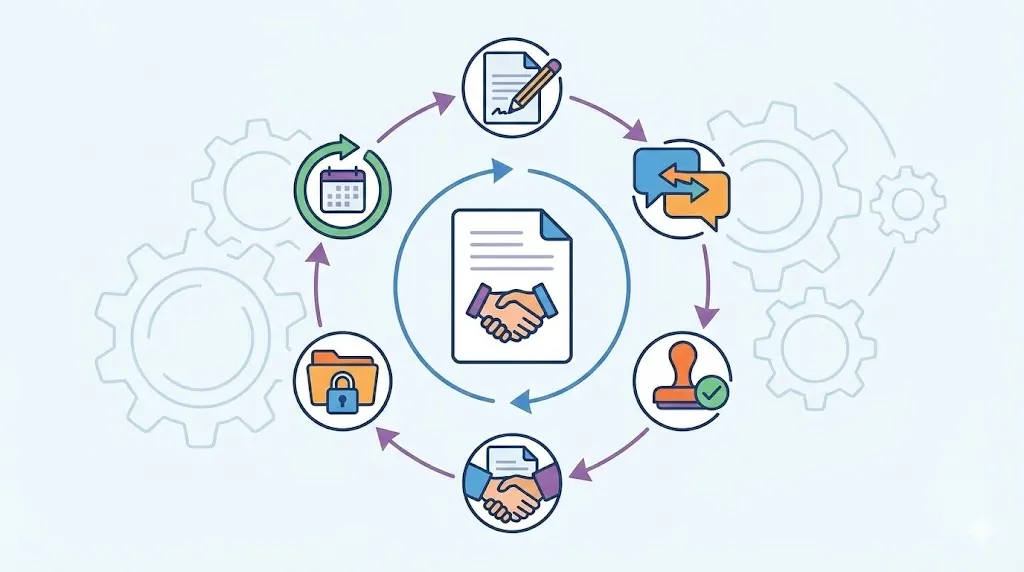
Volody AI CLM is an Agentic AI-powered Contract Lifecycle Management platform designed to eliminate manual contracting tasks, automate complex workflows, and deliver actionable insights. As a one-stop shop for all contract activities, it covers drafting, collaboration, negotiation, approvals, e-signature, compliance tracking, and renewals. Built with enterprise-grade security and no-code configuration, it meets the needs of the most complex global organizations. Volody AI CLM also includes AI-driven contract review and risk analysis, helping teams detect issues early and optimize terms. Trusted by Fortune 500 companies, high-growth startups, and government entities, it transforms contracts into strategic, data-driven business assets.


" height="216.72211px" id="FYO0bO80Y" transform="translate(3 6.105)" width="206.073px"/><path d="M 108.174 222 C 88.432 222 70.303 217.239 53.785 207.717 C 37.267 198.196 24.173 185.052 14.504 168.285 C 4.835 151.312 0 132.165 0 110.845 C 0 89.731 4.835 70.792 14.504 54.025 C 24.173 37.052 37.267 23.804 53.785 14.282 C 70.303 4.761 88.432 0 108.174 0 C 128.116 0 146.246 4.761 162.562 14.282 C 179.08 23.804 192.073 37.052 201.541 54.025 C 211.21 70.792 216.044 89.731 216.044 110.845 C 216.044 132.165 211.21 151.312 201.541 168.285 C 192.073 185.052 179.08 198.196 162.562 207.717 C 146.044 217.239 127.915 222 108.174 222 Z M 108.174 183.189 C 120.864 183.189 132.044 180.291 141.713 174.495 C 151.382 168.492 158.936 160.006 164.375 149.035 C 169.814 138.064 172.533 125.334 172.533 110.845 C 172.533 96.355 169.814 83.729 164.375 72.965 C 158.936 61.994 151.382 53.611 141.713 47.815 C 132.044 42.02 120.864 39.122 108.174 39.122 C 95.483 39.122 84.202 42.02 74.332 47.815 C 64.663 53.611 57.109 61.994 51.67 72.965 C 46.231 83.729 43.511 96.355 43.511 110.845 C 43.511 125.334 46.231 138.064 51.67 149.035 C 57.109 160.006 64.663 168.492 74.332 174.495 C 84.202 180.291 95.483 183.189 108.174 183.189 Z" fill="rgba(255, 255, 255, 0.12)" height="222px" id="aa1McFcE9" transform="translate(227.183 3)" width="216.04399999999998px"/><path d="M 42.302 182.257 L 111.799 182.257 L 111.799 216.722 L 0 216.722 L 0 0 L 42.302 0 Z" fill="rgba(255, 255, 255, 0.12)" height="216.72211px" id="yRq4AnrsX" transform="translate(477.721 6.105)" width="111.79899999999998px"/><path d="M 108.174 222 C 88.432 222 70.303 217.239 53.785 207.717 C 37.267 198.196 24.173 185.052 14.504 168.285 C 4.835 151.312 0 132.165 0 110.845 C 0 89.731 4.835 70.792 14.504 54.025 C 24.173 37.052 37.267 23.804 53.785 14.282 C 70.303 4.761 88.432 0 108.174 0 C 128.116 0 146.246 4.761 162.562 14.282 C 179.08 23.804 192.073 37.052 201.541 54.025 C 211.21 70.792 216.045 89.731 216.045 110.845 C 216.045 132.165 211.21 151.312 201.541 168.285 C 192.073 185.052 179.08 198.196 162.562 207.717 C 146.044 217.239 127.915 222 108.174 222 Z M 108.174 183.189 C 120.864 183.189 132.044 180.291 141.713 174.495 C 151.382 168.492 158.936 160.006 164.375 149.035 C 169.814 138.064 172.534 125.334 172.534 110.845 C 172.534 96.355 169.814 83.729 164.375 72.965 C 158.936 61.994 151.382 53.611 141.713 47.815 C 132.044 42.02 120.864 39.122 108.174 39.122 C 95.483 39.122 84.202 42.02 74.332 47.815 C 64.663 53.611 57.108 61.994 51.67 72.965 C 46.231 83.729 43.511 96.355 43.511 110.845 C 43.511 125.334 46.231 138.064 51.67 149.035 C 57.108 160.006 64.663 168.492 74.332 174.495 C 84.202 180.291 95.483 183.189 108.174 183.189 Z" fill="rgba(255, 255, 255, 0.12)" height="222px" id="mo8HQspQ0" transform="translate(609.155 3)" width="216.04500000000007px"/><path d="M 73.727 0 C 95.885 0 115.324 4.45 132.044 13.351 C 148.967 22.252 161.957 34.982 171.027 51.541 C 180.287 67.894 184.917 86.937 184.917 108.671 C 184.917 130.405 180.287 149.449 171.027 165.801 C 161.957 181.947 148.967 194.47 132.044 203.371 C 115.324 212.271 95.885 216.722 73.727 216.722 L 0 216.722 L 0 0 Z M 72.216 179.773 C 94.374 179.773 111.497 173.564 123.583 161.144 C 135.669 148.724 141.713 131.233 141.713 108.671 C 141.713 86.109 135.669 68.515 123.583 55.888 C 111.497 43.055 94.374 36.638 72.216 36.638 L 42.302 36.638 L 42.302 179.773 Z" fill="rgba(255, 255, 255, 0.12)" height="216.72211px" id="I3iXX5Hi_" transform="translate(859.693 6.105)" width="184.91699999999992px"/><path d="M 185.22 0 L 113.91 141.273 L 113.91 216.722 L 71.61 216.722 L 71.61 141.273 L 0 0 L 47.74 0 L 93.06 99.046 L 138.08 0 Z" fill="rgba(255, 255, 255, 0.12)" height="216.72211px" id="nzHyWC0_d" transform="translate(1061.78 6.105)" width="185.22000000000003px"/></svg>)