

Missed renewal dates expose small businesses to unnecessary costs, service disruptions, and weakened negotiating positions. A disciplined renewal process centralizes agreements, assigns accountability, and surfaces critical deadlines well in advance. With the right controls in place, owners can make informed decisions to renew, negotiate, replace, or terminate contracts on favorable terms.
TL;DR
Missed deadlines can trigger unwanted renewals, higher costs, service gaps, and weak negotiating positions.
Build one contract inventory with dates, notice periods, owners, suppliers, terms, and storage locations.
Track notice deadlines, renewal terms, price changes, obligations, and staged alerts before action becomes urgent.
Prioritize agreements by cost, business impact, legal risk, replacement difficulty, and supplier dependence.
Use a repeatable workflow for feedback, negotiation, approvals, decisions, records, and follow-up tasks.
Spreadsheets suit simple portfolios, while software adds search, reminders, workflows, reporting, and audit trails.
Understand the Risks of Unmanaged Contract Renewals
Contract renewal management is more than an office task. It protects cash flow, service quality, customer promises, and business continuity.
A missed deadline can renew a poor deal automatically. The business may then pay for another term, even when the service no longer fits. A forgotten notice period can also remove the chance to negotiate better terms.
Unmanaged renewals create several common problems:
Financial and Operational Consequences
A contract can renew before anyone checks its price or value. This may lock the business into higher fees, unused services, or costly minimum commitments.
Service problems can also continue without a formal review. A supplier might miss targets, respond slowly, or provide less value than promised. Renewal action gives the business a clear point for challenge.
Missed renewals can also cause service interruptions. A business may lose software access, insurance cover, equipment support, or key supply lines. Each interruption can affect staff, customers, and revenue.
Poor renewal control weakens negotiation power, too. Suppliers gain an advantage when discussions begin days before the deadline. Early review gives the business time to compare options and request changes.
Why Small Teams Are Especially Vulnerable
Small businesses often give one person several contract duties. That person may manage finance, suppliers, staff, and operations at once. Renewal work then competes with urgent daily tasks.
Founders often hold key information in personal inboxes or memory. This creates risk when they take leave, change roles, or leave the business. Other staff may not know where agreements or renewal dates sit.
Informal records also create blind spots. A business may track major supplier contracts but overlook leases, subscriptions, insurance, employment agreements, or customer terms. Contract renewal tracking must cover the full portfolio.
Small teams also lack time for repeated document searches. A central process reduces this burden. It makes each agreement, deadline, owner, and decision easier to find.
Related articles: Why Contract Management Software Demand Is Skyrocketing Now
Build a Complete Contract Inventory
Effective contract renewal management starts with a complete inventory. An inventory is a working record of every active agreement and its key details.
Do not begin with the contracts that seem most important. Begin with every possible source. Memory alone cannot show the full contract portfolio.
Search bank statements, accounting records, email, shared drives, paper files, and signing tools. Ask department leads about agreements held outside the main folders. Check recurring payments against the records you find.
Gather Agreements From Every Source
Start with supplier contracts and software subscriptions. Then search for customer, employment, insurance, property, and professional service agreements.
Include contracts with regular payments and contracts without invoices. Some agreements create duties, access rights, or legal limits without monthly charges.
Search for these contract groups:
Supplier and contractor agreements
Software, hosting, and support subscriptions
Customer sales and service contracts
Employment, freelance, and agency agreements
Insurance, lease, and property documents
Banking, finance, and professional service contracts
Each group can hold different renewal risks. A software contract may contain an automatic renewal clause. An insurance policy may require notice before its cover ends.
Customer contracts may set service commitments or price rules. Supplier contracts may control delivery dates, quality standards, and replacement rights. Treat each group as part of one business record.
Record Ownership and Storage
Assign one internal owner to every active contract. The owner does not need to be a lawyer. They need enough knowledge to start reviews and involve the right people.
Record the counterparty, contract type, status, storage location, and access rights. Add the department that uses the agreement. These fields show who should act and where the signed version sits.
Store each agreement in a central, searchable repository. Keep signed contracts, amendments, order forms, and related notices together. This prevents teams from reviewing an old version by mistake.
Access should match business need. Sensitive employee, pricing, and customer information should not sit in open folders. Clear permissions protect data while keeping work practical.
Establish a Single Source of Truth
Use one record for each agreement. Give files consistent names with the counterparty, contract type, and effective date. Avoid names such as “final,” “new,” or “latest.”
Keep the signed version separate from drafts. Store amendments beside the original contract. Mark expired, cancelled, and replaced agreements clearly.
Required metadata makes contract expiry date tracking easier. Staff can filter records by month, owner, supplier, or status. They can see upcoming work without opening every document.
Review duplicate records during the inventory process. Link related documents rather than creating separate contract entries. This creates a clearer history of changes and decisions.
Related articles: Contract Management Software for Faster Legal Work
Capture Renewal Dates, Notice Periods, and Key Clauses
An expiry date alone does not tell the business when action must begin. Many contracts require notice weeks or months before the stated end date.
The record should show the dates, terms, and duties that affect renewal decisions. It should also show where staff confirmed each detail. This supports reliable contract notice period tracking.
Distinguish Expiry Dates From Notice Deadlines
The expiry date shows when the current term ends. The notice deadline shows when the business must act. These dates can differ by several months.
Some agreements renew for another year unless notice arrives on time. Others renew for shorter periods or continue month by month. Read the renewal clause instead of assuming a standard rule.
Each contract record should contain:
Effective date and current end date
Notice deadline and required delivery method
Next renewal date and renewal term
Date for the next internal review
Name of the contract owner and approver
Record the notice method as well. A contract may require email, registered mail, a portal submission, or written notice. Sending notice through the wrong channel can create another dispute.
Identify Terms That Change at Renewal
Review clauses that change the commercial deal. Look for price uplifts, minimum commitments, volume tiers, revised services, and longer renewal periods.
A supplier may increase fees after the first term. A software provider may change user limits or support levels. A customer agreement may add new service duties without changing the main price.
Check early termination rights and notice conditions. Also review service levels, credits, data return duties, and renewal caps. These terms shape both cost and operating risk.
Ask whether the contract includes an automatic renewal clause. Confirm when it applies and whether the business can opt out. Record any required form, notice wording, or delivery process.
Use Multi Stage Renewal Alerts
Use several alerts before each action date. A 120-day alert can start the review. A 90-day alert can support supplier contact and budget checks.
A 60-day alert can prompt negotiation or replacement planning. A 30-day alert can confirm the final decision and notice status. Adjust these stages for contract value and notice length.
Automated contract renewal reminders should reach the owner first. They should also reach approvers when decisions need finance, legal, or executive input.
Do not rely on one calendar reminder. A single alert can be missed, deleted, or sent to someone who changed roles. Multiple alerts create useful checks without removing human responsibility.
Validate Data Before Relying on It
Review every date against the signed agreement. Then check amendments, order forms, renewal letters, and later emails. A later document may change the original term.
AI and other tools can help find dates and clauses. They can improve consistency across many documents. They can still misread a table, scanned page, or unusual clause.
Ask the contract data owner to confirm important fields. Record the review date and the person who checked them. This creates a useful audit trail for later questions.
Related articles: Best Contract Management Software in 2026: Top 20 CLM Tools
Prioritize Renewals by Value, Risk, and Business Impact
Not every renewal deserves the same review time. A small unused subscription differs from a critical supplier agreement.
Prioritization helps a small business team use its limited capacity well. It also prevents urgent, high-risk contracts from hiding among routine renewals.
Assess Financial Exposure
Start with annual spend and expected price changes. Add minimum commitments, early termination costs, and likely replacement costs.
Consider budget sensitivity as well. A small price rise may matter greatly when cash flow is tight. A larger contract may have stable pricing and low replacement effort.
A simple score can guide the first review:
Value measures current and expected spend.
Risk measures service, legal, data, and continuity concerns.
Replacement difficulty measures time, cost, and available alternatives.
Give each area a low, medium, or high rating. The highest combined scores should receive earlier reviews and more senior attention.
This method does not need complex mathematics. It creates a shared reason for treating some renewals as urgent. It also helps explain priorities during planning meetings.
Evaluate Operational and Legal Risk
Ask what happens if the contract ends without replacement. A missed supplier renewal may stop production or delay customer delivery.
Check whether the agreement supports customer promises. Review data access, confidentiality, insurance, and any industry rules. A contract can create contract obligations beyond its payment terms.
Single-provider dependence deserves special attention. Replacement may take months when a provider controls critical data or equipment. Start those reviews early, even when the price seems acceptable.
Look at supplier performance before renewal discussions. Record missed targets, support issues, delivery problems, and unresolved disputes. This evidence supports a stronger renewal or replacement decision.
Related articles: Top Contract Lifecycle Management Solutions for Insurance
Create a Repeatable Renewal Workflow
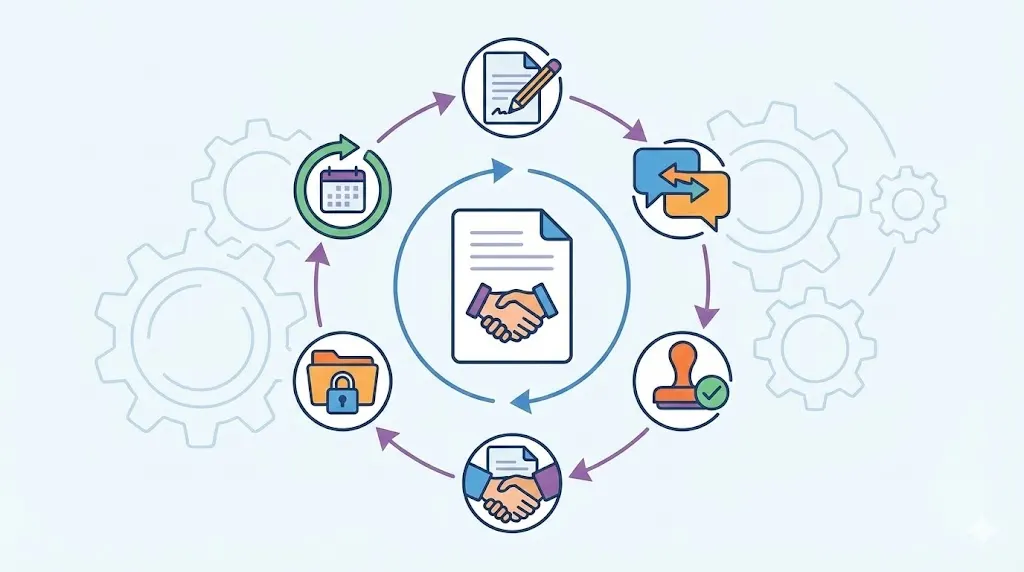
A renewal workflow turns dates into planned work. It should begin early and end with a recorded decision.
The process needs named owners for each stage. One person may coordinate the work, while others review cost, performance, risk, or legal terms.
Start the Review With Stakeholder Feedback
Begin with people who use the contract. Finance can review spend and budget. Operations can assess service quality and business impact.
Legal advisers can review changes, liability, and termination rights. Procurement can compare suppliers and market options. Service users can report daily problems that invoices may not show.
Ask stakeholders these questions:
Did the supplier meet service and delivery expectations?
Did the contract provide fair value for its cost?
Have business needs changed since signing?
Which terms need change before renewal?
Should the business renew, renegotiate, replace, or cancel?
Record clear answers in the contract record. Avoid vague notes such as “seems fine.” Specific feedback helps decision makers act before the notice period ends.
Communicate With Contractors and Suppliers
Start supplier conversations before the final notice date. Explain the planned review and request current pricing, service details, and proposed changes.
Raise known service issues early. Ask for corrective action, credits, improved support, or revised service levels. Keep important promises in writing.
Customer contract reviews need a similar approach. Confirm future demand, pricing, service needs, and delivery changes. Early conversations reduce rushed amendments and customer surprises.
Keep a record of calls, emails, proposals, and agreed actions. This history supports later approvals. It also helps when different people handle future renewals.
Route Decisions Through Clear Approvals
Set approval rules before renewal work begins. A low-cost renewal may need the owner and finance lead. A high-risk renewal may need executive or legal review.
Confirm the budget before signing. Check whether the new price, term, and user count match actual needs. Do not approve a renewal only because the old contract already existed.
Record the selected decision and its reason. The choices may include renew, renegotiate, replace, or terminate. Note who approved the decision and when.
After signing, update the new dates and obligations. Close old tasks and create future reminders. A renewal is not complete until the record reflects the new agreement.
Related articles: Top 10 Contract Management Software for Enterprises in 2026
Choose the Right Tracking Method for the Business
The right tracking method depends on contract volume, risk, and team habits. A structured spreadsheet may suit a small portfolio with simple terms.
Contract management renewal software becomes useful when work grows harder to control. It can connect documents, dates, owners, tasks, alerts, and approvals.
Make a Spreadsheet Reliable
A spreadsheet needs clear rules from its first day. Use one shared file, consistent date formats, and protected fields. Give one person responsibility for updates.
Use filters to show upcoming deadlines and unassigned contracts. Add a status field for review, negotiation, approval, signed, and closed. Review access rights before sharing the file widely.
Minimum spreadsheet fields should include:
Counterparty, contract type, and internal owner
Effective date, expiry date, and notice deadline
Renewal term, price, payment terms, and status
Contract location, approval owner, and next action
Review notes, decision, and date of last update
Back up the file on a planned schedule. Keep older versions when changes affect important dates. Test access when the main tracker owner takes leave.
Recognize When Manual Tracking Breaks Down
Missed reminders are a clear warning sign. So are duplicate versions, inaccessible files, and unclear contract owners.
Manual tracking also struggles with frequent amendments. Staff may update one record but miss a related order form or notice letter. The portfolio then contains conflicting information.
Separate trackers create another problem. Finance may hold one list, while operations keeps another. Neither list may show the full renewal picture.
Consider a new method when staff spend more time searching than reviewing. The goal is not to buy a tool quickly. The goal is to reduce avoidable work and missed action.
Use Software for Automation and Visibility
Contract renewal management software stores agreements and key data in one place. Teams can search contracts, filter dates, and view upcoming work without opening each file.
Automated contract renewal notifications can alert owners and approvers at set stages. Approval workflows can route decisions to the right people. Dashboards can show renewals by status, owner, value, or risk.
Software can also support contract expiry date tracking. It can connect the expiry date with the notice deadline and related tasks. This reduces the chance of acting on the wrong date.
Audit trails record changes, approvals, and actions. That history helps explain who changed a date or approved a renewal. It also supports better control over sensitive agreements.
Protect Data and Access
Choose access rules that fit each contract. Employee, customer, pricing, and legal records may need limited visibility.
Use secure sharing for outside advisers and suppliers. Avoid sending full contract folders when one clause will answer the question. Remove access when people change roles or leave.
Maintain backups and retention rules. Keep signed agreements and key renewal records for the period your business requires. Check that old files remain readable and searchable.
Train staff on the process. Even the best tool fails when users save records elsewhere. Simple rules make contract tracking more reliable.
Related articles: 10 Best Contract Management Software in the USA
Review Renewal Performance and Improve the Process
Renewal management should improve after each cycle. A short review can reveal missed steps, unclear owners, and weak supplier decisions.
Use the review to improve the process, not to blame one person. Most failures come from missing records, unclear rules, or late communication.
Track Useful Renewal Metrics
Choose measures that support action. Review them monthly or quarterly, depending on portfolio size and renewal volume.
Useful measures include:
Reviews completed before the notice deadline
Missed deadlines and unexpected automatic renewals
Savings from negotiation or contract changes
Agreements without owners or complete key dates
Contracts renewed, replaced, cancelled, or still under review
Agreements with updated terms and recorded approvals
Track both outcomes and process quality. Savings alone may hide poor service or increased risk. A higher renewal rate may also reflect weak review standards.
Use trends to find recurring problems. Several missed deadlines may show poor ownership. Many unassigned contracts may show a weak intake process.
Document Renewal Decisions
Record the decision, reason, and approval path. Explain why the business renewed, renegotiated, replaced, or terminated the agreement.
Add the new price, term, notice deadline, and service commitments. Save the signed version with related amendments and approval records. Update the owner and next review date.
Record follow-up duties as well. These may include data returns, supplier changes, new insurance documents, or staff training. A signed renewal can still fail when its obligations receive no owner.
Review the record after completion. Confirm that reminders, tasks, and access rights reflect the new contract. This final check closes the renewal cycle properly.
Related articles: Enterprise Contract Lifecycle Management Software
Why Contract Management Software Matters
Contract management software gives small businesses one searchable record of their agreements. It connects documents with renewal dates, notice periods, owners, tasks, and decisions.
It also reduces repeated manual work. Automated reminders can support owners before action dates arrive. Approval workflows can move decisions through finance, operations, and leadership.
Search tools help staff find clauses quickly. Reports show upcoming renewals, missing owners, and incomplete records. Audit trails preserve changes, approvals, and renewal actions.
Software should support the process rather than replace judgment. Teams still need to review service quality, pricing, risk, and future needs. The tool makes that work easier to repeat as the portfolio grows.
Bring dates, owners, documents, and tasks into one searchable workspace.
Reduce follow-up work with alerts, approval routing, and renewal views.
Support sound decisions with terms, performance notes, and renewal history.
Protect records through permissions, backups, and change histories.
Volody's CLM Software supports contract renewal management with AI Contract Summaries, Automated Approval Workflow, and Obligation Management. It can highlight renewal dates, obligations, and risks while routing decisions to the right approvers. It also helps teams track deliverables, renewals, and commitments after signing.
For example, a small supplier can review key terms early, route approval, and track follow-up duties from one record.
Want to see how contract management software can simplify your legal workflows? Check out Volody's CLM Software.
FAQ
What is contract management?
Contract management is the process of creating, storing, reviewing, approving, and tracking agreements. It continues after signing, because teams must monitor duties, payments, dates, and risks. For small businesses, it also includes renewal decisions and contract expiry date tracking. A clear process helps staff find the right records and act before deadlines become urgent.
What contract management challenges do small businesses face?
Small businesses often lack time, staff, and one central contract record. Agreements may sit across email, shared drives, paper files, and personal folders. This makes ownership and notice periods hard to confirm. Frequent amendments, automatic renewals, and changing staff can create more gaps without clear contract renewal notifications.
How can small businesses stay on top of key contract dates?
Create one inventory with expiry dates, notice deadlines, owners, terms, and storage locations. Review each date against the signed agreement and later amendments. Use staged alerts before action dates, such as 120, 90, 60, and 30 days. Assign an owner and approver for every important renewal.
How far in advance should a small business review a contract renewal?
Start far enough ahead to review performance, budget, risk, and alternatives. A 120-day review works well for many important agreements. Shorter contracts may need fewer stages, while complex supplier deals need more time. Always check the notice period, because it sets the latest safe action date.
Is a spreadsheet enough for tracking contract renewals?
A spreadsheet can work for a small portfolio with simple terms and clear ownership. It needs required fields, shared access, backups, filters, and regular updates. Software becomes useful when reminders are missed, files are scattered, or many people manage separate trackers. Choose the method that matches risk and workload.
What should a business do when a contract has already passed its renewal deadline?
Take immediate action: confirm the contract’s current status, review any grace period or termination rights, contact the counterparty, and document the outcome. For material cost, service, data, or liability exposure, obtain legal advice and update the contract record with the agreed resolution.
About the Company

Volody AI CLM is an Agentic AI-powered Contract Lifecycle Management platform designed to eliminate manual contracting tasks, automate complex workflows, and deliver actionable insights. As a one-stop shop for all contract activities, it covers drafting, collaboration, negotiation, approvals, e-signature, compliance tracking, and renewals. Built with enterprise-grade security and no-code configuration, it meets the needs of the most complex global organizations. Volody AI CLM also includes AI-driven contract review and risk analysis, helping teams detect issues early and optimize terms. Trusted by Fortune 500 companies, high-growth startups, and government entities, it transforms contracts into strategic, data-driven business assets.






" height="216.72211px" id="FYO0bO80Y" transform="translate(3 6.105)" width="206.073px"/><path d="M 108.174 222 C 88.432 222 70.303 217.239 53.785 207.717 C 37.267 198.196 24.173 185.052 14.504 168.285 C 4.835 151.312 0 132.165 0 110.845 C 0 89.731 4.835 70.792 14.504 54.025 C 24.173 37.052 37.267 23.804 53.785 14.282 C 70.303 4.761 88.432 0 108.174 0 C 128.116 0 146.246 4.761 162.562 14.282 C 179.08 23.804 192.073 37.052 201.541 54.025 C 211.21 70.792 216.044 89.731 216.044 110.845 C 216.044 132.165 211.21 151.312 201.541 168.285 C 192.073 185.052 179.08 198.196 162.562 207.717 C 146.044 217.239 127.915 222 108.174 222 Z M 108.174 183.189 C 120.864 183.189 132.044 180.291 141.713 174.495 C 151.382 168.492 158.936 160.006 164.375 149.035 C 169.814 138.064 172.533 125.334 172.533 110.845 C 172.533 96.355 169.814 83.729 164.375 72.965 C 158.936 61.994 151.382 53.611 141.713 47.815 C 132.044 42.02 120.864 39.122 108.174 39.122 C 95.483 39.122 84.202 42.02 74.332 47.815 C 64.663 53.611 57.109 61.994 51.67 72.965 C 46.231 83.729 43.511 96.355 43.511 110.845 C 43.511 125.334 46.231 138.064 51.67 149.035 C 57.109 160.006 64.663 168.492 74.332 174.495 C 84.202 180.291 95.483 183.189 108.174 183.189 Z" fill="rgba(255, 255, 255, 0.12)" height="222px" id="aa1McFcE9" transform="translate(227.183 3)" width="216.04399999999998px"/><path d="M 42.302 182.257 L 111.799 182.257 L 111.799 216.722 L 0 216.722 L 0 0 L 42.302 0 Z" fill="rgba(255, 255, 255, 0.12)" height="216.72211px" id="yRq4AnrsX" transform="translate(477.721 6.105)" width="111.79899999999998px"/><path d="M 108.174 222 C 88.432 222 70.303 217.239 53.785 207.717 C 37.267 198.196 24.173 185.052 14.504 168.285 C 4.835 151.312 0 132.165 0 110.845 C 0 89.731 4.835 70.792 14.504 54.025 C 24.173 37.052 37.267 23.804 53.785 14.282 C 70.303 4.761 88.432 0 108.174 0 C 128.116 0 146.246 4.761 162.562 14.282 C 179.08 23.804 192.073 37.052 201.541 54.025 C 211.21 70.792 216.045 89.731 216.045 110.845 C 216.045 132.165 211.21 151.312 201.541 168.285 C 192.073 185.052 179.08 198.196 162.562 207.717 C 146.044 217.239 127.915 222 108.174 222 Z M 108.174 183.189 C 120.864 183.189 132.044 180.291 141.713 174.495 C 151.382 168.492 158.936 160.006 164.375 149.035 C 169.814 138.064 172.534 125.334 172.534 110.845 C 172.534 96.355 169.814 83.729 164.375 72.965 C 158.936 61.994 151.382 53.611 141.713 47.815 C 132.044 42.02 120.864 39.122 108.174 39.122 C 95.483 39.122 84.202 42.02 74.332 47.815 C 64.663 53.611 57.108 61.994 51.67 72.965 C 46.231 83.729 43.511 96.355 43.511 110.845 C 43.511 125.334 46.231 138.064 51.67 149.035 C 57.108 160.006 64.663 168.492 74.332 174.495 C 84.202 180.291 95.483 183.189 108.174 183.189 Z" fill="rgba(255, 255, 255, 0.12)" height="222px" id="mo8HQspQ0" transform="translate(609.155 3)" width="216.04500000000007px"/><path d="M 73.727 0 C 95.885 0 115.324 4.45 132.044 13.351 C 148.967 22.252 161.957 34.982 171.027 51.541 C 180.287 67.894 184.917 86.937 184.917 108.671 C 184.917 130.405 180.287 149.449 171.027 165.801 C 161.957 181.947 148.967 194.47 132.044 203.371 C 115.324 212.271 95.885 216.722 73.727 216.722 L 0 216.722 L 0 0 Z M 72.216 179.773 C 94.374 179.773 111.497 173.564 123.583 161.144 C 135.669 148.724 141.713 131.233 141.713 108.671 C 141.713 86.109 135.669 68.515 123.583 55.888 C 111.497 43.055 94.374 36.638 72.216 36.638 L 42.302 36.638 L 42.302 179.773 Z" fill="rgba(255, 255, 255, 0.12)" height="216.72211px" id="I3iXX5Hi_" transform="translate(859.693 6.105)" width="184.91699999999992px"/><path d="M 185.22 0 L 113.91 141.273 L 113.91 216.722 L 71.61 216.722 L 71.61 141.273 L 0 0 L 47.74 0 L 93.06 99.046 L 138.08 0 Z" fill="rgba(255, 255, 255, 0.12)" height="216.72211px" id="nzHyWC0_d" transform="translate(1061.78 6.105)" width="185.22000000000003px"/></svg>)