

Imagine a company juggling hundreds or thousands of contracts across sales, procurement, and legal teams. Each contract holds key obligations, deadlines, and risks. Without a clear system, missed renewals, slow approvals, and hidden risks can cost millions. That is why the demand for contract management software is surging. Businesses want tools that bring order, speed, and insight to their contract processes. Recent market reports show interest in contract lifecycle management (CLM) solutions jumped sharply as companies adapt to remote work and digital operations. This shift is not a temporary trend but a lasting change in how organizations handle contracts.
TL;DR
Interest in CLM solutions surged 40% in 2020, driven by the widespread shift to remote work and accelerating digital transformation initiatives.
Additionally, contracts influence diverse operational domains, extending the impact of CLM beyond the confines of legal departments.
Leveraging advanced analytics within contract management enables organizations to mitigate risks effectively while expediting negotiation cycles.
The increasing intricacy of contractual obligations necessitates scalable, adaptable CLM platforms.
Selecting a CLM vendor requires careful consideration of scalability and integration potential to support long-term organizational growth.
Managing contracts has become indispensable in business operations, paralleling the critical role CRM systems play in handling customer data.
What Is Driving the Surge in Contract Management Software Demand?
The sudden rise in interest for digital solutions to manage contracts results from a convergence of business pressures. Additionally, the onset of the COVID-19 pandemic forced a rapid shift to remote work for many organizations. This transition revealed critical vulnerabilities inherent in manual, paper-based, or siloed contract processes. Teams encountered significant difficulties in accessing contracts, monitoring obligations, and collaborating effectively. As a result, digital contract management became indispensable for maintaining operational continuity.
According to Gartner’s 2021 report on contract lifecycle management, inquiries about CLM solutions jumped by 40% in 2020. That is a huge increase for a software category that was already growing steadily. The report also notes that organizations rapidly pursued tools offering enhanced structure and visibility into contracts across departments.
Contracts are the backbone of business relationships. They govern sales deals, supplier agreements, service terms, and more. When contracts are scattered or managed in spreadsheets, businesses face delays, errors, and risks. Moreover, these platforms centralize contracts in one secure system. It automates workflows, tracks deadlines, and provides data insights.
The pandemic accelerated the pace of digital adoption, although the need for better contract oversight existed well before it. Companies expanding globally or across industries face growing contract complexity. Managing contracts manually becomes unsustainable and risky. Such software addresses these challenges by offering scalable, integrated solutions.
In short, the surge in demand reflects a growing recognition that contracts are strategic assets. Companies want tools that reduce friction, speed approvals, and lower risk. This trend will continue as digital business processes become the norm.
How Does Contract Management Software Benefit Business Operations?
Contract management software delivers value far beyond just storing contracts. Additionally, it also streamlines collaboration across departments and minimizes the risk of costly errors. Here are some key ways CLM benefits businesses:
Boosts process efficiency: Automating contract requests, approvals, and renewals cuts down manual work. Sales teams close deals faster. Procurement teams onboard suppliers smoothly. Legal teams spend less time on routine tasks.
Improves risk management: CLM software flags risky clauses, missing terms, or compliance gaps early. Moreover, it further tracks obligations and sends alerts to teams ahead of deadlines. This reduces exposure to penalties or disputes.
Enhances collaboration: Centralized contract repositories and real-time commenting help legal, sales, and procurement teams work together. Everyone stays on the same page, avoiding version confusion.
Provides actionable insights: Advanced analytics show contract bottlenecks, cycle times, and risk areas. Leaders get data to improve policies and negotiate better terms.
Supports compliance and audits: Complete audit trails and version histories simplify regulatory reviews. Role-based access controls protect sensitive data.
Contracts rarely exist in isolation. They link to sales proposals, purchase orders, and service delivery. CLM software integrates with enterprise systems like CRM, ERP, and procurement platforms. This integration extends contract data’s value across the organization.
Also, sales teams gain direct access to contract renewal timelines embedded within their CRM dashboards, enabling proactive account management. In procurement, automated workflows synchronize contract approvals with purchase order controls to streamline supplier onboarding. Meanwhile, legal teams employ AI-driven risk assessment tools to detect potential contract issues well before finalization. Together, these integrated processes enhance operational efficiency and significantly reduce the likelihood of errors.
As organizations grow, managing the increasing volume and complexity of contracts demands more sophisticated CLM capabilities. Merely storing contracts is insufficient. Companies require CLM solutions that can scale accordingly and offer advanced capabilities such as AI-driven clause analysis and comprehensive obligation management.
Related articles: How can Pharmaceutical Industry Benefit from CLM Software
What Challenges Do Companies Face in Contract Management?
Contract management has always been complex, but new challenges have emerged with digital transformation and global business expansion. Here are some common hurdles companies face:
Fragmented contract data: Contracts often live in email inboxes, shared drives, or local folders. This fragmentation makes it hard to find documents or track status.
Manual processes: Relying on spreadsheets, emails, and paper slows down contract creation, review, and approval. It increases errors and missed deadlines.
Lack of visibility: Without centralized dashboards or reporting, leaders cannot see contract risks or bottlenecks. This limits proactive decision-making.
Compliance risks: Contracts must meet legal, regulatory, and internal policy requirements. Manual checks are error-prone and inconsistent.
Inefficient collaboration: Multiple stakeholders reviewing contracts via email threads causes version confusion and delays.
Complex approval workflows: Contracts often require multi-level approvals across departments and regions. Manual routing leads to slow turnaround.
Scaling issues: As contract volumes grow, manual or basic systems cannot keep up, resulting in backlogs and increased operational risks.
Data extraction difficulties: Extracting key terms and metadata from legacy contracts is time-consuming without AI tools.
These challenges create risks such as missed renewal opportunities, penalties for non-compliance, and lost revenue. They also consume substantial time for legal and business teams.
Companies that depend on outdated contract management approaches find themselves at a strategic disadvantage.
Their ability to accelerate deal closure and maintain supplier relationships suffers as a consequence.
Addressing these issues requires investing in advanced contract lifecycle solutions designed to streamline processes and enhance oversight.
Related articles: Top 10 Contract Management Solutions in India (2026)
How Does Contract Management Software Evolve With Business Needs?
Contract management needs change as companies grow and mature. Additionally, in the early stages, a startup often relies on simple contract templates combined with manual tracking. As it expands, contract volumes increase, and processes become more complex. This requires more advanced contract lifecycle management capabilities.
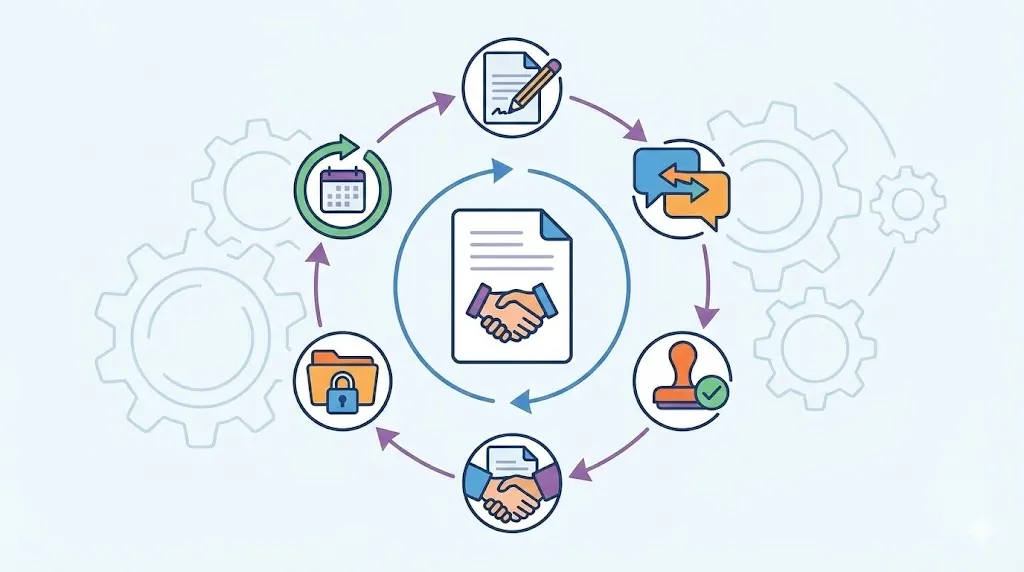
The evolution typically follows these stages:
Digitizing contracts: Moving paper contracts into a central digital repository. This improves accessibility and basic search.
Automating workflows: To reduce manual workload and streamline operations, organizations implement contract request portals, establish approval routing mechanisms, and deploy notification systems.
Adding clause and template management: Companies at this phase maintain approved templates alongside clause libraries, which helps enforce contract uniformity and accelerates drafting procedures.
Integrating with enterprise systems: Integration connects CLM platforms with CRM, ERP, and procurement tools, enabling efficient and accurate contract data synchronization.
Applying AI and analytics: These advanced features utilize AI to extract metadata, conduct risk assessments, recommend optimal clauses, and produce concise summaries of contracts.
Managing obligations and renewals: Tracking deliverables, milestones, and renewal dates with automated alerts.
Scaling globally: Supporting multi-language, multi-jurisdiction contracts with localization features.
Each stage adds value and complexity. Companies must choose CLM vendors that can support this growth path. Opting for a system limited to basic contract storage often results in expensive replacements down the line.
Gartner recommends a thorough assessment of vendors’ strategic roadmaps alongside their advanced analytics capabilities to safeguard CLM investments against obsolescence. Businesses require platforms capable of advancing in tandem with their evolving contract maturity and operational complexity.
Related articles: How Does AI Limitations Impacting Contract Management?
What Should You Look for When Choosing Contract Management Software?
Selecting the right contract management software requires careful consideration. Additionally, it is essential to focus on maximizing return on investment while minimizing the risks and costs associated with switching vendors. Here are key factors to evaluate:
Scalability: Can the system handle growing contract volumes, users, and complex workflows? Look for multi-entity and global support.
Ease of use: Is the interface intuitive for legal and business users? Easy adoption speeds ROI.
Workflow automation: Does the platform support configurable approval routing, reminders, and escalations?
AI capabilities: Evaluate if the platform incorporates advanced AI functionalities such as clause analysis, metadata extraction, risk detection, and generation of contract summaries.
Integration: Assess the ability of the CLM to seamlessly connect with enterprise systems including CRM, ERP, procurement platforms, e-signature solutions, and document management tools.
Security and compliance: Verify that the platform implements robust encryption standards, granular access controls, and comprehensive audit trails to ensure adherence to regulatory requirements.
Template and clause management: Investigate whether the software provides a unified repository for verified templates and clauses, equipped with systematic version control.
Reporting and analytics: Seek out advanced dashboards designed to deliver actionable insights into contract lifecycles, risk profiles, and critical performance metrics.
Localization: Does the software support multiple languages, currencies, and jurisdiction-specific requirements?
Vendor support and roadmap: What is the vendor’s track record and future development plans?
Implementation and training: How long does deployment take? Are training and support services included?
A thorough evaluation process should include demos, proof of concepts, and reference checks. Involve stakeholders from legal, sales, procurement, and IT to ensure the system meets diverse needs.
Choosing a future-proof CLM platform reduces risk and supports continuous process improvement. It enables companies to unlock contract data’s full value and improve business outcomes.
Related articles: 4 powerful ways to improve contract management
Why Contract Management Software Is No Longer Optional
Contracts form the foundational basis of business relationships and are integral to generating revenue streams. Additionally, many organizations still rely on manual or disjointed contract management processes. Such an inconsistent methodology leads to operational inefficiencies, heightened risks, and missed business opportunities.
The market report data and real-world experience show that contract management software is no longer a luxury. It is a must-have tool for companies of all sizes and industries. Here are reasons why:
Speed matters: Accelerating contract turnaround times shortens sales cycles and streamlines supplier onboarding.
Mitigating risk is essential: Integrating automated risk detection with comprehensive obligation tracking significantly reduces the likelihood of costly oversights.
Data drives decisions: Leveraging advanced analytics provides actionable insights that refine contract terms and bolster compliance efforts.
Remote work demands digital tools: Providing centralized, cloud-based contract access is vital for supporting distributed teams effectively.
Regulatory pressures increase: Maintaining robust audit trails and compliance frameworks is indispensable to meet evolving regulatory requirements.
Competitive edge: Streamlined contract management elevates experiences for customers and partners alike.
Just as customer relationship management (CRM) systems evolved into indispensable platforms for managing customer data, contract lifecycle management has become equally critical for organizing and controlling contract-related information. Organizations that neglect CLM risk falling behind in operational efficiency and risk management.
Related articles: Top 5 Contract Management Solutions in Japan 2026
How Contract Management Software Solves These Challenges
Contract management software centralizes contracts in one secure platform. Additionally, it also automates manual tasks such as contract requests, approvals, and renewals. This automation minimizes errors while accelerating workflows.
AI-powered features extract key contract data automatically. The software evaluates clauses to identify potential risks or omissions, facilitating a more comprehensive review. This process enables legal teams to dedicate more time to strategic initiatives.
Collaboration tools provide a shared environment where multiple stakeholders can simultaneously review and annotate contracts. Version control prevents confusion and lost changes.
Automated alerts notify teams about upcoming renewals, obligations, and approvals. As a result, missed deadlines and penalties are significantly reduced.
Integration with CRM, ERP, and procurement systems extends contract data’s value across the business. Sales teams see contract status in their pipelines. Procurement links contracts to purchase orders.
Advanced analytics dashboards provide insights into contract performance, cycle times, and risk exposure. Leaders can make informed decisions and improve policies.
Scalable CLM platforms support multi-entity, multi-language, and multi-jurisdiction contracts. This supports global business growth.
Related articles: Legacy Contracts: How to Effectively Migrate to a CLM
How Volody’s Contract Management Software Supports Modern Business Needs
Contract management software helps companies organize, automate, and analyze their contracts. Additionally, volody offers a platform designed to meet these needs with AI-powered features and enterprise-grade security.
Volody’s software includes AI contract drafting, review, and clause recommendations. It extracts metadata and highlights risks automatically. This speeds up contract creation and reduces legal risk.
The platform centralizes contracts in a secure repository with advanced search and version control. Automated workflows route contracts for approvals with reminders and escalations.
In addition, volody tracks obligations, milestones, and renewals with alerts to keep teams on schedule. Moreover, integration with Microsoft Word and popular e-signature providers streamlines contract execution.
Dashboards provide real-time insights into contract volumes, cycle times, and risk areas. Role-based access controls protect sensitive information.
Volody’s no-code configuration lets teams customize workflows, templates, and business rules without IT support. This flexibility supports changing business needs.
> See how Volody's CLM Software helps legal teams manage contracts faster and with greater control.
FAQ
What processes are included in managing the contract lifecycle?
Additionally, contract lifecycle management covers all stages involved in contracts, starting from their drafting and execution, through performance monitoring, to renewal and expiration management.
Why has contract software become essential recently?
The rise of remote work and digital business processes exposed weaknesses in manual contract handling. Software centralizes contracts, automates approvals, and provides data insights that improve speed and reduce risk.
How does AI improve contract management?
AI can extract key data from contracts, spot risky clauses, suggest fallback language, and summarize contract terms. This approach significantly cuts down manual review time and enables legal teams to concentrate on more complex issues.
Moreover, is it possible to integrate contract software with other business systems?
Yes. Contemporary CLM solutions are designed to interface seamlessly with CRM, ERP, procurement, and e-signature platforms. This connectivity facilitates contract data sharing across departments and optimizes workflow efficiency.
Which features are critical when selecting contract software?
Prioritize scalability, intuitive user interfaces, workflow automation, advanced AI functionalities, robust security measures, integration capabilities, comprehensive template and clause management, and insightful reporting dashboards.
In addition, how does contract software contribute to risk mitigation?
Risk is minimized by identifying missing or problematic contract terms, monitoring critical deadlines and obligations, and maintaining thorough audit trails. Furthermore, this proactive approach helps avoid compliance breaches, overlooked renewals, and contractual disputes.
Are contract solutions appropriate for small enterprises?
Yes. Many solutions offer scalable pricing and features. Smaller organizations also gain significant advantages through centralized contract repositories and automation of repetitive tasks.
What is the typical timeframe to deploy contract software?
Implementation time varies by company size and complexity. Also, basic deployments can take weeks, while enterprise rollouts may take several months. Vendor support and comprehensive training facilitate smoother adoption.
Can global contracts be managed effectively with these platforms?
Leading platforms support multiple languages, currencies, and jurisdiction-specific rules. They also provide localization functionalities to effectively manage contracts across different regions.
How can the return on investment be evaluated for contract software?
Therefore, the value is demonstrated by faster contract processing, reduced legal risks, improved adherence to regulations, and enhanced contract data analytics. These factors directly contribute to lowering costs and boosting revenue.
These advantages contribute directly to cost reductions and increased revenue.
This article explains why contract management software demand is rising sharply. It covers the benefits, challenges, and how to choose the right solution. Volody’s platform offers features that meet modern contract management needs with AI and automation. Businesses that invest in CLM now will improve efficiency, reduce risk, and gain a competitive edge.
About the Company

Volody AI CLM is an Agentic AI-powered Contract Lifecycle Management platform designed to eliminate manual contracting tasks, automate complex workflows, and deliver actionable insights. As a one-stop shop for all contract activities, it covers drafting, collaboration, negotiation, approvals, e-signature, compliance tracking, and renewals. Built with enterprise-grade security and no-code configuration, it meets the needs of the most complex global organizations. Volody AI CLM also includes AI-driven contract review and risk analysis, helping teams detect issues early and optimize terms. Trusted by Fortune 500 companies, high-growth startups, and government entities, it transforms contracts into strategic, data-driven business assets.





" height="216.72211px" id="FYO0bO80Y" transform="translate(3 6.105)" width="206.073px"/><path d="M 108.174 222 C 88.432 222 70.303 217.239 53.785 207.717 C 37.267 198.196 24.173 185.052 14.504 168.285 C 4.835 151.312 0 132.165 0 110.845 C 0 89.731 4.835 70.792 14.504 54.025 C 24.173 37.052 37.267 23.804 53.785 14.282 C 70.303 4.761 88.432 0 108.174 0 C 128.116 0 146.246 4.761 162.562 14.282 C 179.08 23.804 192.073 37.052 201.541 54.025 C 211.21 70.792 216.044 89.731 216.044 110.845 C 216.044 132.165 211.21 151.312 201.541 168.285 C 192.073 185.052 179.08 198.196 162.562 207.717 C 146.044 217.239 127.915 222 108.174 222 Z M 108.174 183.189 C 120.864 183.189 132.044 180.291 141.713 174.495 C 151.382 168.492 158.936 160.006 164.375 149.035 C 169.814 138.064 172.533 125.334 172.533 110.845 C 172.533 96.355 169.814 83.729 164.375 72.965 C 158.936 61.994 151.382 53.611 141.713 47.815 C 132.044 42.02 120.864 39.122 108.174 39.122 C 95.483 39.122 84.202 42.02 74.332 47.815 C 64.663 53.611 57.109 61.994 51.67 72.965 C 46.231 83.729 43.511 96.355 43.511 110.845 C 43.511 125.334 46.231 138.064 51.67 149.035 C 57.109 160.006 64.663 168.492 74.332 174.495 C 84.202 180.291 95.483 183.189 108.174 183.189 Z" fill="rgba(255, 255, 255, 0.12)" height="222px" id="aa1McFcE9" transform="translate(227.183 3)" width="216.04399999999998px"/><path d="M 42.302 182.257 L 111.799 182.257 L 111.799 216.722 L 0 216.722 L 0 0 L 42.302 0 Z" fill="rgba(255, 255, 255, 0.12)" height="216.72211px" id="yRq4AnrsX" transform="translate(477.721 6.105)" width="111.79899999999998px"/><path d="M 108.174 222 C 88.432 222 70.303 217.239 53.785 207.717 C 37.267 198.196 24.173 185.052 14.504 168.285 C 4.835 151.312 0 132.165 0 110.845 C 0 89.731 4.835 70.792 14.504 54.025 C 24.173 37.052 37.267 23.804 53.785 14.282 C 70.303 4.761 88.432 0 108.174 0 C 128.116 0 146.246 4.761 162.562 14.282 C 179.08 23.804 192.073 37.052 201.541 54.025 C 211.21 70.792 216.045 89.731 216.045 110.845 C 216.045 132.165 211.21 151.312 201.541 168.285 C 192.073 185.052 179.08 198.196 162.562 207.717 C 146.044 217.239 127.915 222 108.174 222 Z M 108.174 183.189 C 120.864 183.189 132.044 180.291 141.713 174.495 C 151.382 168.492 158.936 160.006 164.375 149.035 C 169.814 138.064 172.534 125.334 172.534 110.845 C 172.534 96.355 169.814 83.729 164.375 72.965 C 158.936 61.994 151.382 53.611 141.713 47.815 C 132.044 42.02 120.864 39.122 108.174 39.122 C 95.483 39.122 84.202 42.02 74.332 47.815 C 64.663 53.611 57.108 61.994 51.67 72.965 C 46.231 83.729 43.511 96.355 43.511 110.845 C 43.511 125.334 46.231 138.064 51.67 149.035 C 57.108 160.006 64.663 168.492 74.332 174.495 C 84.202 180.291 95.483 183.189 108.174 183.189 Z" fill="rgba(255, 255, 255, 0.12)" height="222px" id="mo8HQspQ0" transform="translate(609.155 3)" width="216.04500000000007px"/><path d="M 73.727 0 C 95.885 0 115.324 4.45 132.044 13.351 C 148.967 22.252 161.957 34.982 171.027 51.541 C 180.287 67.894 184.917 86.937 184.917 108.671 C 184.917 130.405 180.287 149.449 171.027 165.801 C 161.957 181.947 148.967 194.47 132.044 203.371 C 115.324 212.271 95.885 216.722 73.727 216.722 L 0 216.722 L 0 0 Z M 72.216 179.773 C 94.374 179.773 111.497 173.564 123.583 161.144 C 135.669 148.724 141.713 131.233 141.713 108.671 C 141.713 86.109 135.669 68.515 123.583 55.888 C 111.497 43.055 94.374 36.638 72.216 36.638 L 42.302 36.638 L 42.302 179.773 Z" fill="rgba(255, 255, 255, 0.12)" height="216.72211px" id="I3iXX5Hi_" transform="translate(859.693 6.105)" width="184.91699999999992px"/><path d="M 185.22 0 L 113.91 141.273 L 113.91 216.722 L 71.61 216.722 L 71.61 141.273 L 0 0 L 47.74 0 L 93.06 99.046 L 138.08 0 Z" fill="rgba(255, 255, 255, 0.12)" height="216.72211px" id="nzHyWC0_d" transform="translate(1061.78 6.105)" width="185.22000000000003px"/></svg>)