
Sharvi Sawant

Consumer Packaged Goods (CPG) and retail companies face constant pressure to move faster and adapt quickly. Complex supply chains, shifting consumer demands, and tight margins make every decision critical. One overlooked factor in gaining speed and agility is contract intelligence. When companies unlock the power of their contracts, they can reduce delays, improve collaboration, and make smarter decisions. This article explains why contract intelligence matters and how it can transform operations in CPG and retail.
TL;DR
Contract intelligence enables CPG and retail companies to enhance collaboration with suppliers and partners by unlocking the value of contract data.
Additionally, digitizing contracts breaks down data silos and embeds contract terms directly into critical platforms such as ERP and POS.
Quicker retrieval of contract insights leads to more informed decisions regarding pricing strategies, promotional activities, rebate programs, and mitigation of supply chain risks.
Common challenges include unclear ownership of contracts, fragmented data, and slow workflows.
Advanced contract management software automates contract review, metadata extraction, and obligation tracking.
Using contract intelligence tools creates a single source of truth that boosts speed, agility, and profitability.
Why Contract Data Is a Hidden Bottleneck in CPG and Retail
CPG and retail companies rely on complex networks of suppliers, distributors, and retailers. Additionally, each of these relationships is governed by contracts specifying pricing, volume commitments, rebates, delivery terms, and penalties. These contracts contain essential data that impacts daily operations and strategic planning. Yet, many companies struggle to use this data effectively.
Often, contract information lives in multiple systems or even in paper form. One retailer might have contract data spread across dozens of platforms, spreadsheets, and emails. This fragmentation creates delays in accessing accurate information. For example, sales teams may not know the exact rebate terms when negotiating with suppliers. Procurement might miss volume discounts because contract details are buried in PDFs. Legal teams can spend weeks reviewing contracts manually.
This lack of contract visibility slows down decision-making and increases risk. Without quick access to contract terms, companies cannot respond rapidly to market changes or supply disruptions. The result is lost revenue, missed opportunities, and strained supplier relationships.
A large CPG company once reported that its supply chain management used contract data from over 25 different systems. By consolidating and digitizing the data, the company was able to streamline its system interfaces down to three.
This consolidation generated millions in monthly savings by enhancing data accuracy and accelerating operational workflows.
Related articles: How Asset Managers Can Reveal Value Hidden in Contracts
How Digitizing Contracts Boosts Speed and Flexibility
Digitizing contracts means converting paper or unstructured documents into searchable, structured data. This process involves extracting key metadata such as parties, dates, payment terms, volume thresholds, and obligations. Once digitized, contract data can feed directly into operational systems like ERP (Enterprise Resource Planning) and POS (Point of Sale).
Here are some ways digitization improves speed and agility:
Eliminates manual data entry: Contract terms automatically populate relevant systems, reducing errors and delays.
Adjustments to pricing, rebates, or delivery schedules occur automatically whenever contract terms change, ensuring that operational systems remain aligned with current agreements.
Compliance management benefits from proactive alerts that notify teams well in advance of critical renewals, deadlines, and contractual obligations.
Scenario planning becomes more effective, giving managers the ability to quickly evaluate how varying market conditions impact contract performance.
Dispute resolution accelerates by granting immediate access to organized contract data, facilitating faster agreement and settlement.
For example, integrating contract data directly into the POS system allows a retailer to precisely control promotional discount application. When a sales promotion ends, the system automatically stops applying discounts based on contract rules. This automation prevents revenue leakage and ensures compliance with supplier agreements.
Digitized contracts also enable better collaboration between departments. Sales, procurement, finance, and legal teams can access the same contract information tailored to their needs. This shared visibility reduces silos and speeds up approvals and negotiations.
Related articles: How To Accelerate Contract Review Process? Effective Guide
Common Challenges in Managing Contract Data
Companies often face three main obstacles when trying to improve contract management:
Lack of Clear Ownership
Legal teams draft contracts, procurement handles negotiation of terms, sales finalizes deals, and finance oversees payments. Additionally, no single team owns the contract data lifecycle. Without clearly assigned responsibility, contracts risk being overlooked. This situation increases the likelihood of outdated terms, missed renewals, and compliance risks.
Fragmented and Inconsistent Data
Contract data resides across multiple platforms, appearing in a variety of formats and stored within separate repositories. Many contracts remain inaccessible, lodged in email attachments or preserved solely as physical copies. Departments apply diverse naming conventions, and data storage practices lack a consistent framework. Such fragmentation complicates efforts to assemble a comprehensive and accurate dataset.
Slow and Manual Workflows
Many contract management processes still depend heavily on manual activities such as printing, scanning, emailing, and filing. Reviews and approvals frequently extend over several weeks. Extracting data manually from contracts introduces errors and consumes significant time. These inefficiencies undermine responsiveness and elevate operational costs.
Overcoming these issues demands a well-defined strategy supported by appropriate technology. Clarifying ownership, implementing data standardization, and deploying workflow automation represent essential measures.
Related articles: How Contract AI Archives Transform Legal Workflows
How Contract Intelligence Transforms Operations
Contract intelligence means more than just digitizing contracts. Additionally, it also leverages technology to perform dynamic analysis of contract data and integrate it with core business processes. This approach helps companies understand how contracts affect operations, risks, and financial outcomes.
Key capabilities of contract intelligence include:
AI-powered metadata extraction: Automatically identify and extract key contract terms and obligations.
Risk and compliance analysis: Detect risky clauses or deviations from company policies.
Automated alerts: Notify teams of upcoming deadlines, renewals, or performance triggers.
Integration with business systems: Sync contract data with ERP, CRM, procurement, and finance platforms.
Advanced analytics: Provide dashboards and reports on contract performance, bottlenecks, and opportunities.
With contract intelligence, companies can react faster to supply chain disruptions, optimize rebate programs, and enforce compliance. For example, if a supplier contract includes penalties for late deliveries, the system can flag missed deadlines and trigger corrective actions immediately.
Contract intelligence also fosters continuous improvement by enabling teams to identify patterns in contract data that inform negotiation strategies and highlight inefficiencies in processes. By harnessing these insights, organizations make more informed decisions and strengthen their supplier relationships.
Explore related insights in: Contract Process KPIs That Boost Business Performance
Real-World Applications of Contract Intelligence in CPG and Retail
Managing Complex Supplier Networks
CPG companies often deal with hundreds of suppliers worldwide. Individual agreements frequently specify unique terms related to pricing, volume discounts, and delivery schedules. Contract intelligence helps centralize this data and automate compliance checks.
For example, when a supplier agreement specifies a volume rebate triggered after shipping 10,000 units, the system monitors shipments and automatically applies the rebate once that threshold is reached. This automation eliminates manual calculation errors and enhances precision.
Optimizing Promotional Programs
Retailers frequently execute promotions with suppliers aimed at increasing sales. These campaigns are governed by intricate agreements detailing discount percentages, timeframes, and qualifying conditions. Contract intelligence bridges these contractual stipulations with point-of-sale systems to ensure promotional discounts are correctly applied at checkout.
This approach not only safeguards against revenue leakage due to erroneous discounting but also delivers immediate insights into how well promotions are performing in real time.
Accelerating Contract Reviews and Renewals
Contract intelligence streamlines the review process by pinpointing atypical clauses or absent provisions, significantly cutting down the time required for thorough contract analysis. It also maintains oversight of critical renewal dates, issuing alerts well in advance to prevent any oversight.
Such foresight mitigates the pressure associated with last-minute contract renewals and reduces the risk of unintended contract expirations.
Legal teams can thus redirect their focus from routine document scrutiny toward more strategic negotiation efforts.
Enhancing Risk Management
Contracts often include provisions that could potentially expose companies to risks such as penalties, liabilities, or compliance failures. Contract intelligence tools perform comprehensive analyses of contract language against established risk parameters and internal governance policies.
For instance, when a contractual provision conflicts with regulatory mandates, the system flags it for further examination. This reduces legal exposure and enforces governance.
Related articles: AI Contract Review vs. Human Lawyers: Speed, Accuracy & ROI
What Leaders Must Do to Build Contract Intelligence
To succeed, companies need a clear transformation plan that addresses people, processes, and technology. Here are key steps:
Assign Ownership and Accountability
Designate a contract owner or team responsible for managing contract data and workflows. This role ensures contracts are accurate, up to date, and accessible.
Standardize Contract Data and Processes
Create consistent templates, naming conventions, and metadata fields. Standardization simplifies data extraction and integration.
Digitize and Centralize Contracts
Convert all contracts into digital formats stored in a secure, searchable repository. Centralization eliminates data silos.
Automate Workflows and Alerts
Moreover, implement software solutions that streamline contract creation, review, approval, and renewal stages. Configure notifications to highlight critical dates and obligations.
Integrate Contract Data with Business Systems
Establish connections between contract management software and platforms such as ERP, CRM, procurement, and finance to facilitate seamless real-time data exchange.
Train Teams and Foster Collaboration
Educate legal, procurement, sales, and finance teams on contract intelligence tools and processes. Encourage cross-department collaboration.
Continuously Monitor and Improve
Use analytics to track contract performance, identify bottlenecks, and optimize terms. Regularly update policies and templates based on insights.
Why Contract Management Software Matters
Contract management software (CLM) fundamentally transforms how organizations harness contract intelligence. Additionally, it also serves as a centralized hub for creating, storing, and digitally managing contracts. CLM solutions encompass capabilities to automate workflows, extract metadata, and monitor contractual obligations.
By using CLM software, CPG and retail companies can:
Reduce manual work and errors in contract handling.
Ensure that contract data remains accurate and instantly accessible to all relevant teams.
Accelerate the approval phases alongside contract negotiation timelines.
Maintain vigilant oversight of compliance requirements while addressing potential risks preemptively.
Moreover, leverage in-depth dashboards and extensive reporting tools to gain actionable insights.
Modern CLM platforms include AI features that automatically review contracts for risky clauses and summarize key terms. They also integrate with enterprise systems like ERP and CRM, linking contract data to operational processes.
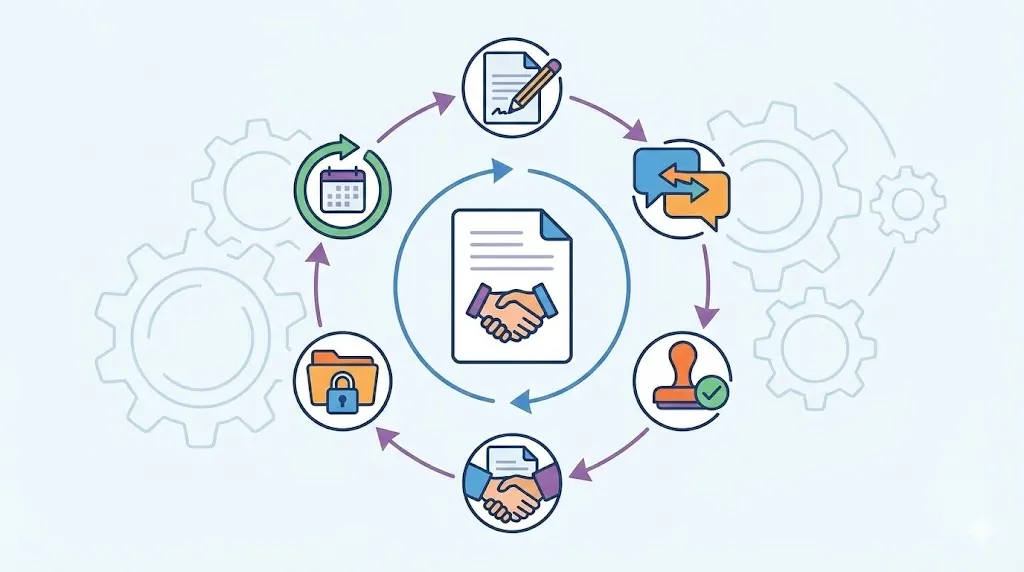
Managing complex legal workflows requires a centralized and intelligent solution. Volody’s platform integrates AI-driven contract drafting, review, metadata extraction, and obligation management into a unified interface. It further enhances capabilities with workflow automation, electronic signature options, and advanced analytics designed to optimize contract lifecycle progression.
> Discover how Volody's CLM Software enables legal teams to streamline contract management while retaining thorough oversight.
FAQ
What defines contract intelligence within the retail and packaged goods sectors?
Additionally, this approach leverages sophisticated technologies to extract, analyze, and integrate contractual data directly into business workflows. Additionally, it helps companies make faster, smarter decisions by turning contract terms into actionable insights.
How does digitizing contracts improve supply chain management?
Digitizing contracts enhances access to contractual information and facilitates its integration with supply chain systems. This reduces errors, speeds up approvals, and ensures compliance with supplier terms like pricing and delivery schedules.
What are common challenges in managing contracts for retail companies?
Challenges include unclear ownership of contracts, fragmented data across multiple systems, and slow, manual workflows. These problems often lead to operational delays and heightened risk exposure.
Moreover, how might contract intelligence mitigate legal and financial risks?
Tools designed for contract intelligence analyze agreements for hazardous clauses and deviations from policy. They provide early warnings about compliance concerns or unfavorable terms prior to contract execution or renewal.
What role does AI play in contract management?
AI automates contract review, extracts key metadata, summarizes contract terms, and recommends clause alternatives. This speeds up contract processing and reduces errors.
Furthermore, in what ways does contract intelligence impact promotional program effectiveness?
It integrates contract terms with POS systems to ensure promotions and discounts apply correctly. Furthermore, this prevents revenue loss and provides real-time data on promotion effectiveness.
What should companies do first when adopting contract intelligence?
Begin by designating clear ownership for contract information and standardizing templates along with metadata. Following this, proceed to digitize agreements and progressively implement workflow automation.
Can contract intelligence help with contract renewals?
Yes. Automated alerts notify teams of upcoming renewals and deadlines. Also, this helps avoid missed renewals and last-minute negotiations.
How does contract intelligence improve cross-department collaboration?
Also, it establishes a unified repository of contract data accessible to legal, sales, procurement, and finance teams. This transparency breaks down silos and accelerates decision-making.
Is contract intelligence only for large consumer packaged goods and retail firms?
No. While larger enterprises derive significant advantages, these solutions are scalable and suitable for organizations of diverse sizes aiming to enhance contract visibility and operational speed.
This detailed guide explains how contract intelligence unlocks speed and agility for retail and packaged goods companies. By digitizing contracts, automating workflows, and integrating contractual information with business systems, companies can reduce risk, improve collaboration, and boost profitability. The right contract management software is a key enabler of this transformation.
About the Company

Volody AI CLM is an Agentic AI-powered Contract Lifecycle Management platform designed to eliminate manual contracting tasks, automate complex workflows, and deliver actionable insights. As a one-stop shop for all contract activities, it covers drafting, collaboration, negotiation, approvals, e-signature, compliance tracking, and renewals. Built with enterprise-grade security and no-code configuration, it meets the needs of the most complex global organizations. Volody AI CLM also includes AI-driven contract review and risk analysis, helping teams detect issues early and optimize terms. Trusted by Fortune 500 companies, high-growth startups, and government entities, it transforms contracts into strategic, data-driven business assets.





" height="216.72211px" id="FYO0bO80Y" transform="translate(3 6.105)" width="206.073px"/><path d="M 108.174 222 C 88.432 222 70.303 217.239 53.785 207.717 C 37.267 198.196 24.173 185.052 14.504 168.285 C 4.835 151.312 0 132.165 0 110.845 C 0 89.731 4.835 70.792 14.504 54.025 C 24.173 37.052 37.267 23.804 53.785 14.282 C 70.303 4.761 88.432 0 108.174 0 C 128.116 0 146.246 4.761 162.562 14.282 C 179.08 23.804 192.073 37.052 201.541 54.025 C 211.21 70.792 216.044 89.731 216.044 110.845 C 216.044 132.165 211.21 151.312 201.541 168.285 C 192.073 185.052 179.08 198.196 162.562 207.717 C 146.044 217.239 127.915 222 108.174 222 Z M 108.174 183.189 C 120.864 183.189 132.044 180.291 141.713 174.495 C 151.382 168.492 158.936 160.006 164.375 149.035 C 169.814 138.064 172.533 125.334 172.533 110.845 C 172.533 96.355 169.814 83.729 164.375 72.965 C 158.936 61.994 151.382 53.611 141.713 47.815 C 132.044 42.02 120.864 39.122 108.174 39.122 C 95.483 39.122 84.202 42.02 74.332 47.815 C 64.663 53.611 57.109 61.994 51.67 72.965 C 46.231 83.729 43.511 96.355 43.511 110.845 C 43.511 125.334 46.231 138.064 51.67 149.035 C 57.109 160.006 64.663 168.492 74.332 174.495 C 84.202 180.291 95.483 183.189 108.174 183.189 Z" fill="rgba(255, 255, 255, 0.12)" height="222px" id="aa1McFcE9" transform="translate(227.183 3)" width="216.04399999999998px"/><path d="M 42.302 182.257 L 111.799 182.257 L 111.799 216.722 L 0 216.722 L 0 0 L 42.302 0 Z" fill="rgba(255, 255, 255, 0.12)" height="216.72211px" id="yRq4AnrsX" transform="translate(477.721 6.105)" width="111.79899999999998px"/><path d="M 108.174 222 C 88.432 222 70.303 217.239 53.785 207.717 C 37.267 198.196 24.173 185.052 14.504 168.285 C 4.835 151.312 0 132.165 0 110.845 C 0 89.731 4.835 70.792 14.504 54.025 C 24.173 37.052 37.267 23.804 53.785 14.282 C 70.303 4.761 88.432 0 108.174 0 C 128.116 0 146.246 4.761 162.562 14.282 C 179.08 23.804 192.073 37.052 201.541 54.025 C 211.21 70.792 216.045 89.731 216.045 110.845 C 216.045 132.165 211.21 151.312 201.541 168.285 C 192.073 185.052 179.08 198.196 162.562 207.717 C 146.044 217.239 127.915 222 108.174 222 Z M 108.174 183.189 C 120.864 183.189 132.044 180.291 141.713 174.495 C 151.382 168.492 158.936 160.006 164.375 149.035 C 169.814 138.064 172.534 125.334 172.534 110.845 C 172.534 96.355 169.814 83.729 164.375 72.965 C 158.936 61.994 151.382 53.611 141.713 47.815 C 132.044 42.02 120.864 39.122 108.174 39.122 C 95.483 39.122 84.202 42.02 74.332 47.815 C 64.663 53.611 57.108 61.994 51.67 72.965 C 46.231 83.729 43.511 96.355 43.511 110.845 C 43.511 125.334 46.231 138.064 51.67 149.035 C 57.108 160.006 64.663 168.492 74.332 174.495 C 84.202 180.291 95.483 183.189 108.174 183.189 Z" fill="rgba(255, 255, 255, 0.12)" height="222px" id="mo8HQspQ0" transform="translate(609.155 3)" width="216.04500000000007px"/><path d="M 73.727 0 C 95.885 0 115.324 4.45 132.044 13.351 C 148.967 22.252 161.957 34.982 171.027 51.541 C 180.287 67.894 184.917 86.937 184.917 108.671 C 184.917 130.405 180.287 149.449 171.027 165.801 C 161.957 181.947 148.967 194.47 132.044 203.371 C 115.324 212.271 95.885 216.722 73.727 216.722 L 0 216.722 L 0 0 Z M 72.216 179.773 C 94.374 179.773 111.497 173.564 123.583 161.144 C 135.669 148.724 141.713 131.233 141.713 108.671 C 141.713 86.109 135.669 68.515 123.583 55.888 C 111.497 43.055 94.374 36.638 72.216 36.638 L 42.302 36.638 L 42.302 179.773 Z" fill="rgba(255, 255, 255, 0.12)" height="216.72211px" id="I3iXX5Hi_" transform="translate(859.693 6.105)" width="184.91699999999992px"/><path d="M 185.22 0 L 113.91 141.273 L 113.91 216.722 L 71.61 216.722 L 71.61 141.273 L 0 0 L 47.74 0 L 93.06 99.046 L 138.08 0 Z" fill="rgba(255, 255, 255, 0.12)" height="216.72211px" id="nzHyWC0_d" transform="translate(1061.78 6.105)" width="185.22000000000003px"/></svg>)