

Enterprise contract renewals directly influence cost control, supplier performance, compliance, and operational continuity. Missed notice dates can create unwanted commitments or service disruptions. High-performing programs establish clear ownership, reliable data, early decision-making, and repeatable workflows. This guide outlines how enterprises can build a disciplined renewal process that improves commercial outcomes and reduces risk.
TL;DR
Centralize contracts, renewal dates, notice periods, owners, values, and obligations in one searchable contract repository.
Start renewal work 90 to 120 days early, then act sooner for strategic or complex agreements.
Give legal, procurement, finance, compliance, and business teams clear roles, approvals, and decision rights.
Review supplier performance, usage, cost, risk, and alternatives before choosing renewal, renegotiation, replacement, or termination.
Use Contract Renewal Software for alerts, workflows, approvals, obligation tracking, integrations, and audit records.
Track cycle time, savings, price changes, missed notices, renewal outcomes, and retained contract value.
Establishing an Enterprise Renewal Management Foundation
Contract renewal management is an ongoing business process. It is not only a calendar task for contract administrators. The process covers supplier agreements, customer contracts, subscriptions, leases, services, and automatic renewal clauses.
A strong program connects commercial ownership with legal control. Procurement manages supplier value and market options. Legal checks terms, risks, and notice rules. Finance reviews budgets and payment effects. Business owners confirm that the agreement still supports daily work.
Every agreement needs a named owner. That owner must understand the contract, monitor its use, and start the renewal review. A documented decision path also prevents unclear handoffs when several teams share responsibility.
Creating a single source of truth
A central contract repository gives teams one reliable place to find renewal data. Contract Repository Software can store signed files, amendments, notices, and related records together.
Each contract should include its expiration date and notice deadline. It should also show the renewal type, supplier, owner, business unit, value, and risk level. Teams should record service duties, payment terms, renewal options, and key dependencies.
Metadata means structured details about a contract. Good metadata helps users sort contracts and find urgent work quickly. It also supports reporting across suppliers, business units, and agreement types.
Assigning ownership and accountability
Procurement should lead commercial reviews and supplier discussions. Legal should review changes, risk, notice rules, and fallback terms. Finance should confirm budget impact, invoices, and price changes.
Compliance may review privacy, security, or industry duties. Operations should confirm service quality and business impact. The business owner should explain current needs, usage, and future demand.
One contract can involve many people. It should still have one accountable owner. That owner coordinates the review and records the final decision, with clear roles and responsibilities across the contract lifecycle.
Renewal data inventory
Create a renewal data inventory before selecting new tools. Include contract files, dates, notice terms, owners, values, obligations, suppliers, and business units.
Add operational dependencies and financial data where possible. Record who approves changes and which team sends formal notice. This inventory exposes missing data before renewal alerts begin.
Related articles: What is Contract Renewal? Key Terms and Processes in 2026
Building a Proactive Renewal Lifecycle
Reactive renewal work begins when a deadline feels close. Proactive work begins with enough time for review, negotiation, and approval. A 90 to 120 day window fits many agreements.
Complex, regulated, or strategic contracts need earlier planning. Teams may need extra time for market testing, security review, budget approval, or executive decisions. The renewal plan should also match budget cycles and sourcing plans.
A repeatable lifecycle reduces rushed decisions. It gives each team a clear point of action. It also creates evidence for later audits and supplier reviews.
Monitoring dates and notice periods
A renewal calendar should show expiration dates and notice deadlines. It should also show the required notice method, such as email, portal submission, or formal letter.
Some contracts renew unless a party sends notice. Others end unless both parties sign an extension. Teams must record the exact rule for each agreement.
Automated reminders should reach the owner before the notice deadline. Escalations should reach a manager when work remains incomplete. These controls protect the enterprise from silent renewals.
Reviewing business need and usage
The business owner should confirm current needs before renewal talks begin. Review seats, service levels, features, volumes, locations, and support requirements.
Usage data can reveal waste or new demand. A team may pay for unused seats or duplicate tools. Another team may need more capacity because business activity grew.
The review should also test the commercial model. A fixed fee may no longer suit changing usage. A tiered model may better match actual demand.
Making the renewal decision
The decision may be to renew, renegotiate, replace, consolidate, or terminate. Each option needs a clear reason and supporting evidence.
Document the business case, expected value, risks, and approved terms. Save stakeholder comments and final approvals with the contract record. This history helps teams explain decisions later.
Renewal timeline
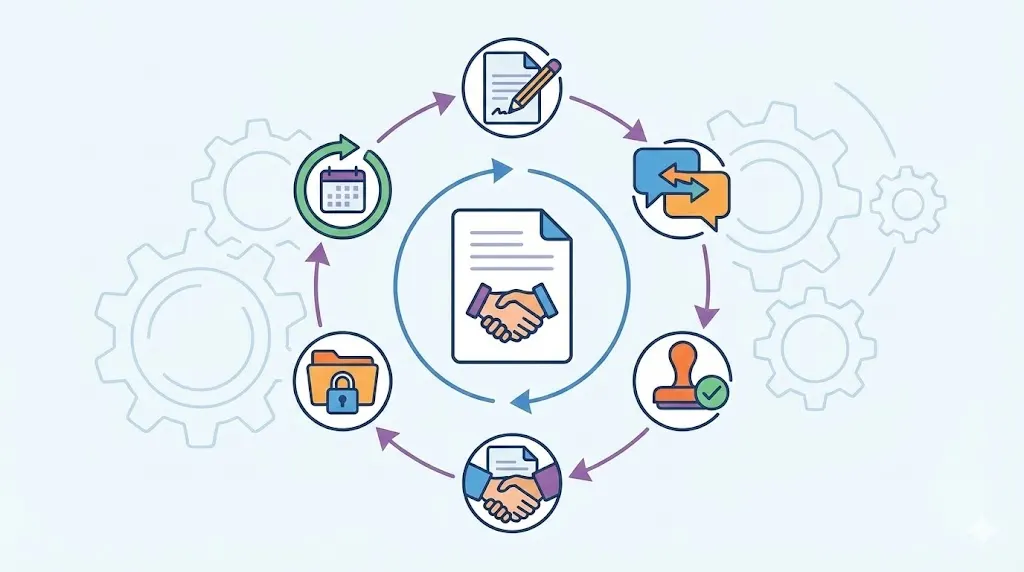
The renewal timeline should begin with preparation and data checks. It should then cover performance review, stakeholder consultation, negotiation, approval, notice, signature, and post-renewal tracking.
Set clear dates for each milestone. Tie each date to an owner and an escalation path. A complete timeline prevents negotiation from starting after approval becomes urgent.
Related articles: Enterprise Contract Lifecycle Management Software
5 Key Challenges in Enterprise Contract Renewals
Enterprise renewals become difficult when information, ownership, and timing remain scattered. The problems often appear simple, but their effects can spread across budgets and operations.
A missed notice can create an unwanted commitment. A weak review can preserve poor service. A disconnected system can hide duplicate suppliers or unapproved spend.
These challenges need process controls, not heroic last-minute effort. Each control should have an owner, a deadline, and evidence of completion.
1. Scattered contract information
Contracts often sit across shared drives, inboxes, local folders, and procurement tools. Teams may find several versions without knowing which one controls.
Missing metadata makes renewal exposure hard to see. Users may know an agreement exists but miss its notice period. They may also overlook amendments that changed the original term.
A central repository reduces this search burden. It should connect the signed contract with amendments, notices, approvals, and renewal notes.
2. Missed deadlines and automatic renewals
Automatic renewal clauses can extend agreements without a fresh signature. The enterprise may then lose time for negotiation or termination.
Late discovery can also create financial and service risk. Teams might pay for another term or lose access to a needed service.
Early alerts provide time for action. Escalation rules help when owners do not respond. Clear notice records prove that the enterprise acted correctly.
3. Limited cross-functional visibility
Legal may review terms without seeing current usage. Finance may see invoices without knowing service problems. Procurement may negotiate without business demand data.
This separation can produce unsuitable renewals. It can also create duplicate services or commitments without approval.
A shared workflow brings the right people into one decision. Each reviewer sees the evidence needed for their role. The owner then records one final outcome.
4. Supplier dependency and weak leverage
Repeated renewals can increase dependence on one supplier. This dependence may weaken price discussions and reduce operational choices.
Teams should review alternatives before renewal talks begin. They should also check market prices, switching costs, and transition risks.
A contingency plan improves negotiation strength. It does not require an immediate supplier change. It shows the enterprise understands its options.
Challenge-to-remedy matrix
Connect each challenge with a practical control. Record the accountable owner, due date, and evidence of completion.
For scattered records, use a central repository and metadata audit. For missed deadlines, use alerts, escalations, and saved notices. For weak visibility, use shared approvals and decision records.
Related articles: What is an Automatic Contract Renewal Clause? Detailed Guide
Designing Governance and Renewal Workflows
Renewal governance should create consistency without forcing every contract through one path. A low-value subscription needs less review than a critical supplier agreement.
Risk-based segmentation helps teams focus effort where exposure is highest. Consider value, service criticality, data sensitivity, supplier dependency, and exit difficulty.
Workflow rules should reflect those factors. Simple agreements can move quickly. Strategic agreements need more evidence, review, and approval.
Segmenting contracts by risk and value
Use contract value as one factor, not the only factor. A low-value service may still support a critical business process.
Review regulatory duties and data access. Consider renewal flexibility, termination costs, and supplier alternatives. Check whether service failure would disrupt customers or employees.
Use expedited, standard, enhanced, or executive paths. Each path should have clear lead times and approval rules. The owner should know the path when planning starts.
Creating playbooks for recurring scenarios
A renewal contract playbook gives teams practical guidance. It can cover price increases, scope changes, seat cuts, service expansion, and poor performance.
Include target terms and fallback terms. Add approval limits, escalation triggers, and preferred clauses. Explain when teams should seek alternative suppliers.
Playbooks also support negotiation consistency. New team members can follow them without starting from scratch. Legal and procurement can update them as market conditions change.
Workflow routing table
Map each contract category to review teams and approval levels. Include lead times, required records, and escalation rules.
A routine agreement may need owner and procurement approval. A regulated agreement may need legal, compliance, security, and executive approval.
Keep routing rules visible to users. Hidden rules create delays and encourage workarounds. Review the rules when policies or business risks change.
Related articles: Modern Contract Handbook: Master Every Step of Contract
Using Performance and Commercial Data in Renewal Decisions
A renewal should reflect current value, not past habit. Teams need evidence about service quality, usage, cost, and business fit.
Performance data supports fair supplier discussions. Usage data helps remove waste or plan added capacity. Finance data shows budget effects and price movement.
Legal and compliance teams also need this context. A service that handles sensitive data may need stronger controls. A service with repeated failures may need remedies before renewal.
Measuring supplier performance
Track service-level results, support response times, incidents, delivery milestones, and audit findings. Add feedback from users who work with the supplier every day.
Review missed targets and repeated issues. Separate one-time problems from patterns. Ask whether the supplier corrected root causes.
Use service credits and other remedies when contract terms allow them. Record the evidence before negotiation begins. This creates a stronger position than general dissatisfaction.
Assessing usage and value realization
Compare contracted scope with actual use. Check seats, features, volumes, locations, and support levels.
Unused capacity may support a price reduction or scope change. Duplicate tools may support consolidation. Increased demand may justify a different service tier.
Value realization also includes business outcomes. Ask whether the service reduced work, improved speed, or supported revenue. A low-use service may still matter if it supports a critical process.
Preparing a negotiation position
Start with internal spend history and market benchmarks. Review supplier alternatives, switching costs, and likely transition time.
Set target terms before meetings begin. Define acceptable price changes, service levels, term length, and exit rights. Decide which concessions require approval.
Include fallback clauses and renewal conditions. These may cover service credits, price limits, data return, or added support. A written position keeps discussions focused.
Renewal decision scorecard
Build a scorecard with performance, usage, cost, risk, and strategic importance. Add market alternatives and supplier dependency.
The final score should support a recommended action. That action may be renewal, renegotiation, replacement, consolidation, or termination.
Scores should change when facts change. Refresh them after major service issues, price increases, usage shifts, or business changes.
Related articles: Contract Management SaaS: Unlocking Cost and Compliance
Automating Renewal Operations and Integrating Systems
Contract management platforms can centralize records, dates, workflows, obligations, and approvals. They reduce manual tracking and make renewal work easier to see.
Automation should support defined rules. It cannot fix missing owners or poor data. Teams must first agree on fields, paths, and decision rights.
A Contract Management System can also connect renewal work with enterprise data. Useful connections include ERP, procurement, CRM, finance, identity, Slack, and Jira tools.
Automating alerts and escalations
Set alerts at 120, 90, 60, and 30 days when the contract needs that cadence. Use earlier alerts for strategic or complex agreements.
Each alert should explain the next action. The owner should know what information to review and when. Escalate overdue tasks to managers or backup owners.
Do not send alerts without useful context. Include the contract value, supplier, notice rule, and decision status. This helps users act without searching elsewhere.
Connecting contract data to business systems
ERP links can show spend, invoices, and supplier records. Procurement links can show sourcing events and approved vendors. CRM links can support customer renewal work.
Project and ticket data can show delivery status and open issues. Finance data can show budget changes and payment history. These connections reduce duplicate entry and improve judgment.
Integrations also support Contract Obligation Management. Teams can connect contract duties with tasks, tickets, and owners. This helps track commitments after renewal.
Maintaining an auditable renewal record
Keep the signed agreement, versions, notices, approvals, and negotiation documents together. Add amendments, signatures, and post-renewal changes.
Version control prevents confusion about the latest terms. Approval history shows who approved each material change. The record should also show when notices were sent.
A complete record supports audits and disputes. It also helps future owners understand past decisions. Good records reduce repeated research during the next cycle.
Protecting data quality and access
Use permission controls for sensitive contract and supplier data. Give users only the access needed for their roles.
Standardize metadata names and required fields. Add validation rules for dates, owners, values, and renewal types. Run regular repository audits to find gaps.
Set retention rules for old agreements and related records. Data quality needs ongoing care. A repository loses value when users cannot trust its contents.
Automation map
Map each trigger to a system action and responsible user. Include the escalation condition and resulting audit record.
For example, a notice deadline can trigger an owner task. An overdue task can alert a manager. A completed approval can store the decision and timestamp.
Review automation after each renewal cycle. Remove alerts that create noise. Add controls where users still miss important actions.
Related articles: Free Contract Management Software: Try Volody for 30 Days
Measuring and Improving the Renewal Program
Renewal management should be measured like other business processes. Leaders need to see timing, cost, risk, and decision quality.
Review the program every month. Look for late decisions, repeated supplier problems, and missed savings. Compare results across business units and contract types.
Use metrics with context. A faster cycle may hide weak review quality. A high renewal rate may preserve unnecessary spend. The goal is better business value, not more renewals.
Track both activity and outcomes. Activity shows whether teams follow the process. Outcomes show whether the process improves cost, service, and risk.
Renewal metrics dashboard
Renewal cycle time: Track days from review start to signed decision. Compare results across contract types and review paths.
On-time decisions: Measure decisions completed before notice deadlines. Separate planned decisions from urgent, late decisions.
Missed notice periods: Record every missed deadline and its cause. Review whether data, ownership, or escalation failed.
Automatic renewal incidents: Count unwanted renewals and their financial effects. Assign corrective actions to responsible teams.
Realized savings: Record approved savings after negotiation or scope change. Separate hard savings from avoided cost.
Contract value retained: Track the value of agreements that continue. Compare retained value with performance and business need.
Price changes: Monitor increases, decreases, and unchanged rates. Review price movement against usage and market evidence.
Stakeholder response time: Measure how long owners and reviewers take. Use the data to find workflow delays.
Renewal outcomes: Group decisions by renew, renegotiate, replace, consolidate, and terminate. Review the reasons behind each outcome.
Use dashboard results in monthly renewal meetings. Assign owners for recurring delays and supplier issues. Revisit playbooks when the same problem appears often.
Program reviews should also test user adoption. Ask whether people can find records and understand their tasks. Training may solve some issues, while workflow changes may solve others.
Related articles: Contract Value Preservation Guide
Why Contract Management Software Matters
Contract management software gives enterprise teams one shared system for records, dates, obligations, workflows, approvals, and reports. It reduces manual tracking and improves deadline visibility.
Contract Renewal Software can send alerts before notice dates and escalate overdue tasks. It can also store renewal evidence and support Contract Renewal Tracking across business units.
Volody's CLM Software supports AI Contract Summaries, AI Metadata Extraction, and Approval Workflow Automation. It can highlight renewal dates, extract key terms, and route decisions to the right reviewers.
For example, a procurement owner can review renewal dates and payment terms quickly. The system can then send the agreement through legal and finance approval.
Use automated alerts and escalation rules to reduce missed notice periods. These controls help prevent unwanted automatic renewals.
Apply standard workflows and playbooks for routine agreements. Route strategic contracts to the right legal, procurement, finance, and business reviewers.
Monitor supplier outcomes, contract value, and decision history. Centralized reporting helps leaders improve renewal work over time.
Ready to make contract management more efficient? Learn more about Volody's CLM Software.
FAQ
What is contract renewal management?
Contract renewal management is the process of tracking dates, terms, obligations, and performance. It helps teams decide whether to renew, renegotiate, replace, or terminate agreements. Enterprise programs coordinate procurement, legal, finance, compliance, and business owners. This coordination helps teams act before deadlines create unwanted commitments or service gaps.
How should enterprises choose contract renewal management software?
Enterprises should look for central storage, date tracking, alerts, workflows, reports, and audit trails. The tool should support risk-based approvals and enterprise system connections. Buyers should also review security, migration needs, user adoption, scalability, and support. A strong fit should match the company’s contract types and renewal process.
What renewal rate should we target?
There is no universal renewal rate for every enterprise. The right target depends on contract type, supplier results, business needs, and available alternatives. Track renewal rates with savings, price changes, usage, and service quality. A high rate is not helpful when teams retain poor suppliers or unused services.
Should enterprises offer multi-year contracts to avoid annual renewal conversations?
Multi-year contracts can reduce repeated administration and improve price planning. They may also reduce flexibility when usage, strategy, or supplier performance changes. Review exit rights, price protections, service remedies, and renewal options before signing. A longer term should support business value, not only reduce renewal tasks.
How can enterprises prevent unwanted automatic contract renewals?
Capture every automatic renewal clause and notice rule in a central repository. Set alerts early enough for review, negotiation, approval, and formal notice. Escalate overdue tasks to managers or backup owners. Save notices, approvals, and termination decisions with the contract record for clear evidence.
How can enterprises build a renewal risk score?
Establish a centralized renewal program, assign accountable owners, and use early alerts, evidence-based reviews, and risk-based approvals to control spend, prevent missed deadlines, and improve supplier outcomes.
About the Company

Volody AI CLM is an Agentic AI-powered Contract Lifecycle Management platform designed to eliminate manual contracting tasks, automate complex workflows, and deliver actionable insights. As a one-stop shop for all contract activities, it covers drafting, collaboration, negotiation, approvals, e-signature, compliance tracking, and renewals. Built with enterprise-grade security and no-code configuration, it meets the needs of the most complex global organizations. Volody AI CLM also includes AI-driven contract review and risk analysis, helping teams detect issues early and optimize terms. Trusted by Fortune 500 companies, high-growth startups, and government entities, it transforms contracts into strategic, data-driven business assets.



" height="216.72211px" id="FYO0bO80Y" transform="translate(3 6.105)" width="206.073px"/><path d="M 108.174 222 C 88.432 222 70.303 217.239 53.785 207.717 C 37.267 198.196 24.173 185.052 14.504 168.285 C 4.835 151.312 0 132.165 0 110.845 C 0 89.731 4.835 70.792 14.504 54.025 C 24.173 37.052 37.267 23.804 53.785 14.282 C 70.303 4.761 88.432 0 108.174 0 C 128.116 0 146.246 4.761 162.562 14.282 C 179.08 23.804 192.073 37.052 201.541 54.025 C 211.21 70.792 216.044 89.731 216.044 110.845 C 216.044 132.165 211.21 151.312 201.541 168.285 C 192.073 185.052 179.08 198.196 162.562 207.717 C 146.044 217.239 127.915 222 108.174 222 Z M 108.174 183.189 C 120.864 183.189 132.044 180.291 141.713 174.495 C 151.382 168.492 158.936 160.006 164.375 149.035 C 169.814 138.064 172.533 125.334 172.533 110.845 C 172.533 96.355 169.814 83.729 164.375 72.965 C 158.936 61.994 151.382 53.611 141.713 47.815 C 132.044 42.02 120.864 39.122 108.174 39.122 C 95.483 39.122 84.202 42.02 74.332 47.815 C 64.663 53.611 57.109 61.994 51.67 72.965 C 46.231 83.729 43.511 96.355 43.511 110.845 C 43.511 125.334 46.231 138.064 51.67 149.035 C 57.109 160.006 64.663 168.492 74.332 174.495 C 84.202 180.291 95.483 183.189 108.174 183.189 Z" fill="rgba(255, 255, 255, 0.12)" height="222px" id="aa1McFcE9" transform="translate(227.183 3)" width="216.04399999999998px"/><path d="M 42.302 182.257 L 111.799 182.257 L 111.799 216.722 L 0 216.722 L 0 0 L 42.302 0 Z" fill="rgba(255, 255, 255, 0.12)" height="216.72211px" id="yRq4AnrsX" transform="translate(477.721 6.105)" width="111.79899999999998px"/><path d="M 108.174 222 C 88.432 222 70.303 217.239 53.785 207.717 C 37.267 198.196 24.173 185.052 14.504 168.285 C 4.835 151.312 0 132.165 0 110.845 C 0 89.731 4.835 70.792 14.504 54.025 C 24.173 37.052 37.267 23.804 53.785 14.282 C 70.303 4.761 88.432 0 108.174 0 C 128.116 0 146.246 4.761 162.562 14.282 C 179.08 23.804 192.073 37.052 201.541 54.025 C 211.21 70.792 216.045 89.731 216.045 110.845 C 216.045 132.165 211.21 151.312 201.541 168.285 C 192.073 185.052 179.08 198.196 162.562 207.717 C 146.044 217.239 127.915 222 108.174 222 Z M 108.174 183.189 C 120.864 183.189 132.044 180.291 141.713 174.495 C 151.382 168.492 158.936 160.006 164.375 149.035 C 169.814 138.064 172.534 125.334 172.534 110.845 C 172.534 96.355 169.814 83.729 164.375 72.965 C 158.936 61.994 151.382 53.611 141.713 47.815 C 132.044 42.02 120.864 39.122 108.174 39.122 C 95.483 39.122 84.202 42.02 74.332 47.815 C 64.663 53.611 57.108 61.994 51.67 72.965 C 46.231 83.729 43.511 96.355 43.511 110.845 C 43.511 125.334 46.231 138.064 51.67 149.035 C 57.108 160.006 64.663 168.492 74.332 174.495 C 84.202 180.291 95.483 183.189 108.174 183.189 Z" fill="rgba(255, 255, 255, 0.12)" height="222px" id="mo8HQspQ0" transform="translate(609.155 3)" width="216.04500000000007px"/><path d="M 73.727 0 C 95.885 0 115.324 4.45 132.044 13.351 C 148.967 22.252 161.957 34.982 171.027 51.541 C 180.287 67.894 184.917 86.937 184.917 108.671 C 184.917 130.405 180.287 149.449 171.027 165.801 C 161.957 181.947 148.967 194.47 132.044 203.371 C 115.324 212.271 95.885 216.722 73.727 216.722 L 0 216.722 L 0 0 Z M 72.216 179.773 C 94.374 179.773 111.497 173.564 123.583 161.144 C 135.669 148.724 141.713 131.233 141.713 108.671 C 141.713 86.109 135.669 68.515 123.583 55.888 C 111.497 43.055 94.374 36.638 72.216 36.638 L 42.302 36.638 L 42.302 179.773 Z" fill="rgba(255, 255, 255, 0.12)" height="216.72211px" id="I3iXX5Hi_" transform="translate(859.693 6.105)" width="184.91699999999992px"/><path d="M 185.22 0 L 113.91 141.273 L 113.91 216.722 L 71.61 216.722 L 71.61 141.273 L 0 0 L 47.74 0 L 93.06 99.046 L 138.08 0 Z" fill="rgba(255, 255, 255, 0.12)" height="216.72211px" id="nzHyWC0_d" transform="translate(1061.78 6.105)" width="185.22000000000003px"/></svg>)