

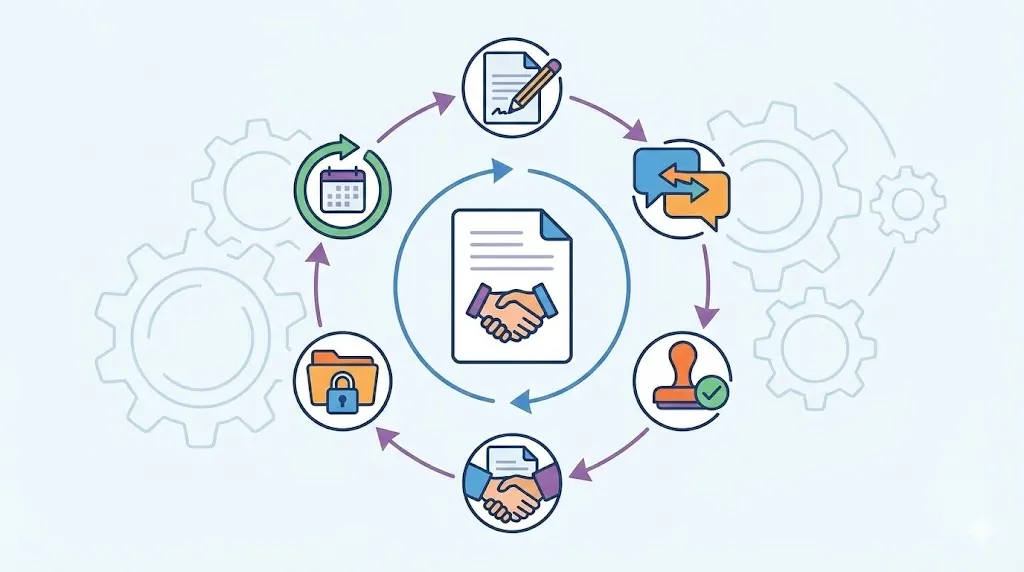
Contracts drive business. Yet managing them well remains a challenge for many organizations. A modern contract handbook helps you navigate every phase—from drafting to renewal—so you avoid costly mistakes and delays. Imagine a busy legal team juggling dozens of contracts without clear processes or tools. Without a solid framework, contracts become bottlenecks, not business enablers. This guide breaks down each stage of contract management with practical insights and expert advice.
TL;DR
Clear contract drafting sets the foundation for efficient management and fewer disputes.
Additionally, legal design principles contribute significantly to improved contract clarity and a more intuitive user experience for all parties involved.
Collaboration workflows streamline reviews and approvals, reducing bottlenecks.
The use of electronic signatures accelerates the closing process while maintaining adherence to global legal standards.
Data-driven contract management uncovers essential insights that facilitate renewal optimization and risk mitigation.
Integrating contracts with business systems enhances automation capabilities and provides greater operational transparency.
What Are the Key Elements of a Modern Contract Handbook?
A contract handbook is your go-to resource for managing contracts consistently and effectively. Additionally, it also establishes best practices, workflows, tools, and roles relevant throughout each phase in the contract lifecycle. A modern handbook must cover more than just legal language. It should address how contracts flow through an organization, how teams collaborate, and how technology supports these processes.
A good handbook helps reduce risks and cycle times. It also improves compliance and business outcomes. Here are the essential elements to include:
Drafting standards: Clear, concise language and standardized templates to reduce errors.
Collaboration protocols: Establishing responsibilities, approval sequences, and communication frameworks to enhance coordination among stakeholders.
Signature processes: Implementing secure electronic signing systems that meet regulatory requirements.
Contract tracking: Utilizing centralized databases that provide live status updates and notification features.
Renewal management: Employing automated alert systems and triggers to guarantee timely contract reviews.
Data analysis: Leveraging performance indicators and visualization tools to detect trends and anticipate risks.
Integration guidelines: Defining interfaces between agreements and enterprise applications like ERP, CRM, and procurement software.
The integration of these components markedly enhances the effectiveness of contract management. For instance, well-defined drafting standards help minimize the need for repeated revisions. Data derived from automated tracking mechanisms supports more strategic and evidence-based decision-making. Together, these elements optimize every phase of the contract lifecycle.
Related articles: Mastering Contract Clauses: Risk & Performance
Why Does Good Contract Drafting Matter Before Management?
Drafting is the foundation. No contract management software or process can fix poorly written contracts. Contracts full of vague terms, contradictions, or legalese cause confusion and disputes. They slow approvals and increase risk.
Ken Adams, a leading voice on contract clarity, highlights six drafting lessons that every organization should follow:
Use plain language: Eschew legal jargon and convoluted sentence structures to ensure clarity for professionals outside the legal field.
Be precise: Clearly define terms and maintain consistent terminology throughout the document.
Structure logically: Arrange sections methodically so that essential information is readily accessible to the reader.
Limit ambiguity: Steer clear of phrasing that allows for multiple interpretations or creates uncertainty.
Focus on intent: Ensure that clauses accurately embody the underlying objectives and responsibilities of the parties involved.
Review regularly: Continuously revise templates to accommodate evolving legal requirements and shifting business objectives.
Once these principles are firmly established, managing contracts becomes significantly more efficient. Review cycles shorten. Negotiations focus on substance, not fixing wording. Automation tools work better with standardized language.
Related Article: Understanding the Most Common Construction Contract Types
How Can Legal Design Improve Contract Creation?
Legal design applies user-centered principles to make contracts clearer and more accessible. Additionally, it combines law, design, and technology to improve contract readability and usability. Leading experts like Margaret Hagan and Helena Haapio advocate for contracts that people can understand and act on without needing a legal dictionary.
Key legal design techniques include:
Visual aids: Use icons, charts, and tables to highlight important information.
Simplified language: Transform dense paragraphs by employing bullet points alongside concise sentences.
Clear hierarchy: Establish a logical structure using headings and subheadings that orient the reader and clarify the flow of information.
Interactive elements: Integrate digital features such as clickable definitions or embedded FAQs to enrich the content and support deeper understanding.
User testing: Collaborate with contract users to identify problematic areas and iteratively improve the document based on their feedback.
For example, a contract clause about payment terms might include a table showing due dates and amounts, instead of a long paragraph. This helps stakeholders quickly confirm obligations and deadlines.
Beyond minimizing errors, legal design fosters confidence between parties, encouraging adherence to terms and reducing the likelihood of disputes.
How Do Collaboration Workflows Streamline Contract Review?
Contract collaboration often involves multiple teams: legal, sales, finance, procurement, and external partners. Additionally, in the absence of well-defined workflows, drafts tend to circulate inefficiently, leading to ambiguous responsibilities and the risk of version mismanagement.
Effective collaboration workflows define:
Who reviews what and when: Assign reviewers based on expertise and authority.
Approval steps: Outline the sequence and criteria necessary to obtain all required sign-offs.
Communication channels: Centralized platforms are employed to collect feedback and track revisions with precision.
Version control: A single, authoritative version is preserved to prevent discrepancies.
Technology supports these workflows through contract lifecycle management (CLM) platforms, which automate routing, send timely reminders, and keep detailed records of approvals. They further provide functionalities for redlining and in-document commentary.
For example, a sales contract might first go to legal for risk review, then finance for budget approval, and finally to the sales director for signature. Each step triggers automatic notifications and deadlines.
Using approval workflows reduces delays and errors. It also creates an audit trail, which helps with compliance and dispute resolution.
Related articles: Fix Broken Legal Budgets: CLM Solutions That Work
What Are the Legal Considerations for Electronic Signatures?
Electronic signatures now underpin the execution of numerous business contracts. Additionally, they also accelerate transaction finalization and minimize reliance on physical documents. The legal recognition of eSignatures depends significantly on their adherence to applicable standards and the transaction's context.
Key legal frameworks encompass the following:
ESIGN Act (US): Validates electronic signatures for most contracts.
eIDAS Regulation (EU): Defines different levels of eSignatures, including qualified electronic signatures with higher security.
UNCITRAL Model Law: Provides international guidance for electronic transactions.
To ensure enforceability:
Verify signer identity through authentication methods.
Capture clear intent to sign electronically.
Maintain tamper-evident records of the signed document.
Comply with jurisdiction-specific rules for certain contract types (e.g., real estate).
For example, a contract signed via a secure eSignature platform that logs IP addresses and timestamps is more defensible than a scanned signature sent by email.
Organizations should choose eSignature solutions that meet their legal requirements and integrate with contract workflows.
How Can Contract Data Transform Legal Processes?
Contracts generate valuable data throughout their lifecycle. Additionally, critical elements such as dates, obligations, renewal terms, and risk clauses embed significant insights. Yet many organizations lose or ignore this data.
Capturing and analyzing contract data enables:
Risk management: Identify high-risk clauses or non-compliance trends.
Renewal forecasting: Monitoring contract expiration schedules allows organizations to proactively manage renewals and prevent lapses.
Performance metrics: Analyzing cycle durations, pinpointing approval bottlenecks, and assessing negotiation frequencies provide a comprehensive view of contract efficiency.
Strategic decisions: Leveraging contract data supports more advantageous negotiations and informed vendor consolidation strategies.
For example, a company might discover that contracts with certain suppliers consistently have longer approval times, prompting process improvements.
Extracting data requires structured contract storage and AI-powered tools that can read and classify contract content. According to a recent Gartner report, organizations using contract analytics reduce review times by up to 50%.
Explore related insights: How to Improve Vendor Contract Management in Logistics
What Are the Challenges in Integrating Contracts with Business Systems?
Contracts rarely exist in isolation. Additionally, integration typically involves connecting with procurement, finance, sales, and compliance systems. Integration allows data to flow automatically, reducing manual entry and errors.
Common integration challenges include:
Data inconsistency: A major hurdle is that systems often use different formats and terminologies, complicating data harmonization.
Legacy systems: Many older platforms were not designed with modern APIs or connectivity standards in mind, which significantly restricts integration possibilities.
Security concerns: Given the highly confidential nature of contract information, robust access controls must be rigorously enforced to protect data integrity.
Change management: Successfully adopting new tools and workflows requires organizations to strategically manage the transition process and address user adaptation.
Achieving effective integration demands a detailed mapping between contract fields and their corresponding data points in business systems. For example, aligning contract payment terms directly with accounts payable workflows can facilitate automatic invoice generation.
Using middleware or enterprise integration platforms can help bridge gaps between contract management software and ERP or CRM systems.
What Happens After a Contract Is Signed?
Many organizations prioritize contract execution but often overlook the complexities of managing agreements once they are signed. Additionally, true value emerges from diligent adherence to contract terms and continual compliance monitoring.
Post-signature activities include:
Obligation tracking: This involves monitoring critical deadlines, deliverables, and milestones to ensure compliance.
Amendments and renewals: Handling contractual modifications and proactively extending agreements as circumstances evolve.
Performance monitoring: Verifying that all parties fulfill their contractual responsibilities effectively.
Dispute handling: Facilitating rapid retrieval of contract documentation to address and resolve conflicts efficiently.
Neglecting post-signature contract management frequently results in overlooked renewals, financial penalties, and diminished revenue streams. Utilizing a centralized contract repository equipped with alert systems and analytical dashboards enables teams to maintain rigorous oversight of contractual obligations.
For example, automated notifications can be configured to trigger 90 days prior to contract expiration, prompting timely initiation of renewal discussions.
How Legal AI Software Solves This
Contract automation platforms facilitate the streamlining and acceleration of contract workflows. Additionally, these systems also perform contract analysis, extract key data points, suggest improvements for drafting, and keep track of crucial deadlines. AI tools reduce manual tasks and improve accuracy.
One such platform combines contract drafting, review, research, and workflow automation in a single workspace. It offers AI-powered clause analysis, risk scoring, and Microsoft Word integration. Teams can manage contracts from creation to renewal without switching tools.
This methodology reduces cycle times, minimizes repetitive tasks, and establishes a knowledge repository for uniform legal processes.
Additionally, Explore how artificial intelligence is transforming legal workflows with Lawxy Legal AI Software.
FAQ
What is a modern contract handbook?
A contemporary contract handbook serves as an extensive reference detailing best practices, workflows, and technological tools designed to optimize contract management. Moreover, it encompasses drafting, collaboration, signing, tracking, renewal, and integration with business systems. Its goal is to reduce risks, speed up contract cycles, and improve compliance.
Why is clear contract drafting so important?
Clarity in contract language is essential to prevent misunderstandings and avoid disputes. This clarity accelerates review processes and reduces the likelihood of negotiation setbacks. Contracts that lack precision tend to cause confusion, elevate risk, and hinder automation efforts. Establishing a foundation of exact, plain language supports reliable contract management throughout its lifecycle.
Furthermore, how does legal design improve contracts?
Legal design makes contracts easier to read and use. Also, it employs visuals, simple language, and clear structure to help all parties understand their rights and obligations. This reduces errors, builds trust, and improves compliance by making contracts more user-friendly.
What are the benefits of collaborative workflows in contract processes?
These collaborative workflows define the order and responsibility for reviewing and approving contracts. They help avoid lost versions, cut down delays, and maintain accountability. Automated processes within contract platforms enhance communication and generate audit trails to support compliance.
Therefore, are electronic signatures legally valid worldwide?
Also, electronic signatures are widely accepted but rules vary. In the United States, the ESIGN Act provides a legal framework, while the European Union’s eIDAS Regulation governs eSignature standards. Ensuring valid eSignatures requires authentication of the signer’s identity, clear demonstration of intent, and maintenance of tamper-evident records. Organizations need to implement eSignature solutions that align with the specific legal requirements applicable to their jurisdiction.
How can contract data improve business decisions?
Contract data reveals patterns related to risk, renewal timing, and performance indicators. Examining this information enables identification of bottlenecks, prediction of renewals, and negotiation of improved terms. Therefore, aI-enhanced analytics lessen manual review and yield actionable insights.
What challenges arise when integrating contracts with other systems?
Integration faces issues like inconsistent data formats, legacy software, security concerns, and change resistance. Mapping contract data to ERP or CRM fields and using middleware can overcome these challenges, enabling automated workflows and better visibility.
As a result, what should happen after contract signing?
Effective post-signature management requires tracking key obligations, deadlines, and renewal dates. It also involves ongoing performance monitoring and the resolution of any amendments or disputes that may arise. Implementing robust post-signature processes mitigates risks related to missed deadlines, financial penalties, and lost revenue.
Consequently, how does AI improve contract management?
AI automates drafting, review, risk analysis, and data extraction. It accelerates contract processing and reduces manual work. AI tools also help maintain consistency and build organizational knowledge bases, enabling legal teams to scale efficiently.
What features should I look for in contract management software?
Essential features include AI-assisted drafting and review, automated workflows, integration capabilities, secure eSignature functionality, and comprehensive reporting. The platform should centralize contract storage and provide alerts for critical dates and obligations to enhance operational efficiency and compliance.
About the Company

Volody AI CLM is an Agentic AI-powered Contract Lifecycle Management platform designed to eliminate manual contracting tasks, automate complex workflows, and deliver actionable insights. As a one-stop shop for all contract activities, it covers drafting, collaboration, negotiation, approvals, e-signature, compliance tracking, and renewals. Built with enterprise-grade security and no-code configuration, it meets the needs of the most complex global organizations. Volody AI CLM also includes AI-driven contract review and risk analysis, helping teams detect issues early and optimize terms. Trusted by Fortune 500 companies, high-growth startups, and government entities, it transforms contracts into strategic, data-driven business assets.




" height="216.72211px" id="FYO0bO80Y" transform="translate(3 6.105)" width="206.073px"/><path d="M 108.174 222 C 88.432 222 70.303 217.239 53.785 207.717 C 37.267 198.196 24.173 185.052 14.504 168.285 C 4.835 151.312 0 132.165 0 110.845 C 0 89.731 4.835 70.792 14.504 54.025 C 24.173 37.052 37.267 23.804 53.785 14.282 C 70.303 4.761 88.432 0 108.174 0 C 128.116 0 146.246 4.761 162.562 14.282 C 179.08 23.804 192.073 37.052 201.541 54.025 C 211.21 70.792 216.044 89.731 216.044 110.845 C 216.044 132.165 211.21 151.312 201.541 168.285 C 192.073 185.052 179.08 198.196 162.562 207.717 C 146.044 217.239 127.915 222 108.174 222 Z M 108.174 183.189 C 120.864 183.189 132.044 180.291 141.713 174.495 C 151.382 168.492 158.936 160.006 164.375 149.035 C 169.814 138.064 172.533 125.334 172.533 110.845 C 172.533 96.355 169.814 83.729 164.375 72.965 C 158.936 61.994 151.382 53.611 141.713 47.815 C 132.044 42.02 120.864 39.122 108.174 39.122 C 95.483 39.122 84.202 42.02 74.332 47.815 C 64.663 53.611 57.109 61.994 51.67 72.965 C 46.231 83.729 43.511 96.355 43.511 110.845 C 43.511 125.334 46.231 138.064 51.67 149.035 C 57.109 160.006 64.663 168.492 74.332 174.495 C 84.202 180.291 95.483 183.189 108.174 183.189 Z" fill="rgba(255, 255, 255, 0.12)" height="222px" id="aa1McFcE9" transform="translate(227.183 3)" width="216.04399999999998px"/><path d="M 42.302 182.257 L 111.799 182.257 L 111.799 216.722 L 0 216.722 L 0 0 L 42.302 0 Z" fill="rgba(255, 255, 255, 0.12)" height="216.72211px" id="yRq4AnrsX" transform="translate(477.721 6.105)" width="111.79899999999998px"/><path d="M 108.174 222 C 88.432 222 70.303 217.239 53.785 207.717 C 37.267 198.196 24.173 185.052 14.504 168.285 C 4.835 151.312 0 132.165 0 110.845 C 0 89.731 4.835 70.792 14.504 54.025 C 24.173 37.052 37.267 23.804 53.785 14.282 C 70.303 4.761 88.432 0 108.174 0 C 128.116 0 146.246 4.761 162.562 14.282 C 179.08 23.804 192.073 37.052 201.541 54.025 C 211.21 70.792 216.045 89.731 216.045 110.845 C 216.045 132.165 211.21 151.312 201.541 168.285 C 192.073 185.052 179.08 198.196 162.562 207.717 C 146.044 217.239 127.915 222 108.174 222 Z M 108.174 183.189 C 120.864 183.189 132.044 180.291 141.713 174.495 C 151.382 168.492 158.936 160.006 164.375 149.035 C 169.814 138.064 172.534 125.334 172.534 110.845 C 172.534 96.355 169.814 83.729 164.375 72.965 C 158.936 61.994 151.382 53.611 141.713 47.815 C 132.044 42.02 120.864 39.122 108.174 39.122 C 95.483 39.122 84.202 42.02 74.332 47.815 C 64.663 53.611 57.108 61.994 51.67 72.965 C 46.231 83.729 43.511 96.355 43.511 110.845 C 43.511 125.334 46.231 138.064 51.67 149.035 C 57.108 160.006 64.663 168.492 74.332 174.495 C 84.202 180.291 95.483 183.189 108.174 183.189 Z" fill="rgba(255, 255, 255, 0.12)" height="222px" id="mo8HQspQ0" transform="translate(609.155 3)" width="216.04500000000007px"/><path d="M 73.727 0 C 95.885 0 115.324 4.45 132.044 13.351 C 148.967 22.252 161.957 34.982 171.027 51.541 C 180.287 67.894 184.917 86.937 184.917 108.671 C 184.917 130.405 180.287 149.449 171.027 165.801 C 161.957 181.947 148.967 194.47 132.044 203.371 C 115.324 212.271 95.885 216.722 73.727 216.722 L 0 216.722 L 0 0 Z M 72.216 179.773 C 94.374 179.773 111.497 173.564 123.583 161.144 C 135.669 148.724 141.713 131.233 141.713 108.671 C 141.713 86.109 135.669 68.515 123.583 55.888 C 111.497 43.055 94.374 36.638 72.216 36.638 L 42.302 36.638 L 42.302 179.773 Z" fill="rgba(255, 255, 255, 0.12)" height="216.72211px" id="I3iXX5Hi_" transform="translate(859.693 6.105)" width="184.91699999999992px"/><path d="M 185.22 0 L 113.91 141.273 L 113.91 216.722 L 71.61 216.722 L 71.61 141.273 L 0 0 L 47.74 0 L 93.06 99.046 L 138.08 0 Z" fill="rgba(255, 255, 255, 0.12)" height="216.72211px" id="nzHyWC0_d" transform="translate(1061.78 6.105)" width="185.22000000000003px"/></svg>)