
Contracts shape business relationships, yet managing them often feels like navigating a maze. Modern contract playbooks offer a way out by guiding negotiators through common pushbacks without constant legal intervention. This approach saves time, reduces risk, and helps teams close deals faster. But effective playbooks go far beyond simple templates or rulebooks. They require thoughtful design, real-world data, and clear escalation paths to work well at scale.
Imagine a sales rep facing a vendor’s redline on a liability clause. Without clear guidance, they hesitate, waiting days for legal review. A well-built playbook arms them with approved fallback language and clear limits, letting them respond confidently and keep deals moving. This article explores how to build and use modern contract playbooks that do exactly that.
TL;DR
Contract negotiators turn to playbooks not just to pinpoint preferred language but also to map out fallback options and escalation points that guide discussions.
More than a repository of clauses or a template, these playbooks embed decision-making protocols alongside clearly articulated escalation procedures.
Playbooks customized to the needs of sales, procurement, HR, and legal departments deliver targeted solutions to the unique hurdles each team faces during negotiations.
Developing effective playbooks requires analyzing real negotiation outcomes rather than relying exclusively on theoretical clause constructs.
Clearly delineated escalation tiers enable negotiators to make independent decisions on specific terms or to appropriately escalate issues for senior review.
To maintain their effectiveness, playbooks need to be integrated within contract management platforms and subjected to periodic updates that capture shifting negotiation dynamics.
Related Article: Contract Management Process Stages Guide for 2026
What exactly is a contract playbook?
A contract playbook serves as a comprehensive framework guiding your team through the complexities of contract negotiations. Additionally, beyond that, it specifies the preferred contractual clauses, delineates acceptable alternatives, and identifies provisions that require escalation for legal review. Its primary purpose is to enable non-legal personnel to conduct routine negotiations efficiently, minimizing delays caused by awaiting legal approval.
Think of your contract template as the starting point. The playbook is the manual for what to do when the other party changes the template. Without a playbook, every change triggers questions for your legal team. With one, negotiators can check the playbook, respond to common pushbacks, and escalate only when necessary.
This approach protects your business by controlling risk and speeding up deal cycles. According to the 2026 Contracting Benchmark Report by World Commerce & Contracting, companies lose an average of 11% of contract value after signing due to missed revenue and inefficient processes. Moreover, playbooks contribute to mitigating these losses by aligning responses and reducing the need for unnecessary legal intervention.
A good playbook covers four key areas:
Standard positions: The precise clause formulations required in every contract.
Fallback positions: Pre-approved alternative language negotiators can offer.
Walk-away triggers: Terms that are non-negotiable or require immediate legal review.
Escalation rules: Explicit guidelines detailing who reviews specific issues and the circumstances under which escalation is necessary.
The escalation rules are critical. They turn a list of clauses into an operational tool. Negotiators know the boundaries within which they may approve terms autonomously and the points at which legal counsel must be consulted.
Related articles: Legal Playbook: Reasons Why Your Business Needs One
What a contract playbook is not
Many confuse contract playbooks with other contract tools, which leads to ineffective playbooks.
Additionally, a playbook should not be mistaken for a clause library - Such libraries contain approved language options. A playbook adds decision-making rules on when to use each clause and fallback.
It is not a contract template - Templates are the documents you send out. Playbooks govern the negotiation process after the template is sent and marked up.
It does not replace legal judgment. Playbooks handle routine negotiations, freeing lawyers to focus on complex or high-risk deals.
Routine tasks make up about 63% of in-house legal work, according to Deloitte’s 2023 Legal Operations Survey. Playbooks help reduce legal reviews by allowing negotiators to handle standard changes. For example, if your legal team reviews 1,000 contracts monthly with 40% legal involvement, cutting that to 30% frees up roughly 100 reviews and nearly $480,000 in annual legal capacity.
Related articles: Contract Templates Standardization: Simplifying Legal Work
Who uses contract playbooks and who owns them?
Contract playbooks benefit more teams than you might expect. Additionally, those engaged in negotiations leverage defined parameters to accelerate and refine their processes.
Sales teams respond to customer redlines without waiting for legal approval.
Procurement teams negotiate vendor terms within approved limits.
HR teams manage employment agreements consistently across hiring managers.
Legal and legal operations oversee playbook creation, ongoing maintenance, enforcement, and the escalation of complex issues.
Ownership usually resides with legal because they establish the binding terms. The most effective playbooks incorporate feedback directly from negotiators. For example, if procurement keeps facing pushback on indemnity clauses, the playbook should include fallback language for those situations.
Legal operations or a senior contracts manager often handles day-to-day updates. Deloitte’s survey found that 77% of law departments have legal ops functions, providing the infrastructure to maintain playbooks effectively.
Related articles: Legacy Contracts: How to Effectively Migrate to a CLM
What should a contract playbook include?
A comprehensive playbook encompasses much more than just a list of clauses. Additionally, it also delivers practical guidance and establishes clear rules.
Standard positions: This refers to the preferred clause language tailored for each contract type. This sets the baseline for negotiations.
Fallback positions: Pre-approved alternatives negotiators can offer when the other party pushes back. These should be realistic and draw on prior successful negotiations.
Walk-away triggers: These terms are deemed non-negotiable or require prompt consultation with legal counsel to assess potential risks. For example, provisions such as specific liability caps or data privacy requirements.
Escalation rules: These define the approval hierarchy and specify the circumstances under which issues must be escalated. This could include tiers like negotiator approval, contracts manager review, and senior counsel sign-off.
Negotiation tips: Contextual advice on common negotiation points, including how to handle specific clauses or counterparty tactics.
Examples and templates: Sample language and fallback clauses for quick reference.
Process flow: Visual or written guides showing how negotiations should progress, including timelines and checkpoints.
A playbook should also be tailored by contract type. Sales agreements, vendor contracts, and employment agreements each have different risks and priorities. Segmenting playbooks by contract category ensures relevant guidance.
Related articles: Contract Clause Library: Your Comprehensive Guide
How to structure a contract playbook for real-world use
The structure of a playbook directly influences its adoption by negotiators. Additionally, clarity and easy access are equally essential.
Group clauses by contract type and category - Group clauses logically, such as payment terms, liability, termination, and confidentiality.
Use language that balances precision with accessibility - This approach ensures clarity without overwhelming users unfamiliar with legal terminology.
Minimize legal jargon to enhance usability - Moreover, this facilitates broader understanding among stakeholders who do not have a legal background.
Reduce reliance on specialized legal terms whenever feasible - Doing so supports clearer communication across diverse teams.
Focus on enabling non - legal personnel to navigate the contract terms effectively.
Integrate decision trees or flowcharts into the playbook - These visual tools provide intuitive guidance on escalation processes.
Highlight escalation triggers - Use colour coding or icons to mark clauses that require legal review.
Embed examples - Show sample fallback language and explain when to use it.
Provide quick reference summaries - Include cheat sheets or one-page guides for common scenarios.
Design the playbook to be both searchable and easily accessible - Host the playbook in a digital format integrated with your contract management system. This lets users find guidance within their workflow.
Set review cycles. Schedule quarterly or biannual updates to keep the playbook current with legal and business changes.
When properly structured, a playbook transcends being just a reference document to become an indispensable resource. It minimizes negotiation bottlenecks and enables teams to proceed with confidence.
Related articles: 4 powerful ways to improve contract management
How to build a contract playbook step by step
Collaboration, data analysis, and iterative processes are essential components for creating an effective playbook.
Additionally, start by gathering negotiation data - Analyze past contracts to identify frequently redlined clauses, common pushbacks, and legal review bottlenecks. Use contract analytics tools if available.
Interview stakeholders - Talk to sales, procurement, HR, and legal teams to understand pain points and negotiation patterns.
Define standard positions - Moreover, work with legal to draft baseline clauses that reflect company policy and risk tolerance.
Develop fallback positions - Identify acceptable alternative language based on negotiation history and legal input.
Set walk-away triggers - Agree on non-negotiable terms that require escalation or termination of negotiations.
Create escalation rules. Determine the appropriate reviewers for each issue and establish associated timelines. Furthermore, establish clear approval tiers and responsibilities.
Draft the playbook document - Organize content logically with clear language, examples, and visuals.
Test with users - Pilot the playbook with a small group of negotiators and gather feedback. Adjust based on real-world use.
Also, train teams - Provide training sessions and materials to ensure everyone understands how to use the playbook.
Integrate with contract systems - Embed playbook guidance into your contract lifecycle management (CLM) platform for easy access during negotiations.
Review and update regularly. Schedule periodic reviews to incorporate new legal developments, business changes, and negotiation trends.
Maintaining and improving the playbook is an ongoing process that must evolve alongside your business and contracts.
Related articles: Types of Contracts Every Business Needs
How contract lifecycle management software supports playbooks
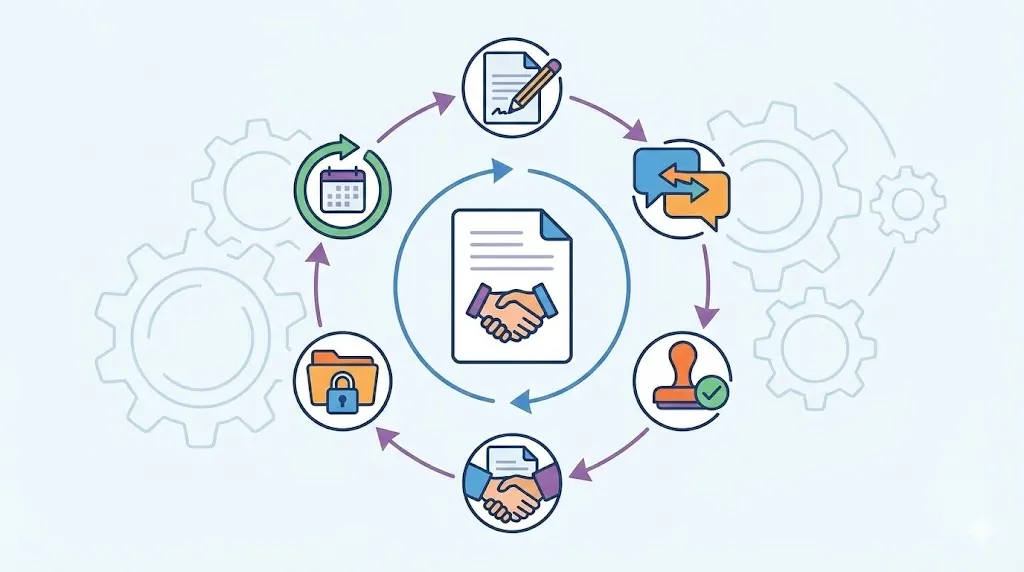
Contract lifecycle management (CLM) software integrates playbooks directly into contract workflows, ensuring compliance and consistency from drafting through execution.
Additionally, CLM platforms unify contract templates, clause libraries, and negotiation workflows within a cohesive interface.
They enable the seamless integration of playbook rules precisely at the stages where contracts are created and negotiated.
This integration delivers negotiators targeted, real-time guidance that minimizes errors and accelerates the overall negotiation process.
Advanced CLM tools provide functionalities such as:
Automated clause recommendations: These tools propose fallback language that aligns with established playbook rules.
Risk and compliance checks: They detect clauses that exceed playbook constraints or violate corporate policies.
Approval workflows: Contracts are automatically routed according to predefined escalation protocols.
Negotiation tracking: This feature consolidates redlines, comments, and approvals for comprehensive oversight.
Reporting and analytics: It enables identification of process bottlenecks and facilitates playbook refinement based on empirical negotiation data.
According to Gartner, organizations using CLM with integrated playbooks reduce contract cycle times by up to 30% and legal review costs by 20%.
Related articles: Ultimate guide of Contract Repository Systems
Why contract management software matters
Managing complex contracts requires a centralized and intelligent solution. Additionally, contract management software helps teams enforce playbook rules consistently and with enhanced accuracy.
Volody’s Contract Lifecycle Management platform integrates sophisticated AI tools that facilitate contract drafting, streamline review processes, and recommend pertinent clauses. It extracts key metadata and identifies potentially risky terms by leveraging configurable playbooks. Users can track negotiations, automate approval workflows, and store contracts securely in one place.
Volody embeds guidance directly within negotiation workflows to reinforce modern playbook strategies. This reduces legal bottlenecks and empowers business teams to handle routine contract tasks.
Moreover, Curious about how contract management technology can streamline your legal workflows? Explore Volody's CLM Software.
Related Article: How to Prevent Clause Drift in Federal Contracts
FAQ
What is the main difference between a contract template and a contract playbook?
The contract template serves as the base document distributed to counterparties. The playbook instructs negotiators on managing changes to that template. It contains preferred language, alternative phrasing choices, and escalation protocols, serving as a strategic decision-making resource rather than merely a static document.
How often should a contract playbook be updated?
Furthermore, playbooks should be reviewed at least quarterly or biannually. Regular reviews ensure they remain aligned with current laws, business priorities, and negotiation trends. Frequent updates also help avoid delays or risks caused by outdated guidance.
Who should be involved in creating a contract playbook?
Legal teams usually lead playbook creation, but input from sales, procurement, HR, and legal operations is essential. Negotiators provide insight into common pushbacks and practical challenges, making the playbook more effective.
Also, can contract playbooks reduce legal workload?
Yes. Playbooks streamline routine negotiations, allowing legal teams to focus on complex issues. Studies show that reducing legal involvement from 40% to 30% in contract reviews can free significant legal capacity and reduce costs.
Also, what are walk-away triggers in a playbook?
Walk-away triggers designate terms that are non-negotiable or require immediate legal escalation. They protect the company from unacceptable risks. For example, certain liability limits or data privacy clauses might be walk-away points.
How do escalation rules work in a playbook?
Therefore, escalation rules define who can approve contract terms at each stage. They specify when negotiators can say yes, when contracts managers must review, and when senior counsel must approve. Clear rules prevent confusion and accelerate negotiations.
Therefore, is a clause library the same as a contract playbook?
No. A clause repository contains approved contract language. A playbook incorporates decision logic about when and how to apply those clauses, including alternative phrasing choices and escalation procedures.
How does CLM software improve contract playbook use?
Consequently, CLM software integrates playbook guidance into contract workflows. It automates clause suggestions, highlights high-risk terms, routes approvals, and tracks negotiations. This makes playbooks easier to use and enforces compliance.
Consequently, what types of contracts benefit most from playbooks?
Contracts that are executed frequently-such as sales agreements, vendor contracts, and employment agreements-derive significant advantages from playbooks. They standardize negotiations, reduce legal reviews, and speed up deal cycles.
Can non-legal teams use contract playbooks effectively?
Yes. Playbooks empower sales, procurement, and HR teams to execute routine negotiations confidently. The presence of clear instructions alongside escalation protocols helps non-lawyers avoid errors and understand when legal involvement is necessary.
About the Company

Volody AI CLM is an Agentic AI-powered Contract Lifecycle Management platform designed to eliminate manual contracting tasks, automate complex workflows, and deliver actionable insights. As a one-stop shop for all contract activities, it covers drafting, collaboration, negotiation, approvals, e-signature, compliance tracking, and renewals. Built with enterprise-grade security and no-code configuration, it meets the needs of the most complex global organizations. Volody AI CLM also includes AI-driven contract review and risk analysis, helping teams detect issues early and optimize terms. Trusted by Fortune 500 companies, high-growth startups, and government entities, it transforms contracts into strategic, data-driven business assets.





" height="216.72211px" id="FYO0bO80Y" transform="translate(3 6.105)" width="206.073px"/><path d="M 108.174 222 C 88.432 222 70.303 217.239 53.785 207.717 C 37.267 198.196 24.173 185.052 14.504 168.285 C 4.835 151.312 0 132.165 0 110.845 C 0 89.731 4.835 70.792 14.504 54.025 C 24.173 37.052 37.267 23.804 53.785 14.282 C 70.303 4.761 88.432 0 108.174 0 C 128.116 0 146.246 4.761 162.562 14.282 C 179.08 23.804 192.073 37.052 201.541 54.025 C 211.21 70.792 216.044 89.731 216.044 110.845 C 216.044 132.165 211.21 151.312 201.541 168.285 C 192.073 185.052 179.08 198.196 162.562 207.717 C 146.044 217.239 127.915 222 108.174 222 Z M 108.174 183.189 C 120.864 183.189 132.044 180.291 141.713 174.495 C 151.382 168.492 158.936 160.006 164.375 149.035 C 169.814 138.064 172.533 125.334 172.533 110.845 C 172.533 96.355 169.814 83.729 164.375 72.965 C 158.936 61.994 151.382 53.611 141.713 47.815 C 132.044 42.02 120.864 39.122 108.174 39.122 C 95.483 39.122 84.202 42.02 74.332 47.815 C 64.663 53.611 57.109 61.994 51.67 72.965 C 46.231 83.729 43.511 96.355 43.511 110.845 C 43.511 125.334 46.231 138.064 51.67 149.035 C 57.109 160.006 64.663 168.492 74.332 174.495 C 84.202 180.291 95.483 183.189 108.174 183.189 Z" fill="rgba(255, 255, 255, 0.12)" height="222px" id="aa1McFcE9" transform="translate(227.183 3)" width="216.04399999999998px"/><path d="M 42.302 182.257 L 111.799 182.257 L 111.799 216.722 L 0 216.722 L 0 0 L 42.302 0 Z" fill="rgba(255, 255, 255, 0.12)" height="216.72211px" id="yRq4AnrsX" transform="translate(477.721 6.105)" width="111.79899999999998px"/><path d="M 108.174 222 C 88.432 222 70.303 217.239 53.785 207.717 C 37.267 198.196 24.173 185.052 14.504 168.285 C 4.835 151.312 0 132.165 0 110.845 C 0 89.731 4.835 70.792 14.504 54.025 C 24.173 37.052 37.267 23.804 53.785 14.282 C 70.303 4.761 88.432 0 108.174 0 C 128.116 0 146.246 4.761 162.562 14.282 C 179.08 23.804 192.073 37.052 201.541 54.025 C 211.21 70.792 216.045 89.731 216.045 110.845 C 216.045 132.165 211.21 151.312 201.541 168.285 C 192.073 185.052 179.08 198.196 162.562 207.717 C 146.044 217.239 127.915 222 108.174 222 Z M 108.174 183.189 C 120.864 183.189 132.044 180.291 141.713 174.495 C 151.382 168.492 158.936 160.006 164.375 149.035 C 169.814 138.064 172.534 125.334 172.534 110.845 C 172.534 96.355 169.814 83.729 164.375 72.965 C 158.936 61.994 151.382 53.611 141.713 47.815 C 132.044 42.02 120.864 39.122 108.174 39.122 C 95.483 39.122 84.202 42.02 74.332 47.815 C 64.663 53.611 57.108 61.994 51.67 72.965 C 46.231 83.729 43.511 96.355 43.511 110.845 C 43.511 125.334 46.231 138.064 51.67 149.035 C 57.108 160.006 64.663 168.492 74.332 174.495 C 84.202 180.291 95.483 183.189 108.174 183.189 Z" fill="rgba(255, 255, 255, 0.12)" height="222px" id="mo8HQspQ0" transform="translate(609.155 3)" width="216.04500000000007px"/><path d="M 73.727 0 C 95.885 0 115.324 4.45 132.044 13.351 C 148.967 22.252 161.957 34.982 171.027 51.541 C 180.287 67.894 184.917 86.937 184.917 108.671 C 184.917 130.405 180.287 149.449 171.027 165.801 C 161.957 181.947 148.967 194.47 132.044 203.371 C 115.324 212.271 95.885 216.722 73.727 216.722 L 0 216.722 L 0 0 Z M 72.216 179.773 C 94.374 179.773 111.497 173.564 123.583 161.144 C 135.669 148.724 141.713 131.233 141.713 108.671 C 141.713 86.109 135.669 68.515 123.583 55.888 C 111.497 43.055 94.374 36.638 72.216 36.638 L 42.302 36.638 L 42.302 179.773 Z" fill="rgba(255, 255, 255, 0.12)" height="216.72211px" id="I3iXX5Hi_" transform="translate(859.693 6.105)" width="184.91699999999992px"/><path d="M 185.22 0 L 113.91 141.273 L 113.91 216.722 L 71.61 216.722 L 71.61 141.273 L 0 0 L 47.74 0 L 93.06 99.046 L 138.08 0 Z" fill="rgba(255, 255, 255, 0.12)" height="216.72211px" id="nzHyWC0_d" transform="translate(1061.78 6.105)" width="185.22000000000003px"/></svg>)