
Key Highlights
Contract renewal is not just about paperwork. It is a plan to keep a business agreement going.
It is important to know the difference between a renewal, which is a new contract, and an extension, which is just more time. This helps you in the negotiation.
The contract renewal process has key steps. These are finding the right contract, checking how it works, negotiation, and getting it signed.
If you miss expiration dates, you might get caught in auto-renewals you do not want. This can leave you stuck with bad terms and extra costs.
Automation and AI tools help with the renewal process. They send automated reminders and keep everything in one place through centralised tracking.
Having a good renewal strategy means you lower risk, keep costs in check, and get more out of your agreements.
Introduction
Every year, a lot of businesses lose money and do not even know it. An old contract might renew by itself on the same terms, or an agreement might end, and no one talks about new terms. Managing your contract renewal process is more than just dealing with paperwork. It is about making smart choices that can change how much money you make, how you work with your suppliers, and if you face legal trouble. Many organisations, however, wait until the last moment and then quickly deal with it, instead of seeing it as an important business task. This guide will show you what the renewal process is and why getting good at the contract renewal process can help you save money and keep better control over your business deals.
Understanding Contract Renewal in 2026

Contract renewal is the step where you choose to keep an existing agreement for another term. You can either keep the same terms or change some conditions that you agree on again. This point is important for the contract lifecycle.
This time is not just another box to tick. It gives you a chance to see if the vendor is still a good fit and brings the value your business needs. Having a good renewal strategy, often with the help of contract management software, helps turn what could be a risk into a way to get better results and save money through the contract management process.
What Does Contract Renewal Mean for Business Agreements?
When you renew a contract in any business agreement, it means both sides have agreed to carry on with their business relationship. This step makes the ongoing existing contract official for a new time, so you get a new agreement that is based on the last one. This is not the same as an extension, which simply adds more time to the old contract.
The renewal process is a good time to look back at your terms and update them. You can ask if the pricing and service levels are still good, or if the contractual obligations match what you need now. When you do a renewal, you can make changes so the agreement fits your business and still brings value to your organisation.
If you don't have a clear renewal process, you could end up stuck with outdated terms because of an automatic renewal. By taking charge of renewals, you get to control your agreements, make business relationships stronger, and be sure that your contracts keep up with your business needs. A renewal contract should always be a smart step.
Key Terms Used in Contract Renewal
Going through the contract renewal process can be hard if you do not know the words used in your agreements. You need to be familiar with key contract terms to have a good contract renewal strategy and to stay away from common problems. If you do not understand these, you could forget key dates or end up with bad terms.
The main things you need to look out for are the renewal clause, notice periods, and expiration dates. These control how and when you can go ahead with contract renewal. When you know about these things, you can be ready and feel in control during contract negotiation. The next parts will talk about these key terms and help you know more about this renewal process.
The Renewal Clause Explained
The renewal clause is a part of a contract. It shows how the agreement can go on after the first term comes to an end. It will say if the contract goes on by itself or if you and the other person have to do something to keep it going. This clause is a key part of good contract drafting and helps with contract management.
You need to know about this clause because it affects your choices as you get near the end of the contract. If the renewal just happens by itself, you will be into a new term unless you tell the other side you want to stop by a set date. If you miss this date, you will not get to change the contract terms or end the renewal agreement.
A clear renewal clause in a renewal agreement should say:
The length of the renewal term.
If the renewal is automatic or manual.
The time you have to give notice if you want to end or not renew the contract.
Any changes to contract terms, such as pricing, that will start when you renew.
The way to renegotiate the terms before the renewal starts.
Renewal Periods and Notice Requirements
Renewal periods and notice times are things you need to know to manage your contracts well. The renewal period is the amount of time you add on after the original contract ends. For example, it could give you one more year. The notice rule is the set number of days, often 30 to 90, before the contract ends when you must tell the other side if you do not want to continue.
If you miss these renewal deadlines, it can be a big problem. If you do not tell the other party in time, an automatic renewal part in the contract could trap you. This means you may have to agree to another term with bad pricing or older service levels. You may also lose your chance to get better terms.
Knowing these dates is key to making sure you stay aware of your choices in the contract. Not keeping track may lead to:
Unwanted auto-renewals of contracts that cost too much or do not do well.
Lost chances to update or get better terms.
Having a contract end without warning, and then you may lose a service you need.
The Typical Contract Renewal Process

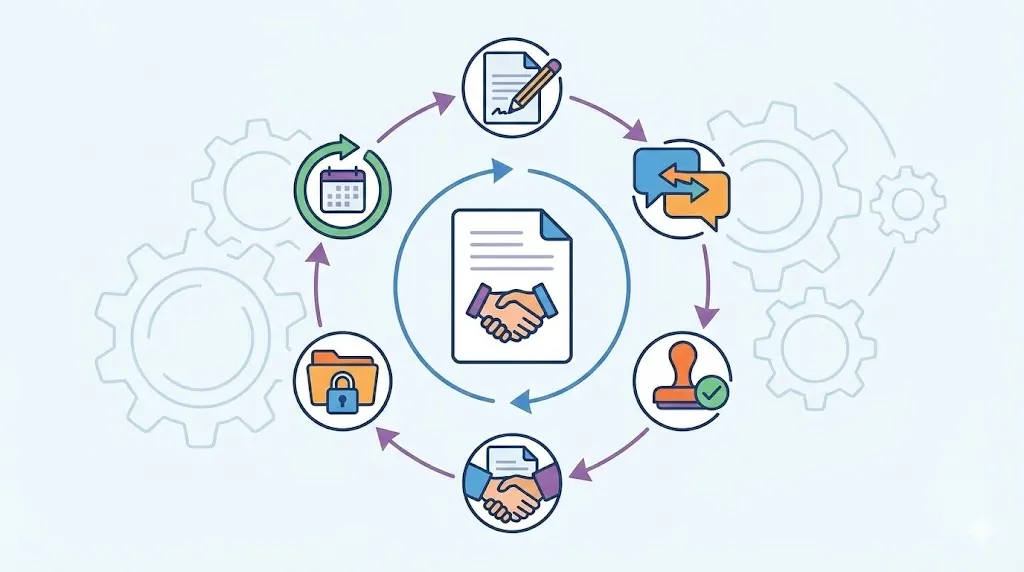
A clear contract renewal process helps your organisation go from chaos to control. You no longer have to deal with problems and stress right before a contract deadline. With the right renewal process, you can handle your agreements before time runs out. This process will have a few key stages. It starts when you spot an agreement that is about to end. It finishes when you sign and return the renewed contract.
Good contract management needs clear rules. When you set out the steps and tell people what to do, you make sure every renewal is smooth and planned. It also helps you use the same system for all your contracts. If you add things like automated reminders and renewal workflows, you stay on track. These tools stop you from making high-cost errors or missing chances to renew. In the next parts, we will look at these steps of the contract renewal process so you can use them in your own work.
Steps Involved in Agreement Renewal
The renewal process can be broken down into clear, manageable steps. Successful contract lifecycle management depends on following a structured workflow that gives you enough time to make informed decisions. This prevents rushed negotiations and ensures all stakeholders are aligned.
Most organisations that manage renewals effectively follow a five-stage process. This starts well in advance of the expiration date and concludes with the new agreement being securely stored in a contract repository. Each stage has a specific objective, from assessing performance to finalising legal terms.
Here is a typical timeline for the renewal process:
Stage | Timeline | Key Activities |
|---|---|---|
1. Identification | 90–120 days before expiry | Flag upcoming expirations using a CLM system and assess initial renewal goals. |
2. Performance Analysis | 60–90 days before expiry | Review vendor performance against SLAs and gather data for negotiations. |
3. Negotiation | 30–60 days before expiry | Discuss new terms, pricing, and service levels based on performance data. |
4. Legal Review & Approval | 15–30 days before expiry | Ensure renewed terms comply with regulations and internal policies. |
5. Execution & Storage | 0–15 days before expiry | Sign the new agreement and update your contract repository with the new terms. |
Initiating the Renewal—Best Practices for Timely Action
Starting the renewal process on time is the one thing that helps make it a success. If you wait and begin to look at renewals only days before they expire, you do not have much room to move. This takes away any chance to negotiate well and can mean you have to make quick choices you may not like. The best way is to use a renewal strategy that gets going well before the deadline is near.
What works best is to start to look at the renewal at least 90 to 120 days before the contract ends. This gives you and the team enough time to check everything, talk with all who need to have a say, and use the right facts to make good choices. Using contract management software that has automated reminders will help make sure you never forget these key dates in the renewal process.
To get renewals started in the right way, you need to:
Set up a clear renewal timeline that uses predictive triggers
Use automated reminders so all stakeholders know what is coming up ahead of time
Mark clear goals for every renewal, such as looking to save money or to get better service
Put one person in charge of handling all parts of the renewal process
Start your work with the agreements that bring the most to the business or carry the most risk
By using this approach with the renewal strategy, contract management, and contract management software, you can stay ahead and be sure nothing is missed with automated reminders.
Related Article: Lease Renewal Agreement: Strategies for Improved Terms
Contract Renewal vs Contract Extension
People often use contract extension and contract renewal to mean the same thing. But, these are two different things in law. A contract renewal is when you make a new contract after the old one ends. This lets you change things like service levels, prices, or other terms.
A contract extension is not the same. With this, you keep the original agreement but add more time, so you can go on working with each other. Most of the time, the other details stay the same and it takes less work to do. Knowing the real difference between contract renewal and contract extension is important. It helps you pick the right way for your business needs.
Major Differences Between Renewal and Extension
The main difference between a renewal and an extension is the way a new agreement comes about. A contract renewal means you get a new contract for a fresh period of time. This resets the business relationship. You also have a chance to change important parts of the original contract to match your current business needs.
An extension, however, is a small change that simply adds more time to the existing agreement. In this case, most of the terms and conditions do not change. It is a quicker and easier option when you are happy with how things are now but you want to keep going for a bit longer.
Here are the main differences:
Agreement: A renewal sets up a new contract, but an extension keeps and updates the original contract.
Terms: Renewals let you change things like costs, the scope of work, and other points. Extensions usually keep the same terms.
Flexibility: Renewals give you the most freedom to shape the new agreement in a way that works for your business needs.
Use Case: Renewals suit long-term business relationships where you want updates. Extensions work best when you only need the same deal to last a little longer.
Which Option Should You Choose for Your Business Needs?
Deciding if you should pick a renewal or an extension comes down to your business needs and how well the current contract is going. Your choice can change how you negotiate and deal with things if they happen to shift. The first thing to do is to look closely at your contract performance.
If the current contract does not fit your goals any more, or if there are new market conditions, a renewal is a better choice. It lets you renegotiate the price, service levels, and other key terms. Go with a renewal when you must make some big changes.
Choose an extension if:
You are happy with the current terms and how things are going.
You only need a short-term fix while you talk about a new longer-term renewal.
The project is going to take longer, and you just need some more time.
You want to keep up business continuity but not do much extra paperwork.
Best Practices for Managing Agreement Renewal
Managing agreement renewal well is not just about knowing the renewal dates. You need to be active and keep things in order. This way, renewals can go from being a risk to offering the business a real edge. It helps to keep all your contracts in one place and to make your steps the same each time.
Many companies now use contract management tools for this reason. The tools give you a contract repository in one space, send automatic alerts, and help your team work better together. When you follow the best practices, every renewal can be a time to get better terms, cut costs, and follow rules more closely.
These steps in contract management make it easier to keep up with renewal dates, use a good contract repository, and choose the right contract management tools.
Setting Up Tracking Systems for Renewal Dates
Using spreadsheets and calendar reminders to keep up with renewal dates works at first, but the method does not last. As the number of your contracts gets bigger, you may miss some new dates or have auto-renewals you do not want. This way of doing contract management ends up not working well. It is best to use a tracking system that is built for the job.
When you bring in a contract management system, you have all your agreements in one place. This system finds the key dates for you. It also sends automated reminders before any deadline comes up. Your team then has the time to look at what has happened and get ready for any talks.
A good tracking system will help you:
Keep every contract together in one secure place you can search through.
Get automated reminders when renewal dates or notice periods are near.
Steer clear of money trouble and risk from auto-renewals you did not want.
See all your contractual obligations clearly.
Be sure that every contract is always checked and nothing is missed.
Reviewing and Negotiating Terms During Renewal
The renewal phase gives you a good chance to change your commercial terms, but you must be ready for it. If you start renewal negotiations without knowing how the vendor performed, you are working in the dark. You will have less power and may take terms that are not good for you.
Build your renewal strategy with strong evidence. Before you talk, review the contract performance and see if the agreed-upon service levels and KPIs were met. Write down any gaps in following the rules or things the vendor did not do. This is what you need to get a better deal.
When you go into renewal negotiations, focus on:
Using data on how well things were done to support any requests for better pricing or service levels.
Checking how the current contract compares with market benchmarks.
Finding and taking out any old or bad terms from the last agreement.
Making sure the new contract fits your business needs and how much risk you can accept.
Leveraging Automation and AI Tools for Contract Renewals

A modern contract renewal strategy works best with automation and AI, not spreadsheets. These tools help change the renewal process from a slow, manual task into something smarter and more planned. AI-powered contract management software can see which upcoming renewals should be looked at first, based on how much they are worth and any risk.
When you automate simple tasks like keeping track of important dates and sending reminders, your team can use their time for bigger tasks like negotiation and looking at performance. Automation makes contract data easy to find and understand. This helps you get the insights you need to make good renewal decisions.
Benefits of Automating the Agreement Renewal Process
Automating the renewal process has big benefits for your organisation. It helps your team work better and lowers risk. With automated reminders, you do not have to worry about missing renewal deadlines. You will also not get stuck with contracts that have bad terms because the system alerts you before these happen. This way of working is now a key part of modern contract lifecycle management.
When you automate, you get one clear view of all your contracts. You can see how each one is doing and what you need to do next. This makes it much easier to check performance metrics and manage your tasks. When you have this info, you can talk with your partners from a stronger place. It also helps your business keep going without problems because you catch contract issues before they cause trouble.
The key benefits of automation include:
Eliminating missed renewal deadlines with automated alerts.
Avoiding costly lock-ins from unwanted auto-renewals.
Reducing the administrative burden on your legal and procurement teams.
Improving decision-making with access to real-time performance data.
Ensuring compliance by flagging outdated or risky clauses before renewal.
Increasing overall efficiency and saving valuable time.
Drafting Contract Renewal Clauses Effectively
The way you write your contract has a big effect on how well the renewal process goes. If your renewal clause is clear, people know what to expect when the agreement continues. This helps get rid of confusion and keeps everyone on the same page. It is important for legal compliance and for keeping risks low.
No matter if you are working on a simple service agreement or a more tricky deal, the renewal clause must fit your needs. You should say how long the renewal term is, how much notice you need to give, and what needs to happen for the deal to carry on. If you plan ahead in this way, you avoid arguments and make talks easier next time.
Must-Have Elements in a Renewal Agreement
When you write a new agreement to renew, it's important to be clear. The document should say how the business relationship will go on. This way, both sides know what to expect and there is less chance for any confusion later.
The new agreement needs to mention the original contract but also show what has changed. This can be changes to the contract period, pricing, or service levels. Be sure to explain every part so the renewal agreement is legal and both sides can trust it.
A good renewal agreement must have:
A clear statement that both sides want to renew the contract.
The exact time the new contract period will last.
Details about what will change in the renewal terms, like pricing and service levels.
How much time is needed to give notice if someone wants to end the new term.
The signatures from people who have the right to sign for both sides.
Using Templates for Lease and Other Agreement Renewals
Using templates is a good way to make the renewal process for contracts fast and clear. When you have contracts that you often use, like lease deals or supply chain contracts, templates help to keep things the same every time. They also help save time and stop small mistakes that people might make while writing up the agreement.
Many contract management software tools have a set of ready-to-use templates. These are checked and approved ahead of time and you can still change them for your own needs. This means you can make new renewal agreements quickly and know that they will follow your company’s legal and business rules.
When you use templates during the renewal process, you:
Keep all your agreements the same way each time.
Make the contract drafting much faster.
Cut down on legal problems by using language that has been checked.
Make the process of renewing contracts easier for your team.
Using contract management software and templates will help your business as it grows. It will also help your staff to work better and ensure contracts are right every time.
Common Challenges in Contract Renewal
Even though the contract renewal process matters a lot, many people have problems with it. Many organisations use a messy system, which makes it easy to miss important expiration dates. This often means they only deal with renewals when something bad happens. Such chaos can lead to big money and business problems.
The two biggest issues are missing deadlines and getting stuck during the negotiation process. When people work with renewals by hand and in different departments, key dates and things they need to do are easy to forget. This split way of working hurts the way you can negotiate and manage your contracts.
Missed Expiration Dates and Their Impact
Missing a contract's expiration date is one of the most expensive mistakes in contract management. It can make your business get stuck in an agreement you do not want for another term because of an automatic renewal. It could also end in an unexpected contract termination, making big problems for your business operations.
This usually happens when contracts sit in many places like email threads or shared drives, and there is no single place to check all your contracts. The problems can go farther than just losing money. You may hurt your reputation and make your business face compliance risks too.
The impact of missed expiration dates includes:
Financial losses from being stuck with prices that are not good.
Problems if an important service is ended suddenly.
Trouble following rules if a contract tied to compliance ends and no-one noticed.
Losing bargaining power since you cannot try to get a better deal on a contract that has already rolled over.
Looking bad in the eyes of others, which shows weak control over how things work inside the business.
Negotiation Roadblocks in Agreement Renewal
Even if you get the renewal at the right time, the negotiation process can still run into many problems. These problems often happen when there is not enough planning or when legal teams and business units do not work well together. When you do not have the right information or a clear plan, your position in the negotiation process is much weaker.
A big problem is when you do not have performance data. If you cannot show that the vendor did not do well, it is tough to get better terms. When legal teams and other groups inside your company work alone, it can cause everything to slow down. Decisions are delayed, and their goals may not match up.
Common roadblocks in the negotiation process include:
Not having performance data that can support your talks.
Starting too late, meaning there is no time for proper discussion.
Authority being scattered, with no single person in charge of the renewal.
Not comparing your current contract to what is available in the market.
Agreement Renewal for Rental Contracts
Renewing an agreement is very important when it comes to rental contracts like commercial and home lease agreements. When both the landlord and tenant renew on time, it helps things keep running smoothly. It also gives both sides a chance to look at the terms and update them to show what is happening in the market at that time.
The way you handle renewing rental contracts uses the same basic ideas as other types of agreements. However, there are a few things that make them different. It is very important to have clear communication. You also need to have a well-written new agreement. This helps keep the relationship between landlord and tenant good and makes sure you have legal compliance.
Steps for Renewing Lease Agreements
Renewing a lease agreement needs a clear plan to make the move into the new term easy. The renewal process should start well before the current lease ends. This gives enough time for both sides to talk and sort out any changes. Being ahead with this stops any last-minute worries for landlords and tenants.
The first step is for one side to show they want to renew the lease. Next, both parties look at the current agreement and discuss if there need to be any new terms, like a rent increase. It is important that the whole contract lifecycle, from the start to finish, is handled with care.
The key steps in the renewal process for lease agreements are:
Review the current lease to see the renewal clause and how much notice is needed.
The tenant or landlord sends a formal message to say if they want to renew.
Talk about and agree on any new terms, such as the rent, length of stay, or their roles.
Write up a new agreement or change the older one.
Both sides sign the new agreement before the first lease runs out.
What Landlords and Tenants Should Include
When making a new agreement for a lease renewal, landlords and tenants should make sure the document is simple, easy to read, and follows local laws. The point is to have a contract that keeps both sides safe during the new rental period.
The renewal agreement must show every one of the renewal terms in a clear way so there is no confusion later. It should mention the old lease, but it must also clearly list all changes that each side has agreed to in talks. This clear detail is needed for legal compliance and to stop arguments in the future.
Key elements to include are:
The names of the landlord and tenant.
The address of the rental property.
The start and end dates of the new lease term.
The new rent amount and payment schedule.
Any other changed terms, like rules about pets or who takes care of what.
Benefits of Automating Agreement Renewal
The benefits of automation in the renewal process are easy to see. With a contract management system, what used to be slow and messy can now go smoothly. Having something in place to handle renewals with automation means you get more control over your contracts.
When you automate the renewal process, mistakes go down, and there is less admin work to do. The contract management system also helps you keep your business running. It gives you what you need to see what is coming up and lets you handle each renewal in a better way, so every renewal could be a good chance for the company, not a problem.
Improving Efficiency and Accuracy
Manual contract management uses things like spreadsheets and email threads. It is often slow and can lead to mistakes. Automation fixes these problems by setting up renewal workflows that are the same every time and keeps all contract data in one place. This helps the work be more accurate and get done faster.
With contract management software, the system pulls out and tracks contract data for you. This cuts down on mistakes people can make. Quicker and better processed contracts mean your team takes care of more work without feeling stressed. You then have time to focus on contract performance instead of chasing files and emails.
Automation helps contract management in many ways:
Take away the need for manual data entry and less errors from people.
Make renewal cycles go faster with automated workflows.
Give instant access to contract information that is always correct.
Make sure every renewal is treated the same way.
Give back valuable time for your team to do more important work.
Reducing Administrative Overheads
A lot of time in contract renewal management goes to tasks like keeping track of dates, sending follow-up emails, and looking for documents. These manual processes make your team spend too much time on admin work, taking their focus away from more important tasks. Using automation can help cut down on all this work.
When you use automation for the renewal agreement process, it takes care of the boring, low-value work for you. Automated reminders, faster approval steps, and having everything saved in one place mean the team does not have to rush at the last minute. This lets them put more time into talking about deals and getting more for the company.
Automation helps lower admin work by:
Using automated alerts instead of manual tracking.
Making the review and approval process much easier.
Letting your team find contracts right away, without digging through emails or drives.
Cutting down the time and effort needed to get ready for renewals.
Conclusion
In the end, knowing the contract renewal process is very important because it helps you handle business deals better in 2026. This blog has shown that the renewal process comes with key terms and steps you should follow. These can have a big effect on how your business works. It helps if you know the small differences between a contract renewal and a contract extension. You can also make the process easier and cut down on problems by using tools that help with automation. When you use these tools, you can avoid missing deadlines or facing hard talks.
Whether you are a landlord, a tenant, or run your own business, taking early steps in managing your contract renewal process will help you have better deals and stronger working relationships. If you want to make things easier with your contract renewals, you can get in touch for a free talk about how to make your steps better.
Frequently Asked Questions
What should be included in a contract renewal clause?
A contract renewal clause needs to say how long the new term will last, and how much time in advance you must give notice if you do not want to renew. It should also say if the renewal will be automatic or if you need to do it yourself. The clause must show any new terms like changes in price that will be used when the contract renews. This helps with legal compliance and makes things clear for everyone.
How does automation simplify agreement renewal management?
Automation makes renewal easier with a contract repository in one place. It sends automated reminders for key dates that matter. It helps teams stay on top of the renewal workflow. This way, they do not miss deadlines, stop any auto-renewals they do not want, and keep business continuity strong. Teams have control over the whole process right from the start.
What key terms should I be aware of when reviewing a contract renewal?
When you look at a renewal contract, make sure you check the key terms. Look at things like the renewal period, notice needs, and if there are any automatic renewal rules. You should also see if pricing, service levels, or end terms have changed. Knowing these things will help you see how the contract works now and what it may do for you later.
What processes are typically involved in the contract renewal process?
The renewal process usually has a few main steps. First, you find contracts that are close to their expiration dates. Then, you look at how well the people involved did against what was planned. After this, you start the negotiation process to talk about and agree on the new terms. Next, the legal team will review the new agreement and give their approval. At last, you sign and put the new agreement into action. Taking these steps is important for good contract lifecycle management.
About the Company

Volody AI CLM is an Agentic AI-powered Contract Lifecycle Management platform designed to eliminate manual contracting tasks, automate complex workflows, and deliver actionable insights. As a one-stop shop for all contract activities, it covers drafting, collaboration, negotiation, approvals, e-signature, compliance tracking, and renewals. Built with enterprise-grade security and no-code configuration, it meets the needs of the most complex global organizations. Volody AI CLM also includes AI-driven contract review and risk analysis, helping teams detect issues early and optimize terms. Trusted by Fortune 500 companies, high-growth startups, and government entities, it transforms contracts into strategic, data-driven business assets.



" height="216.72211px" id="FYO0bO80Y" transform="translate(3 6.105)" width="206.073px"/><path d="M 108.174 222 C 88.432 222 70.303 217.239 53.785 207.717 C 37.267 198.196 24.173 185.052 14.504 168.285 C 4.835 151.312 0 132.165 0 110.845 C 0 89.731 4.835 70.792 14.504 54.025 C 24.173 37.052 37.267 23.804 53.785 14.282 C 70.303 4.761 88.432 0 108.174 0 C 128.116 0 146.246 4.761 162.562 14.282 C 179.08 23.804 192.073 37.052 201.541 54.025 C 211.21 70.792 216.044 89.731 216.044 110.845 C 216.044 132.165 211.21 151.312 201.541 168.285 C 192.073 185.052 179.08 198.196 162.562 207.717 C 146.044 217.239 127.915 222 108.174 222 Z M 108.174 183.189 C 120.864 183.189 132.044 180.291 141.713 174.495 C 151.382 168.492 158.936 160.006 164.375 149.035 C 169.814 138.064 172.533 125.334 172.533 110.845 C 172.533 96.355 169.814 83.729 164.375 72.965 C 158.936 61.994 151.382 53.611 141.713 47.815 C 132.044 42.02 120.864 39.122 108.174 39.122 C 95.483 39.122 84.202 42.02 74.332 47.815 C 64.663 53.611 57.109 61.994 51.67 72.965 C 46.231 83.729 43.511 96.355 43.511 110.845 C 43.511 125.334 46.231 138.064 51.67 149.035 C 57.109 160.006 64.663 168.492 74.332 174.495 C 84.202 180.291 95.483 183.189 108.174 183.189 Z" fill="rgba(255, 255, 255, 0.12)" height="222px" id="aa1McFcE9" transform="translate(227.183 3)" width="216.04399999999998px"/><path d="M 42.302 182.257 L 111.799 182.257 L 111.799 216.722 L 0 216.722 L 0 0 L 42.302 0 Z" fill="rgba(255, 255, 255, 0.12)" height="216.72211px" id="yRq4AnrsX" transform="translate(477.721 6.105)" width="111.79899999999998px"/><path d="M 108.174 222 C 88.432 222 70.303 217.239 53.785 207.717 C 37.267 198.196 24.173 185.052 14.504 168.285 C 4.835 151.312 0 132.165 0 110.845 C 0 89.731 4.835 70.792 14.504 54.025 C 24.173 37.052 37.267 23.804 53.785 14.282 C 70.303 4.761 88.432 0 108.174 0 C 128.116 0 146.246 4.761 162.562 14.282 C 179.08 23.804 192.073 37.052 201.541 54.025 C 211.21 70.792 216.045 89.731 216.045 110.845 C 216.045 132.165 211.21 151.312 201.541 168.285 C 192.073 185.052 179.08 198.196 162.562 207.717 C 146.044 217.239 127.915 222 108.174 222 Z M 108.174 183.189 C 120.864 183.189 132.044 180.291 141.713 174.495 C 151.382 168.492 158.936 160.006 164.375 149.035 C 169.814 138.064 172.534 125.334 172.534 110.845 C 172.534 96.355 169.814 83.729 164.375 72.965 C 158.936 61.994 151.382 53.611 141.713 47.815 C 132.044 42.02 120.864 39.122 108.174 39.122 C 95.483 39.122 84.202 42.02 74.332 47.815 C 64.663 53.611 57.108 61.994 51.67 72.965 C 46.231 83.729 43.511 96.355 43.511 110.845 C 43.511 125.334 46.231 138.064 51.67 149.035 C 57.108 160.006 64.663 168.492 74.332 174.495 C 84.202 180.291 95.483 183.189 108.174 183.189 Z" fill="rgba(255, 255, 255, 0.12)" height="222px" id="mo8HQspQ0" transform="translate(609.155 3)" width="216.04500000000007px"/><path d="M 73.727 0 C 95.885 0 115.324 4.45 132.044 13.351 C 148.967 22.252 161.957 34.982 171.027 51.541 C 180.287 67.894 184.917 86.937 184.917 108.671 C 184.917 130.405 180.287 149.449 171.027 165.801 C 161.957 181.947 148.967 194.47 132.044 203.371 C 115.324 212.271 95.885 216.722 73.727 216.722 L 0 216.722 L 0 0 Z M 72.216 179.773 C 94.374 179.773 111.497 173.564 123.583 161.144 C 135.669 148.724 141.713 131.233 141.713 108.671 C 141.713 86.109 135.669 68.515 123.583 55.888 C 111.497 43.055 94.374 36.638 72.216 36.638 L 42.302 36.638 L 42.302 179.773 Z" fill="rgba(255, 255, 255, 0.12)" height="216.72211px" id="I3iXX5Hi_" transform="translate(859.693 6.105)" width="184.91699999999992px"/><path d="M 185.22 0 L 113.91 141.273 L 113.91 216.722 L 71.61 216.722 L 71.61 141.273 L 0 0 L 47.74 0 L 93.06 99.046 L 138.08 0 Z" fill="rgba(255, 255, 255, 0.12)" height="216.72211px" id="nzHyWC0_d" transform="translate(1061.78 6.105)" width="185.22000000000003px"/></svg>)