

Untracked contracts create operational, financial, and commercial risk for small businesses. When key terms, obligations, and deadlines remain scattered across inboxes and files, teams lose visibility and spend valuable time correcting preventable issues. A disciplined contract tracking process centralizes critical information, assigns accountability, and enables timely action before minor gaps become costly problems.
TL;DR
Untracked contracts hide current terms, duties, deadlines, renewal dates, and ownership from busy small business teams.
Poor visibility causes service delays, missed obligations, approval confusion, and inconsistent work across departments.
Financial exposure includes late payments, price changes, penalties, auto-renewals, and lost contract value.
Weak contract records reduce renewal wins, expansion sales, pricing insight, and negotiating strength.
A central inventory, clear owners, alerts, and regular reviews reduce preventable contract management risks.
Contract management software gives small businesses searchable records, workflows, reminders, and stronger contract monitoring and management.
How Contract Tracking Breaks Down in Small Businesses
Small firms often manage contracts without a dedicated contract owner. One person may handle sales, suppliers, payroll, and customer issues in the same day. Contract tracking then depends on memory and spare time.
Scattered agreements and incomplete records
Agreements often sit in email attachments, shared drives, paper files, and accounting tools. Some may remain on a former employee’s laptop. Others may exist only as signed scans.
This creates a basic question: which document controls? A team may find the original contract but miss a later amendment. It may find the signed agreement but miss an exhibit, price sheet, or service schedule.
A missing signature page can weaken proof of acceptance. A missing exhibit can hide delivery standards or payment terms. An old version can show prices that no longer apply.
Contract expiry tracking also fails when dates sit in different places. One renewal date may appear in a calendar. Another may appear in a spreadsheet. A third may remain buried in an email thread.
Each record should capture the parties, contract type, value, start date, end date, renewal terms, notice window, duties, key documents, and accountable owner. It should also show the latest version and any linked amendment.
Ownership gaps and informal workflows
Small businesses often accept agreements through informal channels. A salesperson may promise terms before review. A manager may approve a supplier by email. A founder may sign a contract while traveling.
Those actions can make sense at the time. Yet they create weak records later. No one may know who should track delivery, pricing, insurance, or renewal dates.
Shared ownership often means no ownership. Finance may expect operations to monitor the deal. Operations may expect sales to manage it. Sales may believe the customer team owns the next step.
A simple intake process helps. Every new agreement should enter one register before signature. The register should name its business owner and its administrative owner. It should also record the next required action.
Without that process, contract monitoring and management becomes reactive. Teams act only after a problem appears. They then search for documents under pressure, with little time to check the full record.
Related articles: AI Advancements in Contract Management Tools by 2026
Operational Problems Caused by Missing Contract Visibility
Untracked contracts affect daily work long before a dispute starts. Staff lose time finding terms, checking approvals, and confirming who must act. Small delays can spread across several teams.
Delayed approvals and service delivery
A buyer may need to confirm a supplier’s delivery terms. A hiring manager may need to check a staffing agreement. A customer team may need to confirm support hours.
If the contract is hard to find, each task waits. People ask colleagues for copies. They repeat searches. They may use a similar agreement as a guide.
These delays can slow procurement, hiring, onboarding, and supplier changes. They can also delay customer work. A team may promise a start date without checking the supplier’s lead time.
Approval status creates another problem. Staff may not know whether legal, finance, or leadership reviewed the latest draft. They may send the same request several times. Or they may act on a draft that never received final approval.
Misunderstood responsibilities across teams
Sales agreement may remember a discount that finance cannot confirm. Operations may expect daily reporting that the supplier never accepted. A customer team may promise support levels missing from the signed agreement.
These gaps create different working assumptions. Each team acts in good faith, but the contract record does not guide them. The business then spends time correcting avoidable confusion.
Clear contract records should show prices, service levels, delivery duties, notice periods, and approval limits. They should also show changes made after signing.
Inconsistent performance monitoring
A business cannot track performance against terms it cannot find. It may know that a supplier delivered late, but not the agreed delivery window. It may know that support felt slow, but not the stated response time.
An untracked clause can create a clear chain of harm: missing clause, missed action, delayed work, unhappy customer, escalation, and avoidable cost.
This problem also affects internal reporting. Managers may receive different answers from different teams. They cannot compare supplier performance or customer commitments with confidence.
Related articles: Intercompany Agreement Management Across Legal Entities
Financial and Compliance Exposure From Untracked Agreements
Untracked agreements create direct financial pressure. They also make it harder to prove that the business met its duties. Weak records can turn a simple question into a costly investigation.
Missed payment terms and cash flow disruption
Contracts often set invoice formats, approval steps, payment dates, and dispute periods. If finance cannot find those terms, invoices may sit unpaid. Customers may also delay payment because required documents were missing.
Late payments can strain supplier relationships. They can trigger interest charges or service holds. They may also create extra work for finance staff.
The reverse problem can happen too. A business may pay an old price or an incorrect amount. Without the current contract, staff may not spot the error quickly.
Penalties, unauthorized renewals, and cost overruns
Some agreements include service credits, volume commitments, price changes, or automatic renewal clauses. Missing one date can lock the business into another term. Missing one service measure can remove a chance to claim relief.
Untracked price terms can also create cost overruns. A supplier may increase fees under a valid clause, while the buyer remains unaware of the timing. The business then reacts after the new charge arrives.
World Commerce & Contracting research, cited by ContractSafe, reports average contract value erosion of 8.6%. The best performers lose slightly over 3%, while the worst lose more than 20%.
Audit gaps and weak business records
An audit may require the signed contract, amendments, approvals, invoices, and performance evidence. A scattered record makes each item hard to connect.
Teams may know that work happened, but lack proof of the agreed standard. They may have a signed document, but not the later changes. They may have approval emails, but not the final terms.
Poor contract management can cost about 9.2% of annual revenue through missed renewals, untracked duties, and pricing differences, according to the cited research.
Disputes and legal uncertainty
A dispute may concern scope, delivery, payment, liability, or termination rights. Each issue depends on the exact wording and version.
When records conflict, resolution takes longer. Staff must rebuild the timeline from emails and conversations. They may also struggle to show who approved a change.
A simple risk matrix helps teams group exposure by cash flow, compliance, operations, and legal uncertainty. It also helps leaders decide which agreements need review first.
Related articles: Contract Management Software for Faster Legal Work
Lost Revenue and Weaker Negotiating Power
Contract tracking is not only a risk task. It also supports revenue growth and better commercial decisions. When records stay hidden, useful opportunities can pass without notice.
Missed renewals and expansion opportunities
Missed contract renewal dates can put customer revenue at risk. A team may notice the end date too late to discuss an extension. The customer may already compare other suppliers.
The same gap can hide expansion opportunities. A customer may need another service, higher capacity, or a broader license. Without a clear contract history, the account team may miss the right timing.
A renewal process should start before the notice window closes. It should show customer value, service history, open issues, and possible next offers.
Contract expiry tracking also helps teams manage supplier agreements. A business can compare prices before renewal. It can ask for better terms instead of accepting an automatic extension.
Decisions made without contract history
Negotiators need facts. They need past prices, discounts, service problems, renewal outcomes, and approved concessions.
Scattered records hide that history. A new employee may repeat an old discount without knowing why it was granted. A manager may accept weak terms because no one can find the prior agreement.
A central record turns past contracts into usable knowledge. It shows what changed, who approved it, and how the relationship performed.
Revenue opportunities often missed include:
Renewals: Teams miss notice windows, customer concerns, or timely extension talks.
Upsells: Account staff lack a clear view of unused needs and current service limits.
Renegotiations: Buyers miss chances to challenge price changes or weak supplier performance.
Price adjustments: Teams overlook agreed review dates, index rules, or volume triggers.
Cross-sell conversations: Sales staff cannot see related services or account commitments.
Related articles: Contract Versions: A Guide to Easily Tracking Each Update
5 Signals Your Contract Process Is Already Untracked
The following signals often appear before a major contract failure. They show that the business lacks a reliable record, owner, or review habit.
1. Teams rely on inbox searches to find agreements
Inbox searches may find a document, but not the full contract record. They may return several drafts with similar names. They may also miss attachments stored in another employee’s mailbox.
This method makes important terms depend on personal memory. If that employee leaves, access may disappear. Even when access remains, retrieval takes time.
Staff may then use the first file they find. That file may lack a signature, amendment, or updated schedule. Version confusion becomes a daily risk.
2. Nobody owns renewal and obligation dates
A deadline without an owner is only a hope. Teams may assume that finance, sales, or operations will act. Each group may wait for another group to speak.
This gap can cause missed notice periods and unwanted auto-renewals. It can also leave insurance certificates, reports, and service checks incomplete.
Every contract needs one accountable person. That owner should receive reminders and know when to escalate an issue.
3. Finance discovers contract issues after invoices arrive
Unexpected charges often reveal weak contract visibility. Finance may see a new price, extra fee, volume charge, or renewal invoice first.
By then, the business may have limited time to respond. Staff must locate the contract, check the clause, and decide whether the invoice is correct.
Good business contract monitoring gives finance access to current terms. It also links payment duties with owners, dates, and approval rules.
4. Employees use inconsistent terms and management lacks answers
Different teams may use different templates or pricing terms. One employee may quote a discount that another cannot confirm. A supplier may receive mixed instructions from separate departments.
Management may then struggle with basic questions. They may not know the total contract value, active suppliers, upcoming renewals, or open duties.
This lack of answers signals weak records, not just weak reporting. Leaders need a current view of contracts before they can manage risk or plan growth.
Related articles: Contract Management Software for Finance: A Detailed Guide
Practical Controls for Bringing Contracts Back Under Control
A small business does not need a complex program to regain control. It needs one trusted register, clear owners, and a repeatable process.
Build a complete contract inventory
Start with active, expired, pending, amended, and informal agreements. Include customer, supplier, employment, lease, software, and service contracts.
Do not judge each file during the first pass. First, locate the records and remove obvious duplicates. Then confirm which version is signed and current.
Capture the parties, value, dates, renewal rules, notice period, duties, owner, and storage location. Add links to exhibits, amendments, certificates, and approval records.
This inventory becomes the base for contract expiry tracking. It also reveals missing data that needs follow-up.
Assign ownership and escalation paths
Each agreement should have a business owner. That person understands the relationship and the business result.
It should also have an administrative owner. That person maintains dates, records, reminders, and status updates.
Escalation rules should name the next person to contact. A missed duty may need finance, operations, leadership, or legal support.
Standardize intake, approval, and storage
Use one route for new contracts and changes. The route should cover submission, review, approval, signature, storage, and updates.
Store the final agreement with its related records. Keep drafts separate from active documents. Record the reason and date for every amendment.
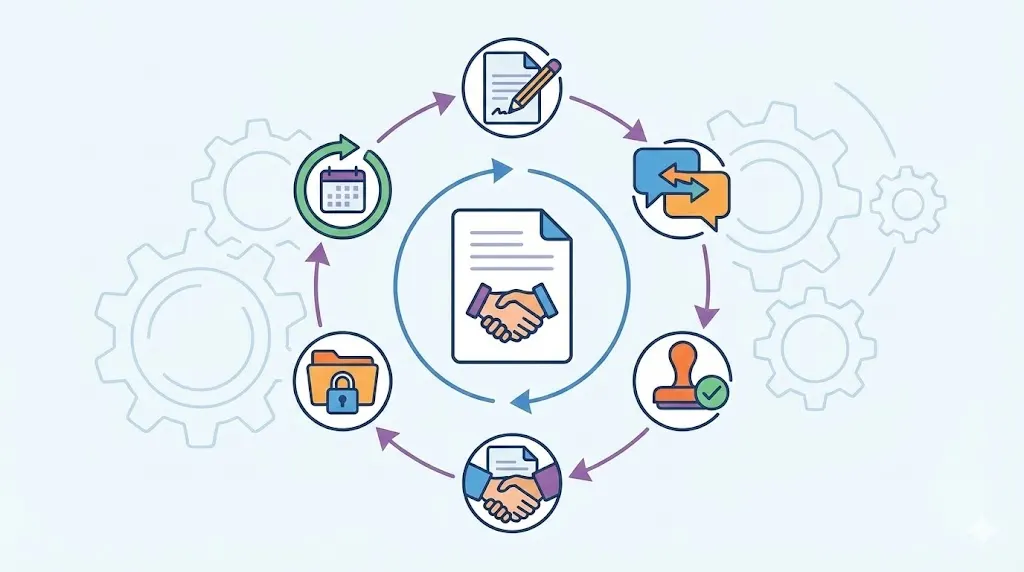
A useful control sequence is contract discovery, data capture, owner assignment, deadline setup, review, and ongoing monitoring.
This approach reduces reliance on memory. It also makes contract tracking for small businesses easier to teach and repeat.
Related articles: Contract Handover: From Signature to Operational Control
A Sustainable Review Process for Small Business Contracts
A one-time cleanup will not solve the problem alone. Contracts change, people move roles, and new agreements enter the business. Small teams need a review rhythm that fits their workload.
Prioritize agreements by risk and value
Begin with high-value contracts and customer-critical agreements. Review regulated, auto-renewing, penalty-bearing, and service-dependent contracts next.
This order gives the business faster protection. It also avoids spending weeks on low-risk files while major exposures remain hidden.
Risk can depend on more than contract value. A small supplier may support a vital process. A modest customer agreement may affect a key reference account.
Track obligations as well as dates
Dates are only one part of contract dashboard and management. Teams also need to track milestones, service levels, insurance, reports, notice periods, payment terms, and renewal conditions.
An obligation should show its due date, owner, evidence, and status. It should also show what happens if the duty remains incomplete.
For example, a supplier may need to provide a monthly report. Operations owns the check, finance reviews related charges, and leadership receives an alert when results fall short.
Schedule recurring contract reviews
Monthly reviews suit active, fast-changing agreements. Quarterly reviews may suit stable supplier or lease contracts.
The review should confirm owners, upcoming dates, open duties, performance issues, and business changes. It should also identify contracts that need amendment or replacement.
Measure process improvement over time
Useful measures include renewal capture, payment delays, unresolved duties, approval time, and contract retrieval speed. These measures show whether the process improves.
A recurring review agenda can cover upcoming deadlines, open obligations, financial changes, performance issues, and required amendments.
The goal is not more administration. The goal is earlier action, fewer surprises, and better commercial choices.
Related articles: Wet Signatures: What Businesses Need to Understand in 2026
Why Contract Management Software Matters
Contract management software gives small businesses one searchable source of truth. It can hold agreements, amendments, owners, obligations, approvals, and dates in one controlled workspace.
The value goes beyond storage. Structured data supports alerts, reporting, permissions, and audit trails. These controls help teams act before a contract issue becomes a financial or operational problem.
Volody CLM Software supports this work with AI Contract Summaries, automated reminders, and a Central Contract Repository. Its summaries highlight obligations, renewal dates, and key risks. The repository supports secure storage, OCR, and full-text search.
For example, a manager can find a supplier agreement, review its renewal date, and check open duties from one record. Automated reminders can then notify the owner before action becomes urgent.
Central records: Store agreements, amendments, metadata, owners, and key dates together.
Clear alerts: Remind teams about renewals, obligations, approvals, and notice windows.
Faster search: Find clauses, parties, terms, and documents without inbox searches.
Better oversight: Use reports and permissions to support review and accountability.
Want to see how contract management software can simplify your legal workflows? Check out Volody's CLM Software.
FAQ
What contract management challenges do small businesses face?
Small businesses often face scattered records, unclear ownership, missed dates, and incomplete contract files. Limited staff may manage agreements alongside sales, finance, and operations work. These gaps can cause late payments, missed duties, unwanted renewals, compliance issues, and customer disputes. A clear register and defined owners help reduce these contract management risks.
Can small businesses benefit from contract management software?
Yes, small businesses can benefit from contract management software. Central records make terms easier to find, while automated reminders support renewals and obligations. Ownership controls and reports reduce manual follow-up work. The right system can prevent missed actions without requiring a large legal department or a complex process.
What is contract management software?
Contract management software helps teams store, organize, search, approve, monitor, and report on agreements. It differs from simple file storage because it uses structured metadata, alerts, workflows, permissions, and audit trails. These features connect documents with owners, dates, duties, and actions. Teams can then manage contracts throughout their active life.
Who should own contract tracking in a small business?
Responsibility can be shared between a business leader, an administrative coordinator, and department owners. Each contract still needs one accountable person for dates, duties, and updates. The administrative owner can maintain records and reminders. Escalation paths should then involve finance, operations, or leadership when action remains incomplete.
Can spreadsheets replace contract tracking software?
A spreadsheet may suit a small contract set with stable terms and limited users. Dedicated software offers stronger search, alerts, version control, permissions, audit history, and workflow support. Growing contract volume can make spreadsheets harder to maintain. Higher risk, more users, or frequent renewals usually support a software choice.
Take control of your contract portfolio by consolidating agreements, assigning accountable owners, and implementing automated reminders and reviews. Adopt a reliable tracking process now to reduce exposure, protect revenue, and make stronger commercial decisions.
About the Company

Volody AI CLM is an Agentic AI-powered Contract Lifecycle Management platform designed to eliminate manual contracting tasks, automate complex workflows, and deliver actionable insights. As a one-stop shop for all contract activities, it covers drafting, collaboration, negotiation, approvals, e-signature, compliance tracking, and renewals. Built with enterprise-grade security and no-code configuration, it meets the needs of the most complex global organizations. Volody AI CLM also includes AI-driven contract review and risk analysis, helping teams detect issues early and optimize terms. Trusted by Fortune 500 companies, high-growth startups, and government entities, it transforms contracts into strategic, data-driven business assets.





" height="216.72211px" id="FYO0bO80Y" transform="translate(3 6.105)" width="206.073px"/><path d="M 108.174 222 C 88.432 222 70.303 217.239 53.785 207.717 C 37.267 198.196 24.173 185.052 14.504 168.285 C 4.835 151.312 0 132.165 0 110.845 C 0 89.731 4.835 70.792 14.504 54.025 C 24.173 37.052 37.267 23.804 53.785 14.282 C 70.303 4.761 88.432 0 108.174 0 C 128.116 0 146.246 4.761 162.562 14.282 C 179.08 23.804 192.073 37.052 201.541 54.025 C 211.21 70.792 216.044 89.731 216.044 110.845 C 216.044 132.165 211.21 151.312 201.541 168.285 C 192.073 185.052 179.08 198.196 162.562 207.717 C 146.044 217.239 127.915 222 108.174 222 Z M 108.174 183.189 C 120.864 183.189 132.044 180.291 141.713 174.495 C 151.382 168.492 158.936 160.006 164.375 149.035 C 169.814 138.064 172.533 125.334 172.533 110.845 C 172.533 96.355 169.814 83.729 164.375 72.965 C 158.936 61.994 151.382 53.611 141.713 47.815 C 132.044 42.02 120.864 39.122 108.174 39.122 C 95.483 39.122 84.202 42.02 74.332 47.815 C 64.663 53.611 57.109 61.994 51.67 72.965 C 46.231 83.729 43.511 96.355 43.511 110.845 C 43.511 125.334 46.231 138.064 51.67 149.035 C 57.109 160.006 64.663 168.492 74.332 174.495 C 84.202 180.291 95.483 183.189 108.174 183.189 Z" fill="rgba(255, 255, 255, 0.12)" height="222px" id="aa1McFcE9" transform="translate(227.183 3)" width="216.04399999999998px"/><path d="M 42.302 182.257 L 111.799 182.257 L 111.799 216.722 L 0 216.722 L 0 0 L 42.302 0 Z" fill="rgba(255, 255, 255, 0.12)" height="216.72211px" id="yRq4AnrsX" transform="translate(477.721 6.105)" width="111.79899999999998px"/><path d="M 108.174 222 C 88.432 222 70.303 217.239 53.785 207.717 C 37.267 198.196 24.173 185.052 14.504 168.285 C 4.835 151.312 0 132.165 0 110.845 C 0 89.731 4.835 70.792 14.504 54.025 C 24.173 37.052 37.267 23.804 53.785 14.282 C 70.303 4.761 88.432 0 108.174 0 C 128.116 0 146.246 4.761 162.562 14.282 C 179.08 23.804 192.073 37.052 201.541 54.025 C 211.21 70.792 216.045 89.731 216.045 110.845 C 216.045 132.165 211.21 151.312 201.541 168.285 C 192.073 185.052 179.08 198.196 162.562 207.717 C 146.044 217.239 127.915 222 108.174 222 Z M 108.174 183.189 C 120.864 183.189 132.044 180.291 141.713 174.495 C 151.382 168.492 158.936 160.006 164.375 149.035 C 169.814 138.064 172.534 125.334 172.534 110.845 C 172.534 96.355 169.814 83.729 164.375 72.965 C 158.936 61.994 151.382 53.611 141.713 47.815 C 132.044 42.02 120.864 39.122 108.174 39.122 C 95.483 39.122 84.202 42.02 74.332 47.815 C 64.663 53.611 57.108 61.994 51.67 72.965 C 46.231 83.729 43.511 96.355 43.511 110.845 C 43.511 125.334 46.231 138.064 51.67 149.035 C 57.108 160.006 64.663 168.492 74.332 174.495 C 84.202 180.291 95.483 183.189 108.174 183.189 Z" fill="rgba(255, 255, 255, 0.12)" height="222px" id="mo8HQspQ0" transform="translate(609.155 3)" width="216.04500000000007px"/><path d="M 73.727 0 C 95.885 0 115.324 4.45 132.044 13.351 C 148.967 22.252 161.957 34.982 171.027 51.541 C 180.287 67.894 184.917 86.937 184.917 108.671 C 184.917 130.405 180.287 149.449 171.027 165.801 C 161.957 181.947 148.967 194.47 132.044 203.371 C 115.324 212.271 95.885 216.722 73.727 216.722 L 0 216.722 L 0 0 Z M 72.216 179.773 C 94.374 179.773 111.497 173.564 123.583 161.144 C 135.669 148.724 141.713 131.233 141.713 108.671 C 141.713 86.109 135.669 68.515 123.583 55.888 C 111.497 43.055 94.374 36.638 72.216 36.638 L 42.302 36.638 L 42.302 179.773 Z" fill="rgba(255, 255, 255, 0.12)" height="216.72211px" id="I3iXX5Hi_" transform="translate(859.693 6.105)" width="184.91699999999992px"/><path d="M 185.22 0 L 113.91 141.273 L 113.91 216.722 L 71.61 216.722 L 71.61 141.273 L 0 0 L 47.74 0 L 93.06 99.046 L 138.08 0 Z" fill="rgba(255, 255, 255, 0.12)" height="216.72211px" id="nzHyWC0_d" transform="translate(1061.78 6.105)" width="185.22000000000003px"/></svg>)