

Imagine closing a multi-million dollar deal that requires signatures from multiple parties across different cities. You print the contract, courier it to each signer, wait days for returns, and then scan it back into your system. This is the reality many businesses still face with wet signatures.
Despite the rise of digital alternatives, wet signatures remain a critical part of legal and business processes. This article covers everything you need to know about wet signatures, from their legal standing to when they are still necessary and how modern contract management software fits into the picture.
TL;DR
Wet signatures are handwritten marks made with ink on paper, still legally required in many cases.
Electronic signatures speed up contract execution but differ from wet signatures in form and security.
Digital signatures add encryption and tamper-proof features beyond basic electronic signatures.
Certain documents, industries, and jurisdictions still mandate wet signatures for compliance.
Understanding wet signature requirements helps avoid legal risks and delays in contract workflows.
Contract lifecycle management (CLM) software can bridge the gap between wet and digital signing needs.
What Is a Wet Signature and Why Does It Matter?
A wet signature is the traditional way of signing documents. It means physically signing your name on paper using a pen or other ink-based writing tool. The term "wet" refers to the ink's liquid state as it transfers onto the paper and dries. This method has been the standard for centuries and remains the default in many legal and business contexts.
Think of a wet signature as a physical handshake on paper. It confirms that the signer has reviewed and agreed to the terms in a tangible way. Even in an age dominated by digital tools, this physical act carries a weight of authenticity and formality that many stakeholders still trust.
However, wet signatures come with challenges. They require the signer to be physically present or for the document to be physically circulated. This process slows down transactions, especially when multiple parties are involved or when signers are spread across locations. Printing, mailing, scanning, and storing paper documents add costs and logistical burdens.
Despite these drawbacks, wet signatures remain legally binding and necessary in many contexts. Understanding when and why they are required helps businesses avoid compliance issues and streamline their contract processes.
Related articles: Contract Law: Understanding Legal Agreements
How Do Wet Signatures Compare to Electronic and Digital Signatures?
The terms wet signature, electronic signature, and digital signature often get mixed up, but they are not the same. Knowing the differences helps businesses choose the right signing method for each situation.
What Are Electronic Signatures?
Electronic signatures, or eSignatures, are any electronic marks or processes that indicate agreement to a contract. This can be as simple as typing your name in an email, clicking “I agree” on a website, or using a stylus to sign on a touchscreen.
Electronic signatures offer clear benefits:
Speed: Sign documents instantly from any location with internet access.
Convenience: No need to print, scan, or mail paper documents.
Remote signing: Complete agreements across cities or countries in minutes.
Audit trails: Automatically record who signed, when, and where.
In the United States, electronic signatures are governed by two main laws: the Uniform Electronic Transactions Act (UETA) and the Electronic Signatures in Global and National Commerce Act (E-SIGN). These laws give electronic signatures the same legal weight as wet signatures for most business and government transactions. The key is that the signature shows clear intent to sign.
Related Article: Sale on approval contracts: A comprehensive Guide Copy
What Are Digital Signatures?
Digital signatures are a subset of electronic signatures that use encryption technology to secure the signing process. They rely on Public Key Infrastructure (PKI), which creates a pair of keys: one private (known only to the signer) and one public (used to verify the signature).
When a signer applies a digital signature, their private key encrypts a unique fingerprint of the document. Anyone with the public key can verify the signature’s authenticity and detect if the document was altered after signing. This makes digital signatures highly secure and tamper-evident.
Digital signatures are especially useful for sensitive or high-value transactions where identity verification and document integrity are critical.
Quick Comparison Table
Feature | Wet Signature | Electronic Signature | Digital Signature |
|---|---|---|---|
Physical presence | Required (pen and paper) | Not required (digital only) | Not required (digital only) |
Legal validity | Universal | Most jurisdictions | Most jurisdictions |
Speed of execution | Days to weeks | Minutes | Minutes |
Geographic limits | Yes (physical location) | None | None |
Security level | Basic | Moderate | High (encrypted) |
Manual | Automatic | Automatic + tamper-evident | |
Storage | Physical files | Cloud/digital | Cloud/digital |
Authentication method | Handwriting analysis | Email, SMS, password | PKI digital certificates |
Related articles: Electronic signature Software | Top 7 eSign tools in 2024
When Do You Still Need Wet Signatures in Business?
Despite digital options, some documents and situations still require wet signatures. Knowing these cases helps avoid invalid contracts and compliance penalties.
1. Legal and Financial Documents
Certain documents have long-standing legal requirements for wet signatures. These include:
Estate planning: Wills and trusts often require physical signatures witnessed by attorneys or third parties. This formality helps prevent fraud and ensures the signer’s intent.
Real estate transactions: Many states still require wet signatures for deeds, mortgages, and property transfers. The high value and permanence of these deals justify stricter rules.
Court filings: Some state courts mandate wet signatures on pleadings and orders. Federal courts have mostly embraced electronic filing, but state courts vary.
Family law: Divorce papers, custody agreements, and adoption documents often require wet signatures, especially when they involve children or property division.
2. Jurisdictional Variations
Signature laws differ widely by country and even by state or province within countries. For example:
In the United States, UETA and E-SIGN laws generally support electronic signatures but some states have exceptions for specific documents.
The European Union’s eIDAS regulation defines three levels of electronic signatures: Simple, Advanced, and Qualified. Only Qualified Electronic Signatures (QES) have the same legal weight as wet signatures across all EU countries.
Some countries require notarization or apostille certification for foreign documents, which often demands wet signatures.
Businesses operating internationally must understand local rules to avoid delays or invalid agreements.
3. Industry-Specific Regulations
Certain industries maintain wet signature requirements due to regulatory or risk management reasons:
Healthcare: Patient consent forms and medical records often require physical signatures to comply with privacy and liability laws.
Financial services: Some banking and investment documents require wet signatures to meet regulatory standards.
Government contracts: Many government agencies still insist on wet signatures for permits, licenses, and official filings.
4. Government Agencies and Public Records
Government bodies at federal, state, and local levels often require wet signatures for:
Permit applications (e.g., building permits, environmental approvals)
Tax filings and notarized tax forms
Security clearance applications and background checks
Immigration paperwork and visa applications
These requirements reflect the need for strict identity verification and fraud prevention.
Related articles: Traditional Signature Vs E-Signature: What's the difference?
5 Challenges in Managing Wet Signatures in Modern Business
Wet signatures create several operational challenges for companies, especially those handling large volumes of contracts or working across multiple locations.
1. Time Delays
Physical signatures require printing, mailing, or couriering documents. This process can take days or weeks, especially when multiple signers are involved. Delays slow down business cycles and increase the risk of lost deals.
2. Increased Costs
Paper, ink, postage, and storage add up. Handling physical documents requires office space, filing cabinets, and staff time. These costs rise with the volume of contracts.
3. Risk of Errors and Loss
Paper documents can be lost, damaged, or altered. Tracking who signed and when is manual and prone to mistakes. This creates legal risks and audit challenges.
4. Limited Accessibility
Signers must be physically present or rely on mail. This limits flexibility, especially for remote or international teams. It also complicates urgent or last-minute signings.
5. Compliance and Security Concerns
Handwritten signatures are harder to verify for authenticity. Forgery and fraud risks exist, and proving intent or identity can be difficult. Paper storage raises data privacy and security issues.
Related articles: Contract Drafting Tips: Create Contracts Effortlessly
How Contract Management Software Solves This
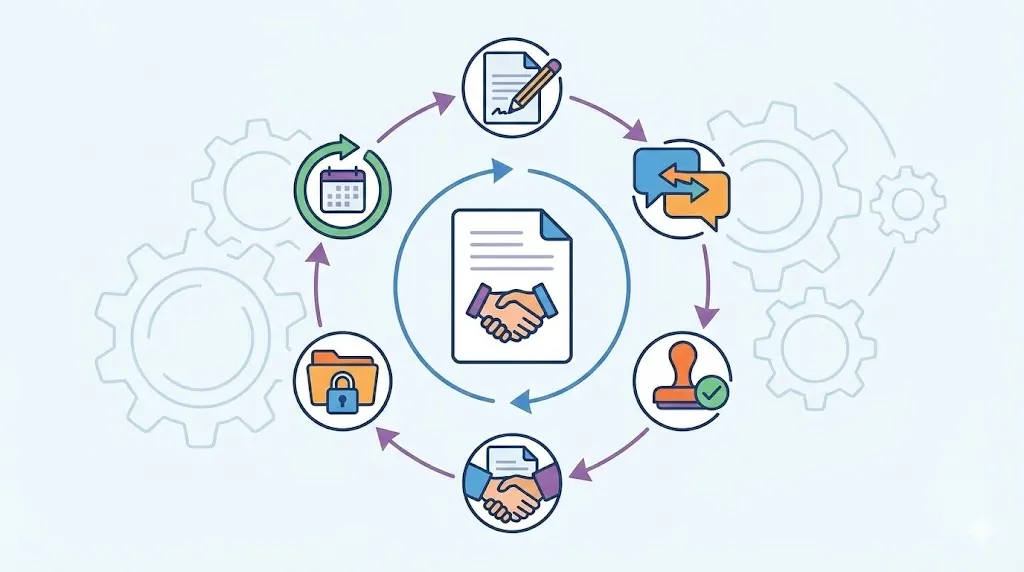
Contract lifecycle management (CLM) software helps businesses manage contracts from creation through execution and storage. It reduces dependence on wet signatures by enabling digital workflows while supporting compliance needs.
CLM platforms provide:
Centralized contract repositories with secure cloud storage
Automated approval workflows and reminders
Native electronic signature capabilities or integrations with e-sign providers
Audit trails that record every action and signature event
Metadata extraction and AI-powered contract review for risk management
Modern CLM solutions allow legal and business teams to work faster and with more control. They reduce errors, speed up contract cycles, and improve compliance.
For example, Volody’s CLM software offers AI contract drafting, review, and clause recommendations to accelerate contract creation. It supports electronic signatures and tracks obligations to prevent missed deadlines. Its advanced search and version control features make contract management efficient and transparent.
Looking for a better way to manage contracts? Discover Volody's CLM Software.
FAQ
What exactly is a wet signature?
A wet signature is a handwritten signature made with ink on a physical document. It requires the signer to physically apply their signature using a pen or similar tool. The term "wet" refers to the ink’s liquid state as it transfers onto paper and dries.
Are wet signatures still legally valid?
Yes, wet signatures remain legally valid and are recognized worldwide. In many cases, they are the default or required method for signing contracts, especially where laws or regulations mandate physical signatures.
Can electronic signatures replace wet signatures?
Electronic signatures can replace wet signatures in most business transactions under laws like UETA and E-SIGN in the US. However, some documents and jurisdictions still require wet signatures for legal or regulatory reasons.
What is the difference between electronic and digital signatures?
Electronic signatures are any digital marks indicating agreement, such as typing a name or clicking “accept.” Digital signatures use encryption and PKI technology to provide a higher level of security and tamper-proof verification.
Which documents still require wet signatures?
Documents like wills, trusts, real estate deeds, court filings, family law agreements, certain government forms, and some industry-specific contracts often require wet signatures due to legal or regulatory mandates.
Are wet signatures required internationally?
Signature requirements vary by country. For example, the EU’s eIDAS regulation recognizes Qualified Electronic Signatures as equivalent to wet signatures, but some countries still require physical signatures for specific documents or notarization.
What risks come with relying on wet signatures?
Wet signatures can cause delays, increase costs, risk document loss or damage, and complicate audit trails. They also pose security risks since verifying authenticity is manual and prone to error.
How do CLM systems help with wet signatures?
CLM software streamlines contract workflows, supports electronic signatures, and centralizes storage. It reduces reliance on wet signatures by enabling faster, more secure digital processes while maintaining compliance.
Is it safe to use electronic or digital signatures instead of wet signatures?
When properly implemented with secure technology and compliance to legal standards, electronic and digital signatures are safe and legally binding. They often provide better security and auditability than wet signatures.
Are there industries that resist digital signatures?
Some industries like healthcare, financial services, and government may have stricter rules or cultural preferences for wet signatures. However, many are gradually adopting digital methods as laws and technology evolve.
About the Company

Volody AI CLM is an Agentic AI-powered Contract Lifecycle Management platform designed to eliminate manual contracting tasks, automate complex workflows, and deliver actionable insights. As a one-stop shop for all contract activities, it covers drafting, collaboration, negotiation, approvals, e-signature, compliance tracking, and renewals. Built with enterprise-grade security and no-code configuration, it meets the needs of the most complex global organizations. Volody AI CLM also includes AI-driven contract review and risk analysis, helping teams detect issues early and optimize terms. Trusted by Fortune 500 companies, high-growth startups, and government entities, it transforms contracts into strategic, data-driven business assets.




" height="216.72211px" id="FYO0bO80Y" transform="translate(3 6.105)" width="206.073px"/><path d="M 108.174 222 C 88.432 222 70.303 217.239 53.785 207.717 C 37.267 198.196 24.173 185.052 14.504 168.285 C 4.835 151.312 0 132.165 0 110.845 C 0 89.731 4.835 70.792 14.504 54.025 C 24.173 37.052 37.267 23.804 53.785 14.282 C 70.303 4.761 88.432 0 108.174 0 C 128.116 0 146.246 4.761 162.562 14.282 C 179.08 23.804 192.073 37.052 201.541 54.025 C 211.21 70.792 216.044 89.731 216.044 110.845 C 216.044 132.165 211.21 151.312 201.541 168.285 C 192.073 185.052 179.08 198.196 162.562 207.717 C 146.044 217.239 127.915 222 108.174 222 Z M 108.174 183.189 C 120.864 183.189 132.044 180.291 141.713 174.495 C 151.382 168.492 158.936 160.006 164.375 149.035 C 169.814 138.064 172.533 125.334 172.533 110.845 C 172.533 96.355 169.814 83.729 164.375 72.965 C 158.936 61.994 151.382 53.611 141.713 47.815 C 132.044 42.02 120.864 39.122 108.174 39.122 C 95.483 39.122 84.202 42.02 74.332 47.815 C 64.663 53.611 57.109 61.994 51.67 72.965 C 46.231 83.729 43.511 96.355 43.511 110.845 C 43.511 125.334 46.231 138.064 51.67 149.035 C 57.109 160.006 64.663 168.492 74.332 174.495 C 84.202 180.291 95.483 183.189 108.174 183.189 Z" fill="rgba(255, 255, 255, 0.12)" height="222px" id="aa1McFcE9" transform="translate(227.183 3)" width="216.04399999999998px"/><path d="M 42.302 182.257 L 111.799 182.257 L 111.799 216.722 L 0 216.722 L 0 0 L 42.302 0 Z" fill="rgba(255, 255, 255, 0.12)" height="216.72211px" id="yRq4AnrsX" transform="translate(477.721 6.105)" width="111.79899999999998px"/><path d="M 108.174 222 C 88.432 222 70.303 217.239 53.785 207.717 C 37.267 198.196 24.173 185.052 14.504 168.285 C 4.835 151.312 0 132.165 0 110.845 C 0 89.731 4.835 70.792 14.504 54.025 C 24.173 37.052 37.267 23.804 53.785 14.282 C 70.303 4.761 88.432 0 108.174 0 C 128.116 0 146.246 4.761 162.562 14.282 C 179.08 23.804 192.073 37.052 201.541 54.025 C 211.21 70.792 216.045 89.731 216.045 110.845 C 216.045 132.165 211.21 151.312 201.541 168.285 C 192.073 185.052 179.08 198.196 162.562 207.717 C 146.044 217.239 127.915 222 108.174 222 Z M 108.174 183.189 C 120.864 183.189 132.044 180.291 141.713 174.495 C 151.382 168.492 158.936 160.006 164.375 149.035 C 169.814 138.064 172.534 125.334 172.534 110.845 C 172.534 96.355 169.814 83.729 164.375 72.965 C 158.936 61.994 151.382 53.611 141.713 47.815 C 132.044 42.02 120.864 39.122 108.174 39.122 C 95.483 39.122 84.202 42.02 74.332 47.815 C 64.663 53.611 57.108 61.994 51.67 72.965 C 46.231 83.729 43.511 96.355 43.511 110.845 C 43.511 125.334 46.231 138.064 51.67 149.035 C 57.108 160.006 64.663 168.492 74.332 174.495 C 84.202 180.291 95.483 183.189 108.174 183.189 Z" fill="rgba(255, 255, 255, 0.12)" height="222px" id="mo8HQspQ0" transform="translate(609.155 3)" width="216.04500000000007px"/><path d="M 73.727 0 C 95.885 0 115.324 4.45 132.044 13.351 C 148.967 22.252 161.957 34.982 171.027 51.541 C 180.287 67.894 184.917 86.937 184.917 108.671 C 184.917 130.405 180.287 149.449 171.027 165.801 C 161.957 181.947 148.967 194.47 132.044 203.371 C 115.324 212.271 95.885 216.722 73.727 216.722 L 0 216.722 L 0 0 Z M 72.216 179.773 C 94.374 179.773 111.497 173.564 123.583 161.144 C 135.669 148.724 141.713 131.233 141.713 108.671 C 141.713 86.109 135.669 68.515 123.583 55.888 C 111.497 43.055 94.374 36.638 72.216 36.638 L 42.302 36.638 L 42.302 179.773 Z" fill="rgba(255, 255, 255, 0.12)" height="216.72211px" id="I3iXX5Hi_" transform="translate(859.693 6.105)" width="184.91699999999992px"/><path d="M 185.22 0 L 113.91 141.273 L 113.91 216.722 L 71.61 216.722 L 71.61 141.273 L 0 0 L 47.74 0 L 93.06 99.046 L 138.08 0 Z" fill="rgba(255, 255, 255, 0.12)" height="216.72211px" id="nzHyWC0_d" transform="translate(1061.78 6.105)" width="185.22000000000003px"/></svg>)