
The integration of artificial intelligence into contract management tools is revolutionizing how legal teams handle contracts in 2026. By automating drafting, review, negotiation, and lifecycle management, AI enhances accuracy, accelerates workflows, and mitigates risks. This transformation empowers organizations to manage contracts more efficiently while maintaining strict compliance and operational control.
TL;DR
AI automates contract drafting, review, and lifecycle tasks to boost speed and accuracy.
Predictive analytics and natural language tools help spot risks and improve negotiations.
AI metadata extraction makes contracts easier to search and analyze.
Challenges include data privacy, fitting AI with old systems, and understanding AI decisions.
Best practices stress human checks, ongoing AI training, and following legal rules.
AI contract management software is crucial for efficient, compliant legal teams in 2026.
AI-Powered Contract Drafting and Review
Advanced Drafting Assistance
AI tools now help create contracts faster and with fewer errors. They suggest clauses based on contract type, past deals, and legal standards. This cuts the time lawyers spend writing first drafts. AI can adapt templates automatically to fit specific deal terms. It also checks for missing or inconsistent clauses, helping to avoid costly mistakes early.
Automated Clause Analysis
AI scans contract text to analyze individual clauses. It flags unusual or risky language that could cause problems. This analysis compares clauses to best practices and company policies. AI can highlight clauses that need review or negotiation. It helps legal teams focus on the most important contract parts, saving review time.
Risk Identification in Drafts
AI identifies risks hidden in contract drafts. For example, it detects vague terms, missing protections, or unfavorable payment conditions. AI tools rate contract risk levels based on company rules and past outcomes. This lets legal teams prioritize high-risk contracts for deeper review. Early risk detection also improves negotiation strategies.
Common AI drafting features transforming contract creation:
Clause suggestion: AI recommends relevant clauses based on contract type and past deals. It adapts wording to match company policies and legal rules. Draft consistency checks: AI spots missing or conflicting clauses to prevent errors. It ensures contract language stays consistent throughout the document. Risk flagging: AI highlights risky terms like vague obligations or unusual payment schedules. It scores contracts to guide legal review priorities. Template adaptation: AI modifies contract templates automatically for different deal types. This speeds up draft creation while maintaining compliance.
AI also learns from previous contract outcomes to improve future drafting. It identifies patterns where certain clauses led to disputes or delays. This feedback loop helps refine clause recommendations and risk assessments over time. In practice, a sales contract draft flagged for ambiguous termination terms can prompt legal teams to clarify language before signing. Additionally, AI tools often integrate with collaboration platforms, allowing multiple stakeholders to review and comment simultaneously. This streamlines communication and accelerates the drafting cycle without losing version control or audit trails. Such features boost accuracy and speed across contract lifecycles.
Related Article: Effectively use AI in Contract Drafting
AI Contract Lifecycle Management Innovations
Lifecycle Stages Enhanced by AI
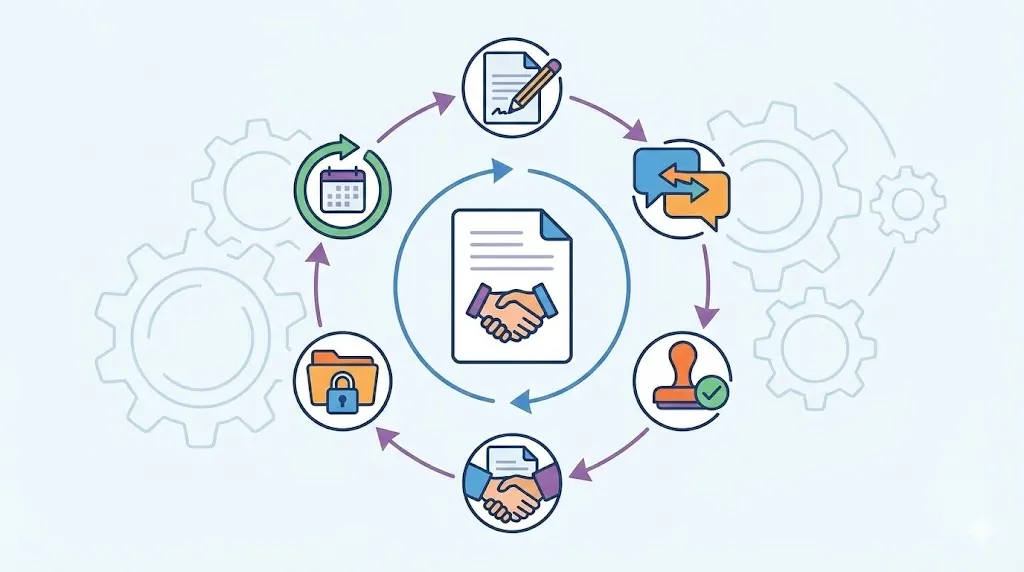
AI improves every contract stage from creation to renewal. During drafting, AI ensures accuracy and compliance. In negotiation, AI predicts outcomes and suggests better terms. After signing, AI tracks key dates like renewals and obligations. It sends alerts to avoid missed deadlines. AI also helps analyze contract performance over time.
Workflow Automation Benefits
AI automates repetitive contract tasks. It routes contracts for approval based on predefined rules. Automated reminders reduce delays in review and signature. Workflow automation cuts administrative overhead and speeds up contract cycles. It also provides audit trails for compliance and accountability.
Integration with Enterprise Systems
Modern AI contract tools connect with other business software like ERP, CRM, and HR systems. This integration centralizes contract data and links contracts to related processes. It allows real-time data sharing and reduces manual entry errors. Integrations help legal teams work seamlessly with sales, finance, and operations.
Key lifecycle management capabilities enabled by AI:
Automated approvals: AI routes contracts through multi-level approval chains with reminders. This speeds up sign-off and prevents bottlenecks. Obligation tracking: AI monitors contract commitments, deadlines, and renewal dates. It alerts teams to upcoming actions. Performance analytics: AI evaluates contract outcomes and flags underperforming agreements. It helps optimize future deals. System integration: AI connects contract data with ERP, CRM, and HR platforms for centralized workflows. This improves data accuracy and access. Audit and compliance: AI logs contract changes and approvals to support audits and regulatory checks.
AI also supports contract risk management by flagging unusual clauses or missing terms. This early warning helps prevent disputes and costly renegotiations. In complex deals, AI can compare contract language against legal playbooks to ensure compliance with company policies. Additionally, AI-powered contract summaries save time by highlighting key points for quick review. These summaries help stakeholders stay informed without reading full documents. By continuously learning from past contracts, AI tools improve their suggestions and risk detection, making contract management smarter and more proactive over time.
Related Article: Generative AI for Contract Management: An Effective Guide
AI Negotiation Tools in 2026
Real-Time Negotiation Support
AI negotiation tools provide instant insights during deal talks. They analyze contract clauses and suggest alternative wording. AI can point out risky terms and recommend safer options. This support helps negotiators make smarter decisions on the spot. It reduces back-and-forth cycles and speeds up deal closure.
Predictive Outcome Analytics
AI predicts negotiation outcomes based on historical data and contract terms. It estimates risks, costs, and likelihood of acceptance. This helps legal teams choose the best negotiation strategies. Predictive analytics also identify which clauses usually cause delays or disputes. Teams use these insights to prepare better counteroffers.
Features of AI negotiation platforms improving deal outcomes:
Clause comparison: AI compares proposed clauses against company standards and past deals. It flags deviations needing attention. Risk scoring: AI assigns risk levels to contract terms to prioritize negotiation focus. This highlights problematic areas early. Alternative suggestions: AI proposes fallback clauses that meet compliance and business goals. Negotiators get ready-to-use options. Outcome prediction: AI forecasts deal success probabilities based on contract language and past results. This guides negotiation tactics.
AI negotiation tools also track real-time changes during talks, updating risk scores and suggestions dynamically. This continuous feedback lets negotiators adjust tactics immediately. Some platforms integrate chat or video, enabling AI to analyze tone and pace, offering communication tips. For example, if a party seems hesitant over a clause, AI might suggest softening language or adding clarifications. These tools can also store negotiation histories to build profiles of counterparties, revealing their common sticking points and preferences. This insight helps teams prepare personalized strategies and anticipate objections before they arise.
Related Article: What Is Contract Negotiation? Strategies & Expert Tips
AI Metadata Extraction for Contracts
Importance of Metadata in Contract Management
Metadata means the key details extracted from contracts, like parties, dates, and payment terms. This data makes contracts searchable and easier to manage. It helps legal and business teams quickly find relevant contracts. Metadata also supports reporting and compliance tracking.
Techniques for Metadata Extraction
AI uses natural language processing to read contracts and identify metadata. It can scan scanned documents using optical character recognition (OCR). Machine learning models improve extraction accuracy by learning contract patterns. AI tools handle diverse contract formats and languages. They tag metadata fields automatically for easy use.
Enhancing Search and Reporting
Extracted metadata powers advanced contract search tools. Users can filter contracts by date, party, or clause type. Metadata also feeds dashboards showing contract statuses, risks, and expirations. This improves decision-making and operational visibility. It reduces time spent manually reviewing contract documents.
Types of metadata AI tools typically extract from contracts:
Parties involved: Names and roles of contract signers and stakeholders. This helps track who is responsible. Key dates: Effective dates, expiry, renewal, and notice periods. These dates trigger alerts and actions. Payment terms: Amounts, schedules, and conditions for payments. This supports financial tracking and forecasting. Obligations: Deliverables, milestones, and performance requirements. Metadata monitors compliance with contract promises. Contract type and status: Identifies contract categories and current lifecycle stage. This aids organization and reporting.
AI metadata extraction also supports risk management by highlighting unusual or missing information. For example, it can flag contracts lacking key approval dates or payment details. This early warning helps legal teams address issues before they escalate. Integration with other business systems allows metadata to update automatically, ensuring teams work with current data. Over time, AI learns from corrections and feedback, boosting accuracy and reducing manual fixes. Companies benefit from faster contract reviews and improved audit readiness, as metadata provides a clear, organized overview of contract portfolios without digging through full documents.
Related Article: Contract Data Extraction: Unlocking Value from PDF Contracts
5 Key Challenges in AI Contract Management
1. Data Privacy and Security Concerns
Handling sensitive contract data raises privacy risks. AI tools must protect contract information from breaches. Organizations need strong encryption and access controls. They must also comply with data protection laws to avoid penalties.
2. Integration with Legacy Systems
Many companies use old software not built for AI. Integrating AI contract tools with these systems can be complex. It requires planning and technical expertise. Poor integration risks data silos and workflow disruptions.
3. Model Transparency and Explainability
AI models often work like "black boxes" without clear reasoning. Legal teams need to understand how AI makes decisions. Lack of transparency can reduce trust and cause errors. Explainable AI helps users verify results and comply with regulations.
4. User Adoption and Trust
Some users resist AI due to fear of job loss or errors. Building trust requires clear communication and training. Users need to see AI as a helpful assistant, not a replacement. Demonstrating AI accuracy and benefits encourages adoption.
5. Regulatory Compliance Issues
AI tools must keep up with changing laws and rules. Non-compliance risks fines and contract disputes. Organizations must update AI models regularly. They need processes to ensure AI outputs meet legal standards.
Data privacy demands strict security and legal compliance to protect contract details.
Legacy system integration requires technical planning to avoid workflow disruptions.
AI transparency is critical to build trust and explain contract decisions clearly.
User adoption improves with training and showing AI’s practical value in daily tasks.
Compliance needs ongoing model updates aligned with current laws and regulations.
Managing data privacy means not only encrypting data but also controlling who can see and edit contracts. Role-based access limits exposure to sensitive details. For legacy systems, APIs (application programming interfaces) can bridge old and new software, easing integration without full replacement. Transparency in AI also involves auditing AI decisions regularly to catch biases or mistakes. Encouraging user adoption can include pilot programs where teams test AI features in real scenarios, building confidence gradually. For compliance, companies may assign dedicated staff to monitor legal changes and coordinate AI updates, ensuring contract outputs stay accurate and lawful.
Related Article: Overcome Top 5 Contract Management Challenges with Ease
Best Practices to Overcome AI Contract Management Challenges
Establishing Human Oversight
Humans must review AI outputs to catch errors and ethical issues. Oversight ensures AI suggestions follow legal and business rules. It balances automation with expert judgment. This approach reduces risks and builds confidence in AI tools.
Continuous Model Training and Validation
AI models need regular updates with new contract data and rules. Continuous training improves accuracy and relevance. Validation checks help detect biases or mistakes early. This keeps AI aligned with evolving legal standards and company needs.
Aligning AI with Legal Compliance
AI tools should embed current laws, policies, and compliance playbooks. Legal teams must update AI configurations as rules change. This alignment prevents regulatory breaches and contract disputes. It also supports audit readiness.
Recommended strategies for successful AI contract management implementation:
Human review: Combine AI automation with expert checks to ensure quality and ethics. Ongoing training: Regularly update AI models with fresh data and feedback. This improves performance. Compliance embedding: Integrate legal rules and policies into AI configurations for consistent adherence. User education: Train teams on AI use cases and benefits to increase acceptance. Technical planning: Prepare for smooth integration with existing IT systems and workflows.
Clear communication channels between AI developers, legal teams, and end users are crucial. Feedback loops allow quick identification and fixing of AI errors or gaps. Transparency about how AI makes decisions builds trust and eases adoption among stakeholders. Organizations should also monitor AI performance metrics regularly to spot trends or issues early. For example, tracking how often AI flags incorrect clauses helps refine models and reduce false positives. These steps create a culture of collaboration that supports continuous improvement and responsible AI use in contract management.
Related Article: Top 10 Contract Management Best Practices in 2024
Why Contract Management Software Matters
AI-powered contract software centralizes all contract activities in one platform. It boosts accuracy by reducing manual errors and automating checks. This speeds up contract creation, review, and approval cycles. Legal teams can focus on strategic work instead of routine tasks. Using contract software is vital to stay competitive and compliant in 2026.
Centralizes contract data and workflows for easy access and management.
Enhances compliance by tracking obligations and flagging risks automatically.
Improves negotiation and renewal efficiency with AI insights and alerts.
Volody's CLM Software offers powerful AI features that solve contract challenges. It includes AI Contract Drafting to create smart first drafts from templates. The AI Contract Review feature flags risky clauses and missing terms. Volody also provides Obligation Management to track deliverables and renewal dates. These tools streamline contract workflows and reduce risk. For example, Volody can automatically highlight renewal deadlines while suggesting safer clause alternatives during drafting.
Discover how Volody's CLM Software can transform your contract management processes. Explore the platform today to enhance efficiency, reduce risk, and ensure compliance across your legal workflows.
FAQ
What is AI-powered contract drafting?
AI-powered contract drafting uses machine learning to help create contracts faster. It suggests clauses and detects errors early. This reduces drafting time and improves consistency. The AI adapts templates to fit specific deals and company rules.
How does AI improve contract review automation?
AI speeds up contract review by scanning for risks and compliance issues. It flags unusual or missing clauses. This makes reviews more accurate and faster than manual checks. AI allows legal teams to focus on complex contract parts.
What benefits does AI bring to contract lifecycle management?
AI automates workflows like approvals and obligation tracking. It sends reminders for deadlines and renewals. AI also provides insights on contract performance and risks. This improves efficiency and reduces missed commitments.
How do AI negotiation tools work in 2026?
AI negotiation tools analyze contract terms in real time. They suggest safer clauses and predict deal outcomes. This helps negotiators reach better agreements faster. AI also highlights risky terms needing attention during talks.
What challenges exist with AI metadata extraction in contracts?
Challenges include ensuring extracted data is accurate and complete. Contracts come in many formats, making extraction complex. Privacy concerns arise when handling sensitive information. Maintaining high-quality metadata requires ongoing tuning.
Why is human oversight important in AI contract management?
Human oversight catches AI errors and ethical issues. It ensures AI outputs follow legal and company rules. Oversight builds trust in AI decisions. Humans balance automation with judgment to reduce risks.
Can AI contract management tools comply with regulations?
Yes, when regularly updated with current laws and policies. AI can flag regulatory risks and ensure contract terms meet standards. Ongoing maintenance is critical to stay compliant. Proper design helps avoid legal issues.
How do organizations overcome integration issues with AI contract tools?
They plan carefully and choose AI platforms compatible with existing systems. Collaboration between IT and legal teams ensures smooth workflows. Testing and phased rollouts reduce disruption. Ongoing support keeps integrations stable.
About the Company
Volody AI CLM is an Agentic AI-powered Contract Lifecycle Management platform designed to eliminate manual contracting tasks, automate complex workflows, and deliver actionable insights. As a one-stop shop for all contract activities, it covers drafting, collaboration, negotiation, approvals, e-signature, compliance tracking, and renewals. Built with enterprise-grade security and no-code configuration, it meets the needs of the most complex global organizations. Volody AI CLM also includes AI-driven contract review and risk analysis, helping teams detect issues early and optimize terms. Trusted by Fortune 500 companies, high-growth startups, and government entities, it transforms contracts into strategic, data-driven business assets.





" height="216.72211px" id="FYO0bO80Y" transform="translate(3 6.105)" width="206.073px"/><path d="M 108.174 222 C 88.432 222 70.303 217.239 53.785 207.717 C 37.267 198.196 24.173 185.052 14.504 168.285 C 4.835 151.312 0 132.165 0 110.845 C 0 89.731 4.835 70.792 14.504 54.025 C 24.173 37.052 37.267 23.804 53.785 14.282 C 70.303 4.761 88.432 0 108.174 0 C 128.116 0 146.246 4.761 162.562 14.282 C 179.08 23.804 192.073 37.052 201.541 54.025 C 211.21 70.792 216.044 89.731 216.044 110.845 C 216.044 132.165 211.21 151.312 201.541 168.285 C 192.073 185.052 179.08 198.196 162.562 207.717 C 146.044 217.239 127.915 222 108.174 222 Z M 108.174 183.189 C 120.864 183.189 132.044 180.291 141.713 174.495 C 151.382 168.492 158.936 160.006 164.375 149.035 C 169.814 138.064 172.533 125.334 172.533 110.845 C 172.533 96.355 169.814 83.729 164.375 72.965 C 158.936 61.994 151.382 53.611 141.713 47.815 C 132.044 42.02 120.864 39.122 108.174 39.122 C 95.483 39.122 84.202 42.02 74.332 47.815 C 64.663 53.611 57.109 61.994 51.67 72.965 C 46.231 83.729 43.511 96.355 43.511 110.845 C 43.511 125.334 46.231 138.064 51.67 149.035 C 57.109 160.006 64.663 168.492 74.332 174.495 C 84.202 180.291 95.483 183.189 108.174 183.189 Z" fill="rgba(255, 255, 255, 0.12)" height="222px" id="aa1McFcE9" transform="translate(227.183 3)" width="216.04399999999998px"/><path d="M 42.302 182.257 L 111.799 182.257 L 111.799 216.722 L 0 216.722 L 0 0 L 42.302 0 Z" fill="rgba(255, 255, 255, 0.12)" height="216.72211px" id="yRq4AnrsX" transform="translate(477.721 6.105)" width="111.79899999999998px"/><path d="M 108.174 222 C 88.432 222 70.303 217.239 53.785 207.717 C 37.267 198.196 24.173 185.052 14.504 168.285 C 4.835 151.312 0 132.165 0 110.845 C 0 89.731 4.835 70.792 14.504 54.025 C 24.173 37.052 37.267 23.804 53.785 14.282 C 70.303 4.761 88.432 0 108.174 0 C 128.116 0 146.246 4.761 162.562 14.282 C 179.08 23.804 192.073 37.052 201.541 54.025 C 211.21 70.792 216.045 89.731 216.045 110.845 C 216.045 132.165 211.21 151.312 201.541 168.285 C 192.073 185.052 179.08 198.196 162.562 207.717 C 146.044 217.239 127.915 222 108.174 222 Z M 108.174 183.189 C 120.864 183.189 132.044 180.291 141.713 174.495 C 151.382 168.492 158.936 160.006 164.375 149.035 C 169.814 138.064 172.534 125.334 172.534 110.845 C 172.534 96.355 169.814 83.729 164.375 72.965 C 158.936 61.994 151.382 53.611 141.713 47.815 C 132.044 42.02 120.864 39.122 108.174 39.122 C 95.483 39.122 84.202 42.02 74.332 47.815 C 64.663 53.611 57.108 61.994 51.67 72.965 C 46.231 83.729 43.511 96.355 43.511 110.845 C 43.511 125.334 46.231 138.064 51.67 149.035 C 57.108 160.006 64.663 168.492 74.332 174.495 C 84.202 180.291 95.483 183.189 108.174 183.189 Z" fill="rgba(255, 255, 255, 0.12)" height="222px" id="mo8HQspQ0" transform="translate(609.155 3)" width="216.04500000000007px"/><path d="M 73.727 0 C 95.885 0 115.324 4.45 132.044 13.351 C 148.967 22.252 161.957 34.982 171.027 51.541 C 180.287 67.894 184.917 86.937 184.917 108.671 C 184.917 130.405 180.287 149.449 171.027 165.801 C 161.957 181.947 148.967 194.47 132.044 203.371 C 115.324 212.271 95.885 216.722 73.727 216.722 L 0 216.722 L 0 0 Z M 72.216 179.773 C 94.374 179.773 111.497 173.564 123.583 161.144 C 135.669 148.724 141.713 131.233 141.713 108.671 C 141.713 86.109 135.669 68.515 123.583 55.888 C 111.497 43.055 94.374 36.638 72.216 36.638 L 42.302 36.638 L 42.302 179.773 Z" fill="rgba(255, 255, 255, 0.12)" height="216.72211px" id="I3iXX5Hi_" transform="translate(859.693 6.105)" width="184.91699999999992px"/><path d="M 185.22 0 L 113.91 141.273 L 113.91 216.722 L 71.61 216.722 L 71.61 141.273 L 0 0 L 47.74 0 L 93.06 99.046 L 138.08 0 Z" fill="rgba(255, 255, 255, 0.12)" height="216.72211px" id="nzHyWC0_d" transform="translate(1061.78 6.105)" width="185.22000000000003px"/></svg>)