

Contracts sit at the heart of business operations. Yet, legal and finance teams often struggle to work together efficiently on them. Imagine two skilled pilots flying the same plane but using different instruments and no shared flight plan. The result? Turbulence, delays, and missed destinations. This disconnect can stall deals, cause costly errors, and strain internal relationships. Understanding why this happens and how to fix it can transform contract management into a smooth, reliable process.
TL;DR
Legal and finance teams depend on contracts but often use separate tools and processes, causing delays and confusion.
Approval delays happen when no clear handoff or communication exists between teams.
Multiple contract versions lead to errors and lost changes, hurting deal accuracy.
Tracking obligations like renewals and payments is difficult without a shared system.
Clear role definitions and documented workflows reduce friction and improve accountability.
Contract lifecycle management (CLM) software centralizes workflows, boosts visibility, and speeds approvals.
Why Do Legal and Finance Struggle to Manage Contracts Together?
Legal and finance teams share responsibility for contracts but rarely share a system or process. This gap creates several common challenges.
Separate Systems and Lack of Visibility
Finance teams often track contracts using spreadsheets or financial software. Legal teams store contracts in shared drives or document management systems. Neither side sees the full picture. This siloed approach means finance may not know when legal has updated contract terms. Legal may not see finance’s budget approvals or payment schedules.
Without shared visibility, teams work in isolation. This causes misunderstandings and missed deadlines. For example, finance might approve a budget based on an outdated contract version. Legal might negotiate terms without knowing finance’s constraints.
Approval Delays and Missed Requests
Contract approvals usually require input from both teams. But many organizations lack a formal handoff or notification process. Sometimes, approval requests happen informally via chat apps or email. Other times, they are assumed but never communicated.
This leads to stalled deals. Commercial teams wait for approvals that never come. Legal and finance wonder if the other has reviewed the contract. These delays increase frustration and slow revenue recognition.
Version Confusion and Lost Changes
Contracts often move through multiple drafts. Teams email documents back and forth, saving files with names like “Contract_v3_FINAL_FINAL.” It becomes impossible to know which draft is current.
Finance might review payment terms in draft three while legal works on draft five. Redlines and comments get lost or ignored. This confusion can cause costly mistakes, such as signing contracts with outdated or incorrect terms.
Difficulty Tracking Obligations
Contracts contain key dates and obligations that finance and legal must monitor. Finance tracks renewal deadlines, payment schedules, and termination windows to manage cash flow. Legal watches compliance requirements, indemnities, and liabilities.
When contracts live in inboxes or generic folders, finding this information takes hours. Teams either spend too much time searching or fail to track obligations. This leads to missed renewals, penalties, or compliance risks.
No Clear Ownership or Accountability
Many stakeholders touch contracts. Without clear ownership, no one manages the full contract lifecycle. When issues arise, legal and finance blame each other. This lack of accountability creates tension and risks business exposure.
Real-World Example
Imagine a company negotiating a vendor contract. Legal drafts the agreement and sends it to finance for budget approval. Finance never receives a formal request and assumes legal is still working on terms. Meanwhile, the vendor waits for a signed contract. Weeks pass, and the deal stalls. This scenario repeats across many contracts, causing lost revenue and strained internal relationships.
Related Article: Mastering Contract Version Control That Actually Works
What Does Effective Legal-Finance Collaboration Look Like?
Good collaboration does not mean eliminating all review or negotiation. Some friction is natural and healthy. The goal is to remove unnecessary delays, duplicate work, and surprises.
Define Clear Roles and Responsibilities
Both teams must agree on who does what at each contract stage. Legal typically owns template creation, risk review, and final approval of terms. Finance handles budget sign-off, payment terms, and renewal tracking.
Each team should know when and how the other gets involved. Document these roles in a shared workflow that survives staff changes. This clarity prevents contracts from falling between the cracks.
Establish Formal Handoffs and Communication
Create structured handoff points between legal and finance. For example, legal completes contract drafting and formally requests finance approval. Finance acknowledges receipt and provides feedback within a set timeframe.
Use shared tools or platforms to track requests and approvals. Avoid informal chats or email threads for critical steps. This reduces confusion and speeds decision-making.
Use a Centralized Contract Repository
Store all contracts in a single, secure system accessible to legal, finance, and other stakeholders. This repository should track versions, comments, approvals, and metadata like renewal dates.
Having one source of truth prevents version conflicts and lost information. Teams can quickly find contracts and key details without hunting through emails or shared drives.
Track Obligations Proactively
Set up automated reminders for contract milestones like renewals, payment due dates, and compliance checks. Both legal and finance should have visibility into these alerts.
Proactive obligation management reduces the risk of missed deadlines and penalties. It also supports better cash flow forecasting and compliance.
Encourage Open Dialogue and Shared Understanding
Legal and finance teams should communicate regularly about dependencies and priorities. Understanding each other’s constraints builds trust and smoother workflows.
For example, finance can explain budget cycles that affect contract timing. Legal can clarify which contract terms are negotiable and which are fixed.
Example Workflow for Collaboration
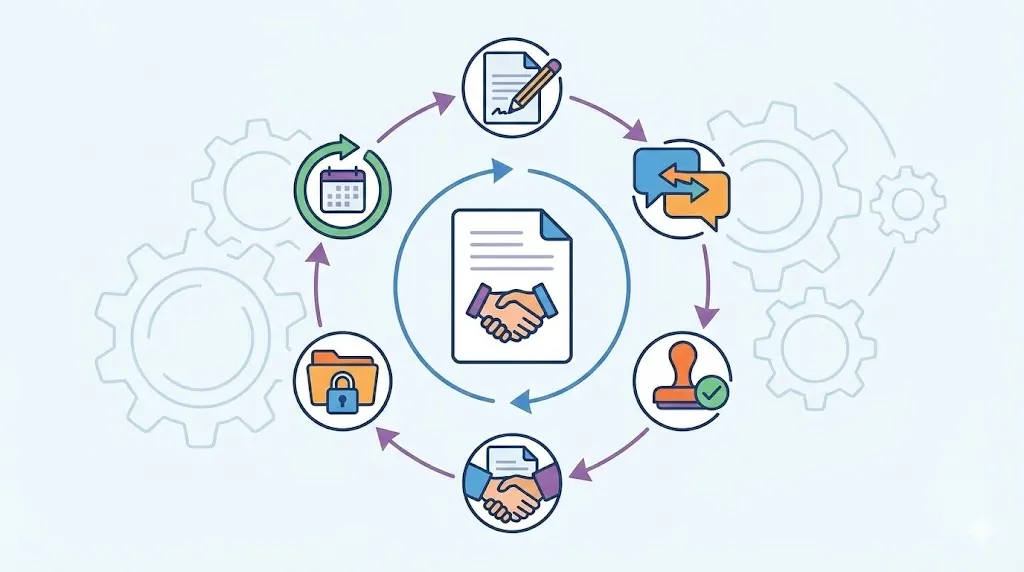
Legal drafts contract using approved templates.
Legal sends contract to finance via shared system with formal approval request.
Finance reviews payment terms and budget, then approves or requests changes.
Legal incorporates finance feedback and finalizes contract.
Contract is stored in central repository with version control.
Automated alerts notify teams of renewal and payment deadlines.
Related Article: CLM 101: Mastering the Contract Lifecycle
5 Challenges in Maintaining Smooth Legal-Finance Contract Collaboration
Even with good intentions, organizations face hurdles in aligning legal and finance on contracts.
1. Resistance to Change
Teams often cling to familiar tools like email and spreadsheets. Moving to shared platforms requires training and mindset shifts. Without leadership support, adoption stalls.
2. Complex Contract Types
Some contracts involve multiple departments beyond legal and finance, such as procurement or sales. Coordinating all stakeholders complicates workflows.
3. Lack of Standardized Templates
Without approved templates, legal drafts vary widely. Finance struggles to review inconsistent terms. Standardization speeds review and reduces errors.
4. Incomplete Data Capture
Contracts often lack structured data fields for key terms. This makes tracking obligations and reporting difficult. Manual extraction wastes time.
5. Poor Integration with Other Systems
Contract data disconnected from ERP, CRM, and accounting systems limits finance’s ability to forecast and manage spend. Integration is critical for efficiency.
How Can Legal Teams Enable Finance to Work More Efficiently?
Legal teams that act as strategic partners help finance operate smoothly. They do more than review contracts on request. They design processes and tools that support finance’s needs.
1. Create Self-Serve Resources
Develop pre-approved contract templates for common vendor and supplier agreements. Provide clear guidelines on negotiable terms and fixed clauses.
Offer cheat sheets or FAQs that answer routine contract questions. This empowers finance to handle standard contracts independently, freeing legal for complex issues.
2. Build Clear Communication Channels
Encourage regular check-ins and shared workstreams. Use collaborative platforms where legal and finance can comment and track contract progress.
Understanding each team’s dependencies helps avoid bottlenecks. For example, finance knows when legal expects budget sign-off.
3. Provide Training and Support
Legal can train finance teams on contract basics, risk areas, and approval processes. This builds confidence and reduces errors.
4. Use Data to Drive Improvements
Track contract cycle times, approval delays, and common negotiation points. Use this data to refine templates and workflows.
5. Align on Priorities
Legal and finance should jointly set goals for contract turnaround times, risk tolerance, and compliance standards. Shared objectives foster collaboration.
Related Article: Legal Team Structure: Understanding Roles and Titles
Why Contract Management Software Matters
Contract lifecycle management (CLM) software replaces disconnected tools with a single platform. It supports collaboration, visibility, and control across legal and finance teams.
Centralized Contract Repository
CLM stores contracts securely with version control, metadata tagging, and full-text search. Teams find the latest contract instantly.
Automated Workflows and Approvals
Configure multi-step approval processes with automated routing, reminders, and escalations. This speeds contract review and reduces delays.
Obligation Tracking and Alerts
Track key dates like renewals, payments, and compliance deadlines. Automated notifications keep teams proactive.
Integration with Enterprise Systems
CLM connects with ERP, CRM, and accounting tools. Finance gains real-time visibility into contract data for budgeting and forecasting.
AI-Powered Contract Analysis
Some CLM platforms use AI to review contracts for risky clauses, extract metadata, and summarize key terms. This reduces manual work and errors.
Example Benefits
Legal controls templates and approvals, ensuring compliance.
Finance accesses contract data for budgeting without manual requests.
Both teams collaborate in one system, reducing email and version confusion.
Automated alerts prevent missed obligations and penalties.
How Contract Management Software Solves This
Contract management software creates a shared workspace for legal and finance teams. It centralizes contracts, automates approvals, and tracks obligations. This eliminates email chains and spreadsheet chaos.
Volody’s CLM software offers AI-powered drafting and review, a central repository, and automated workflows. Its approval routing and obligation management features keep contracts moving smoothly. Integration with ERP and CRM systems gives finance real-time contract insights.
See how Volody's CLM Software helps your team move contracts forward with confidence.
FAQ
Why do legal and finance teams often have trouble collaborating on contracts?
Legal and finance teams usually use different tools and processes to manage contracts. Legal focuses on risk and compliance, while finance tracks budgets and payments. Without a shared system or clear handoffs, communication breaks down. This causes delays, version confusion, and missed obligations.
What are the main risks of poor contract collaboration between legal and finance?
Delays in approvals can stall deals and revenue recognition. Version confusion can lead to signing incorrect terms. Missed obligations like renewals or payments cause financial penalties or compliance issues. Lack of accountability increases the chance of errors and internal conflict.
How can teams avoid version confusion in contract management?
Use a centralized contract repository with version control. Avoid emailing documents back and forth. Track changes and comments within one platform. This ensures everyone works on the latest draft and all feedback is visible.
What role should legal play in enabling finance to handle contracts?
Legal should provide pre-approved templates, clear guidelines, and self-serve resources. They should train finance on contract basics and maintain open communication. Legal acts as a strategic partner, designing processes that reduce finance’s reliance on lawyers for routine matters.
How does contract management software improve collaboration?
It centralizes contracts and workflows in one system. Automated approval routing reduces delays. Obligation tracking prevents missed deadlines. Integration with other business systems gives finance real-time contract data. AI features speed review and risk detection.
What features should a CLM system have to support legal and finance collaboration?
Key features include a secure contract repository, version control, approval workflow automation, obligation management, and integration with ERP/CRM. AI-powered contract review and metadata extraction add efficiency. User-friendly interfaces encourage adoption.
How can organizations encourage adoption of new contract processes?
Leadership must support change and communicate benefits clearly. Provide training and easy-to-use tools. Show how new processes save time and reduce errors. Start with pilot teams and gather feedback to improve workflows.
What are common contract obligations finance needs to track?
Finance tracks renewal dates, payment schedules, termination windows, and penalties. These affect cash flow and budgeting. Missing these dates can cause financial losses or service interruptions.
Can contract management software integrate with financial systems?
Yes. Many CLM platforms connect with ERP, accounting, and CRM systems. This integration provides finance with up-to-date contract data for forecasting and spend management.
How do automated alerts help contract management?
Alerts notify teams of upcoming renewals, payment due dates, and approval deadlines. This proactive approach prevents missed obligations and keeps contracts on track.
About the Company

Volody AI CLM is an Agentic AI-powered Contract Lifecycle Management platform designed to eliminate manual contracting tasks, automate complex workflows, and deliver actionable insights. As a one-stop shop for all contract activities, it covers drafting, collaboration, negotiation, approvals, e-signature, compliance tracking, and renewals. Built with enterprise-grade security and no-code configuration, it meets the needs of the most complex global organizations. Volody AI CLM also includes AI-driven contract review and risk analysis, helping teams detect issues early and optimize terms. Trusted by Fortune 500 companies, high-growth startups, and government entities, it transforms contracts into strategic, data-driven business assets.





" height="216.72211px" id="FYO0bO80Y" transform="translate(3 6.105)" width="206.073px"/><path d="M 108.174 222 C 88.432 222 70.303 217.239 53.785 207.717 C 37.267 198.196 24.173 185.052 14.504 168.285 C 4.835 151.312 0 132.165 0 110.845 C 0 89.731 4.835 70.792 14.504 54.025 C 24.173 37.052 37.267 23.804 53.785 14.282 C 70.303 4.761 88.432 0 108.174 0 C 128.116 0 146.246 4.761 162.562 14.282 C 179.08 23.804 192.073 37.052 201.541 54.025 C 211.21 70.792 216.044 89.731 216.044 110.845 C 216.044 132.165 211.21 151.312 201.541 168.285 C 192.073 185.052 179.08 198.196 162.562 207.717 C 146.044 217.239 127.915 222 108.174 222 Z M 108.174 183.189 C 120.864 183.189 132.044 180.291 141.713 174.495 C 151.382 168.492 158.936 160.006 164.375 149.035 C 169.814 138.064 172.533 125.334 172.533 110.845 C 172.533 96.355 169.814 83.729 164.375 72.965 C 158.936 61.994 151.382 53.611 141.713 47.815 C 132.044 42.02 120.864 39.122 108.174 39.122 C 95.483 39.122 84.202 42.02 74.332 47.815 C 64.663 53.611 57.109 61.994 51.67 72.965 C 46.231 83.729 43.511 96.355 43.511 110.845 C 43.511 125.334 46.231 138.064 51.67 149.035 C 57.109 160.006 64.663 168.492 74.332 174.495 C 84.202 180.291 95.483 183.189 108.174 183.189 Z" fill="rgba(255, 255, 255, 0.12)" height="222px" id="aa1McFcE9" transform="translate(227.183 3)" width="216.04399999999998px"/><path d="M 42.302 182.257 L 111.799 182.257 L 111.799 216.722 L 0 216.722 L 0 0 L 42.302 0 Z" fill="rgba(255, 255, 255, 0.12)" height="216.72211px" id="yRq4AnrsX" transform="translate(477.721 6.105)" width="111.79899999999998px"/><path d="M 108.174 222 C 88.432 222 70.303 217.239 53.785 207.717 C 37.267 198.196 24.173 185.052 14.504 168.285 C 4.835 151.312 0 132.165 0 110.845 C 0 89.731 4.835 70.792 14.504 54.025 C 24.173 37.052 37.267 23.804 53.785 14.282 C 70.303 4.761 88.432 0 108.174 0 C 128.116 0 146.246 4.761 162.562 14.282 C 179.08 23.804 192.073 37.052 201.541 54.025 C 211.21 70.792 216.045 89.731 216.045 110.845 C 216.045 132.165 211.21 151.312 201.541 168.285 C 192.073 185.052 179.08 198.196 162.562 207.717 C 146.044 217.239 127.915 222 108.174 222 Z M 108.174 183.189 C 120.864 183.189 132.044 180.291 141.713 174.495 C 151.382 168.492 158.936 160.006 164.375 149.035 C 169.814 138.064 172.534 125.334 172.534 110.845 C 172.534 96.355 169.814 83.729 164.375 72.965 C 158.936 61.994 151.382 53.611 141.713 47.815 C 132.044 42.02 120.864 39.122 108.174 39.122 C 95.483 39.122 84.202 42.02 74.332 47.815 C 64.663 53.611 57.108 61.994 51.67 72.965 C 46.231 83.729 43.511 96.355 43.511 110.845 C 43.511 125.334 46.231 138.064 51.67 149.035 C 57.108 160.006 64.663 168.492 74.332 174.495 C 84.202 180.291 95.483 183.189 108.174 183.189 Z" fill="rgba(255, 255, 255, 0.12)" height="222px" id="mo8HQspQ0" transform="translate(609.155 3)" width="216.04500000000007px"/><path d="M 73.727 0 C 95.885 0 115.324 4.45 132.044 13.351 C 148.967 22.252 161.957 34.982 171.027 51.541 C 180.287 67.894 184.917 86.937 184.917 108.671 C 184.917 130.405 180.287 149.449 171.027 165.801 C 161.957 181.947 148.967 194.47 132.044 203.371 C 115.324 212.271 95.885 216.722 73.727 216.722 L 0 216.722 L 0 0 Z M 72.216 179.773 C 94.374 179.773 111.497 173.564 123.583 161.144 C 135.669 148.724 141.713 131.233 141.713 108.671 C 141.713 86.109 135.669 68.515 123.583 55.888 C 111.497 43.055 94.374 36.638 72.216 36.638 L 42.302 36.638 L 42.302 179.773 Z" fill="rgba(255, 255, 255, 0.12)" height="216.72211px" id="I3iXX5Hi_" transform="translate(859.693 6.105)" width="184.91699999999992px"/><path d="M 185.22 0 L 113.91 141.273 L 113.91 216.722 L 71.61 216.722 L 71.61 141.273 L 0 0 L 47.74 0 L 93.06 99.046 L 138.08 0 Z" fill="rgba(255, 255, 255, 0.12)" height="216.72211px" id="nzHyWC0_d" transform="translate(1061.78 6.105)" width="185.22000000000003px"/></svg>)