

Contract management often feels like juggling too many balls at once. Teams struggle with scattered files, missed deadlines, and unclear contract terms. The CLM 101 Archives offer a clear path out of this chaos. Whether you are in legal, sales, procurement, or HR, understanding contract lifecycle management (CLM) basics can transform how your organization handles contracts. This guide breaks down the essentials and shows how to move from spreadsheets and shared drives to a streamlined, automated contract process.
TL;DR
Managing the contract lifecycle from initial drafting through renewal or expiration mitigates risk while enhancing operational efficiency.
Additionally, errors, missed deadlines, and revenue leakage commonly stem from manual contract handling; deploying CLM software provides a robust solution to these issues.
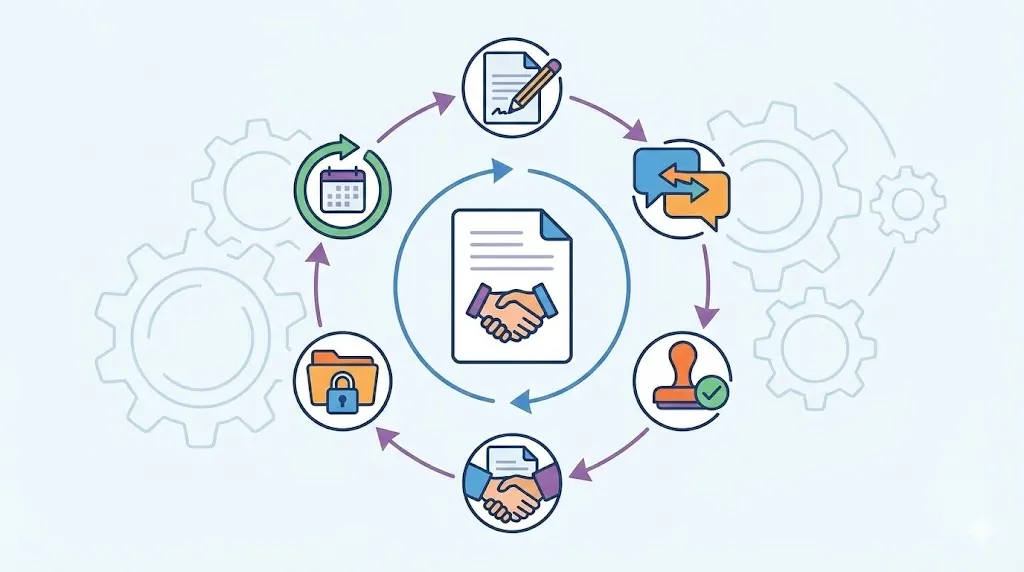
The lifecycle encompasses various stages such as drafting, negotiating terms, securing approvals, executing agreements, archiving documentation, and tracking compliance with contractual obligations.
By standardizing workflows, CLM empowers legal, sales, procurement, and HR teams to execute contract-related tasks with increased consistency and accuracy.
Industries such as healthcare and telecommunications leverage CLM adoption to achieve stronger compliance frameworks alongside improved operational performance.
Contemporary CLM platforms integrate workflow automation, leverage AI-driven contract analysis, and consolidate contract repositories to enhance oversight and control.
What Is Contract Lifecycle Management and Why Does It Matter?
CLM encompasses the comprehensive management of contracts from initiation through completion. This includes drafting, negotiating, approving, signing, storing, and tracking contracts. The goal is to make contracts easier to create, faster to approve, and simpler to manage after signing.
Without CLM, many companies rely on spreadsheets, email chains, or shared drives. These methods cause delays, lost contracts, and compliance risks. For example, a sales team might send a contract for approval but never get a response. Or a legal team may miss a renewal deadline, leading to automatic contract extensions that hurt the company financially.
CLM provides a structured way to handle contracts. It reduces manual work and errors by automating routine tasks. It also improves visibility so teams can track contract status and deadlines at a glance. According to a recent Gartner report, companies using CLM software reduce contract cycle times by up to 50 percent and cut compliance risks significantly.
Related articles: Understanding CLM: Top Lifecycle Management Solutions in 2026
5 Key Stages of the Contract Lifecycle Explained
Understanding the contract lifecycle helps teams identify where problems arise and how to fix them. Here are the five main stages every contract goes through:
1. Contract Creation
This is where contracts start. Teams draft agreements using templates or from scratch. The goal is to ensure contracts are accurate and consistent. Many organizations use approved templates and clause libraries to speed up this step and reduce errors.
Example: A procurement team uses a standard purchase agreement template to create contracts quickly without legal review for every deal.
2. Negotiation
Once the initial draft is ready, the parties engage in collaborative discussions to align on the terms. This phase involves exchanging redlines, comments, and revisions to refine the agreement’s details. Without a centralized system, coordinating these iterative updates can become unwieldy. Employing version control alongside collaboration platforms helps simplify this process while preserving transparency.
Example: Sales and legal teams collaborate on contract terms, tracking changes in real time to avoid confusion over which version is current.
3. Approval
Contracts often require multiple approvals before signing. Moreover, delays frequently occur when the approval process relies on manual steps or lacks clearly assigned responsibilities. Automated workflows direct contracts to the appropriate stakeholders and issue reminders to sustain momentum.
Example: A contract needs sign-off from finance, legal, and the business unit head. Automated routing ensures no one is missed.
4. Execution
At this stage, the contract moves to the signing process. Electronic signatures accelerate execution and minimize reliance on physical paperwork. They also create audit trails that verify when and how contracts were signed.
Example: A vendor contract is signed electronically within hours instead of waiting days for physical signatures.
5. Post-Signature Management
Managing obligations, renewals, and compliance after signing is critical. Teams track deadlines, deliverables, and payment terms to avoid penalties or missed opportunities.
Example: A legal team sets alerts for contract renewals to renegotiate terms before automatic extensions.
Related articles: Mastering the Stages of Contract Lifecycle
Why Manual Contract Management Fails and How CLM Fixes It
Many organizations still manage contracts with spreadsheets, emails, and shared drives. These tools are not designed for contract workflows and cause several problems:
Lost or misplaced contracts: Files get buried in folders or inboxes, making retrieval difficult.
Missed deadlines: Critical renewal dates and obligations often slip through the cracks in the absence of automated alert systems.
Version confusion: Multiple drafts circulating simultaneously introduce inconsistencies that may provoke disputes.
Slow approvals: The manual contract routing process creates bottlenecks, delaying signatures and extending deal closure timelines.
Limited visibility: Real-time insights into contract statuses and risk exposure are often unavailable to teams.
CLM software resolves these challenges by consolidating contracts within a secure, centralized repository accessible to all relevant parties. Automated workflows optimize the management of reminders and approval processes, significantly enhancing deadline compliance. Robust version control mechanisms provide an authoritative single source of truth across all contract drafts. Additionally, advanced analytics identify potentially problematic clauses or missing terms early, facilitating proactive risk management. Together, these features shorten contract lifecycles, reduce errors, and improve compliance outcomes.
Related articles: Legacy Contracts: How to Effectively Migrate to a CLM
How Different Teams Benefit from Contract Lifecycle Management
CLM extends its utility beyond legal teams, catering to the specialized needs of multiple departments within an enterprise.
Legal Teams
Additionally, legal teams leverage CLM to standardize contract language, mitigate risk, and accelerate review cycles. They rely on clause libraries and AI review tools to catch problematic terms. Automated workflows reduce bottlenecks and improve governance.
Sales Teams
By expediting contract drafting processes and refining approval workflows, sales teams can respond to opportunities with greater agility. The platform automates contract requests and approvals, enabling deals to close more rapidly. Furthermore, seamless CRM integration ensures every contract corresponds directly to the evolving sales pipeline.
Procurement Teams
Moreover, procurement oversees vendor contracts and purchase agreements. The system consolidates all supplier agreements into a single repository, facilitating vigilant tracking of renewals and ensuring adherence to negotiated terms. This comprehensive oversight minimizes unauthorized spending and fosters stronger vendor relationships.
Human Resources
HR manages employment contracts, NDAs, and policy agreements through CLM. Automated workflows streamline the process of securing timely approvals and managing renewals. Additionally, monitoring contractual obligations supports HR’s commitment to maintaining compliance with labor regulations.
For further insights, see: Atlanta Contract Management: Top AI CLM Solutions
6 Industries That Gain the Most from CLM
Contract management challenges vary by industry. Additionally, different sectors impose unique demands that CLM software must accommodate effectively.
Healthcare
Compliance with stringent regulatory standards and safeguarding patient privacy are critical aspects of healthcare contracts. CLM systems meticulously track these regulatory mandates while providing secure management of vendor contracts.
Construction
Managing construction contracts requires careful monitoring of project milestones, handling change orders, and coordinating subcontractor activities. CLM solutions deliver real-time visibility into deliverables and critical deadlines to prevent costly project delays.
Government
Agencies in the public sector operate under rigorous regulatory frameworks and obligations for transparency. Moreover, in this context, CLM facilitates comprehensive audit trails, utilization of standardized contract templates, and detailed compliance documentation.
Real Estate
Real estate agreements cover leases, property transactions, and asset management. CLM platforms provide structured management of contract documents and alert stakeholders to upcoming renewals to protect revenue.
Telecom
The telecommunications industry manages an extensive portfolio of service contracts alongside numerous vendor agreements. CLM streamlines approval workflows and maintains ongoing oversight of service-level commitments.
Oil and Gas
This sector faces complex contracts with multiple parties and regulatory oversight. CLM improves risk management and contract visibility.
Related Article: Should You Build or Buy CLM Software in the AI Age?
7 Common Challenges in Contract Management and How to Overcome Them
Contract management is complex. Here are seven challenges teams face and practical ways to address them:
1. Fragmented Contract Storage
Storing contracts in different locations causes confusion. Use a centralized contract repository with secure access to solve this.
2. Lack of Standardization
Inconsistent contract language increases risk. Implement approved templates and clause libraries for uniformity.
3. Manual Approvals
The reliance on manual review processes significantly extends contract cycle times. Introducing automated approval workflows equipped with integrated reminders and escalation protocols can substantially mitigate delays and speed up contract finalization.
4. Poor Visibility
Teams struggle to obtain a comprehensive and timely understanding of contract statuses and pending obligations. Moreover, the use of visual dashboards combined with automated alert mechanisms enables continuous, real-time monitoring of contract metrics.
5. Version Control Issues
Mistakes frequently occur when multiple contract versions circulate without an effective tracking system. Dedicated software that meticulously records every revision and clearly highlights modifications guarantees version integrity and minimizes errors.
6. Missed Deadlines
Critical renewals and compliance-related obligations frequently go unnoticed. Establishing automated alerts for key dates ensures timely attention and action.
7. Compliance Risks
There is a persistent danger that contracts may inadvertently breach internal policies or external regulations. Employing AI-driven analysis tools helps identify and flag potentially non-compliant clauses prior to execution.
Related articles: Top Contract Management Software for Hyderabad
How to Transition from Spreadsheets to a Centralized Contract System
Moving from manual contract management to a CLM system requires planning and change management.
Step 1: Assess Current Processes
Map out how contracts are created, approved, and stored today. Identify pain points and bottlenecks.
Step 2: Define Requirements
List must-have features such as workflow automation, AI review, or e-signatures. Consider integrations with existing systems like CRM or ERP.
Step 3: Clean Up Contract Data
Gather all contracts from various locations. Remove duplicates and organize files for migration.
Step 4: Choose the Right CLM Software
Moreover, evaluate vendors based on features, ease of use, security, and scalability.
Step 5: Train Teams
Provide targeted training sessions for legal, sales, procurement, and other users, emphasizing how the CLM system streamlines their workflows.
Step 6: Roll Out in Phases
Start with a pilot group before expanding company-wide. Collect feedback and adjust processes.
Step 7: Monitor and Improve
Use analytics to track contract cycle times, compliance, and user adoption. Continuously refine workflows.
Related articles: Top Contract Lifecycle Management Software in Maharashtra
Why Contract Metadata and AI Matter in Modern CLM
Contract metadata means key information extracted from contracts such as parties, dates, payment terms, and obligations. Additionally, precise capture of metadata is essential for effective search, comprehensive reporting, and regulatory compliance.
Manual metadata entry is slow and error-prone. AI-powered extraction automates this process, pulling data directly from contract text. This speeds up contract review and migration projects.
AI also helps with contract review by flagging unusual language, missing clauses, or risky terms. It can suggest fallback clauses or summarize contract obligations for quick understanding.
According to a Deloitte study, AI in contract management can reduce review times by 30 to 50 percent and lower legal risks.
Related articles: Volody's AI CLM Transforms contract with Global Conglomerate
How to Build a Contract Management Plan That Works
A contract management plan outlines how your organization handles contracts to ensure consistency and control.
Key Components
Objectives: Establish clear targets that the contract management process aims to fulfill.
Roles and Responsibilities: Define which teams and individuals oversee the entire contract lifecycle, specifying who holds ownership, who must approve contracts, and who conducts in-depth reviews.
Processes: Capture each phase in detail, starting with contract drafting and negotiation, progressing through approval and execution, and extending to ongoing contract administration.
Templates and Clauses: Maintain a centralized library of standardized contract templates and clause options to guarantee uniformity across all agreements.
Technology: Assess and implement CLM software to enhance efficiency by automating contract-related workflows.
Training: Provide comprehensive instruction to relevant personnel on both the contractual policies and the software tools employed.
Monitoring: Implement ongoing evaluations of contract compliance, track key performance indicators, and identify emerging risks.
Related Article: How Contract Audit Trails Strengthen Compliance
Example Plan Outline
Contract Intake: Establish a centralized request portal through which business units can submit their contract requirements.
Drafting: Contracts are prepared by the legal team, utilizing approved templates and catalogs of standard clauses.
Review and Negotiation: Collaborate closely with stakeholders to refine terms and reach mutual agreement.
Approval: Employ automated routing systems that streamline and accelerate the approval process.
Execution: Expedite contract finalization by using electronic signature technologies.
Storage: Contracts are securely archived in a centralized repository to ensure accessibility and protection.
Obligation Tracking: Set up alert systems to notify relevant parties of critical deadlines and deliverable milestones.
Audit and Reporting: Regular audits are conducted to verify adherence, accompanied by comprehensive compliance reporting.
For further details, consult: Contract Management Strategies: Key Dos and Don'ts
How Contract Management Software Solves These Challenges
CLM software centralizes contract data and automates key tasks. Additionally, it also eliminates reliance on manual spreadsheets and email threads by implementing structured workflows. Here is how it helps:
Central Repository: Store all contracts securely with full-text search and metadata tagging.
Workflow Automation: Automatically direct contracts through review and approval stages, complete with reminder notifications.
Version Control: Monitor every modification and maintain a comprehensive audit trail.
AI Review: Analyze contracts to detect clauses that introduce risk, identify missing terms, and flag compliance issues.
Obligation Management: Track deadlines, renewals, and deliverables with alerts.
E-Signatures: Execute contracts quickly and securely online.
Collaboration: Enable teams to comment, redline, and negotiate in one platform.
Managing complex legal workflows requires a centralized and intelligent solution. Volody offers contract lifecycle management software with AI-powered drafting, review, and metadata extraction. It supports approval workflows, electronic signatures, and obligation tracking to keep contracts on track and reduce risk.
> See how Volody's CLM Software helps legal teams manage contracts faster and with greater control.
FAQ
Furthermore, what is the difference between a contract and an agreement?
A contract is a legally enforceable agreement with clear terms and obligations. An agreement may be informal and not legally binding. Contracts require offer, acceptance, consideration, and intent to create legal relations.
How does AI improve contract review?
AI examines documents to uncover potentially hazardous clauses, absent or incomplete terms, and unusual language patterns. Also, it highlights areas of concern for legal teams, accelerating the review process while reducing errors. In addition, it can propose alternative clause language to enhance negotiation leverage.
Can CLM software integrate with other business systems?
Yes, most CLM solutions integrate with CRM, ERP, HRMS, and e-signature platforms. This ensures contract data flows smoothly across departments and reduces duplicate data entry.
What are common contract types managed in CLM?
Therefore, CLM handles many contract types including sales agreements, purchase orders, NDAs, employment contracts, leases, and service agreements. Each type has specific clauses and compliance needs.
Therefore, how do contract templates help organizations?
Templates standardize contract language, reducing drafting time and legal risk. They ensure contracts comply with company policies and legal requirements. Templates also simplify training and onboarding.
What is contract obligation management?
It involves tracking and fulfilling contract commitments such as payment dates, deliverables, renewals, and compliance tasks. Consequently, effective oversight of obligations reduces the risk of penalties and prevents missed opportunities.
How does version control work in CLM?
Version control captures every amendment made within a contract. The system archives all previous iterations and distinctly annotates each change. This approach prevents ambiguity regarding the document’s current version and facilitates comprehensive audits.
What industries benefit most from CLM?
As a result, healthcare, construction, government, real estate, telecom, and oil and gas industries gain significant compliance and operational benefits from CLM. These sectors often handle complex contracts and strict regulations.
Why is contract metadata important?
Metadata enables quick search, reporting, and compliance tracking. Extracting metadata accurately helps teams find contracts and understand key terms without reading full documents.
How do automated workflows speed up contract approvals?
Automated workflows ensure contracts are sent to the appropriate approvers without delay. They provide reminders and escalate approvals that are overdue. These features minimize bottlenecks and maintain momentum in closing deals.
About the Company

Volody AI CLM is an Agentic AI-powered Contract Lifecycle Management platform designed to eliminate manual contracting tasks, automate complex workflows, and deliver actionable insights. As a one-stop shop for all contract activities, it covers drafting, collaboration, negotiation, approvals, e-signature, compliance tracking, and renewals. Built with enterprise-grade security and no-code configuration, it meets the needs of the most complex global organizations. Volody AI CLM also includes AI-driven contract review and risk analysis, helping teams detect issues early and optimize terms. Trusted by Fortune 500 companies, high-growth startups, and government entities, it transforms contracts into strategic, data-driven business assets.





" height="216.72211px" id="FYO0bO80Y" transform="translate(3 6.105)" width="206.073px"/><path d="M 108.174 222 C 88.432 222 70.303 217.239 53.785 207.717 C 37.267 198.196 24.173 185.052 14.504 168.285 C 4.835 151.312 0 132.165 0 110.845 C 0 89.731 4.835 70.792 14.504 54.025 C 24.173 37.052 37.267 23.804 53.785 14.282 C 70.303 4.761 88.432 0 108.174 0 C 128.116 0 146.246 4.761 162.562 14.282 C 179.08 23.804 192.073 37.052 201.541 54.025 C 211.21 70.792 216.044 89.731 216.044 110.845 C 216.044 132.165 211.21 151.312 201.541 168.285 C 192.073 185.052 179.08 198.196 162.562 207.717 C 146.044 217.239 127.915 222 108.174 222 Z M 108.174 183.189 C 120.864 183.189 132.044 180.291 141.713 174.495 C 151.382 168.492 158.936 160.006 164.375 149.035 C 169.814 138.064 172.533 125.334 172.533 110.845 C 172.533 96.355 169.814 83.729 164.375 72.965 C 158.936 61.994 151.382 53.611 141.713 47.815 C 132.044 42.02 120.864 39.122 108.174 39.122 C 95.483 39.122 84.202 42.02 74.332 47.815 C 64.663 53.611 57.109 61.994 51.67 72.965 C 46.231 83.729 43.511 96.355 43.511 110.845 C 43.511 125.334 46.231 138.064 51.67 149.035 C 57.109 160.006 64.663 168.492 74.332 174.495 C 84.202 180.291 95.483 183.189 108.174 183.189 Z" fill="rgba(255, 255, 255, 0.12)" height="222px" id="aa1McFcE9" transform="translate(227.183 3)" width="216.04399999999998px"/><path d="M 42.302 182.257 L 111.799 182.257 L 111.799 216.722 L 0 216.722 L 0 0 L 42.302 0 Z" fill="rgba(255, 255, 255, 0.12)" height="216.72211px" id="yRq4AnrsX" transform="translate(477.721 6.105)" width="111.79899999999998px"/><path d="M 108.174 222 C 88.432 222 70.303 217.239 53.785 207.717 C 37.267 198.196 24.173 185.052 14.504 168.285 C 4.835 151.312 0 132.165 0 110.845 C 0 89.731 4.835 70.792 14.504 54.025 C 24.173 37.052 37.267 23.804 53.785 14.282 C 70.303 4.761 88.432 0 108.174 0 C 128.116 0 146.246 4.761 162.562 14.282 C 179.08 23.804 192.073 37.052 201.541 54.025 C 211.21 70.792 216.045 89.731 216.045 110.845 C 216.045 132.165 211.21 151.312 201.541 168.285 C 192.073 185.052 179.08 198.196 162.562 207.717 C 146.044 217.239 127.915 222 108.174 222 Z M 108.174 183.189 C 120.864 183.189 132.044 180.291 141.713 174.495 C 151.382 168.492 158.936 160.006 164.375 149.035 C 169.814 138.064 172.534 125.334 172.534 110.845 C 172.534 96.355 169.814 83.729 164.375 72.965 C 158.936 61.994 151.382 53.611 141.713 47.815 C 132.044 42.02 120.864 39.122 108.174 39.122 C 95.483 39.122 84.202 42.02 74.332 47.815 C 64.663 53.611 57.108 61.994 51.67 72.965 C 46.231 83.729 43.511 96.355 43.511 110.845 C 43.511 125.334 46.231 138.064 51.67 149.035 C 57.108 160.006 64.663 168.492 74.332 174.495 C 84.202 180.291 95.483 183.189 108.174 183.189 Z" fill="rgba(255, 255, 255, 0.12)" height="222px" id="mo8HQspQ0" transform="translate(609.155 3)" width="216.04500000000007px"/><path d="M 73.727 0 C 95.885 0 115.324 4.45 132.044 13.351 C 148.967 22.252 161.957 34.982 171.027 51.541 C 180.287 67.894 184.917 86.937 184.917 108.671 C 184.917 130.405 180.287 149.449 171.027 165.801 C 161.957 181.947 148.967 194.47 132.044 203.371 C 115.324 212.271 95.885 216.722 73.727 216.722 L 0 216.722 L 0 0 Z M 72.216 179.773 C 94.374 179.773 111.497 173.564 123.583 161.144 C 135.669 148.724 141.713 131.233 141.713 108.671 C 141.713 86.109 135.669 68.515 123.583 55.888 C 111.497 43.055 94.374 36.638 72.216 36.638 L 42.302 36.638 L 42.302 179.773 Z" fill="rgba(255, 255, 255, 0.12)" height="216.72211px" id="I3iXX5Hi_" transform="translate(859.693 6.105)" width="184.91699999999992px"/><path d="M 185.22 0 L 113.91 141.273 L 113.91 216.722 L 71.61 216.722 L 71.61 141.273 L 0 0 L 47.74 0 L 93.06 99.046 L 138.08 0 Z" fill="rgba(255, 255, 255, 0.12)" height="216.72211px" id="nzHyWC0_d" transform="translate(1061.78 6.105)" width="185.22000000000003px"/></svg>)