
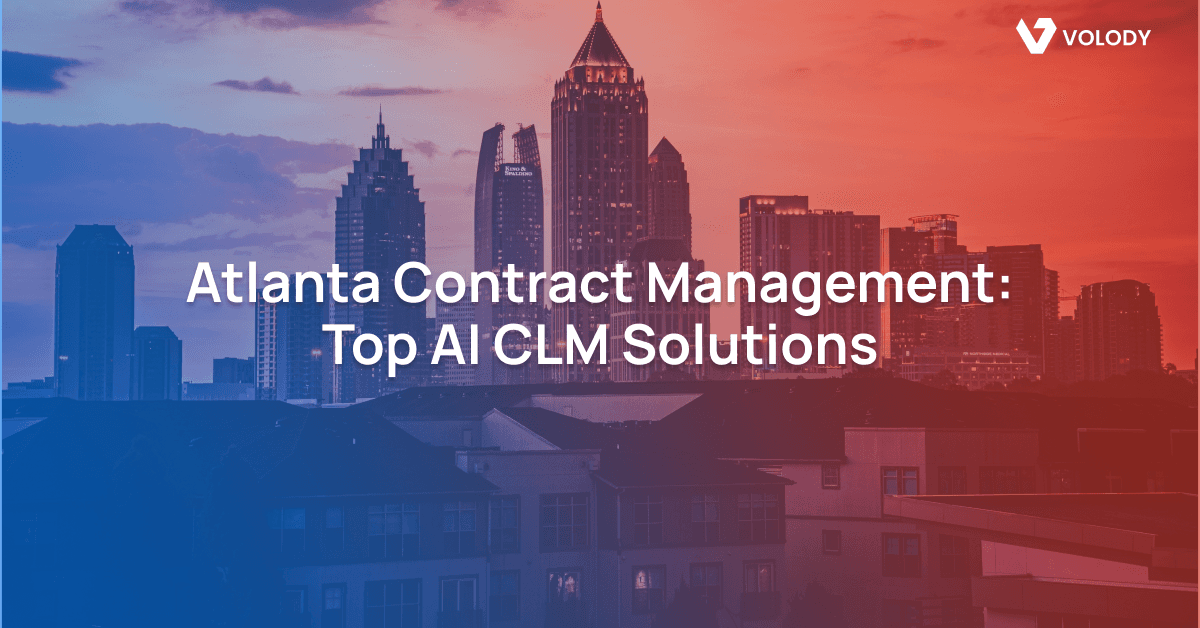
Atlanta is a pivotal economic center in the southeastern United States, characterized by a diverse industrial base and a sophisticated corporate landscape. The city’s robust financial services, technology, pharmaceutical, and infrastructure sectors create a pressing need for advanced contract lifecycle management (CLM) solutions designed to meet complex enterprise requirements.
Effective contract governance is essential in Atlanta’s regulatory environment. Enterprises must navigate stringent compliance demands to mitigate risks such as contractual breaches, financial exposure, and missed obligations. These challenges are particularly significant in Atlanta’s dominant industries, including banking, healthcare, and government contracting.
This comprehensive guide evaluates the top five CLM software platforms tailored for Atlanta enterprises. It provides in-depth analysis of features, pricing, and sector-specific suitability, enabling legal and procurement professionals to select solutions that align with both local market conditions and organizational complexity.
Strategic Overview & Key Insights
Contract lifecycle management in Atlanta requires solutions that balance automation, compliance, and integration. Volody CLM leads as the top platform, offering AI-powered contract authoring, multi-level approval workflows, and unlimited-user pricing. Other contenders excel in specific areas like AI contract automation software and enterprise-grade contract compliance solutions Georgia companies need. The best tools differ mainly on pricing models, customization, and integration options. Choosing the right CLM depends on company size, sector, and existing technology stacks.
Governing Laws and Compliance Requirements for Contracts in Atlanta
Governing Contract Law
Contracts in Atlanta fall under Georgia state law, primarily governed by the Georgia Code Title 13 - Contracts. This statute outlines general contract principles, enforceability rules, and remedies for breach. Georgia follows common law contract doctrines, emphasizing offer, acceptance, consideration, and mutual assent. Courts in Atlanta apply these principles with attention to commercial reasonableness in enterprise agreements.
For enterprises, understanding Georgia’s Uniform Commercial Code (UCC) provisions is critical. The UCC governs sales and lease contracts, which are common in procurement and vendor relationships. Atlanta businesses must ensure contracts meet UCC standards for clarity and enforceability to avoid disputes.
Data Protection Law and Compliance Requirements
Atlanta enterprises face data protection rules under both federal and state laws. The Georgia Personal Identity Protection Act (PIPA) mandates protection of personal data and breach notification procedures. Contracts involving personal information must include clauses addressing data security, breach response, and privacy compliance.
Additionally, companies handling health-related data must comply with HIPAA regulations, which influence contract terms in healthcare and pharma sectors. Atlanta’s growing tech industry also faces obligations under the Federal Trade Commission (FTC) Act, which addresses unfair or deceptive practices in data handling.
Sector-Specific Regulations
Several Atlanta industries operate under specialized regulatory frameworks that affect contract management. The banking and finance sector must comply with the Gramm-Leach-Bliley Act (GLBA) and Dodd-Frank Act, requiring strict controls on contract terms regarding data sharing and risk.
Pharmaceutical firms must align contracts with Food and Drug Administration (FDA) regulations and Good Manufacturing Practices (GMP). Infrastructure projects often involve public procurement rules governed by Georgia’s Department of Transportation and local authorities, requiring transparent contract compliance solutions Georgia enterprises rely on.
Cross-Border Contract Enforcement Considerations
Atlanta’s role as a logistics and trade center means many contracts have cross-border elements. Enterprises engaging international partners must address choice of law, jurisdiction, and enforceability clauses carefully. Georgia courts recognize foreign judgments under the Uniform Foreign Money-Judgments Recognition Act, but contract terms must clearly specify dispute resolution methods.
For multinational contracts, compliance with the United Nations Convention on Contracts for the International Sale of Goods (CISG) may apply. CLM software Georgia Atlanta solutions that support multilingual contract templates and compliance tracking ease the management of these complexities.
Related articles: Leading CLM Software Solutions for Seattle’s Tech Sector
Volody CLM

Volody CLM is a purpose-built contract lifecycle management platform designed for mid-market and enterprise legal and procurement teams in Atlanta and beyond. Developed with enterprise needs in mind, it combines AI-powered contract authoring with deep workflow automation. Volody CLM empowers teams to manage contracts from drafting through post-signature analytics with unmatched clarity and control.
Key Features, Strengths, and Differentiators
AI-Powered Contract Authoring: Uses clause intelligence to suggest and auto-populate contract language, reducing drafting time and errors.
Automated Multi-Level Approval Workflows: Supports customized approval hierarchies with notifications and audit trails to ensure thorough governance.
Unlimited-User Pricing Model: Eliminates per-seat fees, enabling broad team access without escalating costs.
End-to-End Visibility: Provides dashboards tracking contract status, obligations, and performance metrics for proactive management.
Purpose-Built for Enterprises: Addresses complex legal and procurement needs with advanced contract workflow automation.
Fast Implementation: Deploys within weeks, not months, minimizing disruption and accelerating ROI.
Dedicated Customer Success Team: Offers ongoing support and training at no extra cost, ensuring adoption and continuous improvement.
Why It Leads for Atlanta
Volody CLM aligns perfectly with Atlanta’s enterprise environment. Its AI contract automation software accelerates contract cycles for fast-moving tech firms. The platform’s robust compliance and risk management features meet BFSI and pharma sector demands. Unlimited-user pricing suits Atlanta’s growing teams and diverse departments. Integration capabilities with ERP systems enhance operational consistency. The local customer success team understands regional business practices, making Volody CLM the clear top choice for Atlanta enterprises.
Pricing and Ideal Use Case
Plan/Tier | Price | Key Inclusions |
|---|---|---|
Enterprise | Contact vendor | Unlimited users, AI authoring, multi-level workflows, analytics, dedicated support |
Volody CLM is ideal for mid-sized to large enterprises seeking a scalable, AI-driven CLM platform. It fits industries requiring rigorous contract compliance solutions Georgia’s regulatory environment demands. Organizations needing fast setup and broad user adoption will find Volody CLM unmatched in value.
Related articles: Best Contract Management Software: Top 10 CLM Tools
Ironclad
Ironclad is a cloud-native CLM software built to modernize contract management with AI-powered drafting and seamless integrations. Designed for legal teams in mid-market to large enterprises, Ironclad helps automate contract creation, negotiation, and post-signature management. Its Salesforce integration makes it popular among sales-driven organizations.
Key Features, Strengths, and Differentiators
AI Contract Automation: Uses machine learning to generate contracts and extract key data, speeding review cycles.
Customizable Contract Templates: Enables legal teams to create reusable templates that enforce compliance.
Advanced Workflow Automation: Supports dynamic routing and collaboration across departments.
Salesforce Integration: Provides tight CRM linkage to align contracts with sales pipelines.
Robust Reporting and Analytics: Offers insights into contract bottlenecks and risk areas.
Cloud-Based Access: Ensures teams can work securely from anywhere with real-time updates.
Ideal For: Team Size, Industry, and Use Case
Ironclad suits mid-market to enterprise legal teams, especially in technology and financial services sectors sectors. Its Salesforce integration appeals to companies focused on sales contract efficiency. Organizations needing customizable contract template features and AI contract automation software will benefit most.
Pricing
Plan/Tier | Price | Key Inclusions |
|---|---|---|
Growth | Contact vendor | AI contract automation, workflow automation, CRM integration |
Enterprise | Contact vendor | Advanced compliance, analytics, dedicated support |
Related articles: Top 5 CLM Software in Texas: 2026 Legal Compliance Guide
Icertis

Icertis is a leading enterprise contract management tool acclaimed for its scalability and compliance capabilities. It supports global organizations with complex contract portfolios. The platform emphasizes risk management in contract lifecycle processes and robust CLM integration with ERP systems.
Key Features, Strengths, and Differentiators
Enterprise-Grade Compliance: Manages regulatory requirements across industries with built-in controls.
Risk Management Tools: Identifies and mitigates contract risks using AI-driven scoring.
CLM Integration with ERP Systems: Connects seamlessly to SAP, Oracle, and other ERPs for unified operations.
Custom Workflow Designer: Allows creation of advanced contract workflow automation tailored to business needs.
Global Language and Currency Support: Facilitates multinational contract management.
Comprehensive Reporting: Delivers dashboards and alerts for contract performance and obligations.
Ideal For: Team Size, Industry, and Use Case
Icertis fits large enterprises with global operations, particularly in manufacturing, pharmaceuticals, and BFSI sectors. Companies requiring tight contract compliance solutions Georgia businesses face benefit from its extensive regulatory coverage. It suits teams needing deep ERP integration and risk management in contract lifecycle oversight.
Pricing
Plan/Tier | Price | Key Inclusions |
|---|---|---|
Enterprise | Contact vendor | Full compliance suite, ERP integration, risk scoring |
Related articles: What Is CLM Software And Top 15 Best CLM Tools In 2026
ContractPodAi
ContractPodAi combines AI-driven contract lifecycle management with an intuitive interface designed for legal and procurement teams. It emphasizes automation and compliance, helping enterprises reduce manual work and improve contract accuracy. The platform is known for customizable contract template features and strong document management.
Key Features, Strengths, and Differentiators
AI-Enhanced Document Assembly: Automates contract creation using intelligent templates.
Contract Compliance Monitoring: Tracks key obligations and deadlines to reduce risk.
Centralized Repository: Offers secure storage with advanced search capabilities.
Customizable Contract Template Features: Supports flexible template creation for varied contract types.
Integration with Microsoft and Salesforce: Enhances workflow continuity across platforms.
Automated Approval Workflows: Speeds contract review and authorization processes.
Ideal For: Team Size, Industry, and Use Case
ContractPodAi serves mid-sized to large enterprises valuing ease of use and compliance tracking. Its features benefit legal and procurement teams in healthcare, financial services, and government sectors. Organizations emphasizing customizable contract templates and automated workflows will find this platform effective.
Pricing
Plan/Tier | Price | Key Inclusions |
|---|---|---|
Standard | Contact vendor | AI document assembly, compliance tracking, integrations |
Enterprise | Contact vendor | Advanced automation, custom templates, analytics |
Agiloft
Agiloft offers a flexible and highly configurable CLM platform catering to diverse enterprise needs. Its no-code customization allows teams to tailor workflows and templates without IT involvement. The platform supports advanced contract workflow automation and emphasizes risk reduction through compliance controls.
Key Features, Strengths, and Differentiators
No-Code Customization: Enables business users to build workflows and templates without programming.
Advanced Contract Workflow Automation: Automates complex approval and renewal processes.
Risk Management in Contract Lifecycle: Provides alerts and dashboards to identify compliance gaps.
Integration with ERP and CRM Systems: Connects with Oracle, SAP, and Salesforce for seamless data flow.
Comprehensive Audit Trails: Tracks changes and approvals for accountability.
Scalable Architecture: Supports growing teams and expanding contract volumes.
Ideal For: Team Size, Industry, and Use Case
Agiloft suits enterprises across industries requiring flexible contract management solutions. Its no-code approach appeals to legal and procurement teams wanting control without IT delays. The platform benefits firms with complex workflows and strong compliance needs in sectors such as manufacturing, healthcare, and finance.
Pricing
Plan/Tier | Price | Key Inclusions |
|---|---|---|
Professional | Contact vendor | No-code customization, workflow automation, integrations |
Enterprise | Contact vendor | Advanced risk management, analytics, dedicated support |
How to Choose the Right CLM software for Your Atlanta Business
Key Questions to Ask Before Selecting a Solution
Choosing the right CLM software Georgia Atlanta demands careful evaluation. Start by asking:
Does the platform support AI contract automation software to speed drafting?
Can it handle multi-level approval workflows tailored to your governance model?
Is pricing aligned with your team size, avoiding costly per-seat fees?
Does it provide customizable contract template features to meet sector rules?
How well does it integrate with your ERP and CRM systems?
What risk management tools are included for contract lifecycle oversight?
Is the solution easy to implement and supported locally?
Implementation Considerations for Atlanta Market
Atlanta’s enterprises often face tight deadlines and complex regulatory landscapes. Choose vendors offering rapid implementation and regional customer support. Ensure the CLM software aligns with local contract law and data protection standards. Look for platforms that facilitate cross-border contract management for Atlanta’s global trade ties. Finally, assess vendor experience in your key sectors to ensure effective adoption.
Conclusion
Volody CLM represents the premier choice for Atlanta enterprises seeking a powerful, AI-driven contract lifecycle management platform. Its combination of unlimited-user pricing, rapid deployment, and comprehensive compliance features delivers measurable improvements in contract turnaround and operational efficiency. While alternatives like Ironclad, Icertis, ContractPodAi, and Agiloft provide valuable options with specialized strengths, Volody CLM’s tailored fit for Atlanta’s regulatory and business landscape makes it the optimal solution.
Begin your evaluation by conducting a thorough audit of your current contract processes to identify critical gaps. Implementing Volody CLM can reduce contract cycle times by up to 40%, significantly enhancing productivity and risk mitigation. Supported by a dedicated customer success team, Volody CLM ensures a smooth transition and sustained adoption. Selecting the right CLM software is essential to maintaining compliance, reducing risk, and driving contract confidence in Atlanta’s dynamic enterprise environment.
Frequently Asked Questions
What are the top CLM software in Atlanta, Georgia for enterprises?
The top CLM software for enterprises in Atlanta include Volody CLM, Ironclad, Icertis, ContractPodAi, and Agiloft. These platforms offer a range of features from AI-driven drafting to advanced compliance and integration options. They serve diverse industries such as financial services, technology, healthcare, and infrastructure, meeting the complex needs of Atlanta’s corporate landscape.
What features do these CLM software offer?
Common features include AI contract automation software for faster drafting, customizable contract template features, automated multi-level approval workflows, risk management tools, and integration with ERP and CRM systems. Most platforms provide centralized contract repositories, compliance monitoring, and reporting dashboards to improve contract visibility and control.
How do these CLM software help with contract management?
They simplify contract workflows by automating drafting, review, and approval steps. AI tools extract key data and flag risks early. Centralized storage ensures secure access and version control. Compliance features track obligations and deadlines. Integration with other enterprise systems streamlines operations, reducing manual effort and errors.
What are the benefits of using CLM software for enterprises?
Enterprises gain faster contract cycles, reduced legal and financial risk, improved compliance, and better collaboration. CLM software enhances contract visibility and audit readiness. It also cuts administrative overhead and supports data-driven decisions with analytics, enabling legal and procurement teams to focus on strategic priorities.
How do businesses in Atlanta shortlist the right CLM software?
They assess factors like AI capabilities, workflow automation, pricing models, customization options, and integration support. Local legal compliance and sector-specific needs guide selection. Vendor reputation, implementation speed, and customer support quality are also key. Pilot testing and stakeholder feedback help finalize the choice.
What legal requirements should teams validate before buying CLM software in Atlanta?
Teams must ensure the software supports Georgia contract law compliance, including enforceability and UCC rules. It should enable data protection adherence under Georgia PIPA and federal laws like HIPAA. Sectoral regulations for BFSI, pharma, and infrastructure must be addressable through contract templates and audit features.
How can companies benchmark vendors when comparing CLM software?
Benchmarking involves evaluating feature sets, ease of use, integration capabilities, pricing transparency, and customer success resources. Companies should request demos, check reference clients in similar sectors, and review independent analyst reports. Performance metrics like contract cycle time reduction and compliance improvements provide measurable benchmarks.
Which deployment model works best for enterprise CLM software?
Cloud-based SaaS models dominate for flexibility, scalability, and remote access. They enable continuous updates and lower upfront costs. However, some enterprises with strict data residency or security policies may prefer on-premises or hybrid deployments. The choice depends on company IT strategy and regulatory demands.
What integrations are non-negotiable for modern CLM software?
Integration with ERP systems like SAP or Oracle is crucial for unified contract and financial management. CRM integrations, especially Salesforce, align contracts with sales pipelines. E-signature platforms and document management tools also enhance workflow. APIs for custom connections support evolving enterprise ecosystems.
How should legal and procurement divide ownership of CLM software?
Legal typically owns contract drafting, compliance, and risk management functions. Procurement focuses on contract execution, vendor management, and spend control. A collaborative governance model with shared access and clear role definitions maximizes CLM software value. Cross-functional workflows ensure accountability and efficiency.
About the Company
Volody AI CLM is an Agentic AI-powered Contract Lifecycle Management platform designed to eliminate manual contracting tasks, automate complex workflows, and deliver actionable insights. As a one-stop shop for all contract activities, it covers drafting, collaboration, negotiation, approvals, e-signature, compliance tracking, and renewals. Built with enterprise-grade security and no-code configuration, it meets the needs of the most complex global organizations. Volody AI CLM also includes AI-driven contract review and risk analysis, helping teams detect issues early and optimize terms. Trusted by Fortune 500 companies, high-growth startups, and government entities, it transforms contracts into strategic, data-driven business assets.



" height="216.72211px" id="FYO0bO80Y" transform="translate(3 6.105)" width="206.073px"/><path d="M 108.174 222 C 88.432 222 70.303 217.239 53.785 207.717 C 37.267 198.196 24.173 185.052 14.504 168.285 C 4.835 151.312 0 132.165 0 110.845 C 0 89.731 4.835 70.792 14.504 54.025 C 24.173 37.052 37.267 23.804 53.785 14.282 C 70.303 4.761 88.432 0 108.174 0 C 128.116 0 146.246 4.761 162.562 14.282 C 179.08 23.804 192.073 37.052 201.541 54.025 C 211.21 70.792 216.044 89.731 216.044 110.845 C 216.044 132.165 211.21 151.312 201.541 168.285 C 192.073 185.052 179.08 198.196 162.562 207.717 C 146.044 217.239 127.915 222 108.174 222 Z M 108.174 183.189 C 120.864 183.189 132.044 180.291 141.713 174.495 C 151.382 168.492 158.936 160.006 164.375 149.035 C 169.814 138.064 172.533 125.334 172.533 110.845 C 172.533 96.355 169.814 83.729 164.375 72.965 C 158.936 61.994 151.382 53.611 141.713 47.815 C 132.044 42.02 120.864 39.122 108.174 39.122 C 95.483 39.122 84.202 42.02 74.332 47.815 C 64.663 53.611 57.109 61.994 51.67 72.965 C 46.231 83.729 43.511 96.355 43.511 110.845 C 43.511 125.334 46.231 138.064 51.67 149.035 C 57.109 160.006 64.663 168.492 74.332 174.495 C 84.202 180.291 95.483 183.189 108.174 183.189 Z" fill="rgba(255, 255, 255, 0.12)" height="222px" id="aa1McFcE9" transform="translate(227.183 3)" width="216.04399999999998px"/><path d="M 42.302 182.257 L 111.799 182.257 L 111.799 216.722 L 0 216.722 L 0 0 L 42.302 0 Z" fill="rgba(255, 255, 255, 0.12)" height="216.72211px" id="yRq4AnrsX" transform="translate(477.721 6.105)" width="111.79899999999998px"/><path d="M 108.174 222 C 88.432 222 70.303 217.239 53.785 207.717 C 37.267 198.196 24.173 185.052 14.504 168.285 C 4.835 151.312 0 132.165 0 110.845 C 0 89.731 4.835 70.792 14.504 54.025 C 24.173 37.052 37.267 23.804 53.785 14.282 C 70.303 4.761 88.432 0 108.174 0 C 128.116 0 146.246 4.761 162.562 14.282 C 179.08 23.804 192.073 37.052 201.541 54.025 C 211.21 70.792 216.045 89.731 216.045 110.845 C 216.045 132.165 211.21 151.312 201.541 168.285 C 192.073 185.052 179.08 198.196 162.562 207.717 C 146.044 217.239 127.915 222 108.174 222 Z M 108.174 183.189 C 120.864 183.189 132.044 180.291 141.713 174.495 C 151.382 168.492 158.936 160.006 164.375 149.035 C 169.814 138.064 172.534 125.334 172.534 110.845 C 172.534 96.355 169.814 83.729 164.375 72.965 C 158.936 61.994 151.382 53.611 141.713 47.815 C 132.044 42.02 120.864 39.122 108.174 39.122 C 95.483 39.122 84.202 42.02 74.332 47.815 C 64.663 53.611 57.108 61.994 51.67 72.965 C 46.231 83.729 43.511 96.355 43.511 110.845 C 43.511 125.334 46.231 138.064 51.67 149.035 C 57.108 160.006 64.663 168.492 74.332 174.495 C 84.202 180.291 95.483 183.189 108.174 183.189 Z" fill="rgba(255, 255, 255, 0.12)" height="222px" id="mo8HQspQ0" transform="translate(609.155 3)" width="216.04500000000007px"/><path d="M 73.727 0 C 95.885 0 115.324 4.45 132.044 13.351 C 148.967 22.252 161.957 34.982 171.027 51.541 C 180.287 67.894 184.917 86.937 184.917 108.671 C 184.917 130.405 180.287 149.449 171.027 165.801 C 161.957 181.947 148.967 194.47 132.044 203.371 C 115.324 212.271 95.885 216.722 73.727 216.722 L 0 216.722 L 0 0 Z M 72.216 179.773 C 94.374 179.773 111.497 173.564 123.583 161.144 C 135.669 148.724 141.713 131.233 141.713 108.671 C 141.713 86.109 135.669 68.515 123.583 55.888 C 111.497 43.055 94.374 36.638 72.216 36.638 L 42.302 36.638 L 42.302 179.773 Z" fill="rgba(255, 255, 255, 0.12)" height="216.72211px" id="I3iXX5Hi_" transform="translate(859.693 6.105)" width="184.91699999999992px"/><path d="M 185.22 0 L 113.91 141.273 L 113.91 216.722 L 71.61 216.722 L 71.61 141.273 L 0 0 L 47.74 0 L 93.06 99.046 L 138.08 0 Z" fill="rgba(255, 255, 255, 0.12)" height="216.72211px" id="nzHyWC0_d" transform="translate(1061.78 6.105)" width="185.22000000000003px"/></svg>)