
Key Highlights
Contract lifecycle management (CLM) is the process of managing a contract from its creation to its renewal or expiry.
Implementing CLM software automates and streamlines your contract processes, significantly reducing manual effort and errors.
This technology improves risk management by ensuring better compliance and providing a clear audit trail for all agreements.
Understanding the nine stages of the contract lifecycle helps identify areas for improvement that suit your business needs.
CLM platforms reduce cycle times, prevent revenue leakage, and enhance collaboration across departments.
Introduction
Welcome to the main guide on contract lifecycle management (CLM). Contracts play a key role in every business. They shape how you work with customers, suppliers, and partners. But the contracting process can be hard to handle and may take a lot of time. If the process does not work well, there can be risks, slowdowns, and lost chances for your company. In this guide, you will see how CLM can make each part of the contract lifecycle clear and simple. It covers all steps, from the first request to the time of renewal. With CLM, you can get better business outcomes and turn your contracts into smart tools for growth.
Understanding Contract Lifecycle Management (CLM)
Contract Lifecycle Management, or CLM, means looking after a contract for the whole time you have it. This covers every step from when you first ask for the contract, to talking about the details, agreeing and signing it, and then seeing how well it works over time. It also includes renewing the contract or ending it when it finishes. This helps make the whole contract process simple and clear.
The aim of contract lifecycle management is to make contract processes faster and safer. When you use a CLM platform or other contract management tools, you can let the system handle routine tasks, keep all your contract data in one place, and make cycle times shorter. This helps protect the business and keeps things running well. Now, let's look at what contract management software is and how it has changed.
What is CLM software and its role in business processes
CLM software is a tool to help you with contract management in your company. It makes things simple by putting all your contract work on one platform. This means you do not have to use spreadsheets, handle lots of emails, or move paper documents around. It is a main place where you can look at all your agreements.
The software is good for business users in many departments, like legal, sales, and procurement. It helps make work flow better for everyone. With this software, your document management becomes easy. All your contracts stay safe in one place, so you can find and check them fast. Because it automates repetitive tasks, it also cuts cycle times.
Implementing CLM software automates and streamlines your contract processes, significantly reducing manual effort and errors. There are also industry-specific contract lifecycle management solutions tailored for sectors such as finance or healthcare, which address unique regulatory requirements and workflow needs within these industries.
Evolution from manual to AI-powered contract management
Contract management has changed a lot over the years. At first, people kept these documents in paper files, and it took much time to find or track them. Then, the first big change was moving files to computer drives. But even then, it was hard to keep track of different versions, and there was not much time saving.
Now, contract management uses artificial intelligence and machine learning. This has helped make contract intelligence better for everyone. AI does routine tasks like pulling out important data and looking for risks. Legal teams do not have to spend as much time on these jobs. They can use their time for other good work.
Modern AI tools can help with contract drafting. They can also spot risky parts in a contract and give helpful tips before you finish your agreements. These tools fit well with other business systems, like CRM or ERP. This way, all of your data can work together. Now, contract cycle times are much shorter. Businesses now get more control and can see what's happening with their contracts in real time.
The 9 Stages of the Contract Lifecycle
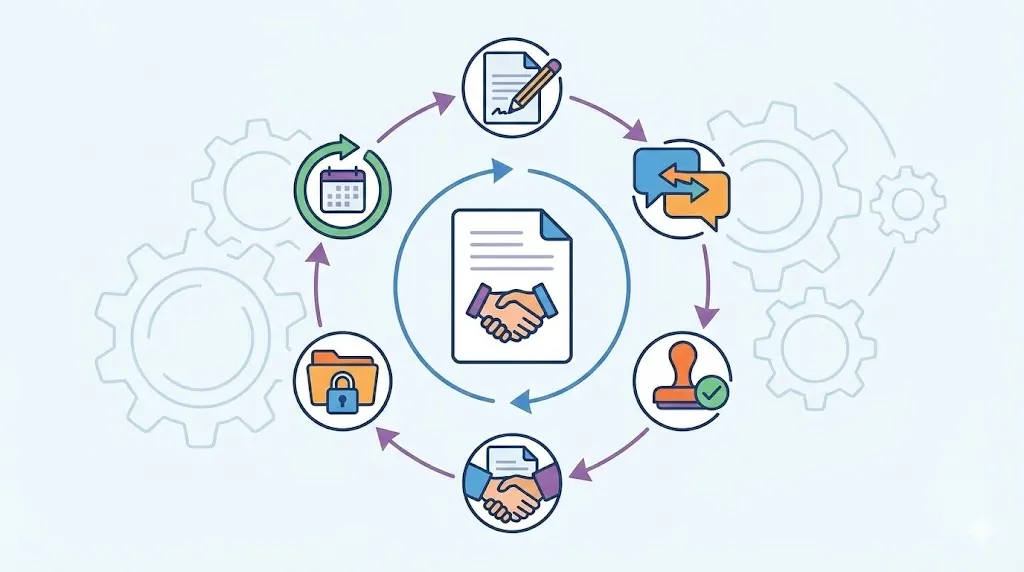
To really understand how the contract lifecycle management (CLM) process works, you need to know the steps a contract goes through. The contract lifecycle has nine main stages. Each one has its own tasks and challenges. Managing these stages in a good way helps you get more value from contracts and cut down on risk.
From the first request to the final review, each step leads into the next. This creates a clear flow of contract data. A good CLM system helps with every stage. It supports everything from contract drafting to keeping track of how the contract is going. The next sections will explain the nine stages one by one.
Contract request and initiation
Contract requests are the start of the contracting process. In this first step, people work to make clear what the business needs. The team then creates documents to show all key details. With a modern CLM tool, things get simpler. Automated workflows help the procurement teams and business users work together. They can use contract templates that look the same for everyone. Version control is strong, so you can see every change made. Entering data as things happen also helps keep details correct. When you have these tools in a single, unified workspace, the contract management process is easy to follow. This setup gives you more insight and helps manage contracts well all through their entire lifecycle.
Authoring and drafting contracts
After someone approves a contract request, the next step is to write and prepare the agreement. This means making the real document that has the needed terms and rules. If there is no CLM system, you either have to start fresh or look for an old contract to copy. This can lead to mistakes and things not matching up.
CLM software makes contract drafting much easier. The software gives everyone access to a set of ready-to-use contract templates and clause libraries. Your team can put together a contract fast by picking the right template and adding the standard clauses to it. This makes sure that every agreement is the same and follows company policy.
Approval workflows in CLM tool
Once a contract is drafted, it needs to be looked at and signed off by people inside the company. When you do this by hand, you usually send the document to people by email. This can make things confusing. There can be delays, and it is hard to keep track of the latest version. It's also not easy to know who has said yes and what changes have been made. It is easy to lose version control this way.
A CLM tool helps by making approval workflows faster and smoother. You can set up rules, so the contract goes to the right people to check. The rules may depend on things like contract value, department, or risk level. Approvals can happen one after another, or many at the same time, based on your business needs.
Negotiation and redlining
The contract negotiation stage is when the two sides talk and settle the last terms. In the past, you would send Word files back and forth, using tracked changes. This would lead to long email threads and it could be hard to know which version is the latest. This back-and-forth also makes the process slow and can frustrate everyone.
CLM software helps make the negotiation and redlining work smoother. It gives you one place where both sides inside and outside your company can work on the contract. All changes and comments are kept together, so there is no need for lots of emails. This lets everyone use the latest version of the agreement.
Execution and e-signatures
Contract execution is the step where everyone signs the agreement, so it becomes legally binding. The old way means printing, signing, sending, and scanning papers. This takes a lot of time and money. It slows down cycle times and may push back the start of new work or revenue recognition by weeks or days.
Now, modern CLM solutions work with e-signature tools. This helps you finish contract execution in a few clicks. After approval, the contract is sent for an online signature. Anyone can sign from any device, any place, and at any time in real time.
The digital process cuts execution time, changing it from days to only minutes in most cases. The finished contract is then put straight into the CLM system. A safe audit trail is also made, showing you each step of signing. This saves time for your business and helps with security and compliance too.
Obligation and compliance management
After you sign a contract, the work does not stop. What you do after the signing is key to seeing the value of any agreement. Obligation management means you track and check that everything promised in the contract—like tasks, deadlines, and what each party must do—is done by both sides. If you do not keep up with this, there will be fines, harm to good business links, and missed chances.
CLM software plays a big part in making obligation management and risk management easier for you. It can pick out main tasks from the contract writing on its own, give them out to the right people, and remind them when due dates are close. By doing this, you get better compliance and can avoid missing important cut-off times.
Handling amendments and changes
Business relationships can change over time, and so contracts may need to be changed too. These changes, called amendments, must be handled in a clear way to keep them well recorded, approved, and tracked. If there is no set process, doing amendments can get messy and may lead to confusion with contract data and a loss of version control.
CLM software helps put a process in place for managing these changes. If someone needs to change something, they can make a new version of the contract in the system. Then, you can do the same basic steps of writing, talking through, and approving the changes as you did for the first contract.
Renewal alerts and proactive renewals
Many contracts run for a set period. When that time is up, the contract will end or you will need to renew it. If you miss renewal dates, there can be serious trouble. For sales contracts, you might lose money. For procurement contracts, you could lose an important service. You could also face an automatic renewal on bad terms.
CLM software helps you remember renewal dates by sending automated alerts. The system will let key people know before a contract ends. This gives you enough time to work out what to do next. With this, you can handle renewals early and avoid rush decisions at the last minute.
Reporting and analytics in CLM software
The last part of the lifecycle is about reporting and analytics. There is a lot of useful data inside your contracts. But this data only helps if you can get it and know what it means. If you use manual steps, it is hard to look at contract data for many deals, so you miss out on key things.
CLM software has strong reporting and analytics tools. These features turn contract data into something you can use. You are able to set up dashboards and reports that show numbers such as cycle times, times when you do not follow your usual terms, and how the suppliers do. This is an important thing to check when you pick any tool.
Common Challenges in Manual Contract Management
When you rely on doing contract management by hand, you can run into some big problems. As your contract volume gets bigger, it gets even tougher. Using things like spreadsheets, emails, and shared drives can lead to mistakes. There is also not enough visibility, and this can put your business at risk.
Manual contract management makes it easy to miss things. You might spend more time on drafting, forget to renew, or not meet compliance requirements. These problems can hit your bottom line, hurt your business relationships, or cause you to fall short when it comes to rules.
Inefficient drafting and lengthy negotiation cycles
One of the biggest problems in contract management is that the early stages can be slow and messy. When teams write contracts from scratch or use old templates, mistakes and the risk of errors can go up. This starting point can slow everything down and make the whole process longer.
The review process during negotiation can also make things worse. When people swap documents by email, it is easy to get mixed up about which file is the latest. Changes from different people often end up in separate copies, and then someone has to pull all the edits together. This back-and-forth makes the contract cycle times longer and can stop your business outcomes from happening as fast as you want.
Missed renewals and revenue leakage
If you do not use an automated system, keeping track of contract dates means a lot of manual work. Many people use calendar notes or spreadsheets to do this. But this way, it is easy to make mistakes. If you miss a renewal date, you could lose money. This is what people call revenue leakage.
For sales teams, missing a renewal can mean they lose regular income. And for procurement, it can mean a contract gets renewed on terms that are not good. It could also mean a service from a key supplier stops all at once. Both of these can hurt the business and make it less steady.
Collaboration issues and slow post-execution management
Effective contract management needs good teamwork between the legal, sales, finance, and procurement teams. But when these groups rely on manual methods, working together can be hard. The information often stays locked in separate systems or in people’s email inboxes. This means it is tough for everyone to know what is going on.
Without a single system, managing contracts after signing becomes slow. Once a deal is signed, it can be very hard to keep track of things you need to do and target dates. Business users might not see the contract status, and may not know what their tasks are. This can make them miss important deadlines and promises.
Difficult audits and compliance risks
When you need to go through an audit, using a manual contract management system can be very hard. Auditors want to see the right contracts and need a full audit trail showing all approvals and changes. If your contracts are in many different places and you do not keep a proper audit trail, getting ready for an audit can take a lot of time and can be very stressful for you.
This lack of order can also bring big compliance risks. If you do not have a clear record of who did each thing and when, it is hard to show that you have followed your own internal rules. This can make you fail an audit, and could even give you penalties, especially if your company is in an industry that has a lot of rules.
Core Benefits of Using CLM Software
Putting CLM solutions in place can change your contracting process. It will turn it from something that slows you down to something that helps you get ahead. When you use CLM solutions to automate and follow the same steps for every agreement, you open the door to many benefits. These help your whole company and are about more than just making things quicker.
Simplified contract processes with clm tool
Using a CLM tool makes the whole contracting process easier and faster. It helps you finish contract creation quickly with automated templates and clause libraries. Teams can use these tools to make legal documents without delay. With approval workflows, everyone can see the contract status, so talks happen on time and cycle times are much shorter.
Improved visibility and tracking
Handling contracts by hand makes it hard to keep track of everything. The contracts might be kept in many places like on the desktop, in emails, or a filing cabinet. Because of this, it can be tough to see the full picture of your contract management. Sometimes, you may miss deadlines, not see all the risks, or even lose chances that could help your business.
CLM software puts all your contracts in one place, so you have one clear place for your contract data. Using tools like custom dashboards and search, you get a real-time look at all your contract status and see important contract details right away.
Reduced risk and enhanced governance
Every contract will always have some risk. The important thing is to handle this risk in the right way. CLM software helps you do that by giving you strong tools for risk management and better control. When you use standard templates and clauses, your contracts all start with approved and safe rules.
Automated approval workflows make sure the correct people look at and sign each contract. You can set up the software to ask for more checks if a contract is high-value or has more risk. This organised setup keeps your team following all rules and stops any terms getting in that should not be there.
Audit readiness and better compliance
Getting ready for an audit can take a lot of time and feel hard when you use manual systems. With CLM software, you can always be ready for audits. The reason is that all contracts and related papers are kept in one central repository. There is also a full audit trail. This means finding the needed information for auditors is easy.
Keeping all things together and tracking them leads to better compliance. The software lets you watch if you are meeting regulatory compliance needs by tracking your duties. It also makes sure your contracts have the right language. You can run reports with ease to show auditors or your team that you are meeting compliance requirements.
Step-by-step guide/process to Getting Started with CLM Software
Are you ready to move away from doing things by hand and try a better way to look after contracts? Bringing in CLM software can really help you get more done and use your time well. Still, to make this work, you need to plan things right and know what your organisation needs.
Using best practices will let you move to the new way smoothly. This will help you get the most out of what you spend. This step-by-step guide will show you what to do, from thinking about your needs to starting the platform for your team.
Step 1: Assess your contract management needs
The first step to pick the right CLM software is to look closely at your current contract management system. Think about how you create, handle, and renew contracts now. Spot where the problems are in your contract management and look for what your real business needs are.
Ask yourself these questions as you check your system:
What is your contract volume at the moment, and will it go up soon?
Which stages of the contract lifecycle slow you down or bring risks?
What contract data do you need the most for your performance management and business outcomes?
Step 2: Identify stakeholders and project goals
Successful CLM implementation takes work from the whole team. It’s important to find all the main people who will be part of or affected by the new system. This often includes the legal team, procurement teams, sales, finance, and IT. You need their help early for the process to go well.
Work together with their group to set clear, simple goals for the project. What do you want the new CLM software to do for you? The goals have to be clear and match what you need, as found in the last step. Some goals could be:
Cutting the average contract cycle time by 30%.
Stopping all missed renewals for procurement contracts.
Making tracking contract compliance better across the company.
Step 3: Choose the best clm software india for your business
Once you know your needs and goals, you can start to look at different CLM solutions. When you search for the best CLM software in India for your business, do not just think about the features. Think about how people feel about the company, their customer support, and what experience they have in your area.
To make a shortlist of some good contract management tools, you can:
Ask for reports and analyst ratings, like the Gartner Magic Quadrant for CLM.
Speak to people you know and see what they say.
Ask vendors for demos so you can see their CLM platform in use.
Step 4: Configure templates, clause libraries, and workflows
Once you have picked your CLM software, the next thing to do is set it up so it fits your organisation's needs. This stage is very important, as you will make the base for a system that helps people do contract drafting in a better way and stay compliant. When you do this well, it helps your team and company grow.
Work with your legal team to put in place your basic contract templates and clause libraries. Here is what you should do:
Find your most used agreement types.
Make common clauses with simple, standard language.
Decide on rules for which clauses should go in and when to use them.
Step 5: Integrate CLM tool with CRM and ERP systems
Contracts are not separate from other main business tasks. They are linked to many things your company does. To get the most out of your clm tool, you need to bring it together with your other important systems. This means you should link it to tools like your Customer Relationship Management (CRM) and your Enterprise Resource Planning (ERP) systems.
If you mix your clm tool with your CRM, your sales team can make contracts right from an opportunity record. It will pull in customer data by itself. This helps get deals done faster and cuts down mistakes from typing in data by hand. The contract status can then flow back into the CRM, so the sales team can see what is going on fast, using the app they already use every day.
Step 6: Train your team and launch the platform
Even the best CLM platform will not work well if your team does not know how to use it. You need to have good training for people to get the most out of it and keep using it in the long run. You should also make sure the training matches what each group in your business needs.
Your legal departments will need to get much deeper training. They will want to know how to set up workflows and manage clause libraries in the CLM platform. Your business users, on the other hand, just need to know how to ask for a contract, follow its status, and find signed contracts.
Comparing Top CLM Software Options in India for 2026
Choosing the right CLM solution in a competitive market can be challenging. As you look toward 2026, several top CLM software options in India stand out for their features, usability, and customer support. When comparing these contract management tools, it's crucial to align their offerings with your specific business needs. While analyst reports like the Magic Quadrant provide a good starting point, a direct comparison of features relevant to you is essential.
Feature | Volody CLM |
|---|---|
AI Capabilities | Advanced AI for drafting, risk analysis, and data extraction |
User Interface | Intuitive and user-friendly, designed for business users |
Integration | Seamless integration with CRM, ERP, and e-signature tools |
Support in India | Dedicated local support team and implementation experts |
Configurability | Highly configurable workflows and templates to fit any business process |
The Role of AI and ML in CLM Software
Artificial intelligence and machine learning are now a big part of contract lifecycle management. These are not things of the future anymore. They are used today in modern contract management software. At first, these platforms were only used to keep your contracts safe. Now, thanks to contract intelligence, the systems can do a lot more. The power of AI and ML makes contract lifecycle management platforms stand out from normal contract management software.
AI and ML cut down the time a person needs to handle routine tasks in contract lifecycle work. This is good news for legal and procurement teams. AI can do clause extraction in a contract. That means it will find and take out important things such as renewal dates, payment terms, and other must-have details. All these jobs are done fast and without someone sitting there to read lines one by one.
Conclusion
To sum up, contract lifecycle management, or CLM, has changed the way businesses handle contracts. It has moved from old, slow ways to smarter, AI-based tools. If you know the nine stages of the contract lifecycle, you can use CLM software to make your business run smoother. This will help you follow the rules and cut down on risks in contract management.
When you have a good CLM system, you get better visibility, see less revenue leakage, and stay ready for audits. As you think about trying CLM for your work, it is important to pick the right tool. You can look at what we offer at Volody to find something that fits your team. This could be your first step to better contract management.
Frequently Asked Questions
What are the main benefits of using CLM software?
The main benefits of using CLM software are faster cycle times, improved risk management, and better compliance. You get a central repository for all contracts, so it is easy to find and manage them. The software gives you more visibility, helps you be ready for audits, and does many manual tasks for you. This lets your teams spend more time on important work that brings greater business value.
How do I choose the best CLM tool for my organisation?
To pick the best CLM platform, first look at your business needs, your contract processes, and your contract volume. Think about how easy the platform is to use, how well it works with your current tools, and what customer support they offer. Reports like the Gartner Magic Quadrant can also give you a good idea. But make sure you get a demo before you decide.
What features should I look for in a contract lifecycle management tool?
Look for features like a central repository, contract templates you can change, and clause libraries. You will also want approval workflows that you can set up, e-signature integration, and alerts that are sent automatically. A full audit trail is needed, as well as strong reporting and analytics that give you good contract intelligence. These features help you and your team manage the contract lifecycle well.
How much does CLM software typically cost in India?
The price of CLM solutions in India can change a lot. It depends on things like the number of users, how many contracts you have, and the complexity of your business needs. Most times, you pay for a subscription. It is a good idea to ask vendors for quotes. This way, you get an estimate that fits your own needs best.
About the Company

Volody AI CLM is an Agentic AI-powered Contract Lifecycle Management platform designed to eliminate manual contracting tasks, automate complex workflows, and deliver actionable insights. As a one-stop shop for all contract activities, it covers drafting, collaboration, negotiation, approvals, e-signature, compliance tracking, and renewals. Built with enterprise-grade security and no-code configuration, it meets the needs of the most complex global organizations. Volody AI CLM also includes AI-driven contract review and risk analysis, helping teams detect issues early and optimize terms. Trusted by Fortune 500 companies, high-growth startups, and government entities, it transforms contracts into strategic, data-driven business assets.




" height="216.72211px" id="FYO0bO80Y" transform="translate(3 6.105)" width="206.073px"/><path d="M 108.174 222 C 88.432 222 70.303 217.239 53.785 207.717 C 37.267 198.196 24.173 185.052 14.504 168.285 C 4.835 151.312 0 132.165 0 110.845 C 0 89.731 4.835 70.792 14.504 54.025 C 24.173 37.052 37.267 23.804 53.785 14.282 C 70.303 4.761 88.432 0 108.174 0 C 128.116 0 146.246 4.761 162.562 14.282 C 179.08 23.804 192.073 37.052 201.541 54.025 C 211.21 70.792 216.044 89.731 216.044 110.845 C 216.044 132.165 211.21 151.312 201.541 168.285 C 192.073 185.052 179.08 198.196 162.562 207.717 C 146.044 217.239 127.915 222 108.174 222 Z M 108.174 183.189 C 120.864 183.189 132.044 180.291 141.713 174.495 C 151.382 168.492 158.936 160.006 164.375 149.035 C 169.814 138.064 172.533 125.334 172.533 110.845 C 172.533 96.355 169.814 83.729 164.375 72.965 C 158.936 61.994 151.382 53.611 141.713 47.815 C 132.044 42.02 120.864 39.122 108.174 39.122 C 95.483 39.122 84.202 42.02 74.332 47.815 C 64.663 53.611 57.109 61.994 51.67 72.965 C 46.231 83.729 43.511 96.355 43.511 110.845 C 43.511 125.334 46.231 138.064 51.67 149.035 C 57.109 160.006 64.663 168.492 74.332 174.495 C 84.202 180.291 95.483 183.189 108.174 183.189 Z" fill="rgba(255, 255, 255, 0.12)" height="222px" id="aa1McFcE9" transform="translate(227.183 3)" width="216.04399999999998px"/><path d="M 42.302 182.257 L 111.799 182.257 L 111.799 216.722 L 0 216.722 L 0 0 L 42.302 0 Z" fill="rgba(255, 255, 255, 0.12)" height="216.72211px" id="yRq4AnrsX" transform="translate(477.721 6.105)" width="111.79899999999998px"/><path d="M 108.174 222 C 88.432 222 70.303 217.239 53.785 207.717 C 37.267 198.196 24.173 185.052 14.504 168.285 C 4.835 151.312 0 132.165 0 110.845 C 0 89.731 4.835 70.792 14.504 54.025 C 24.173 37.052 37.267 23.804 53.785 14.282 C 70.303 4.761 88.432 0 108.174 0 C 128.116 0 146.246 4.761 162.562 14.282 C 179.08 23.804 192.073 37.052 201.541 54.025 C 211.21 70.792 216.045 89.731 216.045 110.845 C 216.045 132.165 211.21 151.312 201.541 168.285 C 192.073 185.052 179.08 198.196 162.562 207.717 C 146.044 217.239 127.915 222 108.174 222 Z M 108.174 183.189 C 120.864 183.189 132.044 180.291 141.713 174.495 C 151.382 168.492 158.936 160.006 164.375 149.035 C 169.814 138.064 172.534 125.334 172.534 110.845 C 172.534 96.355 169.814 83.729 164.375 72.965 C 158.936 61.994 151.382 53.611 141.713 47.815 C 132.044 42.02 120.864 39.122 108.174 39.122 C 95.483 39.122 84.202 42.02 74.332 47.815 C 64.663 53.611 57.108 61.994 51.67 72.965 C 46.231 83.729 43.511 96.355 43.511 110.845 C 43.511 125.334 46.231 138.064 51.67 149.035 C 57.108 160.006 64.663 168.492 74.332 174.495 C 84.202 180.291 95.483 183.189 108.174 183.189 Z" fill="rgba(255, 255, 255, 0.12)" height="222px" id="mo8HQspQ0" transform="translate(609.155 3)" width="216.04500000000007px"/><path d="M 73.727 0 C 95.885 0 115.324 4.45 132.044 13.351 C 148.967 22.252 161.957 34.982 171.027 51.541 C 180.287 67.894 184.917 86.937 184.917 108.671 C 184.917 130.405 180.287 149.449 171.027 165.801 C 161.957 181.947 148.967 194.47 132.044 203.371 C 115.324 212.271 95.885 216.722 73.727 216.722 L 0 216.722 L 0 0 Z M 72.216 179.773 C 94.374 179.773 111.497 173.564 123.583 161.144 C 135.669 148.724 141.713 131.233 141.713 108.671 C 141.713 86.109 135.669 68.515 123.583 55.888 C 111.497 43.055 94.374 36.638 72.216 36.638 L 42.302 36.638 L 42.302 179.773 Z" fill="rgba(255, 255, 255, 0.12)" height="216.72211px" id="I3iXX5Hi_" transform="translate(859.693 6.105)" width="184.91699999999992px"/><path d="M 185.22 0 L 113.91 141.273 L 113.91 216.722 L 71.61 216.722 L 71.61 141.273 L 0 0 L 47.74 0 L 93.06 99.046 L 138.08 0 Z" fill="rgba(255, 255, 255, 0.12)" height="216.72211px" id="nzHyWC0_d" transform="translate(1061.78 6.105)" width="185.22000000000003px"/></svg>)