

Manual contract management creates hidden barriers for technology companies trying to grow fast. It wastes time, causes errors, and hides risks that could cost millions. Imagine a fast-moving tech firm juggling hundreds of contracts with partners, suppliers, and customers. If each contract is tracked on spreadsheets or emails, important deadlines slip by unnoticed. Deals close slower, and legal teams scramble to keep up. This inefficiency can stall innovation and block revenue growth in an industry where speed and agility matter most.
TL;DR
The reliance on manual contract processing in technology companies frequently results in prolonged deal cycles and a higher incidence of legal inaccuracies.
Additionally, the intricate dynamics within partner and reseller networks demand rigorous contract oversight to safeguard revenue streams effectively.
Subscription and service-based business models necessitate persistent contract evaluation well beyond the initial execution stage.
Business operations, intellectual property rights, and supply chain management are dictated by contracts, each critically influencing profitability.
Employing AI-driven contract lifecycle management (CLM) enhances operational speed, precision, and analytical insights.
Contemporary contract management solutions enable technology firms to respond swiftly and prevent revenue attrition.
What Makes Manual Contract Management a Bottleneck in Tech?
Technology companies face unique contract challenges. Additionally, their deals frequently encompass multiple parties, intricate pricing structures, and dynamic service terms. Managing these manually means relying on emails, spreadsheets, and siloed systems. This approach creates several problems:
Slow turnaround times: Drafting, reviewing, and approving contracts by hand takes weeks or months. This slows down sales cycles and delays revenue recognition.
High error rates: Manual processes increase the chance of missing key clauses or deadlines. Errors can lead to compliance violations or lost revenue.
Poor visibility: Contract data scattered across files and inboxes makes it hard to get a clear picture of obligations and risks.
Difficulty scaling: As companies grow, manual management becomes unsustainable. Adding more contracts multiplies complexity exponentially.
For example, a tech firm expanding into new markets might sign dozens of reseller agreements. Without a centralized system, tracking each contract’s renewal dates, pricing terms, and compliance requirements becomes chaotic. The legal team spends more time firefighting than supporting growth.
According to a report by Deloitte, inefficient contract management can add up to 9% of annual revenue lost due to missed opportunities and compliance issues. This figure highlights the financial risk of sticking to manual methods in a fast-moving industry.
Related articles: Contract Management Software for Sales Teams | CLM Guide
How Contract Complexity Grows in Technology Businesses
Technology companies rarely sell simple products. Their contracts often include:
Subscription and SaaS models: Managing these involves ongoing billing cycles, detailed usage tracking, and careful oversight of renewal processes.
Partner and reseller agreements: The presence of multiple indirect sales channels introduces complexity in revenue sharing arrangements and compliance requirements.
Licensing and IP rights: Safeguarding intellectual property necessitates precise contract drafting and vigilant monitoring.
Mergers and acquisitions: Each transaction generates additional contractual obligations, compounding both volume and management complexity.
Each of these factors multiplies the difficulty of manual contract management. For instance, subscription contracts need constant attention to billing terms and service levels. If a contract renews automatically but the company misses the notice period, it could lose revenue or face penalties.
A McKinsey study analyzing software companies found that those growing faster than 60% annually had much better contract management practices. These companies could quickly adapt contracts to new business models and close deals faster. In contrast, slower growers struggled with outdated manual processes.
Related articles: How Machine Learning Transforms Contract Management Today
Why Understanding Contractual Relationships Drives Revenue
Contracts do more than just formalize deals. They define how companies interact with customers, partners, and suppliers. A clear grasp of these relationships helps firms:
Optimize pricing and incentives: Knowing how rebates, discounts, and commissions apply prevents revenue leakage.
Manage risk and compliance: Monitoring contractual obligations carefully mitigates the likelihood of breaches or regulatory penalties.
Improve forecasting: Leveraging precise contract data enables more reliable revenue projections and cash flow management.
Enhance negotiations: A detailed understanding of contract history and specific clauses empowers legal teams to secure more favorable terms.
Without a complete view, companies risk signing deals that erode margins or expose them to legal risks. For example, a hardware vendor might offer discounts to a reseller but fail to track the reseller’s sales volume properly. This oversight can lead to incorrect payments and strained relationships.
Gartner reports that companies using contract analytics can reduce revenue leakage by up to 5%. This shows the value of turning contract data into actionable insights rather than leaving it buried in documents.
Related articles: Contract Process KPIs That Boost Business Performance
Why Monitoring Contract Performance Matters in Tech
Contracts in technology often represent ongoing relationships, not one-time transactions. Additionally, subscription services, maintenance agreements, and licensing deals demand ongoing attention to ensure smooth execution. Monitoring contract performance means:
Tracking deliverables and milestones: Ensuring that each party fulfills their responsibilities within the agreed timelines is essential to maintaining contractual integrity.
Managing renewals and expirations: Vigilant management here helps avoid lapses that could disrupt services or incur financial penalties.
Measuring compliance: This involves rigorous verification that all contractual provisions—including data security measures, service level agreements, and payment terms—are strictly observed.
Adjusting terms as business evolves: It is often necessary to revise contracts to accommodate changes in scope, pricing models, or regulatory requirements.
Manual tracking of these elements is prone to failure. Teams might fail to notice renewal notices or neglect to identify missed obligations before issues intensify. Moreover, this lack of oversight can undermine customer confidence and elevate the risk of legal conflicts.
Consider the scenario of a cloud software provider managing thousands of customers across various subscription tiers. Without automated notifications and real-time dashboards, overseeing contract performance at scale becomes exceedingly complex. This complexity often results in lost revenue opportunities and overlooked chances for upselling.
According to Forrester, companies that automate contract performance tracking reduce compliance risks by 30% and improve renewal rates by 20%. These improvements directly impact profitability and customer satisfaction.
Related articles: Key Contract Process KPIs That Impact Business Success
How Contract Management Controls Business Operations and Profitability
Contracts govern every aspect of a tech company’s operations. They establish foundational parameters such as:
Purchasing components or services: Establishing detailed supplier agreements that specify terms and cost structures.
Selling products and services: Addressing contractual elements like pricing models, delivery timelines, and payment protocols.
Managing intellectual property: Incorporating clauses to safeguard patents, copyrights, and proprietary information.
Handling disputes and liabilities: Defining the available legal remedies and delineating each party’s protections.
Ambiguities or mismanagement in contract provisions can trigger supply chain interruptions, diminished revenues, or heightened legal risks. For instance, a manufacturing tech company dependent on critical component suppliers must have meticulously drafted contracts to prevent production hold-ups.
Contracts also influence how fast a company can respond to market changes. Slow contract approvals or renegotiations delay product launches or new partnerships. This lack of agility can cost market share.
A PwC survey found that 61% of companies see contract management as a critical factor in operational efficiency. Improving contract processes can reduce costs and speed up business decisions.
Related articles: Contract Management Strategies: Expert Dos & Don'ts
How AI-Powered Contract Lifecycle Management Helps Tech Companies
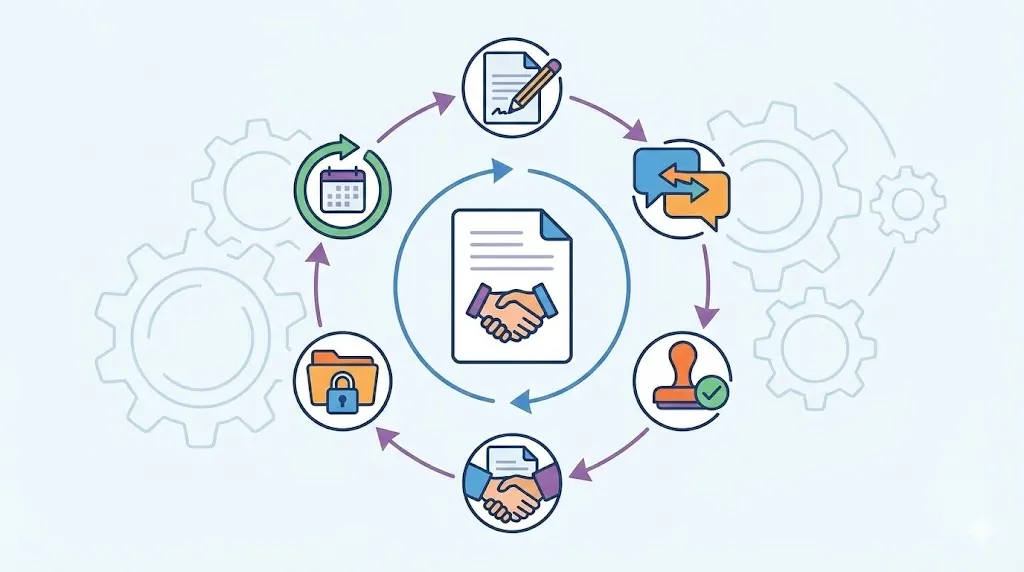
Contract lifecycle management (CLM) software automates and streamlines contract processes from creation to renewal. AI-powered CLM offers several advantages:
Faster contract drafting: Use templates and clause libraries to generate contracts quickly.
Risk detection: Automatically flag risky clauses or missing terms.
Data extraction: Pull key contract details like dates, parties, and obligations without manual entry.
Approval workflows: Facilitate contract review and sign-off by sending automated reminders.
Centralized repository: Keep all contracts securely stored with comprehensive search and version control features.
Performance tracking: Track deadlines, renewals, and compliance status continuously.
For example, a sales team can generate a contract draft in minutes using pre-approved templates. Legal can review flagged risks instantly. Automated alerts remind teams of upcoming renewals, preventing revenue loss.
According to a Gartner report, companies using AI-enabled CLM reduce contract cycle times by up to 50%. They also cut legal risks and improve compliance.
Related articles: Top 5 CLM Solutions in Japan 2026
How Contract Management Software Solves These Challenges
Contract management software removes the manual burden and brings clarity to complex contract portfolios. It helps companies:
Standardize contract creation: By enforcing uniform language and terms across all agreements.
Automate approvals: Workflows accelerate through configurable routing and timely reminders.
Provide real-time visibility: Interactive dashboards display contract status, risk factors, and obligations.
Integrate with business systems: Connect with CRM, ERP, and billing to align contracts with operations.
Support complex models: Handle SaaS, subscription, licensing, and partner agreements easily.
Volody offers a contract management platform designed to meet these needs. It uses AI to draft contracts from templates, review risks, and extract key data automatically. The platform tracks obligations and renewals with alerts to keep teams proactive. It integrates with popular business tools to ensure contracts align with sales and finance processes.
Volody’s features include AI contract drafting, risk analysis, approval workflow automation, and a secure central repository. These capabilities help tech companies close deals faster and reduce revenue leakage.
> See how modern contract management can streamline every stage of your contract lifecycle with Volody's CLM Software.
FAQ
Why is manual contract management risky for technology companies?
Additionally, relying on manual workflows increases the likelihood of errors and delays, while making it difficult to identify significant risks. In technology sectors where contracts are intricate and rapidly evolving, such shortcomings can result in revenue leakage and regulatory noncompliance.
How do subscription models affect contract management?
Managing subscription agreements demands continuous oversight of renewal timelines, invoicing cycles, and compliance with service-level commitments. Conventional manual methods frequently struggle to keep pace with these ongoing responsibilities.
What role does contract management play in revenue growth?
Moreover, the discipline encompasses the administration of pricing models, incentive structures, and performance indicators. Vigilant management of these elements is crucial for optimizing revenue streams and avoiding costly mistakes.
Can AI really improve contract review and drafting?
Yes. AI helps generate drafts from templates, flags risky clauses, and extracts key data. It significantly expedites the review cycle while reducing exposure to legal liabilities.
How does contract management software integrate with other business systems?
Furthermore, modern CLM platforms seamlessly interface with CRM, ERP, and billing systems. This ensures contract terms align with sales, finance, and operations.
What are the signs that a company needs contract management software?
Signs include slow deal closures, missed deadlines, scattered contract data, and frequent legal disputes. These indicate manual methods are no longer sufficient.
How does contract management software improve compliance?
Also, it tracks obligations, sends alerts for deadlines, and enforces approved templates. Also, this reduces the chance of breaches or penalties.
Is contract management software only for legal teams?
No. Sales, procurement, finance, and operations also benefit from better contract visibility and automation.
What should technology companies look for in a contract management solution?
Look for AI features, workflow automation, integration capabilities, and support for complex contract types like SaaS and licensing.
How quickly can a company see benefits from contract management software?
Companies frequently realize accelerated deal cycles and diminished risk within months of deploying preconfigured templates and workflows.
About the Company

Volody AI CLM is an Agentic AI-powered Contract Lifecycle Management platform designed to eliminate manual contracting tasks, automate complex workflows, and deliver actionable insights. As a one-stop shop for all contract activities, it covers drafting, collaboration, negotiation, approvals, e-signature, compliance tracking, and renewals. Built with enterprise-grade security and no-code configuration, it meets the needs of the most complex global organizations. Volody AI CLM also includes AI-driven contract review and risk analysis, helping teams detect issues early and optimize terms. Trusted by Fortune 500 companies, high-growth startups, and government entities, it transforms contracts into strategic, data-driven business assets.





" height="216.72211px" id="FYO0bO80Y" transform="translate(3 6.105)" width="206.073px"/><path d="M 108.174 222 C 88.432 222 70.303 217.239 53.785 207.717 C 37.267 198.196 24.173 185.052 14.504 168.285 C 4.835 151.312 0 132.165 0 110.845 C 0 89.731 4.835 70.792 14.504 54.025 C 24.173 37.052 37.267 23.804 53.785 14.282 C 70.303 4.761 88.432 0 108.174 0 C 128.116 0 146.246 4.761 162.562 14.282 C 179.08 23.804 192.073 37.052 201.541 54.025 C 211.21 70.792 216.044 89.731 216.044 110.845 C 216.044 132.165 211.21 151.312 201.541 168.285 C 192.073 185.052 179.08 198.196 162.562 207.717 C 146.044 217.239 127.915 222 108.174 222 Z M 108.174 183.189 C 120.864 183.189 132.044 180.291 141.713 174.495 C 151.382 168.492 158.936 160.006 164.375 149.035 C 169.814 138.064 172.533 125.334 172.533 110.845 C 172.533 96.355 169.814 83.729 164.375 72.965 C 158.936 61.994 151.382 53.611 141.713 47.815 C 132.044 42.02 120.864 39.122 108.174 39.122 C 95.483 39.122 84.202 42.02 74.332 47.815 C 64.663 53.611 57.109 61.994 51.67 72.965 C 46.231 83.729 43.511 96.355 43.511 110.845 C 43.511 125.334 46.231 138.064 51.67 149.035 C 57.109 160.006 64.663 168.492 74.332 174.495 C 84.202 180.291 95.483 183.189 108.174 183.189 Z" fill="rgba(255, 255, 255, 0.12)" height="222px" id="aa1McFcE9" transform="translate(227.183 3)" width="216.04399999999998px"/><path d="M 42.302 182.257 L 111.799 182.257 L 111.799 216.722 L 0 216.722 L 0 0 L 42.302 0 Z" fill="rgba(255, 255, 255, 0.12)" height="216.72211px" id="yRq4AnrsX" transform="translate(477.721 6.105)" width="111.79899999999998px"/><path d="M 108.174 222 C 88.432 222 70.303 217.239 53.785 207.717 C 37.267 198.196 24.173 185.052 14.504 168.285 C 4.835 151.312 0 132.165 0 110.845 C 0 89.731 4.835 70.792 14.504 54.025 C 24.173 37.052 37.267 23.804 53.785 14.282 C 70.303 4.761 88.432 0 108.174 0 C 128.116 0 146.246 4.761 162.562 14.282 C 179.08 23.804 192.073 37.052 201.541 54.025 C 211.21 70.792 216.045 89.731 216.045 110.845 C 216.045 132.165 211.21 151.312 201.541 168.285 C 192.073 185.052 179.08 198.196 162.562 207.717 C 146.044 217.239 127.915 222 108.174 222 Z M 108.174 183.189 C 120.864 183.189 132.044 180.291 141.713 174.495 C 151.382 168.492 158.936 160.006 164.375 149.035 C 169.814 138.064 172.534 125.334 172.534 110.845 C 172.534 96.355 169.814 83.729 164.375 72.965 C 158.936 61.994 151.382 53.611 141.713 47.815 C 132.044 42.02 120.864 39.122 108.174 39.122 C 95.483 39.122 84.202 42.02 74.332 47.815 C 64.663 53.611 57.108 61.994 51.67 72.965 C 46.231 83.729 43.511 96.355 43.511 110.845 C 43.511 125.334 46.231 138.064 51.67 149.035 C 57.108 160.006 64.663 168.492 74.332 174.495 C 84.202 180.291 95.483 183.189 108.174 183.189 Z" fill="rgba(255, 255, 255, 0.12)" height="222px" id="mo8HQspQ0" transform="translate(609.155 3)" width="216.04500000000007px"/><path d="M 73.727 0 C 95.885 0 115.324 4.45 132.044 13.351 C 148.967 22.252 161.957 34.982 171.027 51.541 C 180.287 67.894 184.917 86.937 184.917 108.671 C 184.917 130.405 180.287 149.449 171.027 165.801 C 161.957 181.947 148.967 194.47 132.044 203.371 C 115.324 212.271 95.885 216.722 73.727 216.722 L 0 216.722 L 0 0 Z M 72.216 179.773 C 94.374 179.773 111.497 173.564 123.583 161.144 C 135.669 148.724 141.713 131.233 141.713 108.671 C 141.713 86.109 135.669 68.515 123.583 55.888 C 111.497 43.055 94.374 36.638 72.216 36.638 L 42.302 36.638 L 42.302 179.773 Z" fill="rgba(255, 255, 255, 0.12)" height="216.72211px" id="I3iXX5Hi_" transform="translate(859.693 6.105)" width="184.91699999999992px"/><path d="M 185.22 0 L 113.91 141.273 L 113.91 216.722 L 71.61 216.722 L 71.61 141.273 L 0 0 L 47.74 0 L 93.06 99.046 L 138.08 0 Z" fill="rgba(255, 255, 255, 0.12)" height="216.72211px" id="nzHyWC0_d" transform="translate(1061.78 6.105)" width="185.22000000000003px"/></svg>)