

HR teams hold a unique position in shaping how organizations manage contracts and workforce relationships. The shift to hybrid work and digital processes means HR can no longer stay on the sidelines. It’s time for HR leaders to step up and take charge, guiding their companies through new challenges with smart contract lifecycle management (CLM). This article explores why HR must assume leadership in this space and how modern contract management platforms support this role.
TL;DR
The pandemic changed work forever, making remote and hybrid models the norm for many organizations.
Additionally, HR has a critical role in ensuring inclusivity and fairness as teams operate across diverse locations and configurations.
Traditional leadership roles like CFOs and CIOs no longer dominate; HR needs to be at the center of organizational strategy.
Younger HR professionals, closer to digital tools, have a chance to drive change and innovation.
Contract lifecycle management software helps HR control contracts, reduce risk, and improve collaboration.
Modern CLM platforms offer AI-powered drafting, review, and obligation tracking that save time and improve compliance.
How Has the Pandemic Shifted HR’s Role in Contract Management?
The global health crisis fundamentally altered workplace dynamics and organizational practices. Additionally, remote work, which was previously regarded as a privilege or an anomaly, rapidly evolved into an essential component of business continuity. Hybrid models mixing office and home work are now standard. This shift impacts how HR manages contracts related to employees, vendors, and partners.
Before, contracts were often paper-based or scattered across departments. Now, teams need digital tools to keep track of agreements, deadlines, and obligations. HR must ensure contracts reflect new realities like flexible hours, remote work policies, and compliance with evolving labor laws.
HR’s role has expanded beyond hiring and payroll to managing complex legal agreements that affect workforce stability and productivity. Key responsibilities encompass:
Developing contracts that clearly establish the parameters for remote work arrangements.
Navigating compliance requirements associated with labor laws across multiple domestic and international jurisdictions.
Partnering with legal and procurement departments to oversee vendor contract management with precision.
Monitoring contract renewals, amendments, and compliance issues proactively to mitigate risk.
HR leaders who embrace these responsibilities gain influence and help their organizations avoid costly legal risks. According to Gartner, companies with integrated HR and contract management systems reduce contract cycle times by up to 30%, improving agility in workforce management.
Related articles: How to Improve HR Contract Management with CLM
Why Must HR Take the Leadership Position Now?
For years, HR has often played a supporting role while finance, IT, and legal led digital transformation efforts. Additionally, the pandemic, however, altered that dynamic. HR is now at the center of employee experience, compliance, and operational continuity.
HR leaders face pressure to:
Navigate hybrid work policies fairly.
Support employee well-being and engagement remotely.
Manage a growing volume of contracts with vendors and service providers.
Align workforce contracts with business goals and compliance needs.
This expanded remit requires HR to spearhead initiatives that integrate people management with contract oversight. They must become strategic partners, not just administrators.
Younger HR professionals have an advantage here. Moreover, many are more comfortable with technology and digital collaboration tools. They can push for adopting contract lifecycle management platforms that automate routine tasks and provide better visibility into contract data.
Taking charge means:
Advocating for digital contract tools that integrate with HR systems.
Leading cross-functional teams to streamline contract workflows.
Using data insights from contracts to inform workforce planning and risk management.
Cultivating an environment where HR champions innovation alongside compliance.
This leadership position becomes indispensable for organizations navigating continuous change. HR cannot afford to defer responsibility for contract governance; instead, they must proactively shape how contracts underpin the evolving workforce.
Related articles: Contract Management Solutions Shaping Pharma’s Future in 2026
What Challenges Do HR Teams Face in Contract Lifecycle Management?
Managing contracts in today’s world is complex. HR teams encounter several challenges that require new approaches and tools:
Fragmented Contract Data
Contracts often reside in multiple systems or even physical files. This fragmentation makes it hard for HR to get a full picture of obligations, deadlines, and risks. Searching for contract details wastes time and increases errors.
Manual Processes
HR departments frequently depend on manual drafting, review, and approval workflows. This slows down contract turnaround and increases the chance of missing critical clauses or compliance requirements.
Compliance Risks
Labor laws and regulations vary by region and change frequently. HR must ensure contracts comply with these rules to avoid fines or legal disputes. Moreover, without automated checks, compliance is difficult to maintain.
Collaboration Barriers
The process of drafting and negotiating contracts requires input from HR, legal, finance, and various business units. When collaboration tools are insufficient, it often results in version confusion, delays, and miscommunication.
Managing Renewals and Obligations
Effectively monitoring critical contract milestones such as renewal dates, notice periods, and deliverables is essential to avoid unintended renewals or penalties. A significant number of HR teams lack systems to monitor these effectively.
Adapting to Hybrid Work Policies
Contracts now need to address flexible work schedules, remote work expectations, and data security policies. HR must update templates and clauses regularly to reflect these changes.
Related articles: Top Contract Lifecycle Management Solutions for Insurance
How Can HR Drive Inclusivity and Fairness in Hybrid Work Contracts?
Hybrid work models bring new challenges for inclusion and fairness. Some employees work in offices, others from home, and some from remote locations. Additionally, HR must also ensure that contract terms are equitable and do not inadvertently disadvantage any group.
Key steps HR can take include:
Standardizing contract language to guarantee equal rights and benefits regardless of work location.
Crafting detailed frameworks that encompass flexible hours, reimbursement for remote work-related expenses, and robust data privacy measures.
Utilizing contract management solutions to track compliance with diversity and inclusion benchmarks.
Designing specialized training initiatives aimed at managers to promote consistent and fair treatment across hybrid teams.
Collecting employee input methodically to enhance contracts and organizational guidelines.
For example, if some employees receive stipends for home office equipment, contracts should specify eligibility criteria clearly. This avoids confusion and perceived unfairness.
HR can also use contract data to spot trends. If certain groups face more contract disputes or unclear terms, HR can intervene early to improve policies.
By leading these efforts, HR builds trust and engagement across a dispersed workforce. Inclusivity in contracts becomes a foundation for successful hybrid work.
Related articles: 4 powerful ways to improve contract management
What Skills and Mindset Should HR Leaders Adopt?
HR leaders must combine people skills with digital savvy and strategic thinking. Additionally, the pandemic has fundamentally altered the expectations placed on HR leadership roles. Here are essential qualities:
Digital fluency: Understand how contract management software works and how it fits with HR systems.
Data-driven decision making: Use contract data and analytics to guide workforce planning and risk mitigation.
Collaboration: Work closely with legal, finance, and IT to align contract processes.
Change management: Lead adoption of new tools and processes within HR and across the company.
Agility: Respond promptly and effectively to changes in business conditions and regulatory requirements affecting contracts and policies.
Inclusivity: Advocate for contract provisions that uphold equity and nondiscrimination across all employee groups.
Young HR professionals frequently excel in integrating new technologies. They should proactively deepen their expertise in contract lifecycle management and champion innovative solutions. Veteran HR leaders can mentor and support this digital transformation.
How Contract Lifecycle Management Software Supports HR Leadership
Contract lifecycle management (CLM) software centralizes and automates contract processes. Additionally, in the HR context, it enhances oversight of employment contracts, vendor agreements, and compliance documentation.
Key benefits include:
Central repository: Store all contracts in one secure place with easy search and retrieval.
Template and clause libraries: Standardized language accelerates the drafting process while maintaining consistency across documents.
Automated workflows: Contract routing for review and approval is streamlined, with built-in reminders and escalation mechanisms to keep processes on track.
AI-powered review: Advanced algorithms detect risky clauses, identify missing terms, and highlight potential compliance gaps with high accuracy.
Obligation tracking: Critical deadlines, contract renewals, and deliverables are continuously monitored to prevent any lapse in commitments.
Collaboration tools: These facilitate real-time commenting and maintain comprehensive version histories among HR, legal, and business stakeholders.
Integration: The software interfaces smoothly with HR systems, e-signature platforms, and ERP solutions, enhancing overall workflow productivity.
Implementing CLM software alleviates the manual workload associated with contract administration and significantly reduces error rates for HR leadership. Furthermore, it provides in-depth analytics on contract performance and risk exposure, enabling more informed and proactive governance decisions. Designed with modern work environments in mind, the platform supports secure remote access and promotes collaborative contract management within hybrid workplace models.
Explore related content: Contract Management Software for Sales Teams | CLM Guide
Practical Example: Managing Remote Work Contracts
Imagine a company shifting to hybrid work. Additionally, HR must revise contracts to incorporate clauses addressing remote work arrangements, data security protocols, and equipment reimbursement policies.
Without a dedicated contract lifecycle management system, HR might:
Circulate contract templates through email, which raises the likelihood of version control issues.
Maintain paper or digital logs to track which employees have signed the updated contracts.
Struggle to verify compliance with the newly established policy standards.
Spend considerable effort locating contract details during audits.
With an integrated CLM platform, HR can:
Modify templates and clauses seamlessly within a centralized repository.
Automate contract requests and approvals through workflows.
Use AI to check contracts for missing or inconsistent terms.
Track signatures and send automated reminders.
Generate reports on contract status and compliance.
This example shows how CLM tools empower HR to lead contract management efficiently and accurately.
Related articles: Atlanta Contract Management: Top AI CLM Solutions
Why Contract Management Software Matters for HR Today
The complexity of workforce contracts and the speed of change make manual contract management unsustainable. Additionally, HR is increasingly responsible for implementing digital solutions that address these shifting business needs.
The software enables:
Faster contract creation and approval cycles.
Reduced legal and compliance risks.
Better visibility into contract obligations and performance.
Enhanced collaboration across departments.
Support for hybrid and remote workforce policies.
According to a report by Forrester, organizations using CLM software see a 20-40% reduction in contract cycle time and significant improvements in compliance.
HR leaders who adopt these tools position themselves as strategic drivers of business success. They improve employee experience, reduce risk, and enable agility.
Related articles: Top Contract Solutions for Hyderabad
How CLM Software Solves This
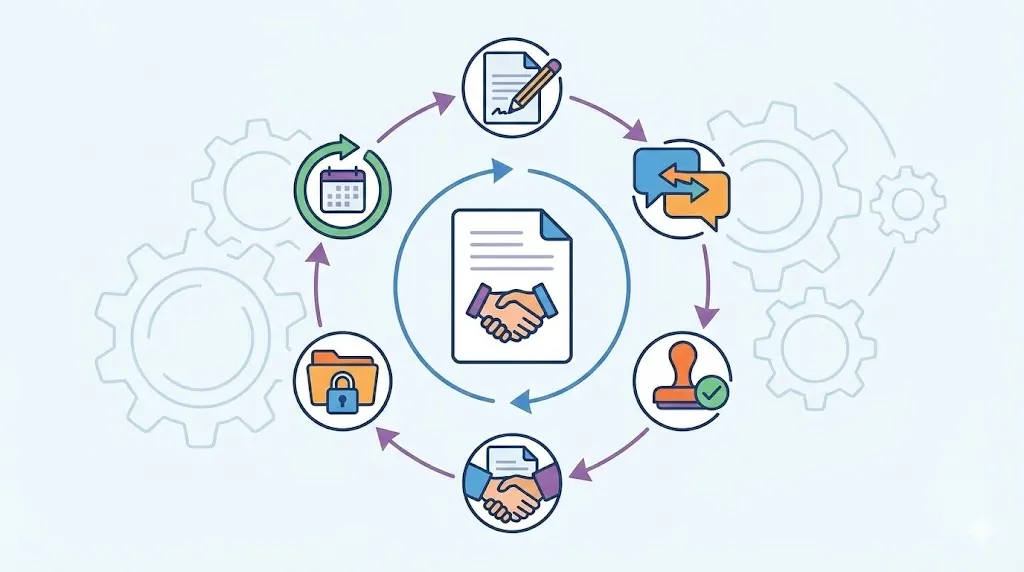
Contract lifecycle management software helps HR teams manage contracts from creation to renewal. Additionally, it streamlines routine tasks and consolidates all agreements into a unified, authoritative repository.
Modern CLM platforms offer AI features that draft contracts from templates, review for risks, and extract key data. They track obligations like renewal dates and compliance checkpoints automatically.
Collaboration tools let HR, legal, and business units work together smoothly, even when remote. Automated workflows speed approvals and reduce bottlenecks.
Volody’s contract management platform includes these features and more. It supports HR teams with AI contract drafting, risk analysis, obligation tracking, and secure storage. Integration with HR systems and e-signature tools makes contract processes seamless.
> Looking for a better way to manage contracts? Discover Volody's CLM Software.
FAQ
Why should HR lead the management of contracts from initiation to completion?
Additionally, HR is responsible for employee and vendor agreements that directly influence workforce stability and compliance.
Additionally, how has remote work changed contract management for HR?
Remote and hybrid work require contracts to address flexible hours, data security, and equipment policies. It is essential for HR to revise contracts promptly while maintaining equitable treatment across different locations.
What challenges do HR teams face without dedicated software for contract management?
Reliance on manual processes introduces delays, errors, and increases compliance risks. Fragmented contract data complicates tracking obligations. Collaboration across departments becomes inefficient.
How can younger HR professionals drive change in contract management?
Moreover, they often possess advanced digital skills and can lead the integration of modern contract tools. Their fresh perspective helps push innovation and agility in HR processes.
What features should HR look for in a comprehensive contract management platform?
Look for AI-powered drafting and review, automated workflows, obligation tracking, collaboration tools, and integration with HR and e-signature systems.
In addition, can software designed for managing contracts enhance compliance?
Yes. Automated validations and alert systems ensure contracts adhere to legal and policy standards. Monitoring obligations minimizes the risk of overlooked deadlines or penalties.
How does contract management software support hybrid work policies?
It centralizes contract data accessible remotely, supports digital approvals, and helps standardize contract language for fairness across work locations.
Furthermore, what is the impact of overseeing contract lifecycles on organizational agility?
Accelerated contract cycles and enhanced transparency enable HR and business leaders to adapt swiftly to evolving workforce demands and regulatory changes.
Also, how does collaboration improve with contract management tools?
Real-time commenting, version control, and automated workflows reduce confusion and speed up contract negotiations among HR, legal, and business teams.
Is software for handling contract lifecycles expensive for HR teams?
Costs vary, but many platforms offer scalable options. The time saved, risk reduced, and compliance improved often justify the investment.
This article explains why HR must step up as leaders in managing contracts throughout their lifecycle. The evolving work environment demands new skills and digital tools. By embracing CLM software, HR can improve contract efficiency, reduce risk, and support a fair, inclusive workforce.
About the Company

Volody AI CLM is an Agentic AI-powered Contract Lifecycle Management platform designed to eliminate manual contracting tasks, automate complex workflows, and deliver actionable insights. As a one-stop shop for all contract activities, it covers drafting, collaboration, negotiation, approvals, e-signature, compliance tracking, and renewals. Built with enterprise-grade security and no-code configuration, it meets the needs of the most complex global organizations. Volody AI CLM also includes AI-driven contract review and risk analysis, helping teams detect issues early and optimize terms. Trusted by Fortune 500 companies, high-growth startups, and government entities, it transforms contracts into strategic, data-driven business assets.





" height="216.72211px" id="FYO0bO80Y" transform="translate(3 6.105)" width="206.073px"/><path d="M 108.174 222 C 88.432 222 70.303 217.239 53.785 207.717 C 37.267 198.196 24.173 185.052 14.504 168.285 C 4.835 151.312 0 132.165 0 110.845 C 0 89.731 4.835 70.792 14.504 54.025 C 24.173 37.052 37.267 23.804 53.785 14.282 C 70.303 4.761 88.432 0 108.174 0 C 128.116 0 146.246 4.761 162.562 14.282 C 179.08 23.804 192.073 37.052 201.541 54.025 C 211.21 70.792 216.044 89.731 216.044 110.845 C 216.044 132.165 211.21 151.312 201.541 168.285 C 192.073 185.052 179.08 198.196 162.562 207.717 C 146.044 217.239 127.915 222 108.174 222 Z M 108.174 183.189 C 120.864 183.189 132.044 180.291 141.713 174.495 C 151.382 168.492 158.936 160.006 164.375 149.035 C 169.814 138.064 172.533 125.334 172.533 110.845 C 172.533 96.355 169.814 83.729 164.375 72.965 C 158.936 61.994 151.382 53.611 141.713 47.815 C 132.044 42.02 120.864 39.122 108.174 39.122 C 95.483 39.122 84.202 42.02 74.332 47.815 C 64.663 53.611 57.109 61.994 51.67 72.965 C 46.231 83.729 43.511 96.355 43.511 110.845 C 43.511 125.334 46.231 138.064 51.67 149.035 C 57.109 160.006 64.663 168.492 74.332 174.495 C 84.202 180.291 95.483 183.189 108.174 183.189 Z" fill="rgba(255, 255, 255, 0.12)" height="222px" id="aa1McFcE9" transform="translate(227.183 3)" width="216.04399999999998px"/><path d="M 42.302 182.257 L 111.799 182.257 L 111.799 216.722 L 0 216.722 L 0 0 L 42.302 0 Z" fill="rgba(255, 255, 255, 0.12)" height="216.72211px" id="yRq4AnrsX" transform="translate(477.721 6.105)" width="111.79899999999998px"/><path d="M 108.174 222 C 88.432 222 70.303 217.239 53.785 207.717 C 37.267 198.196 24.173 185.052 14.504 168.285 C 4.835 151.312 0 132.165 0 110.845 C 0 89.731 4.835 70.792 14.504 54.025 C 24.173 37.052 37.267 23.804 53.785 14.282 C 70.303 4.761 88.432 0 108.174 0 C 128.116 0 146.246 4.761 162.562 14.282 C 179.08 23.804 192.073 37.052 201.541 54.025 C 211.21 70.792 216.045 89.731 216.045 110.845 C 216.045 132.165 211.21 151.312 201.541 168.285 C 192.073 185.052 179.08 198.196 162.562 207.717 C 146.044 217.239 127.915 222 108.174 222 Z M 108.174 183.189 C 120.864 183.189 132.044 180.291 141.713 174.495 C 151.382 168.492 158.936 160.006 164.375 149.035 C 169.814 138.064 172.534 125.334 172.534 110.845 C 172.534 96.355 169.814 83.729 164.375 72.965 C 158.936 61.994 151.382 53.611 141.713 47.815 C 132.044 42.02 120.864 39.122 108.174 39.122 C 95.483 39.122 84.202 42.02 74.332 47.815 C 64.663 53.611 57.108 61.994 51.67 72.965 C 46.231 83.729 43.511 96.355 43.511 110.845 C 43.511 125.334 46.231 138.064 51.67 149.035 C 57.108 160.006 64.663 168.492 74.332 174.495 C 84.202 180.291 95.483 183.189 108.174 183.189 Z" fill="rgba(255, 255, 255, 0.12)" height="222px" id="mo8HQspQ0" transform="translate(609.155 3)" width="216.04500000000007px"/><path d="M 73.727 0 C 95.885 0 115.324 4.45 132.044 13.351 C 148.967 22.252 161.957 34.982 171.027 51.541 C 180.287 67.894 184.917 86.937 184.917 108.671 C 184.917 130.405 180.287 149.449 171.027 165.801 C 161.957 181.947 148.967 194.47 132.044 203.371 C 115.324 212.271 95.885 216.722 73.727 216.722 L 0 216.722 L 0 0 Z M 72.216 179.773 C 94.374 179.773 111.497 173.564 123.583 161.144 C 135.669 148.724 141.713 131.233 141.713 108.671 C 141.713 86.109 135.669 68.515 123.583 55.888 C 111.497 43.055 94.374 36.638 72.216 36.638 L 42.302 36.638 L 42.302 179.773 Z" fill="rgba(255, 255, 255, 0.12)" height="216.72211px" id="I3iXX5Hi_" transform="translate(859.693 6.105)" width="184.91699999999992px"/><path d="M 185.22 0 L 113.91 141.273 L 113.91 216.722 L 71.61 216.722 L 71.61 141.273 L 0 0 L 47.74 0 L 93.06 99.046 L 138.08 0 Z" fill="rgba(255, 255, 255, 0.12)" height="216.72211px" id="nzHyWC0_d" transform="translate(1061.78 6.105)" width="185.22000000000003px"/></svg>)