

Vendor agreements should give businesses enforceable oversight of vendor performance, billing, compliance, and risk controls. A well-constructed audit clause defines what teams may review, how reviews will be conducted, and what follows a failed review. It also protects the vendor from unreasonable disruption or unnecessary disclosure. This guide sets out the terms businesses should address before signing.
TL;DR
Define audit purpose, scope, timing, methods, access rules, and limits before the vendor relationship begins.
Cover billing, pricing, insurance, security, compliance, resilience, service quality, and performance records.
Extend suitable audit duties to subcontractors that handle data or deliver important contracted services.
Address vendor resistance, confidentiality concerns, costs, privacy limits, and restricted third-party evidence access.
Require written findings, response deadlines, corrective plans, dispute steps, and remedies for serious failures.
Review audit rights during renewals, incidents, scope changes, regulatory events, and vendor relationship closeout.
Establishing the Purpose and Scope of Audit Rights
Contract Audit Rights let a business check whether a vendor keeps its promises. They support reviews of billing, service quality, security, and legal duties.
They also help detect overbilling and weak controls before problems grow. A clear clause gives the buyer evidence when a dispute arises.
Connecting Audit Rights to Vendor Risk
Audit scope should match the vendor’s risk and business role. A payroll vendor needs wider access than a supplier of office furniture.
Consider the vendor’s data access, service importance, financial effect, and regulatory exposure. Critical vendors may need onsite reviews, technical testing, and faster document delivery.
A vendor handling payment data may require security reports and control testing. A vendor supporting a vital system may also need continuity and recovery evidence.
The clause should support a risk-based review, not unlimited inspection. This balance makes the right easier to negotiate and use.
Defining Auditable Activities and Records
The agreement should name the activities that the buyer may review. These may include service delivery, pricing, invoices, staffing, quality, and security controls.
It should also cover systems, facilities, work papers, transaction records, and relevant personnel. Access should include records held by approved subcontractors when they support the service.
The buyer should be able to review evidence linked to specific duties. A vague right to inspect “vendor operations” may invite delay and argument.
Use clear terms for remote access, onsite visits, interviews, samples, and electronic records. These details turn a broad promise into a workable process.
Distinguishing Audits, Assessments, and Reports
A direct audit lets the buyer examine evidence through its team or an outside reviewer. An assessment usually uses questions, samples, or focused testing.
A report, such as a control report, gives indirect evidence from an independent assessor. Each method serves a different purpose and carries different limits.
The agreement should say when each method is acceptable. It should also preserve direct audit rights when a report does not answer the buyer’s concern.
A scope checklist can cover:
Services: Review contracted work, service levels, quality targets, and delivery records. Include changes that affect the vendor’s duties.
Records: Include invoices, time logs, pricing files, payment support, and transaction histories. Match each record type with the duty it proves.
Systems and locations: Cover relevant platforms, offices, data centers, and storage sites. Limit access to systems tied to the contracted service.
People and third parties: Permit interviews with responsible staff and access to relevant subcontractor evidence. Require suitable cooperation from each covered party.
Legal duties: Include privacy, security, insurance, industry rules, and regulatory commitments. State which evidence can confirm each obligation.
Related articles: Understanding Contract Risk Exposure in Business
Structuring the Clause for Practical Use
An audit right has little value if the process remains unclear. The clause should set practical rules for notice, access, timing, evidence, and follow-up.
It should also explain how the buyer may respond to urgent concerns. Routine reviews and emergency reviews need different procedures.
Scope, Method, and Notice Requirements
State whether audits may occur remotely, onsite, or through secure electronic access. Permit document requests, interviews, samples, system checks, and control testing.
Most routine audits need reasonable advance notice. The clause should define that notice period and name the required request details.
Those details may include the review purpose, requested records, proposed dates, and reviewer names. Notice should not become a barrier when a serious incident needs fast action.
Business-hour limits can prevent unreasonable disruption. Still, the clause should allow access during other hours when systems operate continuously or an incident demands it.
Frequency, Timing, and Trigger Events
Set routine audit periods that match the vendor’s risk. Annual reviews may suit critical vendors, while lower-risk suppliers may need less frequent checks.
The clause should permit extra reviews after specific trigger events. These events can include a security incident, material breach, regulatory request, or credible billing concern.
A buyer may also need an audit after a major service failure. The agreement should explain when notice may be shorter for such reviews.
A useful clause design matrix includes:
Routine audits: Use planned reviews during the contract term. Set a normal notice period, standard scope, and reasonable cost limit.
Event-driven audits: Use these after incidents, disputes, breaches, or credible concerns. Permit faster access and focused testing.
Regulatory audits: Support reviews needed by regulators, laws, or industry rules. Require the vendor to provide prompt cooperation and evidence.
Termination reviews: Use these before or after exit when records, charges, data, or duties remain unresolved. Link this review to the Contract Exit Management plan.
Related articles: Key Clauses Every License Agreement Should Include
Records and Reports to Include in the Agreement
A business cannot test vendor performance without useful evidence. The agreement should name the records, reports, and systems that support oversight.
Record requests should connect to real contract duties. They should not create broad access to unrelated business information.
Financial, Billing, and Performance Records
Financial review can test whether charges match agreed prices and services. Request invoices, rate cards, time records, usage data, and payment support.
Where relevant, request audited financial statements or internal financial records. These can show financial health, payment risk, or the effect of disputed charges.
Tax filings may matter when the vendor handles tax duties or charges. The contract should explain which records apply and who may review them.
Performance records should include service levels, delivery times, quality results, ticket data, and customer measures. These records help compare actual results with promised standards.
Keep a clear link between each metric and its remedy. A missed service level may trigger credits, a cure plan, or deeper review.
Compliance and Security Evidence
Security evidence may include control reports, vulnerability scans, penetration tests, and policy records. It may also include privacy reviews and access management records.
PCI compliance reports may matter when the vendor handles payment card data. Other vendors may need evidence of industry rules or specific customer requirements.
Ask for evidence that fits the service and risk. A large report may still fail to answer a focused question about one control.
The clause should permit technology-enabled audits where suitable. Secure portals, system logs, and remote interviews can reduce time and disruption.
Insurance and Resilience Documentation
Insurance certificates can confirm required coverage and policy periods. The buyer may also need policy references, exclusions, limits, and renewal evidence.
Business continuity plans show how the vendor will respond to major disruption. Disaster recovery tests show whether those plans work in practice.
Request recovery objectives, test results, incident response materials, and open improvement actions. These records help assess the vendor’s ability to restore important services.
The agreement should require updates after material changes. A new data center, platform, or subcontractor can change recovery and security risks.
An evidence register can connect each request to ownership and timing:
Document: Name the exact report, record, or certificate required. Avoid broad terms that invite different interpretations.
Contract duty: Identify the clause, service level, or control supported by that evidence. This helps reviewers judge relevance.
Vendor owner: Name the responsible contact and backup contact. Clear ownership reduces delay during urgent reviews.
Review cycle: Record when the evidence is due and how often it needs review. Trigger extra reviews after serious events.
Retention period: Set the period for keeping each record. Align it with audit rights and possible disputes.
Related articles: Procurement Contract Risks That Could Sink Your Business
Managing the Challenges of Exercising Audit Rights
Vendors may resist audits for valid or strategic reasons. They may fear disclosure of trade secrets, customer data, or internal weaknesses.
Poor drafting can also create needless cost and disruption. Strong clauses anticipate these issues while preserving meaningful access.
Vendor Resistance and Restricted Access
A vendor may claim that its systems hold data for many customers. It may offer a third-party report instead of direct access.
The buyer should define acceptable alternatives before a dispute starts. The clause can permit reports for routine checks but preserve direct reviews for material concerns.
A vendor may also object to interviews, samples, or onsite visits. Clear limits on scope and time can answer reasonable burden concerns.
Repeated refusal needs a clear response. The agreement should treat blocked access as a breach when the request follows the agreed process.
Confidentiality and Data Protection Concerns
Audits should protect information that does not relate to the contract. Reviewers should see only relevant records, systems, and locations.
Use secure data rooms for sensitive files. Limit downloads, apply access logs, and require secure deletion after the review ends.
Auditors should follow the contract’s confidentiality rules. The business should also control the use of outside assessors and technical specialists.
Privacy needs careful handling when records contain personal data. The clause can require masked data, samples, redaction, or supervised access.
Cost Allocation and Operational Disruption
The buyer often pays for routine audits. The vendor may pay follow-up costs when a review finds material noncompliance.
Incident reviews may also shift costs to the vendor. This result should appear clearly in the agreement, with rules for reasonable expenses.
Set limits for travel, specialist work, and outside counsel. Require prior approval for unusual costs unless an urgent event prevents it.
A risk table can link each obstacle with a response:
Confidentiality objection: Use redaction, secure rooms, and bound auditors. Escalate if the vendor withholds relevant evidence without cause.
Third-party report offered: Accept it for low-risk checks when it answers the request. Require direct testing when the report leaves a material gap.
Excessive burden claim: Narrow the sample, schedule business-hour work, and use remote access. Escalate repeated delay or unsupported refusal.
High audit cost: Set expense limits and approval rules. Shift reasonable follow-up costs after proven material noncompliance.
Privacy concern: Use masked records, limited fields, and supervised access. Escalate when privacy claims block necessary review without alternatives.
Related articles: Contract Review: A Strategic Guide to Key Risks
Remedies, Reporting, and Dispute Handling
An audit should lead to action, not simply produce a report. The agreement should define what happens after the buyer identifies a problem.
Remedies should match the seriousness of the finding. Small process gaps need different treatment from fraud, security failures, or repeated refusal.
Audit Reports and Vendor Response Duties
The reviewer should issue a written report with clear findings and supporting evidence. Each finding should identify the related contract duty or control.
The vendor should have a set time to respond. Its response should state whether it agrees, disputes, or accepts the finding.
For accepted findings, require a corrective-action plan. The plan should name an owner, due date, fix, and proof of completion.
The buyer should verify closure rather than relying on a promise. Verification may require new documents, testing, interviews, or a follow-up audit.
Escalation and Dispute Procedures
The clause should provide a fair way to challenge disputed findings. The parties may first use contract managers or senior business contacts.
If disagreement continues, an independent reviewer may assess the disputed evidence. The agreement should define who selects that reviewer and who pays.
Both parties should preserve relevant records during a dispute. This includes emails, system logs, invoices, reports, and audit work papers.
A remediation workflow can follow these steps:
Classify the finding: Rate it by financial effect, service impact, security risk, and legal exposure. Use clear categories understood by both parties.
Set the response date: Give the vendor a defined period to respond and propose a fix. Shorten the period for urgent risks.
Approve the plan: Check the owner, action, due date, and proof required. Reject plans that only promise future review.
Verify completion: Test the fix with records, samples, or technical evidence. Keep proof that supports closure.
Escalate failure: Move unresolved issues to senior leaders, dispute review, or formal remedies. Use cure rights when the agreement permits.
Close the matter: Record the final decision, evidence, and remaining risk. Keep the file for later renewal and Contract Closeout Process reviews.
Related articles: Understanding Contractual Risk in Business Contracts
Extending Oversight to Subcontractors and Regulators
A vendor may not perform every service itself. Subcontractors may host systems, process data, provide staff, or run key operations.
The buyer still needs evidence when those parties perform the vendor’s duties. The main agreement should require suitable flow-down terms.
Subcontractor Flow-Down Obligations
Require the vendor to place audit duties in relevant subcontractor agreements. Those duties should cover records, security, confidentiality, cooperation, and remediation.
The vendor should identify subcontractors that handle sensitive data or critical services. It should provide notice before adding or changing important fourth parties.
The flow-down terms should support remote and onsite reviews where needed. They should also preserve access after a subcontractor relationship ends.
The primary vendor remains accountable for coordination. It should not avoid its duties by pointing to a separate company.
Regulatory and Customer Access
Some laws or industry rules may require direct access for regulators. The contract should support that access without unnecessary delay.
Customers or external auditors may also need evidence. This can happen when the vendor supports regulated services or shared customer systems.
The buyer should require prompt notice of such requests. The vendor should help prepare records, respond to questions, and protect confidential information.
The clause should explain conflicts between audit rights and legal limits. It should require the vendor to offer lawful alternatives when direct access is restricted.
Subcontractor Evidence and Access Controls
Maintain a current list of relevant fourth parties and their roles. Fourth parties are subcontractors used by the vendor’s own subcontractors.
Identify where each party stores data and performs important work. This information helps the buyer assess access, location, and resilience risks.
Use access controls that limit evidence to the needed service. Require secure transfer, named reviewers, and documented handling of sensitive data.
A responsibility map can show who must act:
Business: Defines the review need, approves scope, and protects received information. It also tracks findings and required remedies.
Primary vendor: Coordinates access, supplies evidence, and manages subcontractor responses. It remains responsible for contract performance.
Subcontractor: Preserves records and supports approved reviews. It must follow flowed-down security and confidentiality duties.
Independent assessor: Performs agreed testing and protects work papers. It should report facts without widening the review scope.
Regulator: Receives required evidence under applicable rules. The vendor should support lawful requests and explain any access limits.
Related articles: Essential Contract Resources Every Sales Team Needs to Win
Negotiating and Maintaining Effective Audit Rights
Audit rights need balance during negotiation. Buyers need useful access, while vendors need clear limits on burden and disclosure.
The strongest clause can still weaken over time. Teams should review it as services, risks, and rules change.
Matching Rights to Service Criticality
Critical vendors need broader evidence and faster response times. Their contracts may require annual audits, incident reviews, and direct testing.
Lower-risk vendors may use questionnaires and periodic reports. Their clauses can set narrower access and longer notice periods.
Risk should not depend only on spend. A low-cost vendor may still handle sensitive data or support a vital process.
Use service criticality, data access, financial effect, and recovery needs. These factors support a clear reason for each audit term.
Negotiating Acceptable Alternatives
Vendors may restrict direct audits because of shared systems or customer commitments. Acceptable alternatives can preserve useful oversight.
These may include independent control reports, PCI reports, certifications, and targeted questionnaires. Secure evidence rooms and customer audit summaries may also help.
Alternatives should answer the actual risk question. A general certificate may not prove a specific control worked during an incident.
Keep direct rights for material concerns and unresolved gaps. The contract should say when an alternative no longer provides enough assurance.
Reviewing Rights During the Vendor Lifecycle
Review audit terms during renewals and major scope changes. Also review them after incidents, mergers, new regulations, or subcontractor changes.
Compare past findings with current risks. Repeated gaps may require shorter response times or stronger remedies.
Contract teams should record open findings and promised fixes. They should also confirm that reports and certificates remain current.
The Contract Termination Process needs audit support too. Before exit, confirm charges, data return, open incidents, and surviving duties.
Preserving Historical Records and Access
Record retention should last as long as audit rights may apply. It should also cover renewal cycles, disputes, and post-termination duties.
Keep historical pricing, invoices, service reports, and compliance evidence. These records may reveal billing errors that appear months later.
The agreement should state where records reside and how they remain accessible. A vendor should not delete evidence when the relationship ends.
A renewal review checklist can cover:
Risk changes: Reassess data access, service criticality, spend, and recovery needs. Update audit scope when those factors change.
Audit results: Review findings, response quality, and repeated weaknesses. Use the results to adjust frequency and remedies.
Open findings: Confirm owners, due dates, and evidence for closure. Carry unresolved issues into renewal approval.
Regulatory updates: Check new privacy, security, industry, and reporting duties. Amend the clause when existing rights fall short.
Reporting quality: Test whether reports answer real oversight needs. Replace weak evidence with targeted testing where necessary.
Clause changes: Record new access, retention, cost, and termination terms. Keep the signed version easy to find.
Related articles: Contract Compliance: Importance & Best Practices
Why Contract Management Software Matters
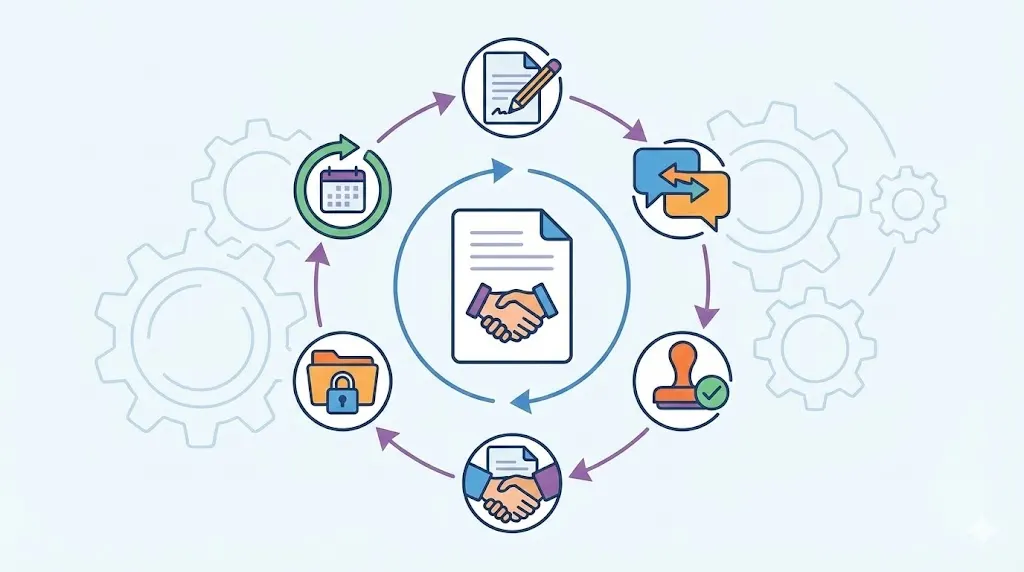
Contract management software helps teams find audit clauses and related duties quickly. A central repository can hold agreements, amendments, insurance records, reports, and review evidence.
Structured metadata can capture renewal dates, vendors, service risk, and retention periods. Searchable text helps legal and procurement teams locate the right clause before an audit begins.
Automation can send alerts for expiring certificates, review dates, and remediation deadlines. It can also route approval tasks to legal, finance, security, and compliance teams.
Volody’s CLM Software supports a central contract repository, AI metadata extraction, and obligation management. The repository helps teams search signed agreements and amendments. AI metadata extraction can identify audit rights, renewal dates, and payment terms. Obligation management can track evidence requests, corrective actions, and closeout duties.
For example, a security review can trigger an alert, gather the vendor’s reports, and track each open finding through closure.
Explore a simpler way to create, review, approve, and track contracts with Volody's CLM Software.
FAQ
What is a right-to-audit clause in a vendor contract?
A right-to-audit clause gives a business authority to review vendor records, systems, facilities, controls, and performance. It helps verify billing, service delivery, security, and compliance duties. The clause should define notice, timing, access methods, confidentiality, costs, and remedies. It should also explain what happens when the vendor refuses reasonable access.
What should the scope of contractual audit rights include?
The scope should cover records and activities tied to the vendor’s duties. These may include billing, pricing, service levels, quality, security, privacy, insurance, compliance, and continuity. It may also cover systems, facilities, staff, subcontractors, and electronic evidence. The agreement should separate routine document requests from onsite or technical audits.
How often should businesses be allowed to audit vendors?
Audit frequency should match the vendor’s risk, service role, data access, and financial importance. Critical vendors may need annual reviews and faster event-driven checks. Lower-risk vendors may use less frequent reviews and standard reports. The clause should still allow extra audits after incidents, breaches, disputes, regulatory requests, or credible concerns.
Can contractual audit rights extend to a vendor’s subcontractors?
Yes, the contract can require suitable audit duties for subcontractors. The vendor should flow down record retention, security, confidentiality, cooperation, and remediation requirements. Direct access may matter when a subcontractor hosts systems or processes sensitive data. The primary vendor should remain responsible for coordinating access and meeting its contract duties.
How can a business enforce audit rights when a vendor resists?
The business should follow the agreed notice, scope, confidentiality, and dispute steps first. It can then escalate to senior contacts, request alternative evidence, or invoke cure provisions. Repeated refusal may support fee withholding, suspension, indemnity claims, or termination. The available remedy depends on the wording of the agreement and the seriousness of the failure.
Who should pay for a vendor contract audit?
Set cost responsibilities in the agreement before the audit begins. Assign routine audit costs clearly, shift reasonable follow-up costs after material noncompliance where appropriate, and define approval rules for travel, specialists, and outside counsel. Confirm these terms during contract review so the business can act decisively when oversight is required.
About the Company

Volody AI CLM is an Agentic AI-powered Contract Lifecycle Management platform designed to eliminate manual contracting tasks, automate complex workflows, and deliver actionable insights. As a one-stop shop for all contract activities, it covers drafting, collaboration, negotiation, approvals, e-signature, compliance tracking, and renewals. Built with enterprise-grade security and no-code configuration, it meets the needs of the most complex global organizations. Volody AI CLM also includes AI-driven contract review and risk analysis, helping teams detect issues early and optimize terms. Trusted by Fortune 500 companies, high-growth startups, and government entities, it transforms contracts into strategic, data-driven business assets.



" height="216.72211px" id="FYO0bO80Y" transform="translate(3 6.105)" width="206.073px"/><path d="M 108.174 222 C 88.432 222 70.303 217.239 53.785 207.717 C 37.267 198.196 24.173 185.052 14.504 168.285 C 4.835 151.312 0 132.165 0 110.845 C 0 89.731 4.835 70.792 14.504 54.025 C 24.173 37.052 37.267 23.804 53.785 14.282 C 70.303 4.761 88.432 0 108.174 0 C 128.116 0 146.246 4.761 162.562 14.282 C 179.08 23.804 192.073 37.052 201.541 54.025 C 211.21 70.792 216.044 89.731 216.044 110.845 C 216.044 132.165 211.21 151.312 201.541 168.285 C 192.073 185.052 179.08 198.196 162.562 207.717 C 146.044 217.239 127.915 222 108.174 222 Z M 108.174 183.189 C 120.864 183.189 132.044 180.291 141.713 174.495 C 151.382 168.492 158.936 160.006 164.375 149.035 C 169.814 138.064 172.533 125.334 172.533 110.845 C 172.533 96.355 169.814 83.729 164.375 72.965 C 158.936 61.994 151.382 53.611 141.713 47.815 C 132.044 42.02 120.864 39.122 108.174 39.122 C 95.483 39.122 84.202 42.02 74.332 47.815 C 64.663 53.611 57.109 61.994 51.67 72.965 C 46.231 83.729 43.511 96.355 43.511 110.845 C 43.511 125.334 46.231 138.064 51.67 149.035 C 57.109 160.006 64.663 168.492 74.332 174.495 C 84.202 180.291 95.483 183.189 108.174 183.189 Z" fill="rgba(255, 255, 255, 0.12)" height="222px" id="aa1McFcE9" transform="translate(227.183 3)" width="216.04399999999998px"/><path d="M 42.302 182.257 L 111.799 182.257 L 111.799 216.722 L 0 216.722 L 0 0 L 42.302 0 Z" fill="rgba(255, 255, 255, 0.12)" height="216.72211px" id="yRq4AnrsX" transform="translate(477.721 6.105)" width="111.79899999999998px"/><path d="M 108.174 222 C 88.432 222 70.303 217.239 53.785 207.717 C 37.267 198.196 24.173 185.052 14.504 168.285 C 4.835 151.312 0 132.165 0 110.845 C 0 89.731 4.835 70.792 14.504 54.025 C 24.173 37.052 37.267 23.804 53.785 14.282 C 70.303 4.761 88.432 0 108.174 0 C 128.116 0 146.246 4.761 162.562 14.282 C 179.08 23.804 192.073 37.052 201.541 54.025 C 211.21 70.792 216.045 89.731 216.045 110.845 C 216.045 132.165 211.21 151.312 201.541 168.285 C 192.073 185.052 179.08 198.196 162.562 207.717 C 146.044 217.239 127.915 222 108.174 222 Z M 108.174 183.189 C 120.864 183.189 132.044 180.291 141.713 174.495 C 151.382 168.492 158.936 160.006 164.375 149.035 C 169.814 138.064 172.534 125.334 172.534 110.845 C 172.534 96.355 169.814 83.729 164.375 72.965 C 158.936 61.994 151.382 53.611 141.713 47.815 C 132.044 42.02 120.864 39.122 108.174 39.122 C 95.483 39.122 84.202 42.02 74.332 47.815 C 64.663 53.611 57.108 61.994 51.67 72.965 C 46.231 83.729 43.511 96.355 43.511 110.845 C 43.511 125.334 46.231 138.064 51.67 149.035 C 57.108 160.006 64.663 168.492 74.332 174.495 C 84.202 180.291 95.483 183.189 108.174 183.189 Z" fill="rgba(255, 255, 255, 0.12)" height="222px" id="mo8HQspQ0" transform="translate(609.155 3)" width="216.04500000000007px"/><path d="M 73.727 0 C 95.885 0 115.324 4.45 132.044 13.351 C 148.967 22.252 161.957 34.982 171.027 51.541 C 180.287 67.894 184.917 86.937 184.917 108.671 C 184.917 130.405 180.287 149.449 171.027 165.801 C 161.957 181.947 148.967 194.47 132.044 203.371 C 115.324 212.271 95.885 216.722 73.727 216.722 L 0 216.722 L 0 0 Z M 72.216 179.773 C 94.374 179.773 111.497 173.564 123.583 161.144 C 135.669 148.724 141.713 131.233 141.713 108.671 C 141.713 86.109 135.669 68.515 123.583 55.888 C 111.497 43.055 94.374 36.638 72.216 36.638 L 42.302 36.638 L 42.302 179.773 Z" fill="rgba(255, 255, 255, 0.12)" height="216.72211px" id="I3iXX5Hi_" transform="translate(859.693 6.105)" width="184.91699999999992px"/><path d="M 185.22 0 L 113.91 141.273 L 113.91 216.722 L 71.61 216.722 L 71.61 141.273 L 0 0 L 47.74 0 L 93.06 99.046 L 138.08 0 Z" fill="rgba(255, 255, 255, 0.12)" height="216.72211px" id="nzHyWC0_d" transform="translate(1061.78 6.105)" width="185.22000000000003px"/></svg>)