

Contracts shape business relationships, but they also carry hidden dangers. Contractual risk means the chance that something in a contract could cause financial loss, legal trouble, or operational headaches. Imagine signing a deal with a supplier who fails to deliver on time or agreeing to terms that expose your company to penalties. These risks can quietly build up and disrupt your business if you don’t spot and manage them early.
What Is Contractual Risk? Learn the Basics helps you see where risks hide in contracts and how to control them. This knowledge lets you protect your company and turn contracts into tools for growth, not sources of trouble.
TL;DR
Contractual risk means potential losses or problems from contract terms or execution.
Additionally, risks encompass financial loss, legal exposure, operational failures, security breaches, and damage to brand reputation.
Ambiguous language and unclear obligations often cause contract risks.
Assess risk early by reviewing contract terms, counterparty health, and compliance needs.
Transfer risks to the party best able to manage them using indemnity and liability clauses.
Contract management software helps track, analyze, and reduce risks throughout a contract’s life.
What Does Contractual Risk Really Mean?
Contractual risk is the chance a contract’s terms or performance will cause harm to your business. Additionally, this harm may manifest as financial losses, legal disputes, or interruptions to your operational processes. Every contract you sign carries some risk, even simple agreements. Understanding the specific risks embedded in your contracts and developing strategies to mitigate them is essential.
For instance, a contract with a service provider might specify a delivery deadline. Failure to meet that deadline can delay your project and generate additional costs. Alternatively, contracts that contain ambiguous clauses regarding responsibilities often become flashpoints for disputes or litigation over time.
Contractual risk encompasses more than just apparent issues. It also involves potential violations of regulatory requirements, exposure of confidential information, or damage to corporate reputation. According to a study by World Commerce & Contracting, poor contract management causes companies to lose nearly 10% of their revenue annually. That shows how costly ignoring contract risks can be.
Understanding contractual risk means looking beyond the contract’s surface. You must examine the terms, the parties involved, and the context around the agreement. This helps you spot risks before they cause damage.
Related articles: What is Contract Risk & How to manage it?
What Types of Risks Hide in Contracts?
Contractual risks come in different forms. Additionally, each category influences your business operations and risk profile in distinct ways. Knowing these types helps you identify risks and decide how to reduce or avoid them.
Financial Risk
Financial risk involves losing money because of contract issues. This could mean paying penalties, losing revenue, or facing unexpected costs. Common causes include:
A supplier going bankrupt and failing to deliver goods or services.
Missing deadlines that trigger penalty fees.
Moreover, contracts renewing automatically at higher prices you didn’t catch.
Hidden clauses that reduce your expected income.
Financial risks have a direct effect on cash flow and profitability, as well as implications for budgeting and forecasting.
Legal Risk
Legal risk refers to the possibility of facing lawsuits or regulatory sanctions. It arises when contracts omit essential legal safeguards or contravene applicable laws. Examples include:
Breaching contract terms that lead to claims.
Furthermore, using intellectual property without proper rights.
Non-adherence to regulatory mandates, such as those governing data privacy or specific industry compliance standards.
Omitting key contractual elements, such as limitation of liability clauses or established dispute resolution procedures.
Legal risks can expose the company to costly litigation or penalties imposed by regulators. Beyond financial consequences, they erode corporate reputation and diminish stakeholder confidence.
Operational Risk
Operational risk arises from failures in processes or performance tied to contracts. This includes:
Instances where a vendor fails to meet agreed-upon service levels.
Delivery setbacks that disrupt operational continuity.
Ambiguities regarding roles and responsibilities among parties.
Insufficient allocation of resources necessary to satisfy contract obligations.
Operational risks disrupt your business flow and can cause customer dissatisfaction.
Security Risk
Also, security risk concerns the exposure of sensitive contract data or breaches of confidentiality. This risk grows if contracts involve personal data or proprietary information. Poor data handling or weak security controls can cause:
Data leaks or hacks.
Violations of privacy laws like GDPR or CCPA.
Loss of trust from customers and partners.
Security risks frequently result in regulatory penalties and damage to reputation.
Brand Risk
Brand risk occurs when contractual failures negatively impact how the public perceives your company. Often, this damage originates from financial, legal, or security lapses becoming visible to external stakeholders. Media scrutiny or negative customer feedback may significantly undermine your brand’s equity and jeopardize future business prospects.
Related articles: Procurement Contract Risks That Could Sink Your Business
What Causes Contractual Risk?
Understanding what creates contractual risk helps prevent it. Multiple underlying issues often trigger its development:
Ambiguous Language
Contracts with unclear or vague wording create confusion. Terms like “reasonable efforts” or “best practices” tend to be interpreted differently by each party involved. Such ambiguity frequently generates disagreements over the precise obligations required.
For instance, a contract might say a vendor will “deliver services promptly.” Without a clear deadline, the vendor might delay without penalty, hurting your project.
Hidden Obligations
Occasionally, contracts impose obligations that are not fully apprehended by the involved teams. For example, a data handling clause could necessitate costly security enhancements to meet compliance standards. Overlooking these requirements may result in unanticipated financial burdens or regulatory infractions.
Performance Failures
Risks escalate when a party cannot fulfill their contractual commitments. Consider a supplier undergoing financial distress who is unable to meet delivery schedules. Moreover, this failure cascades into your operations, causing delays and losses.
Counterparty Risks
In addition, risks inherent to your contract partner can have significant repercussions. When your vendor relies on secondary suppliers, any disruption in that chain can jeopardize your agreement. Extended supply chain risks can be costly and hard to control.
Changing Conditions
Contracts assume stable conditions. Regulatory changes, market shifts, or events like natural disasters can make contract terms impossible to meet. These changes create risk if contracts don’t account for them.
Related articles: What is Contractual Risk? Your Ultimate Guide
How to Assess Contractual Risk Before Signing
Assessing risk requires identifying potential issues well in advance, ideally prior to contract execution. This evaluation encompasses multiple critical steps:
Review Contract Terms Thoroughly
Read every clause carefully. Look for vague language, unclear obligations, or unusual terms. Pay special attention to payment schedules, penalties, renewal terms, and termination rights.
Check Counterparty Financial Health
Assess the counterparty’s capacity to meet contractual obligations. Review their credit rating, financial statements, and reputation. Financial instability on the partner’s side significantly increases exposure to risk.
Consider Operational Feasibility
Evaluate whether your team is capable of meeting the contract’s requirements. Moreover, if the obligations surpass your operational resources, the potential for adverse outcomes rises.
Verify Compliance and Legal Requirements
Verify that the contract adheres to all applicable laws and regulatory standards. This includes sector-specific mandates, data protection protocols, and export control regulations. Failure to maintain compliance may result in significant fines and expose the organization to legal liabilities.
Identify Risk Probability and Impact
Estimate how likely each risk is and how severe its consequences would be. This helps prioritize which risks need urgent attention.
Use Risk Checklists and Tools
Develop or use standard checklists to cover common risks. Contract management software often includes risk assessment features to automate this step.
Related Article: Can Contracts Keep Pace with Supply Chain Shocks?
What Does Contractual Risk Transfer Mean?
Risk transfer means shifting responsibility for certain risks to the party best able to control them. Instead of sharing all risks equally, contracts assign specific risks to one side.
Common ways to transfer risk include:
Indemnification Clauses: One party agrees to cover losses caused by certain events.
Limitation of Liability Clauses: Caps the maximum financial responsibility that a party may bear in the event of claims.
Waivers of Subrogation: Prevents one party’s insurer from pursuing the other party for recovery.
Insurance Requirements: Requires a party to carry insurance for specific risks.
For example, if a vendor handles sensitive data, the contract might transfer the risk of data breaches to them by requiring indemnity and insurance.
By transferring risk, parties protect themselves from exposures that lie outside their direct management scope. Establishing a fair and legally robust distribution of these risks requires careful drafting and thorough negotiation.
Related articles: What is a Clause Limiting Financial Responsibility in Contracts?
How to Manage Contractual Risk Effectively
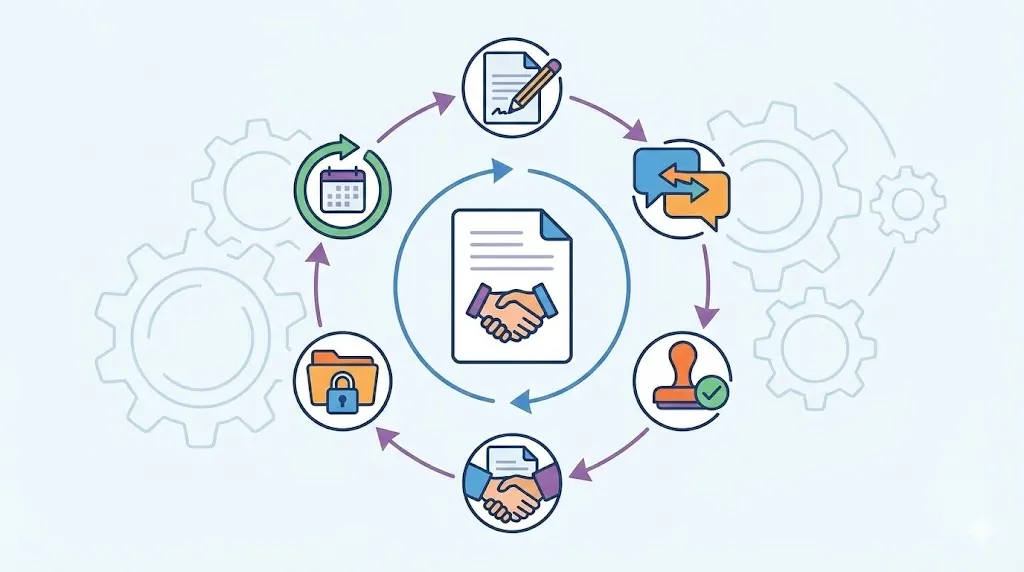
Managing risk requires ongoing vigilance throughout the entire contract lifecycle. It involves:
Early Risk Identification
Begin assessing risks early in the contract drafting and negotiation stages. This timing maximizes leverage to amend terms effectively.
Use Standardized Templates
Employing templates with pre-approved language minimizes ambiguity and mitigates risk. This practice promotes uniformity in contractual terms.
Automate Workflows
Automated contract processes reduce human error and speed up reviews. They also enforce compliance with risk policies.
Monitor Contract Performance
Track obligations, deadlines, and milestones. Early warnings help prevent breaches or missed terms.
Regular Risk Reviews
It is critical to reexamine risks at regular intervals, particularly when contracts come up for renewal or when there are significant shifts in business conditions.
Training and Collaboration
Providing training for legal, procurement, and business teams enhances awareness of risk factors. Encouraging cross-functional communication helps identify and address risks promptly.
Document Everything
Keep comprehensive records of contract versions, negotiation history, and approvals. Good documentation supports dispute resolution and audits.
Related articles: What are Contract Obligations and How to Manage Them
Why Contract Management Software Matters
Contract management software (CLM) plays a critical role in addressing the risks embedded within contractual agreements. It provides tools to:
Centralize contract storage with robust security measures.
Utilize AI algorithms combined with predefined rules to enhance risk assessment processes.
Deliver proactive notifications to track deadlines, obligations, and contract renewals.
Examine contract data to identify potentially hazardous terms or recurring patterns.
Ensure compliance by mandating the use of approved templates and clauses.
Facilitate seamless collaboration between legal and business teams.
These capabilities reduce manual work and improve accuracy. CLM software turns contract risk management from a reactive task into a proactive strategy.
Related articles: Legal Risk Management: A Comprehensive Guide for Businesses
How CLM Software Solves This
Contract lifecycle management software enables businesses to identify and mitigate risks throughout each phase of the contract process. Additionally, by leveraging approved templates, it streamlines contract creation to ensure consistent terminology and reduce the likelihood of errors. AI-driven review tools detect risky clauses and absent provisions, accelerating the legal review process.
Tracking obligations and deadlines is essential to avoid missed payments or renewals that could incur penalties. Dashboards provide up-to-the-minute visibility into risk exposure, contract status, and team performance.
Volody integrates AI contract drafting, review, and risk analysis within a centralized repository and workflow automation platform. This solution empowers legal teams to expedite contract management while enhancing oversight, thereby diminishing financial, legal, and operational risks.
See how Volody's CLM Software helps legal teams manage contracts faster and with greater control.
FAQ
What is the biggest source of contractual risk?
Additionally, ambiguous or vague contract language presents the greatest risk. When terms are unclear, parties interpret obligations differently, leading to disputes and potential losses.
How can I reduce financial risk in contracts?
Use clear payment terms, set penalties for missed deadlines, and check your counterparty’s financial health before signing. Incorporate caps on liability as well as indemnity clauses.
When should I assess contractual risk?
It is critical to evaluate risk early in the contract drafting and negotiation phases. Moreover, this timing offers the greatest opportunity to modify terms and minimize exposure.
Can implementing contract management software eliminate all risks?
Although no software solution can completely eliminate risks, contract management systems play a crucial role in detecting, tracking, and mitigating them. Automation and AI enhance precision and operational workflows, strengthening risk controls.
What is risk transfer in contracts?
Risk transfer means shifting responsibility for certain risks to the party best able to handle them. This is done through clauses like indemnity, liability limits, and insurance requirements.
Furthermore, how does ineffective contract oversight affect businesses?
Lapses in contract administration cause missed deadlines, penalties, revenue shortfalls, and escalate legal exposure. Research indicates such failures may reduce company revenues by nearly 10%.
Poor contract management results in missed deadlines, penalties, revenue loss, and legal disputes.
Failure to properly administer contracts often causes missed deadlines, incurred penalties, lost revenue, and increased exposure to litigation.
What role do templates play in managing risk?
Templates create a consistent framework for contract wording that minimizes ambiguity and drafting errors. Also, standardized language ensures adherence to corporate governance standards.
Templates provide standardized contract language that minimizes ambiguity and errors.
They serve as a foundation of uniform provisions that limit interpretive discrepancies and drafting mistakes.
They promote uniformity in terms and ensure adherence to corporate policies.
Additionally, templates help maintain alignment with organizational policies and risk management standards.
How do operational risks show up in contracts?
Operational risks appear when parties fail to meet service levels, deliver on time, or fulfill obligations. Also, this disrupts business processes and can cause financial loss.
Why is ongoing risk monitoring important?
Therefore, contracts and business conditions change over time. Regular reviews help catch new risks and ensure compliance throughout the contract lifecycle.
What should I look for in a contract risk assessment checklist?
Check for clear obligations, deadlines, penalties, compliance with laws, counterparty reliability, and risk transfer provisions. Use tools or software to automate this process.
This article provides a detailed look at contractual risk, helping legal, operations, and technology leaders understand and manage the hidden dangers in business agreements. Proper risk assessment, transfer, and management protect your company’s finances, reputation, and operations. Leveraging software solutions significantly enhances these efforts, making contracts a source of strength instead of risk.
About the Company

Volody AI CLM is an Agentic AI-powered Contract Lifecycle Management platform designed to eliminate manual contracting tasks, automate complex workflows, and deliver actionable insights. As a one-stop shop for all contract activities, it covers drafting, collaboration, negotiation, approvals, e-signature, compliance tracking, and renewals. Built with enterprise-grade security and no-code configuration, it meets the needs of the most complex global organizations. Volody AI CLM also includes AI-driven contract review and risk analysis, helping teams detect issues early and optimize terms. Trusted by Fortune 500 companies, high-growth startups, and government entities, it transforms contracts into strategic, data-driven business assets.




" height="216.72211px" id="FYO0bO80Y" transform="translate(3 6.105)" width="206.073px"/><path d="M 108.174 222 C 88.432 222 70.303 217.239 53.785 207.717 C 37.267 198.196 24.173 185.052 14.504 168.285 C 4.835 151.312 0 132.165 0 110.845 C 0 89.731 4.835 70.792 14.504 54.025 C 24.173 37.052 37.267 23.804 53.785 14.282 C 70.303 4.761 88.432 0 108.174 0 C 128.116 0 146.246 4.761 162.562 14.282 C 179.08 23.804 192.073 37.052 201.541 54.025 C 211.21 70.792 216.044 89.731 216.044 110.845 C 216.044 132.165 211.21 151.312 201.541 168.285 C 192.073 185.052 179.08 198.196 162.562 207.717 C 146.044 217.239 127.915 222 108.174 222 Z M 108.174 183.189 C 120.864 183.189 132.044 180.291 141.713 174.495 C 151.382 168.492 158.936 160.006 164.375 149.035 C 169.814 138.064 172.533 125.334 172.533 110.845 C 172.533 96.355 169.814 83.729 164.375 72.965 C 158.936 61.994 151.382 53.611 141.713 47.815 C 132.044 42.02 120.864 39.122 108.174 39.122 C 95.483 39.122 84.202 42.02 74.332 47.815 C 64.663 53.611 57.109 61.994 51.67 72.965 C 46.231 83.729 43.511 96.355 43.511 110.845 C 43.511 125.334 46.231 138.064 51.67 149.035 C 57.109 160.006 64.663 168.492 74.332 174.495 C 84.202 180.291 95.483 183.189 108.174 183.189 Z" fill="rgba(255, 255, 255, 0.12)" height="222px" id="aa1McFcE9" transform="translate(227.183 3)" width="216.04399999999998px"/><path d="M 42.302 182.257 L 111.799 182.257 L 111.799 216.722 L 0 216.722 L 0 0 L 42.302 0 Z" fill="rgba(255, 255, 255, 0.12)" height="216.72211px" id="yRq4AnrsX" transform="translate(477.721 6.105)" width="111.79899999999998px"/><path d="M 108.174 222 C 88.432 222 70.303 217.239 53.785 207.717 C 37.267 198.196 24.173 185.052 14.504 168.285 C 4.835 151.312 0 132.165 0 110.845 C 0 89.731 4.835 70.792 14.504 54.025 C 24.173 37.052 37.267 23.804 53.785 14.282 C 70.303 4.761 88.432 0 108.174 0 C 128.116 0 146.246 4.761 162.562 14.282 C 179.08 23.804 192.073 37.052 201.541 54.025 C 211.21 70.792 216.045 89.731 216.045 110.845 C 216.045 132.165 211.21 151.312 201.541 168.285 C 192.073 185.052 179.08 198.196 162.562 207.717 C 146.044 217.239 127.915 222 108.174 222 Z M 108.174 183.189 C 120.864 183.189 132.044 180.291 141.713 174.495 C 151.382 168.492 158.936 160.006 164.375 149.035 C 169.814 138.064 172.534 125.334 172.534 110.845 C 172.534 96.355 169.814 83.729 164.375 72.965 C 158.936 61.994 151.382 53.611 141.713 47.815 C 132.044 42.02 120.864 39.122 108.174 39.122 C 95.483 39.122 84.202 42.02 74.332 47.815 C 64.663 53.611 57.108 61.994 51.67 72.965 C 46.231 83.729 43.511 96.355 43.511 110.845 C 43.511 125.334 46.231 138.064 51.67 149.035 C 57.108 160.006 64.663 168.492 74.332 174.495 C 84.202 180.291 95.483 183.189 108.174 183.189 Z" fill="rgba(255, 255, 255, 0.12)" height="222px" id="mo8HQspQ0" transform="translate(609.155 3)" width="216.04500000000007px"/><path d="M 73.727 0 C 95.885 0 115.324 4.45 132.044 13.351 C 148.967 22.252 161.957 34.982 171.027 51.541 C 180.287 67.894 184.917 86.937 184.917 108.671 C 184.917 130.405 180.287 149.449 171.027 165.801 C 161.957 181.947 148.967 194.47 132.044 203.371 C 115.324 212.271 95.885 216.722 73.727 216.722 L 0 216.722 L 0 0 Z M 72.216 179.773 C 94.374 179.773 111.497 173.564 123.583 161.144 C 135.669 148.724 141.713 131.233 141.713 108.671 C 141.713 86.109 135.669 68.515 123.583 55.888 C 111.497 43.055 94.374 36.638 72.216 36.638 L 42.302 36.638 L 42.302 179.773 Z" fill="rgba(255, 255, 255, 0.12)" height="216.72211px" id="I3iXX5Hi_" transform="translate(859.693 6.105)" width="184.91699999999992px"/><path d="M 185.22 0 L 113.91 141.273 L 113.91 216.722 L 71.61 216.722 L 71.61 141.273 L 0 0 L 47.74 0 L 93.06 99.046 L 138.08 0 Z" fill="rgba(255, 255, 255, 0.12)" height="216.72211px" id="nzHyWC0_d" transform="translate(1061.78 6.105)" width="185.22000000000003px"/></svg>)