

Every business faces financial commitments wrapped in contracts. These agreements shape how money moves, how risks are shared, and how obligations are met. Yet many teams struggle to keep track of these contracts after signing. Hidden clauses, missed deadlines, and scattered data can cause costly mistakes. Understanding financial contracts and managing them well is vital for legal, finance, and operations leaders.
Imagine a scenario where a company’s largest software subscription automatically renews for another year. No one caught the 60-day cancellation window. That’s an unplanned $150,000 expense locked in by default. This is not a negotiation failure. It is a failure to manage contracts proactively.
This article breaks down the main types of financial contracts, highlights key provisions to watch, and explains how to manage these contracts effectively. It offers practical insights for teams responsible for contract oversight and financial risk control.
TL;DR
Financial contracts cover all agreements with financial impact, from vendor deals to loans and SaaS subscriptions.
Additionally, key contract clauses encompass payment terms, renewal conditions, liability limits, and financial covenants.
Poor contract management risks unplanned expenses, missed obligations, and compliance failures.
Vendor agreements, purchase orders, SaaS contracts, loan agreements, and NDAs have unique financial provisions.
Centralized contract management software improves visibility, automates alerts, and simplifies reporting.
AI-powered tools extract key data and flag risks, helping teams stay ahead of deadlines and obligations.
Related Article: Purchase Orders, Purchase Agreements & Contracts Explained
What Exactly Is a Financial Contract?
A financial contract is any agreement that creates a financial duty, right, or risk for a business. Additionally, it defines the terms under which money, assets, or services are exchanged and establishes binding obligations for each party involved. This term covers most commercial contracts a company signs.
What makes a contract "financial" is not its label but its content. Look for clauses about payment schedules, price adjustments, renewal terms, liability limits, and penalties for breach. These define the financial impact and risks.
Finance teams usually get involved after contracts are signed. Their job is to track payments, monitor deadlines, and pull data for audits and forecasts. They need to know where contracts live, what they say, and how to spot risks early.
For example, a contract might say a vendor must deliver services by a certain date or the company must pay a monthly fee. Missing these details can lead to extra costs or legal trouble.
Related articles: How Legal and Finance Can Collaborate Better on Contracts
What Types of Financial Contracts Do Businesses Use?
Financial contracts come in many forms. Additionally, each category contains distinct clauses that require close attention from finance teams. Here are the main categories:
Vendor and Supplier Agreements
Vendor agreements cover purchases of goods or services. They specify what is bought, the price, payment terms, delivery deadlines, and remedies if something goes wrong.
Finance teams monitor payment schedules closely to confirm invoices correspond precisely with contract terms. They also keep track of clauses that permit price adjustments potentially increasing costs over time. Provisions regarding automatic renewal are reviewed carefully, as they can obligate spending if not canceled within specified timeframes. Liability limits are analyzed to understand the maximum amounts recoverable should the vendor fail to perform adequately.
Moreover, large vendor contracts may also include compliance requirements, such as data protection rules if personal data is involved or controls relevant to financial reporting standards like Sarbanes-Oxley (SOX).
For instance, a company contracts with a supplier for office equipment. The contract states payments are due 30 days after delivery. Finance must verify that invoices comply with this term and monitor for any price increases after one year.
Purchase Orders (POs)
Purchase orders are formal requests from buyers to suppliers authorizing specific purchases. Once accepted, they become legally binding and support the overall procurement process.
Finance uses POs to:
Control and record committed spending.
Match invoices against approved orders.
Furthermore, maintain an audit trail for accounts payable.
POs should align with terms in the main vendor agreement, including prices and payment conditions.
A purchase order issued for 100 laptops, for instance, cites the pricing and payment terms established in the vendor agreement. Prior to processing payment, finance verifies that the invoiced amounts correspond with this PO.
SaaS Agreements
Software-as-a-Service contracts are common and growing in most companies’ budgets. These contracts combine software licensing with ongoing service delivery, usually billed by subscription.
Key financial provisions to monitor include:
Auto-renewal clauses requiring advance notice to cancel, often 30 to 90 days.
Price increase terms on renewal that can affect budgeting.
Usage-based billing that may cause actual spend to differ from forecasts.
Data processing agreements related to handling personal data, which may need updates on renewal.
Also, consider a SaaS contract for a CRM platform that auto-renews annually unless canceled 60 days before expiration. Finance must identify this notice period to prevent unintended charges.
Loan Agreements and Credit Facilities
Loan contracts define the terms for borrowing money. They cover everything from revolving credit lines to term loans and asset financing.
Finance teams focus on:
Financial covenants, such as minimum cash flow ratios or maximum debt levels.
Conditions and timing for fund drawdowns.
Therefore, interest rates, whether fixed or variable, including hedging arrangements.
Repayment schedules and penalties for missed payments or defaults.
Therefore, regulated businesses may have extra disclosure obligations under financial authorities like the SEC (US) or FCA (UK). Material loan agreements often require mention in financial statements.
Consider a company that secures a term loan incorporating a covenant to maintain a debt-to-equity ratio below 2. Finance routinely monitors this ratio to avoid breaching the covenant.
Non-Disclosure Agreements (NDAs)
NDAs often seem low-risk but can carry financial exposure, especially during mergers, fundraising, or partnerships.
Key considerations include the duration of confidentiality obligations, penalties applied for breaches that may result in financial liability, and the scope of information covered, which can influence the extent of potential liability.
During a fundraising round, for example, an NDA is used to protect sensitive financial data. Breaches of this agreement may expose the company to significant legal claims.
Related articles: What are Contract Obligations and How to Manage Them
What Are the Key Provisions in Financial Contracts?
Understanding the clauses that create financial impact helps teams manage risk. Here are the most important provisions:
Payment Terms
This section spells out how much, when, and how payments must be made. Details cover payment schedules, whether monthly, quarterly, or aligned with project milestones. The contract delineates the acceptable forms of payment agreed upon by the parties. Penalties and interest charges applicable to overdue payments are explicitly described. Responsibilities concerning currency exchange and tax obligations are also established.
Finance teams must track due dates and ensure invoices comply with these terms.
Renewal and Termination Clauses
Contracts often include automatic renewal unless canceled within a notice period. Missing this window can lock in unwanted spend.
Termination clauses explain how either party can end the contract early and any penalties involved.
Example: A lease contract renews automatically unless canceled 90 days before expiry. The finance department also implements reminder systems to prevent unexpected renewals.
Price Adjustment and Escalation
Some contracts allow price changes over time, linked to inflation, usage, or other metrics.
Finance must forecast these changes and budget accordingly.
Liability and Indemnity
These clauses limit how much one party can claim from the other if things go wrong. They define caps on damages and responsibilities for losses.
Understanding these limits helps assess financial risk exposure.
Financial Covenants
Typically found in loan agreements, financial covenants obligate the borrower to maintain specified financial ratios or comply with certain conditions. Failure to meet these requirements can trigger penalties or prompt acceleration of the loan.
Data Protection and Compliance
Contracts that handle personal data must comply with regulations such as GDPR. It is essential for finance teams to identify any compliance obligations that could lead to financial ramifications.
Related articles: Clear Contract Payment Terms: A Guide to Understanding
What Challenges Do Teams Face Managing Financial Contracts?
Managing financial contracts after signature is complex. Additionally, a common issue is the dispersion of agreements across various mediums such as email, network drives, and physical documentation. This fragmentation complicates the retrieval of vital contractual provisions and the monitoring of key deadlines.
Lack of Visibility
Contracts are typically stored in diverse repositories including email folders, shared drives, and hard copy archives. Locating essential terms or monitoring deadlines under these conditions often proves challenging.
Missed Renewal Deadlines
Failure to act within designated cancellation periods can activate auto-renewal clauses, exposing organizations to unexpected financial commitments.
Manual Data Extraction
Pulling payment terms, renewal dates, or covenant requirements manually is time-consuming and error-prone.
Compliance Risks
Failing to track obligations related to data privacy or financial reporting can lead to fines or legal trouble.
Inconsistent Processes
Without standard workflows, contract creation, review, and approval can be slow and risky.
Audit and Reporting Difficulties
Scattered contract data slows down audits, board reporting, and due diligence for investments or sales.
Related articles: 7 Key Contract Clauses Found in Business Contracts
How Can Better Contract Management Help?
Effective contract management addresses these challenges through several key capabilities:
It provides a centralized repository for all contracts.
Additionally, automated alerts ensure stakeholders receive timely notifications about upcoming renewals, payments, and critical contractual commitments.
Leveraging AI, the system accurately extracts essential data points from contracts.
Standardized templates and extensive clause libraries enhance consistency across documents.
Integrated approval workflows help streamline and accelerate the contract creation lifecycle.
Dashboards and reports offer comprehensive, actionable insights that strengthen financial oversight.
These tools give finance and legal teams control and visibility to act proactively.
Related articles: Financial Contracts: Types, Clauses & Management Guide 2026
Why Contract Management Software Matters
Contract lifecycle management (CLM) software is designed to simplify contract oversight. Additionally, it supports teams throughout every stage, from drafting agreements to managing renewals and ongoing obligations.
Key benefits include:
Centralized Storage: Store all contracts in one secure place with easy search capabilities, enhancing accessibility.
Automated Alerts: Receive timely notifications for key dates such as renewals, payments, and compliance deadlines.
AI Data Extraction: Advanced algorithms scan documents to pinpoint and extract pivotal information such as payment terms, renewal clauses, and financial covenants.
Template and Clause Management: Organizations maintain a repository of vetted templates and clauses that standardize language and reduce drafting errors.
Collaboration Tools: Functionality designed to facilitate seamless coordination among legal, finance, and operations teams during contract review and negotiation phases.
Reporting and Analytics: Comprehensive reports illuminate contract-associated risks, spending patterns, and adherence to compliance requirements.
This integration minimizes manual intervention, mitigates risk exposure, and accelerates contract workflows.
Related articles: Contract Management Software for Finance: A Detailed Guide
How Contract Management Software Solves This
Contract management software gives finance teams the tools to stay on top of financial contracts. Additionally, it also consolidates documents into a single repository, streamlining access and facilitating thorough contract review. Automated alerts prevent missed renewals or payment deadlines.
AI features extract key contract data, such as payment schedules and renewal terms, reducing manual errors. This enables teams to monitor financial covenants closely and identify potential risks early.
The CLM solution from Volody integrates AI-driven contract drafting, review, and metadata extraction capabilities. Approval workflows and electronic signature functionalities accelerate contract execution. Its obligation management module monitors deliverables and renewal dates, ensuring finance teams remain ahead of critical deadlines.
Looking for a better way to manage contracts? Explore the capabilities of Volody's contract lifecycle management software.
FAQ
How do vendor agreements differ from purchase orders?
Additionally, in essence, vendor agreements serve as comprehensive contracts that specify the terms for acquiring goods or services. Purchase orders become enforceable once accepted, authorizing specific procurements and aiding in expenditure control.
Why do automatic renewal provisions pose risks for finance teams?
Automatic renewal clauses extend contracts unless the company cancels them within a designated notice period.
Auto-renewal clauses automatically extend contracts unless canceled within a set notice period. Missing the deadline can commit a company to unplanned expenses, which may disrupt budgets.
What are financial covenants in loan agreements?
Moreover, financial covenants comprise specific obligations borrowers must fulfill, such as maintaining designated debt ratios. Violating these can trigger penalties or loan acceleration, increasing financial risk.
How does AI help in contract management?
AI can extract key contract data like payment terms and renewal dates automatically. It flags risky clauses and generates summaries, saving time and reducing errors.
Which elements should finance monitor closely in SaaS agreements?
Finance should monitor auto-renewal deadlines, price increase terms, usage-based billing, and data processing obligations to avoid unexpected costs and compliance issues.
Furthermore, can software designed for contract management improve audit readiness?
Yes, by centralizing contracts and extracting key data, software simplifies audits. It provides a clear trail of obligations, approvals, and financial terms for easy review.
How do liability caps affect financial risk?
Liability caps limit the maximum amount one party can claim for damages. Understanding these limits helps finance assess potential exposure and plan accordingly.
Are NDAs important for financial risk?
Also, yes, especially in deals involving sensitive information. Also, breaches can lead to costly legal claims or damage to business relationships.
What responsibilities does the finance team hold after contract signing?
Finance teams monitor payment obligations, renewal and termination dates, ensure compliance, and support reporting and forecasting.
In what ways does contract lifecycle management tools facilitate collaboration across departments?
The platform offers shared access, supports real-time commenting, and maintains version control, facilitating efficient collaboration among legal, finance, and operations professionals.
This comprehensive overview equips leaders across legal, finance, and operations functions with the insight needed to understand financial contracts deeply and manage them effectively. Clear processes and smart tools reduce risk and improve financial control.
About the Company
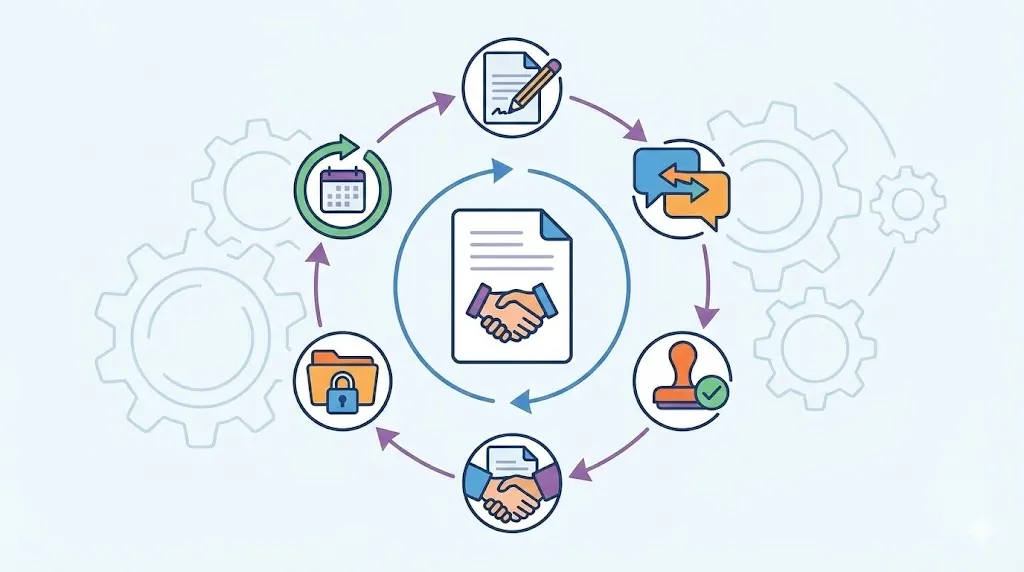
Volody AI CLM is an Agentic AI-powered Contract Lifecycle Management platform designed to eliminate manual contracting tasks, automate complex workflows, and deliver actionable insights. As a one-stop shop for all contract activities, it covers drafting, collaboration, negotiation, approvals, e-signature, compliance tracking, and renewals. Built with enterprise-grade security and no-code configuration, it meets the needs of the most complex global organizations. Volody AI CLM also includes AI-driven contract review and risk analysis, helping teams detect issues early and optimize terms. Trusted by Fortune 500 companies, high-growth startups, and government entities, it transforms contracts into strategic, data-driven business assets.





" height="216.72211px" id="FYO0bO80Y" transform="translate(3 6.105)" width="206.073px"/><path d="M 108.174 222 C 88.432 222 70.303 217.239 53.785 207.717 C 37.267 198.196 24.173 185.052 14.504 168.285 C 4.835 151.312 0 132.165 0 110.845 C 0 89.731 4.835 70.792 14.504 54.025 C 24.173 37.052 37.267 23.804 53.785 14.282 C 70.303 4.761 88.432 0 108.174 0 C 128.116 0 146.246 4.761 162.562 14.282 C 179.08 23.804 192.073 37.052 201.541 54.025 C 211.21 70.792 216.044 89.731 216.044 110.845 C 216.044 132.165 211.21 151.312 201.541 168.285 C 192.073 185.052 179.08 198.196 162.562 207.717 C 146.044 217.239 127.915 222 108.174 222 Z M 108.174 183.189 C 120.864 183.189 132.044 180.291 141.713 174.495 C 151.382 168.492 158.936 160.006 164.375 149.035 C 169.814 138.064 172.533 125.334 172.533 110.845 C 172.533 96.355 169.814 83.729 164.375 72.965 C 158.936 61.994 151.382 53.611 141.713 47.815 C 132.044 42.02 120.864 39.122 108.174 39.122 C 95.483 39.122 84.202 42.02 74.332 47.815 C 64.663 53.611 57.109 61.994 51.67 72.965 C 46.231 83.729 43.511 96.355 43.511 110.845 C 43.511 125.334 46.231 138.064 51.67 149.035 C 57.109 160.006 64.663 168.492 74.332 174.495 C 84.202 180.291 95.483 183.189 108.174 183.189 Z" fill="rgba(255, 255, 255, 0.12)" height="222px" id="aa1McFcE9" transform="translate(227.183 3)" width="216.04399999999998px"/><path d="M 42.302 182.257 L 111.799 182.257 L 111.799 216.722 L 0 216.722 L 0 0 L 42.302 0 Z" fill="rgba(255, 255, 255, 0.12)" height="216.72211px" id="yRq4AnrsX" transform="translate(477.721 6.105)" width="111.79899999999998px"/><path d="M 108.174 222 C 88.432 222 70.303 217.239 53.785 207.717 C 37.267 198.196 24.173 185.052 14.504 168.285 C 4.835 151.312 0 132.165 0 110.845 C 0 89.731 4.835 70.792 14.504 54.025 C 24.173 37.052 37.267 23.804 53.785 14.282 C 70.303 4.761 88.432 0 108.174 0 C 128.116 0 146.246 4.761 162.562 14.282 C 179.08 23.804 192.073 37.052 201.541 54.025 C 211.21 70.792 216.045 89.731 216.045 110.845 C 216.045 132.165 211.21 151.312 201.541 168.285 C 192.073 185.052 179.08 198.196 162.562 207.717 C 146.044 217.239 127.915 222 108.174 222 Z M 108.174 183.189 C 120.864 183.189 132.044 180.291 141.713 174.495 C 151.382 168.492 158.936 160.006 164.375 149.035 C 169.814 138.064 172.534 125.334 172.534 110.845 C 172.534 96.355 169.814 83.729 164.375 72.965 C 158.936 61.994 151.382 53.611 141.713 47.815 C 132.044 42.02 120.864 39.122 108.174 39.122 C 95.483 39.122 84.202 42.02 74.332 47.815 C 64.663 53.611 57.108 61.994 51.67 72.965 C 46.231 83.729 43.511 96.355 43.511 110.845 C 43.511 125.334 46.231 138.064 51.67 149.035 C 57.108 160.006 64.663 168.492 74.332 174.495 C 84.202 180.291 95.483 183.189 108.174 183.189 Z" fill="rgba(255, 255, 255, 0.12)" height="222px" id="mo8HQspQ0" transform="translate(609.155 3)" width="216.04500000000007px"/><path d="M 73.727 0 C 95.885 0 115.324 4.45 132.044 13.351 C 148.967 22.252 161.957 34.982 171.027 51.541 C 180.287 67.894 184.917 86.937 184.917 108.671 C 184.917 130.405 180.287 149.449 171.027 165.801 C 161.957 181.947 148.967 194.47 132.044 203.371 C 115.324 212.271 95.885 216.722 73.727 216.722 L 0 216.722 L 0 0 Z M 72.216 179.773 C 94.374 179.773 111.497 173.564 123.583 161.144 C 135.669 148.724 141.713 131.233 141.713 108.671 C 141.713 86.109 135.669 68.515 123.583 55.888 C 111.497 43.055 94.374 36.638 72.216 36.638 L 42.302 36.638 L 42.302 179.773 Z" fill="rgba(255, 255, 255, 0.12)" height="216.72211px" id="I3iXX5Hi_" transform="translate(859.693 6.105)" width="184.91699999999992px"/><path d="M 185.22 0 L 113.91 141.273 L 113.91 216.722 L 71.61 216.722 L 71.61 141.273 L 0 0 L 47.74 0 L 93.06 99.046 L 138.08 0 Z" fill="rgba(255, 255, 255, 0.12)" height="216.72211px" id="nzHyWC0_d" transform="translate(1061.78 6.105)" width="185.22000000000003px"/></svg>)