

Enterprise contract value leakage erodes revenue, savings, service quality, compliance, and trust when negotiated terms are not fully realized. It typically emerges after signature through missed obligations, pricing errors, unclaimed credits, disconnected systems, and weak ownership. This guide provides a practical framework for identifying, preventing, and recovering lost contract value across the enterprise lifecycle.
TL;DR
Contract value leakage reduces revenue, savings, service quality, compliance, and trust across the enterprise contract lifecycle.
Unclear terms, disconnected systems, missed duties, weak ownership, and pricing errors create most preventable leakage.
Strong drafting, shared reviews, approved clauses, clear approvals, and version control reduce risks before signature.
CLM software centralizes agreements, tracks obligations, alerts teams, and connects contract data with enterprise systems.
Dashboards reveal missed savings, unbilled revenue, service credits, renewal leakage, and other financial contract risks.
A repeatable review process helps teams recover value, improve controls, and protect future contract performance.
Understanding Contract Value Leakage in Enterprise Businesses
Negotiated Value Versus Realized Value
A contract may promise strong financial and operational value. Yet the enterprise may capture only part of that value. The gap between those outcomes is contract value leakage.
Negotiated value includes prices, discounts, rebates, service levels, rights, and protections. Realized value reflects what the business actually receives, pays, uses, or collects.
For example, a supplier agreement may include volume rebates. Finance may never claim them because usage data remains separate. A customer contract may allow annual price increases. Sales may miss the increase during renewal.
Leakage can also create unnecessary costs. A team might pay for unused services or accept poor delivery without applying service credits. These losses can remain hidden until a contract audit begins.
Contract value erosion may affect four areas. Financial leakage reduces revenue or increases spend. Operational leakage weakens delivery and service quality. Compliance leakage creates rule breaches and audit concerns. Relationship leakage causes disputes, delays, and lower trust.
Where Leakage Appears Across the Contract Lifecycle
Leakage can begin during negotiation. A weak clause may limit price protection, audit rights, or recovery options. Poor approval controls can also allow nonstandard terms without proper review.
The risk continues during handoffs. Teams may not understand their duties after signing. They may miss milestones, reporting dates, renewal windows, or payment conditions.
Performance management creates another risk point. Teams need to compare actual delivery with contractual promises. They also need evidence for credits, rebates, claims, and disputes.
Amendments can create new gaps. An amendment may change pricing but never reach billing. A renewal may extend the term without updating the service scope.
Termination also needs control. Teams may keep paying after services end. They may fail to return assets or recover final credits.
Related articles: Essential Contract Resources Every Sales Team Needs to Win
The Enterprise Conditions That Create Leakage
Ambiguous Scope and Commercial Terms
Unclear scope gives each party room to interpret duties differently. That often leads to missed work, disputes, and delayed decisions.
Pricing terms need the same precision. Contracts should define units, tiers, discounts, taxes, increases, credits, and billing dates. They should also explain which data proves each calculation.
Service terms need measurable targets. A phrase such as “high availability” lacks a clear test. A defined uptime target, measurement period, and credit rule gives teams usable guidance.
Acceptance criteria also matter. Without them, buyers may accept incomplete work. Suppliers may invoice before delivery meets agreed standards.
Disconnected Teams and Handoffs
Sales may promise features that operations cannot deliver. Legal may approve terms that finance cannot bill. Procurement may negotiate rebates that no team tracks.
These gaps grow when teams store information in separate tools. One team may use a signed PDF. Another may use an old spreadsheet. A third may rely on email notes.
Each handoff needs clear ownership. The contract owner should confirm key terms, duties, dates, and risks. Business teams should know what action comes next.
Manual Processes and Incomplete Contract Visibility
Spreadsheets can track simple dates. They become risky when portfolios grow large. Teams may miss changes, duplicate records, or enter dates incorrectly.
Email approvals create similar problems. Important decisions may remain in private inboxes. New team members may struggle to find the approval history.
Scattered storage also weakens contract leakage analysis. Teams cannot compare terms when agreements sit across drives, folders, and systems. They may not even know which version controls.
Weak Ownership After Signature
A signed contract still needs active management. Someone must track duties, dates, performance, invoices, and changes.
Ownership should cover the full term. It should not stop with the lawyer who negotiated the agreement. A business owner must coordinate legal, finance, procurement, and operations.
Understanding Contractual Risk in Business Contracts is essential at this stage. Clear escalation rules help teams identify when to raise a missed duty or financial issue. Without those rules, small leaks can become large exposures.
Leakage cause | Typical enterprise symptom | Business consequence |
|---|---|---|
Ambiguous pricing | Invoices use different rates | Overpayment or billing disputes |
Missed renewal date | Contract renews without review | Lost savings or unwanted commitment |
Untracked obligations | Duties lack owners | Missed deadlines and weak performance |
Disconnected systems | CRM and billing hold different terms | Incorrect invoices or revenue loss |
Weak amendment control | Teams use old contract versions | Wrong pricing, scope, or service terms |
Related articles: Contract Review: A Strategic Guide to Key Risks
5 Key Challenges in Preventing Contract Value Leakage
Extracting Contract Language Into Actionable Obligations
Complex agreements contain many duties. These may include delivery dates, reports, service levels, payment terms, and audit rights.
Teams must convert those clauses into actions. Each action needs an owner, deadline, source clause, and proof requirement. This turns legal text into practical work.
Maintaining Control Across Amendments and Versions
Contracts often change after signing. Teams may approve new prices, terms, volumes, or services. Those changes must connect to the original agreement.
An unlinked amendment creates confusion. Billing may use an old price. Operations may follow an old service level. Legal may review a version that no longer controls.
Monitoring Performance Against Commercial Commitments
Enterprises need many data points for effective monitoring. These include invoices, usage, delivery results, rebates, credits, and service reports.
The data often lives in different systems. Teams then spend time matching records by hand. That delay can prevent timely recovery.
Proving and Prioritizing the Financial Impact of Leakage
Not every issue deserves the same response. A small invoice error may need a quick correction. A major renewal failure may need executive attention.
Teams need evidence before they act. They should link the loss to a clause, transaction, service failure, or missed event.
Checklist item | Evidence to collect | Accountable owner | Escalation trigger |
|---|---|---|---|
1. Missed obligation | Clause, deadline, status, proof | Business owner | Deadline passes |
2. Pricing error | Contract rate, invoice, calculation | Finance | Amount exceeds review limit |
3. Service failure | Service report, target, credit rule | Operations | Target misses agreed level |
4. Renewal risk | Term, notice date, business decision | Contract owner | Notice window approaches |
5. Unclaimed entitlement | Rebate clause, usage record, claim proof | Procurement or finance | Claim deadline nears |
Related articles: Contract Review: A Practical Guide to Confident Decisions
Building Stronger Contracts Before Signature
Involving the Right Business Stakeholders
Legal teams protect rights and reduce legal risk. They cannot define every operational detail alone.
Procurement can test pricing and supplier duties. Finance can review billing, tax, and revenue effects. Operations can confirm delivery needs and service measures.
Sales should confirm customer promises. IT and security should review data, access, and system duties. The delivery team should confirm that each promise is practical.
Early review prevents late correction. It also gives each team a clear role after signing. The goal is not more meetings. The goal is fewer surprises.
Standardizing Templates and Approved Clauses
Controlled templates create a reliable starting point. Clause libraries give teams approved language for common terms. Fallback clauses support faster negotiation within set limits.
Content locking can protect key provisions. For example, users may not edit payment or data terms without legal approval. This reduces hidden changes.
Templates should still allow business needs. Teams can use defined options for different deal sizes or risk levels. Each option should have clear approval rules.
Defining Measurable Commercial and Performance Terms
A good contract states what happens, when it happens, and how teams measure it. It should define prices, volumes, milestones, acceptance tests, and reports.
Service levels need clear measurement rules. The contract should identify data sources, review periods, exclusions, and remedies. It should also state how teams request credits.
Contract Review Strategies for Business Protection help businesses identify unclear obligations, missing performance measures, pricing gaps, and weak remedies before signing. Audit rights support contract leakage analysis. They help buyers check invoices, usage, rebates, and performance. Reporting duties make that review easier.
Establishing Approval and Risk Controls
Approval rules should match financial and legal risk. Higher value or unusual terms should receive deeper review.
Delegated authority defines who can approve each exception. Escalation rules identify when legal, finance, or executives must decide. Teams should record the reason for each exception.
These controls create a useful record. The record supports audits, future negotiations, and process improvements. It also shows whether teams followed company rules.
Contract objective | Required language | Measurable indicator | Responsible reviewer |
|---|---|---|---|
Protect price | Rate, increase, and discount rules | Correct invoice rate | Finance |
Protect delivery | Milestones and acceptance tests | Accepted work by date | Operations |
Protect service | Service target and credit process | Target results and credits | Business owner |
Protect savings | Rebate terms and claim dates | Rebate value collected | Procurement |
Protect data | Access, security, and breach duties | Completed control checks | IT or security |
Related articles: What is Contract Risk & How to manage it?
Managing Obligations and Performance After Signature
Assigning Obligations to Accountable Owners
Every obligation needs one clear owner. Shared responsibility can help, but one person must lead the task.
The record should show the source clause, due date, status, evidence, and escalation path. Teams should also record dependencies and approval needs.
Ownership should follow the work. Finance may own invoice checks. Operations may own service reports. Procurement may own rebate claims.
Tracking Deliverables, Service Levels, and Payments
Teams should compare delivery with agreed milestones. They should compare invoices with rates, volumes, and approved changes.
Service reports can reveal missed targets. Those results may support credits or corrective action. Usage data can also reveal unclaimed discounts or volume tiers.
Payment tracking matters for both sides. Late customer payments can create contract revenue leakage. Incorrect supplier payments can create avoidable spend.
Controlling Changes and Amendments
Every change should have an approved request. The record should show the reason, impact, reviewer, and effective date.
Amendments must link to the main agreement. Teams should see which terms changed and which terms stayed the same. This helps prevent version disputes.
An audit trail records each action. It shows who approved the change and when. Stakeholders should receive the final version before the change takes effect.
Dashboard view | What it shows | Why it matters |
|---|---|---|
Obligation status | Open, complete, late, or blocked duties | Reveals missed commitments |
Upcoming deadline | Renewals, reports, milestones, and claims | Gives teams time to act |
Performance variance | Actual results against contract targets | Shows service and delivery risk |
Financial exposure | Value linked to each open issue | Supports recovery priorities |
Escalation state | Owner, decision, and next action | Prevents stalled resolution |
Related articles: What is Contractual Risk? Your Ultimate Guide
Connecting Contract Data With Enterprise Systems
Integrating CRM and Sales Processes
CRM integration preserves terms from opportunity through execution. It helps teams compare sales promises with the final agreement.
The connection can pass customer, deal, price, and term data forward. It can also show whether a contract is signed, active, renewed, or changed.
This reduces manual reentry. It also limits differences between proposals, contracts, orders, and invoices.
Connecting ERP, Procurement, and Finance Workflows
ERP integration connects contract terms with billing and payment records. Finance can compare invoices with approved prices and volumes.
Procurement teams can track purchase orders, supplier spend, rebates, and renewal plans. Revenue teams can review contract events that affect recognition.
These links support faster checks. They also help teams find contract revenue leakage before month-end close.
Using Centralized Metadata and Search
A central repository stores signed agreements, amendments, and related records. Searchable metadata helps users find the right contract quickly.
Useful fields include parties, value, dates, renewal terms, owners, and risk levels. Teams can also tag pricing rules, duties, service levels, and payment terms.
Search reduces time spent opening files. It also creates a shared view for legal, finance, procurement, sales, and operations.
Applying Automation and Intelligent Analysis
Automation can find key terms across large contract groups. It can identify dates, prices, duties, credits, and renewal rights.
AI contract analysis can flag unusual language or missing provisions. It can also surface clauses that need human review.
Automation should support people, not replace judgment. Teams need review rules, confidence checks, and clear exception handling.
Contract event | Connected system | Automated action | Leakage prevention outcome |
|---|---|---|---|
Contract signed | CRM and ERP | Create active contract record | Preserves approved terms |
Renewal date approaches | Calendar and workflow tool | Send owner alerts | Reduces renewal leakage |
Invoice arrives | ERP and contract system | Compare rate and volume | Finds billing errors |
Service target missed | Operations platform | Open credit review | Supports claim recovery |
Amendment approved | Repository and finance system | Update linked records | Prevents stale terms |
Related articles: Top Contract Management Tips for Legal Professionals
Measuring and Continuously Reducing Leakage
Defining Contract Value Leakage Metrics
Metrics turn hidden leakage into visible work. Teams should track both losses and recovery results.
Useful measures include missed savings, unbilled revenue, invoice errors, service credits, and avoidable spend. Teams should also track completed obligations and renewal outcomes.
Recovered value shows whether controls work. The measure should link each recovery to a contract, issue, action, and owner.
Prioritizing High Value and High Risk Agreements
Not every contract needs the same review depth. Segment agreements by value, complexity, renewal timing, and operational importance.
High-risk contracts may involve critical suppliers, key customers, sensitive data, or difficult pricing. They deserve earlier review and stronger monitoring.
Renewal proximity also matters. A contract with a near renewal date may offer the fastest recovery opportunity.
Establishing Review Cadences and Escalation Rules
Weekly alerts can cover late duties and near deadlines. Monthly reviews can cover invoices, service levels, and open claims.
Quarterly portfolio reviews can reveal wider patterns. Executives should review material exposures, major disputes, and recovery progress.
Each review needs a clear next action. Owners should record decisions, deadlines, and unresolved risks.
Improving Processes With Evidence
Recurring leakage patterns reveal weak controls. For example, repeated billing errors may require better rate fields or system checks.
Missed rebates may require clearer ownership. Poor service reporting may require new data rules or supplier meetings.
Use findings to update clauses, templates, training, and workflows. This turns each issue into a process improvement.
Metric definition | Data source | Review frequency | Threshold | Owner | Corrective action |
|---|---|---|---|---|---|
Missed savings | Contract and spend records | Monthly | Any confirmed gap | Procurement | Claim savings or fix terms |
Unbilled revenue | Contract and billing records | Monthly | Open billing variance | Finance | Issue invoice or correction |
Invoice discrepancy | ERP and contract records | Weekly | Rate or volume mismatch | Accounts payable | Hold and resolve invoice |
Service credit recovery | Service reports and clauses | Monthly | Missed target | Operations | Submit credit claim |
Obligation completion | Obligation records | Weekly | Late or blocked task | Contract owner | Escalate and assign action |
Renewal outcome | Repository and CRM | Quarterly | Unreviewed renewal | Business owner | Review, renegotiate, or exit |
Related articles: KPIs for Successful Contract Management
Why Contract Management Software Matters
Centralize contract records: Store agreements, amendments, metadata, duties, renewal dates, and compliance details together. Searchable records help teams find current terms quickly. They also reduce reliance on personal folders and old spreadsheets. This shared view supports faster contract leakage analysis across departments.
Automate contract controls: Send alerts for renewals, deadlines, approvals, and overdue duties. Route contracts to the right reviewers based on value or risk. Record each action in an audit trail. These controls reduce missed events and unclear handoffs.
Connect business systems: Link contract data with CRM, ERP, procurement, finance, and operations tools. Teams can compare negotiated terms with invoices, usage, delivery, and payments. This helps reveal contract revenue leakage sooner. It also limits duplicate data entry.
Support intelligent review: Use AI to find key terms, unusual clauses, duties, and risks. Human reviewers can then focus on exceptions and high-value agreements. Review rules should define when people must confirm results. This keeps automation practical and controlled.Effective enterprise contract management also helps larger organizations manage complex agreements, approval structures, and responsibilities across departments.
Measure performance: Build dashboards for obligations, exposure, credits, savings, renewals, and recovery. Give each issue an owner and next action. Review results on a set schedule. Use recurring findings to improve future contracts.Advanced analytics can help businesses identify contract value trends, monitor performance, uncover revenue leakage, and make better-informed decisions
Contract management software gives teams one working view. It connects contract terms with daily business actions. That connection helps enterprises protect value after signature.
Volody's CLM Software supports centralized contract records, AI contract summaries, and obligation management. It can highlight renewal dates, key risks, and duties. Teams can also track deliverables, commitments, and follow-up actions in one place.
For example, a finance team can find a rebate duty, review its deadline, and assign the claim. Operations can track the related delivery evidence in the same contract record.
Take control of contract value leakage with Volody's CLM Software.
FAQ
What is Contract Lifecycle Management (CLM)?
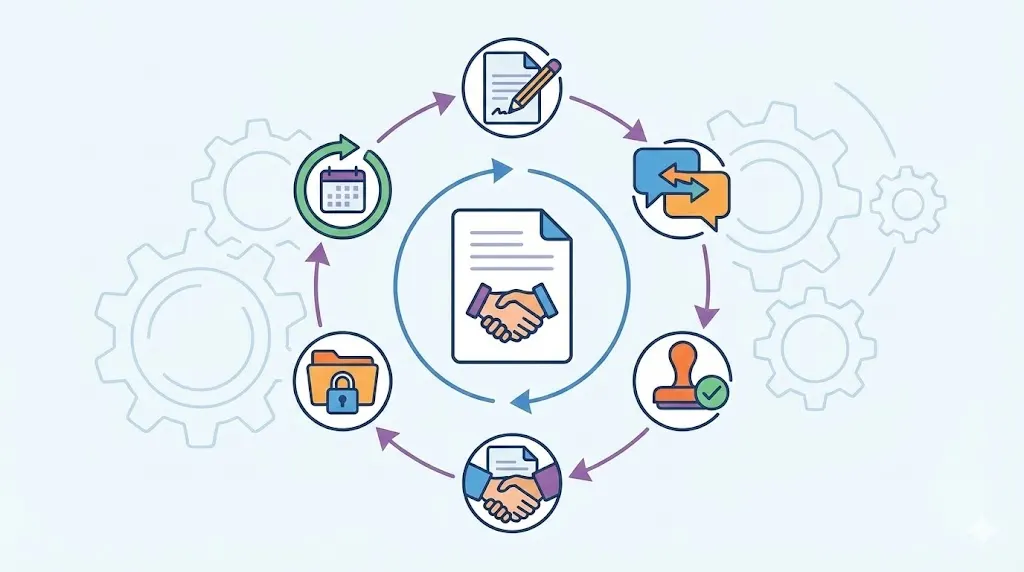
Contract Lifecycle Management is the structured management of contracts from intake through termination. It covers drafting, review, approval, signing, performance, renewal, and amendment. CLM also tracks duties, dates, risks, and records. It gives teams a shared process for managing contracts before and after signature.
What is enterprise contract management?
Enterprise contract management coordinates people, processes, and tools across a large contract portfolio. It connects legal, finance, procurement, sales, operations, and business owners. The goal is to protect value while reducing risk and delays. Strong enterprise management also supports audits, reporting, renewals, and consistent execution.
Why do modern enterprises rely on contract lifecycle management software?
Modern enterprises rely on CLM software because contract data spreads across many teams and systems. A central tool improves search, approvals, alerts, duty tracking, and reporting. Integrations connect contract terms with billing, sales, procurement, and operations. This helps teams find leakage earlier and act before losses grow.
What are the most common causes of contract value leakage?
Common causes include unclear terms, missed duties, pricing errors, and weak ownership. Disconnected systems can also separate contracts from invoices, usage, and delivery data. Manual tracking creates missed dates and stale records. Overlooked renewals and unclaimed credits can further reduce realized contract value.
How can enterprises detect and prevent contract value leakage?
Enterprises can start with contract audits and a clear leakage baseline. They should track duties, invoices, service results, renewal dates, and payment terms. Cross-functional owners must review exceptions and escalate material risks. A CLM system can support alerts, evidence collection, approvals, and corrective workflows.
Which metrics should enterprises use to measure contract value leakage?
Useful metrics include missed savings, unbilled revenue, invoice discrepancies, and unclaimed service credits. Teams should also track duty completion, renewal outcomes, avoidable spend, and recovered value. Each metric needs a data source, owner, review schedule, and action threshold. This turns measurement into regular control work.
About the Company

Volody AI CLM is an Agentic AI-powered Contract Lifecycle Management platform designed to eliminate manual contracting tasks, automate complex workflows, and deliver actionable insights. As a one-stop shop for all contract activities, it covers drafting, collaboration, negotiation, approvals, e-signature, compliance tracking, and renewals. Built with enterprise-grade security and no-code configuration, it meets the needs of the most complex global organizations. Volody AI CLM also includes AI-driven contract review and risk analysis, helping teams detect issues early and optimize terms. Trusted by Fortune 500 companies, high-growth startups, and government entities, it transforms contracts into strategic, data-driven business assets.





" height="216.72211px" id="FYO0bO80Y" transform="translate(3 6.105)" width="206.073px"/><path d="M 108.174 222 C 88.432 222 70.303 217.239 53.785 207.717 C 37.267 198.196 24.173 185.052 14.504 168.285 C 4.835 151.312 0 132.165 0 110.845 C 0 89.731 4.835 70.792 14.504 54.025 C 24.173 37.052 37.267 23.804 53.785 14.282 C 70.303 4.761 88.432 0 108.174 0 C 128.116 0 146.246 4.761 162.562 14.282 C 179.08 23.804 192.073 37.052 201.541 54.025 C 211.21 70.792 216.044 89.731 216.044 110.845 C 216.044 132.165 211.21 151.312 201.541 168.285 C 192.073 185.052 179.08 198.196 162.562 207.717 C 146.044 217.239 127.915 222 108.174 222 Z M 108.174 183.189 C 120.864 183.189 132.044 180.291 141.713 174.495 C 151.382 168.492 158.936 160.006 164.375 149.035 C 169.814 138.064 172.533 125.334 172.533 110.845 C 172.533 96.355 169.814 83.729 164.375 72.965 C 158.936 61.994 151.382 53.611 141.713 47.815 C 132.044 42.02 120.864 39.122 108.174 39.122 C 95.483 39.122 84.202 42.02 74.332 47.815 C 64.663 53.611 57.109 61.994 51.67 72.965 C 46.231 83.729 43.511 96.355 43.511 110.845 C 43.511 125.334 46.231 138.064 51.67 149.035 C 57.109 160.006 64.663 168.492 74.332 174.495 C 84.202 180.291 95.483 183.189 108.174 183.189 Z" fill="rgba(255, 255, 255, 0.12)" height="222px" id="aa1McFcE9" transform="translate(227.183 3)" width="216.04399999999998px"/><path d="M 42.302 182.257 L 111.799 182.257 L 111.799 216.722 L 0 216.722 L 0 0 L 42.302 0 Z" fill="rgba(255, 255, 255, 0.12)" height="216.72211px" id="yRq4AnrsX" transform="translate(477.721 6.105)" width="111.79899999999998px"/><path d="M 108.174 222 C 88.432 222 70.303 217.239 53.785 207.717 C 37.267 198.196 24.173 185.052 14.504 168.285 C 4.835 151.312 0 132.165 0 110.845 C 0 89.731 4.835 70.792 14.504 54.025 C 24.173 37.052 37.267 23.804 53.785 14.282 C 70.303 4.761 88.432 0 108.174 0 C 128.116 0 146.246 4.761 162.562 14.282 C 179.08 23.804 192.073 37.052 201.541 54.025 C 211.21 70.792 216.045 89.731 216.045 110.845 C 216.045 132.165 211.21 151.312 201.541 168.285 C 192.073 185.052 179.08 198.196 162.562 207.717 C 146.044 217.239 127.915 222 108.174 222 Z M 108.174 183.189 C 120.864 183.189 132.044 180.291 141.713 174.495 C 151.382 168.492 158.936 160.006 164.375 149.035 C 169.814 138.064 172.534 125.334 172.534 110.845 C 172.534 96.355 169.814 83.729 164.375 72.965 C 158.936 61.994 151.382 53.611 141.713 47.815 C 132.044 42.02 120.864 39.122 108.174 39.122 C 95.483 39.122 84.202 42.02 74.332 47.815 C 64.663 53.611 57.108 61.994 51.67 72.965 C 46.231 83.729 43.511 96.355 43.511 110.845 C 43.511 125.334 46.231 138.064 51.67 149.035 C 57.108 160.006 64.663 168.492 74.332 174.495 C 84.202 180.291 95.483 183.189 108.174 183.189 Z" fill="rgba(255, 255, 255, 0.12)" height="222px" id="mo8HQspQ0" transform="translate(609.155 3)" width="216.04500000000007px"/><path d="M 73.727 0 C 95.885 0 115.324 4.45 132.044 13.351 C 148.967 22.252 161.957 34.982 171.027 51.541 C 180.287 67.894 184.917 86.937 184.917 108.671 C 184.917 130.405 180.287 149.449 171.027 165.801 C 161.957 181.947 148.967 194.47 132.044 203.371 C 115.324 212.271 95.885 216.722 73.727 216.722 L 0 216.722 L 0 0 Z M 72.216 179.773 C 94.374 179.773 111.497 173.564 123.583 161.144 C 135.669 148.724 141.713 131.233 141.713 108.671 C 141.713 86.109 135.669 68.515 123.583 55.888 C 111.497 43.055 94.374 36.638 72.216 36.638 L 42.302 36.638 L 42.302 179.773 Z" fill="rgba(255, 255, 255, 0.12)" height="216.72211px" id="I3iXX5Hi_" transform="translate(859.693 6.105)" width="184.91699999999992px"/><path d="M 185.22 0 L 113.91 141.273 L 113.91 216.722 L 71.61 216.722 L 71.61 141.273 L 0 0 L 47.74 0 L 93.06 99.046 L 138.08 0 Z" fill="rgba(255, 255, 255, 0.12)" height="216.72211px" id="nzHyWC0_d" transform="translate(1061.78 6.105)" width="185.22000000000003px"/></svg>)