

Pune’s manufacturing and IT firms need disciplined contract control across suppliers, customers, plants, legal teams, and technology operations. The right CLM platform centralizes agreements, accelerates approvals, strengthens compliance, and protects critical renewal and obligation timelines. This guide evaluates five leading options for Legal Tech Pune buyers.
TL;DR
Contractzy, Icertis, Oneflow, DocuSign CLM, and Agiloft serve different Pune business needs.
Manufacturing firms need supplier controls, renewal alerts, obligation tracking, and ERP links.
IT firms need fast NDA, MSA, SaaS, approval, signing, and renewal workflows.
Enterprise platforms offer deeper control, but need larger budgets and stronger internal support.
Compare workflow fit, integrations, security, adoption, analytics, support, and total ownership cost.
Start with one contract group, then measure cycle time, renewals, risks, and user adoption.
Why Contract Management Software Matters
Pune businesses handle contracts across offices, plants, vendors, and client teams. Files often sit in email, shared drives, paper folders, and local tools.
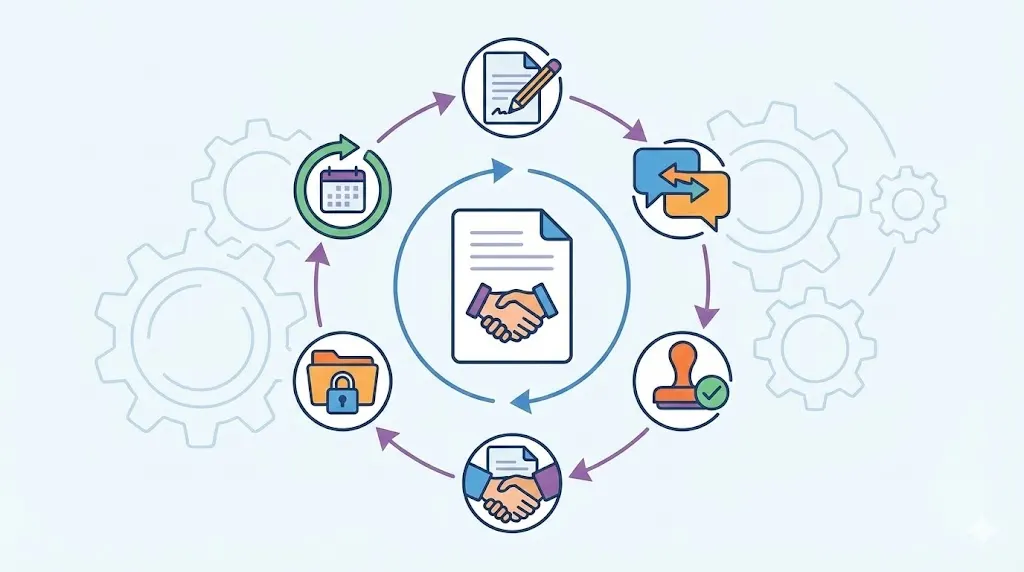
Contract management software brings these records into one controlled workspace. It supports drafting, review, approval, signing, storage, renewal, and obligation tracking.
That single flow reduces spreadsheet work and repeated follow-ups. Teams can also find the latest version without asking several people.
Manufacturers need control over supplier terms, warranties, delivery dates, and service levels. They also need clear rules for plant approvals and penalty clauses.
IT firms manage NDAs, master service agreements, or MSAs, and statements of work. They also track data terms, intellectual property, subscriptions, and client renewals.
A central repository gives teams better search and access control. Audit trails show who changed, viewed, approved, or signed each agreement.
Alerts can flag renewal dates, notice periods, price changes, and service duties. This creates stronger contract compliance management in Pune operations.
CLM also supports distributed teams. Legal can set rules while procurement, sales, finance, and plant users complete assigned tasks.
The benefits of CLM in manufacturing include fewer missed duties and better supplier control. IT firms gain faster deal cycles and clearer customer commitments.
The best contract lifecycle management software should support work after signing. A signed contract still creates duties, dates, risks, and business decisions.
Related Article: Best Contract Management Software: Top 10 CLM Tools
How to Evaluate CLM Software for Pune Businesses
A strong review starts with business needs, not brand names. List contract types, users, approval steps, systems, risks, and budget limits.
Pune firms should also assess cloud and on-premises choices. Local operations may need strong partner support, clear data controls, and practical training.
Do not assume every company needs an India-specific platform. Instead, test how each tool handles local tax terms, e-signatures, e-stamping needs, and internal rules.
Workflow and Automation Fit
Check how users request new contracts. Intake forms should capture business needs before legal review starts.
Review template controls, clause libraries, redlining, and fallback language. Redlining means showing proposed contract changes clearly during negotiation.
Test approval routing by value, risk, department, and contract type. Automated reminders should reach the right owner without manual chasing.
Also review obligation management after signing. The platform should assign duties, deadlines, renewals, and escalation steps.
Integration and Security Requirements
Manufacturers often need links with ERP, procurement, supplier, and finance tools. IT firms may need CRM, ticketing, identity, and document system links.
Ask about APIs and ready-made connectors. An API lets other systems exchange data with the CLM platform.
Security checks should cover role-based access and audit logs. Role-based access means each user sees only approved records and actions.
Review data backup, encryption, identity controls, and retention rules. Ask vendors to explain their security testing and support process.
Cost, Adoption, and Implementation Effort
Compare more than the subscription price. Include setup, migration, training, support, integrations, and future configuration work.
Some platforms need specialist legal operations teams. Others may offer faster setup for smaller or less complex teams.
Estimate the time needed from legal, procurement, IT, finance, and business users. A platform fails when owners cannot support daily use.
A simple comparison checklist should cover automation, integrations, security, price, setup, ease of use, reporting, and support.
Related Article: How To Design Contracts That Don't Leak Value
Top 5 CLM Software Picks for Manufacturing and IT Firms
These five platforms suit different contract needs and business sizes. The right choice depends on workflow depth, contract volume, risk, and internal skills.
The shortlist includes Contractzy, Icertis, Oneflow, DocuSign CLM, and Agiloft. Each platform can support a different place in the Legal Tech Pune market.
Use-case fit matters more than brand recognition. A complex tool may fail if users find it difficult.
AI-Driven Contract Operations
Contractzy suits teams seeking practical AI-powered contract management tools. It can support drafting, review, approvals, compliance work, and post-signature tracking.
Its fit may appeal to growing manufacturers and IT firms. Common uses include supplier agreements, NDAs, service contracts, and renewal monitoring.
AI can help flag unusual language and missing provisions. It can also support clause choices and contract summaries.
The main strength is a broad workflow across the contract lifecycle. Teams can connect review work with obligations and deadlines.
Buyers should confirm integration depth and setup needs. They should also test reporting, permissions, migration, and support before purchase.
Enterprise Governance at Scale
Icertis is designed for large organisations with complex contract estates. It can support many entities, regions, departments, and agreement types.
Its strengths include advanced risk models and obligation orchestration. Orchestration means assigning and coordinating contract duties across teams.
Manufacturers may use it for suppliers, production partners, distribution, and quality agreements. IT firms may use it for customers, vendors, software, and data terms.
The platform may suit firms with mature legal operations. It can provide strong governance across a large contract portfolio.
The trade-off is greater cost and longer setup. Firms may need dedicated administrators, process owners, and change support.
Fast Agreement Creation and Signing
Oneflow focuses on simple digital agreement workflows. It may suit teams that need fast creation, collaboration, approval, and signing.
IT firms can use it for NDAs, statements of work, and recurring client agreements. Manufacturers may use it for lower-risk supplier or service contracts.
Its accessible user experience can support wider business adoption. Users can move agreements forward without relying on email chains.
Buyers should test complex approval rules and reporting needs. They should also confirm how the platform handles obligations after signing.
Workflow Automation for Diverse Contract Portfolios
DocuSign CLM can suit firms already using electronic signatures. It supports agreement workflows, approvals, templates, and compliance records.
It may fit IT teams handling customer agreements and renewals. It can also support manufacturing teams with supplier and service documents.
Agiloft offers configurable workflows for varied contract portfolios. Its flexibility may help teams with special approval paths or complex rules.
Both tools require careful testing before selection. Compare integration depth, contract volume, governance needs, and internal setup capacity.
A fast signing process alone does not create strong contract control. Review storage, search, audit trails, alerts, and post-signature duties.
Related Article: 10 Key Contract Clauses Every Business Should Know In 2026
5 Key Contract Management Challenges in Pune Firms
Pune companies often work across plants, offices, customers, suppliers, and technology teams. These groups create different contract risks and approval needs.
A CLM platform should solve operating problems, not simply store files. The biggest risks usually appear before and after signing.
1. Fragmented Contract Storage
Contracts may sit in email, shared drives, local folders, and paper files. Procurement teams may hold different copies from legal teams.
This makes version control difficult. Users may negotiate an old draft or miss a later amendment.
Search also becomes slow and unreliable. Staff may spend hours finding one signed agreement.
A central repository gives each team controlled access to current records. OCR, or text recognition, can make scanned contracts searchable.
2. Delayed Reviews and Approvals
Contract reviews often involve legal, finance, procurement, sales, IT, and plant teams. Each group may wait for another team before acting.
Email approvals create unclear ownership. They also make it hard to see where a request stopped.
Slow reviews can delay purchases, customer deals, and production support. They may also create pressure for rushed legal decisions.
Automated workflows route agreements based on value, risk, and contract type. Clear reminders help each reviewer act on time.
3. Missed Renewals and Obligations
A contract may include expiry dates, notice periods, warranties, penalties, and service duties. These details can disappear after signature.
Missed notice dates may trigger unwanted renewals. Missed price reviews may also reduce savings or increase cost.
Manufacturers must track deliveries, quality terms, and maintenance duties. IT firms must track subscriptions, service levels, and client commitments.
Obligation tools assign owners and send alerts. Escalation rules can notify managers when deadlines remain open.
4. Compliance and Data Exposure
Inconsistent clauses can create legal and business risk. Weak access controls can expose prices, source code, customer data, or supplier terms.
Teams also need clear audit records. They should know who changed a clause and approved a final version.
Contract risk management strategies should reflect each company’s legal playbook. A playbook is a set of approved rules for common contract issues.
CLM can flag missing clauses, unusual language, and policy departures. It can also support reports for audits and management review.
Related Article: How To Prevent Missed Contract Obligations
Remedies and Best Practices for CLM Adoption
CLM adoption works best when firms improve process and technology together. A new repository cannot fix unclear ownership or weak approval rules.
Start with a clear view of current work. Then remove repeated steps and define simple rules for common contracts.
Standardize Templates and Approval Policies
Create approved templates for common supplier, customer, NDA, and service agreements. Keep each template linked to an accountable owner.
Set fallback clauses for common negotiation points. Fallback clauses provide safer alternatives when the first position fails.
Define approval thresholds by value, risk, and department. Also set delegation rules for leave periods and urgent work.
These rules reduce random contract choices. They also help business users complete low-risk work faster.
Create an Obligation and Renewal Operating Model
Assign every key duty to a named person or team. Avoid assigning obligations to a general department mailbox.
Set alerts before renewal and notice dates. Use different alert windows for low-risk and high-risk agreements.
Create escalation steps for missed actions. Managers should see open obligations before they affect suppliers or customers.
Review duties after signature, not only during negotiation. This keeps the contract connected to daily business work.
Launch in Phases and Measure Adoption
Start with one high-volume or high-risk contract group. Good starting points include supplier agreements, NDAs, or customer renewals.
Clean priority records before migration. Remove duplicates and confirm the status of active agreements.
Train users by role, not through one large session. Legal, procurement, finance, and business users need different tasks.
Track cycle time, renewal capture, obligation completion, and template use. Use these results to guide the next rollout.
Integrating CLM With Pune Manufacturing and IT Workflows
CLM should connect with current business systems. An isolated tool creates new data entry and weakens adoption.
Integration can move key details between procurement, ERP, CRM, finance, and document tools. It can also trigger reviews when a business event occurs.
Identity integration supports faster user access and better control. Collaboration links can keep users inside familiar workspaces.
Manufacturing Process Connectivity
Supplier onboarding may start in procurement and create a contract request. The CLM system can then route terms to legal and plant approvers.
ERP links can connect supplier records, purchase values, and contract dates. This reduces repeated entry and supports better reporting.
Manufacturing agreements may include quality rules, delivery duties, warranties, and penalties. These terms need owners and alerts after signing.
Plant-level approvals also need clear routing. A local plant manager may review operational terms before central legal approval.
IT and SaaS Agreement Management
IT teams manage NDAs, MSAs, statements of work, and data processing terms. They also manage software subscriptions and vendor agreements.
CRM integration can start contracts from approved sales opportunities. IT service management links can connect support duties with signed service levels.
Finance systems can track payment terms and renewal costs. Identity tools can limit access to sensitive customer and vendor records.
The integration map should show contract types, source systems, users, shared data, approval triggers, and post-signature actions.
Related Article: CLM Software for Information Technology
Measuring CLM ROI, Governance, and Long-Term Value
CLM value goes beyond replacing paper or email. Leaders should connect platform results with financial, legal, operational, and compliance goals.
Set a baseline before launch. Without a baseline, teams cannot show whether the new process improved results.
Review results by department and contract type. A supplier workflow may need different measures from a customer renewal workflow.
Operational and Financial Metrics
Track contract cycle time from request to signature. Also measure approval turnaround by team and contract risk level.
Review renewal savings and missed renewal rates. Compare supplier performance with contract terms and agreed service levels.
Measure obligation completion and overdue actions. These results show whether teams manage contracts after signing.
Estimate avoided manual effort with care. Use work logs and process samples instead of rough assumptions.
Governance and Compliance Visibility
Review clause deviations against approved playbooks. Track access history for sensitive contracts and business units.
Audit readiness improves when records, approvals, and changes stay together. Teams can answer questions without searching many systems.
Use risk dashboards for open issues and unusual terms. Reports should show owners, status, deadlines, and required actions.
A useful KPI scorecard should separate baseline data, target results, data owners, reporting frequency, and review duties.
Related Article: CLM Software for Executives
Choosing and Implementing the Right CLM Platform
Selection should follow documented needs, not sales demos alone. Record contract volumes, users, workflows, systems, risks, and budget first.
Bring legal, procurement, finance, sales, operations, and IT into the review. Each group sees different contract problems and adoption barriers.
Use the scorecard to compare all five shortlisted tools. Keep business fit and support beside features and price.
Match Platform Depth to Organizational Complexity
A fast-deployment tool may suit a smaller team with standard contracts. It may also suit an IT firm seeking quick signing and renewal control.
Large enterprises may need deeper rules and cross-entity reporting. They should consider platforms built for complex governance and obligation models.
Do not buy complexity without internal capacity. A strong platform still needs owners, administrators, training, and regular review.
Validate the Platform Before Purchase
Ask vendors to demonstrate real use cases. Use supplier agreements, NDAs, MSAs, renewals, and service terms from your business.
Test sample contracts and difficult clauses. Check search, redlining, approvals, alerts, audit trails, and reporting.
Validate integrations with ERP, CRM, procurement, identity, and finance systems. Also review security controls and data handling.
Request migration estimates and service-level details. Speak with references that have similar contract volumes and operating needs.
Build Internal Ownership
Executive sponsorship gives the project authority and budget. A product owner should manage priorities, issues, and adoption targets.
Process administrators should maintain templates, clauses, roles, and approval rules. Legal and business owners should review these rules often.
Create training for each user group. Publish simple guidance for requests, reviews, approvals, signing, and obligation updates.
The final selection scorecard should cover business fit, features, security, integration, setup, adoption, support, and total cost.
Related Article: How to Choose the Right CLM Software: A Practical Guide
Why Contract Management Software Matters
The right CLM platform can help Pune firms control risk and speed agreements. It can also connect legal work with procurement, sales, finance, plants, and IT teams.
Compare Contractzy, Icertis, Oneflow, DocuSign CLM, and Agiloft against written requirements. Do not select a tool only because it has broad market awareness.
Start with one contract category and measurable goals. Then expand after users prove the process works.
Post-signature work matters as much as drafting and signing. Renewal alerts, obligation ownership, and audit records protect value over time.
Business fit: Match the tool with contract types, users, risk, and operating scale.
Workflow needs: Test intake, templates, approvals, review, signing, renewals, and obligations.
Integration readiness: Confirm ERP, CRM, procurement, finance, identity, and document links.
Implementation resources: Plan ownership, migration, training, support, and change work.
Measurable outcomes: Track cycle time, renewals, obligations, risks, adoption, and savings.
Volody's CLM Software can support this approach with AI Contract Review, Approval Workflow Automation, and Obligation Management. It can flag risky language, route approvals, and track duties after signing.
For example, a Pune manufacturer could review supplier terms, route plant approval, and receive renewal alerts from one system.
Take control of contract operations with Volody's CLM Software. Schedule a focused evaluation to streamline reviews, strengthen compliance, and manage obligations from one system.
FAQ
Which Contract Management Software is highly rated in Pune based on customer reviews?
Customer ratings vary by review source, company size, and rollout experience. SAP Ariba appears among products linked with popularity and support in cited Pune research. Icertis, Contractzy, Oneflow, DocuSign CLM, and Agiloft may fit different needs. Compare recent reviews with demonstrations, references, security checks, and written support terms.
Which Contract Management Software has the best customer support based on reviews in Pune?
Support quality depends on service tier, partner coverage, and deployment complexity. Cited Pune review research connects SAP Ariba with customer support visibility. Buyers should still verify local escalation paths directly. Ask about response times, remote help, onsite options, implementation ownership, and post-launch assistance.
Which Contract Management Software provides onsite support in Pune?
Onsite support depends on the vendor team, local partners, and purchased service package. The product alone does not guarantee local assistance. Enterprise providers may offer workshops, migration help, or onsite configuration. Request written details about coverage, travel, response times, training, and ownership before signing.
Which CLM software is best for manufacturing firms in Pune?
Manufacturers should prioritize supplier controls, ERP links, plant approvals, quality terms, warranties, penalties, and renewal alerts. Icertis may suit complex enterprise environments with broad governance needs. Contractzy or Agiloft may suit firms seeking flexible workflows. The best choice depends on volume, budget, risk, and implementation capacity.
Which CLM software is best for IT companies in Pune?
IT firms often need workflows for NDAs, MSAs, statements of work, SaaS terms, and renewals. They should test approval speed, clause libraries, e-signatures, CRM links, ITSM links, and security. Oneflow or DocuSign CLM may suit streamlined execution. Icertis or Agiloft may support wider governance needs.
Can CLM software integrate with ERP and CRM systems?
Many CLM tools support APIs, connectors, workflow tools, or identity platforms. Manufacturing teams may connect procurement and ERP systems. IT firms may connect CRM, finance, ticketing, and document tools. Test data movement, approval triggers, user access, error handling, and reports with realistic workflows.
About the Company
Volody AI CLM is an Agentic AI-powered Contract Lifecycle Management platform designed to eliminate manual contracting tasks, automate complex workflows, and deliver actionable insights. As a one-stop shop for all contract activities, it covers drafting, collaboration, negotiation, approvals, e-signature, compliance tracking, and renewals. Built with enterprise-grade security and no-code configuration, it meets the needs of the most complex global organizations. Volody AI CLM also includes AI-driven contract review and risk analysis, helping teams detect issues early and optimize terms. Trusted by Fortune 500 companies, high-growth startups, and government entities, it transforms contracts into strategic, data-driven business assets.




" height="216.72211px" id="FYO0bO80Y" transform="translate(3 6.105)" width="206.073px"/><path d="M 108.174 222 C 88.432 222 70.303 217.239 53.785 207.717 C 37.267 198.196 24.173 185.052 14.504 168.285 C 4.835 151.312 0 132.165 0 110.845 C 0 89.731 4.835 70.792 14.504 54.025 C 24.173 37.052 37.267 23.804 53.785 14.282 C 70.303 4.761 88.432 0 108.174 0 C 128.116 0 146.246 4.761 162.562 14.282 C 179.08 23.804 192.073 37.052 201.541 54.025 C 211.21 70.792 216.044 89.731 216.044 110.845 C 216.044 132.165 211.21 151.312 201.541 168.285 C 192.073 185.052 179.08 198.196 162.562 207.717 C 146.044 217.239 127.915 222 108.174 222 Z M 108.174 183.189 C 120.864 183.189 132.044 180.291 141.713 174.495 C 151.382 168.492 158.936 160.006 164.375 149.035 C 169.814 138.064 172.533 125.334 172.533 110.845 C 172.533 96.355 169.814 83.729 164.375 72.965 C 158.936 61.994 151.382 53.611 141.713 47.815 C 132.044 42.02 120.864 39.122 108.174 39.122 C 95.483 39.122 84.202 42.02 74.332 47.815 C 64.663 53.611 57.109 61.994 51.67 72.965 C 46.231 83.729 43.511 96.355 43.511 110.845 C 43.511 125.334 46.231 138.064 51.67 149.035 C 57.109 160.006 64.663 168.492 74.332 174.495 C 84.202 180.291 95.483 183.189 108.174 183.189 Z" fill="rgba(255, 255, 255, 0.12)" height="222px" id="aa1McFcE9" transform="translate(227.183 3)" width="216.04399999999998px"/><path d="M 42.302 182.257 L 111.799 182.257 L 111.799 216.722 L 0 216.722 L 0 0 L 42.302 0 Z" fill="rgba(255, 255, 255, 0.12)" height="216.72211px" id="yRq4AnrsX" transform="translate(477.721 6.105)" width="111.79899999999998px"/><path d="M 108.174 222 C 88.432 222 70.303 217.239 53.785 207.717 C 37.267 198.196 24.173 185.052 14.504 168.285 C 4.835 151.312 0 132.165 0 110.845 C 0 89.731 4.835 70.792 14.504 54.025 C 24.173 37.052 37.267 23.804 53.785 14.282 C 70.303 4.761 88.432 0 108.174 0 C 128.116 0 146.246 4.761 162.562 14.282 C 179.08 23.804 192.073 37.052 201.541 54.025 C 211.21 70.792 216.045 89.731 216.045 110.845 C 216.045 132.165 211.21 151.312 201.541 168.285 C 192.073 185.052 179.08 198.196 162.562 207.717 C 146.044 217.239 127.915 222 108.174 222 Z M 108.174 183.189 C 120.864 183.189 132.044 180.291 141.713 174.495 C 151.382 168.492 158.936 160.006 164.375 149.035 C 169.814 138.064 172.534 125.334 172.534 110.845 C 172.534 96.355 169.814 83.729 164.375 72.965 C 158.936 61.994 151.382 53.611 141.713 47.815 C 132.044 42.02 120.864 39.122 108.174 39.122 C 95.483 39.122 84.202 42.02 74.332 47.815 C 64.663 53.611 57.108 61.994 51.67 72.965 C 46.231 83.729 43.511 96.355 43.511 110.845 C 43.511 125.334 46.231 138.064 51.67 149.035 C 57.108 160.006 64.663 168.492 74.332 174.495 C 84.202 180.291 95.483 183.189 108.174 183.189 Z" fill="rgba(255, 255, 255, 0.12)" height="222px" id="mo8HQspQ0" transform="translate(609.155 3)" width="216.04500000000007px"/><path d="M 73.727 0 C 95.885 0 115.324 4.45 132.044 13.351 C 148.967 22.252 161.957 34.982 171.027 51.541 C 180.287 67.894 184.917 86.937 184.917 108.671 C 184.917 130.405 180.287 149.449 171.027 165.801 C 161.957 181.947 148.967 194.47 132.044 203.371 C 115.324 212.271 95.885 216.722 73.727 216.722 L 0 216.722 L 0 0 Z M 72.216 179.773 C 94.374 179.773 111.497 173.564 123.583 161.144 C 135.669 148.724 141.713 131.233 141.713 108.671 C 141.713 86.109 135.669 68.515 123.583 55.888 C 111.497 43.055 94.374 36.638 72.216 36.638 L 42.302 36.638 L 42.302 179.773 Z" fill="rgba(255, 255, 255, 0.12)" height="216.72211px" id="I3iXX5Hi_" transform="translate(859.693 6.105)" width="184.91699999999992px"/><path d="M 185.22 0 L 113.91 141.273 L 113.91 216.722 L 71.61 216.722 L 71.61 141.273 L 0 0 L 47.74 0 L 93.06 99.046 L 138.08 0 Z" fill="rgba(255, 255, 255, 0.12)" height="216.72211px" id="nzHyWC0_d" transform="translate(1061.78 6.105)" width="185.22000000000003px"/></svg>)