

Key Highlights
A master service agreement is a foundational legal contract that sets the general terms for an ongoing business relationship.
It streamlines future agreements by establishing a pre-approved framework, saving time and money on negotiations.
This document outlines key responsibilities, payment terms, and confidentiality, but not the details of specific services.
The MSA works with other documents like Statements of Work (SOWs), which define individual projects.
Effective contract management is crucial for maintaining and updating the MSA as the partnership evolves.
Introduction
When your business engages in long-term partnerships, do you negotiate a new contract for every project? This can be time-consuming and inefficient. A master service agreement (MSA) provides a solution by creating a comprehensive legal framework for all your business transactions with a particular partner. This single, overarching document establishes the core terms and conditions from the start, simplifying all future engagements and fostering a more stable and predictable business relationship.
Understanding the Master Service Agreement (MSA) in Business

A master service agreement, or MSA, is a vital legal contract for companies planning to work together on multiple projects over time. It sets out the standard terms that will govern all future transactions, creating a predictable foundation for your business operations.
By having this legal contract in place, you avoid renegotiating the basics for every new project. This guide will explore what an MSA is, why it is so beneficial for business relationships, and how it functions as the backbone of your long-term partnerships.
What Is a Master Service Agreement?
So, what exactly is an MSA? Think of it as a blueprint for your business relationship. It is a legal contract between two parties, like a vendor and a client, that outlines the basic terms and conditions governing all current and future work. This foundational agreement covers the fundamental rules of the partnership.
Instead of creating a fresh contract from scratch for each new project, the MSA establishes the overarching legal framework. It defines key aspects like confidentiality, payment structures, and liability. This allows both parties to agree on the core legal principles upfront.
With an MSA in place, your contract management becomes much simpler. You can then use shorter, more specific documents for individual projects, knowing that the main legal protections and basic terms are already settled.
Why Are MSAs Used in Business Transactions?
Businesses use MSAs primarily to make their operations more efficient and predictable, especially in long-term partnerships. The main goal is to speed up the negotiation process for all future transactions. By agreeing on the fundamentals at the beginning of a business relationship, you eliminate repetitive discussions.
This approach saves a significant amount of time and resources. When a new need arises, you can focus solely on the specifics of the new project instead of revisiting the entire legal framework. This leads to faster project kick-offs and smoother business operations.
Key reasons to use an MSA include:
Streamlined Negotiations: It accelerates future projects by building on pre-agreed terms.
Consistency: It ensures that all work done within the business relationship adheres to the same set of rules.
Risk Management: It establishes clear expectations and responsibilities upfront, reducing the chance of future disputes.
Strategic Role of the Master Service Agreement

The master service agreement plays a crucial strategic role in nurturing long-term, ongoing business relationships. It acts as the constitutional document for the partnership, establishing a stable foundation that allows the business relationship to grow and adapt over time without constant renegotiation of future agreements.
This strategic approach to contract management ensures that as circumstances evolve, the core principles of your partnership remain intact. Let's look at how MSAs help streamline these relationships and the specific advantages they offer.
How MSAs Streamline Ongoing Business Relationships
MSAs are designed to streamline processes for ongoing business relationships. By setting the overarching terms at the start, they create a clear and consistent framework for all future activities. This eliminates the need to draft and negotiate entirely new future contracts every time you begin a new project with the same partner.
Imagine you have a new requirement. With an MSA, you can simply create a short Statement of Work (SOW) that references the existing agreement. This document will only need to detail the specifics of the new project, such as deliverables and timelines, because the legal groundwork is already laid.
This method significantly reduces administrative burdens and legal costs. It allows both you and your partner to focus on the work itself rather than getting caught up in repetitive contract negotiations, making the entire business relationship more efficient and collaborative.
Advantages of Using an MSA Agreement for Long-Term Partnerships
Using an MSA for long-term partnerships offers numerous advantages that strengthen the business relationship. It provides a solid, predictable foundation that benefits both the client and the service provider. This clarity helps build trust and promotes a more collaborative environment.
One of the main benefits is enhanced transparency. The MSA clearly outlines each party's rights, responsibilities, and expectations in writing. If a question arises, both sides can easily refer back to the agreed-upon terms, which helps prevent misunderstandings and disputes down the line.
Other key advantages include:
Cost and Time Savings: It eliminates the need for lengthy negotiations for future projects, allowing you to launch new initiatives faster.
Improved Risk Management: By pre-defining terms like liability and indemnification, it protects both parties from unforeseen risks.
Better Contract Management: It centralises the core terms, making it easier to manage the overall business relationship and any associated project documents.
Related Article: Types of Contracts Every Business Needs
Core Elements of a Master Service Agreement
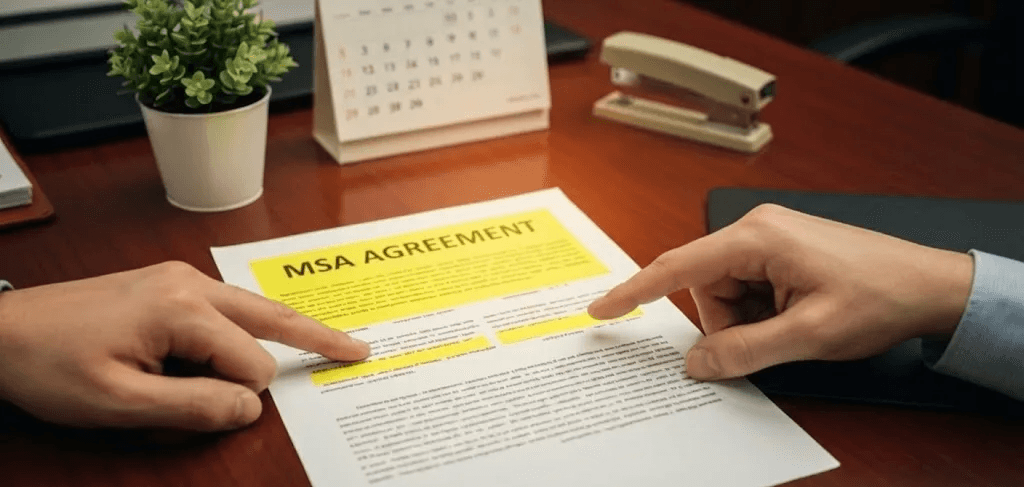
A robust master service agreement is built on several core elements that define the legal and operational boundaries of your partnership. While the specifics of future projects are left to statements of work, the MSA contains all the key terms that apply universally. These basic terms establish everything from performance standards to legal protections.
Understanding these components is essential for drafting a legal contract that effectively governs your relationship. We will now examine the critical clauses that form the backbone of any well-structured MSA.
Intellectual Property Provisions
In today's knowledge-driven economy, provisions for intellectual property (IP) are critical. An MSA must clearly define how IP rights are handled throughout the business relationship. This section prevents disputes over the ownership of intellectual property created during the partnership.
It should explicitly state who owns the work products and any proprietary information that is developed. This could be the client, the service provider, or shared ownership, depending on what is negotiated. The clause should also detail how pre-existing IP from either party can be used.
Key aspects to define in this section include:
Ownership of Intellectual Property: Clearly state who owns the final deliverables and any new inventions.
Licensing Rights: Specify any licenses granted for the use of shared or pre-existing IP.
Protection of Proprietary Information: Outline restrictions on the use of trade secrets and other confidential data.
Indemnification and Liability Clauses
Indemnification and limitation of liability clauses are fundamental for managing potential risks. These sections allocate responsibility between the parties in case something goes wrong, providing essential legal protection for your business.
The indemnification clause specifies one party's obligation to compensate the other for certain losses or damages, often arising from third-party claims. For example, if a service provider's work leads to a lawsuit against the client, this clause will determine who bears the financial responsibility. A limitation of liability clause sets a cap on the amount of damages a party can be held responsible for.
These clauses should clearly address:
Indemnification Obligations: Define under what circumstances one party must defend and cover the losses of the other.
Liability Caps: Set a maximum amount for financial liability to manage potential risks.
Exclusions: Specify what types of damages, such as indirect or consequential losses, are not recoverable.
Confidentiality Requirements
Protecting sensitive information is paramount in any business partnership. The MSA must include robust confidentiality clauses to safeguard proprietary data, trade secrets, and other confidential information shared between the parties. These clauses function like built-in confidentiality agreements.
This section should clearly define what is considered confidential information. This could include customer data, financial details, business strategies, and technical processes. By establishing these boundaries, you ensure that both parties understand their obligations to protect shared data.
Effective confidentiality clauses typically specify:
Handling of Information: Outline the required procedures for protecting sensitive information from disclosure.
Duration of Obligations: State how long the duty of confidentiality lasts, which may extend beyond the termination of the agreement.
Remedies for Breach: Address the consequences if a party fails to uphold its confidentiality obligations.
Governing Law and Dispute Resolution
Even with the best intentions, disagreements can arise. A well-drafted MSA prepares for this by defining the governing law and dispute resolution processes. This ensures that a clear, predetermined path exists for resolving conflicts, which can save time, money, and the business relationship itself.
The governing law clause specifies which state or country's laws will be used to interpret the legal documents and settle any disputes. The dispute resolution section outlines the steps the parties must take to address disagreements. This often involves a tiered approach, starting with negotiation before moving to more formal methods.
Common dispute resolution processes include:
Mediation: A neutral third party helps the parties reach a mutually agreeable solution.
Arbitration: A private, binding decision is made by an arbitrator or a panel of arbitrators instead of going to court.
Litigation: Specifies the jurisdiction and venue for any court proceedings.
Mandatory Clauses in a Legally Compliant MSA

Beyond the core elements, a legally compliant MSA must include several mandatory clauses that provide practical and operational clarity. These clauses form the functional part of the legal framework, defining how the partnership operates daily. They address crucial details like payment terms and the agreement's duration.
Without these clauses, a legal contract can be ambiguous and difficult to enforce. Let's explore some of the most important operational terms you need to include, such as the scope of services, payment schedules, and conditions for termination.
Scope of Services and Payment Terms
While the MSA does not detail the scope of work for specific services, it establishes the categories of services covered and the general parameters for service delivery. This helps prevent "scope creep," where work expands beyond the original agreement. The details of individual projects are then defined in separate Statements of Work.
The payment terms are one of the most critical parts of the MSA. This section outlines the financial rules for the entire relationship, including pricing structures, invoicing procedures, and payment schedules. It should also specify penalties for late payments to ensure timely compensation.
Here is an example of what payment terms might cover:
Term | Description |
|---|---|
Pricing Model | Defines how services are charged (e.g., fixed fee, hourly rate). |
Invoicing Cycle | Specifies when invoices will be sent (e.g., monthly, upon milestone). |
Payment Due Date | Sets the deadline for payment (e.g., within 30 days of invoice). |
Late Payment Penalty | Outlines the interest or fee charged for overdue payments. |
Term, Termination, and Renewal Clauses
Every agreement has a lifecycle, and your MSA should clearly define its duration and the conditions under which it can end. The "term" clause specifies the initial length of the agreement and may include details on renewal clauses, such as automatic renewals unless one party gives notice.
Termination clauses are equally important, as they provide a clear exit strategy for both parties. These clauses outline the specific circumstances under which the agreement can be ended. This may be "for cause," such as a breach of contract, or "without cause," which typically requires a longer notice period.
Key points to include in this section are:
Initial Term: The starting duration of the MSA.
Termination Conditions: The specific reasons the agreement can be terminated by either party.
Notice Periods: The amount of advance notice required to terminate the agreement, which can differ for termination with or without cause.
Related Article: What Is Intellectual Property Essential Guide to Management
Navigating the Differences: MSA vs. SLA vs. SOW

Understanding the distinctions among an MSA, SLA, and SOW is essential for effective contract management. The Master Service Agreement (MSA) serves as a broad legal framework that governs future transactions, ensuring all basic terms are clear and consistent. In contrast, a Service Level Agreement (SLA) focuses on service delivery metrics and performance standards, while a Statement of Work (SOW) outlines specific project details. Together, these documents facilitate smooth negotiations and set the foundation for a solid business relationship.
How a Master Service Agreement Differs from a Service Level Agreement
A Master Service Agreement (MSA) lays the groundwork for an overarching business relationship, while a Service Level Agreement (SLA) focuses on the specific metrics and standards of service delivery. The MSA addresses general terms, such as payment terms, intellectual property rights, and dispute resolution, ensuring a legal framework for future transactions. In contrast, SLAs detail performance metrics, response times, and service quality expectations, thus acting as a supporting document that directly ties to the services outlined in the MSA.
The Relationship Between an MSA and Statement of Work
An MSA serves as the foundational legal contract that governs a business relationship, while a Statement of Work (SOW) details the specific services and deliverables for individual projects. The MSA outlines general terms, including payment schedules and confidentiality clauses, whereas the SOW focuses on performance metrics and the scope of work for a particular project. Together, they enhance contract management, ensuring streamlined processes and compliance with industry standards while protecting sensitive information and intellectual property rights.
Related Article: Mastering Business Agreements: Essential Guide
Drafting and Negotiating an Effective Master Service Contract

Creating an effective master service contract requires careful drafting and a strategic negotiation process. This foundational legal framework will govern your relationship for years, so it is essential to get it right from the start. Seeking legal advice during this stage is always a wise decision to ensure all your interests are protected.
Successful contract negotiations depend on clear communication and a thorough understanding of the agreement's purpose. Let's cover some common mistakes to avoid when drafting MSAs and offer tips for a successful negotiation.
Common Mistakes When Drafting MSAs
Drafting an MSA can be complex, and several common mistakes can undermine its effectiveness. One of the biggest errors is creating a document that is too ambiguous. Vague general terms can lead to misunderstandings and disputes about obligations, performance standards, and deliverables.
Another frequent mistake is making the agreement too rigid. While the MSA should provide a stable legal framework, it also needs to be flexible enough to accommodate changing business needs. An overly restrictive MSA can hinder growth and create unnecessary friction as the partnership evolves.
To avoid these potential risks, watch out for:
Failing to Define Key Terms: Ambiguity in definitions can lead to different interpretations and conflicts.
Ignoring Risk Allocation: Neglecting to clearly define liability and indemnification can expose your business to significant financial harm.
Poorly Defined Scope: Not clearly outlining the categories of services can lead to scope creep and disagreements.
Tips for Successfully Negotiating an MSA Agreement
The negotiation process for an MSA sets the tone for the entire business relationship. Approaching contract negotiations with a collaborative mindset is key to building a strong foundation for all future agreements. Remember that the goal is to create a fair and balanced document that protects both parties.
Before entering negotiations, do your homework. Understand your "must-haves" versus your "nice-to-haves." Having clear priorities will help you focus on the most important terms and know where you can be flexible. It is also beneficial to seek legal advice to understand the implications of each clause.
For a smoother negotiation process, consider these tips:
Distinguish Priorities: Know which terms are non-negotiable and which ones have room for compromise.
Maintain Clear Communication: Be transparent about your goals and concerns to foster trust.
Focus on the Relationship: Frame the negotiation as a collaborative effort to build a successful long-term partnership rather than a zero-sum game.
Related Article: Contract Drafting Tips: Create Contracts Effortlessly
Reviewing, Updating, and Managing Your MSA Agreement
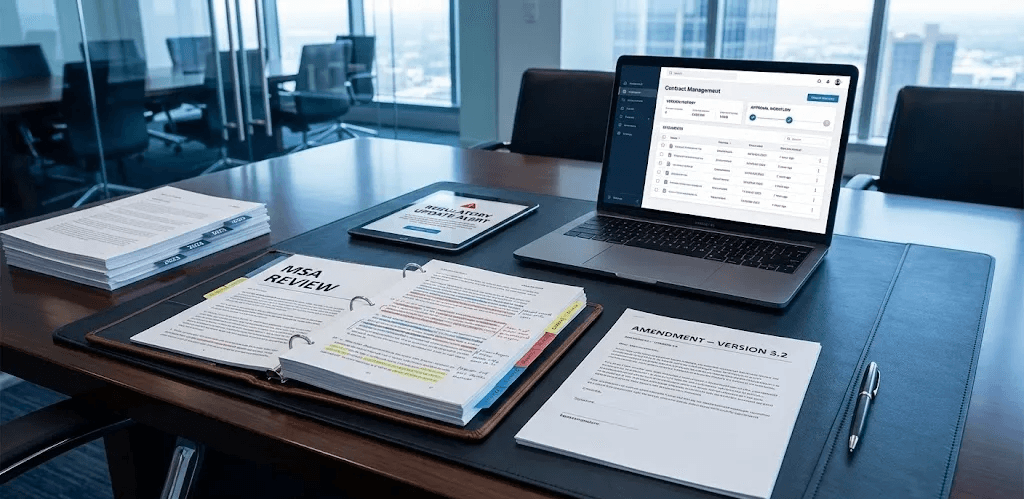
An MSA is not a "set it and forget it" document. For ongoing business relationships to thrive, the agreement must be actively managed. This includes periodic reviews, updates, and amendments to ensure it remains relevant and compliant with any new regulatory requirements.
Effective contract management is essential for the long-term health of your partnership. Using tools like contract management software can streamline this process. Let’s discuss how often you should review your MSA and the best practices for handling amendments.
How Often Should an MSA Contract Be Reviewed?
There is no single rule for how often an MSA should be reviewed, but periodic reviews are essential for effective contract management. A good practice is to review the contract at least once a year or whenever there is a significant change in the business relationship.
Changes in your business needs, such as expanding into new service areas, may require an update to the MSA's scope. Similarly, new regulatory requirements in your industry could make certain clauses outdated or non-compliant. Regular reviews ensure the agreement continues to protect your interests and accurately reflects the state of your ongoing business relationships.
Proactive reviews help you identify potential issues before they become major problems. By keeping the MSA current, you maintain a strong and relevant foundation for your partnership, ensuring it can adapt and grow over time.
Best Practices for Managing MSA Amendments
When you need to change your MSA, it is crucial to handle contract amendments properly to maintain legal protection. All modifications should be documented in writing and signed by both parties. This ensures there is a clear and official record of the changes, which helps avoid future disputes.
Using a defined process for amendments reduces administrative overhead and keeps your business operations running smoothly. Leveraging clm software can be particularly helpful here, as it allows you to track versions, manage approval workflows, and store all related documents in a centralised repository.
For effective management of amendments, follow these best practices:
Document Everything: Ensure all changes are formally recorded in a signed amendment document.
Maintain Version Control: Keep a clear record of all versions of the MSA to avoid confusion.
Communicate Clearly: Ensure all relevant stakeholders within both organisations are aware of the changes.
Frequently Asked Questions
Understanding the nuances of Master Service Agreements (MSAs) often raises specific queries. Common questions revolve around the essential clauses that need to be included, such as confidentiality clauses and ownership of intellectual property rights. Additionally, businesses frequently seek clarification on dispute resolution processes and termination conditions outlined in the MSA. Effective contract management software is vital for tracking these agreements and ensuring compliance. After all, clear guidance on contractual terms supports ongoing business relationships and streamlines future transactions.
Are master service agreements and terms of service the same thing?
No, they are different. A master service agreement is a negotiated legal contract between two specific parties, outlining general terms for an ongoing relationship. Terms of service are typically standardised, non-negotiable terms that a user must accept to use a product or service, often presented on a take-it-or-leave-it basis.
Can you provide a simple template of a master service agreement?
While many templates for a master service agreement are available online, they should only be used as a starting point. Every legal contract has unique business needs, so it is essential to customise the key terms and general terms with legal advice to ensure the document provides adequate protection and suits your specific partnership.
Where can I find guidelines for preparing a legally compliant MSA contract in India?
For a legally compliant MSA in India, you should consult with a legal professional who specialises in Indian contract law. They can provide guidance on the specific legal framework, regulatory requirements, and industry standards. Referring to the Indian Contract Act, 1872, is also a fundamental step in preparing compliant legal documents.
Conclusion
In conclusion, understanding the intricacies of a Master Service Agreement (MSA) is essential for fostering successful business relationships. An MSA acts as the cornerstone for transactions, establishing a clear framework that governs all future dealings between parties. By including mandatory clauses—such as Intellectual Property, Indemnification, and Confidentiality—you ensure comprehensive protection and clarity. Moreover, distinguishing the roles of MSAs, Service Level Agreements (SLAs), and Statements of Work (SOWs) further enhances your strategic planning. Regular reviews and updates to your MSA can mitigate risks and adapt to changing circumstances. For those seeking tailored support, feel free to get in touch for a free consultation to navigate the complexities of drafting and negotiating an MSA effectively.
About the Company

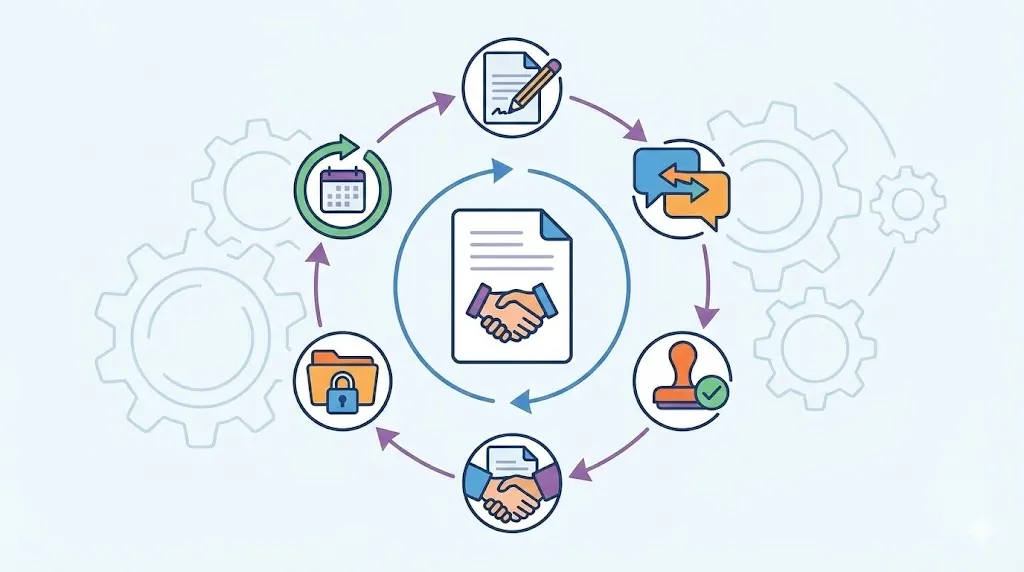
Volody AI CLM is an Agentic AI-powered Contract Lifecycle Management platform designed to eliminate manual contracting tasks, automate complex workflows, and deliver actionable insights. As a one-stop shop for all contract activities, it covers drafting, collaboration, negotiation, approvals, e-signature, compliance tracking, and renewals. Built with enterprise-grade security and no-code configuration, it meets the needs of the most complex global organizations. Volody AI CLM also includes AI-driven contract review and risk analysis, helping teams detect issues early and optimize terms. Trusted by Fortune 500 companies, high-growth startups, and government entities, it transforms contracts into strategic, data-driven business assets.




" height="216.72211px" id="FYO0bO80Y" transform="translate(3 6.105)" width="206.073px"/><path d="M 108.174 222 C 88.432 222 70.303 217.239 53.785 207.717 C 37.267 198.196 24.173 185.052 14.504 168.285 C 4.835 151.312 0 132.165 0 110.845 C 0 89.731 4.835 70.792 14.504 54.025 C 24.173 37.052 37.267 23.804 53.785 14.282 C 70.303 4.761 88.432 0 108.174 0 C 128.116 0 146.246 4.761 162.562 14.282 C 179.08 23.804 192.073 37.052 201.541 54.025 C 211.21 70.792 216.044 89.731 216.044 110.845 C 216.044 132.165 211.21 151.312 201.541 168.285 C 192.073 185.052 179.08 198.196 162.562 207.717 C 146.044 217.239 127.915 222 108.174 222 Z M 108.174 183.189 C 120.864 183.189 132.044 180.291 141.713 174.495 C 151.382 168.492 158.936 160.006 164.375 149.035 C 169.814 138.064 172.533 125.334 172.533 110.845 C 172.533 96.355 169.814 83.729 164.375 72.965 C 158.936 61.994 151.382 53.611 141.713 47.815 C 132.044 42.02 120.864 39.122 108.174 39.122 C 95.483 39.122 84.202 42.02 74.332 47.815 C 64.663 53.611 57.109 61.994 51.67 72.965 C 46.231 83.729 43.511 96.355 43.511 110.845 C 43.511 125.334 46.231 138.064 51.67 149.035 C 57.109 160.006 64.663 168.492 74.332 174.495 C 84.202 180.291 95.483 183.189 108.174 183.189 Z" fill="rgba(255, 255, 255, 0.12)" height="222px" id="aa1McFcE9" transform="translate(227.183 3)" width="216.04399999999998px"/><path d="M 42.302 182.257 L 111.799 182.257 L 111.799 216.722 L 0 216.722 L 0 0 L 42.302 0 Z" fill="rgba(255, 255, 255, 0.12)" height="216.72211px" id="yRq4AnrsX" transform="translate(477.721 6.105)" width="111.79899999999998px"/><path d="M 108.174 222 C 88.432 222 70.303 217.239 53.785 207.717 C 37.267 198.196 24.173 185.052 14.504 168.285 C 4.835 151.312 0 132.165 0 110.845 C 0 89.731 4.835 70.792 14.504 54.025 C 24.173 37.052 37.267 23.804 53.785 14.282 C 70.303 4.761 88.432 0 108.174 0 C 128.116 0 146.246 4.761 162.562 14.282 C 179.08 23.804 192.073 37.052 201.541 54.025 C 211.21 70.792 216.045 89.731 216.045 110.845 C 216.045 132.165 211.21 151.312 201.541 168.285 C 192.073 185.052 179.08 198.196 162.562 207.717 C 146.044 217.239 127.915 222 108.174 222 Z M 108.174 183.189 C 120.864 183.189 132.044 180.291 141.713 174.495 C 151.382 168.492 158.936 160.006 164.375 149.035 C 169.814 138.064 172.534 125.334 172.534 110.845 C 172.534 96.355 169.814 83.729 164.375 72.965 C 158.936 61.994 151.382 53.611 141.713 47.815 C 132.044 42.02 120.864 39.122 108.174 39.122 C 95.483 39.122 84.202 42.02 74.332 47.815 C 64.663 53.611 57.108 61.994 51.67 72.965 C 46.231 83.729 43.511 96.355 43.511 110.845 C 43.511 125.334 46.231 138.064 51.67 149.035 C 57.108 160.006 64.663 168.492 74.332 174.495 C 84.202 180.291 95.483 183.189 108.174 183.189 Z" fill="rgba(255, 255, 255, 0.12)" height="222px" id="mo8HQspQ0" transform="translate(609.155 3)" width="216.04500000000007px"/><path d="M 73.727 0 C 95.885 0 115.324 4.45 132.044 13.351 C 148.967 22.252 161.957 34.982 171.027 51.541 C 180.287 67.894 184.917 86.937 184.917 108.671 C 184.917 130.405 180.287 149.449 171.027 165.801 C 161.957 181.947 148.967 194.47 132.044 203.371 C 115.324 212.271 95.885 216.722 73.727 216.722 L 0 216.722 L 0 0 Z M 72.216 179.773 C 94.374 179.773 111.497 173.564 123.583 161.144 C 135.669 148.724 141.713 131.233 141.713 108.671 C 141.713 86.109 135.669 68.515 123.583 55.888 C 111.497 43.055 94.374 36.638 72.216 36.638 L 42.302 36.638 L 42.302 179.773 Z" fill="rgba(255, 255, 255, 0.12)" height="216.72211px" id="I3iXX5Hi_" transform="translate(859.693 6.105)" width="184.91699999999992px"/><path d="M 185.22 0 L 113.91 141.273 L 113.91 216.722 L 71.61 216.722 L 71.61 141.273 L 0 0 L 47.74 0 L 93.06 99.046 L 138.08 0 Z" fill="rgba(255, 255, 255, 0.12)" height="216.72211px" id="nzHyWC0_d" transform="translate(1061.78 6.105)" width="185.22000000000003px"/></svg>)