

Contracts directly influence revenue, costs, partnerships, and operational performance. Yet fragmented files, inconsistent workflows, and delayed approvals create avoidable inefficiencies and exposure. Contract lifecycle management (CLM) establishes a controlled, connected process across every contract stage, enabling teams to accelerate execution while strengthening legal, financial, and compliance oversight.
TL;DR
CLM centralizes contract data, standardizes workflows, and improves visibility across every stage of contract management.
Automation reduces manual handoffs, approval delays, negotiation bottlenecks, and missed renewal or obligation dates.
Templates, clause controls, permissions, and audit trails reduce unauthorized terms and strengthen contract governance.
Common adoption barriers include poor data, unclear rules, disconnected systems, fragmented records, and weak user adoption.
Strong CLM programs begin with focused workflows, clean data, clear ownership, useful metrics, and steady improvement.
Contract efficiency and risk control work together when teams manage agreements as active business data.
The Contract Lifecycle as an Efficiency System
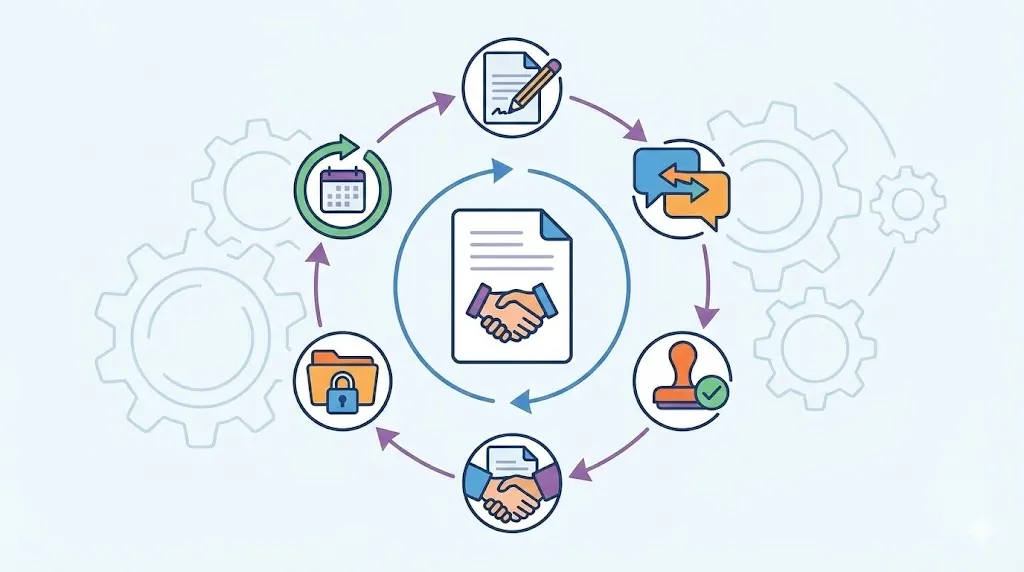
CLM manages contracts from the first request through expiration or termination. It connects drafting, negotiation, approval, signing, performance, and renewal work.
This creates one process instead of many disconnected tasks. Teams spend less time searching for updates and chasing approvals. Leaders also gain clearer control over obligations, terms, and exposure.
From Contract Request to Approval
The process starts with a guided intake form. A requester selects the agreement type, business need, value, and required date.
The system can classify the request and route it automatically. A sales agreement may go to legal and sales operations. A supplier agreement may go to procurement and finance.
Approval rules then match the contract’s value and risk. High-value agreements can require senior approval. Standard agreements can move through a faster path.
Approved templates give users a safe starting point. They also reduce drafting work and limit changes to critical terms. This is one of the main benefits of contract workflow automation.
Negotiation and Execution Without Process Gaps
Negotiations often slow down when teams email separate document versions. CLM keeps one record of every draft, comment, and tracked change.
Legal teams can compare edits against approved clause libraries. They can also record why a party accepted or rejected a change. This supports contract negotiation process optimization without removing human judgment.
After approval, electronic signature tools can start automatically. The platform then records signing status and stores the final agreement. Everyone sees the same current version.
Post-Signature Management and Renewal Planning
Signing does not end the contract lifecycle. Teams still need to manage services, payments, milestones, insurance, and other commitments.
CLM assigns obligations to named owners. It records due dates, completion status, and supporting evidence. Automated reminders help owners act before deadlines pass.
The system can also track amendments, expiry dates, and renewal notice periods. Searchable records make it easier to find related documents. This supports contract renewal management best practices across departments.
Related Article: CLM 101: Mastering the Contract Lifecycle
Where Manual Contract Processes Create Exposure
Manual processes often hide risk inside routine work. Email approvals, spreadsheets, and local folders make small errors harder to find.
A delayed approval can hold up revenue or supplier access. An outdated clause can create legal exposure. A missed notice date can renew an unwanted agreement.
These problems are not separate from efficiency. Slow, unclear work increases the chance of poor decisions. Better speed requires stronger process control.
Scattered records: Teams store agreements across inboxes, drives, and shared folders. They may struggle to find the final signed version quickly. Missing records can hide renewal dates, pricing terms, or obligations. Leaders then make decisions without a complete view of contractual exposure.
Unclear approvals: Many requests move through informal email chains without clear authority rules. Reviewers may miss key terms when documents arrive without context. Repeated follow-ups extend the contract cycle and frustrate business teams. Unclear ownership also makes approval failures difficult to explain later.
Uncontrolled changes: Users may copy old agreements and change language without legal review. Those changes can remove protections or create new commitments. Tracked edits may disappear across multiple file versions. The business then accepts terms that no approved policy supports.
Missed obligations: Spreadsheets rarely provide reliable reminders for every commitment. Owners can overlook service reviews, payment duties, or delivery milestones. Missed actions may trigger disputes, fees, or strained relationships. The company also loses evidence that it monitored performance.
Weak audit evidence: Manual records seldom show every decision and document change. Auditors may need to gather proof from many people and systems. That work takes time and may still leave important gaps. Poor evidence can increase compliance and dispute costs.
Related Article: Risk of Managing Contracts on Excel Spreadsheets
Key Challenges in CLM Adoption
CLM adoption changes how teams request, review, approve, and manage contracts. It is not simply a software purchase.
The platform can only improve weak processes when leaders define better rules. Data, ownership, training, and system links also need careful planning.
Incomplete Contract Inventory
Many organizations begin with contracts spread across departments and regions. Some agreements sit in paper files or personal drives.
Teams must collect these records before creating a trusted repository. They also need to identify duplicates and missing final versions.
Legacy documents often lack useful metadata. Dates, owners, business units, and renewal terms may require manual review. Poor classification weakens later reporting and alerts.
Inconsistent Policies and Approval Rules
Departments may use different templates for similar agreements. They may also follow different approval limits and risk standards.
CLM needs clear rules for each contract type. Those rules should define standard language, approval levels, exceptions, and escalation paths.
Without this structure, automation can repeat confusion at greater speed. Users may also bypass workflows when the process feels unclear or unfair.
Poor Data Quality and Integration Gaps
A CLM platform needs reliable information about people, suppliers, customers, dates, and values. Missing data can create false alerts or silent gaps.
Disconnected CRM, ERP, procurement, and signature systems create more manual work. Users may enter the same information several times. That increases errors and weakens trust in reports.
Integration planning should focus on business events. A sales opportunity may trigger a contract request. A purchase order may need a linked supplier agreement.
Low User Adoption
Users avoid platforms that feel harder than email. Long forms, unclear steps, and slow screens create strong resistance.
Training must explain both the process and the reason behind it. Users should know who owns each step and what happens next.
Leaders should watch bypass behavior after launch. Feedback can reveal confusing fields, poor routing, or missing templates. Small fixes often improve adoption more than extra policy documents.
Related Article: Legacy Contracts: How to Effectively Migrate to a CLM
Automation That Accelerates Contract Work
Contract automation software removes repetitive administration from daily work. It does not replace judgment during complex negotiations or unusual risk reviews.
The best design automates routine paths and escalates exceptions. This keeps experts focused on terms that need careful analysis.
Guided intake: Structured forms collect the details needed for each contract type. The system can ask different questions for sales, procurement, or employment agreements. It can then assign requests to the right team automatically. This reduces incomplete requests and prevents avoidable review delays.
Template selection: Users receive approved templates based on their request details. The platform can select clauses for region, deal type, value, or risk. Standard language reduces drafting effort and limits unauthorized edits. Legal teams can update approved content from one controlled library.
Clause support: Clause libraries give reviewers trusted language for common issues. Fallback clauses can guide negotiations when the other party rejects standard terms. High-risk deviations can trigger specialist review before approval. This approach supports practical risk mitigation strategies in contracts.
Approval routing: Conditional workflows send agreements to the correct reviewers. Value, data use, liability, and term length can drive routing decisions. Escalation rules prevent requests from waiting without action. Every reviewer sees the current contract and required decision.
Signature and alerts: Approved agreements can move directly to electronic signature. Automated reminders show who must sign and when. After signing, the system can create renewal and obligation alerts. Status tracking removes repeated emails asking for basic updates.
Efficiency scorecard: Teams should measure request, drafting, approval, and signature times. They should also track total cycle time across each contract type. Backlog volume shows where work is building up. Completion rates reveal whether workflows move agreements through every required stage.
Related Article: AI CLM in Banking: Efficiency & Risk Control
Governance Controls That Minimize Organizational Risk
Good governance places control inside ordinary contract work. It does not rely only on a final legal check.
CLM can enforce policy while preserving a clear path for exceptions. This reduces legal, financial, security, and operational exposure.
Standardized Language and Exception Management
Approved templates and clause libraries create a consistent starting point. They help teams avoid old language and unapproved commitments.
Not every deal can use standard terms. CLM can record deviations and show the affected clause. It can then route the issue to a specialist.
Escalation thresholds make review more precise. Unlimited liability, unusual data rights, or long auto-renewals may need extra approval. This creates a repeatable control for high-risk terms.
Access Controls and Audit Trails
Role-based permissions limit access to sensitive agreements. A user may view a contract without changing its terms.
Audit trails record document versions, comments, approvals, and signing actions. They show who changed a term and when that change occurred.
These records support audits and disputes. They also help managers review process quality. A complete history makes accountability easier across legal and business teams.
Unauthorized terms: Templates and clause controls help prevent unapproved language. Deviation records reveal where teams accepted different terms. Review rules can send serious changes to legal specialists. These controls reduce the chance of hidden commitments.
Access risk: Permission settings restrict sensitive contracts to approved users. Role changes can remove access when responsibilities change. Central records reduce copies stored in uncontrolled locations. Security teams gain clearer oversight of contract information.
Approval failure: Approval matrices match authority with contract value and risk. Automated routing reduces missed reviewers and informal decisions. Audit records show each required approval. This creates stronger evidence for internal reviews.
Deadline risk: Alerts warn owners about obligations and notice periods. Escalation rules can notify managers when action remains incomplete. Renewal calendars support earlier commercial decisions. Teams gain time to renegotiate or exit.
Compliance gaps: Standard workflows define required reviews and documents. The system can record completed checks and exceptions. Reports show unresolved issues across departments. Leaders can address patterns before they become larger failures.
Related Article: Reducing Contractual Liability with AI-Driven CLM
Visibility Into Obligations, Performance, and Exposure
A signed contract still carries work, cost, and risk. CLM turns its terms into useful tasks and business data.
Teams can track commitments across customers, suppliers, and internal owners. They can also compare terms with actual performance and spend.
This helps leaders see more than individual documents. They can identify repeated delays, weak controls, and value leakage across the organization.
Obligation tracking: The system assigns each commitment to a named owner. It records deadlines, evidence, status, and completion notes. Reminders support timely action without manual calendar work. Managers can focus attention on overdue or high-value obligations.
Renewal planning: Renewal calendars show upcoming dates and notice windows. Alerts give owners time to review price, service, and business need. Escalation workflows prevent silent automatic renewal. Teams can negotiate, renew, or exit with better preparation.
Performance monitoring: Contract records can connect duties with service results. Teams can compare service levels, delivery terms, and payment conditions. Unresolved actions become visible to managers. This supports stronger supplier and customer discussions.
Value leakage: Leakage occurs when agreed value is lost during performance. Examples include missed savings, incorrect prices, or unused service credits. CLM can highlight these terms for review. Finance and procurement can then address avoidable costs.
Searchable data: Full-text search helps teams find clauses, parties, terms, and dates. Metadata supports filters by owner, region, type, or status. Users spend less time searching across separate files. Reliable search also improves responses during audits and disputes.
Executive reporting: Dashboards can show obligations, renewals, owners, deviations, and open actions. Leaders can review bottlenecks and exposure by department. Reports support better staffing and process decisions. They also connect contract work with revenue, spend, and savings.
Related Article: Essential CLM Features Every Business Needs
Measuring CLM Outcomes and Improving the Operating Model
CLM success requires more than counting logins or stored contracts. Teams need measures that show speed, control, adoption, and business value.
Start with a baseline before changing the process. Compare results by contract type, department, region, and risk level.
Review metrics with legal, finance, procurement, sales, and operations. Shared ownership turns reports into action.
Efficiency and Throughput Metrics
Cycle time shows how long contracts take from request to completion. Break that measure into request, drafting, approval, and signature stages.
This reveals where delays actually occur. A short drafting time means little if approvals remain slow.
Backlog volume shows demand and capacity pressure. Completion rates reveal whether users finish required steps. These measures help teams improve workflow design and staffing.
Risk and Compliance Metrics
Track missed renewals, overdue obligations, policy exceptions, and unapproved clauses. These measures show whether controls work after launch.
Audit findings can reveal repeated process failures. Obligation completion rates show whether owners act on signed commitments.
Teams should also record losses linked to noncompliance or missed terms. Clear records help leaders connect contract controls with real business impact.
Adoption and Business Impact Metrics
Active users show whether teams use the platform regularly. Template adoption reveals whether users follow approved paths.
Self-service usage can show whether simple requests leave legal queues. Legal workload measures whether experts spend less time on routine administration.
Financial measures may include realized savings, protected revenue, and recovered credits. Business teams can also track faster customer or supplier enablement.
Speed: Measure request-to-draft, approval, signature, and total cycle time. Compare results across agreement types and business units. Watch backlog volume for signs of capacity problems. Use findings to remove unnecessary steps.
Control: Track policy exceptions, missed dates, open obligations, and audit findings. Review both the number and seriousness of issues. Look for repeated causes rather than isolated mistakes. Assign owners for each corrective action.
Adoption: Measure active users, self-service requests, and template use. Review where users leave the process or use workarounds. Ask users which steps create friction. Improve the process before adding more rules.
Financial impact: Track savings, recovered value, avoided fees, and protected revenue. Link results to specific contract terms or workflow changes. Finance should validate reported gains. This keeps the business case credible.
Business outcomes: Measure faster supplier setup and customer enablement. Review whether legal teams support more strategic work. Connect contract results with sales, procurement, and service goals. These measures show CLM value beyond administration.
Related Article: Industrial CLM Case Study: 40% Faster Procurement Contracts
Practical Best Practices for a Successful CLM Program
A strong CLM program grows through focused, repeatable improvements. It does not require every contract type on the first day.
Begin with work that causes clear delay or risk. Then use evidence from early results to guide expansion.
Start With High-Value Contract Workflows
Choose agreement types with high volume or long cycle times. Common starting points include sales agreements, supplier contracts, and nondisclosure agreements.
Prioritize contracts with frequent renewals or serious financial exposure. A focused launch makes process problems easier to find.
Avoid automating a broken process without review. First remove needless steps and clarify decision rights. Then configure the workflow around the improved process.
Establish Ownership and Governance
Each contract stage needs a clear owner. Legal may manage policy, while procurement or sales owns business action.
Finance should help define value and payment controls. Information technology should manage integrations and access. Compliance should guide required reviews and evidence.
A governance group can review changes and new use cases. It should include both control teams and daily users. This keeps the program practical and trusted.
Prepare Data Before Migration
Create an inventory before moving legacy contracts. Identify duplicates, missing files, expired agreements, and unclear ownership.
Clean key fields such as parties, dates, values, and contract type. Assign owners for important obligations and renewals.
Set retention rules before importing records. Not every document needs the same storage period or access level. Clean data makes alerts and reports more reliable.
Improve the Experience Through Iteration
Launch with simple forms, useful templates, and clear status views. Train users with real examples from their daily work.
Collect feedback after each workflow goes live. Watch completion rates, bypass behavior, and support requests. These signals reveal where the design needs change.
Expand gradually into new contract categories. Add AI-driven contract lifecycle management only with clear review rules. Human oversight remains essential for unusual terms and high-risk decisions.
Discovery: Map current requests, reviews, approvals, signatures, and renewals. Interview legal, sales, procurement, finance, and operations users. Record delays, workarounds, and major risk points. Choose the first workflows using evidence.
Design: Define templates, clause rules, approval limits, roles, and escalation paths. Set required fields for each contract type. Plan integrations with CRM, ERP, procurement, and signature tools. Keep the user journey short.
Migration: Gather legacy agreements and remove duplicate records. Clean metadata and assign owners before loading documents. Confirm dates, values, parties, and renewal terms. Test search and alerts with real records.
Launch: Start with a controlled group and clear support channels. Explain the process, benefits, and responsibilities. Monitor requests, delays, errors, and user questions. Fix major friction quickly.
Measurement: Compare results with the baseline measures. Review speed, risk, adoption, and financial outcomes together. Share findings with business leaders and process owners. Use evidence to approve the next phase.
Optimization: Refine forms, routing, templates, and reports over time. Add new workflows only when the core process works well. Review access, policies, and data quality regularly. Treat CLM as an operating program, not a one-time project.
Related Article: Digitizing Legacy Contracts: Best Practices
Why Contract Management Software Matters
Contract management software turns scattered tasks into one controlled process. CLM supports faster work while preserving human review for important decisions.
Volody's CLM Software supports AI Contract Review, AI Contract Summaries, and Obligation Management. It can flag risky language, highlight renewal dates, and track commitments after signing. A Central Contract Repository also gives teams secure storage, OCR, and full-text search.
For example, a procurement team can review supplier risks quickly. It can find payment terms, assign delivery duties, and receive renewal reminders.
Ready to improve contract performance and strengthen organizational control? Explore Volody's CLM Software to accelerate workflows, manage obligations, and reduce exposure.
FAQ
What is contract lifecycle management?
Contract lifecycle management is the process for managing agreements from request through expiration. It covers drafting, negotiation, approval, signing, performance, renewal, and termination. CLM combines people, rules, and software in one process. It also gives teams better control over obligations, risks, ownership, and important contract dates.
How does contract lifecycle management software work?
Contract lifecycle management software guides users through each contract stage. It can collect requests, select templates, route approvals, track changes, and arrange signatures. After signing, it sends alerts for obligations and renewals. Search, permissions, audit trails, and reports help teams manage contracts consistently.
What are the benefits of contract lifecycle management?
CLM reduces delays caused by manual handoffs, repeated drafting, and unclear approvals. It also supports risk reduction through approved clauses, access controls, and audit records. Centralized contract data helps teams find terms and obligations faster. Better visibility supports stronger decisions across legal, finance, sales, and procurement.
How does CLM reduce organizational risk?
CLM reduces risk by placing approval rules and contract controls inside daily workflows. It can flag unusual terms, missing provisions, and important financial conditions. Alerts help owners manage obligations and renewal deadlines. Complete records also show who reviewed, changed, approved, and signed each agreement.
What should organizations consider before implementing CLM?
Organizations should review their contract inventory, data quality, approval rules, and user needs first. They should also plan security controls and links with existing business systems. Legacy contracts may need classification and cleanup before migration. Clear ownership and practical training support stronger adoption after launch.
Which metrics show whether a CLM program is successful?
Useful metrics include total cycle time, drafting time, approval time, and signature time. Teams should also track backlog, missed renewals, overdue obligations, exceptions, and audit findings. Adoption, template use, savings, and legal workload show broader results. Baselines make progress easier to measure over time.
About the Company
Volody AI CLM is an Agentic AI-powered Contract Lifecycle Management platform designed to eliminate manual contracting tasks, automate complex workflows, and deliver actionable insights. As a one-stop shop for all contract activities, it covers drafting, collaboration, negotiation, approvals, e-signature, compliance tracking, and renewals. Built with enterprise-grade security and no-code configuration, it meets the needs of the most complex global organizations. Volody AI CLM also includes AI-driven contract review and risk analysis, helping teams detect issues early and optimize terms. Trusted by Fortune 500 companies, high-growth startups, and government entities, it transforms contracts into strategic, data-driven business assets.




" height="216.72211px" id="FYO0bO80Y" transform="translate(3 6.105)" width="206.073px"/><path d="M 108.174 222 C 88.432 222 70.303 217.239 53.785 207.717 C 37.267 198.196 24.173 185.052 14.504 168.285 C 4.835 151.312 0 132.165 0 110.845 C 0 89.731 4.835 70.792 14.504 54.025 C 24.173 37.052 37.267 23.804 53.785 14.282 C 70.303 4.761 88.432 0 108.174 0 C 128.116 0 146.246 4.761 162.562 14.282 C 179.08 23.804 192.073 37.052 201.541 54.025 C 211.21 70.792 216.044 89.731 216.044 110.845 C 216.044 132.165 211.21 151.312 201.541 168.285 C 192.073 185.052 179.08 198.196 162.562 207.717 C 146.044 217.239 127.915 222 108.174 222 Z M 108.174 183.189 C 120.864 183.189 132.044 180.291 141.713 174.495 C 151.382 168.492 158.936 160.006 164.375 149.035 C 169.814 138.064 172.533 125.334 172.533 110.845 C 172.533 96.355 169.814 83.729 164.375 72.965 C 158.936 61.994 151.382 53.611 141.713 47.815 C 132.044 42.02 120.864 39.122 108.174 39.122 C 95.483 39.122 84.202 42.02 74.332 47.815 C 64.663 53.611 57.109 61.994 51.67 72.965 C 46.231 83.729 43.511 96.355 43.511 110.845 C 43.511 125.334 46.231 138.064 51.67 149.035 C 57.109 160.006 64.663 168.492 74.332 174.495 C 84.202 180.291 95.483 183.189 108.174 183.189 Z" fill="rgba(255, 255, 255, 0.12)" height="222px" id="aa1McFcE9" transform="translate(227.183 3)" width="216.04399999999998px"/><path d="M 42.302 182.257 L 111.799 182.257 L 111.799 216.722 L 0 216.722 L 0 0 L 42.302 0 Z" fill="rgba(255, 255, 255, 0.12)" height="216.72211px" id="yRq4AnrsX" transform="translate(477.721 6.105)" width="111.79899999999998px"/><path d="M 108.174 222 C 88.432 222 70.303 217.239 53.785 207.717 C 37.267 198.196 24.173 185.052 14.504 168.285 C 4.835 151.312 0 132.165 0 110.845 C 0 89.731 4.835 70.792 14.504 54.025 C 24.173 37.052 37.267 23.804 53.785 14.282 C 70.303 4.761 88.432 0 108.174 0 C 128.116 0 146.246 4.761 162.562 14.282 C 179.08 23.804 192.073 37.052 201.541 54.025 C 211.21 70.792 216.045 89.731 216.045 110.845 C 216.045 132.165 211.21 151.312 201.541 168.285 C 192.073 185.052 179.08 198.196 162.562 207.717 C 146.044 217.239 127.915 222 108.174 222 Z M 108.174 183.189 C 120.864 183.189 132.044 180.291 141.713 174.495 C 151.382 168.492 158.936 160.006 164.375 149.035 C 169.814 138.064 172.534 125.334 172.534 110.845 C 172.534 96.355 169.814 83.729 164.375 72.965 C 158.936 61.994 151.382 53.611 141.713 47.815 C 132.044 42.02 120.864 39.122 108.174 39.122 C 95.483 39.122 84.202 42.02 74.332 47.815 C 64.663 53.611 57.108 61.994 51.67 72.965 C 46.231 83.729 43.511 96.355 43.511 110.845 C 43.511 125.334 46.231 138.064 51.67 149.035 C 57.108 160.006 64.663 168.492 74.332 174.495 C 84.202 180.291 95.483 183.189 108.174 183.189 Z" fill="rgba(255, 255, 255, 0.12)" height="222px" id="mo8HQspQ0" transform="translate(609.155 3)" width="216.04500000000007px"/><path d="M 73.727 0 C 95.885 0 115.324 4.45 132.044 13.351 C 148.967 22.252 161.957 34.982 171.027 51.541 C 180.287 67.894 184.917 86.937 184.917 108.671 C 184.917 130.405 180.287 149.449 171.027 165.801 C 161.957 181.947 148.967 194.47 132.044 203.371 C 115.324 212.271 95.885 216.722 73.727 216.722 L 0 216.722 L 0 0 Z M 72.216 179.773 C 94.374 179.773 111.497 173.564 123.583 161.144 C 135.669 148.724 141.713 131.233 141.713 108.671 C 141.713 86.109 135.669 68.515 123.583 55.888 C 111.497 43.055 94.374 36.638 72.216 36.638 L 42.302 36.638 L 42.302 179.773 Z" fill="rgba(255, 255, 255, 0.12)" height="216.72211px" id="I3iXX5Hi_" transform="translate(859.693 6.105)" width="184.91699999999992px"/><path d="M 185.22 0 L 113.91 141.273 L 113.91 216.722 L 71.61 216.722 L 71.61 141.273 L 0 0 L 47.74 0 L 93.06 99.046 L 138.08 0 Z" fill="rgba(255, 255, 255, 0.12)" height="216.72211px" id="nzHyWC0_d" transform="translate(1061.78 6.105)" width="185.22000000000003px"/></svg>)