
Health systems often miss a critical fact: payer contracts are not just legal documents but valuable revenue assets. Many treat these contracts as static papers, not as dynamic tools that shape financial health. This mindset causes missed revenue opportunities and financial leaks. Imagine negotiating a deal without knowing how past agreements perform or where revenue slips away. That’s the reality for many healthcare organizations today.
TL;DR
Payer contracts directly impact health system revenue but are often unmanaged assets.
Additionally, fragmentation and reliance on paper-based contracts obscure reimbursement performance metrics.
When contract terms are not effectively operationalized, this frequently leads to revenue deficits arising from underpayments and claim denials.
Converting contracts into structured data formats provides a dual advantage: improving negotiation leverage and ensuring more precise execution.
The integration of AI with contract management platforms enables the transformation of contractual data into actionable insights that drive revenue strategy.
Utilizing sophisticated contract software enhances lifecycle management capabilities and reduces the likelihood of revenue leakage.
Why Are Payer Contracts Often Overlooked as Revenue Assets?
Payer contracts set the rules for how health systems get paid. Additionally, they also specify rates, reimbursement terms, and obligations. Yet many health systems treat these contracts as mere paperwork to store rather than strategic assets to manage. As a result, significant inefficiencies emerge in revenue management.
Most contracts come in the form of static PDFs or scanned documents. These documents are often disconnected from billing and revenue systems. This means finance teams lack timely, accurate data on how contracts perform. Without clear insight, it’s impossible to spot underpayments or missed revenue opportunities.
A health system might negotiate better rates but fail to track if those rates are applied correctly. This disconnect causes revenue leakage. Industry analyses suggest providers forfeit 3% to 5% of net revenue annually because of these gaps. That’s millions in lost income for large systems.
In many cases, health systems rely heavily on manual methods to extract contract terms. This is slow, error-prone, and does not scale as portfolios grow through mergers or partnerships. Fragmentation of contract data multiplies the problem, making it harder to compare agreements or monitor compliance consistently.
Treating payer contracts as revenue assets means shifting from passive storage to active management. This involves converting unstructured contracts into structured, actionable data. Such data must integrate seamlessly through negotiation, execution, and ongoing performance monitoring. Only with this comprehensive approach can health systems assert effective control over their revenue streams.
Related articles: How Legal and Finance Can Collaborate Better on Contracts
How Does Fragmented Contract Data Hurt Financial Performance?
Fragmented contract data creates multiple challenges that directly impact revenue. Additionally, contracts stored as PDFs or on paper often conceal critical terms within dense text blocks. Extracting rates, filing deadlines, or escalation clauses demands a thorough manual review, which hampers the efficiency of both finance and managed care teams.
The absence of standardization in contract terms adds another layer of complexity. Each payer utilizes distinct language and formatting conventions. Without a consistent model, side-by-side contract comparison proves challenging. This limits a system’s ability to benchmark payer rates or identify revenue improvement opportunities.
Fragmented data also breaks the link between contracts and billing systems. When contract terms fail to integrate with claims processing, errors happen. For example, a payer rate increase might not be applied in the billing system, causing underpayments. Or timely filing limits might be missed, leading to denied claims.
This lack of integration leads to revenue leakage through:
Underpayments from incorrect rate application
Denied claims due to missed deadlines or obligations
Failure to capture incentives or bonuses in contracts
Difficulty tracking contract renewals and renegotiations
These issues compound as health systems grow. Acquisitions bring new contracts with different terms and formats. Without a unified, structured approach, managing this complexity becomes overwhelming.
A fragmented contract environment also slows negotiations. Without clear data on current contract performance, teams negotiate blindly. They cannot identify which payers offer better terms or where revenue gaps exist. This weakens their bargaining position.
According to a report by the Healthcare Financial Management Association (HFMA), organizations with poor contract data management face longer negotiation cycles and lower reimbursement rates. This translates into lost revenue and higher administrative costs.
Related articles: How Contract Management Improves Insurance Claims
What Happens After Contract Negotiations End?
Signing a contract is only the start. Additionally, the greater challenge lies in translating negotiated terms into measurable financial outcomes. This step, called operationalization, means applying contract terms consistently across billing and revenue systems.
When operationalization fails, health systems lose money. Common problems include:
Billing teams unaware of new rates or terms
Systems not updated to reflect contract changes
Missed deadlines for claim submissions or appeals
Lack of monitoring for payer compliance
For example, if a contract includes a timely filing limit of 90 days, but billing submits claims after 100 days, payers can deny payment. Without automated alerts or tracking, these denials increase.
Operational gaps also cause underpayments. If negotiated rates are not loaded correctly into billing systems, claims reimburse at lower rates. This leaves money on the table.
Some health systems rely on manual processes or spreadsheets to track contract terms. This approach is error-prone and does not scale. It also creates silos between managed care, finance, and revenue cycle teams. Each group may have a different view of contract obligations and performance.
The result is a cycle of limited visibility during negotiation, inconsistent execution after signature, and unpredictable reimbursement outcomes. This cycle undermines financial planning and revenue growth.
Related articles: Clear Contract Payment Terms: A Guide to Understanding
How Can Health Systems Shift From Contract Reconstruction to Connected Management?
Rebuilding contract data manually before each negotiation or audit consumes excessive time and resources. Additionally, this manual effort diverts critical resources and extends turnaround times. Health systems require an integrated approach to contract management.
Managing payer contracts as structured digital assets is essential to achieving this integration. Contracts should be stored in a centralized system that extracts and organizes key terms automatically. This system must integrate with billing, finance, and managed care workflows.
The principal advantages of an integrated contract management system encompass:
Real-time visibility into contract performance metrics
Consistent application of contract terms across systems
Automated alerts for obligations, deadlines, and renewals
Data-driven insights to support negotiation strategy
Reduced manual work and errors
Artificial intelligence (AI) is instrumental in this context. AI can read unstructured contracts, identify important clauses, and convert them into structured data. It can spot reimbursement terms, filing limits, and escalation clauses even when phrased differently.
Moreover, this structured data becomes a single source of truth. In addition, managed care, revenue cycle, and finance teams operate from the same contract intelligence. They can benchmark payers, track compliance, and identify revenue opportunities.
For example, AI can flag contracts with below-market rates or highlight payers with frequent denials. Teams can prioritize renegotiations where revenue impact is highest.
Leading health systems adopt contract lifecycle management (CLM) platforms designed for healthcare. These platforms connect contract data with operational systems and provide dashboards for monitoring performance.
This approach scales as organizations grow through acquisitions or affiliations. It also supports evolving reimbursement models like value-based care, where contract terms become more complex.
Related articles: How can Pharmaceutical Industry Benefit from CLM Software
What Are the Financial Risks of Ignoring Contract Management?
Ignoring payer contracts as revenue assets exposes health systems to significant financial risks. These risks can erode margins and reduce funds available for patient care.
Common risks include:
Revenue leakage through underpayments and denials
Increased administrative costs from manual contract handling
Poor negotiation outcomes due to lack of performance data
Compliance failures leading to penalties or audits
Missed opportunities for incentive payments or bonuses
A study by the Advisory Board Company found that revenue leakage due to contract mismanagement can range from 2% to 8% of net revenue. For an organization generating $1 billion annually, this translates to losses between $20 million and $80 million each year.
These losses often go unnoticed because contract data is buried in documents or spreadsheets. Many finance teams lack the analytical tools necessary to identify discrepancies promptly.
Poor contract management can also undermine payer relationships. Disputes over payments or compliance escalate tensions that hinder effective collaboration.
These conflicts threaten the success of future negotiations and place network participation at risk.
Overlooking contract management further limits an organization’s capacity to adapt strategically. Without precise contract data, responding to evolving reimbursement models or market dynamics becomes exceedingly difficult.
Related articles: KPIs for Successful Contract Management
How Do Contract Management Tools Help Health Systems?
Contract management platforms convert payer contracts from static documents into dynamic revenue assets. Additionally, these solutions also automate extraction, organization, and monitoring of contract terms.
Key capabilities include:
AI-powered contract data extraction and clause identification
Centralized contract repository with search and version control
Automated obligation tracking and deadline alerts
Integration with billing and revenue cycle systems
Dashboards and reports on contract performance metrics
Workflow automation for approvals and renewals
By implementing these platforms, health systems gain:
Faster, more informed negotiations with clear performance data
Reduced revenue leakage through consistent contract execution
Improved collaboration across legal, finance, and managed care teams
Better compliance with contract terms and regulatory requirements
Scalable processes that support growth and complexity
For example, a managed care team can quickly review all payer contracts to identify which agreements have the highest reimbursement rates. They can also monitor if billing teams apply those rates correctly.
Contract managers receive automated reminders for renewal deadlines or filing limits. This prevents missed opportunities and claim denials.
Overall, these solutions help health systems protect and grow revenue by making payer contracts actionable and transparent.
Related Article: Healthcare Contract Management for Modern Organizations
Why Contract Management Software Matters
Managing payer contracts manually is no longer viable. Additionally, the increasing volume and complexity of contracts demand technological solutions to maintain accuracy and operational efficiency.
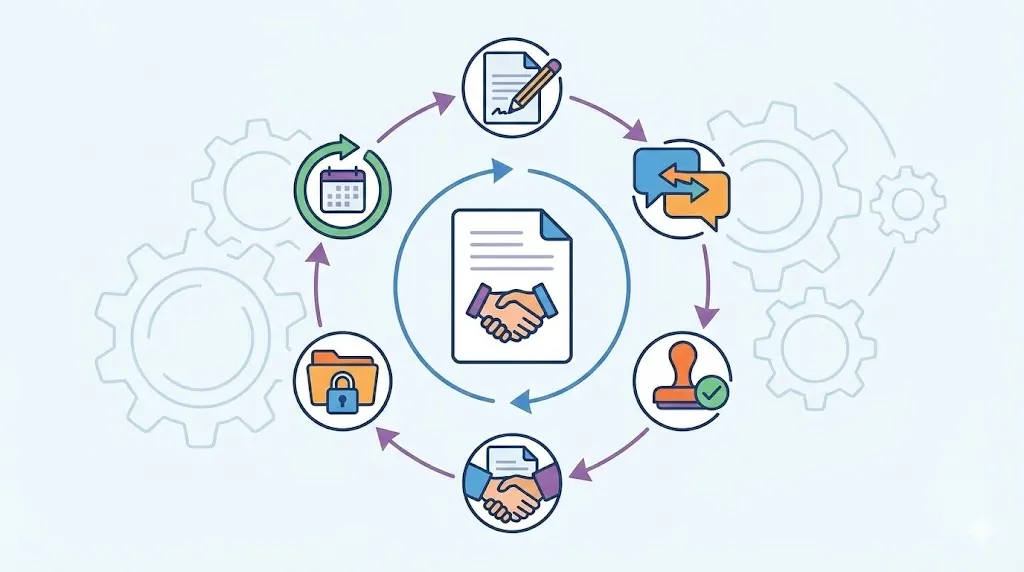
Contract management software consolidates all contract lifecycle processes within a unified platform.
It integrates contract data with operational systems, facilitating immediate insights and enhanced control mechanisms.
This leads to:
Clear visibility into contract terms and performance
Faster contract reviews and negotiations
Reduced administrative burden and errors
Proactive management of obligations and renewals
Data-driven decision-making for revenue optimization
Such software supports cross-functional collaboration. Legal, finance, managed care, and revenue cycle teams can access the same contract intelligence. This alignment improves execution and financial outcomes.
As healthcare reimbursement models evolve, contract complexity will increase. Solutions tailored specifically for healthcare contracts offer the flexibility to accommodate emerging terms and contractual frameworks.
These tools empower health systems to anticipate regulatory shifts and safeguard revenue streams.
Managing contracts as revenue assets is a critical component for sustaining financial stability and optimizing operational workflows.
Related articles: Top Contract Lifecycle Management Solutions for Insurance
How CLM Software Solves This
Contract lifecycle management (CLM) software helps health systems turn payer contracts into manageable revenue assets. It automates contract data extraction, tracks obligations, and integrates with billing systems.
CLM platforms provide dashboards that show contract performance, highlight risks, and alert teams to deadlines. This reduces revenue leakage and improves negotiation readiness.
Volody leverages AI-driven tools for contract drafting, review, and metadata extraction. It also manages obligations, streamlines approval workflows, and ensures secure document storage. Together, these features enhance contract execution reliability and reduce cycle times.
Explore how leveraging advanced contract management technology can optimize every phase of your contract lifecycle by visiting Volody's CLM Software.
FAQ
What makes payer contracts revenue assets?
Additionally, payer contracts specify payment rates and terms that exert a direct influence on health system revenue. Treating them as assets means actively managing these terms to maximize reimbursement and reduce losses.
Why have health systems historically struggled with contract visibility?
Most contracts are stored as unstructured PDFs or paper, disconnected from billing systems. This fragmentation hides key terms and performance data, limiting visibility.
How does poor contract operationalization cause revenue leakage?
Moreover, when negotiated terms are not applied correctly in billing, claims may be underpaid or denied. Missed deadlines or obligations also lead to lost revenue.
Can AI really improve contract management?
Yes. AI can read unstructured contracts, extract key clauses, and convert them into structured data. This enables better tracking, comparison, and analysis.
What risks do health systems face without dedicated contract lifecycle management tools?
Furthermore, without specialized systems, health systems risk revenue loss, compliance breaches, increased administrative burdens, and compromised negotiation leverage due to fragmented contract data.
In what ways do digital platforms enhance negotiation processes for payer agreements?
These platforms provide comprehensive insights into contract performance and payer reimbursement metrics. Consequently, teams can identify revenue shortfalls and focus negotiation efforts to secure more favorable terms.
Are enterprise-grade solutions capable of managing contracts at scale in large health systems?
Enterprise platforms are designed to process extensive contract portfolios, accommodate multiple organizational units, and manage intricate contractual provisions. Furthermore, they facilitate scalability through mergers, acquisitions, and shifts in reimbursement frameworks.
What mechanisms do contract lifecycle management systems utilize to foster collaboration?
Also, centralizing contracts within shared dashboards, alongside integrated workflows and alert notifications, ensures coordination among legal, finance, and managed care departments.
What should health systems look for in a CLM solution?
Look for AI-powered data extraction, obligation tracking, integration capabilities, approval workflows, and secure storage tailored to healthcare contracts.
How quickly can health systems realize returns on investment from deploying contract lifecycle management solutions?
ROI varies but often appears within months through reduced revenue leakage, faster negotiations, and lower administrative costs. Continuous performance monitoring adds long-term value.
About the Company

Volody AI CLM is an Agentic AI-powered Contract Lifecycle Management platform designed to eliminate manual contracting tasks, automate complex workflows, and deliver actionable insights. As a one-stop shop for all contract activities, it covers drafting, collaboration, negotiation, approvals, e-signature, compliance tracking, and renewals. Built with enterprise-grade security and no-code configuration, it meets the needs of the most complex global organizations. Volody AI CLM also includes AI-driven contract review and risk analysis, helping teams detect issues early and optimize terms. Trusted by Fortune 500 companies, high-growth startups, and government entities, it transforms contracts into strategic, data-driven business assets.





" height="216.72211px" id="FYO0bO80Y" transform="translate(3 6.105)" width="206.073px"/><path d="M 108.174 222 C 88.432 222 70.303 217.239 53.785 207.717 C 37.267 198.196 24.173 185.052 14.504 168.285 C 4.835 151.312 0 132.165 0 110.845 C 0 89.731 4.835 70.792 14.504 54.025 C 24.173 37.052 37.267 23.804 53.785 14.282 C 70.303 4.761 88.432 0 108.174 0 C 128.116 0 146.246 4.761 162.562 14.282 C 179.08 23.804 192.073 37.052 201.541 54.025 C 211.21 70.792 216.044 89.731 216.044 110.845 C 216.044 132.165 211.21 151.312 201.541 168.285 C 192.073 185.052 179.08 198.196 162.562 207.717 C 146.044 217.239 127.915 222 108.174 222 Z M 108.174 183.189 C 120.864 183.189 132.044 180.291 141.713 174.495 C 151.382 168.492 158.936 160.006 164.375 149.035 C 169.814 138.064 172.533 125.334 172.533 110.845 C 172.533 96.355 169.814 83.729 164.375 72.965 C 158.936 61.994 151.382 53.611 141.713 47.815 C 132.044 42.02 120.864 39.122 108.174 39.122 C 95.483 39.122 84.202 42.02 74.332 47.815 C 64.663 53.611 57.109 61.994 51.67 72.965 C 46.231 83.729 43.511 96.355 43.511 110.845 C 43.511 125.334 46.231 138.064 51.67 149.035 C 57.109 160.006 64.663 168.492 74.332 174.495 C 84.202 180.291 95.483 183.189 108.174 183.189 Z" fill="rgba(255, 255, 255, 0.12)" height="222px" id="aa1McFcE9" transform="translate(227.183 3)" width="216.04399999999998px"/><path d="M 42.302 182.257 L 111.799 182.257 L 111.799 216.722 L 0 216.722 L 0 0 L 42.302 0 Z" fill="rgba(255, 255, 255, 0.12)" height="216.72211px" id="yRq4AnrsX" transform="translate(477.721 6.105)" width="111.79899999999998px"/><path d="M 108.174 222 C 88.432 222 70.303 217.239 53.785 207.717 C 37.267 198.196 24.173 185.052 14.504 168.285 C 4.835 151.312 0 132.165 0 110.845 C 0 89.731 4.835 70.792 14.504 54.025 C 24.173 37.052 37.267 23.804 53.785 14.282 C 70.303 4.761 88.432 0 108.174 0 C 128.116 0 146.246 4.761 162.562 14.282 C 179.08 23.804 192.073 37.052 201.541 54.025 C 211.21 70.792 216.045 89.731 216.045 110.845 C 216.045 132.165 211.21 151.312 201.541 168.285 C 192.073 185.052 179.08 198.196 162.562 207.717 C 146.044 217.239 127.915 222 108.174 222 Z M 108.174 183.189 C 120.864 183.189 132.044 180.291 141.713 174.495 C 151.382 168.492 158.936 160.006 164.375 149.035 C 169.814 138.064 172.534 125.334 172.534 110.845 C 172.534 96.355 169.814 83.729 164.375 72.965 C 158.936 61.994 151.382 53.611 141.713 47.815 C 132.044 42.02 120.864 39.122 108.174 39.122 C 95.483 39.122 84.202 42.02 74.332 47.815 C 64.663 53.611 57.108 61.994 51.67 72.965 C 46.231 83.729 43.511 96.355 43.511 110.845 C 43.511 125.334 46.231 138.064 51.67 149.035 C 57.108 160.006 64.663 168.492 74.332 174.495 C 84.202 180.291 95.483 183.189 108.174 183.189 Z" fill="rgba(255, 255, 255, 0.12)" height="222px" id="mo8HQspQ0" transform="translate(609.155 3)" width="216.04500000000007px"/><path d="M 73.727 0 C 95.885 0 115.324 4.45 132.044 13.351 C 148.967 22.252 161.957 34.982 171.027 51.541 C 180.287 67.894 184.917 86.937 184.917 108.671 C 184.917 130.405 180.287 149.449 171.027 165.801 C 161.957 181.947 148.967 194.47 132.044 203.371 C 115.324 212.271 95.885 216.722 73.727 216.722 L 0 216.722 L 0 0 Z M 72.216 179.773 C 94.374 179.773 111.497 173.564 123.583 161.144 C 135.669 148.724 141.713 131.233 141.713 108.671 C 141.713 86.109 135.669 68.515 123.583 55.888 C 111.497 43.055 94.374 36.638 72.216 36.638 L 42.302 36.638 L 42.302 179.773 Z" fill="rgba(255, 255, 255, 0.12)" height="216.72211px" id="I3iXX5Hi_" transform="translate(859.693 6.105)" width="184.91699999999992px"/><path d="M 185.22 0 L 113.91 141.273 L 113.91 216.722 L 71.61 216.722 L 71.61 141.273 L 0 0 L 47.74 0 L 93.06 99.046 L 138.08 0 Z" fill="rgba(255, 255, 255, 0.12)" height="216.72211px" id="nzHyWC0_d" transform="translate(1061.78 6.105)" width="185.22000000000003px"/></svg>)