

Contract analytics gives business teams a reliable way to turn contractual obligations, commercial terms, and risk signals into decisive action. By connecting agreement data with operational and financial priorities, organizations can improve oversight, protect value, and make better-informed decisions across the contract portfolio.
TL;DR
Contract analytics turns agreement text into useful data for stronger business decisions.
Teams can spot risks, track duties, protect revenue, and improve supplier outcomes.
Reliable insights need complete records, shared data rules, and human review.
Common barriers include missing contracts, unclear language, weak links, and low trust.
Strong use cases connect analytics to owners, actions, measures, and business goals.
Contract management software helps teams apply insights through alerts, workflows, and reports.
What Contract Analytics Reveals Across the Contract Portfolio
Contract analytics extracts, studies, and explains data from agreements. It uses artificial intelligence, natural language processing, and machine learning. Natural language processing helps software understand written language. Machine learning helps models find patterns in large contract sets.
This process creates contract intelligence, or useful knowledge drawn from contract data. Teams can then use contract data analytics for legal, financial, commercial, and operational choices. The value comes from linking contract facts with decisions, not from storing more documents.
From Document Text to Structured Data
Analytics tools scan contract text and identify key fields. These fields may include parties, dates, prices, duties, service levels, and renewal terms. The tool can also find termination rights, payment rules, and performance measures.
A contract may describe a service credit in several different ways. A strong model can group similar terms under one shared clause category. This lets teams compare agreements without reading each file from the beginning.
The tool can also review exhibits, order forms, and amendments. These documents often change the meaning of the main agreement. Missing them can lead to wrong dates, prices, or obligations.
From Individual Agreements to Portfolio Trends
One contract may show a single issue. A portfolio view shows whether that issue repeats across many agreements. Teams can compare suppliers, customers, regions, business units, and contract types.
For example, procurement may find different prices for similar services. Finance may find payment terms that create uneven cash flow. Sales may find renewal clauses that put key accounts at risk.
Portfolio analysis also supports benchmarking. A business can compare term lengths, discounts, notice periods, or service credits. It can then focus negotiation effort where the gap appears largest.
From Visibility to Business Action
Data becomes useful when it leads to a clear next step. A risk score may send a contract to legal review. A missed obligation may create a task for an operations owner.
Contract performance analysis can show where suppliers miss service targets. Renewal data can show which agreements need early action. Payment data can point to possible revenue leakage or avoidable costs.
A simple decision chain helps teams use these insights:
Contract data: The system finds a renewal date, price rule, or service duty.
Portfolio insight: The team compares that term with similar agreements.
Business action: The owner renegotiates, escalates, forecasts, or assigns work.
Related articles: Contract Management Software for Finance: A Detailed Guide
Business Decisions Improved by Contract Analytics
Contract intelligence supports more than legal review. It helps teams decide where to spend time, which terms to change, and which risks need attention. It also gives leaders a clearer view of commercial commitments.
The best results come when teams connect contract signals to existing decisions. Procurement can act before a renewal. Finance can test revenue assumptions. Sales can plan account action before a customer deadline.
Procurement and Vendor Management
Procurement teams can track supplier service levels, prices, credits, and renewal terms. They can see which vendors have missed targets or changed their charges. This supports better supplier reviews and more focused negotiations.
Contract analytics can also show concentration risk. This means too much business may depend on one supplier or market. Leaders can then consider backup suppliers, broader sourcing, or stronger service terms.
Teams can compare similar vendor agreements across business units. This may reveal duplicate suppliers or uneven pricing. It may also support vendor consolidation when the business has too many small contracts.
Sales, Finance, Compliance, and Executive Planning
Sales teams can find renewal risks, discount promises, and expansion rights. Finance teams can track payment terms, price changes, and revenue commitments. Compliance teams can find missing clauses, duties, and audit evidence.
Executives can use contract performance reporting to view major risks and trends. They may ask which customers face renewal risk or which suppliers miss service levels. They may also review contract terms before approving a new market plan.
A cross-functional view connects signals with decisions:
Procurement: Supplier terms show price gaps or service failures. The team renegotiates or changes sourcing plans.
Sales: Renewal terms show notice dates or discount promises. Account teams plan outreach and protect expansion chances.
Finance: Payment rules show collection risks or billing gaps. Finance adjusts forecasts and follows up with owners.
Compliance: Required duties show missing evidence or weak clauses. Compliance assigns reviews before an audit.
Executives: Portfolio trends show large risks or opportunities. Leaders set priorities and fund corrective action.
Related articles: Contract Management for Small Business: A Complete Guide
Building a Reliable Contract Data Foundation
Good analytics depends on good contract data. A model cannot find a term that the system never received. It also cannot compare fields that teams define in different ways.
The data foundation should support both old and new agreements. It should also show where information came from and who checked it. This creates trust before teams rely on analytics for high-impact decisions.
Centralizing Agreements and Related Documents
A central repository should hold executed contracts and related files. These may include amendments, exhibits, statements of work, and order forms. Renewal records also matter because they can change dates and business duties.
Teams should collect files from email, shared drives, local tools, and paper archives. They should preserve links between a main agreement and later changes. This gives reviewers the full contract story.
Searchable storage helps teams find files by party, date, clause, or business unit. Optical character recognition, or OCR, helps read scanned documents. This reduces blind spots caused by old paper files or image-only PDFs.
Standardizing Fields and Clause Categories
A shared taxonomy gives each contract field one clear meaning. A taxonomy is a common set of names and categories. It may cover parties, dates, prices, duties, governing law, and termination rights.
Teams should define how they classify risk clauses and performance terms. They should also agree on rules for missing values and conflicting terms. These decisions make reports more consistent across departments.
Standard fields support better comparisons. For example, every team should record renewal notice periods in the same format. Otherwise, a portfolio report may mix dates, text, and unclear notes.
Validating and Governing Extracted Information
AI extraction should include confidence scores and exception handling. A confidence score shows how certain the system feels about a result. Low-confidence fields should move to human review.
Teams should sample results and check them against source documents. They should record corrections and track version history. Role-based permissions can limit sensitive data access by user and team.
A clear owner should manage each important field. The business should also set retention rules, audit trails, and correction steps. These controls protect contract data and keep reports dependable.
A practical data foundation checklist includes:
Repository completeness: Collect agreements, amendments, exhibits, and related records.
Shared taxonomy: Define common fields, clause groups, and value formats.
Validation: Review uncertain results and sample automated extractions.
Security: Use permissions, retention rules, and audit trails for sensitive data.
Ownership: Assign people to maintain fields, rules, and correction workflows.
Related articles: Types of Contracts Every Business Needs
Key Challenges in Contract Analytics Implementation
Analytics projects often fail for practical reasons. The model may work well, but the wider process may remain weak. Teams need controls that address data, trust, workflow, and ownership together.
1. Incomplete and Fragmented Contract Repositories
Contracts often sit across email, shared drives, local tools, and paper archives. Some agreements may exist only in a department folder. Others may lack amendments that changed the original deal.
These gaps create blind spots in portfolio analysis. Reports may understate renewal exposure or miss supplier duties. Leaders may then make decisions from incomplete evidence.
The control is a planned collection effort with clear ownership. Teams should rank sources, gather missing files, and link related documents. They should also record which contract groups remain incomplete.
2. Inconsistent Contract Language and Data Quality
Contracts use different terms for similar duties and rights. Legacy templates may use old language or unusual clause structures. Scanned files and handwritten changes can make review harder.
Missing metadata creates another problem. A file may show a renewal date but not identify the responsible owner. An amendment may change price terms without updating the main record.
The control is a shared clause model with review rules. Teams should test the model against varied documents and common exceptions. Human reviewers should resolve unclear terms before teams use them for major decisions.
3. Integration, Trust, and Adoption Gaps
Analytics has limited value when insights stay inside one tool. Procurement, sales, finance, legal, and operations need signals in their daily work. A renewal alert should reach the owner before the notice deadline.
Teams also need to understand why the system flagged an issue. Clear explanations help reviewers trust risk scores and unusual-term warnings. Human oversight remains vital for unclear language and high-impact choices.
The control is a connected workflow with named owners. Integrations should move data between CLM, CRM, ERP, procurement, and reporting tools. Access controls should also protect confidential terms and customer information.
The main barrier map is clear:
Missing files: Reports may hide risks and opportunities. A collection plan closes repository gaps.
Varied language: Models may classify terms inconsistently. A shared taxonomy and review sample improve control.
Weak links: Important alerts may arrive too late. Workflow and system links move signals to owners.
Low trust: Teams may ignore useful results. Explanations, confidence scores, and human checks build trust.
Unclear ownership: Issues may remain open without action. Named owners and due dates create accountability.
Related articles: Top 7 Free Contract Management Software in India (2026)
Best Practices for Turning Insights Into Decisions
A successful analytics program starts with business questions. Teams should not begin by trying to analyze every clause. They should choose decisions where better timing or visibility can create clear value.
The work should also fit existing roles. Legal may validate language, while procurement handles supplier action. Finance may own payment issues, while operations manages service duties.
Start With High-Value Questions
Useful first questions often involve renewal risk, missed duties, supplier performance, or revenue leakage. These questions connect directly to money, deadlines, customer outcomes, or risk.
A focused use case also makes testing easier. Teams can define the needed fields, owners, alerts, and success measures. They can expand after proving that the process works.
For example, a team may begin with contracts renewing within six months. It can identify notice dates, owners, prices, and performance issues. The team can then compare planned action with actual renewal results.
Combine Automation With Human Judgment
AI can speed up extraction, review, and comparison. It can flag unusual terms or suggest similar clauses. It can also group contracts by risk, type, or renewal stage.
Experts still need to resolve ambiguity. Legal teams should review unusual rights and risky wording. Commercial teams should decide whether a term fits the business relationship.Responsible AI practices can also help organizations manage risks associated with AI-supported decision-making.
The best process gives each result a clear review path. Low-risk fields may need light sampling. High-risk clauses may need full human approval before action.
A practical prioritization sequence follows:
Define value: Choose a decision tied to money, risk, time, or customer outcomes.
Check data readiness: Confirm that the needed contracts and fields are available.
Test urgency: Prioritize deadlines, renewals, and risks that cannot wait.
Estimate effort: Consider model work, review time, system links, and change needs.
Set ownership: Name the team that will act on each insight.
Measure results: Track the outcome and expand only after evidence supports growth.
Related articles: Contract Management Software for IT Companies: 5 Top Picks
Measuring the Business Value of Contract Analytics
Contract analytics should improve decisions, not only process documents faster. A balanced measurement plan connects system activity with business outcomes. It should include early process signals and later financial or risk results.
Teams should set a baseline before launch. They can then compare results across contract groups or business units. This helps separate real improvement from normal business change.
Operational and Process Metrics
Operational risk measures show whether teams can find and use contract data. Useful measures include review time, search time, extraction accuracy, and alert response time. Teams can also track renewal visibility and complete metadata.
These measures reveal process friction. Slow alert response may show unclear ownership. Incomplete metadata may point to weak extraction or missing source files.
The goal is not to maximize automation. The goal is to help people make sound decisions with less wasted effort.
Risk and Compliance Metrics
Risk measures should track unresolved duties, missed deadlines, and nonstandard clauses. Teams can also monitor supplier exceptions and audit findings. Early detection matters because it supports action before harm occurs.
A report might show how many obligations lack owners. Another may show which contracts contain terms outside approved rules. These signals help leaders focus review time where exposure is highest.
Teams should record how issues were resolved. This creates evidence for audits and improves future analysis. It also shows whether alerts lead to meaningful action.
Commercial and Financial Metrics
Financial measures can show recovered revenue, avoided costs, and captured savings. Teams may also track reduced leakage or better forecast accuracy. These measures connect contract work with business performance.
For example, analytics may reveal a missed price increase or unused service credit. Finance can then assess the value of recovery. Procurement may use similar evidence to support better supplier terms.
Results should reflect real business outcomes. A high alert count does not prove value. Resolved issues and improved terms provide stronger evidence.
Adoption and Decision Quality
Adoption measures show whether teams use insights in daily work. Useful signals include active users, completed actions, and escalation quality. Teams can also record whether analytics shaped negotiations or planning.
Leaders should review action quality, not just login counts. A team may open many reports but complete few tasks. Another may use a small report to prevent a major contract problem.
A balanced scorecard can group measures this way:
Efficiency: Review time, search time, extraction accuracy, and alert response.
Risk: Open duties, missed deadlines, clause exceptions, and audit findings.
Financial performance: Recovered revenue, avoided costs, savings, and leakage reduction.
Adoption: Active users, completed actions, escalations, and decisions supported.
Related articles: Mastering the Stages of Contract Lifecycle
Embedding Contract Intelligence Into Business Workflows
Contract intelligence becomes useful when it reaches people at the right time. Reports alone may show a problem without creating action. Workflows connect each signal with an owner, deadline, and next step.
This approach turns contract data analytics into a repeatable operating process. Teams can respond to events instead of searching for them manually. They can also learn from each completed action.
Alerts, Deadlines, and Obligation Management
Automated alerts can support renewal dates and notice periods. They can also flag price changes, certifications, service reviews, and deliverables. Owners receive work before the deadline creates pressure.
Obligation management tracks what each party must do. It can show due dates, evidence, status, and responsible people. This helps operations and finance manage promises after signing.
Alerts should match business risk. A major customer renewal may need several reminders and approvals. A low-risk document update may need one simple task.
Collaboration Across Business Functions
Shared dashboards give each team useful contract views. Legal may focus on risk clauses and approvals. Procurement may need contract
suppliers prices and service results.
Finance may need payment rules and price changes. Sales may need renewal dates, discounts, and expansion rights. Operations may need duties, service levels, and delivery dates.
A shared system reduces repeated searches and conflicting records. It also helps teams see how one decision affects another. For example, a pricing change may affect sales forecasts and supplier costs.
Continuous Improvement Through Feedback
Analytics rules should change as the business learns. Reviewers can correct extracted fields and improve clause libraries. Teams can also study recurring exceptions and unclear results.
Feedback helps models and workflows fit real work. If many alerts go unanswered, the team may need better routing. If one clause causes repeated errors, the model may need new examples.
A clear workflow sequence keeps improvement visible:
Contract event: The system finds a date, duty, risk, or unusual term.
Alert: The system sends a notice to the assigned owner.
Owner assignment: The owner confirms responsibility and due date.
Review: The right business expert checks the contract and context.
Action: The team renews, renegotiates, escalates, or records completion.
Measurement: The business tracks the result and updates its process.
Related articles: Contract Management Software for Manufacturing Industry
Why Contract Management Software Matters
Contract management software creates the shared base needed for contract analytics. It stores agreements, organizes fields, supports AI extraction, and connects insights with action. It helps teams move from isolated review to daily contract management.
Volody's CLM Software combines a central contract repository with AI Contract Summaries and Obligation Management. It can highlight key risks, renewal dates, and duties, then track assigned work. These features help legal, finance, procurement, sales, and operations use one trusted record.
For example, a procurement team can spot a supplier renewal risk early. The system can show the relevant terms, assign a review, and track the final action.
Central records: Store contracts, amendments, and related files in one searchable place.
Clear insights: Surface dates, duties, risks, and key commercial terms.
Accountable action: Assign owners, send alerts, and preserve an audit trail.
Practical growth: Start with one use case, then expand across the portfolio.
Want to see how contract management software can simplify your legal workflows? Check out Volody's CLM Software.
FAQ
What is contract analytics software?
Contract analytics software uses artificial intelligence to find meaning in agreements. It can identify clauses, duties, dates, prices, renewal terms, and risks across many files. Teams can then search, compare, monitor, and act on contract information. The software supports faster review, better reporting, and stronger business decisions.
How does contract analytics software work?
The software imports contracts and related documents, then turns text into searchable data. Models identify fields, clauses, obligations, and unusual terms within each file. The system may assign confidence scores and send uncertain results for review. It can also connect findings with alerts, tasks, and business workflows.
What is contract analytics?
Contract analytics is the process of studying contract data for patterns, risks, duties, and opportunities. It combines automated extraction with reporting, benchmarking, and predictive analysis. Businesses use these insights for renewals, negotiations, compliance, forecasting, and supplier management. The goal is better action, not simply faster document review.
How can AI-led contract analytics improve traditional contract analysis?
AI-led contract analytics can review large contract collections faster than manual work alone. It helps teams find unusual clauses, missed duties, renewal dates, and payment risks. Human experts still review unclear language and high-impact issues. This combination improves speed while keeping important decisions under expert control.
What are the main benefits of contract analytics software for businesses?
Contract analytics software can improve review speed, risk visibility, and compliance oversight. It can also support supplier negotiations, renewal planning, revenue protection, and forecasting. Teams gain a clearer view of trends across business units and contract types. Results improve when insights connect with owners, workflows, and clear measures.
How accurate is AI-powered contract analytics?
Move from contract data to decisive action with Volody's CLM Software. Centralize agreements, surface risks, assign owners, and track outcomes across every critical workflow.
About the Company
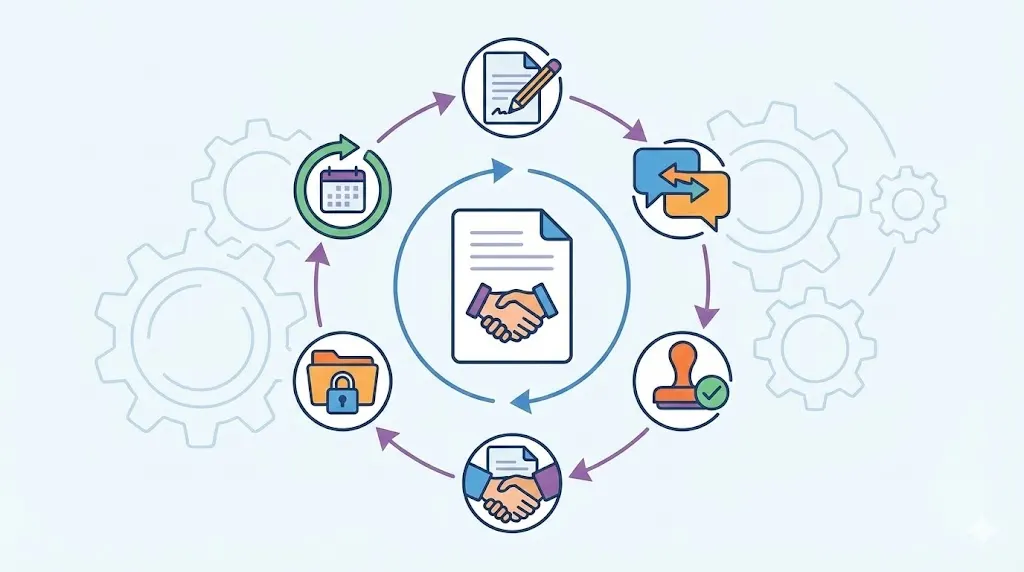
Volody AI CLM is an Agentic AI-powered Contract Lifecycle Management platform designed to eliminate manual contracting tasks, automate complex workflows, and deliver actionable insights. As a one-stop shop for all contract activities, it covers drafting, collaboration, negotiation, approvals, e-signature, compliance tracking, and renewals. Built with enterprise-grade security and no-code configuration, it meets the needs of the most complex global organizations. Volody AI CLM also includes AI-driven contract review and risk analysis, helping teams detect issues early and optimize terms. Trusted by Fortune 500 companies, high-growth startups, and government entities, it transforms contracts into strategic, data-driven business assets.



" height="216.72211px" id="FYO0bO80Y" transform="translate(3 6.105)" width="206.073px"/><path d="M 108.174 222 C 88.432 222 70.303 217.239 53.785 207.717 C 37.267 198.196 24.173 185.052 14.504 168.285 C 4.835 151.312 0 132.165 0 110.845 C 0 89.731 4.835 70.792 14.504 54.025 C 24.173 37.052 37.267 23.804 53.785 14.282 C 70.303 4.761 88.432 0 108.174 0 C 128.116 0 146.246 4.761 162.562 14.282 C 179.08 23.804 192.073 37.052 201.541 54.025 C 211.21 70.792 216.044 89.731 216.044 110.845 C 216.044 132.165 211.21 151.312 201.541 168.285 C 192.073 185.052 179.08 198.196 162.562 207.717 C 146.044 217.239 127.915 222 108.174 222 Z M 108.174 183.189 C 120.864 183.189 132.044 180.291 141.713 174.495 C 151.382 168.492 158.936 160.006 164.375 149.035 C 169.814 138.064 172.533 125.334 172.533 110.845 C 172.533 96.355 169.814 83.729 164.375 72.965 C 158.936 61.994 151.382 53.611 141.713 47.815 C 132.044 42.02 120.864 39.122 108.174 39.122 C 95.483 39.122 84.202 42.02 74.332 47.815 C 64.663 53.611 57.109 61.994 51.67 72.965 C 46.231 83.729 43.511 96.355 43.511 110.845 C 43.511 125.334 46.231 138.064 51.67 149.035 C 57.109 160.006 64.663 168.492 74.332 174.495 C 84.202 180.291 95.483 183.189 108.174 183.189 Z" fill="rgba(255, 255, 255, 0.12)" height="222px" id="aa1McFcE9" transform="translate(227.183 3)" width="216.04399999999998px"/><path d="M 42.302 182.257 L 111.799 182.257 L 111.799 216.722 L 0 216.722 L 0 0 L 42.302 0 Z" fill="rgba(255, 255, 255, 0.12)" height="216.72211px" id="yRq4AnrsX" transform="translate(477.721 6.105)" width="111.79899999999998px"/><path d="M 108.174 222 C 88.432 222 70.303 217.239 53.785 207.717 C 37.267 198.196 24.173 185.052 14.504 168.285 C 4.835 151.312 0 132.165 0 110.845 C 0 89.731 4.835 70.792 14.504 54.025 C 24.173 37.052 37.267 23.804 53.785 14.282 C 70.303 4.761 88.432 0 108.174 0 C 128.116 0 146.246 4.761 162.562 14.282 C 179.08 23.804 192.073 37.052 201.541 54.025 C 211.21 70.792 216.045 89.731 216.045 110.845 C 216.045 132.165 211.21 151.312 201.541 168.285 C 192.073 185.052 179.08 198.196 162.562 207.717 C 146.044 217.239 127.915 222 108.174 222 Z M 108.174 183.189 C 120.864 183.189 132.044 180.291 141.713 174.495 C 151.382 168.492 158.936 160.006 164.375 149.035 C 169.814 138.064 172.534 125.334 172.534 110.845 C 172.534 96.355 169.814 83.729 164.375 72.965 C 158.936 61.994 151.382 53.611 141.713 47.815 C 132.044 42.02 120.864 39.122 108.174 39.122 C 95.483 39.122 84.202 42.02 74.332 47.815 C 64.663 53.611 57.108 61.994 51.67 72.965 C 46.231 83.729 43.511 96.355 43.511 110.845 C 43.511 125.334 46.231 138.064 51.67 149.035 C 57.108 160.006 64.663 168.492 74.332 174.495 C 84.202 180.291 95.483 183.189 108.174 183.189 Z" fill="rgba(255, 255, 255, 0.12)" height="222px" id="mo8HQspQ0" transform="translate(609.155 3)" width="216.04500000000007px"/><path d="M 73.727 0 C 95.885 0 115.324 4.45 132.044 13.351 C 148.967 22.252 161.957 34.982 171.027 51.541 C 180.287 67.894 184.917 86.937 184.917 108.671 C 184.917 130.405 180.287 149.449 171.027 165.801 C 161.957 181.947 148.967 194.47 132.044 203.371 C 115.324 212.271 95.885 216.722 73.727 216.722 L 0 216.722 L 0 0 Z M 72.216 179.773 C 94.374 179.773 111.497 173.564 123.583 161.144 C 135.669 148.724 141.713 131.233 141.713 108.671 C 141.713 86.109 135.669 68.515 123.583 55.888 C 111.497 43.055 94.374 36.638 72.216 36.638 L 42.302 36.638 L 42.302 179.773 Z" fill="rgba(255, 255, 255, 0.12)" height="216.72211px" id="I3iXX5Hi_" transform="translate(859.693 6.105)" width="184.91699999999992px"/><path d="M 185.22 0 L 113.91 141.273 L 113.91 216.722 L 71.61 216.722 L 71.61 141.273 L 0 0 L 47.74 0 L 93.06 99.046 L 138.08 0 Z" fill="rgba(255, 255, 255, 0.12)" height="216.72211px" id="nzHyWC0_d" transform="translate(1061.78 6.105)" width="185.22000000000003px"/></svg>)