

By centralizing agreements into a single source of truth, Contract Lifecycle Management connects legal, sales, and finance teams across the entire agreement lifespan. It leverages automated workflows and AI metadata extraction to eliminate hidden liabilities, track renewal deadlines, and prevent contract value leakage. Consequently, enterprises achieve faster deal execution while enforcing absolute risk control over their commercial commitments.
TL;DR
Definition: Contract lifecycle management (CLM) is an enterprise framework that automates contract creation, negotiation, execution, and post-signature obligation tracking within a single digital system.
Core Problem Solved: It replaces isolated desktop files and manual spreadsheets, eliminating missed renewal deadlines, unauthorized terms, and severe contract value leakage.
Essential Capabilities: Modern CLM platforms offer standardized clause libraries, automated multi-tier approval routing, artificial intelligence metadata extraction, and immutable audit logging.
Business Impact: Implementing structured CLM accelerates deal velocity, enforces regulatory audit readiness, and protects corporate bottom lines against unmonitored financial liabilities.
Commercial banks do not manage high-yield corporate debt through verbal promises recorded on sticky notes. Enterprise legal departments often manage multi-million dollar commercial commitments across unlinked desktop directories and personal inbox folders. Understanding what is contract lifecycle management helps corporate leadership establish systemic compliance across every active commercial agreement. This institutional framework organizes document creation, negotiation, execution, and long-term obligation tracking into a controlled digital workflow. Corporate risk control requires replacing fragmented manual habits with auditable document administration across every operational department.
Unstructured legal operations expose organizations to unmonitored financial liabilities and regulatory penalties. Corporate growth creates thousands of vendor agreements, customer sales terms, and non-disclosure commitments across separate business units. How do corporate leaders maintain verified compliance standards across expanding legal portfolios? They deploy automated governance structures that monitor procedural milestones from initial drafting through mandatory contract renewals. Structured document oversight protects corporate balance sheets by converting flat static agreements into actionable operational data.
What is Contract Lifecycle Management Today?
Defining Modern Enterprise CLM Architecture
Contract lifecycle management is an end-to-end framework that automates the generation, negotiation, execution, and post-signature monitoring of legal agreements. It integrates centralized contract repositories with automated workflow engines to enforce procedural compliance. This systemic approach transforms static legal documents into structured data fields, eliminating unmonitored financial liabilities and missed performance deadlines across commercial portfolios.
Modern corporate governance demands a single source of truth for all active legal commitments. Contract lifecycle management provides the structural foundation for organizing complex document portfolios across global operations. A centralized contract repository stores active agreements alongside complete operational histories and performance metadata. Why do corporate compliance teams require centralized legal visibility? Shared databases grant immediate oversight into commercial terms, preventing unauthorized contract modifications across distant operating divisions.
How CLM Differs from Standard File Storage
Standard cloud storage solutions simply hold static electronic files without processing their underlying content. Understanding what is contract management software helps teams realize how dedicated platforms extract key business terms and performance milestones directly from uploaded documents. Generic document drives cannot track operational notice periods or alert managers when obligations expire. Purpose-built platforms apply automated tagging to link every signed agreement to specific financial workflows. Systems convert passive legal text into active operational data that drives business decisions.
Comparing static document storage with dedicated legal platforms highlights major differences in risk management capabilities. Generic cloud drives require manual data entry to track key performance obligations and financial terms. Contract systems apply structured metadata tagging to link every document to its performance milestones automatically. Legal operations teams use these structured tools to maintain control across high-volume contract environments. Specialized contract platforms prevent critical operational oversights that occur within standard file directories.
Related Article: Unlocking Efficiency Through Contract Lifecycle Management
Why is Contract Lifecycle Management Essential?
Eliminating Unmonitored Financial Exposure
Unmonitored legal terms create unexpected financial liabilities when performance targets slip past operational teams. Vendors often submit invoices that contain unverified rate increases or unapproved administrative fees. Manual tracking tools fail to alert finance managers before payment windows close. What happens when corporate accounting teams pay non-compliant invoices without legal verification? Companies lose direct capital and weaken their bargaining position during subsequent vendor renegotiations. Automated software flags terms before payments clear, protecting company funds from unauthorized charges.
Stopping Revenue and Contract Value Leakage
According to research from World Commerce and Contracting, poor contract practices cause companies to lose up to nine percent of total annual revenue. Contract value leakage occurs when teams fail to enforce agreed terms, service level commitments, or discount schedules. Misaligned delivery milestones allow suppliers to deliver sub-standard outcomes without triggering mandatory credit adjustments. Centralized lifecycle management connects operational deliverables to payment approvals automatically. Systemic monitoring ensures that corporate entities receive the full economic value specified in signed legal agreements.
Enforcing Regulatory Audit Readiness Rules
Regulatory frameworks such as the Sarbanes-Oxley Act demand verifiable internal controls over all corporate financial transactions. Federal auditors review commercial contracts to confirm that signers possessed appropriate financial delegation authority. Immutable system audit logs record every draft revision, review note, and signature timestamp across the entire document history. How do compliance officers prove operational integrity during formal regulatory reviews? They present time-stamped digital audit trails that demonstrate full adherence to internal governance policies. Verifiable tracking safeguards enterprise leadership against non-compliance penalties and reputational damage.
Related Article: 5 Best CLM Contract Management Software in CA
What are the Key Stages of CLM Platforms?
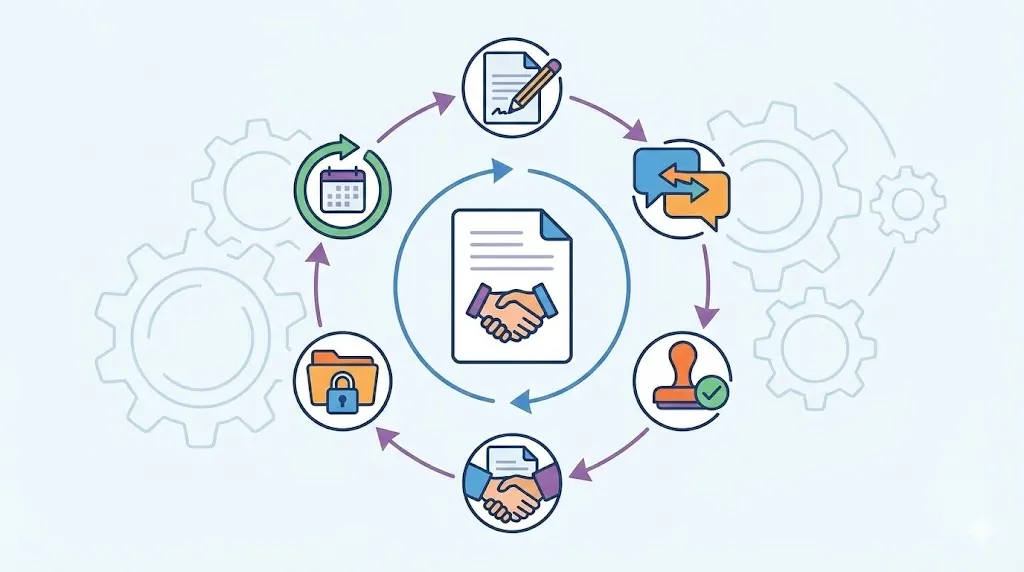
Stage 1 Request Intake and Contract Drafting
Business managers initiate new agreements through standardized digital intake forms. Automated request queues direct incoming projects to appropriate legal staff based on risk level and transaction value. Pre-approved clause libraries provide verified legal language for standard commercial terms. What ensures that initial drafts remain compliant with institutional risk boundaries? Standardized templates prevent staff members from introducing unapproved legal terms during early document creation.
Stage 2 Negotiation and Redlining Controls
Counterparties exchange contract drafts during external negotiation and redlining rounds. Version control mechanisms capture every text deletion, addition, and comment within a single file history. Centralized platforms prevent users from overwriting master documents during collaborative review cycles. Legal counsel tracks non-standard clause additions using automated comparison tools. Clear visibility speeds up contract cycles while maintaining strict adherence to corporate risk standards.
Stage 3 Execution and Signature Approval
Finalized agreements pass through automated authorization gateways before execution. Preset business logic routes documents to designated executives based on exact financial signing limits. Integrated electronic signatures allow authorized officers to execute binding files securely from any location. Digital signing tools embed identity verification credentials and execution timestamps into the file. The system locks signed documents to block any subsequent alterations.
Stage 4 Post-Signature Obligation Tracking
Execution marks the start of active operational oversight across corporate business units. Automated systems monitor performance milestones, payment dates, and compliance obligations automatically. Notifications alert contract managers weeks before critical performance dates pass. Structured monitoring ensures that vendors fulfill service level commitments before receiving payment approvals. Automated obligation tracking converts passive contract archives into active risk mitigation systems.
Stage 5 Renewal and Contract Termination
Agreements reach natural conclusion points through mandatory contract renewal or formal termination. Dedicated platforms track statutory notice periods to stop unwanted auto-renewal clauses. How do procurement leaders prevent automatic multi-year vendor lock-in? Advance system alerts grant teams time to renegotiate terms or send formal cancellation notices. Structured off-boarding completes the contract lifecycle while protecting corporate flexibility.
Related Article: Why Every C-Suite Needs Contract Lifecycle Management
Core Capabilities of Enterprise CLM Platforms
Standardized Corporate Clause Libraries
Centralized clause repositories keep legal drafting aligned with enterprise risk guidelines. Legal teams build approved text blocks for common provisions like indemnification, confidentiality, and liability limits. Business users select pre-approved clauses directly when generating new business agreements. What happens when a counterparty demands non-standard terms during negotiation? The system flags modified text immediately and routes the contract for legal review to preserve clause library standardization.
Automated Multi-Tier Approval Workflows
Manual approval chains create bottlenecks and slow down time to revenue across business units. Automated approval workflows route pending contracts based on contract value, department type, and specific risk factors. High-value agreements trigger secondary finance and compliance checks automatically. Escalation rules redirect pending tasks to backup managers when primary reviewers do not respond within set limits. Systematic routing accelerates contract cycles while preserving internal corporate controls.
Artificial Intelligence Metadata Extraction
Unstructured legacy contract archives contain valuable business data hidden inside static text files. Artificial intelligence algorithms scan uploaded PDF files to identify key operational terms and performance milestones. Natural language processing models tag expiration dates, payment terms, and renewal windows automatically. How does automated extraction improve daily legal operations? It eliminates manual typing errors and builds searchable databases from unorganized legal documents instantly.
Immutable Compliance Audit Record Trails
Regulatory compliance requires absolute proof of user actions throughout the contract lifecycle. Enterprise platforms record every user login, document edit, approval decision, and electronic signature within an unalterable log file. System logs capture user identities, exact timestamps, and network address locations for every action. Internal auditors review these unalterable records during routine financial audits to ensure audit readiness. Comprehensive audit logging protects corporate organizations during formal external regulatory investigations.
Related Article: Volody's AI CLM Transform Contract With PPG Asian Paints
Contract Management vs Formal CLM Frameworks
Reactive Document Storage vs Active Control
Traditional contract administration relies on basic recordkeeping to store signed files in local folders. Enterprise contract lifecycle management builds an automated infrastructure that drives action across every operational stage. What separates simple contract storage from structured lifecycle management? Active system triggers track key deadlines automatically instead of relying on manual oversight. The difference between contract management and contract lifecycle management centers on proactive governance versus passive filing.
Operational Dimension | Basic Contract Management | Enterprise CLM Framework |
|---|---|---|
Document Status | Static electronic files | Active data assets |
Obligation Tracking | Manual spreadsheet entries | Automated metadata alerts |
Process Visibility | Restricted to file owners | Unified corporate dashboard |
Risk Governance | Ad-hoc departmental reviews | Enforced clause libraries |
Departmental Silos vs Centralized Operations
Unstructured legal tracking allows individual business units to manage contracts using separate standards. Procurement officers negotiate vendor terms without coordinating with central legal teams. Sales managers store client agreements on local drives, hiding critical payment terms from accounting staff. Isolated departmental workflows create hidden financial liabilities and cause conflicting contractual commitments. Centralized frameworks connect legal, finance, and procurement operations within a single secure ecosystem.
Related Article: Why Contract Management Software Demand is Skyrocketing Now
How to Implement Contract Lifecycle Management for Corporate Governance
Mapping Internal Operational Bottlenecks
Transitioning to automated governance requires systematic planning before software deployment begins. Legal operations leaders must identify approval delays and tracking gaps across existing workflows. Mapping current request paths highlights where manual reviews slow down negotiation cycles. Departments often uncover hidden handoff friction between sales managers and internal legal counsel. Documenting these pain points ensures that new automated workflows address actual business needs.
Integrating Financial and ERP Software Systems
Technical integration connects legal workflows directly with corporate financial record systems. Contract platforms exchange signed terms with enterprise resource planning tools to update billing schedules instantly. API connectors push milestone data to accounting modules without manual data entry steps. How do finance teams maintain revenue recognition accuracy during system integration? They link execution metadata directly to invoice generation modules while continuous data synchronization prevents billing discrepancies.
Training Corporate Teams for Rapid Adoption
Successful implementation depends on active user adoption across all operational business units. Executive sponsors establish mandatory usage policies to discourage staff from using legacy personal folders. Training programs guide legal, procurement, and sales personnel through standardized drafting and review procedures. Applying contract compliance governance during enterprise deployment requires measuring user activity through centralized compliance metrics. Evaluating leading contract management software for enterprises gives teams clear benchmarks for software selection and workflow setup.
How Volody Drives Enterprise CLM Compliance
Volody contract lifecycle management software transforms complex corporate contracting into an auditable compliance framework. Built specifically for legal operations leaders, Volody automates contract workflows from initial intake to post-execution milestone tracking. Its artificial intelligence engine parses unstructured agreements to extract critical metadata, payment schedules, and renewal deadlines automatically. Centralized dashboards grant executive leadership real-time visibility into active portfolios while enforcing corporate risk boundaries. How does Volody guarantee audit readiness across expanding enterprise operations?
Built-in permission architectures and immutable audit logging ensure every user interaction meets rigorous regulatory standards. The platform connects directly with existing accounting software to synchronize contractual commitments with corporate financial operations. Enterprise legal departments rely on Volody contract management software to enforce procedural compliance across complex global portfolios. Schedule a custom demo with Volody today to secure your enterprise contract workflows.
Frequently Asked Questions About CLM Platforms
Why is contract lifecycle management important for compliance?
Contract lifecycle management enforces internal control standards and statutory rules across every stage of an agreement. Centralized databases record document modifications, user approvals, and execution records within unalterable audit trails. Mandatory approval gateways block staff from issuing unapproved terms to external counterparties. Automated notifications alert legal teams when agreements reach regulatory review deadlines, protecting corporate leaders from non-compliance fines.
What is the difference between CLM and e-signature tools?
Electronic signature software focuses exclusively on authentication and signing at the point of execution. Contract lifecycle management governs the entire agreement lifespan, including intake, redlining, obligation tracking, and renewals. While electronic signature tools provide legal signing functionality, complete lifecycle platforms structure pre-execution drafting and post-signature performance monitoring across all corporate departments.
How does AI assist in contract lifecycle management?
Artificial intelligence extracts operational data fields from flat legal text files automatically. Natural language processing models parse uploaded contracts to flag renewal notice windows, payment schedules, and liability limits without manual data typing. Machine learning algorithms compare draft terms against standard clause libraries to identify non-compliant language during negotiations, accelerating legal review cycles.
Can CLM software prevent auto-renewal penalties?
Dedicated platforms track contract expiration dates and notice periods using automated metadata alerts. The software reads agreement terms and calculates mandatory cancellation windows long before auto-renewal dates occur. Advance warnings grant procurement managers time to renegotiate pricing terms or send cancellation notices, preventing unwanted financial commitments to third-party vendors.
How long does enterprise CLM deployment take?
Enterprise implementation timelines range between eight and sixteen weeks depending on corporate size and document volume. Implementation teams migrate legacy agreements, build customized approval paths, and configure software integrations with financial record platforms. Automated document ingestion speeds up data migration, while structured user training ensures corporate personnel adopt new digital workflows quickly.
What departments benefit from CLM implementation?
Legal, finance, procurement, and sales operations benefit directly from unified contract management software. Sales teams accelerate deal cycles using pre-approved template libraries, while procurement managers monitor supplier obligations and rate structures. Legal departments maintain complete compliance visibility across all active corporate matters, and finance teams verify invoice terms against signed contractual commitments.
Securing Corporate Governance Across Legal Operations
Procedural accuracy forms the backbone of defensive legal operations and corporate risk management. Reliance on fragmented desktop drives creates unnecessary exposure to missed deadlines, unverified spending, and regulatory non-compliance. Establishing contract lifecycle management constructs a defensive barrier across complex commercial contract portfolios. Enterprise teams replace manual habits with centralized digital architectures that enforce compliance at every execution gate. Implementing structured contract lifecycle management ensures your organization retains total procedural control over every critical agreement.
About the Company
Volody AI CLM is an Agentic AI-powered Contract Lifecycle Management platform designed to eliminate manual contracting tasks, automate complex workflows, and deliver actionable insights. As a one-stop shop for all contract activities, it covers drafting, collaboration, negotiation, approvals, e-signature, compliance tracking, and renewals. Built with enterprise-grade security and no-code configuration, it meets the needs of the most complex global organizations. Volody AI CLM also includes AI-driven contract review and risk analysis, helping teams detect issues early and optimize terms. Trusted by Fortune 500 companies, high-growth startups, and government entities, it transforms contracts into strategic, data-driven business assets.




" height="216.72211px" id="FYO0bO80Y" transform="translate(3 6.105)" width="206.073px"/><path d="M 108.174 222 C 88.432 222 70.303 217.239 53.785 207.717 C 37.267 198.196 24.173 185.052 14.504 168.285 C 4.835 151.312 0 132.165 0 110.845 C 0 89.731 4.835 70.792 14.504 54.025 C 24.173 37.052 37.267 23.804 53.785 14.282 C 70.303 4.761 88.432 0 108.174 0 C 128.116 0 146.246 4.761 162.562 14.282 C 179.08 23.804 192.073 37.052 201.541 54.025 C 211.21 70.792 216.044 89.731 216.044 110.845 C 216.044 132.165 211.21 151.312 201.541 168.285 C 192.073 185.052 179.08 198.196 162.562 207.717 C 146.044 217.239 127.915 222 108.174 222 Z M 108.174 183.189 C 120.864 183.189 132.044 180.291 141.713 174.495 C 151.382 168.492 158.936 160.006 164.375 149.035 C 169.814 138.064 172.533 125.334 172.533 110.845 C 172.533 96.355 169.814 83.729 164.375 72.965 C 158.936 61.994 151.382 53.611 141.713 47.815 C 132.044 42.02 120.864 39.122 108.174 39.122 C 95.483 39.122 84.202 42.02 74.332 47.815 C 64.663 53.611 57.109 61.994 51.67 72.965 C 46.231 83.729 43.511 96.355 43.511 110.845 C 43.511 125.334 46.231 138.064 51.67 149.035 C 57.109 160.006 64.663 168.492 74.332 174.495 C 84.202 180.291 95.483 183.189 108.174 183.189 Z" fill="rgba(255, 255, 255, 0.12)" height="222px" id="aa1McFcE9" transform="translate(227.183 3)" width="216.04399999999998px"/><path d="M 42.302 182.257 L 111.799 182.257 L 111.799 216.722 L 0 216.722 L 0 0 L 42.302 0 Z" fill="rgba(255, 255, 255, 0.12)" height="216.72211px" id="yRq4AnrsX" transform="translate(477.721 6.105)" width="111.79899999999998px"/><path d="M 108.174 222 C 88.432 222 70.303 217.239 53.785 207.717 C 37.267 198.196 24.173 185.052 14.504 168.285 C 4.835 151.312 0 132.165 0 110.845 C 0 89.731 4.835 70.792 14.504 54.025 C 24.173 37.052 37.267 23.804 53.785 14.282 C 70.303 4.761 88.432 0 108.174 0 C 128.116 0 146.246 4.761 162.562 14.282 C 179.08 23.804 192.073 37.052 201.541 54.025 C 211.21 70.792 216.045 89.731 216.045 110.845 C 216.045 132.165 211.21 151.312 201.541 168.285 C 192.073 185.052 179.08 198.196 162.562 207.717 C 146.044 217.239 127.915 222 108.174 222 Z M 108.174 183.189 C 120.864 183.189 132.044 180.291 141.713 174.495 C 151.382 168.492 158.936 160.006 164.375 149.035 C 169.814 138.064 172.534 125.334 172.534 110.845 C 172.534 96.355 169.814 83.729 164.375 72.965 C 158.936 61.994 151.382 53.611 141.713 47.815 C 132.044 42.02 120.864 39.122 108.174 39.122 C 95.483 39.122 84.202 42.02 74.332 47.815 C 64.663 53.611 57.108 61.994 51.67 72.965 C 46.231 83.729 43.511 96.355 43.511 110.845 C 43.511 125.334 46.231 138.064 51.67 149.035 C 57.108 160.006 64.663 168.492 74.332 174.495 C 84.202 180.291 95.483 183.189 108.174 183.189 Z" fill="rgba(255, 255, 255, 0.12)" height="222px" id="mo8HQspQ0" transform="translate(609.155 3)" width="216.04500000000007px"/><path d="M 73.727 0 C 95.885 0 115.324 4.45 132.044 13.351 C 148.967 22.252 161.957 34.982 171.027 51.541 C 180.287 67.894 184.917 86.937 184.917 108.671 C 184.917 130.405 180.287 149.449 171.027 165.801 C 161.957 181.947 148.967 194.47 132.044 203.371 C 115.324 212.271 95.885 216.722 73.727 216.722 L 0 216.722 L 0 0 Z M 72.216 179.773 C 94.374 179.773 111.497 173.564 123.583 161.144 C 135.669 148.724 141.713 131.233 141.713 108.671 C 141.713 86.109 135.669 68.515 123.583 55.888 C 111.497 43.055 94.374 36.638 72.216 36.638 L 42.302 36.638 L 42.302 179.773 Z" fill="rgba(255, 255, 255, 0.12)" height="216.72211px" id="I3iXX5Hi_" transform="translate(859.693 6.105)" width="184.91699999999992px"/><path d="M 185.22 0 L 113.91 141.273 L 113.91 216.722 L 71.61 216.722 L 71.61 141.273 L 0 0 L 47.74 0 L 93.06 99.046 L 138.08 0 Z" fill="rgba(255, 255, 255, 0.12)" height="216.72211px" id="nzHyWC0_d" transform="translate(1061.78 6.105)" width="185.22000000000003px"/></svg>)