

Contract lifecycle management (CLM) is a strategic foundation for controlling contract costs and improving operational performance. By connecting intake, drafting, approvals, execution, and post-signature oversight, CLM gives teams a consistent, measurable process. This article identifies the primary sources of hidden cost across the contract lifecycle. It also outlines how organizations can increase speed, control, visibility, and measurable business value.
TL;DR
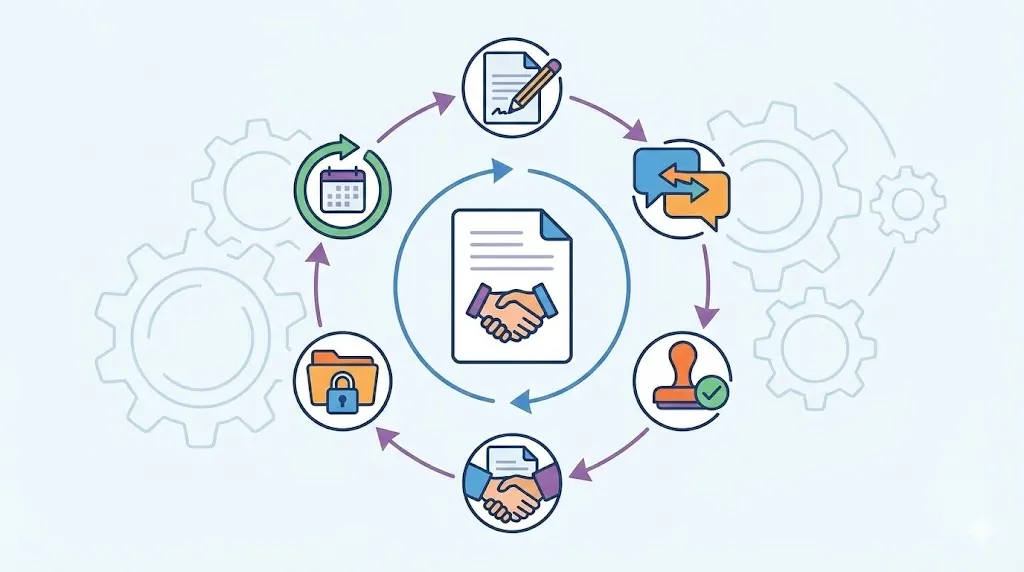
CLM connects contract requests, drafting, negotiation, approval, signing, performance, renewal, and termination.
Manual handoffs create hidden labor costs, missed deadlines, errors, delays, and weak contract visibility.
Workflow automation standardizes intake, routes approvals, reduces rework, and keeps teams accountable.
Central records, obligation tracking, alerts, and reports protect revenue while reducing compliance and renewal risk.
Strong CLM implementation starts with process mapping, clear priorities, useful integrations, training, and measurable goals.
Best practices keep templates, permissions, data, workflows, and reporting accurate as business needs change.
The Contract Lifecycle and Its Hidden Cost Centers
From Intake and Drafting to Execution
The contract lifecycle begins when someone requests a new agreement. The request may come from sales, procurement, finance, or another team.
A clear intake process captures the deal type, parties, value, and risk. The legal team can then choose an approved template and clause set.
Drafting may involve standard language, custom terms, and business details. Negotiation follows, often through several document versions and email threads.
The agreement then moves through legal, finance, security, and executive approval. Once approved, both parties sign through an e-signature service.
The signed contract needs secure storage and clear access rights. Teams must then monitor delivery, payment, service levels, and other duties.
The final stages include renewal, amendment, termination, or closeout. Each stage can create delays when ownership remains unclear.
Where Manual Work Creates Waste
Manual work often starts with email-based intake. A requester sends incomplete details, and legal must ask repeated questions.
Teams may also re-enter the same data in several systems. This creates errors and wastes time that better supports negotiation or review.
Shared drives and spreadsheets make status checks slow. People ask who owns a contract, which version is current, or when renewal occurs.
A simple lifecycle cost map can expose these problems:
Request: Missing details create extra questions and repeated intake work.
Drafting: Old templates create review cycles, rework, and inconsistent contract terms.
Negotiation: Poor version control causes confusion, delays, and accidental use of wrong language.
Approval: Manual follow-ups keep contracts waiting in inboxes and slow business activity.
Post-signature: Weak tracking hides obligations, renewals, and possible revenue recovery opportunities.
These costs may seem small during one contract. Across hundreds of agreements, they consume serious staff time.
Related Article: How much are you losing without a CLM platform?
Financial Leaks CLM Can Help Eliminate
Administrative Effort and Delayed Revenue
Contract preparation requires skilled people and careful attention. Yet many teams spend hours searching, copying, checking, and chasing approvals.
That work adds cost without improving the agreement itself. It also pulls legal and business staff away from higher-value decisions.
Slow execution can delay customer starts, supplier onboarding, or project launches. Sales teams may wait for signatures before moving a deal forward.
A shorter contract cycle can support faster business execution. It can also reduce the need for repeated status meetings and manual updates.
Missed Obligations and Renewal Opportunities
Contracts often include duties beyond the signature date. These may cover price changes, rebates, service levels, insurance, or delivery milestones.
Without a clear tracking process, those duties can disappear from view. Teams may miss a chance to increase prices or claim an earned rebate.
Renewal dates create another common source of leakage. A missed notice window can trigger an unwanted renewal or lost negotiation power.
An automated contract renewal process gives owners time to act. Alerts can support renegotiation, termination, budget planning, or supplier review.
A practical cost leakage checklist includes these areas:
Labor: Count time spent preparing, searching, updating, and chasing contract tasks.
Revenue: Review delayed launches, missed price changes, rebates, and unbilled commitments.
Renewals: Track notice dates, auto-renewal terms, owner assignments, and planned decisions.
Compliance: Check missing approvals, incomplete records, and obligations without assigned owners.
Risk: Find outdated templates, unusual clauses, weak audit trails, and unmanaged exceptions.
This review helps leaders connect CLM work with financial outcomes. It also creates a useful baseline before selecting new tools.
Risk, Rework, and Compliance Exposure
Inconsistent language can create different risk positions across similar deals. Missing approvals can also weaken the company’s audit record.
Outdated templates may omit current business or legal requirements. Teams then spend time fixing issues after signing, when changes cost more.
Regulated organizations face added pressure. Government contractors may need processes that support FAR and DFARS requirements.
CLM can route sensitive agreements to the right reviewers. It can also preserve approval records, clause changes, and final documents.
Related Article: Fix Broken Legal Budgets: CLM Solutions That Work
4 Key Challenges in Streamlining Contract Workflows
1. Fragmented Contract Data
Contracts often sit across shared drives, inboxes, local folders, and business systems. This makes it hard to identify the latest signed version.
People may also struggle to find owners, values, obligations, or renewal dates. Search work becomes slow, especially during audits or urgent customer questions.
A central repository can bring these records together. Metadata, full-text search, permissions, and version control improve access.
2. Inconsistent Processes and Approval Paths
Departments often use different forms, templates, and approval rules. Legal may follow one process, while procurement uses another.
This creates uneven review quality and unclear handoffs. It also makes performance comparisons difficult across teams.
Standard intake and approval rules create a shared operating model. Managers can then see where work waits and why.
3. Limited Adoption Across Stakeholders
CLM tools and platforms may fail when they ignore daily team needs. Sales may avoid a system that adds steps before customer contact.
Procurement may resist tools that do not reflect supplier workflows. Legal may reject platforms that provide weak clause control or poor review tools.
Adoption improves when roles and benefits are clear. Simple training and executive support also help teams change habits.
4. Integration and Data Migration Complexity
Contract lifecycle management software must often connect with existing systems. These may include ERP, CRM, procurement, identity, and e-signature tools.
Poor data quality can make migration harder than expected. Teams must map fields, review permissions, and remove duplicate records.
A challenge-to-remedy matrix can guide planning:
Scattered records: Set a source of truth and migrate priority contracts first.
Uneven workflows: Define shared rules, owners, approval limits, and exception paths.
Low adoption: Test user journeys, provide role-based training, and gather early feedback.
Complex integrations: Map key data flows and connect the most valuable systems first.
The goal is not to solve every issue at once. The goal is to remove the biggest sources of friction first.
Related Article: How CLM Helps Enterprises Manage Contract Complexity
Automating Workflows Without Losing Control
Standardized Intake and Contract Creation
Structured forms collect the details needed for each contract type. They reduce back-and-forth messages and prevent incomplete requests.
Approved templates give teams a safe starting point. Clause libraries provide reviewed language for common business situations.
AI contract drafting can generate a first draft from those approved sources. Legal still controls the final terms, exceptions, and business judgment.
Standardization does not remove flexibility. It creates clear limits around when custom language needs review.
Intelligent Routing and Approval
Rule-based routing sends each contract to the right people. Rules may consider value, geography, risk, department, or data type.
A non-standard clause can trigger legal review. A high-value agreement can also require finance or executive approval.
Escalation rules help prevent work from sitting unnoticed. Status views show owners, current steps, and expected completion dates.
An automation opportunity scan can examine these areas:
Intake: Capture request details, assign owners, and check required information automatically.
Drafting: Select templates, insert approved data, and suggest standard clauses.
Review: Flag unusual language, missing terms, and deviations from approved positions.
Approval: Route work by rules, send reminders, and escalate overdue decisions.
Signature: Send approved documents, track signing status, and store final copies.
Post-signature: Create tasks for obligations, renewals, milestones, and required documents.
Automation should support control, not bypass it. Every rule needs an owner, review date, and clear exception process.
Related Article: How to Maximize Efficiency with CLM Software Integrations
Improving Visibility, Compliance, and Renewal Performance
A Central Source of Contract Truth
A central repository gives authorized users one reliable record. It stores agreements, amendments, attachments, and related contract data.
Searchable metadata helps users find parties, dates, values, and contract types. Full-text search can also find specific terms across many documents.
Version control reduces confusion about drafts and signed copies. Audit trails show who changed, reviewed, approved, or accessed information.
This visibility improves work across legal, sales, procurement, and finance. Teams spend less time searching and more time making decisions.
Obligation Tracking and Critical-Date Alerts
Contract duties need named owners and clear due dates. Those duties may involve deliveries, insurance certificates, milestones, or payment conditions.
Alerts should cover renewals, expirations, and notice periods. They should also support internal review before an external deadline arrives.
Obligation tracking helps teams act before problems grow. It can support supplier checks, customer commitments, and service-level reviews.
A contract performance dashboard can include:
Operations: Cycle time, approval age, task completion, and open obligations.
Finance: Contract value, payment terms, rebates, price changes, and renewal exposure.
Compliance: Missing approvals, clause exceptions, required documents, and audit activity.
Workflow: Bottlenecks, escalations, rejection reasons, and average review time.
Performance: Supplier delivery, customer commitments, service levels, and issue trends.
Analytics for Better Contract Decisions
Reports turn contract data into useful management information. Leaders can see where work slows and which teams need support.
Cycle-time data may reveal a single approval step causing repeated delays. Clause reports may show frequent exceptions that need better fallback language.
Renewal reporting helps teams plan decisions before deadlines. Obligation reports help owners focus on missed or overdue work.
These insights support contract management cost savings. They also make improvement efforts easier to measure and defend.
Related Article: Essential CLM Features Every Business Needs
Building a Practical CLM Implementation Strategy
Assess Current Processes Before Selecting a Platform
Start by mapping how contracts move today. Document request channels, review steps, approval rules, and storage locations.
Measure baseline cycle times and search effort where possible. Identify contract groups, risk levels, owners, and compliance needs.
This work shows which problems require technology first. It also prevents teams from buying features they will not use.
Platform selection should follow business needs. A long feature list does not guarantee useful daily workflows.
Prioritize High-Value Use Cases
Choose use cases with clear pain and visible business value. Sales contracts may offer quick wins through faster approvals.
Procurement agreements may benefit from standard templates and supplier obligations. Nondisclosure agreements may suit simple, high-volume automation.
Renewals and government contracts may need stronger alerts and controls. A phased plan limits risk while teams learn the new process.
Connect CLM to the Business Systems Teams Already Use
Connected systems reduce duplicate entry and improve data quality. A CRM can trigger a contract request from an approved sales opportunity.
An ERP can provide payment, supplier, or financial details. Procurement systems can connect contract terms with sourcing and supplier records.
E-signature tools can return completed agreements automatically. Identity systems can support role-based access and secure approval.
A practical implementation scorecard should review:
Readiness: Process clarity, data quality, leadership support, and user capacity.
Use cases: Business value, contract volume, risk level, and early-win potential.
Integration: Required systems, data owners, field maps, and technical dependencies.
Adoption: Training, role clarity, usage levels, feedback, and support plans.
Return: Cycle time, search effort, renewals, exceptions, risk, and recovered value.
Measure Adoption and Return on Investment
Track both system use and business results. High login numbers do not prove that workflows work well.
Measure approval time, cycle time, search time, and template use. Also track renewal capture, exception rates, and compliance incidents.
ROI should include more than software cost and labor reduction. It should include avoided risk, recovered revenue, and faster execution.
Set a review rhythm after launch. Monthly checks can expose issues before they become accepted habits.
Related Article: How to Choose the Right CLM Software: A Practical Guide
Contract Management Best Practices for Sustained Efficiency
Govern Templates, Clauses, and Permissions
Approved templates need clear owners and review dates. Clause libraries should contain current language and approved fallback options.
Legal teams can define when users may change standard terms. Riskier changes should trigger review before the contract advances.
Permissions should match each person’s role and business need. Audit trails should preserve key actions without blocking normal work.
Governance keeps CLM accurate as laws and business needs change. It also reduces unauthorized edits and inconsistent risk positions.
Design for Collaboration Across Departments
CLM works best when teams share responsibility. Legal may own rules, while business teams own commercial facts.
Finance can review payment terms and value. Security may review data terms, while operations tracks delivery duties.
Clear ownership prevents tasks from falling between departments. It also helps users understand when they must act.
A continuous-improvement checklist should cover:
Governance: Review templates, clauses, rules, roles, and access rights regularly.
Collaboration: Confirm owners for intake, review, approval, signing, and obligations.
Data quality: Check parties, dates, values, status fields, and duplicate records.
Automation: Review routing rules, reminders, exceptions, and failed workflow steps.
Reporting: Compare results with goals, user feedback, and business outcomes.
Small improvements can create lasting efficiency gains. Teams should update processes when reports reveal repeated friction.
Why Contract Management Software Matters
Contract management software turns CLM principles into repeatable daily work. It centralizes documents, automates approvals, tracks obligations, and highlights renewals.
These features reduce search time and manual follow-up. They also create stronger records for review, reporting, and compliance.
CLM tools and platforms can standardize work across departments. They can still preserve legal review for unusual or high-risk terms.
The strongest results come from fit, not feature volume. A useful platform should match documented processes and stakeholder needs.
It should also connect with systems teams already use. That connection reduces duplicate entry and improves reporting accuracy.
Contract lifecycle management benefits grow when teams measure outcomes. Useful measures include faster approvals, fewer exceptions, better renewal decisions, and lower rework.
Volody's CLM Software supports this work through AI Contract Review, AI Contract Summaries, and Obligation Management. It can flag risky language, highlight key dates and duties, and help teams track commitments after signing.
For example, a procurement team can review supplier terms, spot unusual clauses, and assign renewal tasks. The team can then follow delivery duties before missed dates create extra cost.
> Explore a simpler way to create, review, approve, and track contracts with Volody's CLM Software.
FAQ
What is CLM?
CLM means contract lifecycle management. It organizes contracts from request and drafting through negotiation, approval, signing, performance, renewal, or termination. Legal, sales, procurement, finance, and operations can share one process. CLM also keeps contract data, tasks, approvals, and deadlines easier to find.
Why is CLM important?
CLM is important because it reduces manual work and improves contract visibility. It helps teams follow approval rules, track obligations, and manage renewal dates. Better records also support compliance and risk control. Leaders gain clearer data for improving workflows and making contract decisions.
Can CLM integrate with other software?
Yes, CLM can connect with CRM, ERP, procurement, finance, identity, e-signature, and document systems. These links reduce duplicate data entry and keep key records aligned. A CRM can start a contract request from a sales deal. An e-signature system can return the signed agreement automatically.
What is CLM software?
CLM software is a tool that manages contract work through connected workflows. It offers templates, clause libraries, approval routing, repositories, alerts, obligation tracking, and reports. Unlike basic storage, it supports work before and after signing. It can also connect contract data with other business systems.
How does CLM reduce contract management costs?
CLM reduces costs by cutting manual entry, document searches, follow-ups, and repeated review work. It can also reduce approval delays and missed renewal opportunities. Alerts help teams manage obligations before deadlines cause problems. Better data helps leaders allocate staff time toward higher-value contract work.
How long does CLM implementation take?
Begin with prioritized use cases, clean data, and measurable goals, then launch in phases with the right integrations, governance, training, and adoption reviews.
About the Company
Volody AI CLM is an Agentic AI-powered Contract Lifecycle Management platform designed to eliminate manual contracting tasks, automate complex workflows, and deliver actionable insights. As a one-stop shop for all contract activities, it covers drafting, collaboration, negotiation, approvals, e-signature, compliance tracking, and renewals. Built with enterprise-grade security and no-code configuration, it meets the needs of the most complex global organizations. Volody AI CLM also includes AI-driven contract review and risk analysis, helping teams detect issues early and optimize terms. Trusted by Fortune 500 companies, high-growth startups, and government entities, it transforms contracts into strategic, data-driven business assets.



" height="216.72211px" id="FYO0bO80Y" transform="translate(3 6.105)" width="206.073px"/><path d="M 108.174 222 C 88.432 222 70.303 217.239 53.785 207.717 C 37.267 198.196 24.173 185.052 14.504 168.285 C 4.835 151.312 0 132.165 0 110.845 C 0 89.731 4.835 70.792 14.504 54.025 C 24.173 37.052 37.267 23.804 53.785 14.282 C 70.303 4.761 88.432 0 108.174 0 C 128.116 0 146.246 4.761 162.562 14.282 C 179.08 23.804 192.073 37.052 201.541 54.025 C 211.21 70.792 216.044 89.731 216.044 110.845 C 216.044 132.165 211.21 151.312 201.541 168.285 C 192.073 185.052 179.08 198.196 162.562 207.717 C 146.044 217.239 127.915 222 108.174 222 Z M 108.174 183.189 C 120.864 183.189 132.044 180.291 141.713 174.495 C 151.382 168.492 158.936 160.006 164.375 149.035 C 169.814 138.064 172.533 125.334 172.533 110.845 C 172.533 96.355 169.814 83.729 164.375 72.965 C 158.936 61.994 151.382 53.611 141.713 47.815 C 132.044 42.02 120.864 39.122 108.174 39.122 C 95.483 39.122 84.202 42.02 74.332 47.815 C 64.663 53.611 57.109 61.994 51.67 72.965 C 46.231 83.729 43.511 96.355 43.511 110.845 C 43.511 125.334 46.231 138.064 51.67 149.035 C 57.109 160.006 64.663 168.492 74.332 174.495 C 84.202 180.291 95.483 183.189 108.174 183.189 Z" fill="rgba(255, 255, 255, 0.12)" height="222px" id="aa1McFcE9" transform="translate(227.183 3)" width="216.04399999999998px"/><path d="M 42.302 182.257 L 111.799 182.257 L 111.799 216.722 L 0 216.722 L 0 0 L 42.302 0 Z" fill="rgba(255, 255, 255, 0.12)" height="216.72211px" id="yRq4AnrsX" transform="translate(477.721 6.105)" width="111.79899999999998px"/><path d="M 108.174 222 C 88.432 222 70.303 217.239 53.785 207.717 C 37.267 198.196 24.173 185.052 14.504 168.285 C 4.835 151.312 0 132.165 0 110.845 C 0 89.731 4.835 70.792 14.504 54.025 C 24.173 37.052 37.267 23.804 53.785 14.282 C 70.303 4.761 88.432 0 108.174 0 C 128.116 0 146.246 4.761 162.562 14.282 C 179.08 23.804 192.073 37.052 201.541 54.025 C 211.21 70.792 216.045 89.731 216.045 110.845 C 216.045 132.165 211.21 151.312 201.541 168.285 C 192.073 185.052 179.08 198.196 162.562 207.717 C 146.044 217.239 127.915 222 108.174 222 Z M 108.174 183.189 C 120.864 183.189 132.044 180.291 141.713 174.495 C 151.382 168.492 158.936 160.006 164.375 149.035 C 169.814 138.064 172.534 125.334 172.534 110.845 C 172.534 96.355 169.814 83.729 164.375 72.965 C 158.936 61.994 151.382 53.611 141.713 47.815 C 132.044 42.02 120.864 39.122 108.174 39.122 C 95.483 39.122 84.202 42.02 74.332 47.815 C 64.663 53.611 57.108 61.994 51.67 72.965 C 46.231 83.729 43.511 96.355 43.511 110.845 C 43.511 125.334 46.231 138.064 51.67 149.035 C 57.108 160.006 64.663 168.492 74.332 174.495 C 84.202 180.291 95.483 183.189 108.174 183.189 Z" fill="rgba(255, 255, 255, 0.12)" height="222px" id="mo8HQspQ0" transform="translate(609.155 3)" width="216.04500000000007px"/><path d="M 73.727 0 C 95.885 0 115.324 4.45 132.044 13.351 C 148.967 22.252 161.957 34.982 171.027 51.541 C 180.287 67.894 184.917 86.937 184.917 108.671 C 184.917 130.405 180.287 149.449 171.027 165.801 C 161.957 181.947 148.967 194.47 132.044 203.371 C 115.324 212.271 95.885 216.722 73.727 216.722 L 0 216.722 L 0 0 Z M 72.216 179.773 C 94.374 179.773 111.497 173.564 123.583 161.144 C 135.669 148.724 141.713 131.233 141.713 108.671 C 141.713 86.109 135.669 68.515 123.583 55.888 C 111.497 43.055 94.374 36.638 72.216 36.638 L 42.302 36.638 L 42.302 179.773 Z" fill="rgba(255, 255, 255, 0.12)" height="216.72211px" id="I3iXX5Hi_" transform="translate(859.693 6.105)" width="184.91699999999992px"/><path d="M 185.22 0 L 113.91 141.273 L 113.91 216.722 L 71.61 216.722 L 71.61 141.273 L 0 0 L 47.74 0 L 93.06 99.046 L 138.08 0 Z" fill="rgba(255, 255, 255, 0.12)" height="216.72211px" id="nzHyWC0_d" transform="translate(1061.78 6.105)" width="185.22000000000003px"/></svg>)