

A unified contract lifecycle management (CLM) system creates measurable enterprise value by connecting legal, sales, procurement, finance, and IT through one controlled process. When agreements are fragmented across tools, leaders lack visibility into renewals, risk, approvals, and obligations. A shared CLM platform centralizes contract data, standardizes workflows, and gives teams the insight needed to act faster and make better decisions.
TL;DR
An effective company-wide CLM plan has to advance revenue and cost objectives while also addressing risk, compliance, and business continuity.
Once stakeholders are mapped, legal, sales, procurement, finance, and IT can work within a single contract process.
The case for investment is most persuasive when CLM is linked to measurable gains—faster approvals, for example, and fewer missed renewals.
Strong evidence combines internal data, contract research, process metrics, and clear financial assumptions.
A phased rollout can deliver early value while teams build toward broader adoption across the business.
Modern CLM software can centralize contracts, automate work, and help teams act on key obligations.
Why a Single CLM System Creates More Value
Many companies build their contract-tool stack piecemeal, adding one department at a time. Sales often selects a tool to handle deal documents. For supplier agreements, procurement may adopt a separate platform. Negotiated files, meanwhile, frequently remain in Legal's shared drives. Finance may record payment terms in spreadsheets.
Although each team may improve its own work, it often does so in isolation. That leaves the company without a connected contract process. Data is scattered, workflows differ, and staff duplicate manual work. As a result, leaders struggle to measure the full value generated by those agreements.
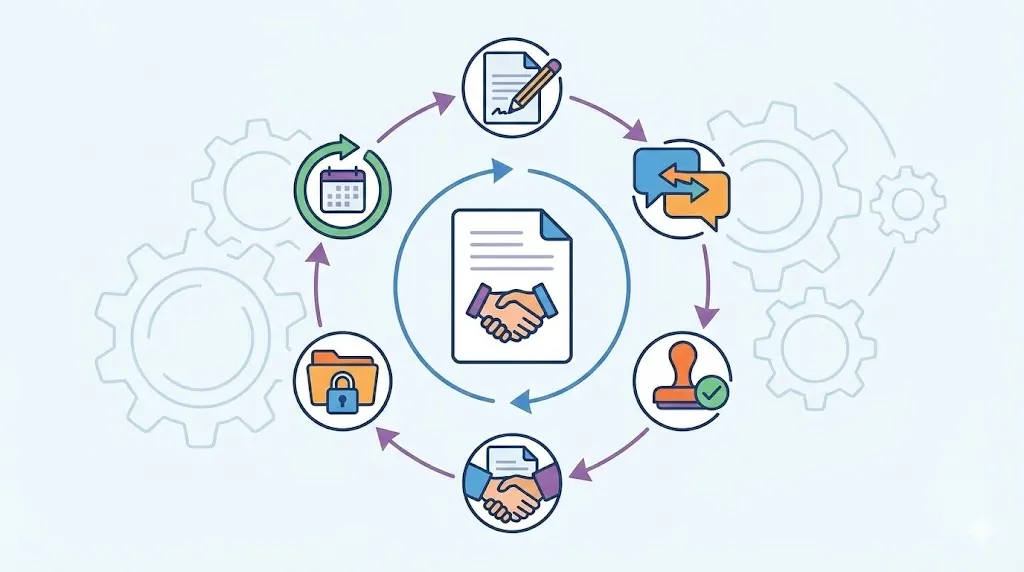
A single CLM system connects these activities within a controlled environment. Its scope extends across the full lifecycle: drafting, review, approval, signing, storage, and ongoing management. Departments retain their respective roles and approval rights. Nevertheless, they work from shared information and common rules.
The resulting model delivers value across the business:
Contract information is easier for teams to locate.
Legal teams can work more efficiently when approved templates and clauses are readily available.
Business users can provide complete contract requests from the outset.
Defined workflows route tasks to the appropriate approvers.
Finance can see payment terms and renewal dates.
Leaders can monitor cycle times, risk, and contract volume.
Important deadlines can trigger reminders for teams.
The benefit does not come from software alone. The real value comes from shared processes, reliable data, and consistent use across departments. Deploying CLM in a narrow area may improve that function without addressing broader needs. Connecting the contract lifecycle, however, can improve decision-making across the enterprise.
Fragmented tools create hidden costs
Different systems often create duplicate records. A supplier may appear under several names. One contract version may sit in a shared drive while another version sits in a sales platform. Staff then spend time checking which document controls.
Fragmentation also weakens reporting. Therefore, a legal leader may know the number of contracts legal reviewed. They may have no visibility into the contracts still waiting in sales queues or procurement inboxes. A finance leader may see upcoming payments but miss a termination right in the contract file.
These gaps create practical risks. A missed renewal notice period can leave the company exposed. The company might also accept a clause that conflicts with policy. Services that no longer support business needs may still be paid for. The company may also respond slowly during an audit, dispute, or major business event.
A common platform supports better governance
A shared platform does not require every department to follow one identical workflow. Sales contracts often need speed. Strategic supplier agreements, by contrast, often warrant deeper risk review. Employment agreements may require different access controls.
Those differences can be accommodated within a well-designed CLM system. It uses common data fields, security rules, and audit records across workflows. As a result, it also gives each department a process that fits its work.
The National Institute of Standards and Technology describes access control as a core part of protecting information systems. A CLM platform should apply that principle to contracts. Role based access can limit documents by role, entity, department, or location.
Treat contracts as operating data
Contracts contain more than legal language. They hold dates, prices, service levels, renewal rights, volume commitments, and business duties. These details guide daily work after signing.
The shared CLM system can then extract this information into searchable records. This lets teams connect contract terms with business actions. For example, an operations team can track service credits. Procurement can compare notice dates across suppliers. Finance, in turn, can verify payment schedules against approved terms.
This shift recasts contract management's role. Agreements become working sources of information rather than static files. Contract data then informs planning, risk control, and better commercial results.
Related reading: Contract Management Software for Sales Teams | CLM Guide
How to Align CLM With Business Goals
A company wide CLM project needs a business purpose. “We need better contract management” may be true, but it will not win broad support. Leaders need a clearer link between contract work and business results.
Start with the company’s current goals. Review the annual plan, finance targets, risk priorities, and technology roadmap. Then identify where contracts affect those goals. This exercise turns CLM from a legal project into a shared business program.
Ask leaders to connect contract work with questions such as:
Can faster approvals help sales recognize revenue sooner?
Would stronger supplier terms lower operating costs?
Could renewal alerts prevent unwanted automatic extensions?
Stronger controls can reduce policy exceptions, but where would they matter most?
Could clearer obligations improve service delivery?
Would searchable records make audits and disputes easier to manage?
Could standard templates curb outside counsel spending?
The answers differ across companies. For a software company, priorities may center on sales velocity and the terms governing data protection. Manufacturers often focus first on supplier performance and price changes. For healthcare providers, privacy, compliance, and renewal controls usually sit at the top of the list.
Build an outcome map
Moreover, create a simple map that traces each business goal to its corresponding contract result. Keep the map specific enough to measure. Avoid broad claims that no one can test.
Business goal | Contract problem | CLM measure |
|---|---|---|
Increase revenue | Sales agreements wait in legal queues | Average review time |
Lower cost | Supplier renewals receive little review | Savings before renewal |
Reduce risk | Teams use unapproved clauses | Policy exception rate |
Improve cash flow | Payment terms remain hard to find | Days from signature to billing |
Support compliance | Teams miss required obligations | Open obligation count |
This map gives each executive a reason to support the program. It also gives the project team a basis for selecting the first release. An attempt to automate every contract type at once is usually counterproductive.
Link CLM to measurable priorities
Define three to five measures before choosing detailed features. The most useful measures show how CLM affects speed, control, adoption, or financial performance. Also, they should also use data that the company can collect without major effort.
Useful measures include:
Time from request to first draft.
Draft-to-approval time.
Approval-to-signature time.
The share of contracts using approved templates.
Contracts with complete metadata.
Missed notices or renewals.
Recorded policy exceptions.
Adoption by department.
Furthermore, set a baseline for each measure. For example, a company may find that legal needs twelve business days to review a standard sales agreement. Following rollout, that time may fall to six days.
Using baselines keeps the project grounded in evidence rather than unsupported claims. The resulting comparison reveals whether CLM delivered a measurable improvement. Leaders can use that evidence to determine where further expansion makes sense.
Give executives a clear role
Executive sponsors remove barriers and confirm priorities. They should not, however, design every workflow. That work belongs to those who understand the day-to-day process.
The sponsor can approve common principles, such as:
Use one contract record for each agreement.
Store executed contracts in the central repository.
Route high risk terms to the right reviewers.
Track obligations after signature.
Measure adoption and business outcomes.
McKinsey research on digital transformation often points to leadership, process change, and user adoption as key success factors. CLM follows the same pattern. A senior sponsor can create focus, but each team must see practical value.
Related articles: How to Select CLM Software: A Practical Guide
How to Bring Stakeholders Into One CLM Program
A shared system will affect more than the legal department. Additionally, legal typically sets policy and manages risk. Sales handles customer negotiations, while procurement manages supplier intake. Finance may monitor commercial terms, and IT may oversee integrations, identity, and security.
Invite these groups early. Do not wait until the system has already been selected. Early participation also surfaces process conflicts while the team can still fix them.
Begin with stakeholder interviews. Ask each group what work enters the process, what causes delays, and what information they need after signature. Ask which rules they must follow and which steps they would remove.
A useful interview guide includes:
What contract types does your team handle?
Who starts each request?
What details does the requester need to provide?
Which terms, if any, trigger legal review?
On what value or risk thresholds do approvals depend?
Where are drafts and executed agreements stored?
Which deadlines create the greatest concern?
What reporting do leaders need?
What would make users adopt a new process?
Separate shared needs from local needs
Furthermore, most teams share several needs. Also, they want clear status, faster movement, fewer errors, and easy access to final agreements. They may describe those needs with different words, but the underlying goals often match.
Local requirements still matter, too. Procurement, for example, may need supplier onboarding data. Sales often requires CRM access. Legal may require clause controls and risk review. Finance may track payment terms and obligation alerts.
Document both types of needs. Let shared requirements define the core design. Also, use local requirements to determine workflow variations, fields, permissions, or integrations.
This method prevents two common errors. The first error creates a rigid process that users avoid. The second creates many separate processes that defeat the purpose of one system.
Create a governance group
A governance group keeps decisions consistent after launch. Include representatives from legal, procurement, sales, finance, IT, security, and key business units. Give the group clear authority and meeting rules.
The group can decide:
Which contract types enter CLM first.
Decide which templates and clauses require approval.
Therefore, establish who has authority to change workflow rules.
Make fields that the process requires mandatory.
Define access to sensitive records by team.
Determine which metrics belong on executive dashboards.
Establish the criteria for introducing additional use cases.
Record every decision. A short decision log can prevent repeated debates. It also helps new team members understand the rationale behind the process.
Design for adoption
Users will avoid a process that feels harder than email. Consequently, make the request form short and clear. Next, use plain labels. Ask only for data that the workflow needs. Give requesters examples for difficult fields.
Organize role-specific training instead of one large session. For sales, the workflow should make it easy to request an agreement and track its progress. Lawyers need clause-review tools and a way to record exceptions. For executive approvers, provide a fast way to read context and make a decision.
Use champions in each department. Departmental champions can answer questions, identify points of friction, and demonstrate the workflow to colleagues. That feedback often does more for adoption than a central help desk alone.
For further reading, see Microsoft SharePoint or CLM: Which One Should You Use?.
How to Build the Financial Case for CLM
A CLM business case needs to tie costs to measurable outcomes. Additionally, leaders also need visibility into current expenses, expected gains, delivery risk, and time to value. Do not promise savings that the team cannot measure.
Assess existing operations first. Estimate the time staff spend searching, drafting, reviewing, approving, and tracking agreements. Include legal, procurement, sales operations, finance, and administrative teams.
Then identify direct costs. These may include:
Routine work handled by outside counsel.
Overlapping tools can result in duplicated software licenses.
Staff capacity is also consumed by manual data entry.
Storage, scanning, and related expenses should be included.
Account for discounts and renewal savings that the company currently leaves unrealized.
Payments that continue after service changes should also be captured.
Moreover, additional costs may result when compliance duties are missed.
Staff time spent answering contract questions is another cost to quantify.
Some costs may resist precise quantification. Make the assumptions explicit. For example, a company may estimate that 200 employees spend thirty minutes each week searching for contract information. The team can test that estimate through interviews or time samples.
Use a simple value model
Leaders can assess the case using a basic value model:
Estimated annual value = time savings + avoided costs + recovered value
Faster drafting, search, approval, and reporting generally drive the time savings. Avoided costs include fewer missed renewals, lower outside counsel use, and reduced storage. Better discounts, service credits, or contract terms can generate additional value.
Subtract annual software and operating costs from that amount. The calculation should include configuration, migration, training, support, and integration work. Internal project time belongs in the model as well.
Recovered hours do not necessarily translate into an equivalent cash reduction. Furthermore, a lawyer who spends less time on routine work may redirect that capacity to strategic matters. That is still value, but describe it accurately in the business case.
Build separate cases for each group
Different leaders may value different outcomes. Cost control and cash flow are likely to be the CFO's primary concerns. For the chief sales officer, faster deal closure may matter most. The general counsel is likely to emphasize risk reduction and workload. The chief procurement officer may place primary importance on supplier value.
Keep the underlying model consistent while presenting each audience with a tailored view. This approach keeps the organization aligned without forcing every executive to use the same argument.
For example, show:
Sales-cycle time measured before and after process changes.
How much legal capacity is devoted to routine reviews.
Renewal value assessed before automatic extension.
Also, the completeness of metadata in contract records.
The assignment of accountable owners to obligations.
Identification of high-risk clauses before signature.
Therefore, the Association for Contract and Commercial Management, now known as World Commerce and Contracting, has reported that poor contracting practices can reduce revenue by an average of 9.2 percent. Use this figure as a benchmark rather than a guaranteed result. Each company needs to quantify its own exposure using contract and finance data.
Include the cost of staying with fragmented tools
Some business cases account only for new software. That framing ignores the resources consumed by the tools already in place. Licenses, support, training, workarounds, and manual effort continue to generate costs.
Quantify the consequences of delay. Consider what happens if the company waits twelve months. During that period, it may add more contracts, systems, users, and data gaps. Migration can become more difficult as teams establish new storage habits.
A fair comparison should include:
Cost area | Current state | Unified CLM state |
|---|---|---|
Contract search | Manual checks across locations | Central search with filters |
Routine drafting | Repeated edits and email requests | Approved templates and intake |
Approvals | Unclear ownership and follow ups | Rules, routing, and alerts |
Renewals | Calendar reminders vary by team | Central deadline tracking |
Reporting | Manual spreadsheet work | Shared dashboards and records |
Use conservative assumptions. A credible business case earns more trust than an inflated forecast.
Related articles: Best Contract Management Software: Top 10 CLM Tools
How to Prove the Case and Prepare for Rollout
A strong proposal needs evidence from inside and outside the company. Additionally, internal evidence documents the current pain points. External research gives leaders useful context. Considered together, these inputs give leaders a stronger basis for deciding whether to proceed.
Start by conducting a brief diagnostic review of recent contracts. Across departments, examine a representative sample of agreements executed recently. Record the time spent at each stage, then identify missing fields, repeated revisions, unclear approvals, and missed deadlines.
Use a sample large enough to make recurring patterns visible. Covering every contract is unnecessary. A review of 100 recent agreements may reveal major gaps in metadata, approval, and storage.
Moreover, collect direct user feedback too. Ask employees where work slows down and which tasks create the most frustration. Where possible, check those responses against system records and finance data.
Use trusted external evidence
Citing external sources carefully can strengthen the case. Favor named research with a stated methodology and publication date. Treat vendor claims as vendor claims rather than independent industry facts.
Useful sources include:
World Commerce and Contracting research on contract performance and commercial practice.
Gartner research on legal technology and enterprise process management.
Forrester research on technology value and user experience.
NIST guidance on security controls and risk management.
The U.S. Also, national Archives also provides guidance on records management. Its records management resources can help teams think about retention, access, and reliable records.
Use these sources to shape questions, not to replace internal analysis. A market-wide statistic may provide useful context, but it cannot establish your company’s position. Your company still needs its own baseline.
Start with a focused release
Begin the project without waiting for the enterprise design to be perfect. Choose a contract area with clear volume, visible pain, and owners who are willing to participate. Standard sales agreements, supplier contracts, and non disclosure agreements are common starting points.
Also, a focused release should include the full lifecycle. Let users request, draft, review, approve, sign, store, and track the selected agreements. A narrow lifecycle often creates more learning than a broad but shallow launch.
Define success before work begins. For example, set targets such as these:
Aim to reduce standard agreement review time by 30 percent.
Bring 95 percent of signed agreements into the repository.
Record renewal dates for 90 percent of new contracts.
Ensure that all high value agreements pass through required approvals.
Reach 80 percent active use among target requesters.
These goals turn the rollout into a practical test rather than a purely theoretical exercise. Therefore, before expanding to more complex agreements, the team can use the results to adjust workflows.
Prepare the data before migration
Legacy data commonly contains duplicate files, inconsistent naming, missing dates, and incomplete records. Without reviewing it first, a bulk move can carry those defects into the new system.
Create migration rules. As a result, determine which agreements belong in the repository, which records need review, and which files require restricted access. Define required metadata before loading documents.
Useful migration steps include:
Inventory existing repositories and contract types.
Remove obvious duplicates and expired files.
Run OCR on scanned documents.
Extract parties, dates, values, and obligations.
Consequently, have owners confirm uncertain information.
Load approved records with audit information.
Test search, permissions, and reporting.
Bulk import and metadata extraction can speed this work. Human review still matters for unclear clauses, poor scans, and sensitive agreements.
Measure after launch
Track results at thirty, sixty, and ninety days. At each interval, review user activity, cycle time, data quality, and support requests. Compare results with the baseline, not with an ideal target.
Look for signs of healthy adoption, including users submitting requests through the portal.
As a result, legal spends less time handling status questions.
Approvers act within expected periods.
Staff can locate executed agreements without assistance.
Owners respond to obligation alerts.
Leaders incorporate dashboards into regular meetings.
Use that feedback to refine the process. A new field may cause users to abandon requests. An approval rule may route too many agreements to senior leaders. Small changes can remove major friction.
Related articles: Why Every C-Suite Needs Contract Lifecycle Management
How CLM Software Solves This
Generic CLM software can centralize agreements, standardize intake, automate approvals, and track obligations after signing. It can also provide search, audit trails, role based access, reporting, and integrations with tools such as Microsoft 365, CRM, ERP, and electronic signature services.
Beyond those core functions, Volody supports AI drafting and review, along with summaries, clause suggestions, metadata extraction, and configurable playbooks. From a single workspace, teams can work from approved templates, compare versions, identify risk, and monitor renewals. As departments expand and contract types multiply, its no code configuration lets companies adapt their workflows accordingly.
Ready to make contract management more efficient? Learn more about Volody's CLM Software.
FAQ
Why do companies consolidate CLM on one platform?
Additionally, a shared CLM environment gives teams one place to create, review, sign, store, and manage agreements. Because the data and controls are shared, the company can report across functions. At the same time, departments can maintain distinct workflows within it.
Must every department follow the same process when the company uses one CLM platform?
No. Fields, approvals, and access rules will vary by department. A well designed platform keeps shared standards while allowing workflow differences for sales, procurement, legal, and finance.
What benefits does a unified CLM platform provide?
The result can be less manual work, faster approvals, more effective contract search, and fewer missed obligations. It also strengthens reporting while limiting exposure to unapproved terms. Moreover, in practice, however, those gains rest on adoption, data quality, and sound process design.
What is the right first CLM use case for a company?
The strongest starting point is usually a contract area with steady volume, visible delays, and engaged business owners. Sales agreements and supplier contracts are often practical starting points. The team should include the full lifecycle in scope to test the process end to end.
How can leaders measure CLM success?
Set a baseline before rollout. Furthermore, track review time, approval time, adoption, template use, metadata completeness, renewal alerts, and open obligations. Combine process measures with financial results where reliable data exists.
What problems can delay a CLM rollout?
Poor data, unclear ownership, complex approval rules, and limited user training can all slow progress. Teams may also resist a process that adds fields or steps without a clear need. Strong governance and early user testing make these risks more manageable.
Does every old contract need to be migrated into CLM?
Also, not always. Start with active, important, or frequently used agreements. Review old files before migration, remove duplicates, and apply access rules. A clear retention policy can help the company decide what belongs in the repository.
Also, can CLM support compliance and audits?
Yes. Approvals, revisions, access, signatures, and other actions can all be recorded in CLM. It can also hold key obligations and policy checks. Even so, the company must define its rules and designate owners for follow up.
What role can AI play in a coordinated CLM program?
Therefore, aI can draft from approved templates, summarize agreements, extract metadata, and flag unusual language. It can suggest approved fallback clauses during negotiation. Legal professionals should review AI output before relying on it.
How long does a CLM project take?
The timeline depends on contract volume, data quality, integrations, workflow complexity, and user scope. A focused first release can move faster than a full enterprise rollout. Define your first release, establish measurable targets, and engage the right stakeholders to move from fragmented tools to coordinated contract operations.
About the Company

Volody AI CLM is an Agentic AI-powered Contract Lifecycle Management platform designed to eliminate manual contracting tasks, automate complex workflows, and deliver actionable insights. As a one-stop shop for all contract activities, it covers drafting, collaboration, negotiation, approvals, e-signature, compliance tracking, and renewals. Built with enterprise-grade security and no-code configuration, it meets the needs of the most complex global organizations. Volody AI CLM also includes AI-driven contract review and risk analysis, helping teams detect issues early and optimize terms. Trusted by Fortune 500 companies, high-growth startups, and government entities, it transforms contracts into strategic, data-driven business assets.





" height="216.72211px" id="FYO0bO80Y" transform="translate(3 6.105)" width="206.073px"/><path d="M 108.174 222 C 88.432 222 70.303 217.239 53.785 207.717 C 37.267 198.196 24.173 185.052 14.504 168.285 C 4.835 151.312 0 132.165 0 110.845 C 0 89.731 4.835 70.792 14.504 54.025 C 24.173 37.052 37.267 23.804 53.785 14.282 C 70.303 4.761 88.432 0 108.174 0 C 128.116 0 146.246 4.761 162.562 14.282 C 179.08 23.804 192.073 37.052 201.541 54.025 C 211.21 70.792 216.044 89.731 216.044 110.845 C 216.044 132.165 211.21 151.312 201.541 168.285 C 192.073 185.052 179.08 198.196 162.562 207.717 C 146.044 217.239 127.915 222 108.174 222 Z M 108.174 183.189 C 120.864 183.189 132.044 180.291 141.713 174.495 C 151.382 168.492 158.936 160.006 164.375 149.035 C 169.814 138.064 172.533 125.334 172.533 110.845 C 172.533 96.355 169.814 83.729 164.375 72.965 C 158.936 61.994 151.382 53.611 141.713 47.815 C 132.044 42.02 120.864 39.122 108.174 39.122 C 95.483 39.122 84.202 42.02 74.332 47.815 C 64.663 53.611 57.109 61.994 51.67 72.965 C 46.231 83.729 43.511 96.355 43.511 110.845 C 43.511 125.334 46.231 138.064 51.67 149.035 C 57.109 160.006 64.663 168.492 74.332 174.495 C 84.202 180.291 95.483 183.189 108.174 183.189 Z" fill="rgba(255, 255, 255, 0.12)" height="222px" id="aa1McFcE9" transform="translate(227.183 3)" width="216.04399999999998px"/><path d="M 42.302 182.257 L 111.799 182.257 L 111.799 216.722 L 0 216.722 L 0 0 L 42.302 0 Z" fill="rgba(255, 255, 255, 0.12)" height="216.72211px" id="yRq4AnrsX" transform="translate(477.721 6.105)" width="111.79899999999998px"/><path d="M 108.174 222 C 88.432 222 70.303 217.239 53.785 207.717 C 37.267 198.196 24.173 185.052 14.504 168.285 C 4.835 151.312 0 132.165 0 110.845 C 0 89.731 4.835 70.792 14.504 54.025 C 24.173 37.052 37.267 23.804 53.785 14.282 C 70.303 4.761 88.432 0 108.174 0 C 128.116 0 146.246 4.761 162.562 14.282 C 179.08 23.804 192.073 37.052 201.541 54.025 C 211.21 70.792 216.045 89.731 216.045 110.845 C 216.045 132.165 211.21 151.312 201.541 168.285 C 192.073 185.052 179.08 198.196 162.562 207.717 C 146.044 217.239 127.915 222 108.174 222 Z M 108.174 183.189 C 120.864 183.189 132.044 180.291 141.713 174.495 C 151.382 168.492 158.936 160.006 164.375 149.035 C 169.814 138.064 172.534 125.334 172.534 110.845 C 172.534 96.355 169.814 83.729 164.375 72.965 C 158.936 61.994 151.382 53.611 141.713 47.815 C 132.044 42.02 120.864 39.122 108.174 39.122 C 95.483 39.122 84.202 42.02 74.332 47.815 C 64.663 53.611 57.108 61.994 51.67 72.965 C 46.231 83.729 43.511 96.355 43.511 110.845 C 43.511 125.334 46.231 138.064 51.67 149.035 C 57.108 160.006 64.663 168.492 74.332 174.495 C 84.202 180.291 95.483 183.189 108.174 183.189 Z" fill="rgba(255, 255, 255, 0.12)" height="222px" id="mo8HQspQ0" transform="translate(609.155 3)" width="216.04500000000007px"/><path d="M 73.727 0 C 95.885 0 115.324 4.45 132.044 13.351 C 148.967 22.252 161.957 34.982 171.027 51.541 C 180.287 67.894 184.917 86.937 184.917 108.671 C 184.917 130.405 180.287 149.449 171.027 165.801 C 161.957 181.947 148.967 194.47 132.044 203.371 C 115.324 212.271 95.885 216.722 73.727 216.722 L 0 216.722 L 0 0 Z M 72.216 179.773 C 94.374 179.773 111.497 173.564 123.583 161.144 C 135.669 148.724 141.713 131.233 141.713 108.671 C 141.713 86.109 135.669 68.515 123.583 55.888 C 111.497 43.055 94.374 36.638 72.216 36.638 L 42.302 36.638 L 42.302 179.773 Z" fill="rgba(255, 255, 255, 0.12)" height="216.72211px" id="I3iXX5Hi_" transform="translate(859.693 6.105)" width="184.91699999999992px"/><path d="M 185.22 0 L 113.91 141.273 L 113.91 216.722 L 71.61 216.722 L 71.61 141.273 L 0 0 L 47.74 0 L 93.06 99.046 L 138.08 0 Z" fill="rgba(255, 255, 255, 0.12)" height="216.72211px" id="nzHyWC0_d" transform="translate(1061.78 6.105)" width="185.22000000000003px"/></svg>)