

Enterprise contract processes demand consistency across teams, regions, and systems. Inconsistent templates, unclear approvals, and fragmented records create avoidable delays and risk. A standardized contract process establishes clear governance, repeatable workflows, and reliable visibility across the agreement lifecycle. This guide outlines how to assess, design, launch, and continuously improve an enterprise-ready process.
TL;DR
Inventory contracts, owners, templates, repositories, risks, and volumes before changing enterprise contract processes.
Fix inconsistent language, unclear approvals, disconnected systems, regional gaps, and weak user adoption.
Create governance with approved clauses, clear roles, policy rules, fallback terms, and controlled changes.
Build repeatable intake, drafting, review, approval, signature, storage, renewal, and obligation workflows.
Keep global standards while allowing approved regional variants for local legal and business needs.
Track speed, adoption, exceptions, compliance, obligations, renewals, and user feedback for improvement.
Assess the Current Contract Landscape
Start with facts, not a software purchase. A clear inventory shows how work happens today. It also exposes waste, risk, and ownership gaps.
Review customer, vendor, employment, licensing, partnership, and confidentiality agreements. Include subcontractor agreements and other recurring contract types. Record each contract’s volume, value, risk, region, and business purpose.
Capture every template and known version. Record its owner, location, users, and approval path. Also note where teams create, negotiate, sign, store, and renew agreements.
Create an inventory matrix with these fields: contract type, business owner, legal owner, volume, risk, template status, storage location, and standardization priority. This matrix gives leaders a shared view of the current contract landscape. It also supports a practical starting point for contract process optimization.
Catalog Contract Types and Use Cases
Group contracts by their business use. Customer agreements may drive revenue and renewals. Vendor agreements may affect cost, data access, and operations.
Employment and licensing contracts may require special legal review. Partnership and subcontractor agreements may create shared delivery risks. Confidentiality agreements often need faster handling and simple approval rules.
Rank each group by frequency and business impact. High-volume agreements usually offer the clearest early gains. High-risk agreements may need stronger controls before any broad rollout.
Consider financial exposure, regulatory sensitivity, and operational importance. A low-volume contract can still deserve early attention. For example, a data processing agreement may carry significant privacy risk.
Locate Version, Ownership, and Repository Gaps
Find duplicate templates across teams and regions. Look for old clauses, local edits, and unapproved fallback terms. Check whether users can identify the current approved version.
Document every repository, including shared drives and local folders. Include email attachments and business systems holding contract records. Then identify the authoritative copy for each contract.
Clarify who owns each step. Some teams may draft, while others approve or store agreements. Unclear ownership often causes delays and missed renewals.
Record where users negotiate and sign contracts. Then record where they track obligations after signing. This view reveals gaps that a document inventory alone may miss.
Prioritize Standardization Opportunities
Score each contract type by volume, risk, value, and variation. Also assess how often teams repeat the same drafting work. High-volume, repeatable agreements usually make strong pilot candidates.
Start with contracts that have clear business owners. Choose teams willing to test new rules and workflows. Their feedback can improve the model before wider adoption.
Do not begin with the hardest contract category. Complex agreements often contain unique facts and negotiation needs. A simpler pilot can prove value and build trust faster.
Use the inventory to set a practical sequence. First address repeated work and clear control gaps. Then expand standards into higher-risk and more complex agreements.
Related articles: How to Build Centralized Contract Repository for Businesses
5 Key Challenges in Enterprise Contract Standardization
Standardization changes habits, not just documents. That makes the work both technical and organizational. Each procurement challenge can affect speed, control, visibility, or risk.
1. Inconsistent Templates and Clauses
Teams may use different versions of similar agreements. Some versions may contain old terms or missing protections. Others may include local edits without legal approval.
This creates repeated drafting work and uneven negotiation results. It can also produce conflicting positions across regions. Users may spend time deciding which version they should trust.
A governed template should show its owner and approval status. A clause library should provide current language and guidance. Users also need approved fallback positions for common negotiations.
2. Unclear Approval and Negotiation Rules
Contracts often stall when review duties remain unclear. One team may expect legal review for every change. Another team may assume business users can approve changes alone.
Define approval triggers before launching new workflows. Triggers may include contract value, liability, data use, or geography. They may also include security terms, unusual payment terms, or major deviations.
Set clear escalation paths for exceptions. Explain who makes the final decision at each level. This keeps negotiations moving without weakening needed controls.
3. Disconnected Systems and Document Storage
Email, shared drives, and local folders fragment contract data. Business systems may hold related details in separate records. Users then struggle to find the signed agreement or current draft.
Disconnected storage also weakens obligation tracking. Teams may miss renewal dates or delivery commitments. They may not know which amendment changed the original terms.
A central repository should connect related contract records. It should include drafts, signed copies, amendments, and supporting files. Searchable metadata should make each record easy to find.
4. Regional and Regulatory Variation
Global teams need consistent standards with local flexibility. A single global template may not fit every jurisdiction. Forcing identical language can create legal or operating problems.
Regional changes should follow documented rules. Each variant should have an owner and approval record. Users should know when that variant applies.
Central legal teams can define global principles. Regional counsel can approve needed local language. This approach keeps variation controlled rather than hidden.
5. Low Adoption of New Processes
Users may resist forms that ask for needless detail. They may avoid workflows that feel slow or confusing. Some may return to email when the new process lacks useful guidance.
Training must explain the reason for each rule. It should show users how the process helps their daily work. Short examples often work better than long policy documents.
Track questions, abandoned requests, and repeated workarounds. These signals reveal where the process creates friction. Fixing that friction supports stronger contract standardization.
Map each challenge to its impact and response. For example, outdated templates increase risk, while controlled libraries reduce it. Unclear approvals cause delays, while approval rules create predictable routing.
Related articles: Contract Approval Authority: A Clear Governance Framework
Build Contract Governance and Ownership
Governance turns preferred practices into working enterprise rules. It defines who decides, who acts, and who checks results. It also prevents uncontrolled changes to templates and clauses.
Bring legal, procurement, sales, finance, security, and compliance together. Include regional leaders when local rules affect contract content. Business users should help shape practical workflows.
Define Roles Across the Contract Lifecycle
Assign owners for each stage of the lifecycle. Someone should own templates, clauses, intake, negotiation, and approvals. Other owners should manage signatures, storage, renewals, and obligations.
Central legal teams may approve core language. Trained business users may handle low-risk agreements. The policy should explain when work moves between those groups.
Define permissions based on role and risk. Users should access only the records they need. Sensitive agreements may require extra controls and review.
Clarify who owns exceptions after approval. An exception should have a reason, owner, and end point. Without these details, temporary changes often become permanent practice.
Create a Controlled Clause Library
Organize clauses by business topic and contract type. Common topics include payment, renewals, confidentiality, and data protection. Also include liability, intellectual property, compliance, and termination.
Each clause should show its approved status. Add guidance about when users should apply it. Explain the risk of changing or removing the clause.
Provide standard positions and approved fallback language. Identify prohibited language that users cannot accept. This gives negotiators useful choices without removing control.
Review clauses when laws, policies, or business needs change. Retire old language instead of leaving it available. Keep version history for every published clause.
Establish Policy Rules and Approval Thresholds
Rules should connect contract facts to required reviews. A high-value deal may need finance and executive approval. A data-heavy agreement may need security and privacy review.
Contract deviations should trigger the right review path. The workflow should identify changed clauses and affected risks. It should also explain the next approval step.
Define signing authority by contract type and value. Add rules for geography, counterparty type, and unusual terms. Document who can approve exceptions and under what conditions.
Make rules easy for users to understand. Complex policy language can create workarounds. Clear prompts can guide users toward the correct process.
Manage Changes Through Formal Review
Create a request process for template and clause changes. The request should explain the reason and business effect. It should name the proposed owner and target date.
Review the request with the right subject experts. Legal may assess risk, while procurement checks business impact. Regional counsel may review local effects.
Publish approved changes with effective dates. Keep old versions available for audit history. Tell affected users what changed and when.
Review published content on a regular schedule. Retire content that no longer supports current policy. This keeps the contract system useful and trusted.
Create a governance responsibility matrix covering content, policy rules, approvals, exceptions, publication, training, and review. The matrix should identify accountable owners and supporting teams. It should also show who must be consulted before major changes.
Related articles: Hospitality Contract Management: Best Practices
Standardize Templates, Clauses, and Policy Rules
Use standard content for repeated contract needs. This reduces drafting effort and supports consistent negotiation. It also gives reviewers a clear baseline for finding deviations.
Do not force every contract into identical language. Some deals need approved options or special terms. The goal is controlled choice, not rigid paperwork.
Classify content into five groups:
Mandatory clauses: These terms must appear in defined contract types. They protect legal, security, financial, or regulatory needs. Users should not remove them without approved escalation. The workflow should flag any missing mandatory term.
Preferred clauses: These terms represent the normal business position. Users should start with them during drafting. Negotiators may change them through approved fallback rules. The system should record any accepted change.
Optional clauses: These terms apply only to certain deals or risks. Guidance should explain when users should include them. Examples may include special service levels or audit rights. Optional status should not mean uncontrolled use.
Fallback positions: These clauses offer approved alternatives during negotiation. Each fallback should show its risk level and approval need. Negotiators can use them without starting from scratch. Higher-risk fallbacks should trigger stronger review.
Prohibited deviations: These changes are not acceptable without senior approval. They may weaken key protections or create legal exposure. The policy should name the required escalation owner. The workflow should block or flag these deviations.
Connect each content group to workflow rules. That link turns a clause library into a working control. It also supports better contract process standardization across teams.
Related articles: Contract Management Software for Government Sector
Design a Consistent Workflow and Repository
Standardization must cover movement as well as language. A consistent workflow guides requests from intake through renewal. A central repository preserves the record after signature.
The process should support both speed and control. Low-risk contracts need a simple path. Higher-risk agreements need more review and stronger evidence.
Simplify Intake and Contract Requests
Ask for useful information at the start. Include contract type, counterparty, value, geography, and timing. Also capture requested terms, data use, and known risks.
Guided intake can suggest the right template. It can also route requests to the correct reviewers. This reduces back-and-forth with legal and procurement teams.
Keep questions clear and relevant. Do not ask users for information the workflow can find elsewhere. A shorter form often improves completion and data quality.
Automate Reviews, Approvals, and Escalations
Use conditional routing based on contract facts. Value, liability, data use, and jurisdiction may affect routing. Clause changes may also trigger specialist review.
Automated reminders help prevent stalled requests. Escalations can alert managers when work misses a target. These controls reduce dependence on personal follow-up.
Approval workflows should show current status clearly. Users need to know who has the next action. They also need a record of past decisions and comments.
Preserve One Authoritative Contract Record
Use one controlled record for each agreement. Store drafts, signed copies, amendments, and related documents together. Link renewals and supporting agreements to the main record.
Apply version control to every meaningful change. Permissions should protect sensitive content and approval actions. Audit trails should show who changed, reviewed, or approved documents.
Capture searchable metadata during contract creation. Useful fields include parties, dates, value, region, and contract type. Also track renewal dates, obligations, and notice periods.
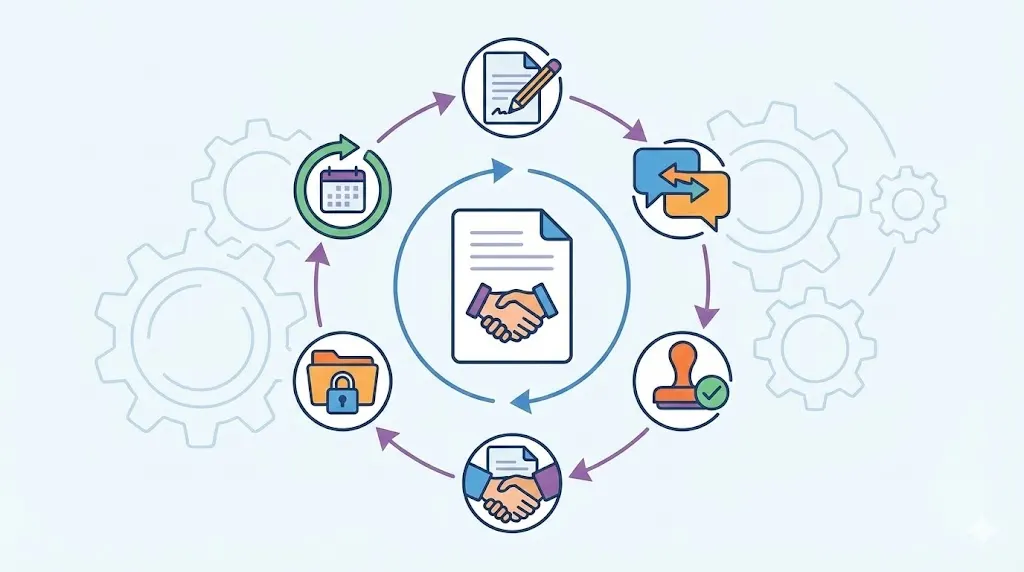
Design the lifecycle flow as request intake, template selection, drafting, negotiation, approval, signature, storage, obligation tracking, and renewal. Each stage should have an owner and completion rule. That flow creates a shared model for enterprise contract processes.
Related articles: 10 Best Contract Management Software in the USA
Balance Enterprise Consistency With Local Compliance
Global companies need common rules and local judgment. The best model separates core standards from approved variants. It does not treat every regional difference as a process failure.
Global standards should cover shared business and risk needs. Local variants should address real legal or operating requirements. Every variation should have a reason, owner, and review path.
Separate Global Standards From Regional Variants
Keep core protections consistent where possible. These may include confidentiality, security, audit rights, and compliance duties. They may also include payment controls and key approval rules.
Allow local changes for governing law and privacy. Employment, tax, language, and signature rules may also vary. Regulatory disclosures can require region-specific wording.
Use a global versus local decision table to guide choices:
Contract component | Global approach | Local adaptation | Approval owner |
|---|---|---|---|
Confidentiality | Use the enterprise standard clause | Permit limited local wording | Central legal |
Governing law | Set approved policy options | Select a valid local jurisdiction | Regional legal |
Privacy terms | Use the core data protection standard | Add required local disclosures | Privacy and regional legal |
Payment terms | Use approved commercial positions | Adjust for local tax rules | Finance and legal |
Signature rules | Use the enterprise signing policy | Follow local execution requirements | Regional legal |
Contract language | Use the approved master language | Add approved translations | Legal content owner |
Involve Legal and Compliance Early
Invite regional counsel before publishing templates. Early review prevents costly redesign later. It also helps teams identify hidden local requirements.
Include compliance, security, procurement, and business owners. Each group sees different risks in the contract process. Their input can improve both rules and user guidance.
Document why each local variant exists. Set a review date for changes in law or policy. This keeps local flexibility controlled and visible.
Related articles: Best Contract Management Software: Top 10 CLM Tools
Measure Adoption, Performance, and Risk Reduction
Measurement shows whether standardization creates real value. Start with a baseline before changing the process. Then compare results across teams, regions, and contract types.
Use both speed and control measures. A faster process may still create risk if users bypass rules. Strong reporting should show both outcomes together.
Track Speed and Process Efficiency
Measure intake-to-draft time and negotiation duration. Track approval time, signature time, and renewal processing. Also measure total contract cycle time.
Compare results by contract type and business unit. Regional results may reveal local workflow friction. Deviation levels may explain why some contracts move slowly.
Time to signature can show business impact. Cycle time can reveal delays inside the process. Together, these measures support better contract workflow management.
Monitor Compliance and Exception Patterns
Track approved template use and clause deviations. Also monitor missing approvals and unapproved language. Review expired agreements and overdue obligations.
Group exceptions by cause and contract type. Repeated exceptions may show unclear policy rules. They may also signal gaps in training or clause coverage.
Use audit findings to improve the process. Do not treat every exception as a user failure. Some exceptions reveal a design problem that needs correction.
Evaluate User and Stakeholder Adoption
Track template use, workflow completion, and self-service rates. Monitor abandoned requests and support questions. Collect feedback from legal and business teams.
Adoption data shows where users face friction. Legal metrics alone may miss these problems. A process can look controlled while users work around it.
Review adoption by role and region. Some teams may need more training or simpler intake. Others may need better system links or clearer approval rules.
Establish a Continuous Improvement Cadence
Review templates, clauses, and policies on a set schedule. Also review workflows, permissions, dashboards, and training. Include lessons from negotiations, audits, disputes, and legal changes.
Use a performance scorecard covering cycle time, standard language use, exception rate, approval compliance, obligation visibility, adoption, and user satisfaction. Assign an owner to each measure. Then turn findings into controlled process changes.
Share results with business leaders and process owners. Good reporting builds support for continued improvement. It also helps teams connect contract work with business results.
Related articles: Top Contract Management Software in UAE for 2026
Why Contract Management Software Matters
Contract management software brings content, workflows, and records together. It supports templates, clauses, approvals, signatures, storage, and obligations. This creates a controlled base for contract process standardization.
A central system reduces manual drafting and duplicate files. It also improves version control and contract visibility. Teams can find current agreements, renewal dates, and key duties faster.
Generic CLM software can route requests by risk and contract type. It can apply approval rules and send reminders automatically. This makes standard processes easier to follow each day.
Volody CLM Software supports AI Contract Review, AI Contract Summaries, and Approval Workflow Automation. It can flag risky language, highlight obligations and renewal dates, and route reviews through defined approval paths. For example, a sales agreement can receive risk checks, show key dates, and move to finance approval without manual chasing.
Establish a more efficient, controlled contract operation with Volody's CLM Software.
FAQ
What does it mean to standardize enterprise contract processes?
It means creating one clear approach for contract intake, drafting, negotiation, approval, signing, storage, renewal, and obligation tracking. Shared templates, clauses, policy rules, and workflows create consistency across teams. Controlled exceptions still allow regional or deal-specific needs. Governance ensures those exceptions receive proper review and documentation.
Why should a company inventory its contracts before standardizing them?
An inventory shows contract types, duplicate versions, owners, repositories, risks, and volumes. It also reveals outdated language and missing approval responsibilities. This information helps teams choose high-impact priorities first. Without an inventory, leaders may design standards around incomplete records or incorrect assumptions.
Which contract clauses should enterprises standardize first?
Start with repeated clauses for payment, renewal, confidentiality, data protection, compliance, liability, intellectual property, and termination. Classify each clause as mandatory, preferred, optional, fallback, or prohibited. This structure gives users clear choices during negotiation. Specialized or high-risk clauses should receive review from the right experts.
How can enterprises support regional contract requirements?
Enterprises can keep global principles while approving local variants. Governing law, privacy, language, tax, employment, disclosures, and signature rules may need regional changes. Each variant should have an owner, reason, version, and review path. Regional legal and compliance teams should join the process before publication.
How can contract management software improve process standardization?
Software can provide guided intake, approved templates, clause libraries, automated routing, approval rules, version control, and audit trails. It can also store executed agreements and track obligations, renewals, and reminders. These features reduce manual work and improve visibility. They help teams follow the same process across business units.
What metrics show whether contract standardization is working?
Useful measures include cycle time, time to signature, template adoption, clause deviation, approval compliance, exceptions, renewals, and obligation visibility. Track user adoption and stakeholder satisfaction as well. Establish a baseline before making changes. Then compare results by contract type, region, business unit, and risk level.
About the Company

Volody AI CLM is an Agentic AI-powered Contract Lifecycle Management platform designed to eliminate manual contracting tasks, automate complex workflows, and deliver actionable insights. As a one-stop shop for all contract activities, it covers drafting, collaboration, negotiation, approvals, e-signature, compliance tracking, and renewals. Built with enterprise-grade security and no-code configuration, it meets the needs of the most complex global organizations. Volody AI CLM also includes AI-driven contract review and risk analysis, helping teams detect issues early and optimize terms. Trusted by Fortune 500 companies, high-growth startups, and government entities, it transforms contracts into strategic, data-driven business assets.





" height="216.72211px" id="FYO0bO80Y" transform="translate(3 6.105)" width="206.073px"/><path d="M 108.174 222 C 88.432 222 70.303 217.239 53.785 207.717 C 37.267 198.196 24.173 185.052 14.504 168.285 C 4.835 151.312 0 132.165 0 110.845 C 0 89.731 4.835 70.792 14.504 54.025 C 24.173 37.052 37.267 23.804 53.785 14.282 C 70.303 4.761 88.432 0 108.174 0 C 128.116 0 146.246 4.761 162.562 14.282 C 179.08 23.804 192.073 37.052 201.541 54.025 C 211.21 70.792 216.044 89.731 216.044 110.845 C 216.044 132.165 211.21 151.312 201.541 168.285 C 192.073 185.052 179.08 198.196 162.562 207.717 C 146.044 217.239 127.915 222 108.174 222 Z M 108.174 183.189 C 120.864 183.189 132.044 180.291 141.713 174.495 C 151.382 168.492 158.936 160.006 164.375 149.035 C 169.814 138.064 172.533 125.334 172.533 110.845 C 172.533 96.355 169.814 83.729 164.375 72.965 C 158.936 61.994 151.382 53.611 141.713 47.815 C 132.044 42.02 120.864 39.122 108.174 39.122 C 95.483 39.122 84.202 42.02 74.332 47.815 C 64.663 53.611 57.109 61.994 51.67 72.965 C 46.231 83.729 43.511 96.355 43.511 110.845 C 43.511 125.334 46.231 138.064 51.67 149.035 C 57.109 160.006 64.663 168.492 74.332 174.495 C 84.202 180.291 95.483 183.189 108.174 183.189 Z" fill="rgba(255, 255, 255, 0.12)" height="222px" id="aa1McFcE9" transform="translate(227.183 3)" width="216.04399999999998px"/><path d="M 42.302 182.257 L 111.799 182.257 L 111.799 216.722 L 0 216.722 L 0 0 L 42.302 0 Z" fill="rgba(255, 255, 255, 0.12)" height="216.72211px" id="yRq4AnrsX" transform="translate(477.721 6.105)" width="111.79899999999998px"/><path d="M 108.174 222 C 88.432 222 70.303 217.239 53.785 207.717 C 37.267 198.196 24.173 185.052 14.504 168.285 C 4.835 151.312 0 132.165 0 110.845 C 0 89.731 4.835 70.792 14.504 54.025 C 24.173 37.052 37.267 23.804 53.785 14.282 C 70.303 4.761 88.432 0 108.174 0 C 128.116 0 146.246 4.761 162.562 14.282 C 179.08 23.804 192.073 37.052 201.541 54.025 C 211.21 70.792 216.045 89.731 216.045 110.845 C 216.045 132.165 211.21 151.312 201.541 168.285 C 192.073 185.052 179.08 198.196 162.562 207.717 C 146.044 217.239 127.915 222 108.174 222 Z M 108.174 183.189 C 120.864 183.189 132.044 180.291 141.713 174.495 C 151.382 168.492 158.936 160.006 164.375 149.035 C 169.814 138.064 172.534 125.334 172.534 110.845 C 172.534 96.355 169.814 83.729 164.375 72.965 C 158.936 61.994 151.382 53.611 141.713 47.815 C 132.044 42.02 120.864 39.122 108.174 39.122 C 95.483 39.122 84.202 42.02 74.332 47.815 C 64.663 53.611 57.108 61.994 51.67 72.965 C 46.231 83.729 43.511 96.355 43.511 110.845 C 43.511 125.334 46.231 138.064 51.67 149.035 C 57.108 160.006 64.663 168.492 74.332 174.495 C 84.202 180.291 95.483 183.189 108.174 183.189 Z" fill="rgba(255, 255, 255, 0.12)" height="222px" id="mo8HQspQ0" transform="translate(609.155 3)" width="216.04500000000007px"/><path d="M 73.727 0 C 95.885 0 115.324 4.45 132.044 13.351 C 148.967 22.252 161.957 34.982 171.027 51.541 C 180.287 67.894 184.917 86.937 184.917 108.671 C 184.917 130.405 180.287 149.449 171.027 165.801 C 161.957 181.947 148.967 194.47 132.044 203.371 C 115.324 212.271 95.885 216.722 73.727 216.722 L 0 216.722 L 0 0 Z M 72.216 179.773 C 94.374 179.773 111.497 173.564 123.583 161.144 C 135.669 148.724 141.713 131.233 141.713 108.671 C 141.713 86.109 135.669 68.515 123.583 55.888 C 111.497 43.055 94.374 36.638 72.216 36.638 L 42.302 36.638 L 42.302 179.773 Z" fill="rgba(255, 255, 255, 0.12)" height="216.72211px" id="I3iXX5Hi_" transform="translate(859.693 6.105)" width="184.91699999999992px"/><path d="M 185.22 0 L 113.91 141.273 L 113.91 216.722 L 71.61 216.722 L 71.61 141.273 L 0 0 L 47.74 0 L 93.06 99.046 L 138.08 0 Z" fill="rgba(255, 255, 255, 0.12)" height="216.72211px" id="nzHyWC0_d" transform="translate(1061.78 6.105)" width="185.22000000000003px"/></svg>)