

A contract deviation summary systematically identifies non-standard or high-risk clauses by comparing contracts against approved templates and policies. This process enables legal teams to swiftly pinpoint potential risks, significantly reducing manual review time and preventing costly oversights. In high-pressure environments with tight deadlines, the ability to instantly assess contract deviations empowers organizations to maintain compliance, accelerate approvals, and safeguard against legal and financial exposure. Leveraging automated deviation summaries is essential for efficient, effective contract risk management in today’s fast-paced business landscape.
TL;DR
Contract deviation summaries highlight differences between a contract and its standard template. They help teams spot risky clauses fast and reduce manual review time. By combining automated detection with expert judgment, these summaries improve contract risk management. They speed approvals and lower the chance of overlooking critical issues. The key is integrating these summaries into contract workflows for maximum impact.
Related articles: What is Contractual Risk? Your Ultimate Guide
The Mechanics of Deviation Summaries
Techniques for Extracting Contract Variances Automatically
A contract deviation summary relies on automated techniques to spot differences from standard templates. At its core, the system compares clauses line-by-line against a set of approved precedent documents. It detects missing, modified, or added terms that fall outside company policies. This process uses text-matching algorithms, pattern recognition, and keyword scanning. Some platforms also apply natural language processing (NLP) to understand clause context. This helps spot subtle wording changes that could affect risk. Extraction tools parse contracts into structured data, making variance identification faster and more accurate. Instead of manual redlining, the system flags deviations instantly.
Automation reduces human error and accelerates review. It captures contract exceptions that might otherwise go unnoticed. Teams gain immediate clarity on where the contract diverges from the norm. They also see which deviations need justification or approval. This lets reviewers focus on high-risk areas without combing through the entire document.
Role of Standard Clauses and Precedent Documents in Comparison
Precedent documents serve as the baseline for deviation detection. These are carefully crafted templates embodying company policies and legal standards. They include standard clauses for liability, indemnity, payment terms, confidentiality, and more. The deviation summary tool uses these precedents to benchmark each contract. Any clause that differs triggers a flag for review. The quality of these templates directly affects the accuracy of deviation summaries. Well-maintained precedents ensure consistent risk management and reduce false positives. They also speed up contract drafting by providing clear defaults.
Legal teams must update their precedent documents regularly. This keeps pace with changing laws, regulations, and business priorities. Effective precedent governance supports reliable contract deviation reporting software. It forms the foundation for clear, actionable deviation summaries that guide risk mitigation.
AI and Machine Learning Methods for Risk Flagging
Artificial intelligence (AI) and machine learning (ML) enhance automated contract deviation detection. These technologies analyze large volumes of contracts to identify common deviation patterns. ML models learn which deviations typically present higher risk based on historical outcomes. AI-powered tools extract clauses and benchmark them against a dynamic risk library. This goes beyond simple text matching to interpret legal concepts and context.
Machine learning improves over time with more data. It reduces false positives by distinguishing harmless variations from risky exceptions. AI also prioritizes deviations by severity, helping legal teams focus on critical issues first. Automated contract deviation detection powered by AI accelerates contract risk management tools. It sharpens detection accuracy while cutting manual review hours.
Such smart systems often integrate with contract lifecycle management (CLM) platforms. They trigger alerts, generate deviation summaries, and support decision-making seamlessly within contract workflows.
Related articles: Significance of tracking data points in contract management
Identifying High-Risk Contract Clauses Quickly
Typical Risky Deviations Found in Contracts
Certain contract clauses often carry higher risk when deviated from. A contract deviation summary highlights these risky exceptions immediately. Typical high-risk deviations include:
Altered indemnity provisions reducing the company’s protection
Modified liability caps increasing exposure to damages
Changes to termination rights that limit exit options
Non-standard confidentiality clauses risking data leaks
Payment terms that delay or reduce expected cash flow
These deviations can create legal and financial risks if left unchecked. The summary flags them for quick review and justification. Legal teams can then decide whether to accept, negotiate, or reject these exceptions.
Consequences of Missing or Modified Indemnity and Liability Clauses
Indemnity and liability clauses shield organizations from losses caused by the other party. If these clauses are missing or weakened, the company may assume unexpected risks. A deviation summary draws attention to such changes instantly. Missing indemnity can leave a business unprotected against third-party claims. Modified liability limits might expose it to unlimited damages.
Failing to catch these deviations early can lead to costly disputes later. Legal contract deviation mitigation strategies rely on spotting these issues fast. The summary acts as an early warning system. It forces approvers to justify or amend risky deviations before finalizing contracts.
Detecting Non-Standard Terms that Increase Legal Exposure
Beyond indemnity and liability, many other non-standard terms can increase legal exposure. These include vague obligations, unusual warranties, or ambiguous dispute resolution clauses. A detailed contract deviation audit checklist helps identify such red flags. The summary captures these deviations systematically. It highlights clauses that deviate from accepted norms or company policies.
Detecting these variations quickly reduces ambiguity and uncertainty in contracts. It prevents unintended commitments that could escalate legal risk. Legal teams are empowered to negotiate clearer, safer terms. This proactive approach improves overall contract risk management.
Related articles: KPIs for Successful Contract Management
Integrating Deviation Summaries into Contract Workflows
Embedding Automated Deviation Analysis in CLM Systems
Embedding deviation summaries directly into contract lifecycle management systems creates a seamless review process. As contracts are drafted or uploaded, automated deviation detection runs in the background. The system generates live deviation reports accessible to legal and business teams. This integration ensures no contract moves forward without a clear risk snapshot.
CLM platforms can enforce contract deviation approval processes. They route flagged contracts to designated approvers based on deviation type or severity. This reduces bottlenecks and speeds up review cycles. Automated reminders and audit trails improve compliance and accountability.
Combining Automated Flags with Legal Expertise for Decision-Making
While automation accelerates risk spotting, expert legal judgment remains vital. Deviation summaries provide data-driven insights but cannot replace nuanced analysis. Legal teams interpret flagged deviations in the context of business goals, jurisdiction, and negotiation strategy.
Combining automated contract clause deviation analysis with human expertise yields the best results. Lawyers validate high-risk flags, assess materiality, and guide negotiations. They also improve deviation justification best practices by documenting why exceptions are acceptable.
This collaboration balances speed with accuracy. It prevents over-reliance on software while maximizing risk mitigation effectiveness.
Using Deviation Data to Prioritize Contract Reviews Efficiently
Deviation summaries produce actionable data that teams use to triage contracts. Not every flagged deviation carries equal risk. Teams can prioritize contracts with multiple or severe deviations for immediate review. Low-risk or justified deviations can be fast-tracked.
This prioritization optimizes resource use and shortens contract cycle times. It enables legal and procurement teams to focus on contracts that truly matter. Tracking deviation trends across portfolios also informs continuous process improvements.
The Role of AI in Accelerating Contract Risk Detection
AI Techniques for Clause Extraction and Benchmarking Against Standards
AI excels at extracting contract clauses quickly and benchmarking them against standard templates. Using NLP, AI parses complex contracts into discrete clauses and data points. It identifies semantic differences, not just text changes. This allows for more accurate deviation detection.
AI then compares each clause to a curated risk library or precedent documents. It flags deviations that conflict with approved language or company policies. This benchmarking happens at scale and speed impossible for manual review.
How AI Reduces Manual Review Time While Maintaining Accuracy
AI-powered contract deviation reporting software cuts manual review time by automating variance detection. Legal teams spend less time reading every line and more time on flagged issues. AI highlights the exact clauses that deviate and provides context for review.
This targeted approach improves accuracy by focusing attention where it’s needed. It also lowers human error and fatigue risks. As a result, contracts move faster through approval workflows without sacrificing quality.
Continuous Improvement of Risk Detection Through Machine Learning
Machine learning models evolve as they process more contracts. They refine risk detection by learning from past approvals, rejections, and dispute outcomes. This continuous learning reduces false positives and sharpens risk flagging.
Over time, AI adapts to changes in legal standards and company policies. It can even customize deviation summaries based on industry-specific risk profiles. This ongoing improvement enhances contract risk management tools’ value and precision.
Challenges in Interpreting Deviation Summaries
Managing False Positives and Over-Flagging Issues
One challenge with automated deviation summaries is false positives. The system may flag benign variations that do not pose real risk. Excessive flags can overwhelm reviewers and reduce trust in the tool. Managing this requires tuning risk criteria and AI models carefully.
Legal teams must calibrate deviation parameters to balance sensitivity and specificity. They should also train users to interpret flags critically. Clear guidelines help prevent overreaction to minor deviations. This ensures focus remains on issues that truly affect risk.
Addressing Contextual and Nuanced Contract Language
Contracts often contain nuanced language that varies by context. A clause that seems risky in one deal may be acceptable in another. Deviation summaries struggle to capture these subtleties fully. They rely on text comparison and risk rules that may lack context awareness.
Human review is essential to interpret these nuances. Legal teams must consider negotiation history, industry norms, and business intent. Combining AI insights with expert interpretation avoids misjudging contract risks.
Maintaining Consistency Across Various Contract Types and Jurisdictions
Contracts differ widely by type, industry, and jurisdiction. A deviation summary must adapt to these variations to remain relevant. Consistency in risk detection is challenging when contract language and legal standards vary.
Customizing deviation parameters and precedent documents for each contract group helps maintain accuracy. Legal teams should regularly review and adjust deviation summaries to reflect evolving contract types and regulatory landscapes.
Customizing Deviation Summaries for Industry-Specific Risks
Adjusting Risk Parameters for Different Industry Contract Norms
Each industry has unique contract risks and norms. Customizing deviation summaries means defining which deviations matter most to that sector. For example, technology contracts may focus on IP rights and data security. Healthcare contracts emphasize patient privacy and regulatory compliance.
Adjusting risk parameters tailors deviation flags to industry priorities. This reduces noise and sharpens risk focus. Industry-specific configuration improves usability and decision-making.
Navigating Regulatory and Compliance Differences by Sector
Regulatory requirements differ by industry and geography. Deviation summaries must incorporate these rules to identify compliance risks. For instance, financial services contracts need scrutiny for anti-money laundering clauses. Energy contracts must align with environmental regulations.
Incorporating regulatory rules into contract deviation reporting software ensures contracts meet legal standards. It helps avoid costly penalties and reputational harm.
Industry-Specific Examples: Healthcare and Technology Contracts
In healthcare, deviation summaries flag clauses that risk violating HIPAA or patient data rules. They highlight exceptions to confidentiality or data handling standards. This supports managing contract exceptions effectively in a tightly regulated environment.
Technology contracts often contain complex licensing and warranty clauses. Deviation summaries identify non-standard terms that could expose the company to IP disputes or service failures. Tailored summaries enable faster negotiation and clearer risk understanding.
Leveraging Deviation Summaries for Proactive Risk Mitigation
Early Detection of Ambiguities and Contractual Gaps
Deviation summaries expose ambiguous or missing clauses early. Identifying these gaps before contract execution reduces misunderstandings. Early detection prevents disputes and costly renegotiations.
Legal teams can address unclear terms proactively. This clarity supports smoother contract performance and compliance.
Facilitating Quicker Negotiation Adjustments and Approvals
By spotlighting risky deviations upfront, summaries speed negotiation cycles. Teams know exactly which clauses need discussion or approval. This focus reduces back-and-forth and accelerates deal closure.
The contract deviation approval process becomes more transparent and efficient. Approvers receive clear justifications and risk assessments, enabling faster decisions.
Reducing Financial and Legal Exposure with Timely Risk Management
Timely risk identification helps control financial and legal exposure. Organizations avoid agreeing to unfavorable terms that could trigger penalties or losses. Deviation summaries act as a safeguard, ensuring contracts align with risk appetite.
They also support ongoing risk monitoring by tracking deviation trends. This continuous oversight sharpens overall contract governance.
Best Practices for Maximizing Deviation Summary Effectiveness
Developing and Maintaining Clear Precedent Documents
Strong precedent documents are the backbone of effective deviation summaries. Legal teams must invest in creating clear, comprehensive templates. These should reflect current policies and legal requirements.
Regular updates keep precedents relevant. Good governance prevents drift and confusion. Clear templates reduce false alarms and improve deviation reporting precision.
Training Legal and Business Teams to Use Automated Flags Effectively
Training is crucial for adoption and impact. Teams need guidance on interpreting deviation flags and justifications. They should understand when to escalate or accept deviations.
Ongoing education encourages consistent use and trust. It empowers users to apply contract deviation justification best practices. This leads to better risk decisions.
Regularly Updating Risk Criteria and Review Processes
Contract risks evolve with business and regulatory changes. Risk criteria for deviation summaries require frequent review and refinement. Legal and compliance teams should collaborate to keep rules current.
Review processes must incorporate lessons learned from disputes and audit findings. This continuous improvement cycle enhances contract deviation reporting software effectiveness.
Measuring the Impact of Deviation Summaries on Contract Risk
Key Metrics for Evaluating Risk Reduction Success
Organizations measure the value of deviation summaries through key performance indicators (KPIs). These include:
Number of deviations detected and resolved
Reduction in contract-related disputes
Percentage of contracts reviewed with deviation summaries
Compliance rates with approval workflows
Tracking these metrics shows how well the tool supports risk mitigation.
Tracking Time Savings and Efficiency Improvements
Time saved on contract review is a critical benefit. Metrics can track average review time per contract before and after using deviation summaries. Shorter negotiation cycles indicate improved efficiency.
Monitoring user adoption and feedback helps identify bottlenecks or training needs. Efficiency gains translate to faster deal closures and reduced legal costs.
Demonstrating Return on Investment Through Reduced Disputes
A clear business benefit of deviation summaries is fewer costly disputes. Tracking dispute frequency and associated costs before and after implementation shows ROI. Reduced legal fees, penalties, and reputational damage justify continued investment.
Presenting these data points to stakeholders supports ongoing funding and tool refinement.
Conclusion
Contract deviation summaries revolutionize risk management by delivering precise, actionable insights with unparalleled speed. Integrating these summaries into contract workflows empowers legal teams to focus on critical issues, accelerating approvals while minimizing exposure to costly disputes. By combining advanced automation with expert legal oversight and customizing parameters to industry-specific needs, organizations achieve a strategic advantage in contract governance. Begin by evaluating your current contract review processes to identify opportunities for automation. Implementing deviation summaries can reduce review times by up to 40% and significantly mitigate legal risks. Embrace this technology-driven approach to ensure your contracts are managed with the highest levels of accuracy, efficiency, and confidence.
Frequently Asked Questions
What is contract analytics software?
Contract analytics software uses AI and machine learning to extract, analyze, and compare contract data automatically. It identifies deviations from standard clauses, flags risks, and summarizes key contract terms quickly. This software reduces manual work and helps legal, procurement, and business teams manage contract risk more effectively. It speeds up contract reviews and ensures important issues get early attention.
What are the key features and benefits of contract analysis software?
Key features include clause detection, contract summarization, cross-contract comparison, and risk flagging. Benefits are faster contract review, better accuracy in spotting deviations, improved compliance, and reduced legal risks. The software helps teams prioritize high-risk contracts, streamline negotiations, and maintain consistent standards. Ultimately, it saves time and cuts costly errors.
How does AI transform contract review?
AI automates contract data extraction and analysis, quickly identifying deviations and risky clauses. It reduces the need for manual line-by-line review and speeds decision-making. AI improves accuracy by learning from large datasets and refining its models over time. This makes contract review more efficient and reliable, spotting subtle risks that humans might miss.
What is the role of contract risk management software?
Contract risk management software helps organizations identify, assess, and reduce risks in contracts. It offers tools for deviation detection, risk scoring, and reporting. This enables proactive management of compliance, financial exposure, and operational risks. The software integrates with contract lifecycle management systems to embed risk controls throughout the contract process.
How do deviation summaries improve contract negotiation outcomes?
Deviation summaries highlight non-standard or risky terms early, allowing negotiators to address them quickly. This reduces negotiation cycles and prevents overlooked risks. Clear insight into problematic clauses supports faster, more informed decisions. Ultimately, it helps close deals efficiently while protecting the organization from unfavorable terms.
Can deviation summaries be customized for different organizational needs?
Yes. Organizations can tailor deviation summaries by defining which clauses and deviations are high priority based on industry, regulations, and internal policies. Customization cuts irrelevant alerts and focuses on the most critical risks. This improves usability and effectiveness across diverse contract environments.
What are the limitations of relying solely on deviation summaries?
Deviation summaries cannot replace expert legal judgment. They may miss contextual subtleties or produce false positives. These summaries serve to prioritize review but require human interpretation to assess materiality and negotiate terms properly. Overreliance without legal oversight risks missed issues or unnecessary alarms.
How do deviation summaries integrate with contract lifecycle management (CLM) systems?
Many CLM platforms embed AI-driven deviation summaries directly into workflows. Contracts are scanned automatically during upload or negotiation, with flagged deviations shown in the interface. This integration streamlines review, supports collaboration, and ensures risk insights are available at key decision points.
What industries benefit most from deviation summary tools?
Industries with complex, high-volume, or regulated contracts benefit most. These include healthcare, technology, finance, and manufacturing. Tailored configurations allow these sectors to address specific regulatory and compliance risks. This improves contract governance and reduces exposure.
How can organizations measure the effectiveness of deviation summaries?
Effectiveness is measured by reductions in contract review time, fewer post-signature disputes, improved risk detection accuracy, and faster negotiation cycles. Tracking user adoption and ROI through cost savings and risk mitigation supports ongoing investment and refinement of deviation summary tools.
About the Company
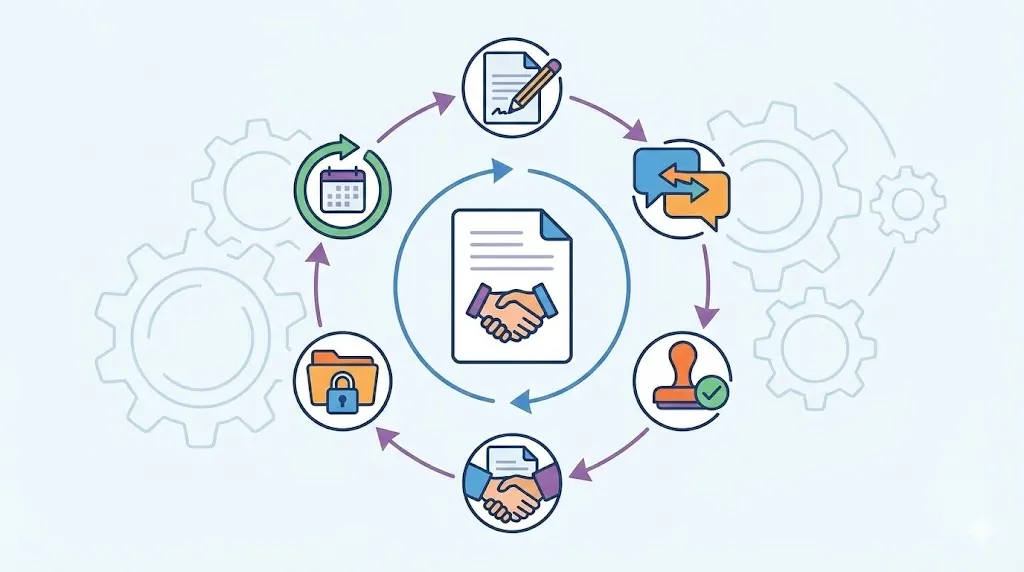
Volody AI CLM is an Agentic AI-powered Contract Lifecycle Management platform designed to eliminate manual contracting tasks, automate complex workflows, and deliver actionable insights. As a one-stop shop for all contract activities, it covers drafting, collaboration, negotiation, approvals, e-signature, compliance tracking, and renewals. Built with enterprise-grade security and no-code configuration, it meets the needs of the most complex global organizations. Volody AI CLM also includes AI-driven contract review and risk analysis, helping teams detect issues early and optimize terms. Trusted by Fortune 500 companies, high-growth startups, and government entities, it transforms contracts into strategic, data-driven business assets.




" height="216.72211px" id="FYO0bO80Y" transform="translate(3 6.105)" width="206.073px"/><path d="M 108.174 222 C 88.432 222 70.303 217.239 53.785 207.717 C 37.267 198.196 24.173 185.052 14.504 168.285 C 4.835 151.312 0 132.165 0 110.845 C 0 89.731 4.835 70.792 14.504 54.025 C 24.173 37.052 37.267 23.804 53.785 14.282 C 70.303 4.761 88.432 0 108.174 0 C 128.116 0 146.246 4.761 162.562 14.282 C 179.08 23.804 192.073 37.052 201.541 54.025 C 211.21 70.792 216.044 89.731 216.044 110.845 C 216.044 132.165 211.21 151.312 201.541 168.285 C 192.073 185.052 179.08 198.196 162.562 207.717 C 146.044 217.239 127.915 222 108.174 222 Z M 108.174 183.189 C 120.864 183.189 132.044 180.291 141.713 174.495 C 151.382 168.492 158.936 160.006 164.375 149.035 C 169.814 138.064 172.533 125.334 172.533 110.845 C 172.533 96.355 169.814 83.729 164.375 72.965 C 158.936 61.994 151.382 53.611 141.713 47.815 C 132.044 42.02 120.864 39.122 108.174 39.122 C 95.483 39.122 84.202 42.02 74.332 47.815 C 64.663 53.611 57.109 61.994 51.67 72.965 C 46.231 83.729 43.511 96.355 43.511 110.845 C 43.511 125.334 46.231 138.064 51.67 149.035 C 57.109 160.006 64.663 168.492 74.332 174.495 C 84.202 180.291 95.483 183.189 108.174 183.189 Z" fill="rgba(255, 255, 255, 0.12)" height="222px" id="aa1McFcE9" transform="translate(227.183 3)" width="216.04399999999998px"/><path d="M 42.302 182.257 L 111.799 182.257 L 111.799 216.722 L 0 216.722 L 0 0 L 42.302 0 Z" fill="rgba(255, 255, 255, 0.12)" height="216.72211px" id="yRq4AnrsX" transform="translate(477.721 6.105)" width="111.79899999999998px"/><path d="M 108.174 222 C 88.432 222 70.303 217.239 53.785 207.717 C 37.267 198.196 24.173 185.052 14.504 168.285 C 4.835 151.312 0 132.165 0 110.845 C 0 89.731 4.835 70.792 14.504 54.025 C 24.173 37.052 37.267 23.804 53.785 14.282 C 70.303 4.761 88.432 0 108.174 0 C 128.116 0 146.246 4.761 162.562 14.282 C 179.08 23.804 192.073 37.052 201.541 54.025 C 211.21 70.792 216.045 89.731 216.045 110.845 C 216.045 132.165 211.21 151.312 201.541 168.285 C 192.073 185.052 179.08 198.196 162.562 207.717 C 146.044 217.239 127.915 222 108.174 222 Z M 108.174 183.189 C 120.864 183.189 132.044 180.291 141.713 174.495 C 151.382 168.492 158.936 160.006 164.375 149.035 C 169.814 138.064 172.534 125.334 172.534 110.845 C 172.534 96.355 169.814 83.729 164.375 72.965 C 158.936 61.994 151.382 53.611 141.713 47.815 C 132.044 42.02 120.864 39.122 108.174 39.122 C 95.483 39.122 84.202 42.02 74.332 47.815 C 64.663 53.611 57.108 61.994 51.67 72.965 C 46.231 83.729 43.511 96.355 43.511 110.845 C 43.511 125.334 46.231 138.064 51.67 149.035 C 57.108 160.006 64.663 168.492 74.332 174.495 C 84.202 180.291 95.483 183.189 108.174 183.189 Z" fill="rgba(255, 255, 255, 0.12)" height="222px" id="mo8HQspQ0" transform="translate(609.155 3)" width="216.04500000000007px"/><path d="M 73.727 0 C 95.885 0 115.324 4.45 132.044 13.351 C 148.967 22.252 161.957 34.982 171.027 51.541 C 180.287 67.894 184.917 86.937 184.917 108.671 C 184.917 130.405 180.287 149.449 171.027 165.801 C 161.957 181.947 148.967 194.47 132.044 203.371 C 115.324 212.271 95.885 216.722 73.727 216.722 L 0 216.722 L 0 0 Z M 72.216 179.773 C 94.374 179.773 111.497 173.564 123.583 161.144 C 135.669 148.724 141.713 131.233 141.713 108.671 C 141.713 86.109 135.669 68.515 123.583 55.888 C 111.497 43.055 94.374 36.638 72.216 36.638 L 42.302 36.638 L 42.302 179.773 Z" fill="rgba(255, 255, 255, 0.12)" height="216.72211px" id="I3iXX5Hi_" transform="translate(859.693 6.105)" width="184.91699999999992px"/><path d="M 185.22 0 L 113.91 141.273 L 113.91 216.722 L 71.61 216.722 L 71.61 141.273 L 0 0 L 47.74 0 L 93.06 99.046 L 138.08 0 Z" fill="rgba(255, 255, 255, 0.12)" height="216.72211px" id="nzHyWC0_d" transform="translate(1061.78 6.105)" width="185.22000000000003px"/></svg>)