

Financial contracts form the backbone of every business’s financial dealings. Imagine a finance team scrambling because a key software subscription auto-renewed unexpectedly, locking in tens of thousands in unplanned expenses. Or consider the chaos when loan covenants slip unnoticed, triggering costly penalties. These situations often arise not from poor negotiation but from a lack of clear contract oversight. This article breaks down the essentials of financial contracts, the clauses that matter most, and practical ways to manage them efficiently.
TL;DR
Financial contracts cover all major business financial obligations, from vendor deals to loans and leases.
Key clauses include payment terms, renewal conditions, liability limits, and compliance requirements.
Missed deadlines or untracked obligations can cause unexpected costs and legal risks.
Finance teams often inherit contract management post-signature, needing clear visibility and tracking tools.
Contract lifecycle management (CLM) software centralizes contracts, automates alerts, and extracts key data.
Effective contract management reduces financial risk and streamlines audits, reporting, and renewals.
What Exactly Is a Financial Contract?
A financial contract is any agreement that creates a financial responsibility, right, or risk for a company. It governs how money, assets, or services exchange hands and sets enforceable duties for all parties involved. The term does not rely on a label but on the contract’s contents—payment schedules, liability limits, renewal terms, and penalties for breaches.
In practice, financial contracts cover most commercial agreements a business signs. These include vendor contracts, software subscriptions, loan agreements, leases, and investment deals. Finance teams rarely draft these contracts but must understand their terms thoroughly. They handle tracking payments, monitoring renewal deadlines, ensuring compliance, and preparing data for audits or board reports.
Understanding the nature of these contracts helps finance teams avoid surprises and maintain control over financial commitments.
Related articles: Contract Management Software for Finance: A Detailed Guide
What Are the Main Types of Financial Contracts?
Financial contracts come in many forms, each with unique features and risks. Here is a detailed look at the most common types:
Vendor and Supplier Agreements
Vendor agreements govern purchases of goods or services from third parties. They specify what is bought, at what price, payment terms, delivery schedules, and remedies if either side fails to meet obligations.
Finance teams must track:
Payment schedules to ensure timely invoices and avoid penalties.
Price escalation clauses that may increase costs over time.
Auto-renewal terms that lock in spending if not canceled on time.
Liability caps limiting recoverable damages if the vendor underperforms.
Large vendor contracts may also involve compliance elements like Sarbanes-Oxley (SOX) controls for financial reporting or data protection rules like GDPR when personal data is involved. Missing these can lead to regulatory fines or audit issues.
For example, a company may have a vendor contract for office supplies with a clause that prices increase 3% annually. If finance overlooks this, budget forecasts will be off, leading to cash flow problems.
Purchase Orders (POs)
Purchase orders are formal requests from buyers to suppliers authorizing specific purchases. Once accepted, they become legally binding and form part of the procurement record alongside vendor agreements.
Finance uses POs to:
Control and record committed spend.
Match invoices to approved purchases for accurate payment.
Maintain a clear audit trail for accounts payable.
POs should align with the terms in vendor contracts, such as payment deadlines and pricing, to avoid discrepancies.
SaaS Agreements
Software-as-a-Service (SaaS) contracts are increasingly common, covering cloud-based software subscriptions. They blend service agreements with software licenses, usually involving prepaid subscription fees and access rights tied to the contract term.
Key risks for finance include:
Auto-renewal clauses requiring advance notice (often 30-90 days) to cancel.
Price increases on renewal that may exceed budgeted amounts.
Usage-based billing that can cause actual costs to vary widely from forecasts.
Data portability rights, which impact data handling at contract end.
SaaS contracts often include a Data Processing Agreement (DPA) as a schedule. This document governs how customer data is processed and must be reviewed if the service scope changes at renewal.
For instance, a company might have a SaaS contract with a 60-day cancellation window. Missing this deadline can automatically renew the subscription for another year, locking in costs without approval.
Loan Agreements and Credit Facilities
Loan contracts define the terms under which lenders provide funds to borrowers. These include revolving credit lines, term loans, and asset financing.
Finance teams focus on:
Financial covenants, such as minimum cash reserves or maximum debt ratios, that must be maintained.
Drawdown rules specifying how and when funds can be accessed.
Interest rates, whether fixed or variable, and any hedging arrangements.
Repayment schedules detailing installments and final maturity dates.
Events of default that can trigger accelerated repayment or penalties.
Regulated businesses and public companies may face additional disclosure rules from bodies like the Financial Conduct Authority (FCA) in the UK or the Securities and Exchange Commission (SEC) in the US. Loan agreements often require disclosure in financial statements, making compliance critical.
Imagine a business missing a covenant requiring a debt-service coverage ratio of 1.2. This could lead to a loan default, forcing immediate repayment and damaging credit ratings.
Non-Disclosure Agreements (NDAs)
While often seen as routine paperwork, NDAs can carry significant financial risks. They protect confidential information during mergers, fundraising, or partnerships. Breaches can lead to costly litigation or loss of competitive advantage.
Finance teams should monitor NDAs during major transactions to understand any financial exposure or indemnity obligations.
Lease Agreements
Leases govern the rental of property, equipment, or vehicles. They specify rent amounts, payment schedules, maintenance responsibilities, and renewal options.
Key finance concerns include:
Fixed and variable rent components.
Renewal and termination notice periods.
Early termination penalties.
Accounting treatment under lease accounting standards (e.g., ASC 842 or IFRS 16).
Proper lease management ensures accurate budgeting and compliance with accounting rules.
Investment Agreements
Investment contracts cover equity investments, convertible notes, or shareholder arrangements. They define funding amounts, valuation, rights, and exit terms.
Finance teams track:
Funding milestones and drawdown schedules.
Dividend or interest payments.
Conversion rights and valuation caps.
Exit and liquidity event provisions.
These contracts impact financial planning and capital structure.
Related articles: What are Contract Obligations and How to Manage Them
What Are the Most Important Clauses in Financial Contracts?
Certain clauses appear repeatedly across financial contracts and deserve close attention. Here is a breakdown of the most critical provisions:
Payment Terms
This clause defines how much, when, and how payments must be made. It covers:
Payment schedules (e.g., monthly, quarterly, lump sum).
Accepted payment methods.
Late payment penalties or interest charges.
Currency and tax considerations.
Finance teams must ensure payments align with these terms to avoid disputes or extra costs.
Renewal and Termination Provisions
Renewal clauses specify if and how contracts renew automatically. Termination terms explain how either party can end the agreement.
Watch for:
Automatic renewal periods and notice deadlines.
Conditions triggering termination rights.
Penalties or fees for early termination.
Obligations upon termination, such as data return or final payments.
Missing renewal deadlines can lock in unwanted spending, while unclear termination terms may cause costly disputes.
Liability and Indemnity
These clauses limit financial exposure if one party breaches the contract or causes harm.
Liability caps set maximum damages payable.
Indemnity provisions require one party to cover losses suffered by the other.
Exclusions clarify which damages are not covered.
Finance teams should assess these carefully to understand potential risks.
Financial Covenants
Common in loan agreements, these are financial targets the borrower must meet.
Examples include:
Minimum net worth.
Maximum debt-to-equity ratio.
Minimum cash flow coverage.
Breaching covenants can trigger defaults, penalties, or loan recalls.
Compliance and Reporting
Contracts may require regular reporting or compliance with laws and standards.
Audit rights allow one party to inspect records.
Data protection clauses ensure compliance with privacy laws.
Regulatory disclosures may be mandated.
Finance teams must track these to avoid fines or legal issues.
Price Adjustment and Escalation
Some contracts allow price changes during the term.
Index-linked adjustments (e.g., inflation).
Volume discounts or penalties.
Renewal price increases.
Understanding these helps maintain accurate budgets.
Force Majeure
This clause excuses performance delays due to unforeseen events like natural disasters or pandemics.
It defines:
What events qualify.
Notification requirements.
Remedies or extensions.
Finance teams should know how this impacts obligations and liabilities.
Related articles: Clear Contract Payment Terms: A Guide to Understanding
5 Challenges in Managing Financial Contracts
Managing financial contracts after signature presents several hurdles for finance teams:
1. Lack of Centralized Contract Storage
Contracts often reside in multiple locations—email inboxes, shared drives, or paper files. This fragmentation makes it hard to find contracts quickly and track obligations.
2. Manual Tracking of Key Dates and Obligations
Teams rely on spreadsheets or memory to track payment deadlines, renewal notices, and compliance reports. This approach is error-prone and leads to missed deadlines.
3. Limited Visibility into Contract Terms
Finance may not have easy access to contract details like payment terms or covenants. Without this, forecasting and risk management suffer.
4. Poor Collaboration Between Legal and Finance
Legal drafts and negotiates contracts, but finance owns post-signature management. Lack of communication creates gaps in understanding and responsibility.
5. Difficulty in Extracting Contract Data
Manually reviewing contracts to pull out key data is time-consuming and prone to mistakes, especially during audits or due diligence.
Related articles: 7 Key Contract Clauses Found in Business Contracts
How Does Contract Management Software Help?
Contract lifecycle management (CLM) software addresses these challenges by centralizing contracts, automating workflows, and using AI to extract and analyze contract data.
Key benefits include:
A single repository for all contracts with secure access and search capabilities.
Automated alerts for renewals, payment deadlines, and compliance tasks.
AI-powered extraction of payment terms, renewal dates, liabilities, and covenants.
Dashboards providing real-time insights into contract status and risks.
Collaboration tools that connect legal, finance, and operations teams.
These features reduce missed obligations, improve financial forecasting, and speed up audit preparation.
Related articles: How Financial Industry Benefit from CLM Software?
Why Contract Management Software Matters
Managing financial contracts manually wastes time and exposes companies to financial risk. CLM software brings control, clarity, and efficiency to contract management.
It helps finance teams:
Avoid unplanned expenses from missed cancellation deadlines.
Monitor loan covenants proactively to prevent defaults.
Ensure compliance with regulatory and reporting requirements.
Streamline audits with instant access to contract data.
Improve collaboration with legal and procurement teams.
With the right software, finance gains full visibility over its contract portfolio, turning contracts from a liability into a manageable asset.
Related articles: Mastering Digital Contract Management: A Strategic Guide
How Contract Management Software Solves This
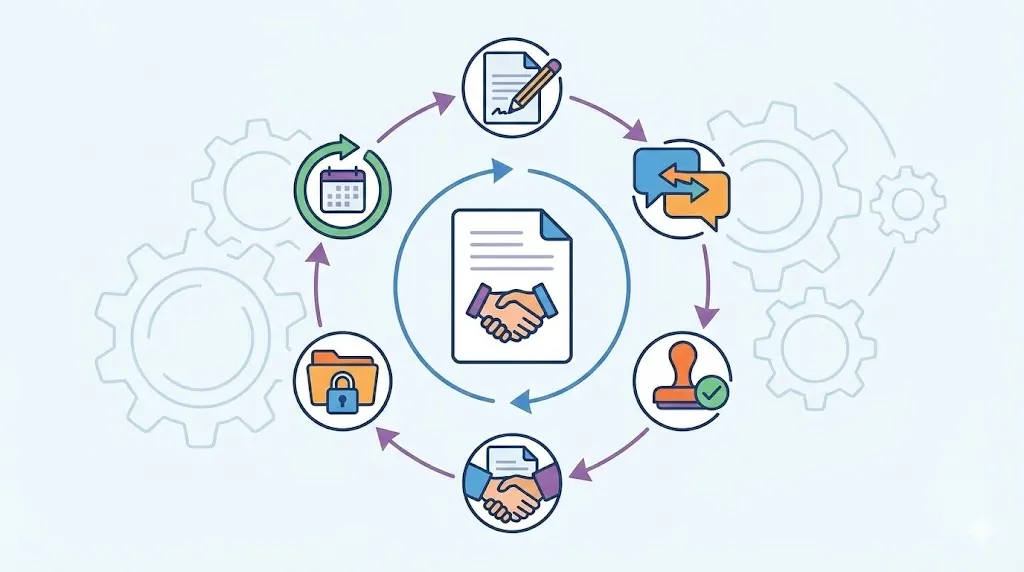
Contract management software centralizes all agreements in one secure system. It uses AI to extract key financial data automatically, eliminating manual review. Automated reminders notify teams of upcoming renewals, payment due dates, and compliance deadlines.
The software also tracks contract versions and stores audit trails for transparency. It supports collaboration by allowing legal, finance, and procurement teams to work together on contract drafting, review, and approval.
Volody’s CLM Software offers these capabilities with AI-driven contract drafting, review, metadata extraction, and obligation management. It integrates with common enterprise tools and supports role-based access control for security.
See how Volody's CLM Software helps legal teams manage contracts faster and with greater control.
Related articles: Master Contract Obligation Management: 5 Proactive Steps
FAQ
What is the difference between a financial contract and a regular contract?
A financial contract specifically creates financial obligations or risks, such as payment terms, loan covenants, or renewal fees. Regular contracts may cover other matters like employment or intellectual property without direct financial terms.
Why do finance teams need to manage contracts after signature?
Finance teams track payments, monitor renewal deadlines, ensure compliance, and prepare reports. Managing contracts post-signature prevents missed payments, unexpected costs, and regulatory issues.
What are financial covenants, and why are they important?
Financial covenants are conditions borrowers must meet in loan agreements, like maintaining certain financial ratios. Breaching them can trigger loan defaults or penalties, impacting business liquidity.
How do auto-renewal clauses affect financial planning?
Auto-renewals can lock in expenses for additional contract terms if cancellation notice is missed. This can lead to unplanned spending and budget overruns.
What risks arise from poor contract data management?
Scattered or inaccessible contract data leads to missed deadlines, inaccurate forecasting, compliance failures, and longer audit times, increasing financial and legal risks.
Can contract management software integrate with existing finance systems?
Yes, modern CLM platforms often integrate with ERP, CRM, and accounting systems to streamline workflows and ensure data consistency.
How does AI improve contract management?
AI automates data extraction, flags risky clauses, summarizes key terms, and supports faster drafting and review, reducing manual effort and errors.
What clauses should finance teams focus on in vendor contracts?
Payment terms, price escalation, auto-renewals, liability limits, and compliance obligations are critical for managing vendor contracts effectively.
How can finance teams track contract obligations effectively?
Using a centralized system with automated alerts for key dates and deliverables helps teams stay on top of obligations and avoid penalties.
Are NDAs considered financial contracts?
While NDAs do not usually involve payments, they can carry financial risks through indemnities or penalties in case of breaches, especially in major deals.
About the Company

Volody AI CLM is an Agentic AI-powered Contract Lifecycle Management platform designed to eliminate manual contracting tasks, automate complex workflows, and deliver actionable insights. As a one-stop shop for all contract activities, it covers drafting, collaboration, negotiation, approvals, e-signature, compliance tracking, and renewals. Built with enterprise-grade security and no-code configuration, it meets the needs of the most complex global organizations. Volody AI CLM also includes AI-driven contract review and risk analysis, helping teams detect issues early and optimize terms. Trusted by Fortune 500 companies, high-growth startups, and government entities, it transforms contracts into strategic, data-driven business assets.





" height="216.72211px" id="FYO0bO80Y" transform="translate(3 6.105)" width="206.073px"/><path d="M 108.174 222 C 88.432 222 70.303 217.239 53.785 207.717 C 37.267 198.196 24.173 185.052 14.504 168.285 C 4.835 151.312 0 132.165 0 110.845 C 0 89.731 4.835 70.792 14.504 54.025 C 24.173 37.052 37.267 23.804 53.785 14.282 C 70.303 4.761 88.432 0 108.174 0 C 128.116 0 146.246 4.761 162.562 14.282 C 179.08 23.804 192.073 37.052 201.541 54.025 C 211.21 70.792 216.044 89.731 216.044 110.845 C 216.044 132.165 211.21 151.312 201.541 168.285 C 192.073 185.052 179.08 198.196 162.562 207.717 C 146.044 217.239 127.915 222 108.174 222 Z M 108.174 183.189 C 120.864 183.189 132.044 180.291 141.713 174.495 C 151.382 168.492 158.936 160.006 164.375 149.035 C 169.814 138.064 172.533 125.334 172.533 110.845 C 172.533 96.355 169.814 83.729 164.375 72.965 C 158.936 61.994 151.382 53.611 141.713 47.815 C 132.044 42.02 120.864 39.122 108.174 39.122 C 95.483 39.122 84.202 42.02 74.332 47.815 C 64.663 53.611 57.109 61.994 51.67 72.965 C 46.231 83.729 43.511 96.355 43.511 110.845 C 43.511 125.334 46.231 138.064 51.67 149.035 C 57.109 160.006 64.663 168.492 74.332 174.495 C 84.202 180.291 95.483 183.189 108.174 183.189 Z" fill="rgba(255, 255, 255, 0.12)" height="222px" id="aa1McFcE9" transform="translate(227.183 3)" width="216.04399999999998px"/><path d="M 42.302 182.257 L 111.799 182.257 L 111.799 216.722 L 0 216.722 L 0 0 L 42.302 0 Z" fill="rgba(255, 255, 255, 0.12)" height="216.72211px" id="yRq4AnrsX" transform="translate(477.721 6.105)" width="111.79899999999998px"/><path d="M 108.174 222 C 88.432 222 70.303 217.239 53.785 207.717 C 37.267 198.196 24.173 185.052 14.504 168.285 C 4.835 151.312 0 132.165 0 110.845 C 0 89.731 4.835 70.792 14.504 54.025 C 24.173 37.052 37.267 23.804 53.785 14.282 C 70.303 4.761 88.432 0 108.174 0 C 128.116 0 146.246 4.761 162.562 14.282 C 179.08 23.804 192.073 37.052 201.541 54.025 C 211.21 70.792 216.045 89.731 216.045 110.845 C 216.045 132.165 211.21 151.312 201.541 168.285 C 192.073 185.052 179.08 198.196 162.562 207.717 C 146.044 217.239 127.915 222 108.174 222 Z M 108.174 183.189 C 120.864 183.189 132.044 180.291 141.713 174.495 C 151.382 168.492 158.936 160.006 164.375 149.035 C 169.814 138.064 172.534 125.334 172.534 110.845 C 172.534 96.355 169.814 83.729 164.375 72.965 C 158.936 61.994 151.382 53.611 141.713 47.815 C 132.044 42.02 120.864 39.122 108.174 39.122 C 95.483 39.122 84.202 42.02 74.332 47.815 C 64.663 53.611 57.108 61.994 51.67 72.965 C 46.231 83.729 43.511 96.355 43.511 110.845 C 43.511 125.334 46.231 138.064 51.67 149.035 C 57.108 160.006 64.663 168.492 74.332 174.495 C 84.202 180.291 95.483 183.189 108.174 183.189 Z" fill="rgba(255, 255, 255, 0.12)" height="222px" id="mo8HQspQ0" transform="translate(609.155 3)" width="216.04500000000007px"/><path d="M 73.727 0 C 95.885 0 115.324 4.45 132.044 13.351 C 148.967 22.252 161.957 34.982 171.027 51.541 C 180.287 67.894 184.917 86.937 184.917 108.671 C 184.917 130.405 180.287 149.449 171.027 165.801 C 161.957 181.947 148.967 194.47 132.044 203.371 C 115.324 212.271 95.885 216.722 73.727 216.722 L 0 216.722 L 0 0 Z M 72.216 179.773 C 94.374 179.773 111.497 173.564 123.583 161.144 C 135.669 148.724 141.713 131.233 141.713 108.671 C 141.713 86.109 135.669 68.515 123.583 55.888 C 111.497 43.055 94.374 36.638 72.216 36.638 L 42.302 36.638 L 42.302 179.773 Z" fill="rgba(255, 255, 255, 0.12)" height="216.72211px" id="I3iXX5Hi_" transform="translate(859.693 6.105)" width="184.91699999999992px"/><path d="M 185.22 0 L 113.91 141.273 L 113.91 216.722 L 71.61 216.722 L 71.61 141.273 L 0 0 L 47.74 0 L 93.06 99.046 L 138.08 0 Z" fill="rgba(255, 255, 255, 0.12)" height="216.72211px" id="nzHyWC0_d" transform="translate(1061.78 6.105)" width="185.22000000000003px"/></svg>)