

Healthcare operations rely heavily on contracts. Every agreement shapes how care is delivered, supplies are managed, and payments are processed. Yet, many healthcare organizations struggle to manage these contracts efficiently. This leads to missed opportunities, compliance risks, and wasted resources. Using contract intelligence can change that. It helps healthcare providers work smarter, reduce errors, and focus more on patient care instead of paperwork.
TL;DR
In healthcare, contracts serve as the foundational mechanism for structuring payer agreements, coordinating supplier engagements, and enabling service collaborations.
Additionally, failures in contract management frequently result in significant revenue deficits and heightened exposure to regulatory non-compliance for healthcare organizations.
Leveraging AI-powered contract intelligence enables organizations to extract actionable insights from contract documents, thereby expediting critical strategic decision-making processes.
Integrating contract data with operational platforms facilitates continuous oversight of supplier performance and ensures strict compliance with contractual obligations.
Automating contract workflows diminishes legal costs and accelerates the pace of negotiations as well as contract renewals.
Advanced contract management solutions enhance transparency, enforce regulatory adherence, and strengthen governance structures.
Why Contracts Are the Backbone of Healthcare Operations
Healthcare providers juggle many relationships daily. Additionally, contracts establish the connections among hospitals, clinics, insurance companies, suppliers, and service providers. Each contract sets terms for payments, services, deliveries, and compliance. These agreements directly affect patient care quality and operational efficiency.
For example, a hospital’s contract with a medical device supplier defines delivery schedules, prices, and penalties for late shipments. Missing a delivery deadline can delay essential surgeries, thereby endangering patient safety. On the payer side, contracts delineate reimbursement frameworks alongside comprehensive billing procedures. Misinterpretation of these provisions often leads to denied claims or substantial financial setbacks.
Despite their importance, contracts often live in silos. Paper files, emails, and spreadsheets make it hard to track obligations and deadlines. Teams spend hours hunting for contract details or manually checking compliance. This slows down decision-making and increases risks.
Healthcare contracts are complex. They include clinical services, IT support, supply chain agreements, and regulatory compliance clauses. Managing this complexity requires a clear system that connects contract data with daily operations.
Related articles: Healthcare Payer Contract Management
How Poor Contract Management Impacts Healthcare Providers
Healthcare organizations face unique challenges in contract management. Additionally, the sheer volume of contracts combined with widely varying terms complicates oversight. Manual processes create bottlenecks and errors.
According to World Commerce & Contracting, companies lose about 8% of contract value due to missed obligations. In healthcare, this loss can mean millions in revenue or unnecessary costs. For example, if a provider fails to enforce penalty clauses for late deliveries, costs rise without accountability.
Compliance is another major concern. Healthcare contracts must meet strict regulatory standards such as HIPAA or the Affordable Care Act. Missing a compliance deadline or misinterpreting contract terms can lead to fines, audits, or legal disputes.
Healthcare teams encounter significant delays in contract turnaround. The negotiation and approval phases frequently extend over several weeks or even months. As a result, processes like service delivery, supplier onboarding, and payment processing experience significant postponements.
Such delays often generate frustration among both staff and patients.
The lack of integrated contract data also hampers efforts to extract meaningful strategic insights. Without a clear view of contract performance, healthcare leaders cannot identify cost-saving opportunities or risks. They miss chances to renegotiate terms or optimize supplier relationships.
Related articles: How Asset Managers Can Reveal Value Hidden in Contracts
What Contract Intelligence Means for Healthcare Operations
Contract intelligence leverages artificial intelligence (AI) and automation within the domain of contract management. Additionally, it converts contracts from static documents into dynamic data sources. This capability enables healthcare organizations to rapidly extract essential information and respond accordingly.
AI tools can analyze contracts to pinpoint critical clauses, dates, obligations, and risks. They convert unstructured text into structured data that integrates with other systems like ERP, procurement, and billing. This creates a single source of truth for contract information.
Contract intelligence improves several areas:
Faster contract drafting and negotiation: AI suggests standard clauses and flags risky language. Teams spend less time reviewing and more time closing deals.
Real-time obligation tracking: Automated alerts notify teams of upcoming deadlines, renewals, or compliance checks. This reduces missed obligations.
Performance monitoring: Linking contract data with supply chain or payer systems helps spot delivery delays or payment discrepancies early.
Better risk management: Through comprehensive analysis of contract provisions in light of applicable policies and regulatory frameworks, AI identifies areas that may pose compliance risks.
Data-driven decisions: The aggregation and synthesis of contract data reveal underlying patterns and highlight avenues for cost reduction or contract term enhancement.
For example, during renewal discussions, a healthcare provider might apply contract intelligence to conduct an in-depth review of payer fee schedules.
This approach facilitates swift evaluation of rate structures across various agreements and supports financial impact modeling, thereby expediting negotiation timelines and improving revenue optimization.
Related articles: Healthcare Contract Management for Modern Organizations
How Healthcare Teams Can Gain Control Over Contracts
Healthcare providers must devise and execute a strategy that addresses the multifaceted challenges inherent in managing contracts. This effort starts with gathering contract data into a single, secure digital repository. Utilizing such a centralized platform ensures that all contracts are immediately available and can be efficiently searched.
Automation plays a critical role in reducing manual effort associated with contract administration tasks. To achieve this, organizations should:
Standardize contract requests through dedicated intake portals.
Employ templates and clause libraries to maintain consistency in drafting.
Implement automated approval workflows that incorporate reminders and escalation protocols.
Enable contract execution by capturing electronic signatures.
These initiatives collectively minimize errors and improve efficiency, allowing legal and operations teams to dedicate their efforts toward higher-value activities such as negotiating optimized terms and managing stakeholder relationships.
In addition, healthcare organizations should link contract data with relevant operational platforms. Practical applications include:
Aligning contract terms with procurement systems to track supplier performance.
Integrating payer agreements with billing software to enhance claim validation.
Leveraging analytics dashboards to gain comprehensive insight into contract inventories, associated risks, and renewal timelines.
Such integration delivers dynamic, real-time insights and enhances governance over contract execution and outcomes.
Related articles: How Contract AI Archives Transform Legal Workflows
What to Look for in Contract Management Software for Healthcare
Not all contract management software fits healthcare needs. Providers should look for solutions that offer:
AI-powered contract analysis: To extract key data and flag risks automatically.
Flexible workflow automation: Designed to manage intricate approval hierarchies while maintaining rigorous compliance protocols.
Secure, centralized repository: Ensuring all contracts are protected via stringent role-based access controls.
Integration capabilities: Enabling seamless connectivity with ERP, CRM, billing, and procurement platforms.
Obligation and renewal tracking: Essential for avoiding overlooked deadlines and ensuring timely notifications to relevant teams.
User-friendly interface: Facilitating effective collaboration between legal and non-legal personnel.
Choosing the right software can reduce contract cycle times by over 80%, according to IDC. This frees up legal resources and accelerates revenue recognition.
Related Article: Mastering Procurement with Smart Contract Intelligence
How Contract Management Software Solves This
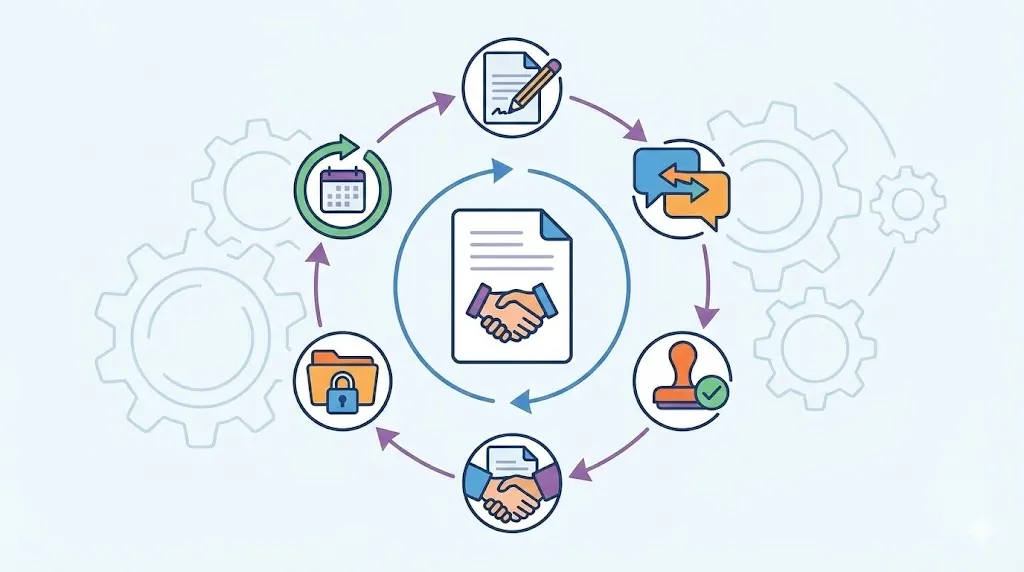
Managing contracts throughout their lifecycle—from drafting to renewal—is streamlined by specialized software. Additionally, it also consolidates documents, automates workflows, and leverages artificial intelligence to scrutinize contract content, thereby minimizing manual effort and errors.
Such software helps healthcare providers:
Draft contracts faster using templates and AI clause suggestions.
Expedite contract reviews by identifying risks automatically.
Keep track of obligations and deadlines by sending proactive alerts and presenting data through intuitive visual dashboards.
Enhance collaboration among teams through integrated commenting capabilities and robust version control.
Maintain secure archives of contracts, complete with comprehensive audit trails to ensure accountability.
Volody’s platform offers a comprehensive suite of these functionalities. Leveraging artificial intelligence, it facilitates contract drafting and review, metadata extraction, and compliance monitoring. Integration with prevalent healthcare systems ensures a consolidated contract overview. Legal and operations teams benefit from enhanced efficiency and precision in contract management.
Explore how Volody's CLM Software can make every stage of contract management simpler.
FAQ
How is contract intelligence applied within healthcare?
Additionally, contract intelligence incorporates AI and automation to extract and analyze contract data efficiently. It facilitates faster contract management processes and improves accuracy by converting documents into actionable insights.
Why do contracts hold such significance in healthcare operations?
Contracts are fundamental in defining the financial arrangements, service expectations, and regulatory obligations that govern healthcare relationships. They create the framework connecting providers with payers, suppliers, and service vendors. Proper management of these agreements is critical to ensuring operational continuity and delivering high standards of patient care.
How does poor contract management affect healthcare providers?
Moreover, it can lead to missed revenue, compliance violations, and operational delays. Manual processes increase errors and slow down contract negotiations and renewals.
Can contract intelligence assist with regulatory compliance?
Yes. AI tools can flag clauses that may violate regulations and track compliance deadlines. This reduces the risk of audits and penalties.
Which functionalities are essential for healthcare providers when selecting contract management solutions?
Look for AI-powered analysis, workflow automation, secure storage, integration with other systems, and obligation tracking.
Furthermore, in what ways does contract software enhance patient care?
By reducing administrative delays and errors, providers can focus more on delivering care. Efficient contract handling ensures timely supplier deliveries and accurate payer reimbursements.
Does contract intelligence serve only legal departments?
No. Contract intelligence benefits legal, procurement, finance, and operations teams by providing clear contract data and automating routine tasks.
What is the typical timeframe for healthcare organizations to realize improvements after deploying contract software?
Many organizations observe enhancements in contract turnaround times and compliance within months of implementation, allowing staff to concentrate on strategic initiatives.
Also, how is AI integrated into contract processes?
AI technology supports data extraction, identifies risks, and suggests relevant clauses. It accelerates contract review and maintains consistency.
Are contract platforms compatible with existing healthcare IT infrastructures?
Yes. Modern platforms connect with ERP, CRM, billing, and procurement systems to provide a complete contract view.
This article explains why healthcare operations depend on contracts and how contract intelligence improves their management. Using AI-powered contract management software reduces risks, saves time, and helps healthcare providers focus on what matters most: patient care.
About the Company

Volody AI CLM is an Agentic AI-powered Contract Lifecycle Management platform designed to eliminate manual contracting tasks, automate complex workflows, and deliver actionable insights. As a one-stop shop for all contract activities, it covers drafting, collaboration, negotiation, approvals, e-signature, compliance tracking, and renewals. Built with enterprise-grade security and no-code configuration, it meets the needs of the most complex global organizations. Volody AI CLM also includes AI-driven contract review and risk analysis, helping teams detect issues early and optimize terms. Trusted by Fortune 500 companies, high-growth startups, and government entities, it transforms contracts into strategic, data-driven business assets.




" height="216.72211px" id="FYO0bO80Y" transform="translate(3 6.105)" width="206.073px"/><path d="M 108.174 222 C 88.432 222 70.303 217.239 53.785 207.717 C 37.267 198.196 24.173 185.052 14.504 168.285 C 4.835 151.312 0 132.165 0 110.845 C 0 89.731 4.835 70.792 14.504 54.025 C 24.173 37.052 37.267 23.804 53.785 14.282 C 70.303 4.761 88.432 0 108.174 0 C 128.116 0 146.246 4.761 162.562 14.282 C 179.08 23.804 192.073 37.052 201.541 54.025 C 211.21 70.792 216.044 89.731 216.044 110.845 C 216.044 132.165 211.21 151.312 201.541 168.285 C 192.073 185.052 179.08 198.196 162.562 207.717 C 146.044 217.239 127.915 222 108.174 222 Z M 108.174 183.189 C 120.864 183.189 132.044 180.291 141.713 174.495 C 151.382 168.492 158.936 160.006 164.375 149.035 C 169.814 138.064 172.533 125.334 172.533 110.845 C 172.533 96.355 169.814 83.729 164.375 72.965 C 158.936 61.994 151.382 53.611 141.713 47.815 C 132.044 42.02 120.864 39.122 108.174 39.122 C 95.483 39.122 84.202 42.02 74.332 47.815 C 64.663 53.611 57.109 61.994 51.67 72.965 C 46.231 83.729 43.511 96.355 43.511 110.845 C 43.511 125.334 46.231 138.064 51.67 149.035 C 57.109 160.006 64.663 168.492 74.332 174.495 C 84.202 180.291 95.483 183.189 108.174 183.189 Z" fill="rgba(255, 255, 255, 0.12)" height="222px" id="aa1McFcE9" transform="translate(227.183 3)" width="216.04399999999998px"/><path d="M 42.302 182.257 L 111.799 182.257 L 111.799 216.722 L 0 216.722 L 0 0 L 42.302 0 Z" fill="rgba(255, 255, 255, 0.12)" height="216.72211px" id="yRq4AnrsX" transform="translate(477.721 6.105)" width="111.79899999999998px"/><path d="M 108.174 222 C 88.432 222 70.303 217.239 53.785 207.717 C 37.267 198.196 24.173 185.052 14.504 168.285 C 4.835 151.312 0 132.165 0 110.845 C 0 89.731 4.835 70.792 14.504 54.025 C 24.173 37.052 37.267 23.804 53.785 14.282 C 70.303 4.761 88.432 0 108.174 0 C 128.116 0 146.246 4.761 162.562 14.282 C 179.08 23.804 192.073 37.052 201.541 54.025 C 211.21 70.792 216.045 89.731 216.045 110.845 C 216.045 132.165 211.21 151.312 201.541 168.285 C 192.073 185.052 179.08 198.196 162.562 207.717 C 146.044 217.239 127.915 222 108.174 222 Z M 108.174 183.189 C 120.864 183.189 132.044 180.291 141.713 174.495 C 151.382 168.492 158.936 160.006 164.375 149.035 C 169.814 138.064 172.534 125.334 172.534 110.845 C 172.534 96.355 169.814 83.729 164.375 72.965 C 158.936 61.994 151.382 53.611 141.713 47.815 C 132.044 42.02 120.864 39.122 108.174 39.122 C 95.483 39.122 84.202 42.02 74.332 47.815 C 64.663 53.611 57.108 61.994 51.67 72.965 C 46.231 83.729 43.511 96.355 43.511 110.845 C 43.511 125.334 46.231 138.064 51.67 149.035 C 57.108 160.006 64.663 168.492 74.332 174.495 C 84.202 180.291 95.483 183.189 108.174 183.189 Z" fill="rgba(255, 255, 255, 0.12)" height="222px" id="mo8HQspQ0" transform="translate(609.155 3)" width="216.04500000000007px"/><path d="M 73.727 0 C 95.885 0 115.324 4.45 132.044 13.351 C 148.967 22.252 161.957 34.982 171.027 51.541 C 180.287 67.894 184.917 86.937 184.917 108.671 C 184.917 130.405 180.287 149.449 171.027 165.801 C 161.957 181.947 148.967 194.47 132.044 203.371 C 115.324 212.271 95.885 216.722 73.727 216.722 L 0 216.722 L 0 0 Z M 72.216 179.773 C 94.374 179.773 111.497 173.564 123.583 161.144 C 135.669 148.724 141.713 131.233 141.713 108.671 C 141.713 86.109 135.669 68.515 123.583 55.888 C 111.497 43.055 94.374 36.638 72.216 36.638 L 42.302 36.638 L 42.302 179.773 Z" fill="rgba(255, 255, 255, 0.12)" height="216.72211px" id="I3iXX5Hi_" transform="translate(859.693 6.105)" width="184.91699999999992px"/><path d="M 185.22 0 L 113.91 141.273 L 113.91 216.722 L 71.61 216.722 L 71.61 141.273 L 0 0 L 47.74 0 L 93.06 99.046 L 138.08 0 Z" fill="rgba(255, 255, 255, 0.12)" height="216.72211px" id="nzHyWC0_d" transform="translate(1061.78 6.105)" width="185.22000000000003px"/></svg>)